Quantum shockwave hits finance as Aussie companies join the race

Quantum shockwave hits finance as Aussie companies join the race

If there’s one threat forming on the horizon of global finance, it’s not necessarily another banking crisis, it’s quantum computing.

Quantum computers aren’t just faster. They’re built on entirely different physics (superposition and entanglement), allowing them to process calculations that would take today’s supercomputers thousands of years … in mere minutes.

That power is a dream for scientists but for banks and payment networks, it’s a ticking time bomb.

That’s because the same quantum power that can simulate entire molecules in seconds can just as easily rip through the encryption walls protecting global finance.

All those locks guarding online payments, digital wallets (and now blockchain transactions) rely on public-key cryptography. Once quantum processors mature, and most experts say they will within a decade, those locks could snap open like cheap padlocks.

“Our financial systems face an existential threat from quantum computing’s ability to break widely used public-key cryptographic protocols,” said Singapore-based blockchain adviser Anndy Lian, warning that trillions in digital transactions are exposed.

Banks know it. Regulators are catching on.

And while some countries are already investing heavily in “quantum-safe” systems, much of the world still isn’t ready.

That gap has created an urgent opportunity for companies that can bridge today’s digital infrastructure with tomorrow’s quantum reality.


Aussie companies gearing up for quantum shift

Australia already has a few names making early moves.

Archer Materials (ASX:AXE) is one of the few public companies in the world developing a quantum chip that can operate at room temperature, which could be a game-changer for the industry.

Its flagship project, the 12CQ chip, aims to use carbon-based qubits, a very different approach from the ultra-cold superconducting systems favoured by giants like IBM and Google.

What makes Archer interesting is that it has already demonstrated the ability to detect and now fabricate individual qubits using standard semiconductor processes. If successful, it could mean quantum computing that fits on a normal circuit board.

Meanwhile, Sydney-based Diraq, though unlisted, has partnered with UNSW to advance silicon-based qubits, essentially trying to make quantum chips that speak the same language as today’s computers.

Another early mover is Codeifai (ASX:CDE), which has recently broadened its focus from product authentication into the much broader world of quantum-secure data.


Codeifai expands into quantum

Codeifai’s story started in product authentication, stopping counterfeit goods with scannable QR codes. But the company’s ambition has evolved fast.

In 2024, it launched ConnectQR, turning those codes into digital trust portals that verify products and track supply chains.

In 2025, Codeifai took a major leap forward by integrating GS1 Digital Link functionality into its ConnectQR platform, a technology that transforms ordinary barcodes into web-enabled smart data carriers.

It connects physical products directly to online information with a single scan, giving consumers instant access to verified product details and authenticity.

This move also saw Codeifai accepted as an Associate Alliance Partner of GS1 Australia, placing it at the forefront of the global transition from 1D to 2D barcodes and expanding opportunities for its high-margin SaaS ConnectQR business.

Now, the company is preparing for its biggest move yet… into quantum-secure payments and communications.

Earlier this month, Codeifai appointed seasoned payments executive Marcus Cann as chief strategy officer to lead the charge.

Cann’s background at Volt Bank and MOGOPLUS gives him deep roots in fintech and open-banking infrastructure, exactly the kind of experience needed to bridge finance and frontier tech.

“He [Cann] will work closely with our COO and myself as we navigate the company into an exciting new arena,” said Codeifai’s executive chairman, John Houston.

The appointment coincides with Codeifai’s potential acquisition of AntennaTransfer.io, an AI-backed, quantum-secure communications platform owned by Canada’s Credissential Inc.

Once the deal is approved at the company’s EGM on 8 December, it will be rebranded QuantumAI Secure.


Secure payments for the post-quantum era

Every time someone scans a QR code, approves a BNPL transaction, or signs a digital agreement, they’re relying on one unspoken assumption: that the system can’t be forged.

Quantum computing is about to test that assumption.

Codeifai’s QuantumAI Secure is designed to make sure that trust still holds. It features a payments gateway fortified with post-quantum cryptography, built so that even if someone intercepts transaction data today, it will remain unreadable decades from now.

The platform also enables file transfers that keep sensitive contracts and intellectual property sealed tight for years to come.

AntennaTransfer.io brings the communications backbone to transmit encrypted information across distributed networks, and that technology is now about to be folded into Codeifai’s ecosystem.

The expansion into encryption technology puts the company squarely in the path of one of the biggest transformations in tech history.


Source: https://stockhead.com.au/tech/quantum-shockwave-hits-finance-as-aussie-companies-join-the-race/

Anndy Lian is an early blockchain adopter and experienced serial entrepreneur who is known for his work in the government sector. He is a best selling book author- “NFT: From Zero to Hero” and “Blockchain Revolution 2030”.

Currently, he is appointed as the Chief Digital Advisor at Mongolia Productivity Organization, championing national digitization. Prior to his current appointments, he was the Chairman of BigONE Exchange, a global top 30 ranked crypto spot exchange and was also the Advisory Board Member for Hyundai DAC, the blockchain arm of South Korea’s largest car manufacturer Hyundai Motor Group. Lian played a pivotal role as the Blockchain Advisor for Asian Productivity Organisation (APO), an intergovernmental organization committed to improving productivity in the Asia-Pacific region.

An avid supporter of incubating start-ups, Anndy has also been a private investor for the past eight years. With a growth investment mindset, Anndy strategically demonstrates this in the companies he chooses to be involved with. He believes that what he is doing through blockchain technology currently will revolutionise and redefine traditional businesses. He also believes that the blockchain industry has to be “redecentralised”.

j j j

UK BL Global Magazine: Presenting Awards to International Companies

UK BL Global Magazine: Presenting Awards to International Companies

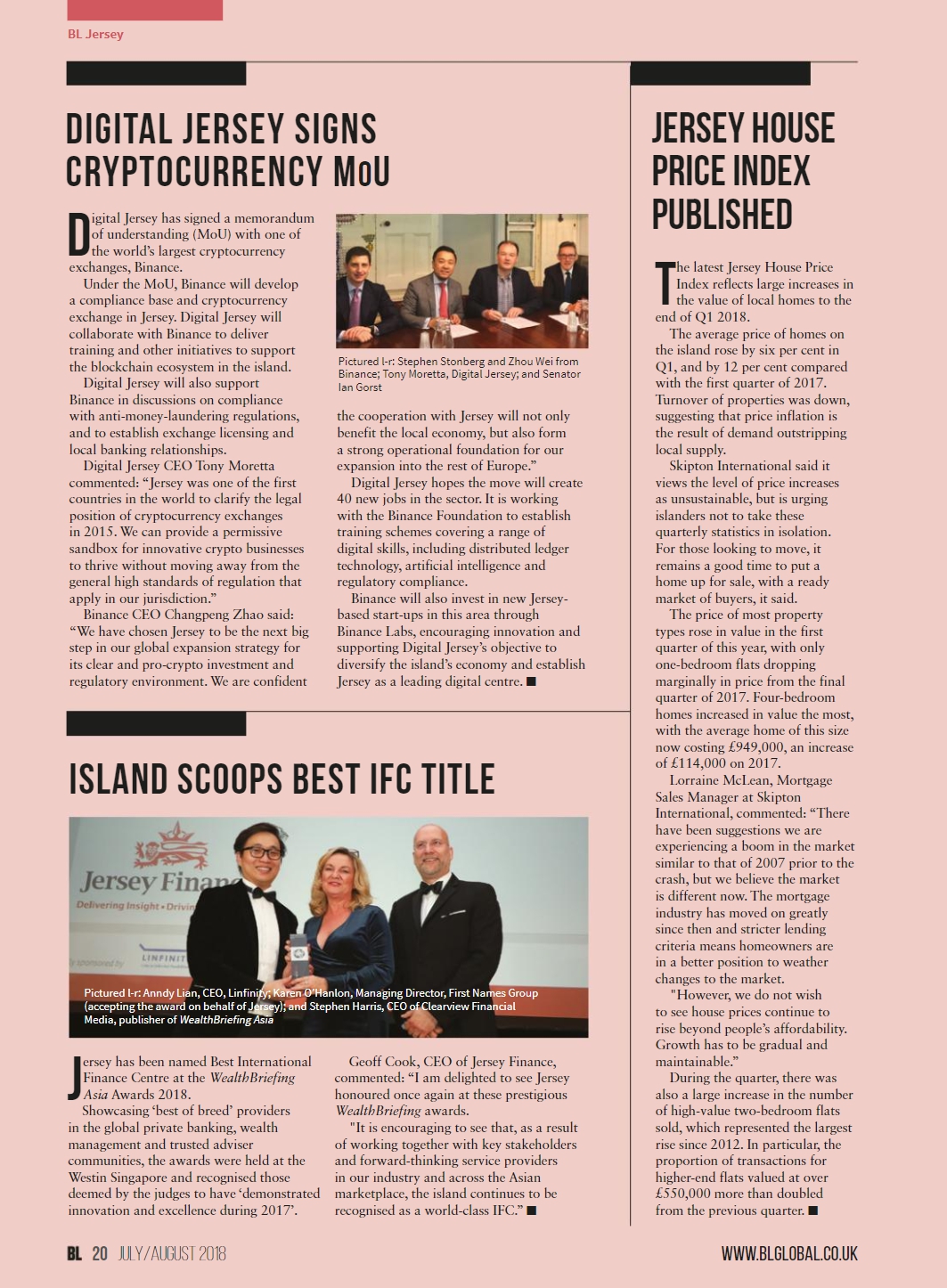
Flash back 1.5 years ago. Covered by UK BL Global Magazine. “Island Scoops Best IFC Title”.

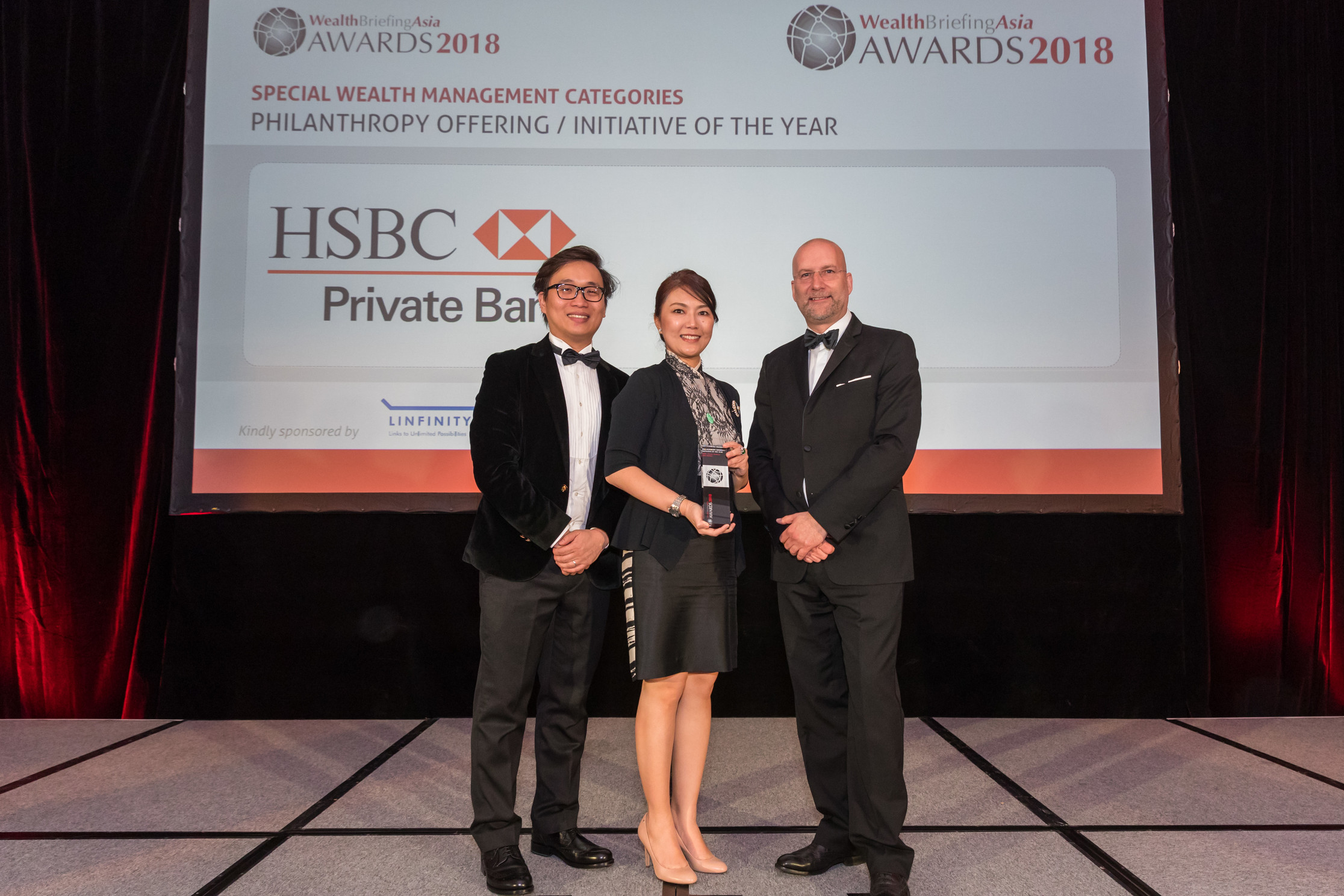
I am also honored to be presenting the awards to internationally companies- HSBC Private Banking, Jersey Finance, BNP Paribas Wealth Management and RHTLaw Taylor Wessing. And also being a blockchain partner at an international wealth awards presentation.

Here’s the BL coverage:

Presented to:

Corporate social responsibility – diversity: RHTLaw TaylorWessing

International Finance Centre: Jersey Finance

Wealth Planning team SEA: RHTLaw Taylor Wessing

Wealth planning team greater China: HSBC Private Banking

Philanthropy offering: BNP Paribas Wealth Management

Philanthropy offering: HSBC Private Banking

https://www.jerseyfinance.je/news/jersey-crowned-best-ifc-at-wealthbriefing-asia-awards-2018/
http://anndy.com/op-ed/linfinity-blockchain-partner-for-wealthbriefingasia-awards-2018/

Anndy Lian is an early blockchain adopter and experienced serial entrepreneur who is known for his work in the government sector. He is a best selling book author- “NFT: From Zero to Hero” and “Blockchain Revolution 2030”.

Currently, he is appointed as the Chief Digital Advisor at Mongolia Productivity Organization, championing national digitization. Prior to his current appointments, he was the Chairman of BigONE Exchange, a global top 30 ranked crypto spot exchange and was also the Advisory Board Member for Hyundai DAC, the blockchain arm of South Korea’s largest car manufacturer Hyundai Motor Group. Lian played a pivotal role as the Blockchain Advisor for Asian Productivity Organisation (APO), an intergovernmental organization committed to improving productivity in the Asia-Pacific region.

An avid supporter of incubating start-ups, Anndy has also been a private investor for the past eight years. With a growth investment mindset, Anndy strategically demonstrates this in the companies he chooses to be involved with. He believes that what he is doing through blockchain technology currently will revolutionise and redefine traditional businesses. He also believes that the blockchain industry has to be “redecentralised”.

j j j

Blockchain Cannot be Developed behind Closed Doors “To change the real world, blockchain companies need to step out of blockchain world.”

Blockchain Cannot be Developed behind Closed Doors “To change the real world, blockchain companies need to step out of blockchain world.”

The blockchain industry does not lack hype, for sure. New blockchain companies seem to spruce up every single day. Initial Coin Offerings (ICOs) raised more money in the first three months of 2018 than the whole of 2017, according to data collected by CoinDesk.

Source from: https://www.coindesk.com/6-3-billion-2018-ico-funding-already-outpaced-2017/

However, blockchain is still a distance away from mass adoption. The technology remains in a nascent stageand has not impacted people around the world yet, which has led many to question whether the world can really be transformed by blockchain.

Linfinity CEO Anndy Lian believes that in order to speed up the tapping of blockchain’s potential, blockchain companies need to proactively try to merge their technologies with traditional businesses and industries, especially those that are less digitalised at the moment.

He said, “The appearance of blockchain provided traditional industries with unlimited heights of imagination. However, there are many problems that blockchain needs to overcome first.

“It cannot work behind closed doors, as its first-priority role should be a technological service that is integrated with traditional industries. In this process, blockchain technology can continually be upgraded.”

A wider audience Integrating blockchain with traditional businesses and industries will, most importantly, let it reach a wider audience.

The value of the blockchain market is estimated to be USD 550 million this year. While the size of the industry is rapidly increasing, it is hardly comparable to already established industries.

For example, Linfinity aims to provide blockchain-based solutions for the supply chain to make the supply chain industry more transparent and secure. The global supply chain management market size is worth around USD 14 billion now, making it 25 times as large as the entire blockchain market.

Hence, when Linfinity integrates blockchain into supply chain management, it opens up blockchain to a whole new paradigm of possibilities and business use-cases. By combining blockchain effectively with pre-existing technologies to help traditional businesses, it brings blockchain directly to the masses, rather than having blockchain stay within specific circles.

The blockchain process of transacting and storing information on a decentralised, distributed ledger yields many benefits for enterprise application data. That makes supply chain management a good use case — a consortium of stakeholders in a supply chain can own, operate and enforce rules for their own shared blockchain.

Combine with other technologies

Blockchain itself should be used sparingly, where it is needed. The ample cryptography which blockchains employ also make them slow. That provides another reason to reconsider off-chain processing and storage alternatives.

In order to maximise its effectiveness and applicability to enterprise scenarios, it needs to be used together with other pre-existing great technologies.

Lian said, “Making blockchain more widespread requires a process. Simply relying on the technology itself is unproductive.”

“Linfinity combines blockchain with Artificial Intelligence and the Internet of Things (IoT). We also focus on the demands of businesses and consumers, so we can speed up the commercialisation of blockchain.”

Besides, having data from the supply chain recorded onto blockchain, Linfinity plans to use other technologies, such as Artificial Intelligence, to conduct real time analysis and to magnify the value of supply chain data.

It will then be able to provide innovative value-add services such as smart energy monitoring, smart sales monitoring, and predictive maintenance.

For blockchain world to expand its reach to the wider world, blockchain companies need to proactively step out. Having access to wider markets and amplifying blockchain’s effectiveness aside, that is the only way blockchain can truly enhance the world.

Anndy Lian is an early blockchain adopter and experienced serial entrepreneur who is known for his work in the government sector. He is a best selling book author- “NFT: From Zero to Hero” and “Blockchain Revolution 2030”.

Currently, he is appointed as the Chief Digital Advisor at Mongolia Productivity Organization, championing national digitization. Prior to his current appointments, he was the Chairman of BigONE Exchange, a global top 30 ranked crypto spot exchange and was also the Advisory Board Member for Hyundai DAC, the blockchain arm of South Korea’s largest car manufacturer Hyundai Motor Group. Lian played a pivotal role as the Blockchain Advisor for Asian Productivity Organisation (APO), an intergovernmental organization committed to improving productivity in the Asia-Pacific region.

An avid supporter of incubating start-ups, Anndy has also been a private investor for the past eight years. With a growth investment mindset, Anndy strategically demonstrates this in the companies he chooses to be involved with. He believes that what he is doing through blockchain technology currently will revolutionise and redefine traditional businesses. He also believes that the blockchain industry has to be “redecentralised”.

j j j