S&P at record highs, Bitcoin at US$115K: Why this convergence signals a new market era

S&P at record highs, Bitcoin at US$115K: Why this convergence signals a new market era

As markets wrap up the weekend on September 15, investors face a pivotal moment that blends traditional equity strength with cryptocurrency resilience. The S&P 500 sits near record highs around 6,584, a level that reflects robust corporate earnings and lingering optimism about economic policy shifts, yet technical indicators hint at an impending pullback. Bitcoin hovers steadily at about US$115,000, recovering from a brief dip after touching US$116,800 last Friday, and analysts such as Fundstrat’s Tom Lee fuel speculation of a surge to US$200,000 by year-end.

I see this convergence as a sign of maturing markets where risk assets increasingly move in tandem, driven by shared sensitivities to Federal Reserve actions. While the broader economy shows signs of cooling inflation and steady growth, the interplay between Wall Street giants and digital currencies underscores the need for thoughtful positioning. Households build cash reserves, bond markets price in rate relief, and global trends favor the United States, but short-term volatility looms large. In my view, this setup rewards patient diversification over concentrated bets on high-flyers, as corrections could test even the strongest performers.

The S&P 500 has delivered impressive gains through much of 2025, climbing over 14 per cent year-to-date and pushing past 6,500 in recent sessions. Companies in the index continue to surprise on the upside during earnings seasons, with the second quarter of 2025 marking the 15th out of the last 16 periods where results exceeded analyst forecasts.

Earnings growth hit around 7.6 per cent for the quarter, led by technology and financial sectors that capitalised on resilient consumer spending and easing macro pressures. Tech firms, in particular, drove much of this momentum, with cloud computing and artificial intelligence investments paying off in higher revenues. I find this pattern encouraging because it demonstrates corporate America’s adaptability in a high-interest-rate environment that persisted longer than many anticipated. However, the index’s concentration in a handful of names raises red flags for sustainability.

The so-called Magnificent Seven stocks, including Nvidia, Apple, Microsoft, Amazon, Alphabet, Meta, and Tesla, now account for over 30 per cent of the S&P 500’s total weight, up sharply from just 12 percent eight years ago. These leaders propelled nearly half of the index’s returns in 2024 and continue to dominate in 2025, with Nvidia alone serving as a cornerstone for many portfolios due to its explosive growth in AI chip demand.

Nvidia’s role stands out as both a boon and a cautionary tale. The company reported stellar quarterly results that reinforced its position in the AI boom, with revenues surging due to increased demand for data centers. Investors flock to it for its momentum, but I advocate spreading exposure because over-reliance on one stock amplifies risks from sector-specific headwinds like supply chain disruptions or regulatory scrutiny on tech monopolies. The Magnificent Seven’s profit growth, while strong, has not matched their market cap expansion, creating a valuation stretch that could unwind in a downturn.

Enter the “Next 20” stocks, the subsequent largest companies in the S&P 500 by market cap, which span more balanced sectors such as industrials, healthcare, and consumer goods. These names have lagged the top tier but offer compelling alternatives with steadier earnings profiles and lower volatility. For instance, firms in utilities and materials beat earnings expectations at rates above 70 per cent in the recent quarter, signaling broad-based health.

In my opinion, shifting some allocation here makes sense for long-term stability, especially as AI adoption remains nascent among S&P 500 companies. Surveys show only about 11 per cent of these firms plan to implement AI tools in the next six months, leaving room for gradual productivity gains but also highlighting that the hype has outpaced reality in many boardrooms.

Technically, the S&P 500 appears overstretched after its rally, with moving averages and momentum indicators flashing warning signs. The index trades in a rising channel on medium-term charts, but negative divergence in the MACD suggests weakening upside momentum relative to price action. Key support levels cluster around 6,144 and 6,000, near the 200-day moving average, where buyers could step in during a correction.

Recent sessions show a slight pullback of 0.05 per cent to 6,584, but broader patterns point to a five to 10 per cent dip as funds rebalance and profit-taking intensifies. Historically, September ranks as the weakest month for the index, averaging negative returns since 1950, often exacerbated by fiscal year-end adjustments and seasonal liquidity drains.

I expect this tradition to hold, particularly with the Federal Open Market Committee meeting just two days away on September 17. Traders price in a near-certain 25 basis point cut, lowering the federal funds rate to 4 to 4.25 percent, followed by two more reductions in October and December.

Such moves typically spark initial volatility, as markets digest the “sell the news” reaction before embracing looser policy. US households, flush with cash from prior savings, position well to weather any turbulence, and widening bond spreads indicate that much of the anticipated relief already factors into prices.

Defensive sectors face heavy short interest as capital chases growth and momentum plays, but I believe a rebound awaits if drawdowns materialise. Investors pile into technology and consumer discretionary, where AI and e-commerce thrive, yet utilities and staples trade at discounts that could attract value hunters.

Globally, the US asserts dominance in equities, bolstering the dollar’s strength against peers and drawing inflows from emerging markets grappling with slower recoveries. AI’s low penetration rate among S&P firms tempers the narrative of an immediate revolution, but projections from analysts such as those at Morgan Stanley suggest it could unlock nearly US$920 billion in annual value through efficiency gains and innovation. Tech giants plan to pour US$371 billion into data centers this year, a figure that underscores the sector’s forward momentum.

Still, broader adoption lags, with only 20 per cent of S&P 500 boards featuring AI expertise, per recent disclosures. In my assessment, this gradual rollout favours diversified portfolios that capture upside without betting the farm on unproven technologies. The US equity market’s primacy reinforces a pro-risk environment, but global themes, such as European energy transitions and Asian manufacturing shifts, offer complementary opportunities beyond the Magnificent Seven.

Turning to Bitcoin, the cryptocurrency maintains poise around US$115,000, a level that reflects institutional maturation amid traditional market parallels. After peaking at US$116,800 on Friday, it settled with minimal fluctuation over the weekend, underscoring stability in a high-volatility asset class. Technical charts reveal solid support at US$114,000, tested but held firm, while resistance looms at US$116,200 and US$116,500.

The relative strength index hovers overbought at 81.7, signaling potential consolidation as traders book profits from the seven-day rally. I view this as a healthy breather in an otherwise bullish setup, especially with the broader crypto market up 5.25 per cent weekly despite a 0.9 per cent daily dip. Institutional interest surges, evidenced by robust inflows into Bitcoin exchange-traded funds, which saw US$642 million net additions on Friday alone and over US$2.3 billion for the week.

This marks the largest weekly haul in two months, contrasting with earlier outflows and highlighting a rotation toward Bitcoin from other assets. Ethereum ETFs, meanwhile, pulled in US$624 million, but Bitcoin dominates the narrative as companies add it to balance sheets and forecast higher allocations for 2025.

Tom Lee’s bold call from Fundstrat captures the optimism swirling around Bitcoin. In a recent CNBC appearance, he linked the asset’s trajectory to monetary policy, noting its sensitivity to rate cuts and its historical strength in the fourth quarter.

Lee predicts Bitcoin could double to US$200,000 by December, a move he deems feasible given easing Fed actions and supply dynamics from the halving cycle. I appreciate his data-driven approach, drawing on past rallies where Bitcoin gained 20 to 35 per cent in Q4 bull years, but tempering enthusiasm with realism. Profit-taking pressures mount, as derivatives volume drops 27 per cent, and events like the YU stablecoin depeg to US$0.20 after a US$30 million hack inject caution across the sector. Macro jitters ahead of the Fed decision could trigger a “sell the news” event, even with 93 per cent odds of a cut.

Institutional rotations exhibit nuance, with US$3.8 billion in Bitcoin ETF outflows over 30 days offset by gains in Ethereum, suggesting diversified crypto interest. Yet, Bitcoin’s correlation to the S&P 500, around 0.3 to 0.6, implies shared downside risks in a correction. Social media buzz on platforms such as X echoes this sentiment, with traders eyeing a US$110,000 to US$130,000 range by month-end but warning of September’s historical weakness, during which Bitcoin has averaged five to seven per cent losses in seven of the last ten years.

Structured products linked to select Magnificent Seven names remain attractive for targeted exposure, offering leveraged upside with defined risks. Investors should diversify into the Next 20 and global equities to mitigate concentration dangers, as no major black swans lurk but sharp corrections persist.

Key events demand attention: the FOMC on September 17, where Chair Powell’s tone could sway sentiment, and the Bank of Japan meeting on September 19, potentially influencing yen flows and carry trades. From my perspective, the macro tailwinds favor risk assets, but overextension in equities and crypto calls for prudence. US dominance and AI’s promise sustain the bull case, yet low adoption rates and seasonal patterns urge balance.

Households’ cash hoards provide a buffer, and rate cuts, largely priced in, set the stage for volatility followed by relief. Bitcoin’s institutional embrace cements its role as a portfolio diversifier, potentially catching up to gold and stocks in a catch-up trade. Overall, I remain constructively optimistic, viewing dips as opportunities to build balanced positions that weather near-term storms and capture year-end rallies. Markets evolve, and those who adapt thrive.


 

Source: https://e27.co/sp-at-record-highs-bitcoin-at-us115k-why-this-convergence-signals-a-new-market-era-20250915/

Anndy Lian is an early blockchain adopter and experienced serial entrepreneur who is known for his work in the government sector. He is a best selling book author- “NFT: From Zero to Hero” and “Blockchain Revolution 2030”.

Currently, he is appointed as the Chief Digital Advisor at Mongolia Productivity Organization, championing national digitization. Prior to his current appointments, he was the Chairman of BigONE Exchange, a global top 30 ranked crypto spot exchange and was also the Advisory Board Member for Hyundai DAC, the blockchain arm of South Korea’s largest car manufacturer Hyundai Motor Group. Lian played a pivotal role as the Blockchain Advisor for Asian Productivity Organisation (APO), an intergovernmental organization committed to improving productivity in the Asia-Pacific region.

An avid supporter of incubating start-ups, Anndy has also been a private investor for the past eight years. With a growth investment mindset, Anndy strategically demonstrates this in the companies he chooses to be involved with. He believes that what he is doing through blockchain technology currently will revolutionise and redefine traditional businesses. He also believes that the blockchain industry has to be “redecentralised”.

j j j

Blurring the Lines: The convergence of traditional finance and crypto

Blurring the Lines: The convergence of traditional finance and crypto

The global financial markets are currently experiencing a period of uncertainty, with risk sentiment retreating due to stalled progress in US-China trade negotiations and investor caution ahead of the Federal Open Market Committee (FOMC) decision. These factors are creating a challenging environment for investors, who are grappling with mixed economic signals, shifting market performances, and significant developments in the cryptocurrency space.

This article explores the current state of the global economy, delves into key corporate strategies involving digital assets, and examines the implications of new regulatory changes from the US Securities and Exchange Commission (SEC).

Economic data and market performance

Recent economic data from the United States paints a picture of an economy at a crossroads. The US Conference Board’s July Consumer Confidence Index rose to 97.2, up from 93, surpassing analyst expectations. This increase suggests that American consumers are feeling more optimistic about their financial prospects, possibly due to stable income levels or an improving outlook on inflation.

However, this positive signal contrasts sharply with signs of a cooling labour market. Job openings in June dropped by 275,000 to 7.437 million, while the job openings rate fell from 4.6 per cent to 4.4 per cent. These declines indicate that employers are pulling back on hiring, which could foreshadow slower economic growth if the trend continues.

This mixed economic backdrop has had a direct impact on financial markets. US stock markets closed lower, with the S&P 500 declining by 0.30 per cent, the NASDAQ by 0.38 per cent, and the Dow Jones by 0.46 per cent. Investors appear to be reacting to the uncertainty surrounding trade negotiations and the upcoming FOMC decision, which could influence interest rates and monetary policy.

At the same time, US Treasury yields fell across the curve, reflecting a shift toward safer assets. The 10-year UST yield dropped by 8.9 basis points to 4.320 per cent, and the two-year UST yield fell by 4.7 basis points to 3.869 per cent. Lower yields often signal investor concerns about economic growth, as they seek the relative security of government bonds.

Currency and commodity markets also reflect this cautious mood. The US Dollar Index climbed by 0.25 per cent, reinforcing the dollar’s role as a safe-haven currency during turbulent times. Gold prices, meanwhile, rebounded by 0.36 per cent after four consecutive sessions of losses, suggesting that investors are turning to traditional hedges against uncertainty.

In Asia, stock markets opened with mixed results, indicating regional variations in how investors are processing these global developments. However, US equity index futures point to a higher opening for US stocks, hinting at a potential rebound as new data and events unfold.

Key events on the horizon

The coming days promise to bring clarity or further complexity to this evolving situation. Monetary policy decisions from the Bank of Canada and the Federal Reserve loom large, with the Fed’s announcement drawing particular attention. Investors are eager to understand whether the central bank will adjust interest rates or signal changes in its approach to inflation and growth.

Additionally, second-quarter GDP data from the United States and the Eurozone will provide a broader view of economic health in these critical regions. Strong GDP figures could bolster confidence, while weaker numbers might deepen concerns about a slowdown.

Earnings releases from the tech sector also feature prominently on the calendar. Companies in this influential industry often serve as bellwethers for the broader market, and their performance could sway investor sentiment. These events collectively represent a packed docket that will likely shape market trajectories in the near term, making it a pivotal moment for financial observers.

Michael Saylor’s strategy: A bold bet on Bitcoin

Amid this uncertain economic climate, some companies are making striking moves in the cryptocurrency space. Michael Saylor’s Strategy, formerly known as MicroStrategy, recently purchased 21,021 Bitcoin after raising US$2.5 billion through its fourth preferred stock offering, dubbed STRC.

This transaction stands out as the largest US initial public offering (IPO) in 2025 so far, surpassing even the much-anticipated US$1 billion IPO of stablecoin issuer Circle Internet Group in June. Strategy acquired the Bitcoin at an average price of US$117,256 per coin, bringing its total holdings to 628,791 BTC, the largest stash among public companies according to BitcoinTreasuries.NET.

This acquisition underscores Strategy’s unwavering commitment to Bitcoin as a core component of its corporate treasury. The company raised US$2.5 billion by selling 28 million shares of Variable Rate Series A Perpetual Preferred Stock at US$90 each, a deal that ballooned from an initial target of US$500 million due to strong investor demand. This move is not just a financial play but a statement of belief in Bitcoin’s long-term value.

By amassing such a significant position, Strategy positions itself as a pioneer in corporate adoption of cryptocurrencies, potentially encouraging other firms to follow suit. For investors, this strategy raises intriguing questions about the role of digital assets in hedging against inflation and diversifying traditional portfolios.

Windtree Therapeutics: Biotech meets blockchain

While Strategy’s Bitcoin haul grabs headlines, Windtree Therapeutics is charting an equally bold path in the crypto realm. This biotech company, listed on NasdaqCM under the ticker WINT, has secured up to US$520 million in new funding, with 99 per cent of the proceeds earmarked for acquiring BNB, the native cryptocurrency of the Binance ecosystem.

The funding package includes a US$500 million equity line of credit (ELOC) and a US$20 million stock purchase agreement with Build and Build Corp, reflecting a deliberate pivot toward digital assets.

Windtree’s CEO, Jed Latkin, emphasised the strategic importance of this move, noting that the opportunity to bolster BNB holdings aligns with the company’s broader vision. Unlike Strategy, which focuses solely on Bitcoin, Windtree is diversifying its treasury with BNB, a token tied to one of the world’s largest cryptocurrency exchanges. This approach suggests confidence in the Binance ecosystem’s growth potential and its utility in decentralised finance.

For a biotech firm traditionally focused on healthcare innovation, this aggressive shift into blockchain-based assets marks a hybrid strategy that blends cutting-edge medicine with cutting-edge finance. It also highlights how companies across industries are rethinking their financial strategy in light of cryptocurrency’s rising prominence.

SEC’s new rules: A game-changer for crypto ETPs

Regulatory developments are adding another layer of intrigue to this narrative. The US Securities and Exchange Commission recently approved new rules that allow authorised participants to create and redeem shares of crypto exchange-traded products (ETPs) using in-kind transfers of Bitcoin and Ether.

This decision departs from the previous cash-only requirement for spot crypto funds, bringing these products in line with commodity-based ETPs like those backed by gold or oil. The change promises to reduce operational costs and enhance efficiency for issuers, potentially making crypto ETPs more appealing to a wider range of investors.

SEC Chairman Paul Atkins hailed this as a step toward a more tailored regulatory framework for crypto markets, emphasising that it benefits investors by lowering costs. Beyond in-kind transfers, the SEC also greenlit additional enhancements to the crypto ETP ecosystem.

These include approval for a mixed ETP holding both spot Bitcoin and Ether, authorisation of options and FLEX options on certain Bitcoin ETPs, and an increase in position limits on listed Bitcoin options to 250,000 contracts, matching thresholds for other high-volume options. These moves signal a maturing infrastructure for cryptocurrency investments, bridging the gap between traditional finance and the digital asset frontier.

Conclusion

The global financial markets stand at a fascinating juncture. Economic data reveals an uneasy balance between optimism and caution, while upcoming events promise to steer the course ahead.

Meanwhile, Strategy and Windtree Therapeutics are redefining corporate strategy with their crypto ambitions, and the SEC is paving the way for a more integrated digital asset market. For investors, this convergence of factors demands vigilance and adaptability.

The interplay of trade negotiations, monetary policy, and cryptocurrency innovation will likely define the financial landscape for months to come, offering both challenges and opportunities in equal measure.

As this story unfolds, one thing is clear: the boundaries between traditional finance and the digital frontier are blurring, and the implications will resonate far beyond today’s headlines.


Source: https://e27.co/blurring-the-lines-the-convergence-of-traditional-finance-and-crypto-20250730/

Anndy Lian is an early blockchain adopter and experienced serial entrepreneur who is known for his work in the government sector. He is a best selling book author- “NFT: From Zero to Hero” and “Blockchain Revolution 2030”.

Currently, he is appointed as the Chief Digital Advisor at Mongolia Productivity Organization, championing national digitization. Prior to his current appointments, he was the Chairman of BigONE Exchange, a global top 30 ranked crypto spot exchange and was also the Advisory Board Member for Hyundai DAC, the blockchain arm of South Korea’s largest car manufacturer Hyundai Motor Group. Lian played a pivotal role as the Blockchain Advisor for Asian Productivity Organisation (APO), an intergovernmental organization committed to improving productivity in the Asia-Pacific region.

An avid supporter of incubating start-ups, Anndy has also been a private investor for the past eight years. With a growth investment mindset, Anndy strategically demonstrates this in the companies he chooses to be involved with. He believes that what he is doing through blockchain technology currently will revolutionise and redefine traditional businesses. He also believes that the blockchain industry has to be “redecentralised”.

j j j

Bybit Talks — The Convergence of Web3, Blockchain, and AI

Bybit Talks — The Convergence of Web3, Blockchain, and AI

Introduction


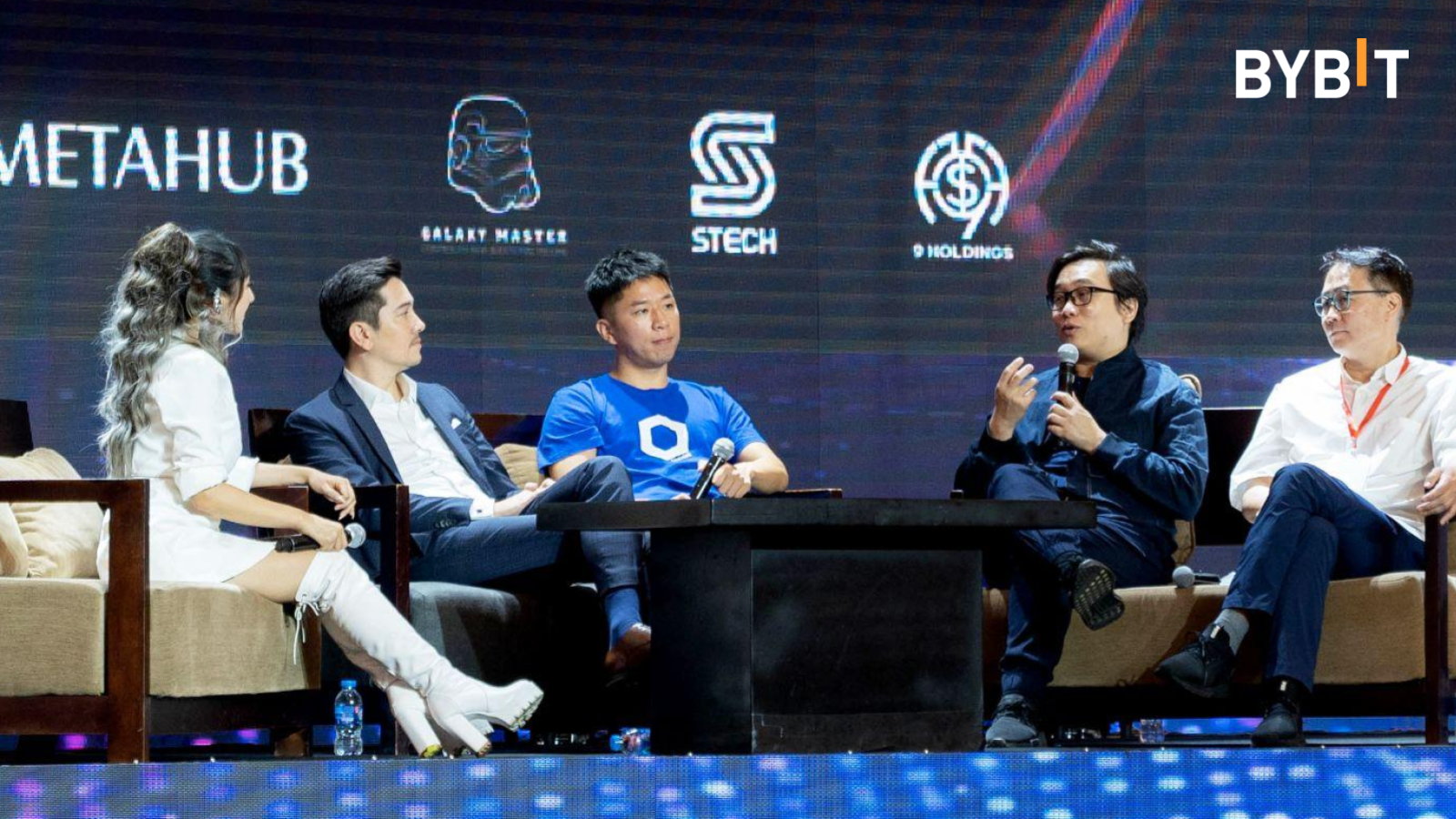
At the Brand Launchpad Event held on 29th May 2023 at Ho Chi Minh, Vietnam, Anndy Lian, advisor of Bybit, discussed the growth of the Web3 industry and its relationship with AI. Lian highlighted how Web3 empowers creators and communities in making informed business choices. He emphasized the convergence of Web3, blockchain, and AI, addressing concerns and emphasizing the benefits of understanding and leveraging AI’s capabilities. Lian also mentioned the advantages of using AI in crypto trading practices.


The Empowering Potential of Web3


Lian emphasized that what we should all focus on is that ” Web3 is for the creators.”. He explains how Web3 “ushers in a fresh type of economy that empowers users and communities to make more informed and advantageous business choices.”


The convergence of Web3, blockchain, and AI, according to Lian, is transforming multiple industries and driving innovation across the board. He further discussed the relationship between these technologies, highlighting their potential to collaborate and create innovative solutions. Blockchain, as Lian explained, plays a crucial role as the verification and security layer. By establishing a decentralized and tamper-proof system, blockchain ensures data integrity and transparency, instilling trust among participants and the AI layer.

AI’s Impact and Potential


Addressing concerns about AI’s impact, Lian reassured the audience that there’s no need for undue worry. Instead, he encouraged understanding and taking control of AI’s capabilities. Lian emphasized that AI can yield positive outcomes if properly harnessed and leveraged. Understanding AI and its potential empowers individuals to make the most of this transformative technology.


By harnessing data analysis and pattern recognition, AI-powered crypto trading systems can generate improved results. These systems process vast amounts of historical and real-time data from diverse sources, including price charts, market indicators, news articles, and social media sentiment. Through this analysis, AI algorithms can identify patterns and trends that may elude human traders, facilitating more informed decision-making. Anndy concluded his take on the advantages of utilizing AI in trading practices by linking it all back to how AI can ultimately aid crypto exchanges.


In conclusion, the panel discussion at the 29th 2023 Brand Launchpad Event brought attention to the immense potential of Web3, blockchain, and AI. These technologies hold the promise of unlocking unprecedented opportunities for creators, businesses, and individuals in a decentralized and data-driven world. As they continue to advance and intersect, understanding and embracing these transformative technologies will be crucial in navigating the ever-evolving landscape of the digital economy. By staying informed and proactive, we can fully harness their power and pave the way for a prosperous future.


Anndy Lian is an early blockchain adopter and experienced serial entrepreneur who is known for his work in the government sector. He is a best selling book author- “NFT: From Zero to Hero” and “Blockchain Revolution 2030”.

Currently, he is appointed as the Chief Digital Advisor at Mongolia Productivity Organization, championing national digitization. Prior to his current appointments, he was the Chairman of BigONE Exchange, a global top 30 ranked crypto spot exchange and was also the Advisory Board Member for Hyundai DAC, the blockchain arm of South Korea’s largest car manufacturer Hyundai Motor Group. Lian played a pivotal role as the Blockchain Advisor for Asian Productivity Organisation (APO), an intergovernmental organization committed to improving productivity in the Asia-Pacific region.

An avid supporter of incubating start-ups, Anndy has also been a private investor for the past eight years. With a growth investment mindset, Anndy strategically demonstrates this in the companies he chooses to be involved with. He believes that what he is doing through blockchain technology currently will revolutionise and redefine traditional businesses. He also believes that the blockchain industry has to be “redecentralised”.

j j j