Trump’s Fed firing threat shakes markets: A deep dive into the economic fallout

Trump’s Fed firing threat shakes markets: A deep dive into the economic fallout

The most striking development in this saga is the report that President Trump drafted a letter to fire Federal Reserve Chair Jerome Powell and shared it with House Republicans during a private meeting.

This move, if true, signals a potential escalation in Trump’s long-standing frustration with Powell, whom he has criticised for not aligning Fed policies, particularly interest rate decisions, with his economic agenda. Sources indicate that Trump sought input from the lawmakers, many of whom reportedly supported the idea of ousting Powell.

However, Trump later walked back these reports, stating he’s “not planning on doing anything” and deeming it “highly unlikely” he would fire Powell unless there were extreme circumstances like fraud. He even denied drafting the letter, despite earlier accounts suggesting otherwise.

This episode is more than just political theatre. It raises serious questions about the independence of the Federal Reserve, a cornerstone of US economic stability. The Fed’s autonomy allows it to make monetary policy decisions based on data and long-term economic health, free from short-term political pressures.

If Trump were to follow through on such a threat, it could erode confidence in the Fed’s ability to act impartially, potentially destabilising financial markets and undermining the US dollar’s global standing.

Even the mere suggestion of such an action has already sparked volatility, as markets grapple with the uncertainty of a politically influenced central bank. Trump’s history of clashing with Powell, particularly over his desire for lower interest rates to stimulate growth, adds context to this tension; however, the draft letter, if it exists, marks a bold step toward direct intervention.

On the economic front, several key indicators provide additional layers to this story. US producer prices (PPI) in June 2025 remained flat, missing expectations of a 0.2 per cent increase after a revised 0.3 per cent rise in May. This stagnation was driven by a 0.1 per cent dip in service prices, highlighted by a sharp 4.1 per cent drop in traveler accommodation costs, offset by a 0.3 per cent rise in goods prices, the largest since February, fuelled by an 0.8 per cent jump in communication equipment.

Flat producer prices suggest that inflationary pressures may be cooling at the wholesale level, which could ease some of the Fed’s concerns about overheating. However, this comes on the heels of a hotter-than-expected consumer price index (CPI) reading earlier in the week, creating a mixed inflation picture that complicates the Fed’s next moves.

Across the Atlantic, UK inflation rose to 3.6 per cent in June 2025, the highest level since January 2024, up from 3.4 per cent in May and exceeding forecasts. This spike was primarily driven by a 1.7 per cent increase in transport costs, with motor fuel, airfares, rail fares, and vehicle maintenance all contributing. Rising UK inflation could pressure the Bank of England to tighten monetary policy, potentially strengthening the pound and influencing global capital flows.

Meanwhile, US industrial production rose 0.3 per cent in June, surpassing expectations of a 0.1 per cent gain after two flat months. Manufacturing edged up 0.1 per cent, while utilities surged 2.8 per cent, boosted by a 3.5 per cent rise in electricity generation. This resilience in industrial activity signals underlying economic strength, though trade tensions and tariffs could pose risks to sustained growth.

Equities: A relief rally in the US, struggles elsewhere

The equity markets have responded swiftly to the Trump-Powell saga. In the US, stocks closed higher on Wednesday after Trump quelled fears of removing Powell, offering a soothing balm to investors rattled by earlier reports. The S&P 500 climbed 0.3 per cent, the Dow Jones Industrial Average gained 231 points, and the Nasdaq 100 rose 0.1 per cent to a record close.

This uptick reflects a relief rally, as markets had dipped earlier on concerns that Powell’s ouster could disrupt monetary policy stability and exacerbate inflation and trade worries. The flat PPI data also helped calm nerves after Tuesday’s hotter CPI reading, suggesting that inflationary pressures might not be as intense as feared.

On the corporate side, results were mixed: Goldman Sachs rose one per cent after beating profit estimates, while Johnson & Johnson soared 6.2 per cent on strong earnings and an upgraded outlook. In contrast, Bank of America fell 0.3 per cent on weak revenue, and Morgan Stanley dropped 1.3 per cent despite solid earnings.

In Europe, however, the mood was less upbeat. Frankfurt’s DAX slipped 0.2 per cent to 24,048, marking its fifth consecutive loss amid trade uncertainty and disappointing earnings. Hopes for a softer tariff deal faded as Trump renewed threats to expand tariffs to pharmaceuticals and semiconductors by August 1 under his “reciprocal” tax plan.

The EU Trade Commissioner, Maros Sefcovic, is set to visit Washington to negotiate the US’s proposed 30 per cent tariff, underscoring the high stakes for European exporters. Automakers bore the brunt of the decline, with Volkswagen down 3.7 per cent, Porsche AG off three per cent, and Mercedes-Benz losing 1.9 per cent. Chemical distributor Brenntag also fell 2.6 per cent after a Deutsche Bank downgrade. These losses highlight how Trump’s trade policies are casting a long shadow over European markets.

In Hong Kong, the Hang Seng Index fell 0.3 per cent to 24,518, snapping a four-day winning streak after hitting a four-month high earlier in the session. Traders took profits as US futures weakened following June inflation data, which hinted that tariffs might be pushing prices higher and reducing expectations for Fed rate cuts.

Trump’s signals of potential tariffs on pharmaceuticals by the end of July, with semiconductors possibly next, added further pressure. Notable losers included Pop Mart International (-4.3 per cent), Zhejiang Leapmotor Tech (-3.0 per cent), KE Holdings (-2.7 per cent), and China Longyuan Power (-2.5 per cent). The pullback reflects broader concerns about how US trade policy could disrupt Asian markets, particularly those tied to global supply chains.

FX: Dollar volatility and global currency shifts

The foreign exchange market has been a rollercoaster amid these developments. The US dollar (USD) initially dipped on reports that Trump might fire Powell, as investors worried about the implications for Fed independence and continuity of monetary policy. The dollar index (DXY) fell below 98.40, reflecting this unease.

However, the USD rebounded after Trump denied the claims, and the soft PPI data bolstered confidence that inflation might remain in check. This recovery underscores the dollar’s sensitivity to both political headlines and economic fundamentals.

The euro (EUR) capitalised on the dollar’s early weakness, briefly rising above US$1.17, but later pared its gains as Powell-related uncertainty lingered, settling around US$1.1630. The British pound (GBP) strengthened to above 1.34, buoyed by the softer dollar and a temporary lift from UK inflation data, which hinted at potential Bank of England action.

In Japan, the yen weakened against the dollar, with USDJPY climbing to 148.20, as exports fell 0.5 per cent year-over-year in June, missing expectations of a 0.5 per cent gain. This decline was driven by an 11.4 per cent drop in exports to the US and a 4.7 per cent fall to China, though exports to the EU rose 3.6 per cent. Imports, meanwhile, rose 0.2 per cent year-over-year, defying forecasts of a 1.1 per cent drop. These trade figures highlight the challenges facing export-driven economies amid global trade tensions.

Commodities mixed, yield curve steepens

In the commodities space, gold rose, snapping a two-day slide, as investors sought safety amid the uncertainty surrounding Powell. The metal surged as much as 1.6 per cent before trimming gains after Trump’s denial, reflecting its role as a haven asset. Oil edged higher after a three-day slide, with West Texas Intermediate (WTI) near US$67 and Brent below US$69, driven by mixed US inventory data. Crude stockpiles fell, but distillate inventories rose, amid ongoing trade war concerns.

In the bond market, the spread between 5-year and 30-year US Treasury yields widened to 108 basis points, the steepest since 2021. This steepening yield curve could signal expectations of stronger growth and higher inflation ahead, though it may also reflect uncertainty about the Fed’s future path under political scrutiny.

Cryptocurrencies: Bitcoin and Ethereum in focus

Bitcoin (BTC-USD) is consolidating below US$120,000 after hitting an all-time high of US$123,091 earlier in the week, closing flat at US$118,600. A bearish engulfing candle and declining volume, from US$180 billion on July 14 to below US$100 billion by July 15, suggest market indecision. Support sits at US$117,000, with a potential drop to US$114,400-US$112,000 if breached. Despite this, spot Bitcoin ETF inflows surged to US$799 million on Wednesday, signalling robust long-term demand.

Ethereum (ETH-USD) soared 15 per cent in three days after Peter Thiel disclosed a 9.1 per cent stake in BitMine, a crypto miner holding 164,000 Ether worth US$500 million. This news has electrified the crypto space, underscoring growing institutional interest.

My take: Implications and outlook

Recent developments indicate that we are at a pivotal moment in the global economy. Trump’s suggestion of firing Powell raises concerns about the independence of the Federal Reserve, a move that could lead to long-term market instability if it were to occur.

The current mixed economic signals from flat US Producer Price Index (PPI) and rising inflation in the UK, to solid industrial production, suggest that the global economy is in a state of flux, with unpredictable trade policies adding to the uncertainty.

In the US, equities show resilience, while other markets exhibit vulnerabilities. The fluctuations in the dollar underscore its crucial role in global finance. Commodities and cryptocurrencies present both opportunities and risks, with gold and Ethereum standing out amid this uncertainty.

Looking ahead, the relationship between politics and economic policy will be vital. If Trump decides to back off, the markets may stabilise; however, any renewed pressure could lead to increased volatility.

Key economic data releases, such as US retail sales and the Eurozone Consumer Price Index (CPI), will further influence the situation. For now, the world is watching closely, and I will continue to analyse the data to provide a clear perspective on what lies ahead.


 

Source: https://e27.co/trumps-fed-firing-threat-shakes-markets-a-deep-dive-into-the-economic-fallout-20250718/

Anndy Lian is an early blockchain adopter and experienced serial entrepreneur who is known for his work in the government sector. He is a best selling book author- “NFT: From Zero to Hero” and “Blockchain Revolution 2030”.

Currently, he is appointed as the Chief Digital Advisor at Mongolia Productivity Organization, championing national digitization. Prior to his current appointments, he was the Chairman of BigONE Exchange, a global top 30 ranked crypto spot exchange and was also the Advisory Board Member for Hyundai DAC, the blockchain arm of South Korea’s largest car manufacturer Hyundai Motor Group. Lian played a pivotal role as the Blockchain Advisor for Asian Productivity Organisation (APO), an intergovernmental organization committed to improving productivity in the Asia-Pacific region.

An avid supporter of incubating start-ups, Anndy has also been a private investor for the past eight years. With a growth investment mindset, Anndy strategically demonstrates this in the companies he chooses to be involved with. He believes that what he is doing through blockchain technology currently will revolutionise and redefine traditional businesses. He also believes that the blockchain industry has to be “redecentralised”.

j j j

Tether under scrutiny: A deep dive into cryptocurrency crime allegations

Tether under scrutiny: A deep dive into cryptocurrency crime allegations

A recent report by the United Nations Office on Drugs and Crime (UNODC) has warned that Tether, one of the world’s most traded cryptocurrencies, has become a key tool for criminals, money launderers and scammers in East and Southeast Asia.

The report claims that Tether’s stability, ease of use, anonymity and low transaction fees have made it the preferred choice for fraudsters and money launderers alike and that its popularity is illustrated by the surging volume of cyber fraud, money laundering and underground banking cases involving the stablecoin.

However, some crypto enthusiasts and experts have challenged the validity and accuracy of the UN report, arguing that it is based on flawed assumptions, incomplete data and biased analysis. They contend that Tether is not the most preferred currency for illicit activities, that it is not as anonymous and untraceable as the report suggests, and that bad actors can use other cryptocurrencies and techniques to evade detection and regulation.

In this article, I will examine both sides of the debate and offer my own opinion on the matter.

What is Tether, and why is it popular?

Tether is a company that runs a blockchain platform and issues digital tokens pegged to real-world currencies with the backing of its own financial reserves, most notably USDT, or tether, which is tied to the US dollar one-for-one. Tether claims that its tokens are fully backed by fiat currency and other assets and that they provide a stable and transparent alternative to volatile and unpredictable cryptocurrencies.

Tether’s main appeal lies in its ability to bridge the gap between the traditional and the crypto worlds, offering users the benefits of both. Tether users can enjoy the speed, security, low cost and global reach of blockchain transactions while also maintaining the stability, liquidity and familiarity of fiat currencies.

Tether also enables users to access various crypto platforms and services, such as exchanges, wallets, lending, gaming and gambling, without having to deal with the complexities and risks of converting between different currencies and tokens.

According to CoinMarketCap, Tether is the world’s third-largest cryptocurrency by market capitalisation, behind only Bitcoin and Ethereum, with a market cap of over US$95 billion as of January 16, 2024.

Tether also has the highest daily trading volume of any cryptocurrency, surpassing even Bitcoin, with an average of over US$100 billion traded per day. Tether is widely accepted and supported by hundreds of crypto platforms and service providers, as well as some regulated entities, such as banks and payment processors.

What are the allegations against Tether?

Despite its popularity and success, Tether has also been plagued by controversies and criticisms, ranging from its lack of transparency and accountability to its involvement in market manipulation and fraud to its vulnerability to hacking and theft. Tether has faced several lawsuits, investigations and regulatory actions from various authorities and stakeholders, both in the US and abroad, over its business practices, operations and compliance.

The most recent and alarming accusation against Tether comes from the UNODC report, which alleges that Tether has quickly become the platform of choice for money laundering and fraud operations across East and Southeast Asia.

The report cites intelligence from law enforcement and financial authorities in the region, who report that Tether ranks among the most popular cryptocurrencies used by organised crime groups, especially those operating online casinos, which have emerged as among the most popular vehicles for cryptocurrency-based money launderers.

The report also details how Tether is used to facilitate various schemes, such as “sextortion”, a form of blackmail threatening to post sexual content or information about a person, and “pig butchering”, a socially engineered romance designed to “fatten up” targets before extracting money. It claims that Tether’s appeal to criminals lies in its speedy and irreversible transactions, its low detection and traceability, and its ability to bypass regulatory and legal barriers.

The same report also highlights the role of “motorcades”, which are sophisticated, high-speed money laundering teams that specialise in Tether transactions. These teams advertise their services on social media platforms, such as Facebook, TikTok and Telegram, and offer to exchange Tether for fiat currency or other cryptocurrencies for a percentage of the total laundered and transferred funds. It says that these teams have seen a rapid uptick in recent years and that they pose a serious challenge to law enforcement and financial authorities.

What are the counterarguments to the UN report?

In my humble opinion, the UN report has been met with scepticism and criticism, and some other experts also question its methodology, data, and conclusions. They argue that the report is based on anecdotal evidence, selective cases and biased sources and that it does not provide a comprehensive and accurate picture of the crypto landscape and the role of Tether in it. I want to also point out the flaws and limitations of the report and offer alternative explanations and perspectives on the issue.

One of the main counterarguments to the UN report is that Tether is not the most preferred currency for illicit activities and that other cryptocurrencies, such as Bitcoin, Ethereum, and BNB, are perhaps more widely used and more suitable for such purposes.

It is cited in various studies and reports that show that the majority of crypto transactions are legitimate and legal and that only a small fraction of them, around one per cent, is associated with criminal and illicit activities.

I would also argue that Tether is not as anonymous and untraceable as the report suggests and that it is possible to track and monitor Tether transactions using blockchain analysis tools and techniques. They point out that Tether transactions are recorded on public ledgers, such as the Bitcoin, Ethereum and Tron blockchains, and that they can be linked to real-world identities and entities using various methods, such as IP addresses, wallet addresses, exchange accounts, KYC information and network activity.

It also contends that bad actors can use other cryptocurrencies and techniques to evade detection and regulation and that Tether is not the only or the best option for them. They mention the use of privacy coins, such as Monero and Zcash, which offer enhanced anonymity and obfuscation features, such as stealth addresses, ring signatures, zero-knowledge proofs and confidential transactions.

They also mention the use of crypto mixers, such as Tornado Cash and Wasabi, which offer decentralised and trustless solutions for mixing and tumbling coins, making it harder to trace their origin and destination.

What is my opinion on the matter?

Based on my research and analysis, I think that the UN report has some merit and validity, but it also has some flaws and limitations. I think that Tether is indeed a popular and convenient tool for some criminals, money launderers and scammers, especially in East and Southeast Asia, where there is a high demand and supply for crypto services and products and where there is a lack of effective and consistent regulation and enforcement.

I think that Tether’s features and benefits, such as its stability, ease of use, low cost and global reach, also make it attractive and useful for such actors, who can exploit its loopholes and weaknesses to their advantage.

However, I also think that the UN report is not conclusive and definitive and that it does not capture the whole and true picture of the crypto landscape and the role of Tether in it. I think that Tether is not the only or the most preferred currency for illicit activities and that other cryptocurrencies and techniques are more widely used and more suitable for such purposes.

I think that Tether is not as anonymous and untraceable as the report suggests and that it is possible to track and monitor Tether transactions using blockchain analysis tools and techniques. I think that the UN report is based on anecdotal evidence, selective cases and biased sources and that it does not provide comprehensive and accurate data and analysis on the issue.

To stay within my argument, here is some food for thought — Tether has conducted the biggest-ever USDT freeze of US$225 million linked to a human trafficking syndicate. They worked hand in hand on this occasion with leading crypto exchanges, OKX and DOJ. This shows Tether’s willingness to help the industry and, to a certain extent, stay accountable and transparent.

Therefore, my opinion is that it is not fair or accurate to label it as the crypto of choice for criminals. I think that Tether has a legitimate and valuable role and function in the crypto ecosystem and that it provides a stable and transparent alternative to volatile and unpredictable cryptocurrencies.

I think that Tether also has a lot of room and potential for improvement and innovation and that it can address and resolve its controversies and criticisms by enhancing its transparency and accountability, complying with relevant laws and regulations, and cooperating with authorities and stakeholders.


Source: https://e27.co/tether-under-scrutiny-a-deep-dive-into-cryptocurrency-crime-allegations-20240123/

Insights

[sc_fs_multi_faq headline-0=”h2″ question-0=”What is Tether, and why has it gained popularity in the cryptocurrency market?” answer-0=”Tether is a blockchain platform that issues digital tokens, such as USDT, pegged to real-world currencies, offering stability and transparency. Its popularity stems from bridging traditional and crypto worlds, combining the benefits of blockchain transactions with the stability and familiarity of fiat currencies.” image-0=”” headline-1=”h2″ question-1=”What are the allegations against Tether regarding its involvement in illicit activities?” answer-1=”Tether faces allegations, notably from a UNODC report, of being a preferred platform for money laundering and fraud in East and Southeast Asia. The report claims Tether’s features, like fast and irreversible transactions, low detection, and traceability, make it attractive to criminals involved in online casinos, “sextortion,” and other illicit schemes.” image-1=”” headline-2=”h2″ question-2=”What counterarguments exist against the UNODC report’s accusations towards Tether?” answer-2=”In the article, Anndy Lian argues that the UN report lacks comprehensive data and relies on anecdotal evidence. They contend that Tether is not the primary choice for illicit activities, pointing to other cryptocurrencies like Bitcoin and Ethereum. Moreover, they emphasize the traceability of Tether transactions through blockchain analysis tools and highlight alternative options, such as privacy coins and crypto mixers.” image-2=”” headline-3=”h2″ question-3=”What is the Anndy Lian’s opinion on the UNODC report and Tether’s role in illicit activities?” answer-3=”Anndy Lian acknowledges the UN report’s merit but criticizes its flaws and limitations. They argue that Tether serves as a tool for criminals in specific regions due to the demand for crypto services and lax regulation. However, the author contends that Tether is not the exclusive choice for illicit activities and suggests that the report is based on biased sources. They advocate for a more nuanced perspective on Tether’s role in the crypto landscape.” image-3=”” headline-4=”h2″ question-4=”How does Tether respond to accusations of involvement in criminal activities, and what is the author, Anndy Lian’s overall opinion on Tether?” answer-4=”Tether has taken action against criminal activities, evidenced by a significant USDT freeze linked to a human trafficking syndicate, showcasing a commitment to industry integrity. The author concludes that labeling Tether as the go-to crypto for criminals is unfair, emphasizing its legitimate role in the crypto ecosystem. Anndy Lian believes Tether can improve by addressing controversies, enhancing transparency, complying with regulations, and collaborating with authorities.” image-4=”” count=”5″ html=”true” css_class=””]

Anndy Lian is an early blockchain adopter and experienced serial entrepreneur who is known for his work in the government sector. He is a best selling book author- “NFT: From Zero to Hero” and “Blockchain Revolution 2030”.

Currently, he is appointed as the Chief Digital Advisor at Mongolia Productivity Organization, championing national digitization. Prior to his current appointments, he was the Chairman of BigONE Exchange, a global top 30 ranked crypto spot exchange and was also the Advisory Board Member for Hyundai DAC, the blockchain arm of South Korea’s largest car manufacturer Hyundai Motor Group. Lian played a pivotal role as the Blockchain Advisor for Asian Productivity Organisation (APO), an intergovernmental organization committed to improving productivity in the Asia-Pacific region.

An avid supporter of incubating start-ups, Anndy has also been a private investor for the past eight years. With a growth investment mindset, Anndy strategically demonstrates this in the companies he chooses to be involved with. He believes that what he is doing through blockchain technology currently will revolutionise and redefine traditional businesses. He also believes that the blockchain industry has to be “redecentralised”.

j j j

NFTs and super brands: A deep dive into web3

NFTs and super brands: A deep dive into web3

In a world where technology evolves at lightning speed, it’s no surprise that the business landscape is constantly shifting. One of the latest and most talked-about developments is the rise of NFTs (Non-Fungible Tokens) and their integration into the strategies of “super brands.” To shed light on this topic, a panel discussion featuring experts from various fields share insights on the complexities of NFT adoption among super brands.

Super brands are more than just products or services; they are cultural phenomena. These brands have transcended their industries to become status, identity, and aspiration symbols. Their power is not limited to marketing; it extends to influencing consumer behavior, market trends, and even social movements. The bond between super brands and their fans is built on trust, shared values, and a sense of belonging.

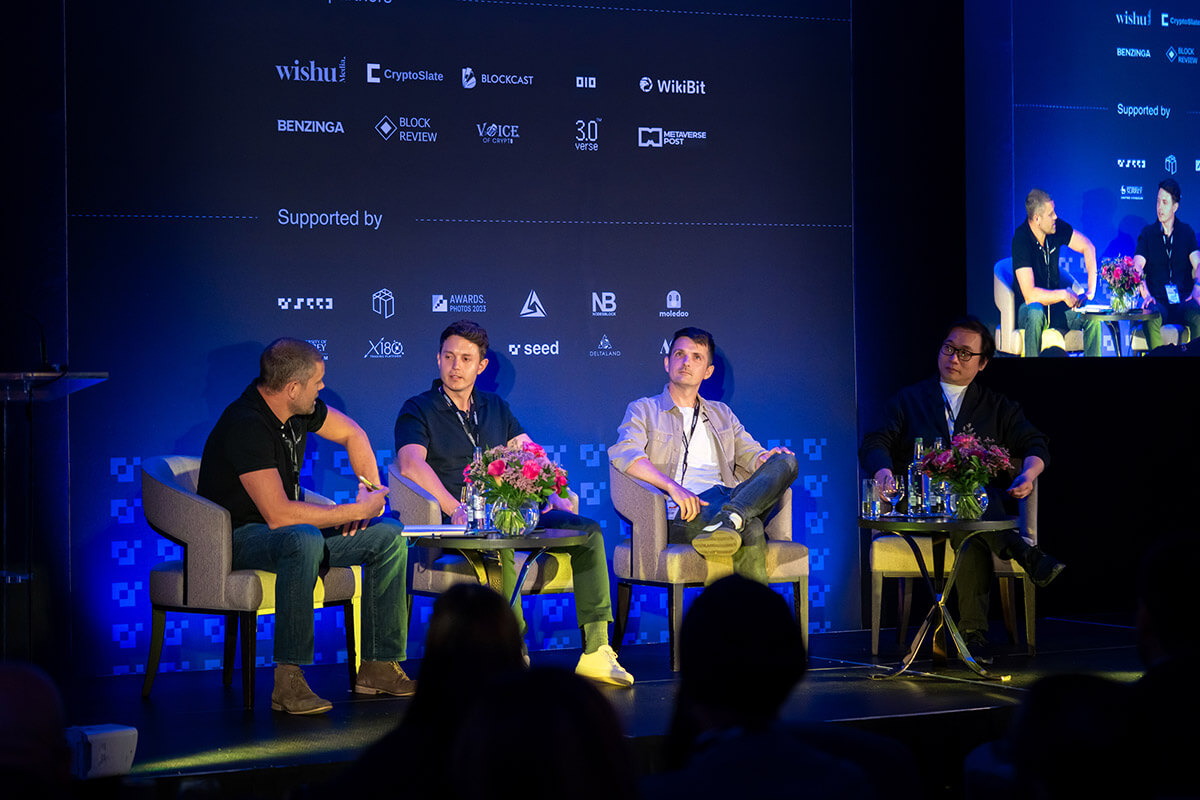
NFT Panel
Investor Anndy Lian hosts a panel at web3wave discussing the potential of NFTs for brands.

The Quest for Fan Engagement

Dan Mitchell, representing Oracle Red Bull Racing, introduced himself as the Web3 lead. Before entering the world of cryptocurrency and Web3, he had worked extensively in advertising, collaborating with global brands on brand strategy and advertising campaigns. Dan discussed how the Red Bull Racing team utilizes Web3 technology to engage racing fans, emphasizing the importance of putting fans at the core of their strategy.

Formula 1 teams understand the hunger of their fans. The desire to feel emotionally connected to the team, to access exclusive content, and to engage with their favorite drivers is palpable. However, with most fans unable to attend races in person, finding innovative ways to bridge the gap is the challenge.

The question that often arises is, “How do we best use Web3 technology to provide fans with emotionally engaging experiences?” Whether it’s about getting closer to the drivers, accessing team principals like Christian Horner, or offering exclusive perks through loyalty reward programs, the potential of Web3 in enhancing fan engagement is vast.

Dan explained:

“We are using Web3 technologies to engage with our fans. It has been a unique journey for our side, and thanks to Bybit, we understand how to manage Web3 a lot easier.”

The Challenge of NFTs and Utility

As the discussion at the NFT conference suggests, Web3 technology, particularly NFTs, should be invisible to the end-user. It’s not about slapping an “NFT” label on a product or experience and expecting it to succeed. The true success lies in crafting an exceptional underlying experience for customers.

Anndy Lian, a book author and licensed fund manager in Singapore, shared his expertise. He discussed the rapid evolution of NFTs, emphasizing their potential as a gateway to larger communities and technology adoption. Andy also highlighted the importance of utility tokens and the value of creating meaningful user experiences.

“NFT gaming is more than just owning a digital sword; it’s about the experience and usefulness it provides within the game. Formula 1 discovered this when they first experimented with NFTs by offering digital helmets and race suits without any clear purpose. Fans were left wondering what they could do with these digital assets. Our partnership with Oracle Red Bull Racing on the newly launched Velocity Series addresses these concerns. We collaborate with successful NFT artists to incorporate racing characteristics into the art. In this case, the value and usefulness are in the art itself, not just as an NFT, as Anndy stated.”

Learning from Mistakes and Customer-Centric Approach

Liverpool Football Club’s early NFT launch serves as a cautionary tale. They released NFTs without a clear utility, mirroring traditional merchandise. However, they understood their audience better when they partnered with Meta for NFT-based clothing. They used terminology their fans understood, focusing on “collectible avatars” and “coins” instead of complex NFT jargon. This approach led to a highly successful project, with three million wallets opened on the first launch.

Reddit, another big brand, ventured into Web3 by offering customizable avatars without emphasizing NFTs, but instead focused on user identity and opinions. This strategy resonated with their audience and resulted in significant success.

The above points were highlighted by Tom Downing, representing the British Interactive Media Association. He highlighted his role in educating brands and businesses about Web3, and he mentioned a Web3 education business called “Roster3,” which offers an accredited mini-MBA in Web3.

The Reality Check

However, amidst all the excitement, it’s essential to remember that not every Web3 venture is groundbreaking. Some may still appear gimmicky. The key is to offer a unique technology that brings transparency, accountability, and genuine value to users. In the case of NFTs, simply replacing traditional offerings with digital versions won’t suffice.

Ben Radcliffe, representing Amber Group, a crypto-native financial services firm, echoed Anndy’s point. He emphasized the need for brands to understand the “why” behind their Web3 initiatives and how these initiatives can create value for users. He has also highlighted the challenges and opportunities for super brands entering the Web3 space. He emphasized the need for brands to have a legitimate reason for adopting Web3 technology beyond just chasing the latest trend.

Conclusion

The potential future directions for super brands in the Web3 space is positive. The possible expansion areas, include NFT ticketing, fan-based tokens, and immersive experiences in the metaverse. Andy emphasized that brands should focus on delivering value and experiences to users with a long-term perspective.

As the panel discussion concluded, it became clear that super brands are taking significant steps into the Web3 world. While NFTs provide exciting opportunities for fan engagement and revenue generation, brands must be strategic.

The success of Web3 initiatives hinges on providing genuine value and creating immersive experiences for users. In this fast-evolving landscape, the future of super brands in Web3 holds the promise of exciting developments and innovations.

Web3wave Summit was organized on the 3rd of August in London. Experts from Binance, Bybit, Coinbase, Mastercard, Bitfinex, Huobi, Oxford University, and many others were present. Her Excellency Uddin, Member of the House of Lords, gave a keynote speech on her vision for Web3 and Metaverses. The event was supported by Benzinga, Coingecko, CryptoSlate, Seed.Photo, Blockcast.cc, Blockreview, Followin, Moledao, AOI, Custodiy, Bitverse, Riple, Tusima, Pollen Defi and Wishu Media etc.


Source: https://cryptoslate.com/nfts-and-super-brands-a-deep-dive-into-web3/

Anndy Lian is an early blockchain adopter and experienced serial entrepreneur who is known for his work in the government sector. He is a best selling book author- “NFT: From Zero to Hero” and “Blockchain Revolution 2030”.

Currently, he is appointed as the Chief Digital Advisor at Mongolia Productivity Organization, championing national digitization. Prior to his current appointments, he was the Chairman of BigONE Exchange, a global top 30 ranked crypto spot exchange and was also the Advisory Board Member for Hyundai DAC, the blockchain arm of South Korea’s largest car manufacturer Hyundai Motor Group. Lian played a pivotal role as the Blockchain Advisor for Asian Productivity Organisation (APO), an intergovernmental organization committed to improving productivity in the Asia-Pacific region.

An avid supporter of incubating start-ups, Anndy has also been a private investor for the past eight years. With a growth investment mindset, Anndy strategically demonstrates this in the companies he chooses to be involved with. He believes that what he is doing through blockchain technology currently will revolutionise and redefine traditional businesses. He also believes that the blockchain industry has to be “redecentralised”.

j j j