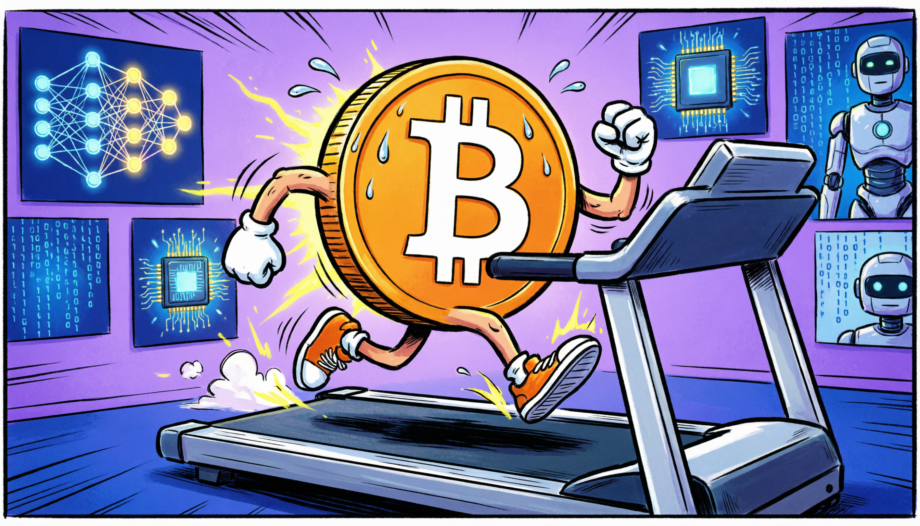
Beyond the US$70K level: Why Bitcoin’s real test isn’t price yet

Beyond the US$70K level: Why Bitcoin’s real test isn’t price yet

Bitcoin’s ability to hold above US$70K while ETF outflows cooled provided the essential foundation. The Fear and Greed Index resting at a neutral 45 signalled neither panic nor euphoria, conditions that often precede sharp reversals. This equilibrium allowed capital to rotate with confidence into broader crypto assets without the spectre of a Bitcoin-led collapse hanging over traders. I see this stability as evidence that the market now prices in institutional participation without becoming enslaved to it. Bitcoin steadies, and the ecosystem breathes.

Bitcoin’s resilience functioned as more than a price level. It served as a psychological anchor for a market still learning to decouple from traditional finance while remaining tethered to macroeconomic currents. When Bitcoin steadies above critical support, it creates space for experimentation and risk-taking elsewhere in the ecosystem. The fact that this stability occurred amid ongoing ETF flow volatility demonstrates that institutional participation, while influential, no longer dictates every intraday move.

Retail and sophisticated derivatives traders alike interpreted Bitcoin’s strength as a green light to explore opportunities beyond the largest-cap assets. This dynamic underscores a healthy evolution where Bitcoin serves as digital gold and market bellwether without stifling innovation in adjacent protocols and tokens.

The rally’s amplification came from two interconnected forces. First, speculative capital chased explosive moves in low-capitalisation tokens. Alaya Governance Token surged 94.5 per cent while RaveDAO climbed 235.4 per cent , gains fuelled by derivatives activity and social media momentum. These moves reflect a familiar pattern where risk appetite returns, capital seeks asymmetric opportunities, and narratives form around emerging projects.

Second, and equally important, crypto maintained a 92 per cent correlation with the Nasdaq-100 ETF, QQQ. This tight linkage means digital assets continue to ride the same macro waves as technology equities, particularly sensitivity to interest rate expectations and liquidity conditions.

On April 10, 2026, US markets extended gains with the S&P 500 rising 0.62 per cent to 6,824.66, the Nasdaq Composite advancing 0.83 per cent to 22,822.42, and the Dow Jones Industrial Average adding 0.58 per cent to close at 48,185.80. The VIX volatility index fell 7.37 per cent to 19.49, signalling reduced anxiety among equity traders. Crypto’s participation in this broader risk-on move was not coincidental but structural.

This correlation cuts both ways. When macro sentiment improves, as it did on hopes of geopolitical de-escalation in the Middle East and steady labour market data, crypto benefits from the same liquidity flows that lift technology stocks. This linkage also means crypto remains vulnerable to shifts in Federal Reserve policy or unexpected economic data. The projected advance in CPI inflation data looms as a potential catalyst for volatility.

Commodity markets reflected similar crosscurrents, with US crude settling near US$98 per barrel amid hopes of a de-escalation, while Brent crude held at US$96.71. Gold rose to US$4,790.90 per ounce as a hedge against uncertainty, and the US Dollar Index slipped 0.51 per cent to 99.13, providing modest tailwinds for risk assets, including crypto. For those of us who believe in the long-term promise of decentralised systems, this macro tether represents both a reality of the current transition period and a reminder that true independence for digital assets requires deeper structural decoupling.

The market faces a clear inflexion point. Technically, the total crypto market capitalisation confronts resistance at the 23.6 per cent Fibonacci retracement level of US$2.49T. The seven-day Relative Strength Index reading of 80.72 suggests short-term overbought conditions that often precede consolidation or pullbacks. Bitcoin’s ability to hold above US$70K remains the primary support for the broader complex. A sustained break above US$72K could reignite bullish momentum across altcoins. A failure to hold US$70K might trigger a retreat toward the US$2.39T support zone.

Beyond price levels, regulatory developments warrant close attention. The SEC’s CLARITY Act roundtable scheduled for April 16 could provide clarity or confusion depending on the tone and substance of discussions. From my perspective, having engaged with policymakers on blockchain frameworks, I view regulatory progress as essential for sustainable growth, but I remain sceptical of approaches that prioritise control over innovation.

The current market posture warrants cautious optimism. Bitcoin’s foundational strength, combined with speculative enthusiasm in altcoins, creates a constructive backdrop. The confluence of technical resistance, overbought signals, and macro uncertainty demands discipline. For investors and builders alike, this environment rewards selectivity.

Projects with genuine utility, transparent tokenomics, and active communities are better positioned to withstand volatility than those riding pure speculation. The 92 per cent correlation with tech equities reminds us that crypto does not operate in a vacuum. Liquidity conditions, rate expectations, and geopolitical developments will continue to influence price action in the near term. The longer arc points toward gradual decoupling as digital asset infrastructure matures and use cases expand beyond financial speculation.

Mainstream narratives often oversimplify crypto market moves as mere risk-on or risk-off plays. The reality proves more nuanced. Bitcoin’s resilience above US$70K despite ETF outflows suggests underlying demand that transcends short-term flow data. The explosive moves in tokens like RaveDAO reflect the enduring appeal of asymmetric opportunities in emerging ecosystems.

These gains occur within a macro framework that remains rate-sensitive. This duality defines the current moment. Traders must navigate technical levels and sentiment indicators while keeping one eye on Federal Reserve communications and geopolitical developments. Builders must focus on creating real value that can sustain projects beyond the next market cycle.

The path forward likely hinges on whether Bitcoin can convert its current stability into decisive upward momentum. A break above US$72K with conviction could propel the total market cap toward the US$2.49T resistance. Success at that level would signal a shift from cautious accumulation to broader participation.

Failure to clear these hurdles might see capital rotate back into Bitcoin as a relatively safe haven within crypto or into traditional assets if macro headwinds intensify. ETF flow data will remain a crucial gauge of institutional sentiment, particularly after a rally that has pushed short-term indicators into overbought territory. Like I said yesterday, the April 16 regulatory roundtable could serve as a catalyst if it produces constructive dialogue, or as a source of volatility if expectations diverge sharply from outcomes.


Anndy Lian is an early blockchain adopter and experienced serial entrepreneur who is known for his work in the government sector. He is a best selling book author- “NFT: From Zero to Hero” and “Blockchain Revolution 2030”.

Currently, he is appointed as the Chief Digital Advisor at Mongolia Productivity Organization, championing national digitization. Prior to his current appointments, he was the Chairman of BigONE Exchange, a global top 30 ranked crypto spot exchange and was also the Advisory Board Member for Hyundai DAC, the blockchain arm of South Korea’s largest car manufacturer Hyundai Motor Group. Lian played a pivotal role as the Blockchain Advisor for Asian Productivity Organisation (APO), an intergovernmental organization committed to improving productivity in the Asia-Pacific region.

An avid supporter of incubating start-ups, Anndy has also been a private investor for the past eight years. With a growth investment mindset, Anndy strategically demonstrates this in the companies he chooses to be involved with. He believes that what he is doing through blockchain technology currently will revolutionise and redefine traditional businesses. He also believes that the blockchain industry has to be “redecentralised”.

j j j

Bitcoin Price Prediction: Will BTC Hold $70K as Iran-Israel Tensions Rise?

Bitcoin Price Prediction: Will BTC Hold $70K as Iran-Israel Tensions Rise?

Bitcoin nearly touched $74,000 on Thursday. Today, it is down 3.29% and trading around $70,355 at the time of writing.

The run to $74,000 wiped out $471 million in crypto derivatives in under 24 hours, $348 million of it from short positions caught badly offside. It was the largest daily short liquidation since late February, resetting a significant chunk of leveraged positioning across the market.

The rally, however, didn’t hold.

What’s Weighing on Bitcoin Today

US-Israel-Iran tensions escalated sharply on March 6, sending shockwaves through global markets. The Dow is down over 780 points at 47,954. WTI crude is trading at $83.30. Gold is holding near $5,100

Bitcoin is now moving with a 0.86 correlation to gold, and $74,000 proved too strong a resistance to clear. It now sits directly on a whale bid zone that traders are watching closely.

The Level That Decides What Comes Next

Blockchain advisor and investor Anndy Lian pointed to the $70,000-$71,000 zone as the line to watch.

“If BTC holds the $70,000 to $71,000 whale bid zone, it could retest $74,000,” Lian noted. “A break below risks a move toward $67,500.”

He added that geopolitical risk and rising oil prices remain the primary macro drivers, with derivatives positioning adding crypto-native volatility on top.

One Analyst Still Sees $80K in March

Not everyone is reading this as a warning sign.

Crypto analyst Michael Van de Poppe posted on X: “Very healthy price action on Bitcoin and I think we’ll start to see that breakout next week and see $80K as a test in March.”

Van de Poppe’s view is that the current pullback is consolidation, not deterioration and that the squeeze earlier this week was part of healthy price action resetting the market for a move higher.

The Market Is Split

The market is sitting with two competing views. Technically, the structure could still support a push higher. On the macro side, oil above $80 and a strengthening dollar complicate that path considerably.

With funding rates normalized and open interest slightly lower, what happens next depends on whether geopolitical pressure keeps draining risk appetite or the positioning reset sets up the next leg up.

The $70,000 level will likely tell the story.


Source: https://coinpedia.org/news/bitcoin-price-prediction-will-btc-hold-70k-as-iran-israel-tensions-rise/

Anndy Lian is an early blockchain adopter and experienced serial entrepreneur who is known for his work in the government sector. He is a best selling book author- “NFT: From Zero to Hero” and “Blockchain Revolution 2030”.

Currently, he is appointed as the Chief Digital Advisor at Mongolia Productivity Organization, championing national digitization. Prior to his current appointments, he was the Chairman of BigONE Exchange, a global top 30 ranked crypto spot exchange and was also the Advisory Board Member for Hyundai DAC, the blockchain arm of South Korea’s largest car manufacturer Hyundai Motor Group. Lian played a pivotal role as the Blockchain Advisor for Asian Productivity Organisation (APO), an intergovernmental organization committed to improving productivity in the Asia-Pacific region.

An avid supporter of incubating start-ups, Anndy has also been a private investor for the past eight years. With a growth investment mindset, Anndy strategically demonstrates this in the companies he chooses to be involved with. He believes that what he is doing through blockchain technology currently will revolutionise and redefine traditional businesses. He also believes that the blockchain industry has to be “redecentralised”.

j j j

Tech earnings fail AI test and crypto pays the price

Tech earnings fail AI test and crypto pays the price

Asian equity markets began the session on a sombre note, weighed down by a broad-based retreat in technology stocks, a sector that has powered regional gains throughout much of the year. The sell-off reflects growing investor unease over the sustainability of artificial intelligence-driven valuations, especially as major US tech firms like Oracle and Broadcom delivered earnings outlooks that failed to meet elevated expectations.

The ripple effects from Wall Street’s Nasdaq, which dropped 1.81 per cent, have now reached Tokyo, Hong Kong, and Seoul, reinforcing the increasingly tight correlation between global tech sentiment and risk-on assets like cryptocurrencies.

Japan’s Nikkei 225 opened at 49,004.9 points, marking a decline of over one per cent from its prior close of 49,512.28. The losses were led by heavyweight tech and semiconductor-related names, with SoftBank Group plunging 7.25 per cent on concerns that its aggressive AI and venture bets may not deliver near-term returns.

In Hong Kong, the Hang Seng Index hovered around 25,405.63 points, slightly lower for the day, but the real pain came from its technology sub-index, which slid sharply as mainland and overseas investors rotated out of growth-oriented equities. Meanwhile, mainland China’s Shanghai Composite bucked the trend slightly, trading at 3,874.3586 points with a modest gain, though it too experienced earlier-week volatility as Beijing’s mixed signals on fiscal stimulus and tech regulation created uncertainty.

At the heart of this market-wide caution lies a fundamental reassessment of AI-driven capital allocation. For over two years, tech companies across Asia, from South Korea’s Samsung and SK Hynix to Taiwan’s TSMC, have poured billions into AI infrastructure, data centres, and next-generation chip development. These investments lifted stock prices to record highs, supported by narratives of an AI revolution that would reshape global productivity.

Today’s market action suggests investors are demanding more than vision; they want measurable returns. With forward earnings revisions turning negative for several key players, the market is pricing in a potential gap between ambition and profitability.

This shift in sentiment has spilled directly into the cryptocurrency market, which fell 1.64 per cent in the last 24 hours, extending a 7.17 per cent weekly decline. The linkage is no longer coincidental; it is structural. Over the past 18 months, institutional capital has increasingly treated large-cap crypto assets, particularly Bitcoin, as a satellite to the Nasdaq, especially during macro regimes dominated by liquidity expectations and risk appetite.

The 24-hour correlation between Bitcoin and the Nasdaq-100 now stands at plus 0.89, meaning the two move in near lockstep. When US tech falters, crypto follows, and today’s Nasdaq weakness is fuelled by AI scepticism, which is transmitted directly into digital asset markets.

Compounding the pressure was a significant liquidation cascade in crypto derivatives markets. In just 24 hours, Bitcoin saw US$153 million in liquidations, a 148 per cent increase from the prior day, with short positions accounting for US$79.5 million of that total. Such aggressive unwinding of leveraged positions typically occurs when prices breach key technical levels, triggering stop-losses and margin calls in a self-reinforcing spiral.

With total open interest across crypto derivatives at US$776 billion, the ecosystem remains highly sensitive to volatility shocks. The 7-day Relative Strength Index for Bitcoin has plunged to 15.4, signalling extreme oversold conditions, a level that historically precedes short-term bounces. Without a catalyst, oversold does not automatically mean reversal.

Further undermining confidence is the curious paradox surrounding XRP. Despite the recent launch of an XRP exchange-traded fund that has drawn US$1 billion in inflows since November, the token itself trades 47 per cent below its all-time high. This disconnect between institutional adoption and price performance has sown doubt among retail traders and algorithmic strategies alike.

If a regulated ETF with billion-dollar backing cannot reignite momentum in a top-five asset, the broader altcoin market may lack the firepower for a meaningful recovery. As a result, Bitcoin dominance has climbed to 59.2 per cent, reflecting a flight to relative safety within an already volatile asset class.

Crypto’s traditional role as a hedge has also diminished. Its 24-hour correlation with gold has turned negative at minus 0.35, indicating that in the current environment, it behaves not as a store of value but as a high-beta tech proxy. This shift matters because it means that during macro stress, such as uncertainty around central bank policy, crypto no longer offers diversification benefits. Instead, it amplifies risk. Traders now view it through the same lens as semiconductor stocks or cloud software equities, a leveraged bet on future innovation with limited near-term cash flows.

Looking ahead, all eyes in Asia will turn to the Bank of Japan’s policy decision later today. While Japan has maintained ultra-loose monetary policy longer than any other major economy, recent inflation data and yen weakness have sparked speculation that a rate hike, however modest, could be on the table. Such a move would tighten financial conditions in the region, further pressuring high-duration assets like tech stocks and crypto. Even the mere acknowledgement of a policy shift could trigger another leg down in risk markets.

In this context, the path for Bitcoin and Asian tech hinges less on fundamentals and more on macro liquidity. The market is no longer rewarding vision alone. It requires evidence that AI investments will translate into earnings, that crypto ETFs will drive sustainable demand, and that central banks will not abruptly withdraw the punchbowl. Until those questions are answered, volatility will persist, and the correlation between the Nasdaq and crypto will remain a dominant force shaping price action.

The current oversold RSI reading may hint at a tactical bounce, but without a shift in narrative or policy, any relief rally could prove fleeting. The era of unquestioning faith in AI-driven growth appears to be giving way to a more discerning, earnings-focused regime, one that will separate speculative narratives from enduring value.


Source: https://e27.co/tech-earnings-fail-ai-test-and-crypto-pays-the-price-20251218/


Anndy Lian is an early blockchain adopter and experienced serial entrepreneur who is known for his work in the government sector. He is a best selling book author- “NFT: From Zero to Hero” and “Blockchain Revolution 2030”.

Currently, he is appointed as the Chief Digital Advisor at Mongolia Productivity Organization, championing national digitization. Prior to his current appointments, he was the Chairman of BigONE Exchange, a global top 30 ranked crypto spot exchange and was also the Advisory Board Member for Hyundai DAC, the blockchain arm of South Korea’s largest car manufacturer Hyundai Motor Group. Lian played a pivotal role as the Blockchain Advisor for Asian Productivity Organisation (APO), an intergovernmental organization committed to improving productivity in the Asia-Pacific region.

An avid supporter of incubating start-ups, Anndy has also been a private investor for the past eight years. With a growth investment mindset, Anndy strategically demonstrates this in the companies he chooses to be involved with. He believes that what he is doing through blockchain technology currently will revolutionise and redefine traditional businesses. He also believes that the blockchain industry has to be “redecentralised”.

j j j