From Tokyo to crypto: How political shifts and policy bets are reshaping global markets

From Tokyo to crypto: How political shifts and policy bets are reshaping global markets

The recent victory of Sanae Takaichi in the Liberal Democratic Party leadership race marks a pivotal moment for Japan, positioning her to step into the role of the country’s first female prime minister by mid-October. Investors caught off guard by this outcome quickly adjusted their positions, leading to notable shifts across Japanese markets. The yen weakened significantly, closing above 150 against the US dollar, while Japanese government bonds faced pressure and equities surged in response.

Takaichi’s strong advocacy for expansive fiscal and monetary policies fuelled this immediate reaction, as markets anticipated a push toward reflationary measures. Her focus on sectors such as defence, nuclear energy, and consumer support promises to drive targeted investments, potentially invigorating economic growth in areas that have long been overdue for attention.

From my perspective, this development injects a fresh dynamism into Japan’s economy, which has grappled with stagnation for years. A leader willing to embrace bold stimulus could finally break the cycle of timid reforms, though the path ahead carries risks that demand careful navigation.

Markets reacted swiftly to Takaichi’s win, reflecting a broader repricing that favoured equities over safer assets. The Nikkei 225 climbed 1.9 per cent on Friday, reaching an all-time high amid a rally in tech and semiconductor shares across Asia. Investors now expect further upside in Japanese stocks, particularly in sectors aligned with Takaichi’s priorities.

Defence and nuclear stocks stand out as prime beneficiaries, given her strategic emphasis on bolstering national security and energy independence. Infrastructure plays and domestic demand-oriented companies also look poised for gains, as her policies aim to stimulate household spending and support small caps.

Exporters benefit from the yen’s depreciation, which enhances their competitiveness abroad. Banks, however, faced initial selling pressure, as expectations for a Bank of Japan rate hike in the fourth quarter diminished under the assumption of Takaichi’s influence.

Yet, this dip presents an opportunity, in my view, because her reflationary approach could boost loan growth, and the central bank might still raise rates to manage volatility in the yen and bond markets. Overall, this sector rotation highlights a market that is betting on policy-driven growth, where winners emerge from areas tied to fiscal expansion.

Macro risks loom large in this scenario, tempering the enthusiasm. The yen’s weakness raises concerns about imported inflation and currency stability, particularly given Japan’s debt-to-GDP ratio, which exceeds 260 per cent. Such high leverage amplifies worries over fiscal sustainability if expansive policies lead to overshooting.

The Bank of Japan may be compelled to hike front-end rates, although many now anticipate a delay into 2026 amid persistent inflation and negative real yields. Policy uncertainty adds another layer, as Takaichi’s administration must balance bold promises with execution.

Investors should monitor how her government addresses these challenges, as any misstep could erode confidence. In my opinion, while the immediate rally feels justified, the long-term success hinges on disciplined implementation. Japan has seen reformist leaders falter before, so Takaichi’s ability to deliver tangible results will determine whether this surge sustains or fizzles.

Shifting to the investment thesis, the stimulus-led upside appears compelling for Japanese equities in the near term, particularly in sectors aligned with Takaichi’s agenda. A risk-adjusted strategy favours reflation beneficiaries, with appropriate hedges to mitigate volatility. The market places its bets on her delivering bold policy changes, but execution risk remains a critical factor. Fiscal discipline will prove essential to avoid exacerbating debt issues.

From where I stand, this moment offers a buying opportunity for those optimistic about Japan’s potential under new leadership. The rally could extend if Takaichi assembles a cohesive cabinet and pushes through her agenda swiftly, drawing in foreign capital seeking exposure to Asia’s third-largest economy.

On the global front, risk sentiment stayed muted due to the ongoing US government shutdown, as the Senate repeatedly failed to pass a funding bill with lawmakers sticking to their stances. This impasse delayed key data releases, including September’s non-farm payrolls, which investors awaited on Friday but never received.

In contrast, Sanae Takaichi’s LDP win captured headlines, highlighting a stark difference in political momentum between the two nations. Wall Street closed mixed on Friday, with the Dow Jones up 0.51 per cent, the S&P 500 edging higher by 0.01 per cent, and the Nasdaq dipping 0.28 per cent as the tech rally paused. US Treasury yields climbed despite services data falling short of expectations, with the 10-year yield rising 3.7 basis points to 4.119 per cent and the two-year yield also up 3.7 basis points to 3.576 per cent.

The US dollar index slipped 0.1 per cent to 97.72, while gold advanced 0.8 per cent to 3886 dollars per ounce. Brent crude gained 0.7 per cent to 64.53 dollars per barrel, buoyed by President Trump’s warnings to Hamas regarding his plan to end the Gaza war. Asian equities ended higher on Friday, driven by tech and semiconductor stocks, although early trading on Monday showed mixed results. US equity futures indicate a higher open, suggesting some resilience amid uncertainty.

Looking ahead, the week features speeches from Federal Reserve officials, including Governor Stephen Miran on Wednesday and Chair Jerome Powell on Thursday. Delays in US data persist, affecting August trade figures, initial jobless claims, and the September federal budget balance.

These events could shape market expectations, particularly around monetary policy. The US shutdown exacerbates economic fog, pushing investors toward safe havens like gold while pressuring equities. Yet the interplay with Japan’s developments creates intriguing cross-currents, where Asian stimulus might offset some Western headwinds.

Turning to the crypto market, it rose 1.04 per cent over the last 24 hours, building on its 7-day gain of 9.07 per cent and 30-day advance of 10.76 per cent. Several factors drove this momentum, starting with macro tailwinds from the US shutdown and weak jobs data, which heightened bets on Federal Reserve rate cuts.

Bitcoin surged 12 per cent last week following the shutdown and ADP jobs report showing a drop of 32K against expectations of plus 50K. Markets now see a 98 per cent chance of a cut by October 29, according to TokenPost. Gold’s 48 per cent year-to-date rise mirrored crypto’s rally as a hedge against uncertainty.

The high correlation between crypto and equities, at 0.82 over seven days versus the Nasdaq-100, amplified these gains as traders shifted into risk assets. Investors should watch Powell’s October 29 speech and FOMC minutes for insights into the rate path. This environment favors crypto as a speculative play, where dovish signals could propel further upside.

Binance’s ecosystem provided another bullish pillar, with the exchange achieving 2.55 trillion dollars in monthly futures volume, a 2025 high, and capturing 87 per cent of Bitcoin taker buy volume per CMC. Its new AI-powered Trading Signals feature boosted activity in the BNB ecosystem, lifting BNB by 18.42 per cent weekly.

Binance’s liquidity depth, holding 41.1 per cent global market share, and institutional tools draw in capital, fostering network effects for its token and partners. This dominance reinforces confidence, making Binance a linchpin in the market’s resilience. I see this as a sign of maturing infrastructure in crypto, where platforms like Binance evolve from mere exchanges to comprehensive ecosystems, attracting serious investors amid broader volatility.

Altcoin developments added a mixed but largely positive influence. Ethereum climbed 9.96 per cent weekly, approaching 4500 dollars ahead of December’s Fusaka upgrade. Solana’s Alpenglow upgrade, reducing block finality by 40 per cent, spurred 13 per cent weekly gains.

However, Bitcoin dominance increased to 58.55 per cent as traders secured profits from alts. These upgrades sustain narratives around altcoins, though Bitcoin’s seven-day RSI of 87.4 indicates overbought territory. The key question revolves around Ethereum’s post-Fusaka momentum, especially as staking yields compress. From my standpoint, altcoins offer diversification in a bull run, but their reliance on upgrades highlights the sector’s innovation-driven nature, which can yield outsized returns when executed well.

In conclusion, today’s market dynamics blend opportunity with caution. Japan’s shift under Takaichi promises stimulus-fuelled growth, potentially lifting equities and sectors like defence and nuclear, while the yen’s weakness and debt concerns warrant vigilance.

Globally, the US shutdown clouds data and sentiment, yet it bolsters rate-cut expectations that benefit risk assets, including crypto. The crypto surge, driven by macro bets, Binance’s strength, and altcoin catalysts, reflects a Goldilocks scenario for bulls. Nonetheless, resistance at Bitcoin’s 125K level and potential Fed hawkishness could prompt pullbacks.

I believe the overarching trend leans positive for investors willing to embrace calculated risks, as political and economic shifts create fertile ground for gains. Takaichi’s leadership could herald a new era for Japan, complementing crypto’s resilience in uncertain times, but success depends on policy delivery and central bank responses. This interconnected landscape demands agility, where staying informed on speeches and upgrades will separate winners from the rest.


 

Source: https://e27.co/from-tokyo-to-crypto-how-political-shifts-and-policy-bets-are-reshaping-global-markets-20251006/

Anndy Lian is an early blockchain adopter and experienced serial entrepreneur who is known for his work in the government sector. He is a best selling book author- “NFT: From Zero to Hero” and “Blockchain Revolution 2030”.

Currently, he is appointed as the Chief Digital Advisor at Mongolia Productivity Organization, championing national digitization. Prior to his current appointments, he was the Chairman of BigONE Exchange, a global top 30 ranked crypto spot exchange and was also the Advisory Board Member for Hyundai DAC, the blockchain arm of South Korea’s largest car manufacturer Hyundai Motor Group. Lian played a pivotal role as the Blockchain Advisor for Asian Productivity Organisation (APO), an intergovernmental organization committed to improving productivity in the Asia-Pacific region.

An avid supporter of incubating start-ups, Anndy has also been a private investor for the past eight years. With a growth investment mindset, Anndy strategically demonstrates this in the companies he chooses to be involved with. He believes that what he is doing through blockchain technology currently will revolutionise and redefine traditional businesses. He also believes that the blockchain industry has to be “redecentralised”.

j j j

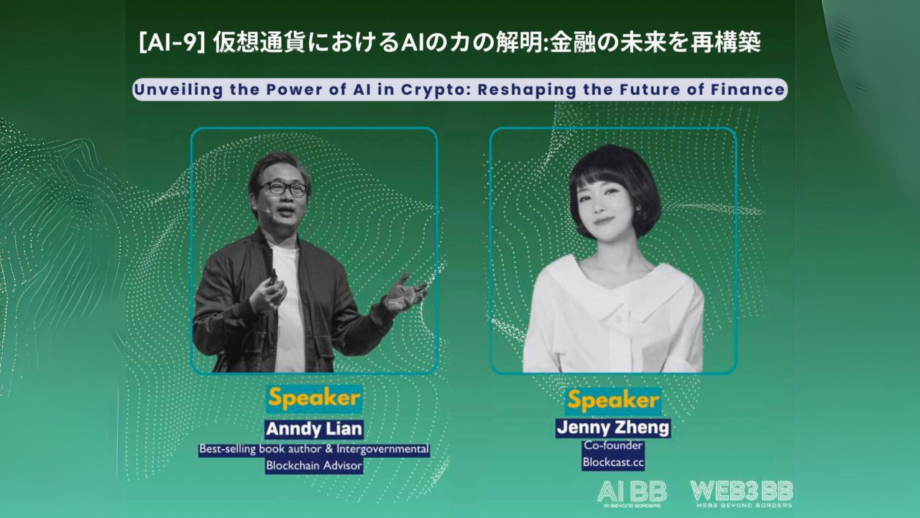
Unveiling the Power of AI in Crypto: Reshaping the Future of Finance at WEB3BB Tokyo 2024

Unveiling the Power of AI in Crypto: Reshaping the Future of Finance at WEB3BB Tokyo 2024

The intersection of artificial intelligence (AI) and cryptocurrency is rapidly becoming one of the most exciting frontiers in the tech world. As both technologies continue to evolve at breakneck speeds, their synergy promises to revolutionize how we interact with digital assets and financial systems.

To explore this cutting-edge convergence, Web3BB, one of Japan’s largest business communities dedicated to bridging global and Japanese perspectives on emerging technologies, recently hosted a panel discussion on “The Power of AI in Crypto.” This event brought together industry luminaries, including Anndy Lian, a book author and venture capitalist, and Jenny Zheng, co-founder of Blockcast.cc. Their insights offer a compelling glimpse into how AI is reshaping the cryptocurrency landscape and what we can expect in the near future.

Beyond Trading: AI’s Broader Impact on Crypto

While trading applications are at the forefront, Anndy emphasized that AI’s potential in the crypto space extends far beyond just price predictions. Some key areas of impact include:

1. Security Enhancement: AI can be used to detect security vulnerabilities in blockchain networks and identify irregular activities or potential threats.

2. Productivity and Automation: AI is helping streamline various processes in the crypto industry, from smart contract development to project auditing.

3. User Experience Improvement: AI assistants are being developed to lower the technical barriers for crypto adoption, helping users navigate complex processes like wallet management and transactions.

4. Code Auditing: Project owners can use AI to analyze smart contracts and identify potential bugs or vulnerabilities, enhancing the overall security of their platforms.

5. Due Diligence: Venture capital firms are leveraging AI models to conduct more thorough and efficient due diligence on crypto projects.

Blockchain as a Secure Foundation for AI

An interesting perspective shared during the panel was how blockchain technology could serve as a secure foundation for AI systems. By storing AI models and data sets on blockchain networks, it adds an extra layer of security and transparency to their AI operations.

This integration of blockchain and AI is becoming increasingly seamless. As Anndy noted, “Nowadays there are fewer people talking about blockchain… because it’s really very well integrated into different systems.” He predicts that the combination of AI and blockchain will soon become so commonplace that it will no longer be considered newsworthy.

Ethical Considerations and Risk Mitigation

The panel also touched on the ethical implications of AI in the crypto space. Jennty commented that while AI offers numerous benefits, there are concerns about potential misuse or unintended consequences. The experts suggested that blockchain technology could play a role in governing AI systems, potentially serving as a failsafe mechanism.

For example, smart contracts could be programmed to automatically limit or shut down AI systems if certain conditions are met, providing a decentralized and tamper-resistant way to mitigate risks associated with AI.

Looking Ahead: The Future of AI in Crypto

As the discussion concluded, the panelists emphasized the transformative potential of AI in the crypto industry. They encouraged users to embrace AI tools to enhance their decision-making processes, while also maintaining a balanced perspective on the technology’s capabilities and limitations.

Anndy’s final advice to the audience was clear: “Try to use smarter tools to get by your days… AI has a lot to do to help you with your whole decision-making process. Just try to use it.”

As AI continues to evolve and integrate more deeply with blockchain and cryptocurrency systems, we can expect to see even more innovative applications emerge. From more sophisticated trading algorithms to enhanced security measures and improved user experiences, AI is set to play a crucial role in shaping the future of the crypto industry.

Conclusion

The key for users and industry participants will be to stay informed about these developments, critically evaluate AI tools, and leverage them responsibly to navigate the complex and fast-paced world of cryptocurrencies.

As with any powerful technology, the responsible development and deployment of AI in the crypto space will be crucial. The ethical considerations and risk mitigation strategies discussed by the panelists underscore the need for a balanced approach. As we move forward, it will be essential for industry players, regulators, and users alike to stay informed and engaged in shaping the future of AI in crypto.

Anndy Lian is an early blockchain adopter and experienced serial entrepreneur who is known for his work in the government sector. He is a best selling book author- “NFT: From Zero to Hero” and “Blockchain Revolution 2030”.

Currently, he is appointed as the Chief Digital Advisor at Mongolia Productivity Organization, championing national digitization. Prior to his current appointments, he was the Chairman of BigONE Exchange, a global top 30 ranked crypto spot exchange and was also the Advisory Board Member for Hyundai DAC, the blockchain arm of South Korea’s largest car manufacturer Hyundai Motor Group. Lian played a pivotal role as the Blockchain Advisor for Asian Productivity Organisation (APO), an intergovernmental organization committed to improving productivity in the Asia-Pacific region.

An avid supporter of incubating start-ups, Anndy has also been a private investor for the past eight years. With a growth investment mindset, Anndy strategically demonstrates this in the companies he chooses to be involved with. He believes that what he is doing through blockchain technology currently will revolutionise and redefine traditional businesses. He also believes that the blockchain industry has to be “redecentralised”.

j j j

Anndy Lian from Neurai Discusses COPX.AI and AI Finance Models at Web3BB Tokyo

Anndy Lian from Neurai Discusses COPX.AI and AI Finance Models at Web3BB Tokyo

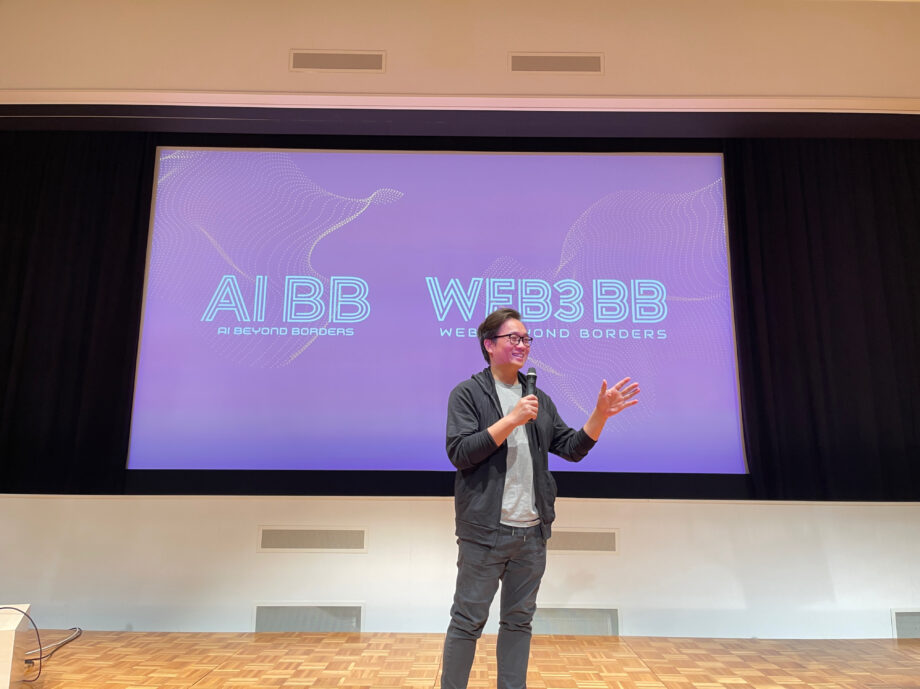
Web3BB, one of the largest business communities in Japan, recently hosted a landmark event that brought together thought leaders, innovators, and enthusiasts from around the globe to discuss the future of Web3, artificial intelligence (AI), and other emerging technologies. The event, held from July 18 to 19, 2024, aimed to bridge the gap between Japan and the global tech community by providing a platform for learning and discussion on these transformative technologies.

Among the distinguished speakers was Anndy Lian, Chairman of Neurai, who delivered an insightful presentation on July 19, 2024. Lian’s talk focused on the pivotal role of AI in the crypto space and its potential to reshape the future of finance. He highlighted Neurai’s pioneering work in AI finance modeling for both stocks and cryptocurrencies, emphasizing the unique approach of their flagship product, COPX.AI.

AI and Web3: A Synergistic Relationship

Anndy Lian emphasized the importance of AI and Web3 working together hand in hand. He sees the finance sector as one of the best case studies for such a combination. “The integration of AI and Web3 can revolutionize the financial industry by providing more secure, efficient, and personalized financial solutions,” Lian noted. This synergy between AI and Web3 can lead to innovative solutions that address the complexities and challenges of modern finance.

Lian elaborated on how most AI crypto models rely on a common set of data, which can limit their effectiveness. In contrast, Neurai’s COPX.AI integrates user-based data, utilizing user behaviors and trading strategies to develop tailored trading strategies for individual users. This innovative approach not only enhances the accuracy of trading models but also creates a win-win situation where users contribute their data in exchange for rewards.

COPX.AI: A User-Centric Approach

Neurai has already made significant strides with COPX.AI, delivering an AI bot on Discord that has garnered a substantial user base. The team is currently working on developing a Telegram bot and integrating gamification modules to enhance user engagement on the platform. With over 100,000 users across various social media channels, COPX.AI is rapidly expanding its reach and influence in the crypto community.

Anndy Lian also mentioned that Neurai not only provides a service to COPX.AI but that some of the team members are also actively assisting COPX.AI. COPX.AI operates as a Decentralized Autonomous Organization (DAO), and some of Neurai’s team members are giving product and technical suggestions to the COPX DAO. “Some of my team members including myself have eventually become core members of COPX DAO, contributing their expertise to drive the project forward,” Lian added.

Quote from Anndy Lian, Chairman of Neurai

“AI in finance is not just about trading; it also acts as an underlying layer to detect frauds. While many financial systems are based on blockchain and are secure enough, an AI system on top of blockchain data storage adds an extra layer of security. At Neurai, we are committed to leveraging AI to enhance the security and efficiency of financial transactions, ensuring a safer and more reliable financial ecosystem. By incorporating user behaviors and trading strategies, COPX.AI can provide more personalized and effective trading solutions. This user-centric model not only benefits individual traders but also contributes to the overall improvement of our AI systems. We are excited about the future of COPX.AI and its potential to revolutionize the way we approach finance and trading.”

Anndy Lian’s talk at Web3BB Tokyo underscored the significant impact of AI on the future of finance and the innovative strides being made by Neurai with COPX.AI. As AI continues to evolve and integrate with financial technologies, the potential for more secure, efficient, and personalized financial solutions becomes increasingly attainable.

Neurai’s commitment to leveraging AI for the betterment of the financial ecosystem positions them as a leader in the Fin-Tech industry, paving the way for a new era of financial innovation.

For more information about Neurai and COPX.AI, please visit Neurai’s website or contact info@neurai.cc.

About Neurai

Neurai, a Singapore-based leading AI technology company, specializes in the development and delivery of AI solutions for the Fin-Tech industry. With a strong focus on innovation and user-centric design, Neurai is at the forefront of integrating AI with financial technologies to create more secure, efficient, and personalized financial solutions.

The company’s commitment to leveraging AI for the betterment of the financial ecosystem positions them as a leader in the Fin-Tech industry, paving the way for a new era of financial innovation. Neurai’s pioneering work in AI finance modeling for both stocks and cryptocurrencies, as demonstrated by COPX.AI, showcases their dedication to providing cutting-edge solutions that address the evolving needs of the financial sector.

About Web3BB

Web3BB is one of the largest business communities in Japan, dedicated to bridging the world and Japan by providing a platform for people to learn and discuss the core ideas of Web3, AI, and other emerging technologies. Through events, discussions, and collaborations, Web3BB aims to foster a deeper understanding and adoption of these transformative technologies.

The Web3BB event featured a series of keynote speeches, panel discussions, and networking sessions that provided attendees with valuable insights into the latest trends and developments in Web3, AI, and other emerging technologies. Participants had the opportunity to engage with industry leaders, share ideas, and explore potential collaborations.


Source: https://markets.businessinsider.com/news/stocks/anndy-lian-from-neurai-discusses-copx-ai-and-ai-finance-models-at-web3bb-tokyo-1033592866


Anndy Lian is an early blockchain adopter and experienced serial entrepreneur who is known for his work in the government sector. He is a best selling book author- “NFT: From Zero to Hero” and “Blockchain Revolution 2030”.

Currently, he is appointed as the Chief Digital Advisor at Mongolia Productivity Organization, championing national digitization. Prior to his current appointments, he was the Chairman of BigONE Exchange, a global top 30 ranked crypto spot exchange and was also the Advisory Board Member for Hyundai DAC, the blockchain arm of South Korea’s largest car manufacturer Hyundai Motor Group. Lian played a pivotal role as the Blockchain Advisor for Asian Productivity Organisation (APO), an intergovernmental organization committed to improving productivity in the Asia-Pacific region.

An avid supporter of incubating start-ups, Anndy has also been a private investor for the past eight years. With a growth investment mindset, Anndy strategically demonstrates this in the companies he chooses to be involved with. He believes that what he is doing through blockchain technology currently will revolutionise and redefine traditional businesses. He also believes that the blockchain industry has to be “redecentralised”.

j j j