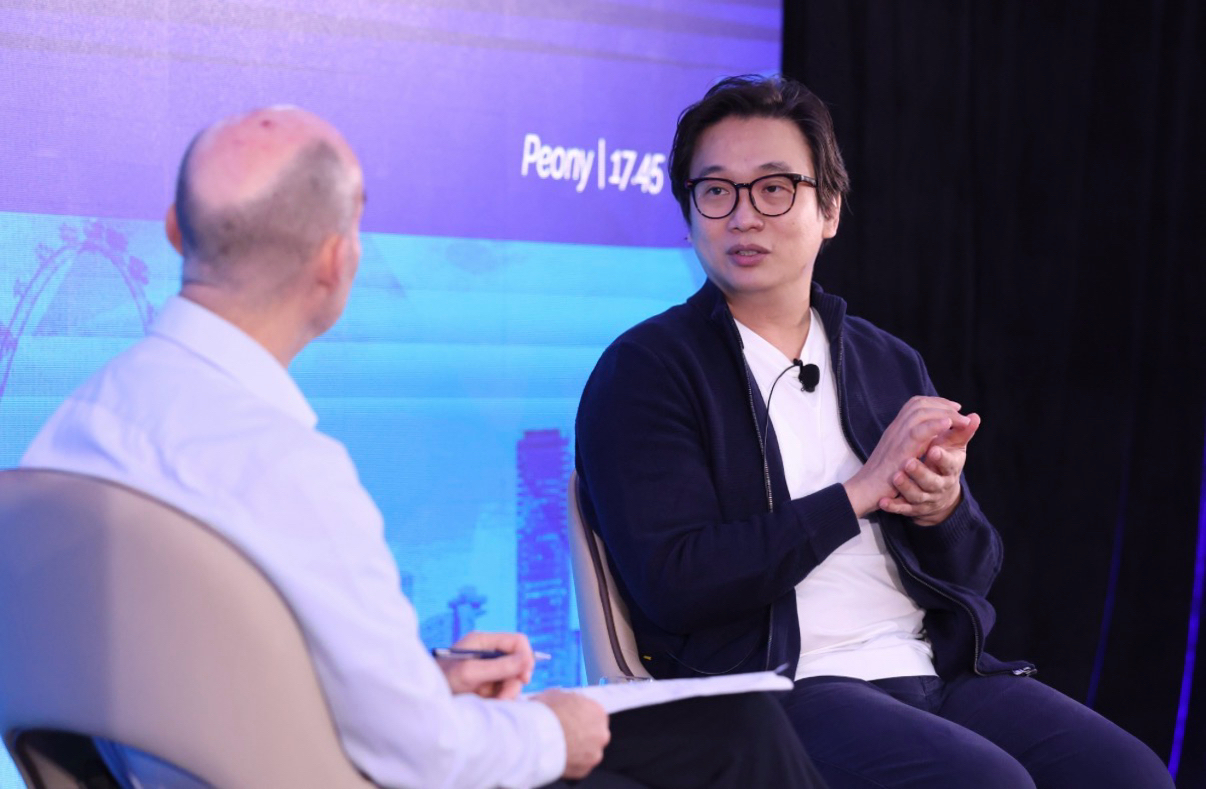
Anndy Lian: Keynote Interview at Financial Crime Summit Singapore- Navigating the Convergence of AI, Blockchain, and Financial Crime

Anndy Lian: Keynote Interview at Financial Crime Summit Singapore- Navigating the Convergence of AI, Blockchain, and Financial Crime

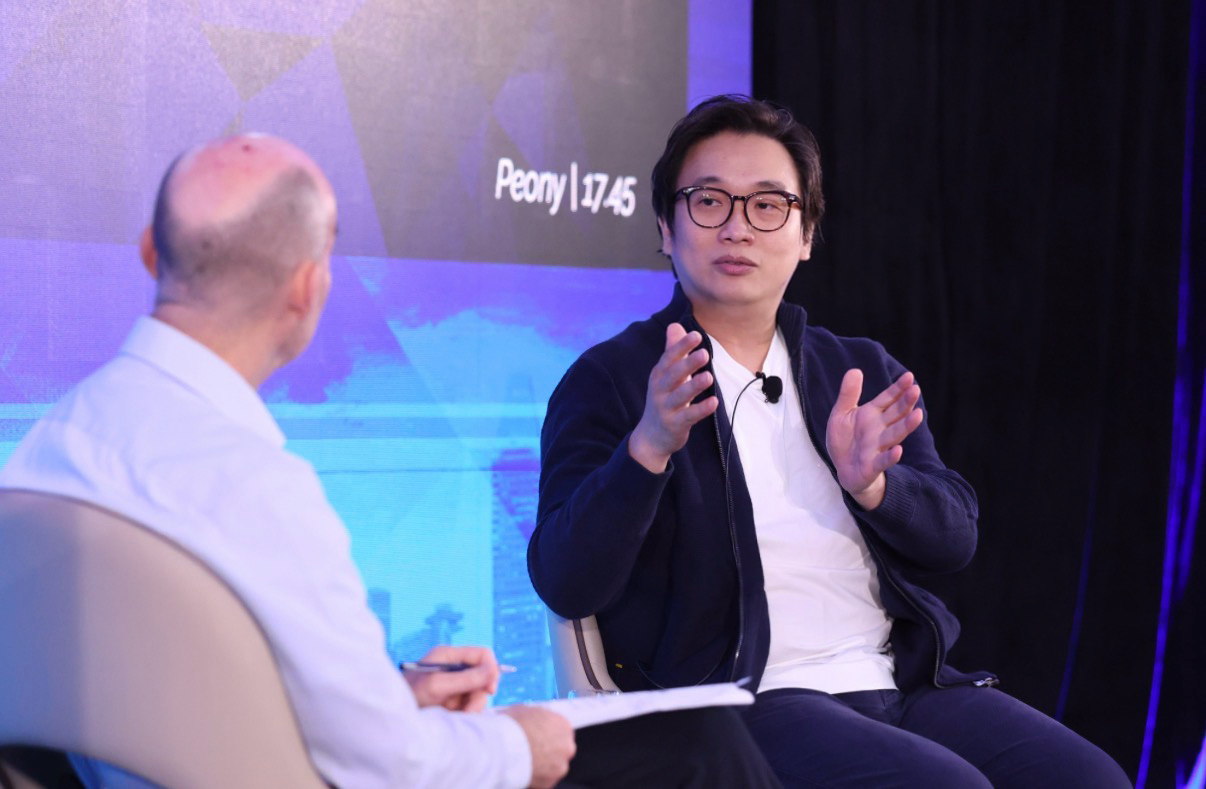
Speaking at the Financial Crime Summit in Singapore at the Marina Bay Sands was a fantastic opportunity to reflect on my decade-long journey in this space. I started advocating for cryptocurrencies early on, advising governments on digital asset matters as far back as 2017, a time when many dismissed the concept as senseless or scammy. Today, as an investor and author of the upcoming book Web4: The Age of Autonomous Intelligence, my focus is on the convergence of AI, distributed ledger systems, and decentralized technologies, and the unique challenges this creates for compliance leaders like yourselves.

During my closing keynote moderated by Dr. Roger Noon, I wanted to address the immediate realities of our evolving digital world. Traditional financial markets in the US are moving rapidly toward tokenization. While I am not a massive fan of tokenizing every single financial product, there is undeniable money and profit driving this shift. Tokenization expands distribution and makes everything 24/7. This creates a massive burden for the financial crime community. If the market operates around the clock, you must fight crime around the clock. When everything is tokenized, criminals will elevate their game. I advised the banks in the room that if they are moving to private, tokenized ledgers, they must combine everything onto a single graph so it can all be easily traced and tracked. Distributed ledger tech offers near-perfect audit trails, making it a powerful tool for risk and control.

We are facing a critical agility gap in the current landscape. We live in an age of fast-paced innovation, but large institutions and governments remain highly bureaucratic and slow to change. Most of the time, the key vulnerability isn’t the underlying software itself, like the CMS or PHP systems we often blame. It is the big organizations that are simply not fast enough to patch and update their systems.

Bad actors are also innovating at an alarming rate, and traditional guardrails are no longer enough. I shared a personal experience where I was targeted by scammers posing as Bloomberg for an interview on Zoom. They used incredibly realistic deepfakes, rhythm, and tonality to try and hack my laptop and steal my private keys. The sophistication of these attacks is terrifying, especially as we look deeper into the space of autonomous agents. We are deploying AI systems to handle customer service, processes, and operations, but the banking infrastructure is still largely in the dark. Most banks cannot even clearly state what permissions these bots have or how far they can go. The cryptocurrency space is actually a bit further ahead here, using AI linked to consumer trading APIs. To make this work in traditional finance, there is no blanket approach. We must clean up the data and permissions.

To combat these threats, I believe we need a form of technological peer review. Different corporations and governments are building AI in silos, speaking their own languages. We need to sit down and exchange notes. Just as the crypto community comes together after a major hack to ensure the sector stands strong, like when the Bybit hack affected so many, the finance sector must do the same. It is not about copying competitive advantages. It is about sharing notes to keep the space clean and workable.

At the end of the day, my message to the industry is to embrace this technology. Deploy your own bots, understand their limitations, and learn how to adjust. We cannot fear the future. We are entering the era of Web4, an environment where AI and blockchain integration will provide a much safer, more accountable ecosystem for financial institutions. That integration is the key to our future.

Screenshot
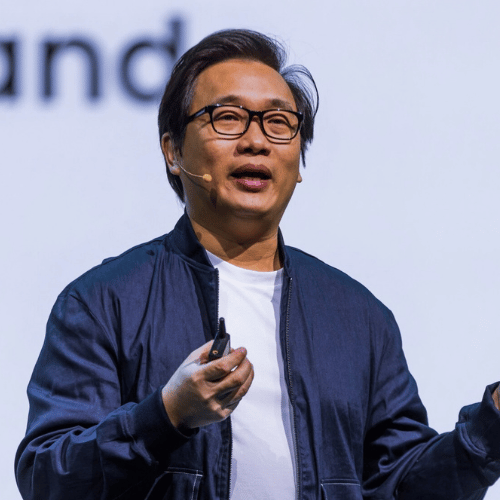
Anndy Lian is an early blockchain adopter and experienced serial entrepreneur who is known for his work in the government sector. He is a best selling book author. The latest book is Web4: The Age of Autonomous Intelligence.

j j j

Anndy Lian on Web4: Why AI Must Rescue Crypto from Itself

Anndy Lian on Web4: Why AI Must Rescue Crypto from Itself

The Crypto Industry Is Lying to Itself, and I Wrote a Book About It

I sat down with Eddy on his show recently, episode 342, and we had a conversation I have been wanting to have publicly for years. No scripts. No promotional fluff. Just two people talking about what is broken in this industry and what might actually fix it.
Let me be direct. I launched my new book, “Web4: The Age of Autonomous Intelligence,” and I priced the ebook at $1.99. I could have charged $8.99 or more. I did not. I am not here to make money off this. I want people to read it, absorb the ideas, and start asking harder questions about the projects they put their money into. The book hit the Amazon top 10, which was encouraging, but the ranking is not the point. The concept spreading is the point.

The Gossip Piece That Became Something Bigger

When I started writing this book, I thought it would be a simple expose. A gossip piece, really. I wanted to name the projects pretending to be decentralized while operating like private companies. I have been investing in this space since 2017, and from day one, I saw fake projects everywhere. The same tricks recycled over and over. Launch pads, alpha groups, beta schemes, all extracting value from regular people while calling it community building.
I talked to many of the big players. Most of them told me this is just part of a capital-driven tech industry. I disagreed then and I disagree now. I asked them a simple question: what is the purpose of launching your coin or your platform? They said it is for the community. Then I asked: if it is for the community, why are you extracting 90%? The silence that followed told me everything.

Web3 Was a Beautiful Lie

Here is what Web3 was supposed to be. You own your data. Power returns to the people. No more Facebook model where one corporation controls everything and you just operate inside their walled garden. That was the pitch. It sounded good. It sounded great in every marketing deck and conference keynote.
It did not happen.
What happened instead was insider trading dressed up as decentralization. Projects governed by five or six people pretending to be DAOs. Token distributions designed so the founding team could dump on retail holders the moment liquidity appeared. I hate it. I hate watching people lose money to schemes that were rigged from the start.
I use the taco analogy with Eddy because it is simple and true. You run a restaurant for 20 years making authentic, handmade tortillas. Then some place opens down the street, buys Costco tortillas, and markets themselves as fresh and homemade. Ninety-five percent of customers cannot tell the difference. They believe the marketing. But you know. You can taste it. You can see the machine-made edges. That is Web3 right now. The marketing says decentralized. The reality is a small group pulling every string.

What Web4 Actually Looks Like

My vision for Web4 is not Web3 with an AI chatbot glued to the side. That is not what I am proposing. What I want is a completely new architecture where AI runs the consensus mechanism and the chain itself. Humans still participate. They still vote. They still propose. But the governance power, the treasury management, the decision-making framework, that belongs to AI working alongside the community.
Let me give you a concrete example. Say three founders start a blockchain. In the current model, each takes 30% of the token supply. Maybe 10% goes to the community. Those three people now control the entire network. They decide when to sell. They decide who gets funded. They decide everything.
In the Web4 model, each founder takes 3%. The AI manages the treasury. It decides when to sell tokens and how much. It works with the community on proposals. If the project needs to hire, AI and the community evaluate candidates together. If there is a governance vote, AI scans wallets to ensure each vote comes from an independent source, not one person operating twenty wallets. The founders still build. They still go to conferences and push the project forward. But they do not hold the keys to the kingdom.
Why does this matter? Because humans extract. That is what we do. We see profit and we think about vacations, about keeping more than we need, about securing our own future at the expense of others. AI does not need to pay bills. AI does not dream about a trip to Bali. AI operates in black and white. That makes it fairer by default.

The Trust Problem Is the Real Problem

I keep coming back to trust. If you lose the trust of the people, your decentralized product is dead. No amount of market making or liquidity partnerships will save it. Right now, the industry chases narratives. RWA one week. Tokenized stocks the next. We are kissing the stock market to get liquidity, and I do not see the value in that. We are just following money around instead of solving our own foundational problem.
The question every person in this space should ask is simple: are we actually decentralized? If the answer is no, and I believe for most projects it is no, then what are we even selling? What is the point? We cannot keep pivoting from narrative to narrative while ignoring the rot at the center.

On the Market and the Noise

Eddy asked me about Bitcoin and whether now is the time to buy. I said no. I do not think we have seen the bottom. I believe the lowest point will come after the US midterms, maybe October or November. The recent price movements look like fake pumps to me. I told a friend I would not buy at 66,000 and then watch it drop to 44,000 and panic sell. Why suffer through that? Wait for a clear green candle with real volume sustained over days or weeks. Buy at 80,000 and sell at 100,000. You still make a strong return without the psychological torture.
I also told Eddy to ignore the social media influencers promising AI trading bots that make money while you sleep. If everyone has the same tool, nobody has an edge. The real advantage in algorithmic trading is data speed, not the bot itself. And if those influencers were truly making that much money, why are they still creating content?

Open Source Is the Path Forward

One more thing I feel strongly about. The future of AI belongs to open-source, open-weighted models. I respect what the frontier labs are doing, and they deserve to earn money during this phase. But paying enormous API fees forever is not sustainable. It reminds me of the early Microsoft days when you paid hundreds for a Windows license. Eventually the cost drops. Eventually the open model wins.
If you surrender all your data to a proprietary frontier model, you are handing power to a corporation, which hands it to a government. Once that power is gone, you do not get it back. Run your own model. Train your own model. Be sustainable. That is the Web4 philosophy applied to AI itself.

Why I Keep Showing Up

I cannot change everything. I know that. But I will not stop sharing the truth. Instead of going on podcasts to say Bitcoin is going to a million next year or XRP is hitting $100, I want to talk about what is real. What is broken. What can be fixed. If you love this industry, ask yourself why you are still here. What are you hoping for? What is missing?
I want the industry to be better. That is the only thing driving me. Read the book. It is $1.99. Share it. Talk about it. Let us push this conversation forward together.
View it at: https://youtu.be/pLVZ8-ggeiQ

Anndy Lian is an early blockchain adopter and experienced serial entrepreneur who is known for his work in the government sector. He is a best selling book author. The latest book is Web4: The Age of Autonomous Intelligence.

j j j

Anndy Lian: Why Autonomous Intelligence Is the Next Chapter for Crypto- #BINANCECONNECT

Anndy Lian: Why Autonomous Intelligence Is the Next Chapter for Crypto- #BINANCECONNECT
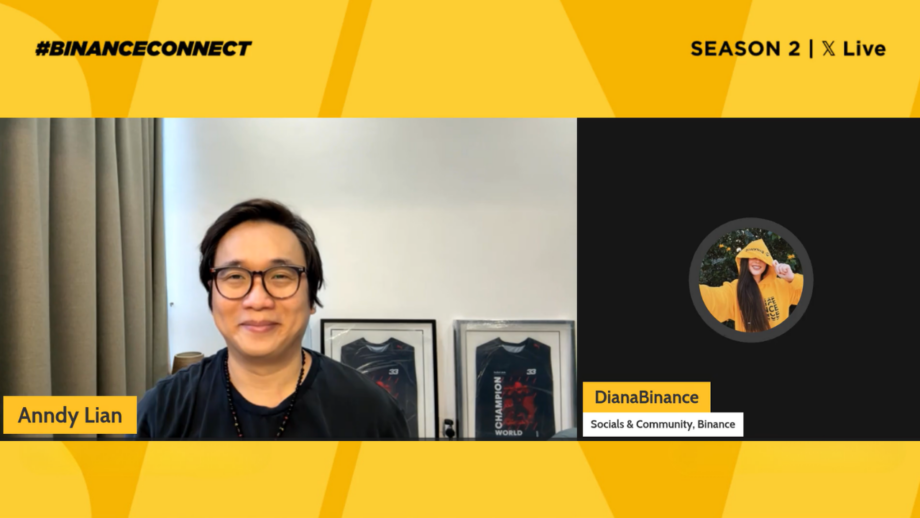
I recently had the pleasure of sitting down with Diana, a Community Associate at Binance, for the season two premiere of Binance Connect. The conversation gave me a chance to unpack the ideas behind my book, Web4: The Age of Autonomous Intelligence. We covered a wide range of topics, from the validity of the term itself to the practical implications of handing decisions over to machines. I want to share some of my deeper thoughts here, expanding on what we discussed live.
Is Web4 Just Another Label?
Diana opened with a question I hear often. Why do we keep numbering the web? Is this simply another marketing term to generate excitement? I understand the skepticism. People outside our space might hear Web1, Web2, Web3, Web4 and think we are just counting upward for fun.
My answer is straightforward. The shift is already happening whether we name it or not. Artificial intelligence is reshaping every layer of the internet, from how we search for information to how financial transactions are executed. You can call it the AI web. You can call it Web AI. The label matters less than the reality underneath. AI is here to stay, and it will bring a new set of values to the entire internet, not just to crypto.
What frustrates me about the current state of Web3 is that many people still believe it is decentralized. It is not. Capital flows from a handful of venture firms. A small number of entities control token supplies. If we truly value distributed governance, then we must push harder toward genuine independence. That is what Web4 represents to me. It is the era where we use intelligent agents to actually achieve what Web3 promised but failed to deliver.
The Centralization Problem
One of the most pressing concerns Diana raised was whether we are trying to build a distributed future on top of centralized intelligence. She pointed out that the most powerful frontier models today are controlled by a small group of massive corporations. Governments can make a single phone call and shut those systems down. Users can be forced to roll back updates they never agreed to.
I firmly believe we need our own models. This does not mean rejecting frontier technology entirely. It means running open-weight models on our own servers. It means forming intelligence within a local environment that belongs to us. There is no need to pay exorbitant API fees when affordable open-source alternatives exist. You can even use frontier models as training data for your own agents, which then reside within your private network.
I predict that within two to three years, after the major AI companies complete their IPOs, we will see a significant divide. API costs from centralized providers will drop, and more people will migrate toward affordable open-source solutions. Things will balance out. If you want your data protected and your operations independent, running your own model will become as common as owning a laptop.
Cognitive Burden and Human Capability
Diana asked a thoughtful question about whether removing complexity from our lives makes us less capable. Every time technology gets smarter, we think a little less. Navigation apps decide our routes. Algorithms choose our entertainment. Now agents might trade our assets and vote in governance proposals on our behalf.
My view is this. If a person is less capable, AI will not magically make them more capable. If a person is already capable, AI will not diminish them. It is scenario-driven. The cognitive layer I describe in my book acts as a brain. It enables agents to learn quickly. Users who understand how these systems think can improvise, develop their own strategies, and advance their missions.
Think of it this way. If you are running a project and cannot figure out the best financial strategy, you ask an intelligent agent. It gives you a suggestion. You can take it as is, or you can tweak it. The tool serves you. You remain in control of the final direction.
Who Bears Responsibility?
This is a question I get asked frequently. If an AI agent managing your assets makes a bad decision, who is at fault? Is it you who granted permission? Is it the model provider? Does the agent itself carry some form of responsibility?
My stance is clear. If the agent resides on a centralized exchange and that platform offers the service, the exchange must bear responsibility. You cannot predict how their proprietary algorithms will react under stress. You cannot see their parameters. The party offering the service must stand behind it.
If you are running an agent on your own computer, on your own network, then the responsibility falls on you. You chose to deploy it. You configured it. You accepted the risk. There is no right or wrong answer here. It depends entirely on the hosting arrangement.
As for blaming the agent itself, I find that question difficult to answer practically. If you determine the machine is at fault, what can you do? What remedy does it offer? Nothing. You must look at the human or corporate structures surrounding the technology.
Jobs and Essential Skills
People worry about employment. I take a different view. So far, intelligent agents are not eliminating roles wholesale. They are making people more productive. Developers finish tasks faster. Companies streamline operations. Instead of hiring ten thousand people, a firm might need one hundred. Those who were part of the original team became more experienced and more valuable to other organizations.
The most important skill I recommend is clear communication. Learn English, or whatever language allows you to articulate your thoughts precisely. If you cannot write a good prompt, if your mind is unclear about what you want, even the most expensive frontier model will produce poor results. Structure your thinking. Define your desired outcome. That is the foundation of thriving in this new age.
Digital Sovereignty
In the era of autonomous agents, digital sovereignty becomes critical. When you hand your credentials to a machine, how do you maintain control over your identity afterward?
This is not just a philosophical question. It is a practical one. Every user must ask how they will protect their privacy data once agents are driving their interactions across multiple platforms.
My Vision Going Forward
I believe blockchain should serve as the spine, the trust layer, the immutable record of everything an agent does. AI is the brain. Every decision, every transaction gets recorded on chain. Nobody can alter it. Everyone can audit it.
If we get this right, Web4 will eliminate the ability for one person or a small cabal to hoard token supply and manipulate markets. It will bring genuine decentralization to the forefront. It will attract capital back to crypto because people will finally see a clear selling point beyond speculation.
I encourage everyone to try the technology. Do not condemn AI before testing it. Ask yourself what outcome you want. Be open. The future is being built right now, and we all have a role in shaping it.


Anndy Lian is an early blockchain adopter and experienced serial entrepreneur who is known for his work in the government sector. He is a best selling book author. The latest book is Web4: The Age of Autonomous Intelligence.

j j j