Interview with Anndy Lian: Views on 2022 Cryptocurrency Adoption – What Is Coming Next

Interview with Anndy Lian: Views on 2022 Cryptocurrency Adoption – What Is Coming Next

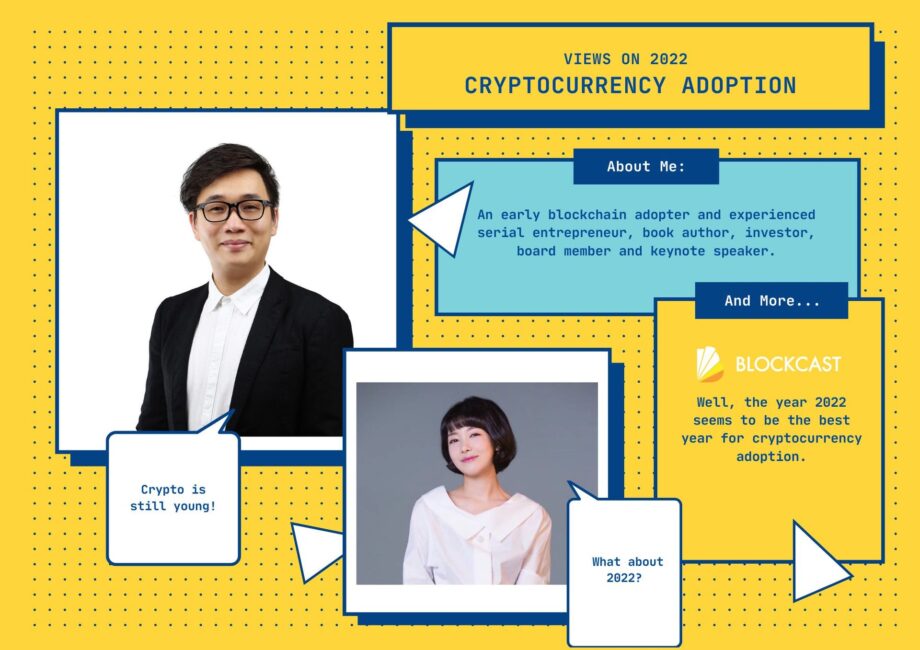
Anndy Lian is an all-rounded business strategist in Asia. He has provided advisory across a variety of industries for local, international, public listed companies and governments. He is an early blockchain adopter and experienced serial entrepreneur, book author, investor, board member and keynote speaker. Currently, he is appointed as the Chief Digital Advisor at Mongolia Productivity Organization, championing national digitization. He is also the Chairman, Asia for BigONE Exchange.

Being an Asian, I would like to hear Anndy’s perspectives on how he sees cryptocurrency adoption for 2022.


Jenny Zheng: Now that the SEC appears to have dropped its resistance to (certain) Bitcoin ETFs, do you expect we’ll see increased institutional adoption of bitcoin/crypto as an investment vehicle and/or inflation hedge?


Anndy Lian: It’s certainly welcome news to exchange-traded fund managers with the launch of the first Bitcoin futures ETF this week, with the ProShares’ Bitcoin Strategy ETF, to first and foremost provide their clients with the option to diversify their portfolio with cryptocurrencies, a testament to the maturation of the market.


Plus, the news that Interactive Brokers announced they will empower Registered Investment Advisors across the United States to invest in bitcoin and cryptocurrencies means hundreds of billions of dollars can now enter the market more easily.


It’s true that big institutional investors have been looking for a regulated way to trade Bitcoin for a while, and that’s all the more so considering the real concerns about high inflation, and the debasement of the dollar due to the US Fed’s quantitative easing program.


Part of that crypto adoption process however is being able to convince the regulator, the SEC in the US being the prime example, that proposed funds will be able to cover the risks for investors. For example, Bitwise, which originally filed for regulatory approval for a bitcoin ETF in 2019 before withdrawing the application after an initial rejection, has been revising its filing for more than a year.


But it’s also clear that since the recent Chinese mining and crypto ban the US has become a little more receptive to crypto regulation. Certainly, regulators in other countries have approved ETFs, Canada’s Purpose Bitcoin ETF, which started trading in February, ballooned to more than $1bn in assets under management in less than two months.


Jenny Zheng: 2021 was notable for witnessing El Salvador’s adoption of bitcoin as legal tender. To what extent do you think 2022 will involve more nations following such an example, or will at least involve more nations/governments using crypto in various ways?


Anndy Lian: The rollout of Bitcoin in El Salvador certainly captured the headlines worldwide, It raised the profile of the country and has no doubt attracted the attention of other countries. By the same token, the speed at which it happened, without the opportunity to enlighten citizens across the country as to the pros and cons of using the cryptocurrency will also have given them food for thought. This caution is supported by the case of Panama, which while also passing a law to increase the use of bitcoin and Ethereum as a payment option did not decree that businesses had to accept cryptocurrency.


In 2022 however, the real crypto push from governments will be more likely to come in the form of central bank digital currencies, most notably in China. There the central bank is looking to use blockchain at the issuance layer for its digital yuan system, which is centralized. The Chinese version of the CBDC is not yet a distributed approach due to issues around performance and scalability; though the wider ecosystem does provide solutions in the form of sidechains and oracles to enable off-chain data to connect with blockchains this seems unlikely to be adopted any time soon.


However, the real impetus to action by the government whether in South America or Southeast Asia may come with the rollout of Facebook’s Novi wallet later this year, with the Diem cryptocurrency to follow shortly after. The reason being that most deserving of crypto aims, to service the ‘unbanked’ citizens who lack banking services. If the Facebook initiatives take off then this could spur governments to action, if not creating their own digital currency, in supporting the growth of private-sector solutions with improved regulations and support.


A good example of this approach is in Ukraine, which voted almost unanimously to legalize and regulate cryptocurrency just a day after El Salvador’s official bitcoin adoption. As reported in Yahoo Finance: “This is with hopes of developing a new industry that will attract transparent investments and boost the country’s reputation as a high-tech state.” No doubt this model for adoption will prove attractive to other governments in 2022.


Jenny Zheng: Lastly, the end of 2021 seems primed to witness a renewed bull market. However, do you think 2022 will witness an increase in people actually using bitcoin and cryptocurrency to make payments?


Anndy Lian: The trend towards greater use of crypto for payments has already started, with the recent news in the US that US-based cinema chain AMC will soon be accepting cryptocurrency payments. It comes just a few months after PayPal decided to allow US consumers to use crypto to make purchases and news that Mastercard would be supporting cryptocurrency payments across its network.


While in the retail sector, Walmart and Amazon’s crypto recruitment announcements have raised awareness that these retail behemoths may be planning to open their doors to cryptocurrencies. At Amazon, it appears the plans are well advanced, as a “full-on, well-discussed, integral part of the future mechanism of how Amazon will work,” according to a City AM report.


While there are certainly challenges in accepting Bitcoin for payments, especially when the price volatility is factored in, more and more merchants are looking to add crypto purchasing to their business. According to a survey last year by BitPay, “up to 40% of customers that pay with crypto are new to the merchant. Second, purchase amounts are twice that of credit card purchases. Third, crypto is less expensive than credit cards, and lastly, there are no fraud-related chargebacks”.


A clear use case for cryptocurrency also comes with international money transfers, for example, with low transfer fees and fast transfer speeds, and anyone can use it. “However, Bitcoin has become less attractive for remittances due to the increasing cost of Bitcoin transactions. Some competing cryptocurrencies, such as Ripple and Dash, are also targeting the remittance market with substantially lower fees,” suggested a recent report in Investopedia.


Jenny Zheng: Any final words?


Anndy Lian: Well, the year 2022 seems to be the best year for cryptocurrency adoption. If you looked at the crypto innovation curve that I have shared on Twitter. You have not missed anything. Crypto is still young.


by Jenny Zheng @jennyzheng.Early crypto advocate | Investor | PR Expert | Cofounder of Blockcast.cc


Original Source: https://hackernoon.com/interview-with-anndy-lian-views-on-2022-cryptocurrency-adoption-what-is-coming-next

Anndy Lian is an early blockchain adopter and experienced serial entrepreneur who is known for his work in the government sector. He is a best selling book author- “NFT: From Zero to Hero” and “Blockchain Revolution 2030”.

Currently, he is appointed as the Chief Digital Advisor at Mongolia Productivity Organization, championing national digitization. Prior to his current appointments, he was the Chairman of BigONE Exchange, a global top 30 ranked crypto spot exchange and was also the Advisory Board Member for Hyundai DAC, the blockchain arm of South Korea’s largest car manufacturer Hyundai Motor Group. Lian played a pivotal role as the Blockchain Advisor for Asian Productivity Organisation (APO), an intergovernmental organization committed to improving productivity in the Asia-Pacific region.

An avid supporter of incubating start-ups, Anndy has also been a private investor for the past eight years. With a growth investment mindset, Anndy strategically demonstrates this in the companies he chooses to be involved with. He believes that what he is doing through blockchain technology currently will revolutionise and redefine traditional businesses. He also believes that the blockchain industry has to be “redecentralised”.

j j j

Anndy Lian Meets Crypto Curry Club: Trading, Investing And The Lessons Learned Along The Way

Anndy Lian Meets Crypto Curry Club: Trading, Investing And The Lessons Learned Along The Way

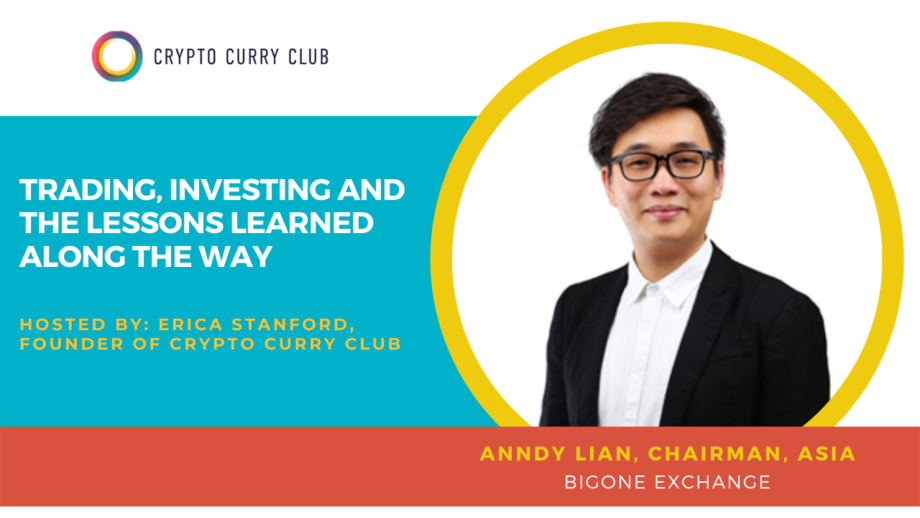
Erica Stanford, Founder of Crypto Curry Club meets Anndy Lian, book author and intergovernmental blockchain expert. They talked about trading, investing and other lessons learnt when dealing with crypto.

It’s hard to miss news of the meteoric rise in prices for several coins but crypto’s nature consists of a lot of plunges along the way due to its volatility and unpredictability and one of the biggest challenges for investors when it comes to crypto is to not get caught up in the hype. This is especially so for now that we live in an era where a tweet can easily dictate its rise and fall.

If you’re tempted to invest or are looking to have a little exposure to crypto in your portfolio, Anndy Lian, Chairman of BigONE Exchange lets you in on what to consider before taking the leap.

Give us an overview of all the different ways for people and institutions to get involved in crypto. What are some of the different ways that are being offered on the BigONE Exchange?
[00:01:59] Anndy Lian

Do you see any new trends in terms of what type of people or users are being drawn to these products and strategies?
[00:05:17] Anndy Lian

What methods would you say you see to mitigate with as less risk as possible if somebody is new to crypto and sort of cautious to get in?
[00:08:39] Anndy Lian

How do you see institutional investment in crypto going?
[00:13:21] Anndy Lian

What else do you see needs to come in for crypto to be fully ideal for new investors, but also for institutional money aside from the regulation and ease of use?
[00:19:26] Anndy Lian

Anndy Lian is an all-rounded business strategist in Asia. He has provided advisory across a variety of industries for local, international, public listed companies and governments. He is an early blockchain adopter and experienced serial entrepreneur, book author, investor, board member and keynote speaker.

Currently, he is appointed as the Chief Digital Advisor at Mongolia Productivity Organization, championing national digitization. He is also the Chairman, Asia for BigONE Exchange. BigONE is a global cryptocurrency exchange that provides a platform for trading various cryptocurrencies. It was founded in 2017 and registered in the Netherlands. The group operates in Russia, Brazil, Vietnam, Seychelles, Singapore, Japan, and Indonesia, providing marketing, investment, and blockchain technology research & development.

At Crypto Curry Club, we create opportunities to build meaningful relationships, and exchange value through shared experiences on a range of topics from Blockchain, Digital Assets, Crypto to Tech for Sustainability. The club connects like-minded individuals to come together and affect real change that innovates our future while driving businesses forward.

More information about Crypro Curry Club can be found at https://www.cryptocurryclub.com/. You can visit Anndy at his personal page at https://anndy.com. BigONE Exchange’s information can be found at https://big.one.


Anndy Lian is an early blockchain adopter and experienced serial entrepreneur who is known for his work in the government sector. He is a best selling book author- “NFT: From Zero to Hero” and “Blockchain Revolution 2030”.

Currently, he is appointed as the Chief Digital Advisor at Mongolia Productivity Organization, championing national digitization. Prior to his current appointments, he was the Chairman of BigONE Exchange, a global top 30 ranked crypto spot exchange and was also the Advisory Board Member for Hyundai DAC, the blockchain arm of South Korea’s largest car manufacturer Hyundai Motor Group. Lian played a pivotal role as the Blockchain Advisor for Asian Productivity Organisation (APO), an intergovernmental organization committed to improving productivity in the Asia-Pacific region.

An avid supporter of incubating start-ups, Anndy has also been a private investor for the past eight years. With a growth investment mindset, Anndy strategically demonstrates this in the companies he chooses to be involved with. He believes that what he is doing through blockchain technology currently will revolutionise and redefine traditional businesses. He also believes that the blockchain industry has to be “redecentralised”.

j j j

On The Metaverse with Anndy Lian

On The Metaverse with Anndy Lian

HackerNoon Interviewer: First, tell us a bit about yourself. For example, name, profession, and personal interests.

My name is Anndy Lian. I have provided advisory across a variety of industries for local, international, public listed companies and governments. I am an early blockchain adopter and experienced serial entrepreneur, book author, investor, board member and keynote speaker.


Currently, I am appointed as the Chief Digital Advisor at Mongolia Productivity Organization, championing national digitization. I am also appointed as the Chairman, Asia for BigONE Exchange, a global cryptocurrency exchange started in 2017.


I believe in giving back to society. I am doing philanthropy work in Asia on my own, helping different grassroots organisations to aid several communities. On top of this, I am also the Non-Executive Chairman at EG Association, the social impact body of Elongate.

Please sum up what the metaverse is in 1 to 2 paragraphs.

Put simply, the metaverse is a virtual digital world that exists alongside the real world, though like the real world it’s got no single creator or commonly agreed on definition.


First used in Neil Stephenson’s 1992 fictional novel ‘Snow Crush’ the term metaverse refers to a loose federation of 3D immersive shared spaces, including social media, augmented reality, online gaming, and cryptocurrencies and NFTs.

Are you currently, directly or indirectly, working on building a metaverse?

At BigONE as an innovative cryptocurrency exchange, we are supporting projects developing decentralized finance (DeFi) which are key to building the payment rails for an interoperable metaverse – what I like to call the ‘metaverseFi’.


DeFi needs to play a key role in the development of the metaverse, to avoid two versions emerging: one dominated by the likes of Facebook, and the other built on open interoperable platforms. Together with NFTs, the role of DeFi is to provide the essential infrastructure for the vision of an open metaverse which liberates us to explore our online identities in both work and play.

In your opinion, is the metaverse inevitable, or is it just another passing trending tech topic that’ll lose hype?

It’s understandable that many regard the metaverse as a tech concept that may never fully materialize into the grand vision for a virtual world of the future. Certainly, in its recent review of the metaverse, the BBC concluded, “everything is in the early stages. The evolution of the metaverse – if it happens at all – will be fought among tech giants for the next decade, or maybe even longer”. Yet just a couple of days later it reported plans from Facebook to hire 10,000 people in the EU to work on the metaverse.


However, on its own, the involvement of tech titans like Facebook is not enough to make the metaverse inevitable unless people see real value in it. This is why the work Facebook is putting into building VR remote working apps for its Oculus VR headsets is particularly relevant in our post-COVID world of remote working.


That said, we believe the ultimate success of the metaverse will rely on the engagement of engaged individuals and communities, connected by their use of gaming worlds such as Fortnite and able to easily build their online identity and creative work through crypto-enabled NFTs.

Why is the metaverse such a revolutionary concept?

Tim Sweeney, the chief executive of Epic, which is behind the metaverse-like game Fortnite explained the potential impact:


“This Metaverse is going to be far more pervasive and powerful than anything else. If one central company gains control of this, they will become more powerful than any government, and be a god on Earth.”


Clearly, the development of a fully functional metaverse has the potential to fundamentally alter how people interact with the digital world. A collective virtual experience would reimagine the creative industry and open new doors for creators, gamers, and artists.


Just as smartphones created the mobile internet the revolutionary impact of the metaverse would not just be in a parallel digital world, but it is connecting the digital and physical worlds together for the first time in a seamless experience.


As Mark Zuckerberg outlined recently in his vision of the immersive metaverse this for example would allow you to take your office with you whenever you went, and in return allow colleagues to see the full context in which you are working, from anywhere around the world.

What can people build in the metaverse that we can’t build on the Internet, or in virtual reality today? What limitations of our current technology does the metaverse free us from?

Currently, our use of technology with smartphones isn’t in a simple sense that far removed from the vision of the metaverse, in that we are connected to our phone from waking up to going to sleep, talking to friends and colleagues, with a whole host of uses from dating apps to cryptocurrency trading. The vision for the metaverse is removed from what critics often see it as currently, a bolt-on VR headset like out of a scene from Ready Player One.


Rather it’s a place where we can merge our online and offline worlds together more naturally, so that for example in a workplace in the metaverse you would have a sense of being in the same physical space as people, as you do in the real world right now. But with the metaverse, we can dress our virtual selves as we see fit, attend the meeting from all corners of the world, and bring up documents and the like in a 3-D environment, rather than the current 2-D world of Zoom we deal with currently.


If you still cannot visualize what I am saying, for starters, you can find out more about metaverse from The Sandbox. You can experience, play, create, own real estate and monetize their virtual experiences. Snoop Dogg is there too.

How are the metaverse and blockchain related? Can we build a metaverse without blockchain technology?

A key reason why the future of the metaverse is inextricably linked to the use of blockchain technology comes down to the use of cryptocurrencies such as Ethereum as programmable payments rails. The properties of blockchain as inherently decentralized, trustless, and able to automatically compensate users means that developers can build apps for the metaverse confident they won’t be dependent on a proprietary payment currency as exists in online games currently, for example.


As metaverse guru Matthew Ball explains:


“Today, only a tiny fraction of online users and gamers even have a crypto wallet, and almost no brands and games issue NFTs. But irrespective of multi-month dips in the blockchain/crypto/NFT economy, we see more of these groups embrace blockchain-based experiences each month. This produces a virtual cycle that drives more users to register a wallet, mint an NFT, or integrate crypto assets.”


So, while we do not yet know what it will look like, or say when a metaverse is finally created, the key role of blockchain-based cryptocurrencies and NFTs in making it a reality is already apparent.

How quickly do you think the metaverse will be developed? How much can we expect metaverse tech to grow in the next 5 to 10 years?

The DeFi and NFT technology to enable payment and identity as well as interoperable wallets within different virtual worlds are already here, and only likely to accelerate in development following news of Facebook’s big bet in this sector.


Only in August this year the world’s first intelligent NFT was released by software developer Alethea AI this year, and later auctioned off for $478,000, while securing $16 million in funding via private token sale to create a metaverse populated by its bots. What’s interesting is that as AI bots, they have the potential to take the metaverse to the next level with “fully interactive, engaging and autonomous agents that can learn and evolve from the environment.”


Therefore, as more and more connected technologies come together, pulling together blockchain and AI, NFTs, and gaming, the rate of development could see a tipping point in the next few years, which makes talk of timescales less useful than the kind of exponential growth that is already taking place in new technologies such as electric vehicles and AI.


What is your hope for the metaverse? Do you have any worries or does the concept pose any threats?

The metaverse has a lot of potential to bring people together, not just corporate works connecting with their colleagues over virtual meetings, but also in giving hope to people who’ve had less opportunity to earn a living for themselves or learn new skills. Certainly, the growth of play-to-earn gaming, with the likes of Axie Infinity, where a younger generation of gamers in countries like the Philippines shows how this can make a real financial difference to people’s lives. This is also why the role of DeFi in the metaverse, can be so important in providing people with a low-cost way to earn, save and send money from person to person.


I believe like any radical technology, which is attracting the attention of large players such as Facebook and no doubt governments keen to keep control of the internet, there are risks involved as well as rewards. But I’m optimistic that the decentralized community-led nature of the development of an interoperable metaverse will ultimately have positive outcomes if user safety is a key part of it using NFT and blockchain solutions.

Thanks for your time! Any final words?

The development of the metaverse concept may still be in its early stages, but the example of Facebook’s backing shows it’s here to stay, as people’s activities and technologies converge online. While we do not yet know what it will look like or say when a metaverse is finally created, the key role of cryptocurrencies and NFTs in making it a reality is already apparent. With the combined involvement of tech giants, the advancement of cryptocurrencies, and the NFT sector, it appears to be a matter of when, not if, the metaverse will become mainstream!


Original Source: https://hackernoon.com/on-the-metaverse-with-anndy-lian

Anndy Lian is an early blockchain adopter and experienced serial entrepreneur who is known for his work in the government sector. He is a best selling book author- “NFT: From Zero to Hero” and “Blockchain Revolution 2030”.

Currently, he is appointed as the Chief Digital Advisor at Mongolia Productivity Organization, championing national digitization. Prior to his current appointments, he was the Chairman of BigONE Exchange, a global top 30 ranked crypto spot exchange and was also the Advisory Board Member for Hyundai DAC, the blockchain arm of South Korea’s largest car manufacturer Hyundai Motor Group. Lian played a pivotal role as the Blockchain Advisor for Asian Productivity Organisation (APO), an intergovernmental organization committed to improving productivity in the Asia-Pacific region.

An avid supporter of incubating start-ups, Anndy has also been a private investor for the past eight years. With a growth investment mindset, Anndy strategically demonstrates this in the companies he chooses to be involved with. He believes that what he is doing through blockchain technology currently will revolutionise and redefine traditional businesses. He also believes that the blockchain industry has to be “redecentralised”.

j j j