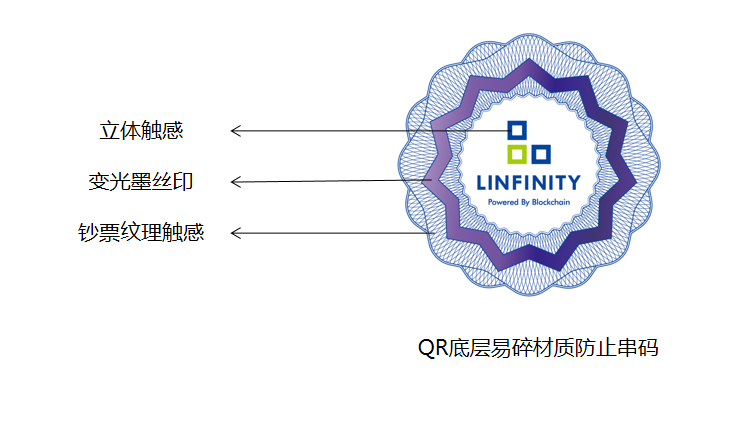
LINFINITY布局供应链+区块链的商业化进程分为三个阶段:分别是信息上链;商品防伪以及信息溯源。除了DApp外,LINFINITY 独创的LINFINITY Mark也起着至关重要的作用,在经过LINFINITY Mark 1.0版本的迭代后,LINFINITY Mark 2.0现已完成,并在三个方面做出了优化:1、印刷采用色变油墨工艺,强化物理防伪视感;2、选取法币材质,凹凸纹理,提升物理防伪触感;3、LINFINITY Mark防伪贴纸采用易碎设计,使其无法被盗用与复制。通过LINFINITY Mark于LINFINITY DApp的相互配合,从而实现商品物理防伪与区块链防伪双保险。LINFINITY正是以这样的方式,将区块链技术与传统供应链相融合,更好的在防伪溯源方面为中小企业服务。
Anndy Lian is an early blockchain adopter and experienced serial entrepreneur who is known for his work in the government sector. He is a best selling book author- “NFT: From Zero to Hero” and “Blockchain Revolution 2030”.
Currently, he is appointed as the Chief Digital Advisor at Mongolia Productivity Organization, championing national digitization. Prior to his current appointments, he was the Chairman of BigONE Exchange, a global top 30 ranked crypto spot exchange and was also the Advisory Board Member for Hyundai DAC, the blockchain arm of South Korea’s largest car manufacturer Hyundai Motor Group. Lian played a pivotal role as the Blockchain Advisor for Asian Productivity Organisation (APO), an intergovernmental organization committed to improving productivity in the Asia-Pacific region.
An avid supporter of incubating start-ups, Anndy has also been a private investor for the past eight years. With a growth investment mindset, Anndy strategically demonstrates this in the companies he chooses to be involved with. He believes that what he is doing through blockchain technology currently will revolutionise and redefine traditional businesses. He also believes that the blockchain industry has to be “redecentralised”.
With LINFINITY’s recent successes in developing their DApp supply-chain management system, and with a swathe of announcements, conference appearances, a website overhaul, and the signing of MOUs with big names in the healthcare industry including Herbriller and Scientific Tradition, the Singapore-based blockchain company, looks, as it always has, towards infinite possibilities beyond Asia.
INEFFICIENCIES, MISCOMMUNICATION AND UK SUPPLY CHAINS
The great difficulties of supply-chain management, especially for smaller businesses, lie in just how vast and complicated the system can become. In a small, import-export-based economy, these problems can quickly drain a significant amount of time, effort, and money from businesses as they expand. In the UK, supply chains are dominated by inefficiencies and miscommunications, costing businesses over £1.5bn per year.
(LINFINITY CEO Anndy Lian at the first LINFINITY Forum in UK)
30th August this year saw LINFINITY hold its first roundtable conference in London’s financial centre at Canary Wharf – the LINFINITY Forum – after a series of successful talks with key industry players in Singapore, South Korea and Japan. One can understand their reasoning for picking Britain as its first step towards international acclaim. “We wanted to make the UK our first stop outside of Asia due to the strong level of interest we received from parties within various industries in the UK over the past few months,” shared LINFINITY CEO Anndy Lian at the conference. “There is a considerable market for LINFINITY’s service offerings in the area of supply chain financing, and the LINFINITY Forum will aim to bridge that gap.”
Mr. Lian makes a good point. In terms of technological advancement, the UK has been at the forefront of innovation since the dawn of the Empire – being the first country to fully industrialise in the 17th century, and continuing the trend even today with an impressive command over goods shipping through the Channel and beyond. However, while technological advancements have increased the workload for traditional supply chains, and while logistical improvements have significantly sped up trade between mainland Europe and Britain, the financial and security aspects of supply-chain operations still rely on traditional, boots-to-ground and paper-based processes, with an alarmingly low rate of adoption of automatic technologies. The NHS, widely lauded as the greatest healthcare system in the world, still relies heavily on manual transportation for its patient records, and a vast majority of computational infrastructure relies on network architecture from three decades ago. Patient records and financial information is regularly lost or deleted irretrievably. It is clear that the UK system needs a dramatic update.
BLOCKCHAIN TECHNOLOGY FOR THE BRITISH PUBLIC
(LINFINITY CEO Anndy Lian at the product demonstration of Herbriller)
In October this year, communication standards agency OFCOM announced the receipt of £700,000 from the Department of Business, Energy and Industrial Strategy to explore the applications of blockchain technology to improving how UK telephone numbers are managed. The idea behind this is that as traditional telephone numbers migrate from analogue services to fully-managed IP servers, blockchain will be able to efficiently manage and allocate numbers to telecoms providers.
This, amongst other blockchain-based developments, have received immense support from the British public. MPs have recently suggested a major adoption of blockchain on a regulated basis so as to more efficiently manage crypto-asset markets and protect investors from money-laundering. A House of Commons select committee suggested that though blockchain currently comes with a “litany of risks” – a lack of compensation schemes, for instance – appropriate regulation on a decentralised level “could lead to positive outcomes for the crypto-asset market, including the move towards a more mature business model and increased liquidity.”
In addition, a recent YouGov survey (November) found that 93% of the British public were aware of Bitcoin and blockchain technology, with the 18-24 age group reporting a 9% rate of buying cryptocurrencies, and more than a quarter of this group preferring decentralised blockchain-based finance to traditional methods of payment.
This represents a major shift for the UK in becoming one of the global centres for blockchain research and development. The aforementioned NHS patient records issues might be solved with the judicious application of cryptographic methods to storing, updating and retrieving patient data – this would successfully circumvent the current issues of paper-based patient notes being lost, or data being inefficiently moved between patients and GP surgeries.
LINFINITY DApp IN THE UK
(LINFINITY DApp beta 1.0 customized for Herbriller)
LINFINITY’s latest success comes down to their innovative DApp – a system of keeping track of individual products throughout the supply chain. Japanese haircare company Herbriller has successfully ported all client and product information onto blockchain, allowing for greater security, a significantly decreased risk of counterfeit products being created and distributed, and the maintenance of transparency between the business and its clients. Currently, LINFINITY aims to roll out DApp on the scale of fast-moving consumer goods first, before potentially applying the same general principles to other areas.
Within the UK, a similar system to DApp may be employed to, for instance, manage stock ordering and distribution for small shops and businesses at a small-scale level, manage company exports and imports at a mid-range level, or, for its loftiest ambitions, keep track of cargo shipped across the Channel or efficiently manage shipping forecasts – the latest statistics on UK trade with the EU state that over £107bn changes hands between the two economies each year. LINFINITY hopes to tap into this rich – in every sense of the word, considering it accounts for anywhere between 12-15% of EU trade – logistical infrastructure, using FMCGs as a natural starting point.
Of course, the beauty of DApp is that its underlying principles are scalable enough to apply to almost any mid-sized economic industry, such as transport services. A DApp-like product could potentially be applied to inner-city taxi drivers to keep track of fares, services in particular areas, or average passenger wait times.
For smaller or niche businesses such as record shops, which are enjoying a huge resurgence within the UK at the moment, using a DApp-like blockchain management system alongside traditional databases such as Discogs might significantly decrease wait times, allow for greater freedom of movement of goods between independent locations, or pave the way for a well-maintained client database, both at the logistical and customer levels – meaning that those businesses have an easy way to track exactly where each product they buy and sell comes from, and customers have an indefatigable way of accessing their order information without the risk of that data being lost, stolen, damaged, or edited.
For the very smallest businesses – those which take card and bank transfer payments as standard for ease-of-use purposes, and who may not have a web platform that uses sufficiently strong encryption methods for payment information currently – integration of LINFINITY DApp, as has been seen in Japan with Herbriller, will give customers the peace of mind over what happens to their payment information that a paper receipt, invoice, or email confirmation never could, due to its commitment to blockchain’s immutable faithfulness to transparency and security at every stage of the supply-chain. The added bonus, when small UK companies work with their European counterparts, is that this information is always available to the average consumer, irrespective of time zone, availability, human error, or any other of the thousand problems that might arise when dealing with sensitive client information.
Due to the massive success of Bitcoin and other cryptocurrency adoption within the UK, as well as governmental and non-governmental organisations alike receiving funding for the research and development of blockchain products, the future is looking particularly bright for any company who can pitch the idea of blockchain supply-chain management into the UK’s vast array of financial, logistical and commercial services.
TOWARDS INFINITE POSSIBILITIES
(LINFINITY CEO Anndy Lian giving a speech at Huobi Carnival)
The LINFINITY Forum showed that there is great scope for the development of blockchain products in the UK. With the aim of enhancing the efficiency, speed and transparency of Bank Payment Obligations, online purchases, compensation, and other digital trade settlements, blockchain and LINFINITY play a pivotal role in improving the management, protection and scalability of an aggregated supply-chain financial network.
The successful acquisition of cooperative intentions with several UK companies, with the view to establishing long-term working partnerships, suggests that LINFINITY made a great move in choosing the UK as their next base of operations.
The best part? Both LINFINITY and the UK thrive from it – the former as an emerging powerhouse in supply-chain optimisation, and latter as adding the driving of the fourth technological evolution to its already impressive trendsetting history – first as steam pioneers, then as early-adopters of electricity, thirdly (thanks to a certain Sir Tim Berners-Lee) as creators and stewards of the Internet Age, and today as the first blockchain-based global economic powerhouse.
For more information about LINFINITY and their future activities, please visit www.linfinity.io or contact pr@linfinity.io.
Anndy Lian is an early blockchain adopter and experienced serial entrepreneur who is known for his work in the government sector. He is a best selling book author- “NFT: From Zero to Hero” and “Blockchain Revolution 2030”.
Currently, he is appointed as the Chief Digital Advisor at Mongolia Productivity Organization, championing national digitization. Prior to his current appointments, he was the Chairman of BigONE Exchange, a global top 30 ranked crypto spot exchange and was also the Advisory Board Member for Hyundai DAC, the blockchain arm of South Korea’s largest car manufacturer Hyundai Motor Group. Lian played a pivotal role as the Blockchain Advisor for Asian Productivity Organisation (APO), an intergovernmental organization committed to improving productivity in the Asia-Pacific region.
An avid supporter of incubating start-ups, Anndy has also been a private investor for the past eight years. With a growth investment mindset, Anndy strategically demonstrates this in the companies he chooses to be involved with. He believes that what he is doing through blockchain technology currently will revolutionise and redefine traditional businesses. He also believes that the blockchain industry has to be “redecentralised”.
Since the beginning of 2018, blockchain technology, and its embedded concepts, have been held in high regard by global economic markets, with countries around the world competing to conduct meaningful and commercially-applicable research and development into the emerging technology, which is widely touted as a leap forward from traditional computational models, security, and network architecture. Among the many distinguished features of blockchain, the enshrinement of trust into its core mechanism, alongside its exceptionally well-developed security protocols, are the most praised. National governments and international organisations have recognised blockchain’s potential as a powerful boost for institutions to improve the transparency of their public affairs, and as a bulwark to assist in the development and maintenance of public services. Blockchain has quickly spread since its inception in 2007, becoming a truly global phenomenon. Twelve years later, the world looks to the future, paying close attention to the application and development of blockchain technology.
After surveying 200 government leaders in 16 countries, IBM’s Institute for Business Value Research published a blockchain study report titled “Building Government Trust”, which shows that by 2018, 90% of governmental organisations plan to invest in blockchain technology.
The US government, for instance, has taken rather a shine to blockchain, undertaking several blockchain exploration and application projects on a broad and deep scale, including for purposes of government procurement, contract reviews, governmental data protection, and distributed network security. The National Institute of Standards and Technology (NIST) recently released a draft report entitled “Research on Blockchain Technology”, focusing on the blockchain technology that supports Bitcoin and other digital currencies, its widespread use, and the future of the industry of cryptocurrency, which has boomed as a new industry of financial service. The European Union (EU) is also seeking to push blockchain legislation through its national parliaments, and to introduce policy surrounding the use and applications of the security technology it provides across its member states. In April 2018, 22 out of 27 European Union countries, including the UK, France, Germany, Norway, Spain and the Netherlands, signed a statement announcing the establishment of a new European blockchain partnership. Such cooperation would “turn the huge potential of blockchain into better civic service”.
Chinese government policy has already expressed strong support for the application of blockchain technology to serve the Chinese economy. As early as December 2016, the “13th Five-Year National Informationisation Plan” issued by the State Council listed blockchain, together with big data, artificial intelligence, machine deep learning, and other technologies, as national priorities, with blockchain technology taking centre stage as the key area of interest. Recently, China has begun to set up a national standard for blockchain to promote the construction of a national blockchain standard system, which is expected to be completed by the end of 2019. As head of the third-largest national economy in the world, Japan’s government and society have a positive attitude towards the development of blockchain and digital currencies. In addition to Bitcoin, blockchain technology in Japan has many application cases in other industries, such as real estate deposit certificates, identity authentication, supply chain finance, clearing and settlement.
The South Korean government has been highly influential within the development of blockchain technology across Asia, embracing digital currencies as new pillars of financial security – the second most-used currency in South Korea today is Ethereum, the second-largest cryptocurrency by market share. The Bank of Korea (KOB) reported that the potential risks of digital assets to domestic financial institutions are relatively limited, provided there is some degree of regulation, and the cryptocurrency market will not pose a threat to traditional local financial markets due to its far-removed nature from traditional financial methods. Perhaps as a result of this, several regional cryptocurrencies have been created, including Gyeongbuk Coin, which was launched by the Gyeongsangbuk-do region and has received widespread approval and funding by the national government to the tune of ₩100bn (USD$100m) per year. The volume of these transactions match the similar existing provincial “Hometown Love Gift Cards” payment system.
In order to promote the development of the blockchain industry, the South Korean government has provided significant support. The fourth Industrial Revolution Committee of the South Korean National Assembly mentioned in a report that “Blockchain is the next generation of the Internet, thus it is necessary to vigorously develop the South Korean blockchain industry.” It is reported that the budget for blockchain pilot projects in South Korea in 2018 was ₩4.2bn, with investment for each individual project costing between ₩750-900mn. It is worth noting that the South Korean government recently announced a plan to revise its current tax policy to expand benefits and implement tax breaks for companies focused on developing emerging technologies such as blockchain, an initiative undoubtedly designed to promote innovation and development of blockchain projects. In addition, the South Korean Ministry of Science and Technology announced a major blockchain technology development strategy in June 2018, with the goal of raising ₩230bn (USD$207mn) for blockchain projects by 2022. According to the Ministry’s official statement, this new initiative will train 10,000 professionals in the blockchain industry and support 100 companies, and will expand and commercialise six existing blockchain pilot projects with the full support of the South Korean government.
(LINFINITY CEO Anndy Lian at the 6th Global Leaders Forum)
Additionally, the 6th Global Leaders Forum, held in Seoul in November 2018, invited the world’s leading political and business elites to participate in discussions surrounding the development of blockchain technologies across the whole of Asia according to shared key strategic values – including President Ilves of Estonia; Amazon co-founder Johnathan Kochme; South Korea Blockchain Association President Dae Je Chin; Bitcoin Foundation Chairman Brock Pierce; and, of course, LINFINITY CEO Anndy Lian. Gyeongsangbuk-do province is at the centre of this blockchain-based invigoration of the South Korean digital economy. On November 14th 2018, the province established the “Gyeongsangbuk-do Blockchain Special Committee”, which aims to establish a blockchain centre in the region and attract investment in blockchain-related business. The committee is comprised of 40 people, including top project sponsors, founders and leaders of blockchain industries, such as Brock Pierce, Chairman of the Bitcoin Foundation; Jeffrey Jones, President of the American Chamber of Commerce in Korea; Jonathan Kochmer, former Information Architect of Amazon and Director of Business Development of RChain Cooperative; Annastasiah Mhaka, Co-Founder of the Alliance for Artificial Intelligence in Healthcare (AAIH) and Anndy Lian, CEO of LINFINITY.
(Gyeongsangbuk-do Governor, Lee Cheol-Woo, presented Anndy Lian with a Letter of Appointment)
This major event shows how South Korea is beginning its efforts in earnest to develop a more inclusive and technology-oriented market for digital currency and blockchain projects, as well as for broader financial technology projects, and by helming these projects has cemented their place as a key nation of cryptocurrency early-adopters.
Mr. Lian, as LINFINITY CEO, is committed to embedding blockchain technology into the supply chain industry, and affirmed South Korea’s current blockchain policy support. He pointed out that the development of blockchain relies on the efforts of the political, academic and business communities, asserting that traditional industries in Korea, such as skin care, have always been at the forefront of innovation, ahead of Western competitors, and, with blockchain, rather than be badly hit, will flourish just as rapidly as before. At the same time, blockchain serves as a clear method to combat the problem of counterfeit goods, which is a particular pain point for the cosmetics industry, causing harm not only to consumers, but also to industry and brand trust. The regaining of consumer trust by eradicating this problem entirely is perhaps the biggest reason why LINFINITY has such an interest in the healthcare and cosmetic industry.
(LINFINITY DApp beta 1.0 customized for Herbriller)
LINFINITY is committed to building a trustworthy business ecosystem for industrial supply chains. The core of its anti-counterfeiting traceability technology is to use blockchain to on-chain “supply chain information” to ensure the transparency and security of entire supply chains. This provides a transparent solution to the problem of ensuring authenticity in these affected industries, and allows for the effective delivery of data in traditional supply chains, promoting consumers’ understanding and trust in goods and building up trust bonds between enterprise, merchants and consumers. The latest commercial achievement of LINFINITY is DApp, a mobile app which tracks every link any given supply chain in its entirety. Currently, LINFINITY’s goal is to first apply DApp to Small and Medium-sized enterprises (SMEs) specialising in Fast Moving Consumer Goods(FMCG), with the overarching aim to apply the same principles to other areas.
(LINFINITY CEO Anndy Lian at the opening ceremony of Coinfinit )
For now, LINFINITY Dapp beta 1.0 has been officially launched, and it has successfully helped Singapore’s well-known Lingzhi health care brand Scientific Tradition and Japanese hair care brand Herbriller to achieve real-time records of raw materials, origin, production date, batch number, logistics flow, distribution channels, etc., set up a decentralized information management system, and successfully complete the information on-chaining work. With its recent announcement of listing its token on Coinfinit, LINFINITY is expanding its business footprints in South Korea and contributing its efforts to the commercialisation of blockchain technology.
Anndy Lian is an early blockchain adopter and experienced serial entrepreneur who is known for his work in the government sector. He is a best selling book author- “NFT: From Zero to Hero” and “Blockchain Revolution 2030”.
Currently, he is appointed as the Chief Digital Advisor at Mongolia Productivity Organization, championing national digitization. Prior to his current appointments, he was the Chairman of BigONE Exchange, a global top 30 ranked crypto spot exchange and was also the Advisory Board Member for Hyundai DAC, the blockchain arm of South Korea’s largest car manufacturer Hyundai Motor Group. Lian played a pivotal role as the Blockchain Advisor for Asian Productivity Organisation (APO), an intergovernmental organization committed to improving productivity in the Asia-Pacific region.
An avid supporter of incubating start-ups, Anndy has also been a private investor for the past eight years. With a growth investment mindset, Anndy strategically demonstrates this in the companies he chooses to be involved with. He believes that what he is doing through blockchain technology currently will revolutionise and redefine traditional businesses. He also believes that the blockchain industry has to be “redecentralised”.