
How Singapore’s stablecoin rules could boost crypto’s ‘mainstream’ banking role

How Singapore’s stablecoin rules could boost crypto’s ‘mainstream’ banking role
  • Industry executives say the proposed rules by the Monetary Authority of Singapore are timely and will boost investor confidence
  • Recent moves by Hong Kong and Europe on rules governing stablecoins will also spur wider adoption of cryptocurrencies, according to the executives


The unpredictable price fluctuations of cryptocurrencies have been a make-or-break game for myriad investors across Asia for months.

However, only a handful of regional policymakers have ventured to integrate these volatile assets into the mainstream financial landscape.

Now, the latest move by Singapore’s central bank to introduce regulatory guidelines for stablecoins could prove to be a milestone for its rapid adoption in traditional channels like banks, analysts say.

Unlike other cryptocurrencies, stablecoins are viewed as safe haven assets as their values are pegged to traditional currencies or other assets such as government bonds and gold.
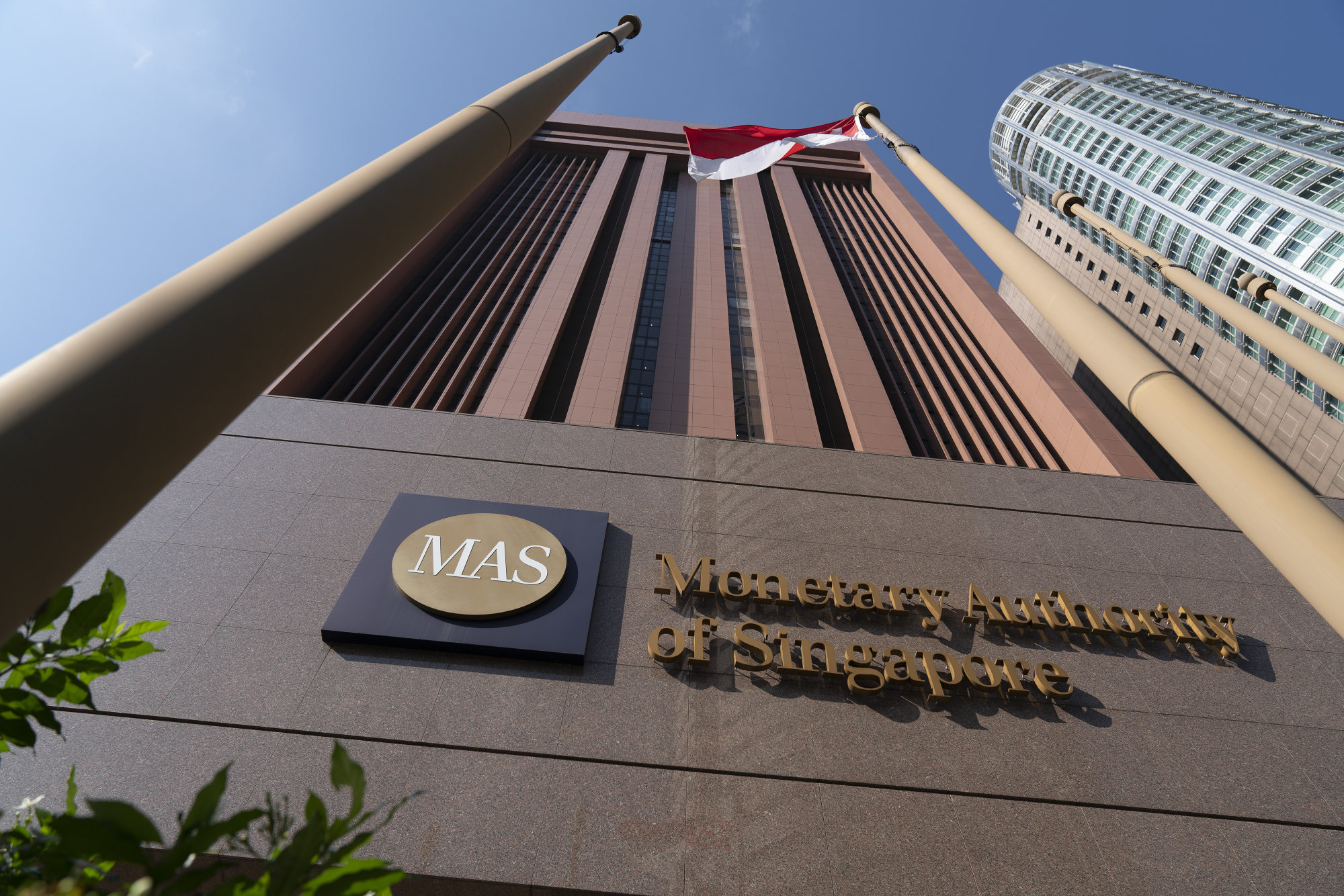
The Monetary Authority of Singapore building in Singapore. Photo: Bloomberg

The Monetary Authority of Singapore’s (MAS) regulations announced last week will apply to nonbank users of single-currency stablecoins pegged to the Singapore dollar, or any currency from the world’s 10 biggest economies, and would require issuers to maintain low-risk reserves and return par value to investors within five days of receiving a redemption request.

“The MAS seems to be paving the way for greater trust and potential formal integration of stablecoins into the banking system.

However, as these regulations are scheduled to come into effect in 2024, their precise impact on bank transactions will [need to] be monitored closely,” said Chen Zhuling, founder and CEO of crypto finance gateway RockX.

The central bank would need to hold legislative consultations before Parliament passes amendments that would bring the framework into force. The coins will be labelled as MAS-regulated stablecoin.

The distinction of having central bank-regulated stablecoins, as opposed to non-regulated cryptocurrencies, is likely to ease concerns about their stability that have curtailed their usage for physical transactions, analysts say.

Stablecoins have been the backbone for cryptocurrency trading and can potentially slash transaction costs associated with traditional banking systems to a nominal amount, while speeding up processing times to seconds.

But stablecoins have in the past failed to make inroads into mainstream financial systems because of a lack of transparency about their reserves.
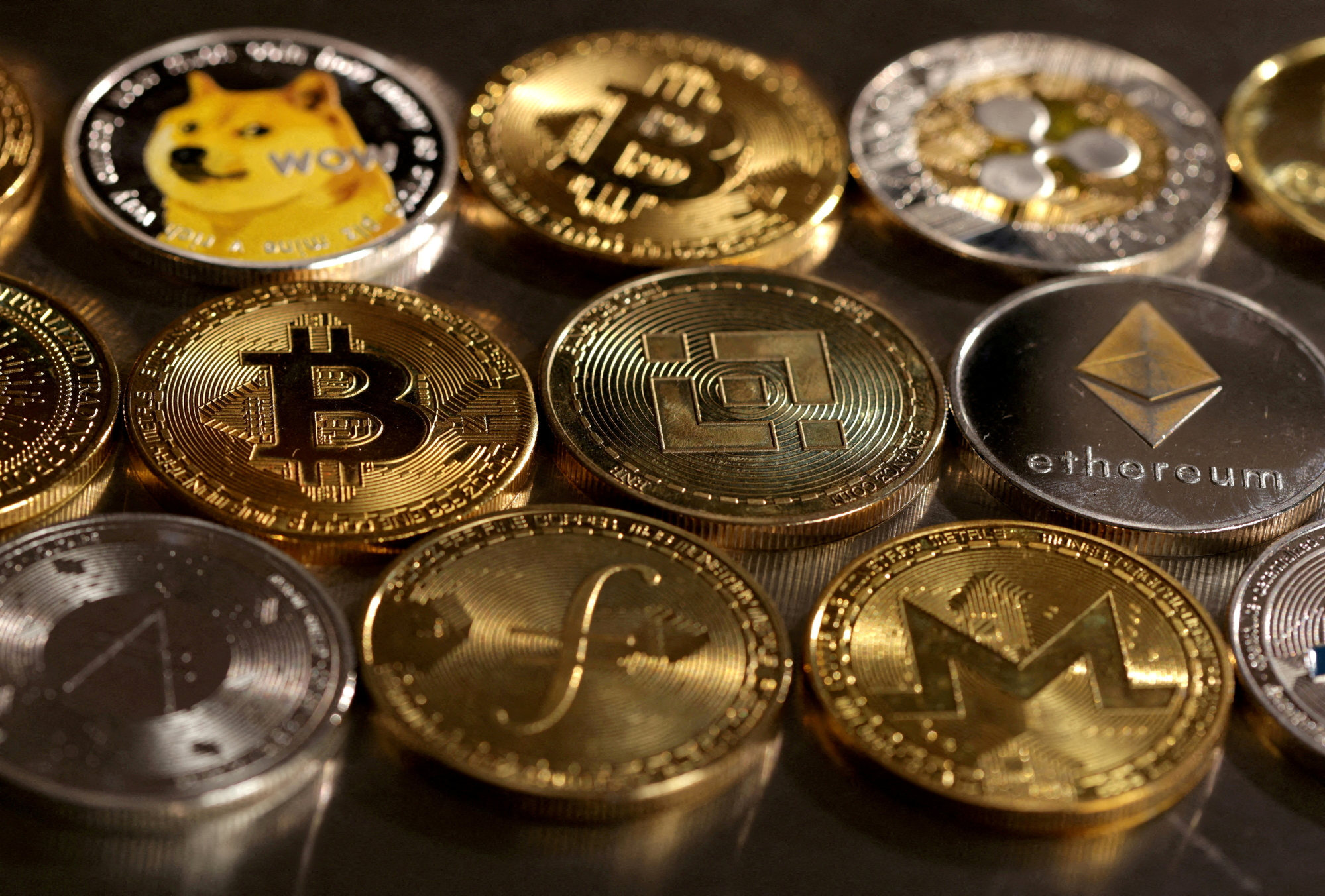
Popular cryptocurrencies like bitcoin and ether tend to suffer from high price volatility. Photo: Reuters

Anndy Lian, author of the book NFT: From Zero to Hero, said Singapore’s guidelines could bridge the gap between fiat currrencies and digital assets.

“But this should not necessarily mean that banks will start to accept all kinds of cryptocurrencies. The volatility of other cryptocurrencies is still a red flag for many,” he said.

Popular cryptocurrencies like bitcoin and ether tend to suffer from high price volatility, whereas stablecoins tend to hold steady since they are linked to fiat currencies and other such assets.

Despite their relative safety, clamours for regulation of stablecoins grew after two such sister currencies – Terra and Luna, whose values were algorithmically pegged to the US dollar and not backed by cash – suddenly collapsed in May last year.

Singapore’s strict guidelines are meant to reassure both investors and institutions that could open new avenues for the asset class, industry executives say.

“Banks may even issue stablecoins for tokenised bank deposits as part of their rapidly developing digital transformations,” said Gerald Goh, co-founder and CEO of Sygnum Singapore, a digital assets fintech group.

“This model – fully regulated, traditional-asset backed and pegged to a high-quality ‘stable’ fiat currency like the Singapore dollar – has the potential to become a blueprint for the industry,” he added.

Do Kwon, the cryptocurrency entrepreneur who created the failed Terra stablecoin, is taken to court in handcuffs in Montenegro in March. Photo: Reuters

First among digital equals

Singapore’s stablecoin framework will put it among the first jurisdictions to have rules to prevent mishaps.

Rival financial hub Hong Kong is, meanwhile, undergoing a public consultation on stablecoins and seeks to introduce regulation for them next year.

The European Commission set the ball rolling with the Markets in Crypto-Assets (MiCA) regulation, which it introduced with the purpose of establishing a global benchmark for governing cryptos.

After being proposed by the commission in September 2020, the European Parliament approved the MiCA regulation on April 20. It is due to come into force for stablecoins from June 2024, and for other assets from December.

Anne-Sophie Cissey, head of legal and compliance at crypto firm Flowdesk, said the European legislation has set the tone for markets. “With clarification on the legal status, all crypto actors will feel more at ease to deal with those.”

Singapore’s regulation could speed up stablecoins adoption across the region, industry executives say.

“Regulators now collaborate with international entities, for example, MiCA’s announcement in Europe led to similar guidelines in various countries,” said Danny Chong, co-founder of online asset tracker Tranchess.

“This trend suggests that financial hubs like Singapore and Hong Kong should move towards converging rules. This convergence might take a few years to materialise, rather than happening immediately,” he said.

Hong Kong’s regulations are likely to follow Singapore’s soon, as it has been earnestly trying to woo crypto investors. In June, it introduced retail trading and licensing guidelines for crypto.

Many investors have already begun to gravitate towards tokenised assets.

“We are increasingly seeing more stablecoin adoption in Asia,” said Henry Zhang, founder and CEO of DigiFT, a Singapore-based decentralised digital asset exchange, adding that they were looking forward to introducing MAS-regulated stablecoins.

Tokenised US short-term bills have exploded to US$600 million this year, said Timo Lehes, co-founder of Swarm, a regulated decentralised finance platform based out of Germany, citing data from Coindesk.

The digital assets have also started making inroads past intermediaries in traditional financial channels, he said.

“We are already seeing applications taking tokenised forms of cash and financial products that cut out the middleman. In this new world, financial institutions will need to rethink financial product design that puts consumers at the heart,” Lehes said.

Central banks have laid the groundwork for cyptocurrency adoption with countries like China, India and Australia either planning to or having launched a central bank digital currency that can compete with stablecoins, said an industry executive.

“This will drive the choice and innovation needed in the market that will lead to mass adoption,” said Vincent Chok, CEO of Hong Kong finance firm First Digital.
Source: https://www.scmp.com/week-asia/economics/article/3231578/how-singapores-stablecoin-rules-could-boost-cryptos-mainstream-banking-role

Anndy Lian is an early blockchain adopter and experienced serial entrepreneur who is known for his work in the government sector. He is a best selling book author- “NFT: From Zero to Hero” and “Blockchain Revolution 2030”.

Currently, he is appointed as the Chief Digital Advisor at Mongolia Productivity Organization, championing national digitization. Prior to his current appointments, he was the Chairman of BigONE Exchange, a global top 30 ranked crypto spot exchange and was also the Advisory Board Member for Hyundai DAC, the blockchain arm of South Korea’s largest car manufacturer Hyundai Motor Group. Lian played a pivotal role as the Blockchain Advisor for Asian Productivity Organisation (APO), an intergovernmental organization committed to improving productivity in the Asia-Pacific region.

An avid supporter of incubating start-ups, Anndy has also been a private investor for the past eight years. With a growth investment mindset, Anndy strategically demonstrates this in the companies he chooses to be involved with. He believes that what he is doing through blockchain technology currently will revolutionise and redefine traditional businesses. He also believes that the blockchain industry has to be “redecentralised”.

j j j

Bybit Talks — Anndy Lian’s Vision for Web3

Bybit Talks — Anndy Lian’s Vision for Web3

The AAAI 2023 Inaugural Summer Symposium served as a dynamic platform for industry experts to converge and explore the horizon of technological transformation. Against this backdrop, Anndy Lian’s thought-provoking perspective resonated, shedding light on the intricate challenges and promising potential that Web3 brings to the forefront. Lian’s incisive quote, “Revenue is one of the factors that is really stopping Web2 companies from fully embracing Web3. The other factor is governance,” sparked profound discussions that unveiled the transformative journey ahead.


Revenue Challenge: Web2’s Dilemma in Embracing Web3

Web2 companies have long thrived on advertising and traditional revenue models. Lian’s observations poignantly highlight the clash between these models and the decentralized nature of Web3. The uncertainty surrounding revenue generation in a decentralized ecosystem poses a significant obstacle for companies looking to transition. But rather than dwelling on the hurdles, it would be more productive for Web2 companies to consider the solutions. By incorporating blockchain-based systems, tokenization, and NFTs, companies can not only find reliable sources of revenue, but also ensure that profits are tied to the overall growth and success of the community.


Governance: Web2’s Centralization vs. Web3’s Decentralization

Governance, a cornerstone of the Web3 narrative, surfaces as another pivotal aspect. Lian’s acknowledgment of the evolution from Web2’s centralized decision-making to the decentralized ethos of Web3 resonates strongly. He strikes a chord by noting the current discrepancies between ideals and implementation. Yet, Lian offers a visionary outlook by introducing the concept of Web4, a realm guided by a fusion of blockchain consensus and AI. This harmonious blend could bridge the gap and accelerate the transition towards true decentralized governance.

In conclusion, while the journey from Web2 to Web3 may present challenges, the potential rewards are immense. The decentralized ethos of Web3 empowers users, fosters innovation, and creates an environment where creativity and collaboration flourish. The revenue and governance challenges that Web2 companies face are not insurmountable roadblocks, but rather opportunities to redefine how businesses interact with their users and communities. As we collectively work toward a Web3 future, we must recognize that the current challenges are stepping stones to a more decentralized, inclusive, and prosperous digital world.


Source: https://blog.bybit.com/en-US/post/bybit-talks-anndy-lian-s-vision-for-web3-bltb37b72da181991f5/

Anndy Lian is an early blockchain adopter and experienced serial entrepreneur who is known for his work in the government sector. He is a best selling book author- “NFT: From Zero to Hero” and “Blockchain Revolution 2030”.

Currently, he is appointed as the Chief Digital Advisor at Mongolia Productivity Organization, championing national digitization. Prior to his current appointments, he was the Chairman of BigONE Exchange, a global top 30 ranked crypto spot exchange and was also the Advisory Board Member for Hyundai DAC, the blockchain arm of South Korea’s largest car manufacturer Hyundai Motor Group. Lian played a pivotal role as the Blockchain Advisor for Asian Productivity Organisation (APO), an intergovernmental organization committed to improving productivity in the Asia-Pacific region.

An avid supporter of incubating start-ups, Anndy has also been a private investor for the past eight years. With a growth investment mindset, Anndy strategically demonstrates this in the companies he chooses to be involved with. He believes that what he is doing through blockchain technology currently will revolutionise and redefine traditional businesses. He also believes that the blockchain industry has to be “redecentralised”.

j j j

Crypto Philanthropy: How Digital Assets Are Driving Charitable Giving

Crypto Philanthropy: How Digital Assets Are Driving Charitable Giving

In 2021, crypto philanthropy saw a massive surge, with cryptocurrency donations rising by 16 times and reaching $500 million in the United States alone, the Web3 tech company that specializes in crypto philanthropy, Givepact, told Technopedia.

While platforms that specialize in crypto donations are yet to see another repeat of the 2021 bull run, the chief operating officer of Endaoment, Zach Bronstein, noted that crypto investors continue to drain their Donor Advisor Funds (DAFs) and give their remaining dollars to charities.

“Folks are excited to get the contributed dollars to the charitable recipients, and are using this slower period of blockchain activity to focus on making impactful and meaningful gifts.”

What is Crypto Philanthropy?

Crypto philanthropy is very similar to other forms of charitable giving, with the only major exception being the type of asset donated.

“The recipient has to understand all of the mechanics of holding a wallet, knowing how to transfer the token to and from an off-ramp or exchange, as well as keeping it secure and safe,” the co-founder of Bracket Labs, Pelli Wang, explained.

Givepact’s Maule added that in many instances, one of the most exciting parts of crypto donations is that, on average, crypto donors tend to give 82 times more money than “cash” donors, which could amount to $10,500 per donation.

In addition, crypto philanthropy is driven by one of the biggest names in the industry – Vitalik Buterin, the founder of ethereum (ETH), who, over the years, has donated vast amounts of crypto for a number of charitable causes.

“We have noticed a trend that schools, universities, and other research and higher learning institutions typically find themselves at the top of this list. I would argue that donors here are not just excited to give back to their college or university but rather are interested in supporting interesting and potentially greatly impactful research that’s being carried out. This is very much in line with the ethos of the Web3 space, to find funding opportunities that can translate not just to doing some good, but to being able to do some good that was previously unattainable,” Endaoment’s Bronstein said.

In 2022 alone, the company saw $22.8 million in crypto donations, with the average donation size being $43,000.

Crypto Philanthropy Pros and Cons

Crypto donations are processed at a much faster rate than traditional donations, the author of NFT: From Zero to Hero, Anndy Lian, told Technopedia, which could come in handy in times of emergencies.

In addition, the fact that crypto is borderless allows individuals to make crypto donations to charities worldwide, regardless of their location.

Lian said:

“The transaction costs for receiving crypto donations are lower than those for credit cards, debit cards, and wire transfers. This means that more of the donation goes directly to the cause.”

Bracket Labs’ Wang added that because cryptocurrency transactions are transparent, donors can openly see how much funds were collected for a certain cause.

On the other hand, cryptocurrencies remain a niche. Digital assets are highly volatile, which could also push many individuals against opting for crypto donations.

“The greatest challenges with crypto donations are fluctuations and regulations. The price of cryptocurrencies is highly volatile, which affects the value of donations. So, nonprofits need to be strategic about converting their bitcoin payments. When it comes to regulations, different regulations depend on the jurisdiction, which makes it complicated because the organizations need to navigate the procedures and comply with the laws,” a founder at Coin Data Flow, Alexandr Sharilov, told Technopedia.

What About Tax Implications?

One of the biggest advantages of crypto philanthropy is the tax breaks the donors get and the tax credit, Sharilov explained. This means that in many cases, donors are eligible to get a charitable contribution deduction when filing their tax returns at the full fair market value of the cryptocurrency that they donated at the time of the donation.

Wang noted that while tax deductions are one of the biggest reasons why many donors would opt for a crypto donation as opposed to cash, each county recognizes the value of cryptocurrencies differently.

In the US, for example, the Internal Revenue Service (IRS) treats digital assets as property for tax purposes meaning that donating digital assets is not a taxable event, and donors can claim a charitable deduction for the fair market value of their donation, Lian explained.

Companies specializing in crypto philanthropy are also keen to educate the public on how easy it is to contribute to charitable causes using digital assets.

“What is key here is explaining to folks that donations of crypto are treated just like donations or stock or property – if you have held the asset for over a year, you can deduct the current market value of the asset (if you have held less than one year, you can only deduct the cost basis of that asset). While of course, this is not tax advice, clearly donations of appreciated assets can create additional deductions for donors, and the non-profits reap the rewards of the appreciation by receiving additional funding!”

The Future of Crypto Philanthropy

Companies specializing in crypto philanthropy are bullish, betting that the field will continue to prosper in the years to come. Maule compared the current rate at which crypto adoption is growing to how the internet was in 1998.

“The interest in crypto is expanding, and we’re just at the beginning of seeing this take off. If $500 million in crypto was donated in 2021 with limited pathways to give, we are betting on a future that projects crypto donations will exceed $10 billion within a decade.”

Edaoment’s Bronstein added that even in the bear market currently faced by the cryptocurrency space, the company has seen over $52 million donated on its platform, with the metrics continuing to grow.

“Put this together with the fact that new folks are onboarding into web3 daily, and large organizations like Coinbase are working to tackle the crypto UX problem – we are sure to see many more folks join us in this space in the next few years, which will in turn lead to additional crypto donation activity, especially as folks learn how easy it can be, and the benefits that can be wrought.”

Making Crypto Philanthropy More Accessible

From UNICEF to the Rainforest Foundation, a number of charities have started to accept crypto donations showing just how easy it is for charities to “jump onto the trend”.

Lian and Sharilov both explained that organizations can start accepting crypto donations in two easy ways. Either through a hands-off approach by leveraging a crypto payment processor in the likes of Givepact or Endaoment to accept the donations on their behalf or through a hands-on approach by holding the crypto donations in a wallet controlled by the organization itself.

Bracket Labs’ Wang noted that before charities get involved in the Web3 space, they must make sure a member of their team is familiar with the crypto world.

“There are many benefits to tapping into the crypto/Web3 audience including higher average donations; younger, higher earning donors; potentially less fees to process. However, you need to make sure you have: a wallet provider or custodian; an off-ramp or exchange; tax/accountant; ID or KYC/AML provider and a security/compliance monitor.”


Source: https://www.techopedia.com/crypto-philanthropy-how-digital-assets-are-driving-charitable-giving

Anndy Lian is an early blockchain adopter and experienced serial entrepreneur who is known for his work in the government sector. He is a best selling book author- “NFT: From Zero to Hero” and “Blockchain Revolution 2030”.

Currently, he is appointed as the Chief Digital Advisor at Mongolia Productivity Organization, championing national digitization. Prior to his current appointments, he was the Chairman of BigONE Exchange, a global top 30 ranked crypto spot exchange and was also the Advisory Board Member for Hyundai DAC, the blockchain arm of South Korea’s largest car manufacturer Hyundai Motor Group. Lian played a pivotal role as the Blockchain Advisor for Asian Productivity Organisation (APO), an intergovernmental organization committed to improving productivity in the Asia-Pacific region.

An avid supporter of incubating start-ups, Anndy has also been a private investor for the past eight years. With a growth investment mindset, Anndy strategically demonstrates this in the companies he chooses to be involved with. He believes that what he is doing through blockchain technology currently will revolutionise and redefine traditional businesses. He also believes that the blockchain industry has to be “redecentralised”.

j j j