NFTs and super brands: A deep dive into web3

NFTs and super brands: A deep dive into web3

In a world where technology evolves at lightning speed, it’s no surprise that the business landscape is constantly shifting. One of the latest and most talked-about developments is the rise of NFTs (Non-Fungible Tokens) and their integration into the strategies of “super brands.” To shed light on this topic, a panel discussion featuring experts from various fields share insights on the complexities of NFT adoption among super brands.

Super brands are more than just products or services; they are cultural phenomena. These brands have transcended their industries to become status, identity, and aspiration symbols. Their power is not limited to marketing; it extends to influencing consumer behavior, market trends, and even social movements. The bond between super brands and their fans is built on trust, shared values, and a sense of belonging.
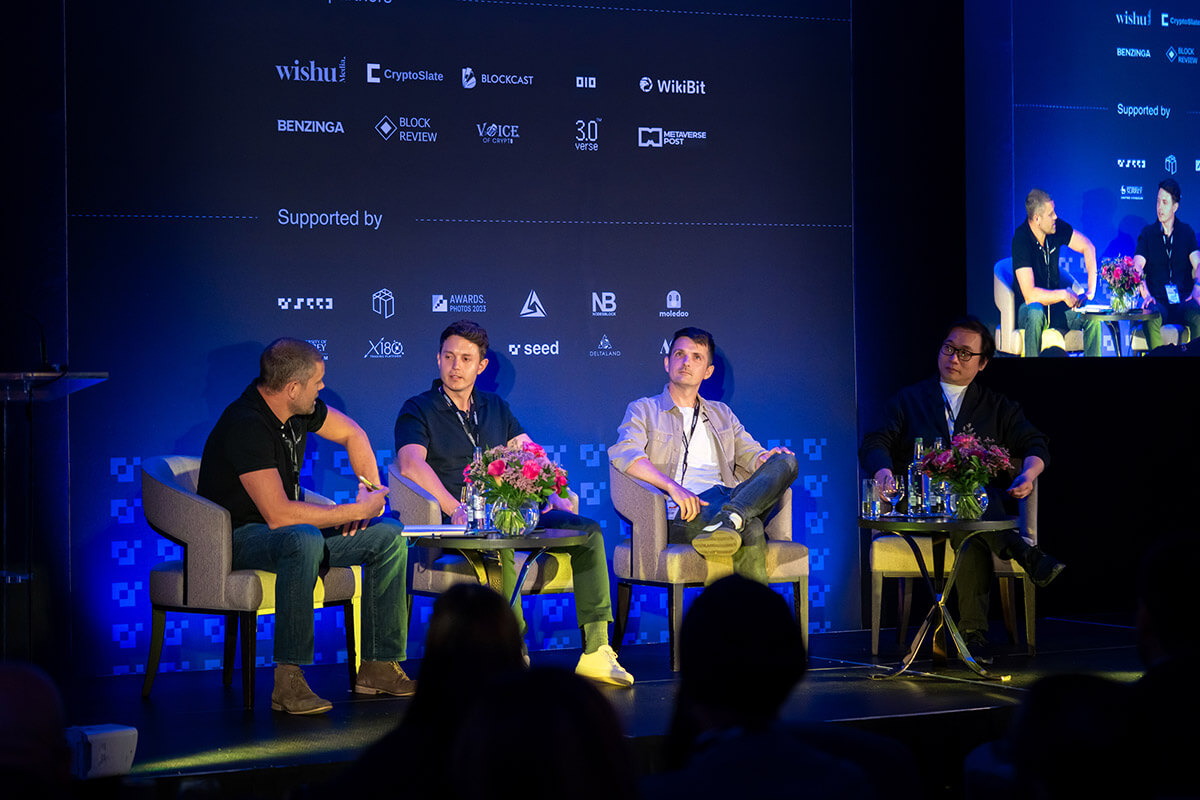
NFT Panel
Investor Anndy Lian hosts a panel at web3wave discussing the potential of NFTs for brands.

The Quest for Fan Engagement

Dan Mitchell, representing Oracle Red Bull Racing, introduced himself as the Web3 lead. Before entering the world of cryptocurrency and Web3, he had worked extensively in advertising, collaborating with global brands on brand strategy and advertising campaigns. Dan discussed how the Red Bull Racing team utilizes Web3 technology to engage racing fans, emphasizing the importance of putting fans at the core of their strategy.

Formula 1 teams understand the hunger of their fans. The desire to feel emotionally connected to the team, to access exclusive content, and to engage with their favorite drivers is palpable. However, with most fans unable to attend races in person, finding innovative ways to bridge the gap is the challenge.

The question that often arises is, “How do we best use Web3 technology to provide fans with emotionally engaging experiences?” Whether it’s about getting closer to the drivers, accessing team principals like Christian Horner, or offering exclusive perks through loyalty reward programs, the potential of Web3 in enhancing fan engagement is vast.

Dan explained:

“We are using Web3 technologies to engage with our fans. It has been a unique journey for our side, and thanks to Bybit, we understand how to manage Web3 a lot easier.”

The Challenge of NFTs and Utility

As the discussion at the NFT conference suggests, Web3 technology, particularly NFTs, should be invisible to the end-user. It’s not about slapping an “NFT” label on a product or experience and expecting it to succeed. The true success lies in crafting an exceptional underlying experience for customers.

Anndy Lian, a book author and licensed fund manager in Singapore, shared his expertise. He discussed the rapid evolution of NFTs, emphasizing their potential as a gateway to larger communities and technology adoption. Andy also highlighted the importance of utility tokens and the value of creating meaningful user experiences.

“NFT gaming is more than just owning a digital sword; it’s about the experience and usefulness it provides within the game. Formula 1 discovered this when they first experimented with NFTs by offering digital helmets and race suits without any clear purpose. Fans were left wondering what they could do with these digital assets. Our partnership with Oracle Red Bull Racing on the newly launched Velocity Series addresses these concerns. We collaborate with successful NFT artists to incorporate racing characteristics into the art. In this case, the value and usefulness are in the art itself, not just as an NFT, as Anndy stated.”

Learning from Mistakes and Customer-Centric Approach

Liverpool Football Club’s early NFT launch serves as a cautionary tale. They released NFTs without a clear utility, mirroring traditional merchandise. However, they understood their audience better when they partnered with Meta for NFT-based clothing. They used terminology their fans understood, focusing on “collectible avatars” and “coins” instead of complex NFT jargon. This approach led to a highly successful project, with three million wallets opened on the first launch.

Reddit, another big brand, ventured into Web3 by offering customizable avatars without emphasizing NFTs, but instead focused on user identity and opinions. This strategy resonated with their audience and resulted in significant success.

The above points were highlighted by Tom Downing, representing the British Interactive Media Association. He highlighted his role in educating brands and businesses about Web3, and he mentioned a Web3 education business called “Roster3,” which offers an accredited mini-MBA in Web3.

The Reality Check

However, amidst all the excitement, it’s essential to remember that not every Web3 venture is groundbreaking. Some may still appear gimmicky. The key is to offer a unique technology that brings transparency, accountability, and genuine value to users. In the case of NFTs, simply replacing traditional offerings with digital versions won’t suffice.

Ben Radcliffe, representing Amber Group, a crypto-native financial services firm, echoed Anndy’s point. He emphasized the need for brands to understand the “why” behind their Web3 initiatives and how these initiatives can create value for users. He has also highlighted the challenges and opportunities for super brands entering the Web3 space. He emphasized the need for brands to have a legitimate reason for adopting Web3 technology beyond just chasing the latest trend.

Conclusion

The potential future directions for super brands in the Web3 space is positive. The possible expansion areas, include NFT ticketing, fan-based tokens, and immersive experiences in the metaverse. Andy emphasized that brands should focus on delivering value and experiences to users with a long-term perspective.

As the panel discussion concluded, it became clear that super brands are taking significant steps into the Web3 world. While NFTs provide exciting opportunities for fan engagement and revenue generation, brands must be strategic.

The success of Web3 initiatives hinges on providing genuine value and creating immersive experiences for users. In this fast-evolving landscape, the future of super brands in Web3 holds the promise of exciting developments and innovations.

Web3wave Summit was organized on the 3rd of August in London. Experts from Binance, Bybit, Coinbase, Mastercard, Bitfinex, Huobi, Oxford University, and many others were present. Her Excellency Uddin, Member of the House of Lords, gave a keynote speech on her vision for Web3 and Metaverses. The event was supported by Benzinga, Coingecko, CryptoSlate, Seed.Photo, Blockcast.cc, Blockreview, Followin, Moledao, AOI, Custodiy, Bitverse, Riple, Tusima, Pollen Defi and Wishu Media etc.


Source: https://cryptoslate.com/nfts-and-super-brands-a-deep-dive-into-web3/

Anndy Lian is an early blockchain adopter and experienced serial entrepreneur who is known for his work in the government sector. He is a best selling book author- “NFT: From Zero to Hero” and “Blockchain Revolution 2030”.

Currently, he is appointed as the Chief Digital Advisor at Mongolia Productivity Organization, championing national digitization. Prior to his current appointments, he was the Chairman of BigONE Exchange, a global top 30 ranked crypto spot exchange and was also the Advisory Board Member for Hyundai DAC, the blockchain arm of South Korea’s largest car manufacturer Hyundai Motor Group. Lian played a pivotal role as the Blockchain Advisor for Asian Productivity Organisation (APO), an intergovernmental organization committed to improving productivity in the Asia-Pacific region.

An avid supporter of incubating start-ups, Anndy has also been a private investor for the past eight years. With a growth investment mindset, Anndy strategically demonstrates this in the companies he chooses to be involved with. He believes that what he is doing through blockchain technology currently will revolutionise and redefine traditional businesses. He also believes that the blockchain industry has to be “redecentralised”.

j j j

Crypto trading landscape: Insights from Bybit, CEX.IO, Huobi and GoodCrypto

Crypto trading landscape: Insights from Bybit, CEX.IO, Huobi and GoodCrypto

According to key CEX players, success in the crypto industry hinges on adapting to client needs, navigating regulatory changes and prioritizing mass crypto education.

The virtual roundtable, hosted by Cointelegraph on Twitter Spaces, brought together key team members from the largest centralized exchanges (CEXs), including Bybit, CEX.IO and Huobi, to discuss current industry challenges and trends in crypto trading. Speakers also included Maksim Hramadtsou, co-founder of GoodCrypto, an all-in-one trading and portfolio management app and member of the Cointelegraph Accelerator.

All speakers noted that the challenges they’re facing are the result of a complicated regulatory landscape, especially in some parts of the world such as the United States, a loss of user confidence due to FTX and other major industry events, liquidity drying up and the consequences of a bear market. They shared strategies for navigating through the uncertainty of the current state of the industry.

Becky Sarwate, head of communications at CEX.IO, doesn’t see increased regulation as an obstacle, as she believes regulation is the key to global crypto adoption. She emphasized the importance of educating users not only on how to use CEX but also on the basics of crypto and the processes behind crypto, without technical terms or detailed descriptions of use cases. “If we really want to welcome newcomers to space, we need to limit the jargon and techno-speak to show the possibilities that really exist in space,” Sarwate said. “In our case, we teach people through the university within our platform, our leadership and values, which we’ve been nurturing throughout CEX.IO’s history.”

Edward Chen, general manager of the Asset and Commercial Center at Huobi, noted the lack of use cases related to the application layer. “Everyone is talking about infrastructure, but not the application layer, where we’ve only seen a few projects. There’s still a lot to be done there from the traditional world, such as crypto and fiat off-ramp solutions, so we provide a bridge between these scenarios to support trading demand,” he said. Among Huobi’s strategies to maintain its position in the market, Chen cites partnerships with traditional finance (TradFi) players, a strong research team to detect market trends ahead of competitors and risk management tools for users.

Bybit takes a different approach, as its adviser, Anndy Lian, pointed out with the example of its recent collaboration with Oracle Red Bull Racing: “Together we launched an NFT collection ‘Velocity Pass’ almost three weeks ago, which has sold quite well despite the fact that the NFT market is not performing strongly. I think whatever the market, bull or bear, as long as you have a good product, you will always be on the right track.” Lian said Bybit has managed to stay ahead of the competition by correctly anticipating the regulatory framework, working closely with various communities and stakeholders at the government and business levels, and constantly supporting customers, including providing artificial intelligence (AI) services. “In the longer term, it turns into a trust when done on a daily basis,” he said.

Maksim Hramadtsou of GoodCrypto noted the shift in traders’ preferences, which are now more toward decentralized exchanges (DEXs). “It’s not only because of FTX but also liquidity, which is not having the best times. Maybe over time, they [users] will change their minds because CEXs are faster, have better liquidity and lower fees. But we try to be with our customers where they are now.” Hramadtsou mentioned that GoodCrypto supports over 35 exchanges and offers tools that are not native to these exchanges but are commonly used by many traders, especially those from TradFi. These tools include trading stops, dollar-cost averaging (DCA) and grid trading bots, as well as the ability to activate any order via webhooks. “So for those who use multiple platforms at the same time, which is absolutely standard practice and creates interesting dynamics in the market, GoodCrypto is a good option as traders can easily switch between exchanges,” said Hramadtsou.

In terms of current trends that will remain and shape the future of the industry, Sarwate highlighted the growing synchronicity between TradFi and decentralized finance (DeFi), which will continue, while Hramadtsou predicted the growth of DEXs built on layer 2. Lian added: “I hope to see more tokenized products in the space, such as securities, commodities, derivatives or equities because it can bring more traditional players into crypto and therefore bring competitiveness and a variety of products. It can take us to new heights.”


Source: https://cointelegraph.com/news/crypto-trading-landscape-insights-from-bybit-cexio-huobi-and-goodcrypto


Anndy Lian is an early blockchain adopter and experienced serial entrepreneur who is known for his work in the government sector. He is a best selling book author- “NFT: From Zero to Hero” and “Blockchain Revolution 2030”.

Currently, he is appointed as the Chief Digital Advisor at Mongolia Productivity Organization, championing national digitization. Prior to his current appointments, he was the Chairman of BigONE Exchange, a global top 30 ranked crypto spot exchange and was also the Advisory Board Member for Hyundai DAC, the blockchain arm of South Korea’s largest car manufacturer Hyundai Motor Group. Lian played a pivotal role as the Blockchain Advisor for Asian Productivity Organisation (APO), an intergovernmental organization committed to improving productivity in the Asia-Pacific region.

An avid supporter of incubating start-ups, Anndy has also been a private investor for the past eight years. With a growth investment mindset, Anndy strategically demonstrates this in the companies he chooses to be involved with. He believes that what he is doing through blockchain technology currently will revolutionise and redefine traditional businesses. He also believes that the blockchain industry has to be “redecentralised”.

j j j

NFT tech expands realm of future art

NFT tech expands realm of future art

With the rapid advancement of artificial intelligence technology, the role of NFT technology goes beyond protecting the copyrights of digital art collectibles, and into expanding the realm of art, with diverse implications for the future art world.

Throughout the NFT 2023 Seoul Conference, held at Coex in southern Seoul on Friday, the future roles of NFT technology were illuminated.

Dedicated to the theme, “the Utilization and Role of NFT Art in the Future Art,” the second part of the conference was filled with speeches by CEOs and technology experts with sharp insights into AI, the metaverse, blockchain technology and NFTs.

The session kicked off with a keynote speech by Cha In-hyuk, former CEO of CJ OliveNetworks.

Throughout the speech, he underscored the dramatic ways in which generative AI can transform the content creation market by enabling the invention of brand-new content including but not limited to texts, images, music and videos, with algorithms based on diverse input.

Cha also envisioned a future in which AI technologies and NFTs are used by businesses not only as a “quick monetizing tool” but also as a tool to revive humanity in the international community by “restoring our values and being a protector of the uniqueness of each of us.”

The emphasis on community was stressed in the second speech by Mariko Nishimura, co-founder and CEO of Heart Catch.

“By acquiring an NFT artwork, you can become a digital villager in Yamakoshi village along with only 800 other residents in Japan,” said Nishimura, citing one of the Japanese projects utilizing NFTs to revitalize depopulated villages.

She also advocated for the integration of art into businesses by highlighting the ability of art to spur “innovative thinking” among entrepreneurs.

The following speech by Aleksandra Artamonovskaja, lead partner of Joyn.xyz, shed light on the role of decentralized curation in facilitating opportunities for emerging artists from various communities to showcase their artworks in virtual galleries.

She added that decentralized curation also enhances “transparency” as the audience can access information about the open-call process, including the identities of the curators, the number of artworks submitted and the criteria used to shortlist artworks.

“Despite the declining trading volume, NFT has not died,” asserted Andy Lian, the Singaporean best-selling author of “Blockchain Revolution 2030,” as he stressed the promising potential of NFTs, which can ride on the growing markets of AI and Web 3.0.

“Advancements in AI technology have resulted in the great synergy between AI and NFT, enabling the invention of unique digital assets,” he said.

He also hinted at the necessity for artists to explore collaboration with AI by building on and refining artworks first generated by AI.


Source: https://www.koreaherald.com/article/3205365

Anndy Lian is an early blockchain adopter and experienced serial entrepreneur who is known for his work in the government sector. He is a best selling book author- “NFT: From Zero to Hero” and “Blockchain Revolution 2030”.

Currently, he is appointed as the Chief Digital Advisor at Mongolia Productivity Organization, championing national digitization. Prior to his current appointments, he was the Chairman of BigONE Exchange, a global top 30 ranked crypto spot exchange and was also the Advisory Board Member for Hyundai DAC, the blockchain arm of South Korea’s largest car manufacturer Hyundai Motor Group. Lian played a pivotal role as the Blockchain Advisor for Asian Productivity Organisation (APO), an intergovernmental organization committed to improving productivity in the Asia-Pacific region.

An avid supporter of incubating start-ups, Anndy has also been a private investor for the past eight years. With a growth investment mindset, Anndy strategically demonstrates this in the companies he chooses to be involved with. He believes that what he is doing through blockchain technology currently will revolutionise and redefine traditional businesses. He also believes that the blockchain industry has to be “redecentralised”.

j j j