Blockchain & AI Change the Shape of Government in 2024

Blockchain & AI Change the Shape of Government in 2024

As we venture into the heart of 2024, information technology is undergoing a seismic shift. Government IT chiefs are grappling with a dual challenge: staying abreast of cutting-edge tech while harnessing its power to boost efficiency, security, and innovation.

This year’s standout trend? blockchain meeting artificial intelligence (AI) to reshape public sector IT strategies.

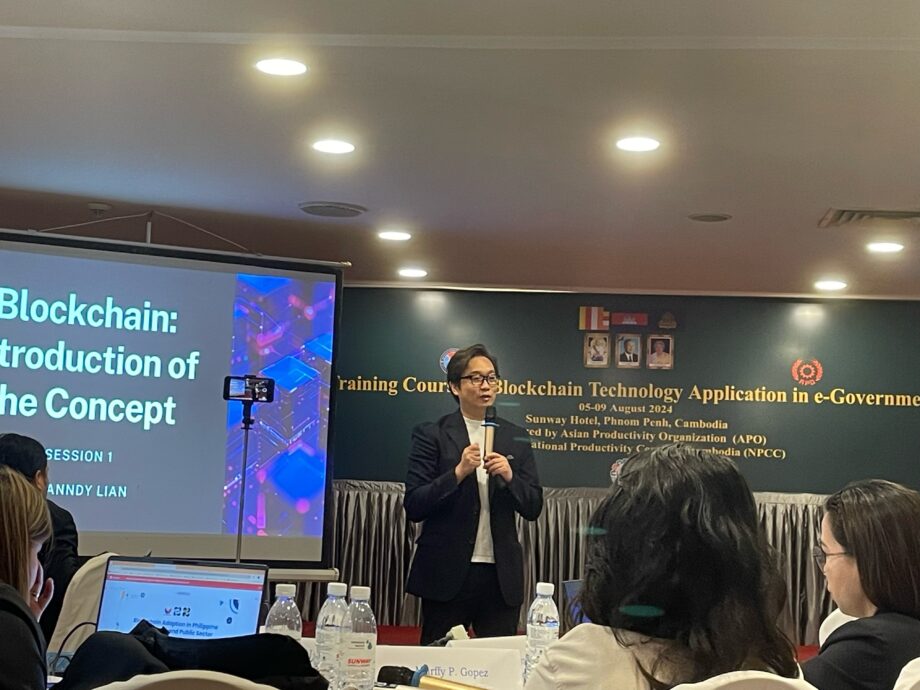
A recent workshop on Blockchain in e-Government, held in Cambodia’s bustling capital from August 5-9, 2024, highlighted the growing fascination with blockchain among state bodies.

The event drew delegates from nine nations and boasted the presence of dignitaries like H.E. Phork Sovanrith, a top official from MISTI and Cambodia’s APO Director, and highlighted blockchain’s pivotal role in molding tomorrow’s digital government services.

As the expert speaker, I witnessed firsthand the palpable excitement surrounding blockchain. The lively debates and probing questions revealed a keen appetite among public sector representatives for blockchain adoption. This shift isn’t fleeting; it marks a profound change in governmental attitudes toward technology.

Key Takeaways

  • Blockchain and AI are beginning to change how public sector IT works, offering security, efficiency, and innovation.
  • The Cambodia workshop in August highlighted global interest in blockchain’s role in transforming e-government services.
  • Blockchain’s transparency and AI’s analytical power can turbo-charge government operations and citizen engagement.
  • There are challenges in adopting these technologies — scalability, interoperability, and ensuring inclusive access among them.
  • Successful e-government transformation hinges on strategic planning, collaboration, and the ethical implementation of blockchain and AI.

Blockchain’s allure for the public sector is multifaceted. At its core, it offers a transparent, decentralized, and tamper-proof ledger system, significantly bolstering the security and integrity of government data and transactions. In our era of sophisticated cyberthreats, blockchain’s security features present an enticing shield for sensitive information.

Furthermore, blockchain’s capacity to streamline operations, slash red tape, and boost transparency aligns perfectly with e-government objectives. Its potential applications span from land registries and identity management to voting systems and public procurement.

Yet, blockchain’s true potential in e-government lies in its synergy with other emerging technologies, particularly AI. This powerful combination could spawn highly efficient, secure, and intelligent systems, revolutionizing public services.

Picture AI algorithms sifting through blockchain-stored data, uncovering patterns, forecasting trends, and making informed decisions. This could lead to more responsive and proactive government services. For instance, an AI-enhanced blockchain system could automatically flag and prevent fraud in public procurement, saving taxpayer money and ensuring fair competition.

Moreover, the AI-blockchain duo could supercharge citizen engagement in governance. Imagine smart contracts on a blockchain paired with AI-powered interfaces, creating intuitive, personalized e-government services. Citizens could interact using everyday language while AI ensures accurate processing and blockchain recording of their requests.

The enthusiasm for these technologies isn’t confined to one region. The diverse attendance at the Cambodia workshop, with participants from nine countries, signals global recognition of blockchain’s potential. This international collaboration is crucial for developing standards and best practices to facilitate widespread blockchain adoption in e-government.

However, the path to blockchain integration in the public sector isn’t without hurdles. Scalability, interoperability, and regulatory compliance are key challenges. There’s also an urgent need for capacity building and skill development within government agencies to implement and manage blockchain solutions effectively.

Looking ahead, it’s clear that blockchain and AI will remain focal points for IT leaders’ strategies. The public sector stands to gain significantly from these technologies. However, success hinges on a strategic approach that considers not just technical aspects but also organizational and cultural shifts needed to fully adopt these technologies.

For public sector IT leaders, key priorities should include developing clear blockchain strategies, investing in AI capabilities, fostering collaboration, prioritizing security, focusing on user experience, addressing ethical considerations, and maintaining agility in the face of rapid technological change.

It Won’t Be a Smooth Ride Though

The enthusiasm observed at the Cambodia workshop is encouraging, suggesting we’re on the brink of a major transformation in government operations and service delivery. However, it’s crucial to temper this excitement with a realistic understanding of the challenges ahead.

Implementing blockchain and AI solutions at a governmental level is a complex undertaking requiring careful planning, substantial resources, and, often, legislative changes. It’s not just about adopting new technologies; it’s about reimagining the delivery of government services and citizen-state interactions.

As governments rush to adopt these technologies, there’s a risk of creating a digital divide. Not all citizens may have equal access to or understanding of these new systems. IT leaders must ensure that blockchain and AI adoption doesn’t inadvertently exclude segments of the population.

Despite these challenges, the potential benefits of blockchain and AI in e-government are too significant to ignore. These technologies promise more efficient, transparent, and responsive government services. They can help rebuild trust in public institutions by providing verifiable records of government actions and decisions.

The interest shown by public sector representatives at the Cambodia workshop is a positive sign, indicating a willingness to learn and adapt. However, this enthusiasm must be channeled into concrete action plans and sustained efforts to realize the full potential of these technologies.

As we progress, it will be fascinating to see how different countries approach blockchain and AI adoption in their e-government initiatives. Will we witness a race to become blockchain-enabled smart nations? Or will the adoption be more measured and cautious?

What’s certain is that blockchain and AI are no longer just buzzwords or experimental technologies. They’re becoming integral to IT strategies, particularly in the public sector. The focus now should be on responsible and effective implementation that truly serves citizens’ needs.

The Bottom Line

In conclusion, as IT leaders map out their strategies for the coming years, blockchain and AI will undoubtedly be at the forefront. The convergence of these technologies presents an unprecedented opportunity to transform e-government services. However, success will depend on more than just technological prowess. It will require visionary leadership, collaborative efforts, and a commitment to ethical and inclusive implementation.

The journey towards blockchain and AI-enabled e-government has just begun. The enthusiasm witnessed at events like the Cambodia workshop is just the first step. The real test lies in translating this enthusiasm into tangible improvements in government services and citizen experiences. As we stand at this technological crossroads, one thing is certain: the future of e-government is exciting, and it’s powered by blockchain and AI.


Source: https://www.techopedia.com/blockchain-ai-in-government

Anndy Lian is an early blockchain adopter and experienced serial entrepreneur who is known for his work in the government sector. He is a best selling book author- “NFT: From Zero to Hero” and “Blockchain Revolution 2030”.

Currently, he is appointed as the Chief Digital Advisor at Mongolia Productivity Organization, championing national digitization. Prior to his current appointments, he was the Chairman of BigONE Exchange, a global top 30 ranked crypto spot exchange and was also the Advisory Board Member for Hyundai DAC, the blockchain arm of South Korea’s largest car manufacturer Hyundai Motor Group. Lian played a pivotal role as the Blockchain Advisor for Asian Productivity Organisation (APO), an intergovernmental organization committed to improving productivity in the Asia-Pacific region.

An avid supporter of incubating start-ups, Anndy has also been a private investor for the past eight years. With a growth investment mindset, Anndy strategically demonstrates this in the companies he chooses to be involved with. He believes that what he is doing through blockchain technology currently will revolutionise and redefine traditional businesses. He also believes that the blockchain industry has to be “redecentralised”.
j j j

Blockchain and AI copyright: A revolution in digital rights management

Blockchain and AI copyright: A revolution in digital rights management
The intersection of blockchain technology and artificial intelligence (AI) is an emerging frontier that holds great promise for addressing one of the most pressing issues in the digital age: copyright enforcement. With the proliferation of AI-generated content, the need for robust mechanisms to protect intellectual property rights has never been more critical.

This article explores how blockchain technology can provide innovative solutions to AI copyright challenges, offering a personal perspective on its potential supported by statistics and research.

The rise of AI-generated content

Artificial Intelligence has revolutionised content creation, bringing forth a new era where machines can produce music, art, literature, and more. AI algorithms, such as OpenAI’s GPT series, have demonstrated the ability to generate human-like text, while programs like DeepArt and DALL-E create visual art that rivals human artists. According to a report by MarketsandMarkets, the AI market size is expected to grow from US$150.2 billion in 2023 to US$1345.2 billion in 2030, reflecting the rapid adoption of AI technologies across various industries.

However, this surge in AI-generated content has raised significant questions about copyright ownership and enforcement. Traditional copyright laws, designed for human creators, struggle to address the complexities introduced by AI. Who owns the copyright to a piece of music composed by an AI? How can creators prove ownership and control the distribution of their work? These questions highlight the need for a new framework that can manage the unique challenges posed by AI-generated content.

Blockchain: A decentralised solution

Blockchain technology, with its decentralised and immutable nature, offers a promising solution to the challenges of AI copyright. At its core, blockchain is a distributed ledger that records transactions in a secure and transparent manner. Each block in the chain contains a timestamp and a link to the previous block, making it virtually tamper-proof. This inherent security and transparency make blockchain an ideal platform for managing digital rights.

One of the key advantages of blockchain is its ability to establish provenance and ownership. By recording the creation and subsequent transactions of digital content on a blockchain, creators can prove the originality and ownership of their work. This is particularly valuable for AI-generated content, where the line between human and machine authorship can be blurred.

Smart contracts and automated rights management

Smart contracts, self-executing contracts with the terms of the agreement directly written into code, are another powerful feature of blockchain technology that can revolutionise copyright management. These contracts can automatically enforce copyright terms, ensuring that creators are compensated for the use of their work.

For instance, an AI-generated piece of music could be embedded with a smart contract that specifies the terms of its use. Whenever the music is played, the smart contract can automatically collect royalties and distribute them to the rightful owner. This not only simplifies the process of rights management but also ensures that creators receive fair compensation without the need for intermediaries.

A notable example of blockchain-based rights management is the platform Audius, a decentralised music streaming service that uses blockchain to ensure artists retain control over their music and receive fair compensation. As of May 2024, the platform has has between 5 million and 6 million monthly active users, demonstrating the potential of blockchain to disrupt traditional industries and provide new opportunities for creators.

Challenges and considerations

While blockchain technology offers significant potential for AI copyright management, it is not without challenges. One of the primary concerns is the scalability of blockchain networks. As the volume of AI-generated content grows, the blockchain must be able to handle a large number of transactions efficiently. Current blockchain networks, such as Bitcoin and Ethereum, have faced scalability issues, leading to high transaction fees and slower processing times.

However, ongoing research and development in blockchain technology are addressing these issues. Layer 2 solutions, such as the Lightning Network for Bitcoin and Ethereum’s Optimistic Rollups, aim to increase transaction throughput and reduce costs. Moreover, newer blockchain platforms like Solana and Mantle are designed with scalability in mind, offering faster and more efficient networks.

Another consideration is the legal recognition of blockchain records. While blockchain provides a secure and transparent way to record ownership and transactions, the legal system must recognise these records for them to be effective in enforcing copyright. This requires updating existing copyright laws to accommodate blockchain technology and ensure its compatibility with legal standards.

The future of blockchain and AI copyright

Despite these challenges, the future of blockchain and AI copyright management looks promising. As both technologies continue to evolve, they are likely to become increasingly integrated, providing a robust framework for protecting digital rights in the age of AI.

One potential development is the creation of decentralised autonomous organisations (DAOs) for content creators. These organisations, governed by smart contracts, could provide a collective platform for creators to manage their rights, distribute their work, and receive fair compensation.

For example, an AI-generated artwork could be minted as a non-fungible token (NFT) on a blockchain, with the DAO managing its sale and distribution. The creator would retain ownership and receive royalties from secondary sales, ensuring ongoing compensation for their work.

Conclusion: A personal perspective

As an observer of technological trends, I am optimistic about the potential of blockchain to address the challenges of AI copyright. The decentralised and transparent nature of blockchain provides a robust framework for managing digital rights, ensuring that creators receive fair compensation and retain control over their work. While there are challenges to overcome, the ongoing development of blockchain technology and its integration with AI offer a promising path forward.

The rise of AI-generated content presents a unique opportunity to rethink traditional copyright laws and embrace new technologies that can better serve the needs of creators in the digital age. Blockchain, with its ability to establish provenance, enforce smart contracts, and provide a decentralised platform for rights management, is well-positioned to play a central role in this transformation.

As we move forward, it is essential for policymakers, creators, and technologists to collaborate and develop a legal framework that recognises the potential of blockchain and supports its adoption for AI copyright management. By doing so, we can create a more equitable and efficient system that benefits both creators and consumers, ensuring that the digital economy continues to thrive in the age of AI.

In conclusion, the integration of blockchain and AI represents a significant step forward in the evolution of digital rights management. By leveraging the strengths of both technologies, we can create a future where creators are empowered, intellectual property is protected, and innovation is encouraged. The journey may be challenging, but the potential rewards are immense, making it a worthwhile endeavour for all stakeholders involved.


Anndy Lian is an early blockchain adopter and experienced serial entrepreneur who is known for his work in the government sector. He is a best selling book author- “NFT: From Zero to Hero” and “Blockchain Revolution 2030”.

Currently, he is appointed as the Chief Digital Advisor at Mongolia Productivity Organization, championing national digitization. Prior to his current appointments, he was the Chairman of BigONE Exchange, a global top 30 ranked crypto spot exchange and was also the Advisory Board Member for Hyundai DAC, the blockchain arm of South Korea’s largest car manufacturer Hyundai Motor Group. Lian played a pivotal role as the Blockchain Advisor for Asian Productivity Organisation (APO), an intergovernmental organization committed to improving productivity in the Asia-Pacific region.

An avid supporter of incubating start-ups, Anndy has also been a private investor for the past eight years. With a growth investment mindset, Anndy strategically demonstrates this in the companies he chooses to be involved with. He believes that what he is doing through blockchain technology currently will revolutionise and redefine traditional businesses. He also believes that the blockchain industry has to be “redecentralised”.

j j j

Crypto, Web3 & AI Offers Us All A Chance to Be Involved

Crypto, Web3 & AI Offers Us All A Chance to Be Involved

Reflecting on my recent speech at the Web3BB Tokyo event, I am struck by the potent mix of artificial intelligence and Web3, and what they hold for the financial industry.

Having had the privilege of leading AI-driven innovations in finance, I am convinced that the convergence of these two technologies is the key to unlocking a more secure, efficient, and personalized financial landscape. Allow me to share my vision.

Key Takeaways

  • AI and Web3 offer the financial industry security, efficiency, and personalization.
  • Combine them with the decentralized nature of Web3 to add transparency and a user focus.
  • AI-driven insights and Web3’s data management enable sophisticated financial predictions and risk assessments.
  • This is a future worth fighting for, and I am excited to be a part of it.

The Relationship Between AI and Web3

The relationship between AI and Web3 is nothing short of symbiotic. Web3’s decentralized architecture offers a framework in which AI can function with enhanced transparency, security, and user focus.

And then with AI, we can unearth new insights and efficiencies within the financial sector while upholding the highest standards of data integrity and security.

Apply the fusion of AI and Web3 to finance, and you get new ways to trade, invest, and handle your financial planning. AI can also find sophisticated models for predicting market trends, identifying risks, and optimizing investment strategies — the change is unparalleled.

For this to work well, a critical juncture in AI and Web3 is in data management. AI algorithms thrive on data, and Web3’s decentralized nature ensures that the data is secure, transparent, and siloed as appropriate for the user.

The goal is then for AI to analyze vast amounts of decentralized data and offer valuable insights while maintaining privacy and security.

Ushering in a New Era of Financial Innovation

As I gaze into the future, I am exhilarated by the potential impact of AI and Web3 on the financial industry. As the Chairman of Neurai, a pioneering AI startup in Singapore, we are committed to pushing the boundaries of AI-powered finance. Our flagship product, COPX.AI, is already reaping the benefits.

“The future of finance transcends mere trading; it’s about crafting a more secure, efficient, and personalized experience for users,” I emphasized during my speech at Web3BB Tokyo.

But what does this mean for the future of finance? In my view, it signifies a shift towards more decentralized and democratized financial systems. With AI and Web3, we can create more accessible, transparent, and secure platforms. For instance, AI-powered trading platforms can analyze vast amounts of market data to identify trends and patterns that human traders might overlook. This leads to more informed investment decisions and better returns for investors.

Similarly, AI-driven risk management systems can detect potential risks and alert investors before they escalate into major issues, thereby safeguarding investors’ assets and preventing financial losses.

Charting the Path Forward

As the financial industry continues to evolve, we need prioritize innovation and experimentation. The integration of AI and Web3 has the potential to unlock new possibilities and drive growth across the sector, but it necessitates a commitment to ongoing research and development.

At the Web3BB Tokyo event, I had the opportunity to meet over 20 founders of Web3 and AI companies. Their dedication to harnessing the power of AI and Web3 to create a better future for finance is palpable. Many believe that these technologies can democratize access to financial services, promote greater transparency and accountability, and unlock new avenues for growth and innovation.

Navigating the Challenges Ahead

Of course, the road ahead is not without challenges. One of the most significant hurdles is regulatory uncertainty. As AI and Web3 continue to evolve, it remains unclear how regulators will respond. Will they introduce new rules and regulations, or will they adopt a more laissez-faire approach?

Another challenge is the need for education and awareness. Many individuals in the financial industry are still unfamiliar with AI and Web3, necessitating education and training to help them understand the potential benefits and risks of these technologies.

Lastly, there is the challenge of scalability. As AI and Web3 continue to grow and evolve, it remains to be seen whether they can scale to meet the demands of the financial industry.

Where We Go Next

As I look to the future, I am excited to witness the impact of these technologies on the sector. Being deeply involved in AI-powered innovation, I am confident that we can create a more secure, efficient, and personalized financial experience for all.

But this journey is not just about us. It’s about the entire financial industry coming together  and creating a world that is more decentralized, democratized, and accessible to all.

I am convinced that the financial industry will become increasingly decentralized.

Decentralized finance is already becoming a reality, with platforms like MakerDAO and Compound enabling users to lend and borrow cryptocurrencies in a decentralized manner.

But DeFi is just the beginning. With AI and Web3, we can create decentralized platforms for trading, investing, and financial planning. These platforms will be more secure, efficient, and personalized.

I am also convinced that the financial industry will become increasingly democratized — with platforms that are accessible to all, regardless of income or social status.

We can develop platforms that allow anyone to invest in cryptocurrencies, regardless of their financial background, and that provide access to financial services to anyone, regardless of their location or income.

The Bottom Line

Finally, I believe that the financial industry will become increasingly secure — resistant to hacking and cyber-attacks.

We can develop platforms that utilize AI-powered security systems to detect and prevent cyber-attacks. We can create platforms that leverage Web3’s decentralized architecture to protect user data and prevent hacking.

This is a future worth fighting for, and I am excited to be a part of it.


Source: https://www.techopedia.com/anndy-lian-crypto-web3-ai-offers-us-all-a-chance-to-be-involved

Anndy Lian is an early blockchain adopter and experienced serial entrepreneur who is known for his work in the government sector. He is a best selling book author- “NFT: From Zero to Hero” and “Blockchain Revolution 2030”.

Currently, he is appointed as the Chief Digital Advisor at Mongolia Productivity Organization, championing national digitization. Prior to his current appointments, he was the Chairman of BigONE Exchange, a global top 30 ranked crypto spot exchange and was also the Advisory Board Member for Hyundai DAC, the blockchain arm of South Korea’s largest car manufacturer Hyundai Motor Group. Lian played a pivotal role as the Blockchain Advisor for Asian Productivity Organisation (APO), an intergovernmental organization committed to improving productivity in the Asia-Pacific region.

An avid supporter of incubating start-ups, Anndy has also been a private investor for the past eight years. With a growth investment mindset, Anndy strategically demonstrates this in the companies he chooses to be involved with. He believes that what he is doing through blockchain technology currently will revolutionise and redefine traditional businesses. He also believes that the blockchain industry has to be “redecentralised”.

j j j