
Data security and analytics in the age of AI and Blockchain: A Cryptocurrency case study

Data security and analytics in the age of AI and Blockchain: A Cryptocurrency case study

In today’s rapidly evolving digital landscape, data security and analytics have become paramount concerns, especially with the advent of artificial intelligence (AI) and blockchain technology. These innovations promise to revolutionise various sectors, including finance, healthcare, and supply chain management, by enhancing efficiency, transparency, and security. However, they also introduce new challenges and vulnerabilities that must be addressed to fully realise their potential. I will share the intricacies of data security and analytics in the context of AI and blockchain, using cryptocurrency as a case study to illustrate the opportunities and risks involved.

The rise of AI and Blockchain

Artificial intelligence and blockchain are two of the most transformative technologies of the 21st century. AI, with its ability to process vast amounts of data and generate insights, is reshaping industries by automating tasks, improving decision-making, and enabling new business models. I remember reading a report by McKinsey, AI could potentially deliver an additional $13 trillion to the global economy by 2030.

Blockchain, on the other hand, offers a decentralised and immutable ledger system that ensures transparency and security in transactions. Originally developed as the underlying technology for Bitcoin, blockchain has found applications in various fields, from supply chain management, education to healthcare systems. A study by PwC estimates that blockchain could boost global GDP by $1.76 trillion by 2030 through increased transparency, efficiency, and trust. To be honest, given how the regulators are approving cryptocurrencies, that amount could be 10 times more than what was estimated.

Cryptocurrency: A Case Study

Cryptocurrency, a digital or virtual form of currency that uses cryptography for security, is perhaps the most well-known application of blockchain technology. Bitcoin, the first and most prominent cryptocurrency, was introduced in 2009 by an anonymous entity known as Satoshi Nakamoto. Since then, thousands of cryptocurrencies have emerged, with a total market capitalisation exceeding $2 trillion as of 2023.

Cryptocurrencies operate on decentralised networks, typically using blockchain technology to record transactions. This decentralisation offers several advantages, including reduced transaction costs, increased transparency, and resistance to censorship. However, it also presents significant challenges in terms of data security and analytics.

Data security in Cryptocurrency

One of the primary concerns with cryptocurrencies is the security of digital assets. Unlike traditional financial systems, where transactions are mediated by banks and other financial institutions, cryptocurrency transactions occur directly between users. This peer-to-peer nature of transactions, while offering greater autonomy, also makes cryptocurrencies a target for cybercriminals.

Just last year alone, the industry saw a record of 286 crypto thefts incidents which added up to be around $2.3 million. If you total all the crypto hacks from 2011, there are more than $19 billion. High-profile incidents, such as the Mt. Gox hack in 2014, where approximately 850,000 Bitcoins were stolen, highlight the vulnerabilities in the cryptocurrency ecosystem. These security breaches often result from weaknesses in the underlying technology, such as software bugs, as well as human factors, such as poor password management and phishing attacks.

Blockchain technology itself is inherently secure due to its decentralised and immutable nature. Each block in the blockchain contains a cryptographic hash of the previous block, a timestamp, and transaction data, making it extremely difficult to alter past transactions without altering subsequent blocks. However, the security of the overall system depends on the implementation and the security practices of the users.

The role of AI in enhancing security

Artificial intelligence can play a crucial role in enhancing the security of cryptocurrency systems. AI algorithms can analyse vast amounts of data to detect patterns and anomalies that may indicate fraudulent activities. For instance, machine learning models can be trained to identify unusual transaction patterns that deviate from a user’s typical behavior, flagging potential security threats in real-time.

AI can also be used to improve the security of cryptocurrency exchanges, which are often targeted by hackers. By analysing network traffic and user behavior, AI systems can detect and mitigate distributed denial-of-service (DDoS) attacks, phishing attempts, and other cyber threats. Additionally, AI-powered identity verification systems can enhance the security of user accounts by using biometric data, such as facial recognition and fingerprint scanning, to prevent unauthorised access.

Data analytics in Cryptocurrency

Data analytics is another critical aspect of the cryptocurrency ecosystem. The decentralised nature of blockchain technology generates a vast amount of data, which can be analysed to gain insights into market trends, user behavior, and network performance. This data can be invaluable for investors, developers, and regulators.

For investors, data analytics can provide insights into market trends and help identify investment opportunities. By analysing historical price data, trading volumes, and social media sentiment, investors can make more informed decisions and develop strategies to maximise their returns. Here’s a report by Singapore Management University on predicting Bitcoin and Ethereum pricing using Tweet data and Google Trends.

For developers, data analytics can help optimise the performance of blockchain networks. By analysing transaction data, developers can identify bottlenecks and inefficiencies in the network, enabling them to make improvements and enhance scalability. For example, Ethereum, the second-largest cryptocurrency by market capitalisation, has undergone several upgrades to improve its transaction throughput and reduce fees, driven by insights gained from data analytics.

For regulators, data analytics can provide valuable insights into the cryptocurrency market and help detect illegal activities, such as money laundering and tax evasion. By analysing transaction data and identifying patterns associated with illicit activities, regulators can develop more effective policies and enforcement strategies.

The intersection of AI, Blockchain, and data security

The intersection of AI, blockchain, and data security presents both opportunities and challenges. On one hand, AI can enhance the security and efficiency of blockchain networks by detecting and mitigating threats, optimizing performance, and providing valuable insights. On the other hand, the integration of AI and blockchain also introduces new risks and complexities.

One of the key challenges is the potential for AI algorithms to be manipulated or biased. AI systems rely on large datasets to train their models, and if these datasets are biased or manipulated, the resulting models may produce inaccurate or unfair outcomes. For instance, if an AI system used to detect fraudulent transactions is trained on biased data, it may disproportionately flag transactions from certain regions or demographics, leading to unfair treatment of users.

Another challenge is the scalability of AI and blockchain systems. Both AI and blockchain require significant computational resources, and integrating the two technologies can exacerbate scalability issues. Training AI models on blockchain data can be computationally intensive, and the decentralised nature of blockchain networks can make it difficult to achieve the necessary computational power. Solutions such as off-chain computation and layer-2 scaling solutions are being explored to address these challenges.

The future of data security and analytics in Cryptocurrency

The future of data security and analytics in the cryptocurrency ecosystem will likely be shaped by ongoing advancements in AI and blockchain technology. As these technologies continue to evolve, they will offer new opportunities to enhance security, efficiency, and transparency in the cryptocurrency market.

One promising development is the use of zero-knowledge proofs (ZKPs) in blockchain networks. ZKPs are cryptographic techniques that allow one party to prove to another that a statement is true without revealing any additional information. This can enhance the privacy and security of blockchain transactions by allowing users to verify transactions without exposing sensitive data. For instance, Zcash, a privacy-focused cryptocurrency, uses ZKPs to enable confidential transactions. Another example would be Silentswap, a decentralised, private, non-custodial protocol that allows users to swap crypto tokens while safeguarding their privacy.

Another development is the integration of AI and blockchain in decentralised finance (DeFi) platforms. DeFi platforms use blockchain technology to offer financial services, such as lending, borrowing, and trading, without intermediaries. By integrating AI, these platforms can offer more sophisticated financial products and services, such as algorithmic trading and automated portfolio management. Bybit’s TradeGPT is one good example. This AI powered tool empowers users with enhanced understanding and formulation of trading strategies within the exchange platform. If you are platform agnostic, COPX used AI to co-pilot, scrutinising real-time market data alongside personal preferences to create customised trading strategies. However, this also introduces new security risks, as AI algorithms can be exploited by malicious actors. Higher security measures must be implemented.

Bottom Line

In conclusion, data security and analytics are critical components of the cryptocurrency ecosystem, especially in the age of AI and blockchain. While these technologies offer significant benefits in terms of efficiency, transparency, and security, they also introduce new challenges and vulnerabilities.

By leveraging AI to enhance security and using data analytics to gain insights, the cryptocurrency market can continue to grow and evolve. However, it is essential to address the potential risks and ensure that these technologies are implemented in a fair and secure manner. As the digital landscape continues to evolve, the intersection of AI, blockchain, and data security will play a crucial role in shaping the future of finance and beyond.



Source: https://ciosea.economictimes.indiatimes.com/blog/data-security-and-analytics-in-the-age-of-ai-and-blockchain-a-cryptocurrency-case-study/111916894


Anndy Lian is an early blockchain adopter and experienced serial entrepreneur who is known for his work in the government sector. He is a best selling book author- “NFT: From Zero to Hero” and “Blockchain Revolution 2030”.

Currently, he is appointed as the Chief Digital Advisor at Mongolia Productivity Organization, championing national digitization. Prior to his current appointments, he was the Chairman of BigONE Exchange, a global top 30 ranked crypto spot exchange and was also the Advisory Board Member for Hyundai DAC, the blockchain arm of South Korea’s largest car manufacturer Hyundai Motor Group. Lian played a pivotal role as the Blockchain Advisor for Asian Productivity Organisation (APO), an intergovernmental organization committed to improving productivity in the Asia-Pacific region.

An avid supporter of incubating start-ups, Anndy has also been a private investor for the past eight years. With a growth investment mindset, Anndy strategically demonstrates this in the companies he chooses to be involved with. He believes that what he is doing through blockchain technology currently will revolutionise and redefine traditional businesses. He also believes that the blockchain industry has to be “redecentralised”.
j j j

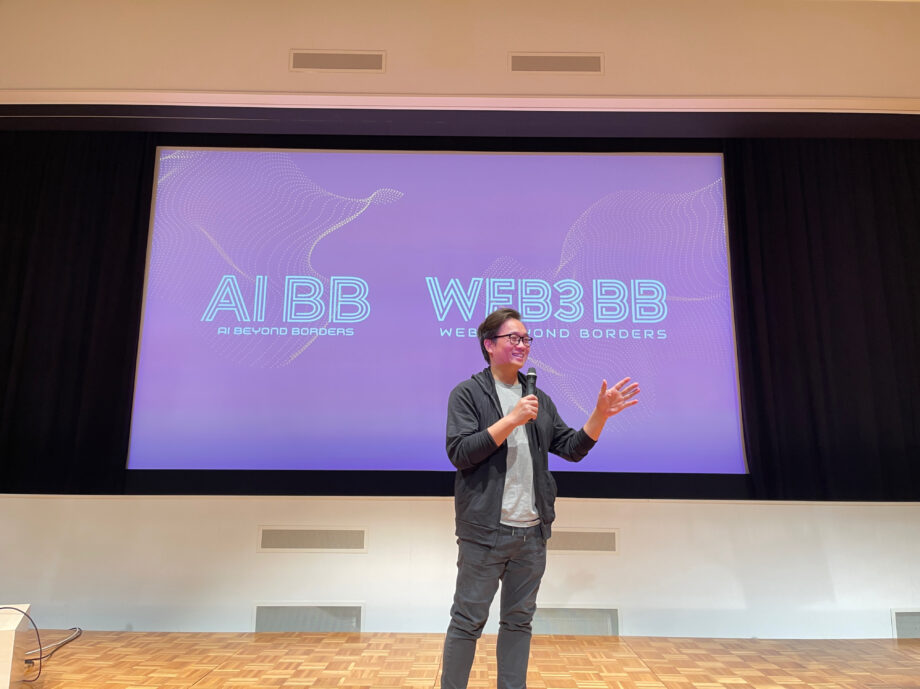
Anndy Lian from Neurai Discusses COPX.AI and AI Finance Models at Web3BB Tokyo

Anndy Lian from Neurai Discusses COPX.AI and AI Finance Models at Web3BB Tokyo

Web3BB, one of the largest business communities in Japan, recently hosted a landmark event that brought together thought leaders, innovators, and enthusiasts from around the globe to discuss the future of Web3, artificial intelligence (AI), and other emerging technologies. The event, held from July 18 to 19, 2024, aimed to bridge the gap between Japan and the global tech community by providing a platform for learning and discussion on these transformative technologies.

Among the distinguished speakers was Anndy Lian, Chairman of Neurai, who delivered an insightful presentation on July 19, 2024. Lian’s talk focused on the pivotal role of AI in the crypto space and its potential to reshape the future of finance. He highlighted Neurai’s pioneering work in AI finance modeling for both stocks and cryptocurrencies, emphasizing the unique approach of their flagship product, COPX.AI.

AI and Web3: A Synergistic Relationship

Anndy Lian emphasized the importance of AI and Web3 working together hand in hand. He sees the finance sector as one of the best case studies for such a combination. “The integration of AI and Web3 can revolutionize the financial industry by providing more secure, efficient, and personalized financial solutions,” Lian noted. This synergy between AI and Web3 can lead to innovative solutions that address the complexities and challenges of modern finance.

Lian elaborated on how most AI crypto models rely on a common set of data, which can limit their effectiveness. In contrast, Neurai’s COPX.AI integrates user-based data, utilizing user behaviors and trading strategies to develop tailored trading strategies for individual users. This innovative approach not only enhances the accuracy of trading models but also creates a win-win situation where users contribute their data in exchange for rewards.

COPX.AI: A User-Centric Approach

Neurai has already made significant strides with COPX.AI, delivering an AI bot on Discord that has garnered a substantial user base. The team is currently working on developing a Telegram bot and integrating gamification modules to enhance user engagement on the platform. With over 100,000 users across various social media channels, COPX.AI is rapidly expanding its reach and influence in the crypto community.

Anndy Lian also mentioned that Neurai not only provides a service to COPX.AI but that some of the team members are also actively assisting COPX.AI. COPX.AI operates as a Decentralized Autonomous Organization (DAO), and some of Neurai’s team members are giving product and technical suggestions to the COPX DAO. “Some of my team members including myself have eventually become core members of COPX DAO, contributing their expertise to drive the project forward,” Lian added.

Quote from Anndy Lian, Chairman of Neurai

“AI in finance is not just about trading; it also acts as an underlying layer to detect frauds. While many financial systems are based on blockchain and are secure enough, an AI system on top of blockchain data storage adds an extra layer of security. At Neurai, we are committed to leveraging AI to enhance the security and efficiency of financial transactions, ensuring a safer and more reliable financial ecosystem. By incorporating user behaviors and trading strategies, COPX.AI can provide more personalized and effective trading solutions. This user-centric model not only benefits individual traders but also contributes to the overall improvement of our AI systems. We are excited about the future of COPX.AI and its potential to revolutionize the way we approach finance and trading.”

Anndy Lian’s talk at Web3BB Tokyo underscored the significant impact of AI on the future of finance and the innovative strides being made by Neurai with COPX.AI. As AI continues to evolve and integrate with financial technologies, the potential for more secure, efficient, and personalized financial solutions becomes increasingly attainable.

Neurai’s commitment to leveraging AI for the betterment of the financial ecosystem positions them as a leader in the Fin-Tech industry, paving the way for a new era of financial innovation.

For more information about Neurai and COPX.AI, please visit Neurai’s website or contact info@neurai.cc.

About Neurai

Neurai, a Singapore-based leading AI technology company, specializes in the development and delivery of AI solutions for the Fin-Tech industry. With a strong focus on innovation and user-centric design, Neurai is at the forefront of integrating AI with financial technologies to create more secure, efficient, and personalized financial solutions.

The company’s commitment to leveraging AI for the betterment of the financial ecosystem positions them as a leader in the Fin-Tech industry, paving the way for a new era of financial innovation. Neurai’s pioneering work in AI finance modeling for both stocks and cryptocurrencies, as demonstrated by COPX.AI, showcases their dedication to providing cutting-edge solutions that address the evolving needs of the financial sector.

About Web3BB

Web3BB is one of the largest business communities in Japan, dedicated to bridging the world and Japan by providing a platform for people to learn and discuss the core ideas of Web3, AI, and other emerging technologies. Through events, discussions, and collaborations, Web3BB aims to foster a deeper understanding and adoption of these transformative technologies.

The Web3BB event featured a series of keynote speeches, panel discussions, and networking sessions that provided attendees with valuable insights into the latest trends and developments in Web3, AI, and other emerging technologies. Participants had the opportunity to engage with industry leaders, share ideas, and explore potential collaborations.


Source: https://markets.businessinsider.com/news/stocks/anndy-lian-from-neurai-discusses-copx-ai-and-ai-finance-models-at-web3bb-tokyo-1033592866


Anndy Lian is an early blockchain adopter and experienced serial entrepreneur who is known for his work in the government sector. He is a best selling book author- “NFT: From Zero to Hero” and “Blockchain Revolution 2030”.

Currently, he is appointed as the Chief Digital Advisor at Mongolia Productivity Organization, championing national digitization. Prior to his current appointments, he was the Chairman of BigONE Exchange, a global top 30 ranked crypto spot exchange and was also the Advisory Board Member for Hyundai DAC, the blockchain arm of South Korea’s largest car manufacturer Hyundai Motor Group. Lian played a pivotal role as the Blockchain Advisor for Asian Productivity Organisation (APO), an intergovernmental organization committed to improving productivity in the Asia-Pacific region.

An avid supporter of incubating start-ups, Anndy has also been a private investor for the past eight years. With a growth investment mindset, Anndy strategically demonstrates this in the companies he chooses to be involved with. He believes that what he is doing through blockchain technology currently will revolutionise and redefine traditional businesses. He also believes that the blockchain industry has to be “redecentralised”.

j j j

The emerging crypto trend of 2024: The intersection of AI and blockchain

The emerging crypto trend of 2024: The intersection of AI and blockchain

As we approach the latter half of 2024, the cryptocurrency landscape is poised for significant transformation. Among the myriad of emerging trends, one stands out as particularly revolutionary: the intersection of artificial intelligence (AI) and blockchain technology. This convergence promises to redefine the crypto ecosystem, offering unprecedented opportunities and challenges.

In this opinion piece, I will delve into why this trend is set to dominate the crypto space, backed by data, expert insights, and a personal perspective on its potential impact.

The convergence of AI and blockchain: A new frontier

The integration of AI and blockchain is not merely a speculative trend; it is a burgeoning reality that is already beginning to reshape various sectors. AI, with its ability to process vast amounts of data and learn from it, complements blockchain’s decentralised, transparent, and secure nature. Together, they form a powerful synergy that can address some of the most pressing issues in the digital world.

One of the most compelling aspects of this convergence is its potential to revolutionise smart contracts. Traditional smart contracts, while innovative, are limited by their static nature. AI can enhance these contracts by making them dynamic and adaptive, capable of learning from past transactions and optimising future ones. This could lead to more efficient and secure decentralised finance (DeFi) applications, reducing the risk of bugs, hacks, and errors that have plagued the sector.

Market data and expert insights

The market’s response to the integration of AI and blockchain has been overwhelmingly positive. According to a report by Gemini, AI-related tokens have seen a notable surge in prices, signalling growing interest and confidence in this emerging trend. This is further corroborated by data from CoinMarketCap, which highlights a significant increase in institutional investments in AI and blockchain projects.

Experts in the field are equally optimistic. Scott Tripp, CEO of Neurai, an AI Startup based in Singapore, notes that the combination of AI and blockchain is leading to innovative projects that merge web3 monetisation, provenance tracking, and digital content attributions. He predicts that AI agents will soon handle most on-chain payments, interfacing with blockchain’s user experience and presenting transactions in a human-friendly manner.

Anndy Lian, a best-selling book author, echoes this sentiment, emphasising the potential of AI and blockchain to create decentralised compute protocols and marketplaces for AI outputs. He believes that while early activity may be driven by hype, the long-term promise of this combination is immense.

Real-world applications and use cases

The practical applications of AI and blockchain are vast and varied. One of the most promising areas is in the realm of secure data solutions. AI can enhance blockchain’s ability to provide secure, transparent, and tamper-proof records, making it ideal for industries such as healthcare, finance, and supply chain management.

In healthcare, for instance, AI can analyse patient data stored on a blockchain to provide personalised treatment plans, predict disease outbreaks, and streamline administrative processes. This not only improves patient outcomes but also reduces costs and inefficiencies.

In finance, AI-powered blockchain platforms can offer more accurate risk assessments, fraud detection, and automated compliance, making financial services more secure and accessible. The integration of AI can also enable more sophisticated trading algorithms, leading to better investment strategies and higher returns.

Supply chain management is another area where AI and blockchain can have a transformative impact. By combining AI’s predictive analytics with blockchain’s transparency, companies can optimise their supply chains, reduce waste, and ensure the authenticity of products. This is particularly important in industries such as pharmaceuticals and luxury goods, where counterfeiting is a major concern.

The role of regulation and security

As with any emerging technology, the integration of AI and blockchain is not without its challenges. One of the primary concerns is regulation. The decentralised nature of blockchain and the autonomous capabilities of AI pose significant regulatory hurdles. Governments and regulatory bodies will need to develop new frameworks to address issues such as data privacy, security, and ethical considerations.

Security is another critical concern. While blockchain is inherently secure, the addition of AI introduces new vulnerabilities. AI algorithms can be manipulated, and the data they rely on can be corrupted. Ensuring the security and integrity of AI-powered blockchain systems will require robust encryption, continuous monitoring, and advanced threat detection mechanisms.

The future of AI and blockchain

Looking ahead, the future of AI and blockchain appears bright. The potential for these technologies to transform industries and create new economic opportunities is immense. However, realising this potential will require collaboration between technologists, regulators, and industry stakeholders.

One of the key drivers of this trend will be the development of AI-powered decentralised applications (dApps). These applications can leverage the strengths of both AI and blockchain to offer innovative solutions in areas such as finance, healthcare, and supply chain management. For instance, AI-powered dApps can provide personalised financial advice, automate complex supply chain processes, and offer real-time health monitoring and diagnostics.

Another important aspect of this trend is the role of AI in enhancing blockchain’s scalability. One of the main challenges facing blockchain technology is its limited scalability, which restricts its ability to handle large volumes of transactions. AI can help address this issue by optimising transaction processing and improving consensus mechanisms, making blockchain more efficient and scalable.

Personal perspective

From a personal perspective, the convergence of AI and blockchain represents a significant leap forward in the evolution of technology. As someone who has closely followed the development of both AI and blockchain, I am excited about the possibilities that this integration offers. The potential to create more secure, efficient, and transparent systems is truly transformative.

However, it is important to approach this trend with a balanced perspective. While the potential benefits are immense, there are also significant challenges that need to be addressed. Ensuring the security and integrity of AI-powered blockchain systems, developing appropriate regulatory frameworks, and addressing ethical considerations will be critical to the success of this trend.

In conclusion, the intersection of AI and blockchain is set to be the standout trend in the crypto space in the latter half of 2024. This convergence promises to revolutionise industries, create new economic opportunities, and address some of the most pressing issues in the digital world.

By leveraging the strengths of both technologies, we can create more secure, efficient, and transparent systems that have the potential to transform our world. As we move forward, it will be essential to address the challenges and ensure that this trend is developed in a responsible and ethical manner.


Source: https://e27.co/the-emerging-crypto-trend-of-2024-the-intersection-of-ai-and-blockchain-20240710/

Anndy Lian is an early blockchain adopter and experienced serial entrepreneur who is known for his work in the government sector. He is a best selling book author- “NFT: From Zero to Hero” and “Blockchain Revolution 2030”.

Currently, he is appointed as the Chief Digital Advisor at Mongolia Productivity Organization, championing national digitization. Prior to his current appointments, he was the Chairman of BigONE Exchange, a global top 30 ranked crypto spot exchange and was also the Advisory Board Member for Hyundai DAC, the blockchain arm of South Korea’s largest car manufacturer Hyundai Motor Group. Lian played a pivotal role as the Blockchain Advisor for Asian Productivity Organisation (APO), an intergovernmental organization committed to improving productivity in the Asia-Pacific region.

An avid supporter of incubating start-ups, Anndy has also been a private investor for the past eight years. With a growth investment mindset, Anndy strategically demonstrates this in the companies he chooses to be involved with. He believes that what he is doing through blockchain technology currently will revolutionise and redefine traditional businesses. He also believes that the blockchain industry has to be “redecentralised”.

j j j