Bybit Talks — The Convergence of Web3, Blockchain, and AI

Bybit Talks — The Convergence of Web3, Blockchain, and AI

Introduction


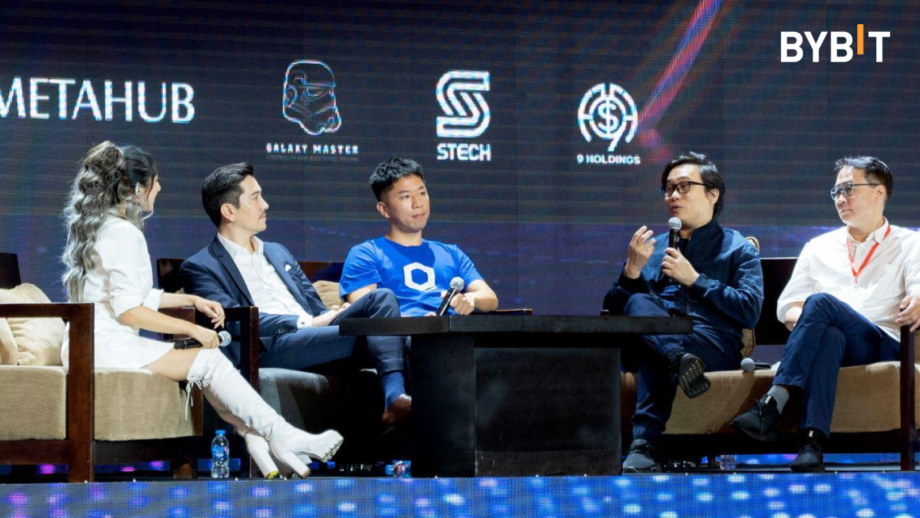
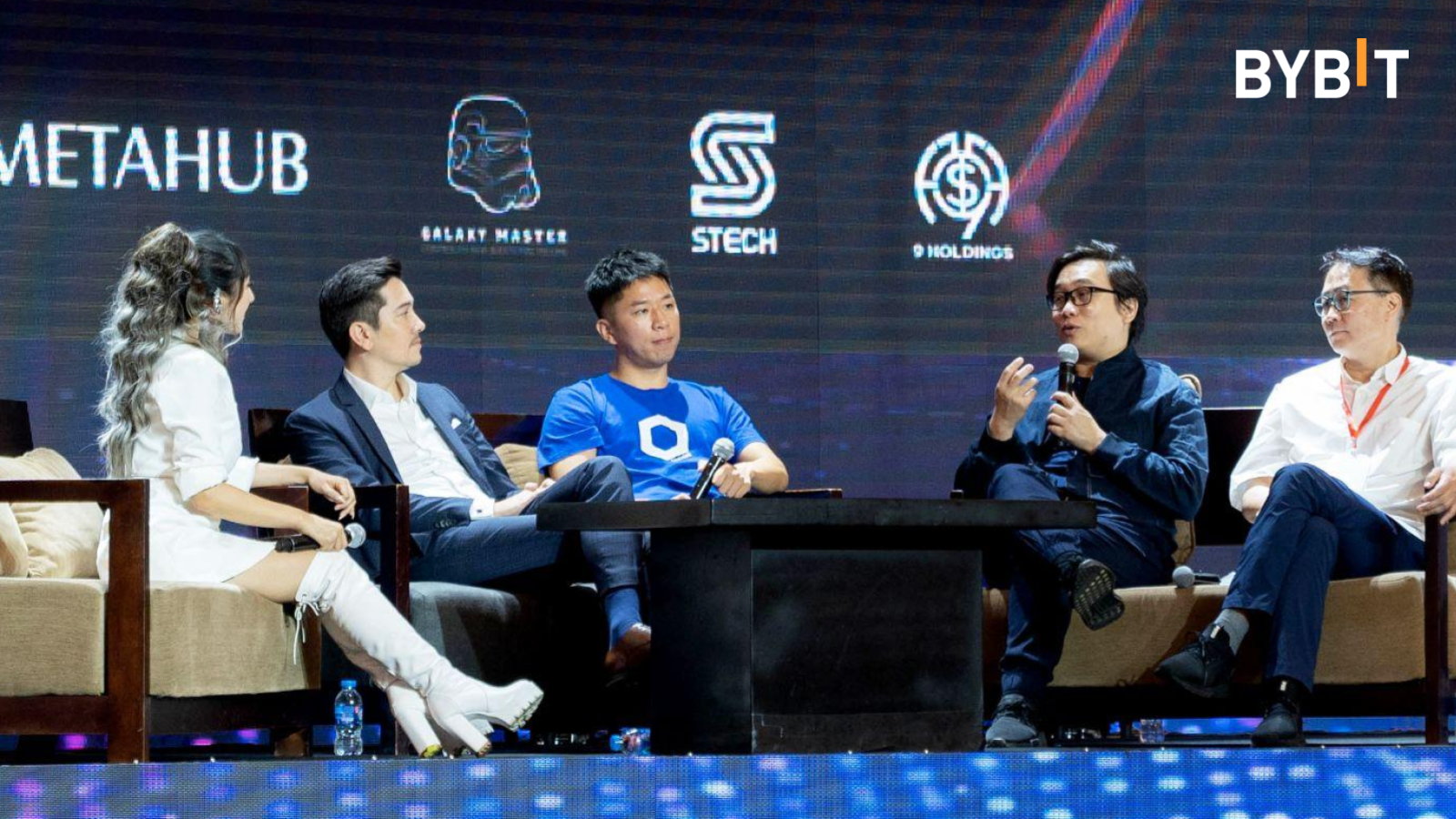
At the Brand Launchpad Event held on 29th May 2023 at Ho Chi Minh, Vietnam, Anndy Lian, advisor of Bybit, discussed the growth of the Web3 industry and its relationship with AI. Lian highlighted how Web3 empowers creators and communities in making informed business choices. He emphasized the convergence of Web3, blockchain, and AI, addressing concerns and emphasizing the benefits of understanding and leveraging AI’s capabilities. Lian also mentioned the advantages of using AI in crypto trading practices.


The Empowering Potential of Web3


Lian emphasized that what we should all focus on is that ” Web3 is for the creators.”. He explains how Web3 “ushers in a fresh type of economy that empowers users and communities to make more informed and advantageous business choices.”


The convergence of Web3, blockchain, and AI, according to Lian, is transforming multiple industries and driving innovation across the board. He further discussed the relationship between these technologies, highlighting their potential to collaborate and create innovative solutions. Blockchain, as Lian explained, plays a crucial role as the verification and security layer. By establishing a decentralized and tamper-proof system, blockchain ensures data integrity and transparency, instilling trust among participants and the AI layer.

AI’s Impact and Potential


Addressing concerns about AI’s impact, Lian reassured the audience that there’s no need for undue worry. Instead, he encouraged understanding and taking control of AI’s capabilities. Lian emphasized that AI can yield positive outcomes if properly harnessed and leveraged. Understanding AI and its potential empowers individuals to make the most of this transformative technology.


By harnessing data analysis and pattern recognition, AI-powered crypto trading systems can generate improved results. These systems process vast amounts of historical and real-time data from diverse sources, including price charts, market indicators, news articles, and social media sentiment. Through this analysis, AI algorithms can identify patterns and trends that may elude human traders, facilitating more informed decision-making. Anndy concluded his take on the advantages of utilizing AI in trading practices by linking it all back to how AI can ultimately aid crypto exchanges.


In conclusion, the panel discussion at the 29th 2023 Brand Launchpad Event brought attention to the immense potential of Web3, blockchain, and AI. These technologies hold the promise of unlocking unprecedented opportunities for creators, businesses, and individuals in a decentralized and data-driven world. As they continue to advance and intersect, understanding and embracing these transformative technologies will be crucial in navigating the ever-evolving landscape of the digital economy. By staying informed and proactive, we can fully harness their power and pave the way for a prosperous future.


Anndy Lian is an early blockchain adopter and experienced serial entrepreneur who is known for his work in the government sector. He is a best selling book author- “NFT: From Zero to Hero” and “Blockchain Revolution 2030”.

Currently, he is appointed as the Chief Digital Advisor at Mongolia Productivity Organization, championing national digitization. Prior to his current appointments, he was the Chairman of BigONE Exchange, a global top 30 ranked crypto spot exchange and was also the Advisory Board Member for Hyundai DAC, the blockchain arm of South Korea’s largest car manufacturer Hyundai Motor Group. Lian played a pivotal role as the Blockchain Advisor for Asian Productivity Organisation (APO), an intergovernmental organization committed to improving productivity in the Asia-Pacific region.

An avid supporter of incubating start-ups, Anndy has also been a private investor for the past eight years. With a growth investment mindset, Anndy strategically demonstrates this in the companies he chooses to be involved with. He believes that what he is doing through blockchain technology currently will revolutionise and redefine traditional businesses. He also believes that the blockchain industry has to be “redecentralised”.
j j j

AI生成艺术与版权法:挑战与未来展望

AI生成艺术与版权法:挑战与未来展望

作者:Anndy Lian

在创意产业中人工智能(AI)的日益应用引发了版权问题,尤其是AI生成的艺术作品是否可以受到版权法保护的问题。美国版权办公室认为,非人类实体,包括机器所创作的作品,不符合版权保护的条件。

人工智能(AI)的影响力正在不同领域扩大,比如GPT-3这样的自然语言处理工具、Google Lens这样的图像识别软件以及包括亚马逊的产品推荐系统在内的产品推荐引擎。AI正在艺术界获得越来越多的认可,例如通过拍卖以432,500美元的天价售出的由AI生成的肖像画《埃德蒙·德·贝拉米》。然而,AI在创意领域的日益介入引发了版权问题的关注。

就目前而言,训练AI模型时使用的受版权保护的材料被认为处于法律灰色地带。根据现行版权法,完全由AI生成的任何作品都不受版权保护,无论其是否源自人工创作的文本提示。尽管公平使用法允许在某些条件下无需版权所有者许可使用受版权保护的材料,但目前正在进行的法律纠纷可能会打破这种现状,并给AI模型训练的未来带来不确定性。

毫无疑问,生成式人工智能的出现在短短几个月内彻底改变了我们的生活方式、劳动实践和艺术产出。与此同时,AI生成的文字作品、图片和音乐以及它们的创作机制引发了大量复杂的法律问题,挑战了我们对所有权、公平性和创新核心基础的理解。

AI生成的艺术作品可以受版权保护吗?

关于AI生成的艺术作品是否可以受版权法保护的问题存在争议,各种观点和意见纷呈。美国版权办公室认为,由非人类实体,包括机器创作的作品,不符合版权保护的条件。因此,生成式AI模型生成的作品无法被视为可享有版权的作品。

根本的挑战在于生成式AI系统的运作方式。这些模型通过识别和复制数据中的模式进行学习。因此,AI系统必须先从人类创作中学习,才能生成文本或图像等内容。例如,如果AI生成的图像与日本艺术家横山大观的艺术风格相似,那么AI模型在训练时会使用横山大观创作的实际艺术作品。同样地,要以J·K·罗琳的风格生成文字内容,AI系统需要通过J·K·罗琳撰写的文字进行训练。

然而,根据目前的美国版权法,这些包括图像和音乐生成器以及像ChatGPT这样的聊天机器人在内的AI系统无法被视为其所生成内容的创作者。相反,它们的输出是人类创作工作的综合结果,其中许多作品以某种形式受到版权保护,并来源于互联网。这并不意味着AI生成的作品必然处于公共领域。例如,如果一家公司使用AI生成内容,该公司仍然可能对该内容拥有专有权,例如商业秘密或专利。

这引发了一个令人困惑的问题:如何将快速发展的人工智能产业与复杂的美国版权法细节协调一致?这是创意专业人士、公司、法院和美国政府在应对AI生成内容和知识产权法律的复杂性和细微差别时所面临的问题。

当人类和AI共同工作时,版权问题是否会更加复杂?

涉及人类与机器合作创作的作品的版权保护问题是复杂的。根据版权办公室的规定,如果一个人以创造性的方式安排或选择AI生成的材料,或者对其进行足够创造性的修改,版权保护将仅适用于人类创作的部分,而不适用于AI生成的材料本身。对于由人类和机器共同创作的作品的版权保护问题则不太清楚,注册申请必须列出所有共同作者的姓名。

使用生成式AI创作艺术作品还可能引发版权侵权问题,如果输出与互联网上现有作品相似。这些模型通常是在互联网上找到的现有作品上进行训练的,这可能导致与之前作品的相似之处。虽然有些情况下,人类创造性地选择或安排AI生成的材料或对其进行修改,从而只对人类创作的部分享有版权保护,但是对于由人类和机器共同创作的作品来说,情况变得复杂。在注册申请中必须列出所有共同作者,包括潜在的AI作者。确定生成式AI输出作品是衍生作品还是侵犯了之前作者的权利可能是具有挑战性的。

最近提起了一些涉及生成式AI的诉讼。Getty Images对Stability AI提起了诉讼,指控该公司在未经允许或许可的情况下非法复制了Getty Images的超过1200万张照片,并将其用于生成式AI系统中。Stability AI并不是唯一面临与生成式AI相关的诉讼的公司。随着微软、OpenAI和GitHub等许多公司推出生成式AI,创意产业开始就AI使用版权作品的问题提起诉讼。除了Getty的案件外,一群艺术家还对Stability AI、Midjourney和DeviantArt提起了诉讼,指控它们在生成式AI系统中使用了他们的作品,进行了大规模的版权侵权。这些诉讼揭示了使用生成式AI所涉及的法律问题,这在实践中变得越来越普遍。

针对GitHub、微软和OpenAI提起了一起集体诉讼。该诉讼声称,AI驱动的编码助手GitHub Copilot通过生成源自开源许可的代码派生代码,侵犯了版权法。Copilot根据程序员现有代码实时提供新代码的建议。根据法律诉讼,Copilot的代码生成软件是在没有获得必要授权的情况下,基于受版权保护的代码进行训练的。此外,该程序生成的新代码与原始作品相似或相同。这是涉及生成式AI的首个诉讼案件。该案旨在获得集体诉讼地位,如果获胜,可能会对整个AI产业以及其如何利用公开可获取的代码来训练模型产生影响。

微软、GitHub和OpenAI已提出解除诉讼的动议。他们辩称Copilot生成的代码是独特的,并且生成的代码并不只是原始数据的简单复制。

这些是最近涉及生成式AI的一些诉讼。诉讼的解决方式及其对AI产业的影响仍然未知。

结束语

版权法是保护知识产权和鼓励创造力的基本方面。它赋予创作者控制其作品使用、分发和改编的权利,并通过给予他们独占权利来鼓励他们创作更多作品。创意共享许可证为创作者提供了更多选择,可以选择他们作品的保护级别。

关于作者:

Anndy Lians是畅销书《Blockchain Revolution 2030》和 《NFT: from Zero to Hero》的作者,对区块链和数字化领域有着广泛的研究和见解。目前,Anndy Lian担任蒙古生产力组织的首席数字顾问,致力于推动国家数字化的发展。

作为一位新加坡知名科普作家和新科技投资者,Anndy Lian以增长型投资的思维方式在业界有着广泛影响力。他坚信区块链技术将彻底改变和重新定义传统企业,并且主张实现区块链行业的“再去中心化”(Re-decentralized)。

https://c.m.163.com/news/a/I4KJOCIJ0553WCZX.html?from=wap_redirect&spss=adap_pc&referFrom=

https://indiaai.gov.in/article/the-legal-implications-of-ai-generated-content-in-copyright-law

Anndy Lian is an early blockchain adopter and experienced serial entrepreneur who is known for his work in the government sector. He is a best selling book author- “NFT: From Zero to Hero” and “Blockchain Revolution 2030”.

Currently, he is appointed as the Chief Digital Advisor at Mongolia Productivity Organization, championing national digitization. Prior to his current appointments, he was the Chairman of BigONE Exchange, a global top 30 ranked crypto spot exchange and was also the Advisory Board Member for Hyundai DAC, the blockchain arm of South Korea’s largest car manufacturer Hyundai Motor Group. Lian played a pivotal role as the Blockchain Advisor for Asian Productivity Organisation (APO), an intergovernmental organization committed to improving productivity in the Asia-Pacific region.

An avid supporter of incubating start-ups, Anndy has also been a private investor for the past eight years. With a growth investment mindset, Anndy strategically demonstrates this in the companies he chooses to be involved with. He believes that what he is doing through blockchain technology currently will revolutionise and redefine traditional businesses. He also believes that the blockchain industry has to be “redecentralised”.

j j j

The Legal Implications of AI-Generated Content in Copyright Law

The Legal Implications of AI-Generated Content in Copyright Law

Highlights

The increasing use of Artificial Intelligence (AI) in creative industries raises copyright concerns, particularly in terms of whether AI-generated art can be protected under copyright laws. The U.S. Copyright Office has taken the position that creations made by non-human entities, including machines, are not eligible for copyright protection.

The influence of Artificial Intelligence (AI) is expanding in diverse domains, as seen in natural language processing tools like GPT-3, image recognition software such as Google Lens, and product recommendation engines, including Amazon’s product suggestion system. AI is gaining traction in the art world, exemplified by the sale of “Edmond de Belamy,” a portrait generated by AI, for an unprecedented $432,500 in an auction. Nonetheless, the increasing involvement of AI in creative pursuits raises copyright concerns.

When it comes to training AI models, the use of copyrighted materials is considered to be in a legal grey area. As it stands now, copyright laws do not safeguard any creation that is wholly generated by AI, regardless of whether it stemmed from a human-crafted text prompt. While fair use laws permit the use of copyrighted material under certain conditions without the owner’s permission, the ongoing legal disputes could disrupt this status quo and bring uncertainty in the future of AI model training.

Undoubtedly, the advent of generative AI has revolutionized our lifestyle, labor practices, and artistry output within a mere few months. In turn, the inundation of AI-fabricated written works, pictures, and tunes, alongside the mechanisms through which they were created, has stimulated a plethora of intricate legal inquiries. These challenge our understanding of ownership, fairness, and the core foundation of innovation.

Can AI-generated art be copyrighted?

The issue of whether AI-generated art can be protected under copyright laws has been a contentious topic, with various opinions and viewpoints. The U.S. Copyright Office has taken the position that creations made by non-human entities, including machines, are not eligible for copyright protection. Consequently, the product of a generative AI model cannot be considered copyrightable.

The fundamental challenge lies in the way generative AI systems operate. These models learn by identifying and replicating patterns found in data. Thus, the AI system must first learn from human creations to produce output such as written text or images. For example, if an AI-generated image resembles the art of Japanese artist Yokoyama Taikan, it would have been trained using actual pieces of art created by the human artist. Similarly, to generate written content in the style of J. K. Rowling, the AI system would need to be trained with words written by J. K. Rowling.

However, according to current U.S. copyright law, these AI systems – which encompass image and music generators, as well as chatbots like ChatGPT – cannot be regarded as the creators of the content they produce. Instead, their outputs result from a culmination of human-generated work, much of which is copyrighted in some form and sourced from the internet. This does not mean that AI-generated works are necessary in the public domain. Another example if a company uses AI to generate content, that company may still have proprietary rights to that content, such as a trade secret or patent.

This raises a perplexing question: how can the rapidly evolving artificial intelligence industry be harmonized with the intricate details of U.S. copyright law? This is a question that creative professionals, companies, courts, and the U.S. government are all grappling with as they navigate the complexities and nuances of AI-generated content and intellectual property laws.

Will copyright issues get tougher when humans and AI do the work together?

The issue of copyright protection for creative works resulting from collaboration between humans and machines is complex. According to the Copyright Office, if a human arranges or selects AI-generated material creatively or modifies it in a sufficiently creative way, copyright protection will only apply to the human-authored components of the work, not the AI-generated material itself. The issue of copyright protection for works created jointly by humans and machines is less clear, and registration applications must name all joint authors.

The use of generative AI for creating artistic works can also lead to copyright infringement concerns if the output shows similarities to pre-existing works on the internet. These models are often trained on existing works found online, which may lead to similarities to previous works. While there are cases where a human creatively selects or arranges AI-generated material or modifies it, resulting in copyright protection for only the human-authored aspects of the work, the situation becomes murky regarding works jointly created by humans and machines. It’s a requirement to name all joint authors, including potentially the AI, in applications for registration. It may be challenging to ascertain whether generative AI output is a derivative work or infringes upon the rights of previous authors.

Lawsuits

Getty Images has taken legal action against Stability AI, accusing the company of unlawfully copying over 12 million photos from Getty Images’ collection and utilizing them in generative AI systems without proper permission or licensing. Stability AI is not alone in facing lawsuits related to generative AI. With the launch of generative AI by numerous companies such as Microsoft, OpenAI, and GitHub, creative industries are beginning to file lawsuits over the co-opting or use of copyrighted work by AI. In addition to Getty’s case, a group of artists has also sued Stability AI, Midjourney, and DeviantArt for alleged mass copyright infringement via the use of their work in generative AI systems. These lawsuits are bringing to light the legal implications of using generative AI, which is becoming an increasingly common practice.

Legal action of collective nature was instituted against GitHub, Microsoft, and OpenAI. The motion claimed that the AI-powered coding aide GitHub Copilot infringed copyright laws by generating code derived from code licensed under open source, which is publicly accessible. Copilot provides programmers with suggestions for novel code based on their existing code in real-time. As per the legal action, Copilot’s code-generating software was trained on code that was subject to copyright, without obtaining the necessary authorization. Furthermore, the program creates new code that is akin or identical to the original work. This is the premier lawsuit to be brought involving generative AI. The case aims to attain class-action status, and if it prevails, it could potentially affect the whole AI industry and how it utilizes publicly available code for training models.

Microsoft, GitHub, and OpenAI have submitted a motion to dismiss the legal action. They argue that Copilot produces unique code and that the code generated is not merely identical copies of the data used for training.

These are some lawsuits that were filed lately involving generative AI. The resolution of the legal action and its influence on the AI industry remains unknown.

Ending Remarks

Copyright law is a fundamental aspect of protecting intellectual property and encouraging creativity. It gives creators the right to control their work’s use, distribution, and adaptation and encourages them to create more by offering them exclusive rights. Creative Commons licenses provide even more options for creators to choose the level of protection they want for their work.

As AI technology advances, it becomes increasingly involved in the creative process. With AI’s ability to generate original content and collaborate with humans, there is a growing need for a legal framework that addresses the copyright protection of collaborative works involving AI. It is crucial to strike a delicate balance between safeguarding the rights of creators and nurturing innovation and originality. It is difficult to predict the exact trajectory of copyright law as it pertains to AI-generated works. Still, it is undeniable that as AI technology becomes increasingly integrated into the creative process, the legal framework governing copyright protection will undergo significant and ongoing transformation.

Source: https://indiaai.gov.in/article/the-legal-implications-of-ai-generated-content-in-copyright-law

Anndy Lian is an early blockchain adopter and experienced serial entrepreneur who is known for his work in the government sector. He is a best selling book author- “NFT: From Zero to Hero” and “Blockchain Revolution 2030”.

Currently, he is appointed as the Chief Digital Advisor at Mongolia Productivity Organization, championing national digitization. Prior to his current appointments, he was the Chairman of BigONE Exchange, a global top 30 ranked crypto spot exchange and was also the Advisory Board Member for Hyundai DAC, the blockchain arm of South Korea’s largest car manufacturer Hyundai Motor Group. Lian played a pivotal role as the Blockchain Advisor for Asian Productivity Organisation (APO), an intergovernmental organization committed to improving productivity in the Asia-Pacific region.

An avid supporter of incubating start-ups, Anndy has also been a private investor for the past eight years. With a growth investment mindset, Anndy strategically demonstrates this in the companies he chooses to be involved with. He believes that what he is doing through blockchain technology currently will revolutionise and redefine traditional businesses. He also believes that the blockchain industry has to be “redecentralised”.

j j j