Integrating “Blockchain + IoT + AI” into traditional industries

Integrating “Blockchain + IoT + AI” into traditional industries

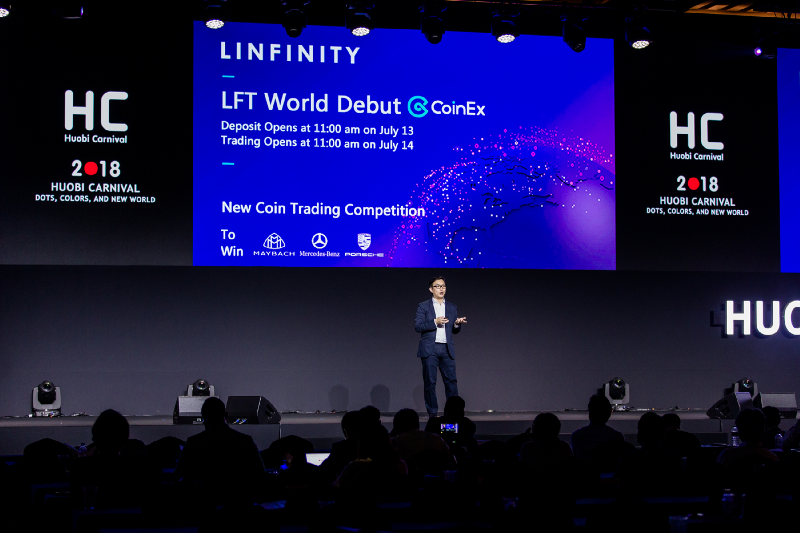
Linfinity CEO Anndy Lian was invited as a keynote speaker at Huobi Carnival in South Korea, held from August 2 to 3.

Huobi Carnival was organised by Huobi, one of the largest cryptocurrency exchanges in the world. Industry heavyweights and South Korean government officials gathered at the event to discuss the future development of the blockchain and cryptocurrency industry.

Blockchain needs to be combined with traditional industries

In his keynote speech, Lian introduced blockchain anti-counterfeit tracking technology and its business applications. He said, “The development of blockchain has brought new opportunities for traditional industries. But we need to clearly understand that blockchain’s development cannot be separated from traditional industries.”

Lian believes that due to blockchain’s transparency, immutability, and traceability, it can effectively resolve pain areas in various industries.

“I do not think blockchain has created a new industry. On the other hand, I think it is going to revolutionise other industries’ methods of growth by providing a new technological tool,” Lian added.

“Blockchain + IoT + AI” combination to combat counterfeits

According to a recent report from Research and Markets, the total loss caused by counterfeit products adds up to USD 120 billion in a year. That figure is estimated to increase to USD 182 billion in 2020. As counterfeit products become increasingly prominent, brands need to invest more time and money into protecting their brand image and products.

However, traditional anti-counterfeit technologies rely on centralised platforms and often use technology in limited ways. This makes them susceptible to malicious attacks.

Lian said, “The appearance of blockchain sheds light on a new future for different industries. For anti-counterfeiting, simply relying on blockchain technology will not be enough. If current technologies are effective 60% of the time, we need to bridge the remaining 40% by using blockchain, IoT, and AI.”

“This is how supply chains should be like. Decentralised data storage platforms can solve security and credibility concerns. AI can ensure that information entered is reliable. IoT allows more objects to be connected and communicate freely.”

“When using blockchain for anti-counterfeit purposes, and we need to revolutionise current methods at the same time. This will allow for a greater degree of integration and realise the true value of blockchain,” he added.

In an interview that Lian gave to the South Korean AsiaeTV, he said, “Blockchain will play an important role. And customers are very important in the process of blockchain commercialisation. Linfinity has already formed partnerships with multinational companies from diverse fields, including Taiwanese cigarette brand Alishan Group. Lian said, “Next, we are going to walk out of Asia and enter the European market, look for more industry partners, and drive blockchain’s commecialization.”

Anndy Lian is an early blockchain adopter and experienced serial entrepreneur who is known for his work in the government sector. He is a best selling book author- “NFT: From Zero to Hero” and “Blockchain Revolution 2030”.

Currently, he is appointed as the Chief Digital Advisor at Mongolia Productivity Organization, championing national digitization. Prior to his current appointments, he was the Chairman of BigONE Exchange, a global top 30 ranked crypto spot exchange and was also the Advisory Board Member for Hyundai DAC, the blockchain arm of South Korea’s largest car manufacturer Hyundai Motor Group. Lian played a pivotal role as the Blockchain Advisor for Asian Productivity Organisation (APO), an intergovernmental organization committed to improving productivity in the Asia-Pacific region.

An avid supporter of incubating start-ups, Anndy has also been a private investor for the past eight years. With a growth investment mindset, Anndy strategically demonstrates this in the companies he chooses to be involved with. He believes that what he is doing through blockchain technology currently will revolutionise and redefine traditional businesses. He also believes that the blockchain industry has to be “redecentralised”.
j j j

将“区块链+IoT+AI”融入传统行业 让防伪溯源攻无不克

将“区块链+IoT+AI”融入传统行业 让防伪溯源攻无不克

8月2至3日,由火币主办的火币嘉年华在韩国首尔举行,活动邀请了中韩区块链业内巨头与韩国政府官员,就行业的发展问题进行了深度探讨。Linfinity CEO Anndy Lian受邀出席并发表主题演讲。

区块链的发展要和传统行业相结合

Anndy在主题演讲中向与会人士介绍了Linfinity在区块链防伪溯源技术上的商业发展以及技术逻辑,他表示,区块链的发展为传统行业带来了新的动能,但我们必须清楚的认识到,区块的发展不能脱离传统行业。

区块链,因其透明性、不可篡改以及可追溯的特性,能够有效地解决目前存在的行业痛点。Anndy说道,“我不认为区块链创造了一个新的行业,反之,我觉得它作为一个新的技术工具,将革新整个行业的发展模式和进程。”

防伪“组合拳”——“区块链+IoT+AI”+物理防伪

据Research and Markets最新的调查报告显示,2017年全球假货造成的总损失达到1.2万亿美元,预计2020年将达到1.82万亿美元。在面临日益泛滥的假货问题时,品牌方需要花费更多时间和金钱来保护他们的品牌和产品,但传统行业的物理防伪因其中心化平台以及单一的物理防伪技术,很容易受到不法分子的攻击,从中牟利。

“区块链技术的出现为整个行业的发展带来了新的前景,但就防伪溯源这块而言,单靠区块链技术是不够的,如果说现在的物理防伪技术已经实现60%的防伪功能,那么剩下的40%需要依靠区块链技术、IoT以及AI来实现。整个供应链的防伪体制应该是这样的,区块链技术构建的去中心化信息平台能解决数据存储的安全和可信问题,AI能够确保信息录入的可靠性以及公允性, IoT技术发展使万物互联,信息互通。”Anndy补充道,“在运用区块链技术防伪的时候,我们也需要革新现有的物理防伪技术,使两者能够达到更大程度的融合,这才能实现其最大的价值。”

Anndy在接受亚洲经济电视台专访时表示,区块链防伪技术将在快消品行业中发挥重要作用。他说道,“在区块链商业化的进程中,消费者是十分重要的推动者,从民众日常接触的快消品开始,是区块链落地最好不过的切入点,目前,Linfinity已经与台湾阿里山集团在内的多家跨国企业达成战略合作,接下来,我们将走出亚洲,进军欧洲市场,寻求更多的行业伙伴,共同推动区块链的商业化进程。”

Anndy Lian is an early blockchain adopter and experienced serial entrepreneur who is known for his work in the government sector. He is a best selling book author- “NFT: From Zero to Hero” and “Blockchain Revolution 2030”.

Currently, he is appointed as the Chief Digital Advisor at Mongolia Productivity Organization, championing national digitization. Prior to his current appointments, he was the Chairman of BigONE Exchange, a global top 30 ranked crypto spot exchange and was also the Advisory Board Member for Hyundai DAC, the blockchain arm of South Korea’s largest car manufacturer Hyundai Motor Group. Lian played a pivotal role as the Blockchain Advisor for Asian Productivity Organisation (APO), an intergovernmental organization committed to improving productivity in the Asia-Pacific region.

An avid supporter of incubating start-ups, Anndy has also been a private investor for the past eight years. With a growth investment mindset, Anndy strategically demonstrates this in the companies he chooses to be involved with. He believes that what he is doing through blockchain technology currently will revolutionise and redefine traditional businesses. He also believes that the blockchain industry has to be “redecentralised”.

j j j

Linfinity CEO Anndy Lian: “Blockchain + Supply Chain + AI” brings a deep trace of the new IoT world

Linfinity CEO Anndy Lian: “Blockchain + Supply Chain + AI” brings a deep trace of the new IoT world

Linfinity CEO Anndy was interviewed by JINSE Finance recently, he suggests that the integration of cutting edge technology instancing blockchain, supply chain and AI will present us a world where the performance of source-tracking+IoT reaches a new high.


Anndy Lian was already a shrewd businessman with multiple commercialization success before stepping into the realm of blockchain. His international insights and vision in supply chain industry come from his Singapore-originated commerce company, eight years in Korea and trading experience of more than 30,000 goods. His background also tells him that the supply chain market is long craving for something which helps fix this long existing pain point- a lack of trust.

The emergence of blockchains gives Anndy enough space for imagination, and this distributed structure and traceable technical features seem to have provided the possibility of solving the ‘pain point’ of the traditional supply chain – thus his blockchain journey with Linfinity has officially started.


Covering the whole process of commodity production to realize the in-dept tracking


To solve the ‘pain point’ of supply chain is to build a credible supply chain ecosystem. Anndy has set 3 main directions for Linfinity.

Tech service: Relying on the past IoT advantage, to integrate the supply chain, blockchain and  artificial intelligence to achieve the core value of technical service.

In-depth commodity source-tracking: From raw materials to warehousing, then to the whole logistics with thorough blockchain coverage, so that traceability with blockchain maximizes the effectiveness of anti-counterfeiting.

Recyclable ecosystem: Use blockchain to track goods in the whole life cycle for better recycling and environmental protection.


In such a system, we can understand and verify the details of every node from the source to the terminal only by scanning the code.


“Linfinity’s traceability to drugs , cosmetics and tobacco has been relatively mature . Although the two-dimensional codes don’t look much different physically, yet there is no two same codes in the world when blockchain technology is applied. Each is recorded on the chain, which has been greatly improved for traditional anti – counterfeiting, ” says Anndy.


Linfinity has already been strategic partnership with eight enterprises, and more companies will be involved. At early July, during the Asian Blockchain Summit held in Taiwan, Linfinity and Taiwan Alishan Group signed a strategic cooperation agreement, which will provide blockchain anti-counterfeiting technology for its cigarette brands and effectively eliminate counterfeits from the market. In August, Linfinity will expand the business to the UK , mainland China , Taiwan area of China, etc ., and Linfinity’s service will be combined with multiple products in different supply chains.

Three in one” makes the idea of blockchain plus IoT more realistic


At present, there are many companies in the blockchain+IoT field, but due to the disconnection between technology and industry, many people think that moving such a large IoT into the blockchain seems to be somewhat “emptiness”.And Anndy who takes “blockchain + supply chain + AI” as a pragmatic key, is convinced that the current practice is moving towards the initial goal:


“I never doubt the value of the IoT+ blockchain. Nowadays, companies of all sizes have not really understood how IoT can promote their business.In other parts, perhaps because there is not a broad perspective or there is not enough money to put the idea of blockchain + IoT into practice, I think this is why some people think that IoT is not reliable.”


Anndy believes that people can’t work alone if they hope IoT can play great potential under the blockchain. Many people say that they don’t believe in IoT, but in Linfinity’s philosophy, IoT should have a clear direction in the future, and AI+ blockchain is the realistic solution proposed by Linfinity for IoT.


“This combination can greatly increase the frequency and production capacity of IoT, and the entire market can improve efficiency while maintaining sufficient transparency”.Anndy also pointed out that the current efforts of Linifinity are to cultivate the starting industry , he believe that after one year, more applications will be landing.


How to promote the Linfinity business, manufacturer is one of the breakthroughs.Anndy makes more manufacturers understand the great value of blockchain in traceability,then show the company’s overall concept and overall strength, lets the manufacturers drive consumers to participate in the use of Linfinity.


The role of issuing Tokens is first to establish ecology, not ” playing with capital”.

Linfinity made it clear from the beginning that it would not do any ICO projects.


“LFT Tokens are not for sale. If you issue 70% of Tokens to the market, you can’t control the value. There are definitely a lot of people going to speculate. The role of Tokens must be to provide a reasonable stimulus for the construction of ecology, and we still have to focus on industry, so the control of Tokens is stricter. We just made a Token-based economic model, and our fans can get Token rewards by scanning the code using the Linfinity system.”


Anndy believes that Token is a “binder” that binds the interests of manufacturers and consumers tightly to achieve a win-win situation. For the cooperation with the manufacturers, Anndy has generously presented Tokens, which aims to let the company do several rounds of experiments in the environment of Linfinity to verify and improve the whole system.


At present, Linifinity has a team of more than 60 people all over the world. They have targeted the development of markets in various countries and regions, covering different types of goods such as food, medicine, tobacco and coffee. With more and more landing scenes, Anndy is very confident about the value of Tokens.


“Because we are directly facing the enterprise, only when the value of Tokens is increased, it is possible to further stimulate the enthusiasm of the manufacturer to use the system. Therefore, in order to make the LFT such an Untility Token really work, we should also be cautious about the Token’s value.”

Anndy tries to convey the long-term value of the blockchain to people, and will continue to work to change the existing industries with blockchain, solve the pain points and achieve a win-win situation.

https://www.jinse.com/blockchain/213905.html

Anndy Lian is an early blockchain adopter and experienced serial entrepreneur who is known for his work in the government sector. He is a best selling book author- “NFT: From Zero to Hero” and “Blockchain Revolution 2030”.

Currently, he is appointed as the Chief Digital Advisor at Mongolia Productivity Organization, championing national digitization. Prior to his current appointments, he was the Chairman of BigONE Exchange, a global top 30 ranked crypto spot exchange and was also the Advisory Board Member for Hyundai DAC, the blockchain arm of South Korea’s largest car manufacturer Hyundai Motor Group. Lian played a pivotal role as the Blockchain Advisor for Asian Productivity Organisation (APO), an intergovernmental organization committed to improving productivity in the Asia-Pacific region.

An avid supporter of incubating start-ups, Anndy has also been a private investor for the past eight years. With a growth investment mindset, Anndy strategically demonstrates this in the companies he chooses to be involved with. He believes that what he is doing through blockchain technology currently will revolutionise and redefine traditional businesses. He also believes that the blockchain industry has to be “redecentralised”.
j j j