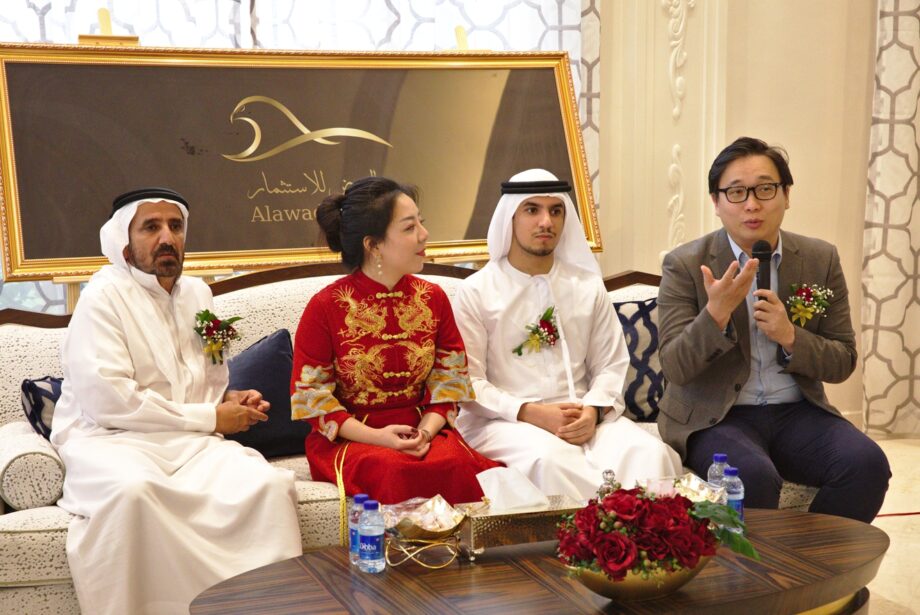
Anndy Lian spoke at launch of Alawad Fund “Dubai’s Drive To Be a Global Hub for Crypto Innovation Show Results”

Anndy Lian spoke at launch of Alawad Fund “Dubai’s Drive To Be a Global Hub for Crypto Innovation Show Results”

As regulation hots up in the US following the Executive Order, and with the prospect of new UK government plans to regulate the cryptocurrency market in the coming weeks, it’s clear that countries can no longer sit on the sidelines of the crypto industry. The potential shift in power spurred on by innovation in blockchain and related technologies means playing safe for jurisdictions is no longer an option. The UAE is well positioned to be a regional hub for the crypto industry, with a regulatory structure in place and with more than 350 blockchain companies operating there. UAE also took advantage of the pandemic to attract business with aggressive vaccination while largely keeping its borders open, while retaining business through low taxes and a light touch regulatory mindset – a perfect environment for attracting crypto entrepreneurs in the last two years.

Indeed, some call Dubai the fastest growing hub in the world right now for crypto technology, reflected in the fact that Binance has now set up offices in Dubai. It’s also benefiting from business relationships with the booming Israeli crypto sector based in Tel Aviv, according to a report in the Wall Street Journal following recent peace accords. In addition, it’s reported that the Abu Dhabi-headquartered fund Mubadala, one of the largest sovereign wealth funds with over $243bn AUM, is investing in the blockchain sector. Mubadala’s CEO Khaldoon Al Mubarak told CNBC in December that he was not a skeptic but saw it as real. But he did admit the regulatory format was not there totally, but it needed to be in place in order for the asset class to transition into something new. “We are looking at the ecosystem around crypto and we are investing in that system.”

This global momentum to embrace crypto and blockchain was addressed by the Chairman of BigONE Anndy Lian recently, in a speech to His Highness Awadh Mohamed Al Sh Mogrin Sultan, a top-ranking diplomat, and Honourable Chairman of the Alawad Fund. Lian said he saw similarities with the innovative and supportive crypto environment in Singapore: “I’ve actually seen the same trend in Dubai, I’ve met some good projects that are very serious about what they do, whether it’s looking at web3 or decentralized storage, or DeFi.”

Elaborating on two key trends starting with DeFi Lian said the integration of traditional finance products into DeFi such as bonds meant this was a sustainable sector for a country such as Dubai. He said the second significant trend was the crypto mining business with a very good uptake of new miners. “There are many new investors going into crypto mining, and when I say big investors, we’re talking about at the very least tens of billions of dollars going into the mining space. If you look at the longer term, it is a very lucrative investment.”

Lian remarked that as a partner & LP to several funds, with an AUM (assets under management) of around $500 million and having invested in crypto startups since 2018, he was looking forward to talking to people and brands about working together on the investment front in Dubai. “I want everybody to work together. You know, we should work together, be open, and welcome, good partners; this is the same philosophy that you do as well; this is the place where we will start to build a new story,” added Lian.

Earlier in March His Highness Sheikh Mohammed bin Rashid Al Maktoum, Vice-President and Prime Minister of the UAE and Ruler of Dubai, approved the first ever law on regulating virtual assets. “Today we are participating in designing the future of virtual assets globally.” Sheikh Mohammed stressed that Dubai possesses all the capabilities to be a key global center in the field of virtual assets, supported with the new legislative environment. “Dubai will provide the most advanced virtual asset ecosystem in terms of organization, governance and security. Approving the virtual asset law and establishing the Dubai Virtual Asset Regulatory Authority is a vital step that establishes the UAE’s position in this sector… a step that aims to help the sector to grow and protect investors,” he confirmed.

The Chainalysis ‘2021 Geography of Cryptocurrency Report’ published in October 2021, found plenty of potential for growth in the Middle East in general and specifically the UAE. The Middle East as a whole is the second-smallest cryptocurrency economy studied by Chainalysis, having received $271.7 billion worth of cryptocurrency between July 2020 and June 2021 (6.6% of global activity). “While that total is low compared to other regions, it represents nearly a 1500% increase over the Middle East’s total activity the previous year, making it one of the fastest-growing markets in the world,” the report’s authors said.

Reflecting the success in promoting crypto businesses in Dubai, it was reported on March 28 that cryptocurrency exchange business Bybit has received in-principle approval to conduct a full spectrum of virtual assets business in Dubai, the firm announced with the UAE Ministry of Economy at the World Government Summit 2022. Bybit also confirmed that it plans to set up its global HQ in Dubai, under the Emirate’s “test-adapt-scale” virtual assets market model.

Anndy Lian is an early blockchain adopter and experienced serial entrepreneur who is known for his work in the government sector. He is a best selling book author- “NFT: From Zero to Hero” and “Blockchain Revolution 2030”.

Currently, he is appointed as the Chief Digital Advisor at Mongolia Productivity Organization, championing national digitization. Prior to his current appointments, he was the Chairman of BigONE Exchange, a global top 30 ranked crypto spot exchange and was also the Advisory Board Member for Hyundai DAC, the blockchain arm of South Korea’s largest car manufacturer Hyundai Motor Group. Lian played a pivotal role as the Blockchain Advisor for Asian Productivity Organisation (APO), an intergovernmental organization committed to improving productivity in the Asia-Pacific region.

An avid supporter of incubating start-ups, Anndy has also been a private investor for the past eight years. With a growth investment mindset, Anndy strategically demonstrates this in the companies he chooses to be involved with. He believes that what he is doing through blockchain technology currently will revolutionise and redefine traditional businesses. He also believes that the blockchain industry has to be “redecentralised”.

j j j

Interview with Anndy Lian: Role of DAO and its Future

Interview with Anndy Lian: Role of DAO and its Future

– An Ukrainian DAO raised about 8 million dollar for the war effort? How do you see the role of DAO in international financing for economically ravaged/weaker countries?

There’s certainly potential in quickly and securely using DAOs (decentralized autonomous organizations) for financing for troubled parts of the world. The case of the Ukraine DAO shows that such a decentralized structure can be spun up quickly and cheaply and engage with a community around issues of concern to individuals around the world. You can also see from the growing use of crypto donations in the NGO and charity sector that DAOS could become a more formal means to channel funds and with less cost in terms of money transfer fees, and with less issues with government bureaucracy by directing funds straight into the pockets of those most in need. In addition, as a collectively owned and managed entity with a set of rules written in computer code, the DAO offers the potential couple with good governance, to avoid corruption that can damage already economically weakened countries.


– Russia has now been imposed multiple economic sanctions. How will DAO in particular play a role in Russian economy now that it will largely be cut off from the international financial system?

It may well be that civil society groups and civilian organizations faced with the impact of economic sanctions will use DAOs to bypass central government restrictions and appeal directly to people across the world for financial help. That will pose problems for the DAO as a model for co-operation as it raises pertinent questions about governance, how do you prove governance and how do you resist your funds being secured by state organizations. However, with the likely collapse of the Russian economy cryptocurrency gives ordinary Russians the opportunity to safeguard funds, as well as to use DAOs to pool resources to meet the needs for housing and heating to name two essential requirements for societal infrastructure to sustain the fabric of civil society in the face of the possible collapse of central government.


– Do you the ongoing Ukraine-Russia war as an inflection point in the mass adoption of DAO system? and how?

In fact, the rise of the DAO is closely tied to the emergence of cryptocurrency with the launch of Bitcoin back in 2008. It set the template, where typically the DAO founder has no workplace and no employees, but the project continues to run quietly because a group of people who believe in the project contribute to it.

More than a decade later, this DAO-based project has a market value of $1.3 trillion, making it one of the world’s top five company in terms of market value. Yes, Bitcoin is the most successful DAO right now, and its founder is the anonymous Satoshi Nakamoto. There is no boss or employees to manipulate, and all such organizations operate autonomously and anonymously. This is DAO’s core value.

More recently, the trend in using DAOs specifically to raise money for campaigns with a political theme have also emerged, in the lead up to the war in Ukraine. Notably ConstitutionDAO was founded on November 11, 2021, by a group of cryptocurrency enthusiasts. Its creators hoped to raise funds through the DAO method in order to purchase a copy of the US Constitution to realize the great dream of “putting the Constitution in the hands of the people,” and attracting over 17,000 donors. ConstitutionDAO took just nine days to raise approximately 11,000 ETH, which is worth more than $47 million.

While in December 2021 a DAO created to raise money for Ross Ulbricht, the jailed founder of Silk Road, announced that over 1,320 people raised over 2,800 ETH in to win the auction for Ross’s NFT. In short, the main reasons for FreeRossDAO’s popularity are its association with NFTs and people’s sympathy for the unfair treatment of Ross.

Taken in this context the mass adoption of DAOs to raise money to support the Ukrainian people is part of a growing trend, highlighted by the urgent need for resources to help refugees and civilian organizations. Indeed, the inspiration for the Ukraine DAO, the leading DAO which has raised over $13 million in crypto donations to date, came from a UK-based Ukrainian activist Alona Shevchenko who works with FreeRossDAO. Connecting to her network of friends led to the connection to Nadya Tolokonnikova of Pussy Riot, who launched the DAO on February 25 along with Trippy Labs and members of PleasrDAO, which was behind FreeRossDAO.

Therefore, the launch of the Ukraine DAO is in many ways simply a recognition of the already growing use of DAOs to raise funds for specific causes; the Russian invasion was the catalyst but whether it is a ‘tipping point’ remains to be seen. Some of the previous issues such as concerns about crypto scammers using the situation to fraudulently raise funds have emerged concerning published crypto addresses when queried by Ethereum’s founder Vitalik Butelin. Which is why the use of the DAO mechanism, which provides greater transparency has proved so popular as well as the means to organize collectively around it. As stated on the Ukraine DAO website, similar to a direct P2P crypto donation method using a DAO coupled with crypto as the funding mechanism means that: “Decentralized Autonomous Organizations are a model for the world to witness how people with a common purpose can join and work together quickly to distribute funds to present humanitarian causes.”

The speed and global reach of the Ukraine DAO, bypassing the problems caused by using conventional funding means whether through central funding institutions such as the banks or examples such as the Patreon startup, which returned money raised for the Ukrainian army, certainly shows their power for future fundraising in Ukraine. Whether this will mean that DAOs will work as a broader model for organizational structure is another question. DAOS have also caught the imagination of the startup community in the US for example, with VC money following suit. That entrepreneurial interest includes celebrity crypto owner Mark Cuban, who added a note of caution in highlighting the importance of good governance to provide long-term benefit to DAO members. “The future of corporations could be very different as DAOs take on legacy businesses,” he is quoted as saying. “Entrepreneurs that enable DAOs can make money. If the community excels at governance, everyone shares in the upside.”


– DAO, largely speaking, is legally still undefined. In the sense, there is a lot of gray area when it comes to DAO. Do you see DAO as a tool to channel the wealth of people who have been sanctioned?

It’s correct to say that DAOs can be used by any group of people with a collective purpose in mind, harnessing the power of cryptocurrency and guided by a set of principles embedded into the smart contracts that regulate the DAO’s operations. However, as recently outlined by the industry organisation CryptoUK, the converse is that by the nature of crypto its very possible to track any illegal funds coming out of Russia. For example, that are a lot of coin swap pools that are trackable, which can be monitored. So, when it comes to trying to evade sanctions it shows that the crypto industry has the capability to react and mobilize in real time to freeze or block funds and also to trace transactions to a single wallet where required. “Crypto transactions are not anonymous and untraceable. Through Public / Private sector collaboration we can quickly inform the criminal world (or those looking to circumvent sanctions) that this technology is exactly the opposite of what they are looking for in terms of anonymity and lack of traceability,” confirmed CryptoUK.


– How can DAO become more legally secured across the world, in order to make sure it is not misused by non-state actors?

While DAOs offer an alternative to organizing a corporation with decision making baked into the code, funding via the Dao’s token, and decisions decided by the whole community, in practice they currently lack the legal status of a corporate entity and a consistent regulatory framework. The token itself depending on the country’s regulations may be deemed as a security and come under tight legal regulations of its own, potentially opening up members of a DAO to liability. At least in the US as unincorporated entities, DAOs do not need to follow the legal formalities of incorporation such as registration, bylaws, and contracts. As a result, DAOs are treated as unincorporated partnerships. In a partnership, each individual has unlimited liability. Therefore, if the DAO is hacked or declares bankruptcy, each member is exposed to liability for the entire amount of funds. This key aspect of the legal status of DAOs for fund raising would need to be resolved to ensure they are not misused by non-state actors. It maybe that a lead would need to be taken at an international level, such as through the United Nations, as well as by individual nation states if the DAO is to prove sustainable from a regulatory standpoint, therefore.


Original Source: https://newslookout.com/feature/interview-with-anndy-lian-role-of-dao-and-its-future/

Anndy Lian is an early blockchain adopter and experienced serial entrepreneur who is known for his work in the government sector. He is a best selling book author- “NFT: From Zero to Hero” and “Blockchain Revolution 2030”.

Currently, he is appointed as the Chief Digital Advisor at Mongolia Productivity Organization, championing national digitization. Prior to his current appointments, he was the Chairman of BigONE Exchange, a global top 30 ranked crypto spot exchange and was also the Advisory Board Member for Hyundai DAC, the blockchain arm of South Korea’s largest car manufacturer Hyundai Motor Group. Lian played a pivotal role as the Blockchain Advisor for Asian Productivity Organisation (APO), an intergovernmental organization committed to improving productivity in the Asia-Pacific region.

An avid supporter of incubating start-ups, Anndy has also been a private investor for the past eight years. With a growth investment mindset, Anndy strategically demonstrates this in the companies he chooses to be involved with. He believes that what he is doing through blockchain technology currently will revolutionise and redefine traditional businesses. He also believes that the blockchain industry has to be “redecentralised”.
j j j

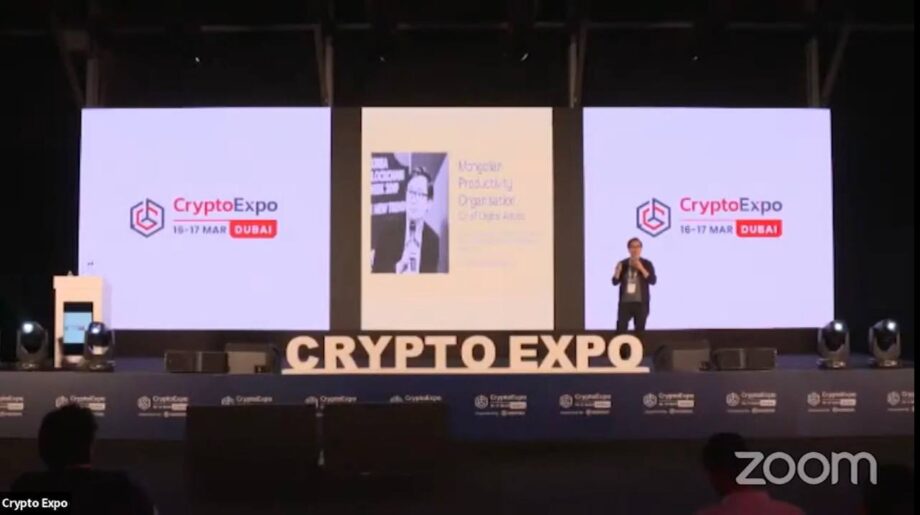
Crypto Expo Dubai 2022: Keynote Speech by Anndy Lian

Crypto Expo Dubai 2022: Keynote Speech by Anndy Lian

Crypto Expo Dubai is the event for Investors and Crypto Industry leaders to network and Explore more business opportunities in the Crypto Space. Meet the right Crypto Companies to Invest and Trade.

Kishu Inu Foundation decided to present and official launch its “K Project” at this event in Dubai.

Anndy Lian, is the Council Member of the Kishu Inu Foundation. He is also an early investor to the token. He joined as a Council Member in February 2022 as he wants to continue doing good with the foundation by donating and helping the less fortunate. The foundation has helped people from Brazil to Philippines, and it is still expanding its footprint.

Anndy is the Chairman of BigONE Exchange. An exchange that has been around since 2017 and is currently ranked top 40 globally. He is also the Chief Digital Advisor at Mongolia Productivity Organisation. Lian is also an investor, book author and philanthropist.

Kishu Inu ($KISHU) is a community-focused, decentralized cryptocurrency with instant rewards thanks to active users! The launch of Project K aka Kishu Kingdom is moving Kishu into the play to earn gaming space. The game is developed by Mainleaf. Mainleaf is specialized in games development since 2010. They have a diverse team with almost 50 members, covering all game development areas such as programming, art, and management. The game becomes the gateway and connector to the current Kishu Inu ecosystem.

Anndy Lian is an early blockchain adopter and experienced serial entrepreneur who is known for his work in the government sector. He is a best selling book author- “NFT: From Zero to Hero” and “Blockchain Revolution 2030”.

Currently, he is appointed as the Chief Digital Advisor at Mongolia Productivity Organization, championing national digitization. Prior to his current appointments, he was the Chairman of BigONE Exchange, a global top 30 ranked crypto spot exchange and was also the Advisory Board Member for Hyundai DAC, the blockchain arm of South Korea’s largest car manufacturer Hyundai Motor Group. Lian played a pivotal role as the Blockchain Advisor for Asian Productivity Organisation (APO), an intergovernmental organization committed to improving productivity in the Asia-Pacific region.

An avid supporter of incubating start-ups, Anndy has also been a private investor for the past eight years. With a growth investment mindset, Anndy strategically demonstrates this in the companies he chooses to be involved with. He believes that what he is doing through blockchain technology currently will revolutionise and redefine traditional businesses. He also believes that the blockchain industry has to be “redecentralised”.

j j j