Anndy Lian, Metaverse, and Cryptocurrency: The Nitty Gritty – An Interview with Stashaway

Anndy Lian, Metaverse, and Cryptocurrency: The Nitty Gritty – An Interview with Stashaway

Metaverse has been talk of the town ever since Facebook CEO Mark Zuckerberg rebranded Facebook into Meta and shared with the world his aspirations and goals in this “metaverse”. But what exactly is metaverse? What does the future hold for us?

Anndy Lian, Chairman of BigONE Exchange gets into the nitty gritty of metaverse with Stashaway,  an intelligent wealth management platform run by roboadvisors.

Metaverse, much like NFTs, is not something new in 2021. It has been talked about seriously since 2018 in a book that Anndy wrote – Blockchain Revolution 2030. Dating further back, ‘metaverse’ was known as a ‘virtual world’ and its origins are mostly credited to Author Neal Stephenson’s 1992 dystopic, sci-fi novel Snow Crash, and many see a more recent inspiration in Earnest Cline’s 2011 novel Ready Player One.

“Metaverse,”, says Anndy, “is more like a bridge between the virtual world and the real world.”. It is speculated that everything that can be done in the real world can be mimicked and reproduced in the metaverse – and maybe even more. It is not as minuscule as having meetings, or creating a cute profile or meme in the metaverse. Imagine what you can do in real life – work, earn your keep, enjoy entertainment – these are what the metaverse promises.

There is a hype around metaverse right now and with the help of Facebook and a few other big companies, people are looking at tech stocks and good crypto companies to invest in. It’s only been a couple of months since the topic of metaverse surfaced and many may argue that it is too early to start investing or paying attention to the market. One concern is that users who are into the metaverse are buying land – digital land – and keeping them. It is of no surprise that they will must have been quite hefty. “It may look like an investment now but you are really just gambling because there is no clear indication right now which metaverse is going to be the next big thing. There are a lot of things to uncover and discover,”, Anndy explains.

The media features news that are trending and people often just listen to them without doing their own research. It is imperative that these people understand that we are only in the beginning phase of metaverse. Taking Google and Yahoo as an example, in the past, everyone thought that Yahoo would be the biggest leader in search engine, but despite both of them being billion-dollar companies, Google clearly has the biggest advantage right now. “Whoever is the leader now may not be the leader at the end,”, emphasises Anndy. There a lot of building blocks that we have not seen and as we progress on, we will get a clearer investment perspective and that would be a better time to invest.

Decentraland (MANA) and The Sandbox (SAND) are the two biggest players in the metaverse right now and the competition has extended to its users – much like Apple versus Samsung. In terms of metaverse, Anndy believes that it is good for everyone to work together and unite such that there would be one metaverse for the whole world. “Ideally, I hope everyone can be united and do what’s needed to build the metaverse up,”, says Anndy.

It is a common misconception that the metaverse is all about cryptocurrency. It is without a doubt that cryptocurrency is one of the aspects of metaverse that connects everyone, however, looking at it from a deeper level, there is also a tech aspect. One of which is Web3.0 that will be coming to improve engagement and enhance safety. Apart from cryptocurrency, NFTs are definitely a part of the concept as well. We may have seen virtual galleries showcasing NFT artworks around the world – and this is only the beginning.

Another common misconception of the metaverse is that it is closely interlinked with virtual reality (VR) and augmented reality (AR). Due to the portrayal of Ready Player One, many believe that we have to wear headsets or sit in a special chair to experience the metaverse in 5D. Thinking back to a conversation with a friend, Anndy brought up that we are all restricted by our physical bodies where we grow old and sick. “If it continues to be like that, how about connecting our mind into the metaverse?”, questions Anndy. This may not be too far-fetched an idea either. Greg Daniel’s 2020 sci-fi television series Upload portrayed Anndy’s thoughts perfectly. The premise of the series is that humans are able to “upload” themselves into a virtual afterlife of their choosing. Now isn’t it wonderful to be able to live even after death?

In a metaverse, there are a few foundational aspects needed to flourish. First and foremost is the ability to let people earn money. Many games such as Axie Infinity have been released where players can play to earn and this attracted the attention of billions of people. Secondly, is the formation of a strong community. With a community, bigger and more valuable things can be built upon as long as they play their part. The third and final point is that whatever is earned from within the metaverse can be brought out and utilised in the real world. “Great importance should be put on these 3 points. I’ve yet to see the 2nd point happen so I’m really looking forward to it,”, says Anndy.

We certainly hope that adoption of cryptocurrencies will be boosted in 2022 as it is a very good opportunity for things to mature. Due to COVID-19, things will definitely have to open up across borders and across different worlds. “As adoption increases, there’ll be new money and new people. The metaverse will be very very different,”, says Anndy. The metaverse that we all imagine should not be something that is too far away. In Anndy’s words, “Let’s shoutout to Elon Musk; maybe he could help to boost the development of the metaverse.”. Cheers to that!


Podcast:

https://www.stashaway.sg/podcast/entering-the-metaverse


YouTube Video:

Anndy Lian is an early blockchain adopter and experienced serial entrepreneur who is known for his work in the government sector. He is a best selling book author- “NFT: From Zero to Hero” and “Blockchain Revolution 2030”.

Currently, he is appointed as the Chief Digital Advisor at Mongolia Productivity Organization, championing national digitization. Prior to his current appointments, he was the Chairman of BigONE Exchange, a global top 30 ranked crypto spot exchange and was also the Advisory Board Member for Hyundai DAC, the blockchain arm of South Korea’s largest car manufacturer Hyundai Motor Group. Lian played a pivotal role as the Blockchain Advisor for Asian Productivity Organisation (APO), an intergovernmental organization committed to improving productivity in the Asia-Pacific region.

An avid supporter of incubating start-ups, Anndy has also been a private investor for the past eight years. With a growth investment mindset, Anndy strategically demonstrates this in the companies he chooses to be involved with. He believes that what he is doing through blockchain technology currently will revolutionise and redefine traditional businesses. He also believes that the blockchain industry has to be “redecentralised”.
j j j

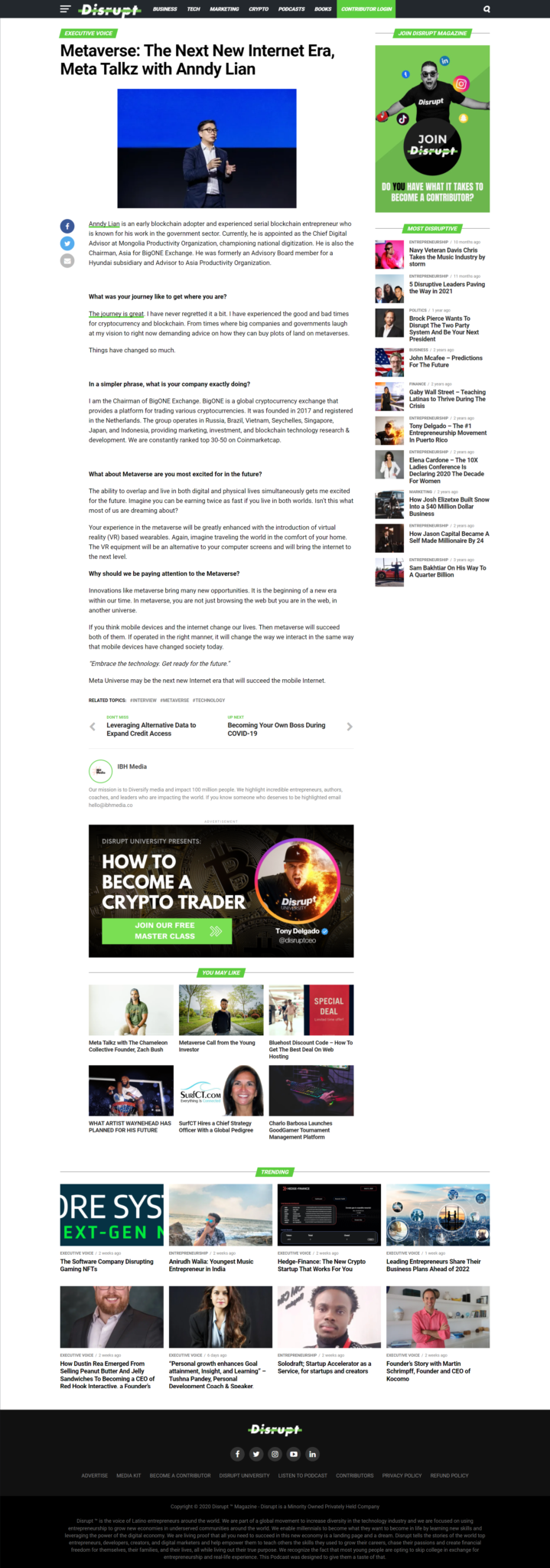
Metaverse: The Next New Internet Era, Meta Talkz with Anndy Lian

Metaverse: The Next New Internet Era, Meta Talkz with Anndy Lian

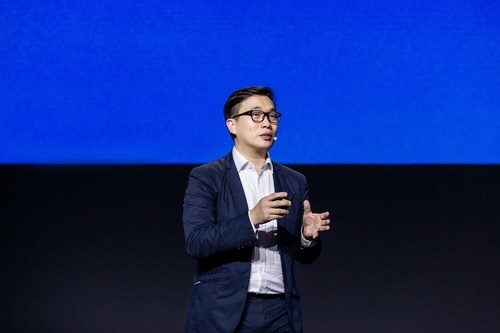
Anndy Lian is an early blockchain adopter and experienced serial blockchain entrepreneur who is known for his work in the government sector. Currently, he is appointed as the Chief Digital Advisor at Mongolia Productivity Organization, championing national digitization. He is also the Chairman, Asia for BigONE Exchange. He was formerly an Advisory Board member for a Hyundai subsidiary and Advisor to Asia Productivity Organization.


What was your journey like to get where you are?

The journey is great. I have never regretted it a bit. I have experienced the good and bad times for cryptocurrency and blockchain. From times where big companies and governments laugh at my vision to right now demanding advice on how they can buy plots of land on metaverses.

Things have changed so much.


In a simpler phrase, what is your company exactly doing?

I am the Chairman of BigONE Exchange. BigONE is a global cryptocurrency exchange that provides a platform for trading various cryptocurrencies. It was founded in 2017 and registered in the Netherlands. The group operates in Russia, Brazil, Vietnam, Seychelles, Singapore, Japan, and Indonesia, providing marketing, investment, and blockchain technology research & development. We are constantly ranked top 30-50 on Coinmarketcap.


What about Metaverse are you most excited for in the future?

The ability to overlap and live in both digital and physical lives simultaneously gets me excited for the future. Imagine you can be earning twice as fast if you live in both worlds. Isn’t this what most of us are dreaming about?

Your experience in the metaverse will be greatly enhanced with the introduction of virtual reality (VR) based wearables. Again, imagine traveling the world in the comfort of your home. The VR equipment will be an alternative to your computer screens and will bring the internet to the next level.


Why should we be paying attention to the Metaverse?

Innovations like metaverse bring many new opportunities. It is the beginning of a new era within our time. In metaverse, you are not just browsing the web but you are in the web, in another universe.

If you think mobile devices and the internet change our lives. Then metaverse will succeed both of them. If operated in the right manner, it will change the way we interact in the same way that mobile devices have changed society today.

“Embrace the technology. Get ready for the future.”

Meta Universe may be the next new Internet era that will succeed the mobile Internet.


About Disrupt ™ 

Disrupt ™ is the voice of Latino entrepreneurs around the world. We are part of a global movement to increase diversity in the technology industry and we are focused on using entrepreneurship to grow new economies in underserved communities around the world. We enable millennials to become what they want to become in life by learning new skills and leveraging the power of the digital economy. We are living proof that all you need to succeed in this new economy is a landing page and a dream. Disrupt tells the stories of the world top entrepreneurs, developers, creators, and digital marketers and help empower them to teach others the skills they used to grow their careers, chase their passions and create financial freedom for themselves, their families, and their lives, all while living out their true purpose. We recognize the fact that most young people are opting to skip college in exchange for entrepreneurship and real-life experience. This Podcast was designed to give them a taste of that.


Original Source: https://disruptmagazine.com/metaverse-the-next-new-internet-era-meta-talkz-with-anndy-lian/

Anndy Lian is an early blockchain adopter and experienced serial entrepreneur who is known for his work in the government sector. He is a best selling book author- “NFT: From Zero to Hero” and “Blockchain Revolution 2030”.

Currently, he is appointed as the Chief Digital Advisor at Mongolia Productivity Organization, championing national digitization. Prior to his current appointments, he was the Chairman of BigONE Exchange, a global top 30 ranked crypto spot exchange and was also the Advisory Board Member for Hyundai DAC, the blockchain arm of South Korea’s largest car manufacturer Hyundai Motor Group. Lian played a pivotal role as the Blockchain Advisor for Asian Productivity Organisation (APO), an intergovernmental organization committed to improving productivity in the Asia-Pacific region.

An avid supporter of incubating start-ups, Anndy has also been a private investor for the past eight years. With a growth investment mindset, Anndy strategically demonstrates this in the companies he chooses to be involved with. He believes that what he is doing through blockchain technology currently will revolutionise and redefine traditional businesses. He also believes that the blockchain industry has to be “redecentralised”.
j j j

Additional Comments by Anndy Lian on Singapore’s approach to regulation of crypto and digital asset activities

Additional Comments by Anndy Lian on Singapore’s approach to regulation of crypto and digital asset activities

The initial article was published at Nikkei Asia and was republished on sites such as DealStreet and K. I hope to add more context to my comments.

Q1/ Singapore is warning investors about investing in cryptocurrencies while selectively giving licenses for crypto/digital asset platforms to operate. How contradictory is this approach and what are authorities exactly trying to achieve here?

Singapore’s approach is essentially one guided by the traditional finance structure, applying existing legal frameworks where possible, to protect the investing public. As a result, the regulators are proactive about warning individual investors about the risks in investing in cryptocurrencies, which is what you would expect.

But I do think Singapore’s approach is also very contradictory. I do not agree with the practice of selectively granting licences to different crypto entities. The whole process of selecting who to give the licence to is not very transparent in my opinion.

If you look at the licences that have been given out so far, to the brokerage arm of Southeast Asia’s largest lender DBS Bank, and Australian cryptocurrency exchange Independent Reserve, it gives the impression that the government is favouring big players and foreign exchanges.

Right now, a lot of crypto exchanges and startups who regard Singapore still as a crypto hub, are doing their very best to stay in Singapore and be licensed. But the truth of the matter is that most of them are effectively in regulatory limbo. They have no idea what exactly is going to happen next, whether or not their application will be approved.

What I would like to see is for the regulator, the Monetary Authority of Singapore (MAS), to take a more systematic and open-handed approach to licensing, so that every crypto business will have an equal opportunity to comply with its requirements.


Q2. What are the positive aspects and drawbacks of the way Singapore is approaching the regulation of crypto and digital asset activities?

The positive aspect is that Singapore is trying to build its own crypto ecosystem by embracing crypto exchanges and startups, and I think that is positive.

 The drawback in the current approach, and one that I really do not want to see, is for all intent and purposes an elitist model where only businesses that appear to be in favour with the regulator are able to get a licence in a reasonable time span.

 Singapore is obviously trying to both embrace crypto, and at the same time also trying to regulate the crypto sector to protect investors and the public at large. But it’s a difficult balance to strike, and without an impartial and transparent approach to licensing, they risk defeating the purpose of making cryptocurrencies available to all.

 Between crypto and traditional assets there are key differences, not least of which is their decentralized nature. As a result, whatever applied in the past to traditional assets might not work so well for cryptocurrency, because of the way it works and how people use it.

It comes down to the fact that Singapore needs to find new ways to regulate this dynamic new sector, without trying to rely on existing models that are no longer fit for purpose, if it’s to be a leading hub for cryptocurrencies in Southeast Asia and globally.


Q3. Which countries in Southeast Asia and the rest of Asian can perhaps best be able to emulate Singapore’s regulatory approach and why?

I believe South Korea and Hong Kong, with similar financial systems, can best emulate the whole regulatory approach, and by learning the lessons so far do it a lot better than Singapore. That said, the recent announcement by China banning crypto activities leaves the fight for the top spot for crypto in Southeast Asia up for grabs. As well as South Korea and Hong Kong, I also see Japan as a big threat to Singapore in the fight to be Asia’s crypto

_______________________________________________

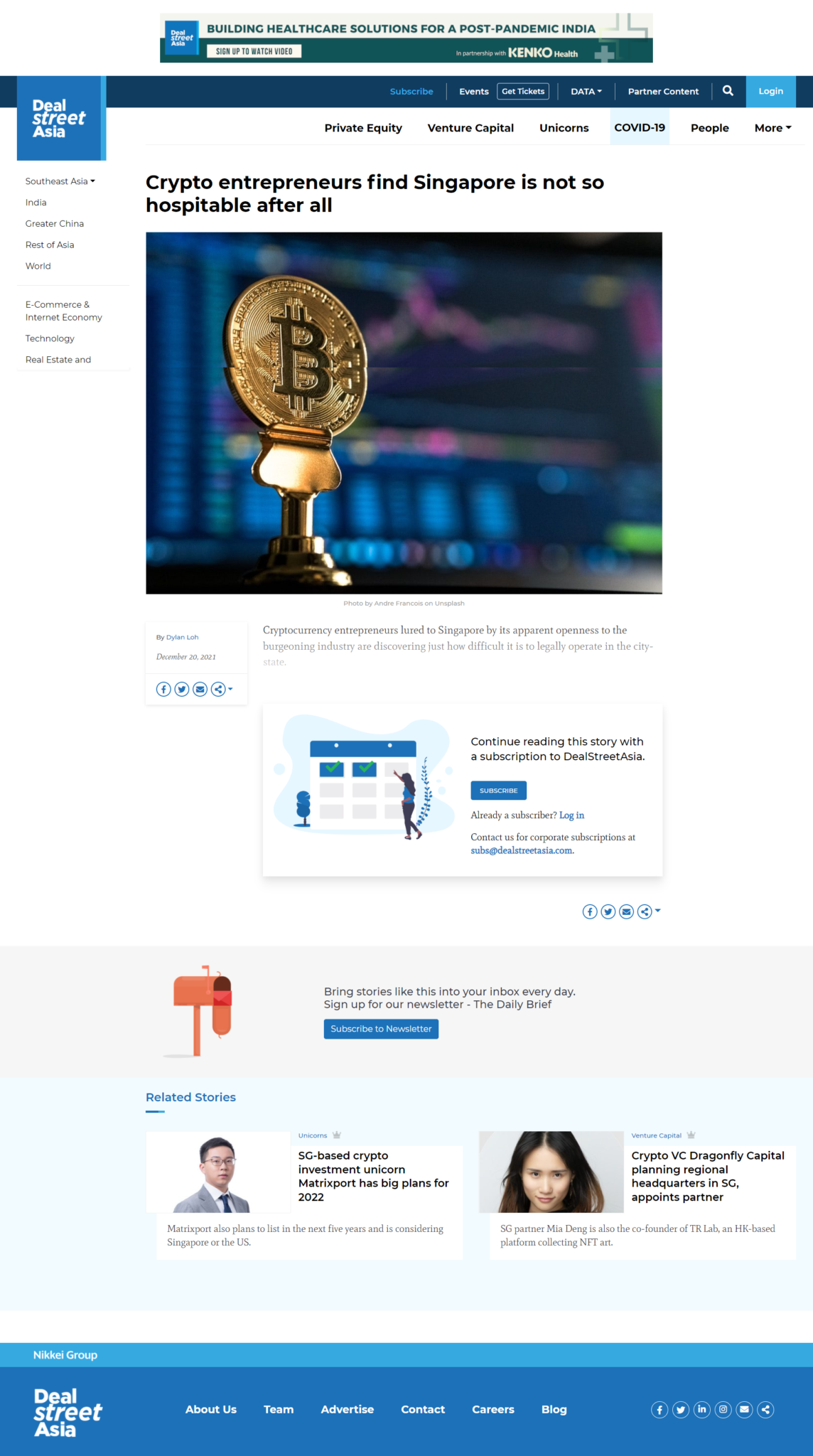
Crypto entrepreneurs find Singapore is not so hospitable after all

Cryptocurrency entrepreneurs lured to Singapore by its apparent openness to the burgeoning industry are discovering just how difficult it is to legally operate in the city-state.

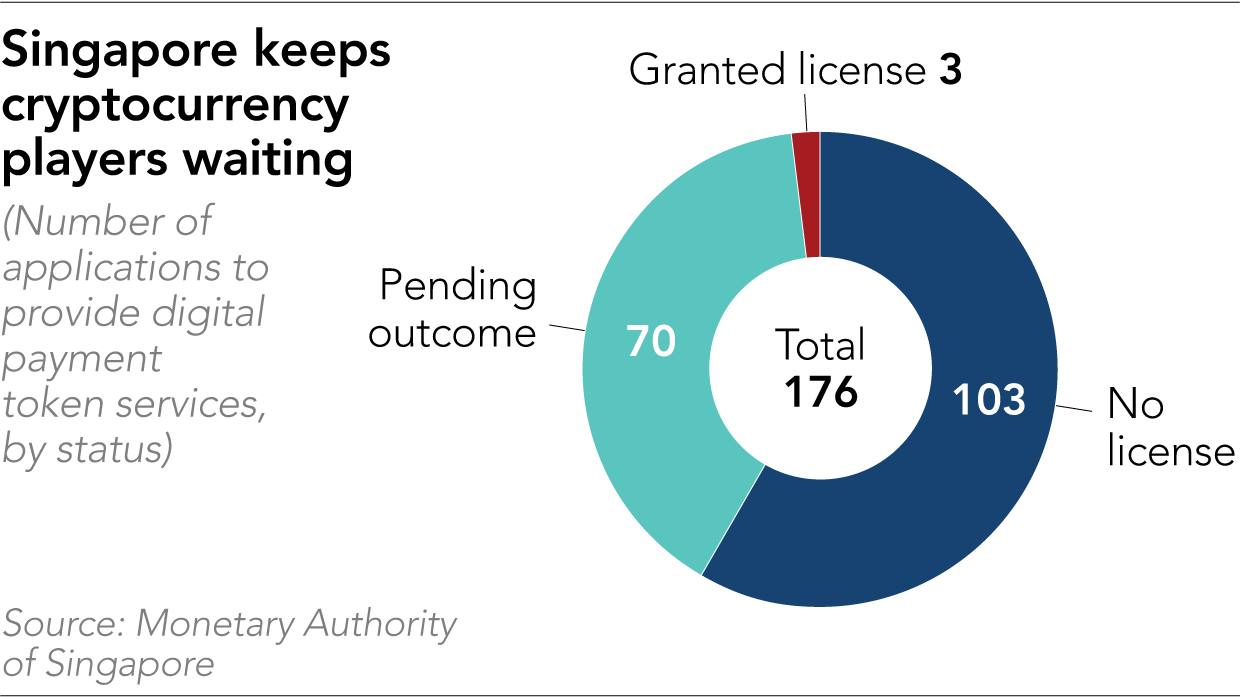
More than 100 of the around 170 businesses that applied for licenses to offer “digital payment token services” have now been turned down or withdrawn their applications, according to the latest figures from regulators.

And scores more face an uncertain future, operating under exemptions but amid a darkening mood over the approval process.

In early September, the Monetary Authority of Singapore (MAS) ordered Binance, one of the world’s largest crypto exchanges, to stop providing services to residents in the city-state, and last week Binance’s Singapore-only affiliate announced it also was shutting down its trading platform for the city-state. Dozens are confronting a similar fate.

Dubai-based crypto exchange Bitxmi is one of 103 companies that appear on the latest MAS list of entities whose exemptions allowing them to operate have been removed. Having set up in Singapore in late 2018, it was unsuccessful in securing a license, chief executive officer Sanjay Jain told Nikkei Asia.

“We can’t operate in Singapore,” he said. “We have an office there, but it’s just more or less—there’s one person for our accounting and legal issues.”

Jain declined to speak about why his outfit did not manage to secure a license from regulators. “That, you need to ask them,” he said.

The introduction of the licensing regime in January was cast as the next step in building a thriving crypto sector and set up a contrast with Singapore’s rival Asian financial hub, Hong Kong, which had taken a more skeptical approach to crypto businesses.

Graph by Nikkei Asia.

A spokesperson for MAS told Nikkei that it is supportive of innovation in the use of blockchain technology, which underpins cryptocurrencies, while also recognizing the risks.

“Cryptocurrencies could be abused for money laundering, terrorism financing, or proliferation financing due to the speed and cross-border nature of the transactions,” the spokesperson said. “Digital payment token service providers in Singapore … have to comply with requirements to mitigate such risks, including the need to carry out proper customer due diligence, conduct regular account reviews, and monitor and report suspicious transactions.”

Rahul Advani, Asia-Pacific policy director at blockchain company Ripple, said Singapore’s stance on digital assets has resulted in the city-state being one of the most advanced and mature nations in the field, helping foster development and innovation in the emerging industry.

“It’s very clear where digital assets and related activities lie on the risk spectrum, so you mitigate the potential of developing and investing in technology that is unregulated,” he told Nikkei.

Crypto players that raced to set up in Singapore run the spectrum from exchange platforms for trading bitcoin, Ethereum, and other tokens, through investment managers and financial advisers looking after digital asset portfolios for the wealthy, to business-to-business outfits helping corporate clients accept cryptocurrency payments.

Outfits that were operating in the country prior to the introduction of the licensing regime were granted exemptions until the outcome of their license application is known. Senior Minister Tharman Shanmugaratnam told parliament in July that there were 90 companies operating under such exemptions.

The MAS website showed that the group had shrunk to about 70 as of December 14.

So far, only three players—DBS Vickers Securities, a unit of Singapore and Southeast Asia’s largest bank, DBS Group Holdings; digital payments startup FOMO Pay; and Australia’s Independent Reserve, which offers crypto exchange services—have been listed on the MAS website as licensed entities.

Two others—Coinhako, which operates a crypto exchange platform, and TripleA, a payments company—have put out announcements themselves saying they have acquired the necessary approvals to operate.

Anndy Lian, chairman of Netherlands-registered crypto trading platform BigONE Exchange, told Nikkei that his outfit does not intend to apply for a license in Singapore presently.

“The whole process of selecting who to give the license to is not very transparent,” he said. “It gives the impression that the government is favoring big players and foreign exchanges.”

MAS has not publicly disclosed why specific crypto players were unable to obtain a permit.

But Nikkei understands that some of them did not have the capacity or infrastructure to meet the high compliance standards set out by the financial regulator to deter money laundering and financing of terrorism.

“Cryptocurrencies are currently being used to channel the earnings of everything from ransomware proceeds, the sale of narcotics to some of the most horrific crimes, including human trafficking,” said Rachel Woolley, head of financial crime at client management solutions provider Fenergo.

“Regulators have now entered this space in an effort to protect the financial services industry from illicit activity in much the same way that activity involving fiat currency must be monitored.”

MAS pointed to comments from its managing director, Ravi Menon, who has said that Singapore does not need 160 players in the crypto sector and it may be better to have “half of them” operating at very high standards.

TripleA told Nikkei that in securing its permit, it had to ensure that its operating procedures for risk assessment, customer due diligence, record-keeping, suspicious transaction reporting, auditing, and training were up to snuff.

But its CEO, Eric Barbier, said TripleA gained little insight into what exactly made the difference between success and failure.

“MAS never talks. MAS asks questions and questions and questions,” he said. “You can ask questions but they will not answer, and most regulators are like this.”

Barbier reckoned that being a business serving other businesses may have helped secure a license. “Especially for consumer-to-consumer, like consumer exchanges and so on, the risk of money laundering is very high, so they need to demonstrate to MAS that they are able to mitigate all those risks accordingly,” he said.

Peiying Chua, financial regulation partner for Singapore at the law firm Linklaters, said it is unlikely MAS is specifically favoring big, incumbent financial players: “Likely reasons for unsuccessful applicants may include a lack of track record or key personnel without adequate experience, a lack of a sustainable business model or serious adverse records relating to directors and key individuals.”

“The regulatory approach by MAS may to some degree stifle innovation in smaller entrepreneurs and sift out smaller virtual asset service providers that may not be able to comply with the regulations,” said Quek Li Fei, partner at law firm CNPLaw.

But he added it “provides a more forward-thinking approach toward encouraging legitimate innovation and entrepreneurship in cryptocurrency and digital asset businesses, with a reasonable level of protection to investors.”


Source: https://www.dealstreetasia.com/stories/crypto-entrepreneurs-singapore-274592/


Anndy Lian is an early blockchain adopter and experienced serial entrepreneur who is known for his work in the government sector. He is a best selling book author- “NFT: From Zero to Hero” and “Blockchain Revolution 2030”.

Currently, he is appointed as the Chief Digital Advisor at Mongolia Productivity Organization, championing national digitization. Prior to his current appointments, he was the Chairman of BigONE Exchange, a global top 30 ranked crypto spot exchange and was also the Advisory Board Member for Hyundai DAC, the blockchain arm of South Korea’s largest car manufacturer Hyundai Motor Group. Lian played a pivotal role as the Blockchain Advisor for Asian Productivity Organisation (APO), an intergovernmental organization committed to improving productivity in the Asia-Pacific region.

An avid supporter of incubating start-ups, Anndy has also been a private investor for the past eight years. With a growth investment mindset, Anndy strategically demonstrates this in the companies he chooses to be involved with. He believes that what he is doing through blockchain technology currently will revolutionise and redefine traditional businesses. He also believes that the blockchain industry has to be “redecentralised”.
j j j