
Anndy Lian on NewsX: India’s Official Digital Currency. Time To Make A Shift?

Anndy Lian on NewsX: India’s Official Digital Currency. Time To Make A Shift?

The development of Bitcoin and thousands of other cryptocurrencies these past few years have left India needing to create a framework for the creation of an official digital currency, which will be issued by the Reserve Bank of India (RBI). A bill in this regard is planned to be tabled in the upcoming winter session of the parliament.

The Indian government is worried about the volatility of cryptocurrency, how it can be misused, and cryptocurrencies’ impact on the country and its economic situation. The primary idea of the RBI behind this move is to protect consumers from the appalling level of volatility seen in digital currency. The governor of RBI went to the extent of saying that cryptocurrencies pose a serious concern to the macroeconomic and financial stability of India.

It has been reported that a huge amount of ₹$40,000 (rupees) have already been spent when it comes to cryptocurrency. Furthermore, the idea of cryptocurrency was, when it was formulated in 2008, to bypass the banking system. This brought rise to RBI’s worry that cryptocurrency will overtake the banking system when it comes to investments in India.

Back when cryptocurrencies were banned in China, the fallout was that a lot of people and a lot of that investment and interest were redirected to the USA. India does not want to make that same mistake. It is almost certain that there will be a lot of problems if there is a blanket ban on cryptocurrency in India.

India is all set to create a framework for the creation of an official digital currency that will be issued by RBI. NewsX invited a panel of experts to talk about the topic. The expert panel consists of Akash Jindal, Sr Economist; Siddhartha Sogani, CEO of Creabaco Global Inc., Bitcoin Expert; Hanif Shaikh, CEO of Upsocial Network, Crypto Expert and Anndy Lian, Chairman, BigONE Exchange and Founding Member of Influxo. News Anchor, Vineet Malhotra discussed the following topics:

• How will this impact the total economic atmosphere of the country?
• Are cryptocurrencies such a threat to the economic environment of any country?
• What is the next step for India?
• How important is the concept of decentralisation when it comes to cryptocurrency?

Here’s what BigONE Chairman Anndy Lian had to say in an interview with India’s NewsX:

The right direction is to embrace cryptocurrency in all manners – because cryptocurrency is here to stay. It is the future of currency. In whatever way that it is called – currency or digital asset – it must be embraced.

Mainstream media may always say that cryptocurrencies are illegal as it may involve money laundering, among other things. But the fact is that the top currency used to carry out such illegal things is the very common US dollar.

Every move made via a blockchain is recorded on the chain. If Bitcoin is sent to a dodgy account, it’s going to be recorded on the chain. How will these dodgy accounts cash it out? Will they be so daring to do that?

BigONE is on the Top 40 list globally. All good exchanges must go through the same regulatory steps to ensure Know-Your-Customer (KYC) and Anti-Money Laundering (AML) processes are carried out. Through these frameworks, illegal acts are minimised.

Decentralisation does not, in any way, mean the removal of governments of taxes. It must be emphasised that when it comes to decentralisation, there is no intention of moving away from countries’ legacy systems or financial systems. Nonetheless, people are living in the real world, and not in the metaverse. Actual, physical money is still required to live as we head into the future.

The term “decentralisation” must not be tweaked in such a way that it is portrayed to be a bad thing. There exists proper entities – proper companies – to back the system. In the cryptocurrency world, everything needs to be registered. When founders of a project are doxxed, documentation to prove that will be kept in a centralised depository. If anything were to happen, tracing back to the person or team in charge will not be an issue.

It is imperative to redefine the term “decentralised” such that governments, family offices, and traditional banking staff know what it means exactly. In comparison to the traditional space, what is experienced in the cryptocurrency world is actually no different. For exchanges such as BigONE, different kinds of available financial requirements are stringently addressed. In this way, proper regulation is assured. Let’s be open-minded and address it.

The Indian government and crypto practitioners are open-minded and progressive about cryptocurrency. As the bill gets drafted, it is good that they would have all the experts to provide their confounding, broad, and elaborate views on what the cryptocurrency market pertains to, as well as the volatility and risks.

This is the second time Anndy Lian is invited to the NewsX Live commentary segment. The first time was with Garrett Minks, Founder & CTO, Rair and Vishal Malhotra, Actor on NFT.

The full video can be found on NewsX official channel:

Anndy Lian is an early blockchain adopter and experienced serial entrepreneur who is known for his work in the government sector. He is a best selling book author- “NFT: From Zero to Hero” and “Blockchain Revolution 2030”.

Currently, he is appointed as the Chief Digital Advisor at Mongolia Productivity Organization, championing national digitization. Prior to his current appointments, he was the Chairman of BigONE Exchange, a global top 30 ranked crypto spot exchange and was also the Advisory Board Member for Hyundai DAC, the blockchain arm of South Korea’s largest car manufacturer Hyundai Motor Group. Lian played a pivotal role as the Blockchain Advisor for Asian Productivity Organisation (APO), an intergovernmental organization committed to improving productivity in the Asia-Pacific region.

An avid supporter of incubating start-ups, Anndy has also been a private investor for the past eight years. With a growth investment mindset, Anndy strategically demonstrates this in the companies he chooses to be involved with. He believes that what he is doing through blockchain technology currently will revolutionise and redefine traditional businesses. He also believes that the blockchain industry has to be “redecentralised”.
j j j

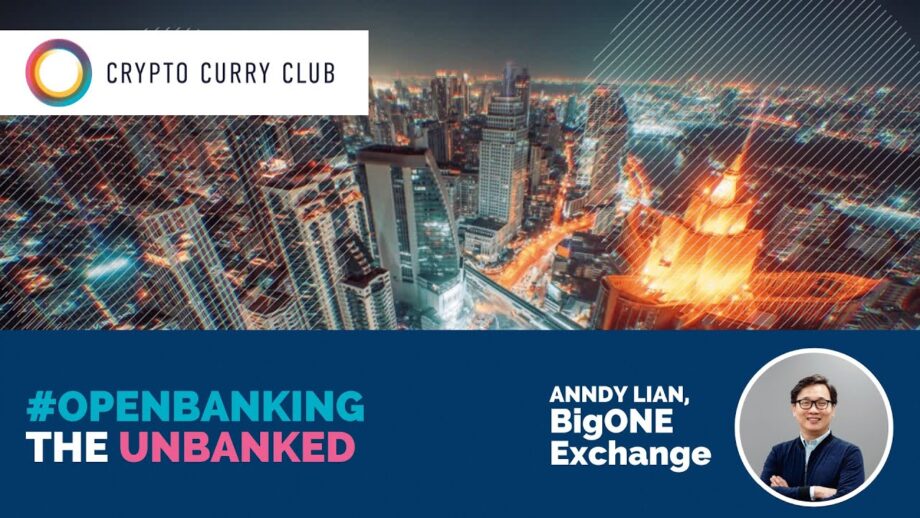
Anndy Lian: “Opening Banking is good. Defi is better. It can fill up the existing financial gaps.”

Anndy Lian: “Opening Banking is good. Defi is better. It can fill up the existing financial gaps.”

The modern-day, tech-savvy consumers’ demand for a more avant-garde service, gave rise to what’s now called the open banking revolution. And, it is changing the way transactional data is shared, used and stored outside Financial Institutions.

This paradigm shift is actively transforming the payments landscape, and with cryptocurrencies squeezing their way toward the innovation space, it looks like it’s set to play a significant role. Crypto Curry Club spoke to BigONE Exchange Chairman, Anndy Lian to discuss the potentially life-changing opportunities that Open Banking brings and how crypto can be leveraged in this new scene.

What is Opening Banking?

Open banking is a banking practice that allows third-party financial service providers to access consumer banking and financial data via application programming interfaces (APIs).

Why do credit bureaus use open banking?

Credit bureaus need to access and process customer information in order to accurately determine creditworthiness. Open banking reduces administrative costs by eliminating manual document collection. Furthermore, open banking allows credit bureaus to analyse consumption patterns, such as overspending, to provide better credit scores (Julio, 2021). Additionally, open banking prevents fraud through authentication and verification of the validity of data (Julio, 2021).

In the video, Anndy and Erica discussed the following topics:

[00:02:01] Give an overview of what open banking is. How is this bringing some disruption and some benefits to the traditional roles of things like lending and credit?

[00:04:51] Do you see any other benefits to the area of credit decision?

[00:08:05] How specifically do you see open banking benefiting people who are either looking to get in crypto or who are already in the crypto space?

[00:12:25] Have you seen a large take up for that sort of access of on ramping via open banking on your exchange?

[00:15:58] What are some of the security benefits that open banking brings?

[00:17:51] What do you see is next for open banking in terms of helping the credit, lending space, and the crypto exchanges picking up this technology of using open banking?

“Open banking prevents fraud through authentication and verification of the validity of data. For financial service providers, open banking will allow financial service providers to significantly innovate on their product offerings to businesses. For businesses, opening banking will mean more effective and efficient financial tools in their business. For customers, it will mean better ways to spend, borrow, and invest.

Opening Banking is good. Defi is better. It can fill up the existing financial gaps.”


About Crypto Curry Club:

The Crypto Curry Club connects like-minded individuals to come together and affect real change that innovates our future while driving businesses forward.


About Anndy Lian:

Anndy Lian is an all-rounded business strategist in Asia. He has provided advisory across a variety of industries for local, international, public listed companies and governments. He is an early blockchain adopter and experienced serial entrepreneur, book author, investor, board member and keynote speaker. Currently, he is appointed as the Chief Digital Advisor at Mongolia Productivity Organization, championing national digitization. He is also the Chairman, Asia for BigONE Exchange.


About Erica Stanford:

Erica is the Founder of Crypto Curry Club. She is also the author of Crypto Wars: Faked Deaths, Missing Billions and Industry Disruption published by Kogan Page.

The full video can be found at:

Anndy Lian is an early blockchain adopter and experienced serial entrepreneur who is known for his work in the government sector. He is a best selling book author- “NFT: From Zero to Hero” and “Blockchain Revolution 2030”.

Currently, he is appointed as the Chief Digital Advisor at Mongolia Productivity Organization, championing national digitization. Prior to his current appointments, he was the Chairman of BigONE Exchange, a global top 30 ranked crypto spot exchange and was also the Advisory Board Member for Hyundai DAC, the blockchain arm of South Korea’s largest car manufacturer Hyundai Motor Group. Lian played a pivotal role as the Blockchain Advisor for Asian Productivity Organisation (APO), an intergovernmental organization committed to improving productivity in the Asia-Pacific region.

An avid supporter of incubating start-ups, Anndy has also been a private investor for the past eight years. With a growth investment mindset, Anndy strategically demonstrates this in the companies he chooses to be involved with. He believes that what he is doing through blockchain technology currently will revolutionise and redefine traditional businesses. He also believes that the blockchain industry has to be “redecentralised”.

j j j

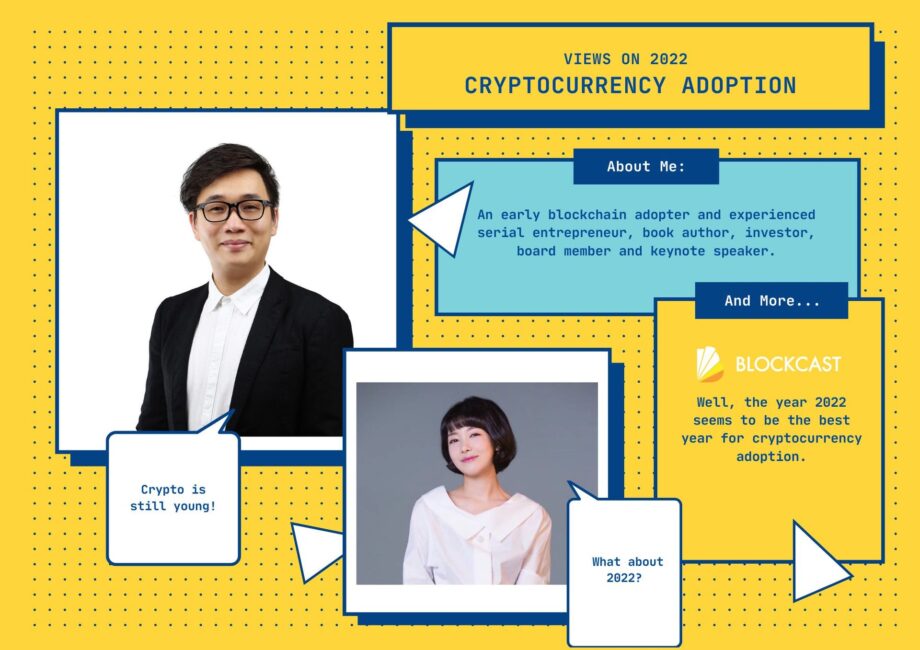
Interview with Anndy Lian: Views on 2022 Cryptocurrency Adoption – What Is Coming Next

Interview with Anndy Lian: Views on 2022 Cryptocurrency Adoption – What Is Coming Next

Anndy Lian is an all-rounded business strategist in Asia. He has provided advisory across a variety of industries for local, international, public listed companies and governments. He is an early blockchain adopter and experienced serial entrepreneur, book author, investor, board member and keynote speaker. Currently, he is appointed as the Chief Digital Advisor at Mongolia Productivity Organization, championing national digitization. He is also the Chairman, Asia for BigONE Exchange.

Being an Asian, I would like to hear Anndy’s perspectives on how he sees cryptocurrency adoption for 2022.


Jenny Zheng: Now that the SEC appears to have dropped its resistance to (certain) Bitcoin ETFs, do you expect we’ll see increased institutional adoption of bitcoin/crypto as an investment vehicle and/or inflation hedge?


Anndy Lian: It’s certainly welcome news to exchange-traded fund managers with the launch of the first Bitcoin futures ETF this week, with the ProShares’ Bitcoin Strategy ETF, to first and foremost provide their clients with the option to diversify their portfolio with cryptocurrencies, a testament to the maturation of the market.


Plus, the news that Interactive Brokers announced they will empower Registered Investment Advisors across the United States to invest in bitcoin and cryptocurrencies means hundreds of billions of dollars can now enter the market more easily.


It’s true that big institutional investors have been looking for a regulated way to trade Bitcoin for a while, and that’s all the more so considering the real concerns about high inflation, and the debasement of the dollar due to the US Fed’s quantitative easing program.


Part of that crypto adoption process however is being able to convince the regulator, the SEC in the US being the prime example, that proposed funds will be able to cover the risks for investors. For example, Bitwise, which originally filed for regulatory approval for a bitcoin ETF in 2019 before withdrawing the application after an initial rejection, has been revising its filing for more than a year.


But it’s also clear that since the recent Chinese mining and crypto ban the US has become a little more receptive to crypto regulation. Certainly, regulators in other countries have approved ETFs, Canada’s Purpose Bitcoin ETF, which started trading in February, ballooned to more than $1bn in assets under management in less than two months.


Jenny Zheng: 2021 was notable for witnessing El Salvador’s adoption of bitcoin as legal tender. To what extent do you think 2022 will involve more nations following such an example, or will at least involve more nations/governments using crypto in various ways?


Anndy Lian: The rollout of Bitcoin in El Salvador certainly captured the headlines worldwide, It raised the profile of the country and has no doubt attracted the attention of other countries. By the same token, the speed at which it happened, without the opportunity to enlighten citizens across the country as to the pros and cons of using the cryptocurrency will also have given them food for thought. This caution is supported by the case of Panama, which while also passing a law to increase the use of bitcoin and Ethereum as a payment option did not decree that businesses had to accept cryptocurrency.


In 2022 however, the real crypto push from governments will be more likely to come in the form of central bank digital currencies, most notably in China. There the central bank is looking to use blockchain at the issuance layer for its digital yuan system, which is centralized. The Chinese version of the CBDC is not yet a distributed approach due to issues around performance and scalability; though the wider ecosystem does provide solutions in the form of sidechains and oracles to enable off-chain data to connect with blockchains this seems unlikely to be adopted any time soon.


However, the real impetus to action by the government whether in South America or Southeast Asia may come with the rollout of Facebook’s Novi wallet later this year, with the Diem cryptocurrency to follow shortly after. The reason being that most deserving of crypto aims, to service the ‘unbanked’ citizens who lack banking services. If the Facebook initiatives take off then this could spur governments to action, if not creating their own digital currency, in supporting the growth of private-sector solutions with improved regulations and support.


A good example of this approach is in Ukraine, which voted almost unanimously to legalize and regulate cryptocurrency just a day after El Salvador’s official bitcoin adoption. As reported in Yahoo Finance: “This is with hopes of developing a new industry that will attract transparent investments and boost the country’s reputation as a high-tech state.” No doubt this model for adoption will prove attractive to other governments in 2022.


Jenny Zheng: Lastly, the end of 2021 seems primed to witness a renewed bull market. However, do you think 2022 will witness an increase in people actually using bitcoin and cryptocurrency to make payments?


Anndy Lian: The trend towards greater use of crypto for payments has already started, with the recent news in the US that US-based cinema chain AMC will soon be accepting cryptocurrency payments. It comes just a few months after PayPal decided to allow US consumers to use crypto to make purchases and news that Mastercard would be supporting cryptocurrency payments across its network.


While in the retail sector, Walmart and Amazon’s crypto recruitment announcements have raised awareness that these retail behemoths may be planning to open their doors to cryptocurrencies. At Amazon, it appears the plans are well advanced, as a “full-on, well-discussed, integral part of the future mechanism of how Amazon will work,” according to a City AM report.


While there are certainly challenges in accepting Bitcoin for payments, especially when the price volatility is factored in, more and more merchants are looking to add crypto purchasing to their business. According to a survey last year by BitPay, “up to 40% of customers that pay with crypto are new to the merchant. Second, purchase amounts are twice that of credit card purchases. Third, crypto is less expensive than credit cards, and lastly, there are no fraud-related chargebacks”.


A clear use case for cryptocurrency also comes with international money transfers, for example, with low transfer fees and fast transfer speeds, and anyone can use it. “However, Bitcoin has become less attractive for remittances due to the increasing cost of Bitcoin transactions. Some competing cryptocurrencies, such as Ripple and Dash, are also targeting the remittance market with substantially lower fees,” suggested a recent report in Investopedia.


Jenny Zheng: Any final words?


Anndy Lian: Well, the year 2022 seems to be the best year for cryptocurrency adoption. If you looked at the crypto innovation curve that I have shared on Twitter. You have not missed anything. Crypto is still young.


by Jenny Zheng @jennyzheng.Early crypto advocate | Investor | PR Expert | Cofounder of Blockcast.cc


Original Source: https://hackernoon.com/interview-with-anndy-lian-views-on-2022-cryptocurrency-adoption-what-is-coming-next

Anndy Lian is an early blockchain adopter and experienced serial entrepreneur who is known for his work in the government sector. He is a best selling book author- “NFT: From Zero to Hero” and “Blockchain Revolution 2030”.

Currently, he is appointed as the Chief Digital Advisor at Mongolia Productivity Organization, championing national digitization. Prior to his current appointments, he was the Chairman of BigONE Exchange, a global top 30 ranked crypto spot exchange and was also the Advisory Board Member for Hyundai DAC, the blockchain arm of South Korea’s largest car manufacturer Hyundai Motor Group. Lian played a pivotal role as the Blockchain Advisor for Asian Productivity Organisation (APO), an intergovernmental organization committed to improving productivity in the Asia-Pacific region.

An avid supporter of incubating start-ups, Anndy has also been a private investor for the past eight years. With a growth investment mindset, Anndy strategically demonstrates this in the companies he chooses to be involved with. He believes that what he is doing through blockchain technology currently will revolutionise and redefine traditional businesses. He also believes that the blockchain industry has to be “redecentralised”.

j j j