Co-Creating the Rules: How Crypto Firms Are Shaping A Sustainable Future With Government

Co-Creating the Rules: How Crypto Firms Are Shaping A Sustainable Future With Government

The crypto world moves fast, with blockchain innovations popping up constantly while governments take their time to respond. As a member of Bitcoin class 2012/13, and having followed its wild rides and the crashes of major exchanges for more than a decade, I’ve noticed a real shift. Crypto firms are starting to view regulators not as enemies to dodge, but as allies in creating a stable and innovative ecosystem. This change feels like a key moment in the industry, especially now when global markets crave clear rules amid all the volatility, scandals, and crypto’s growing ties to traditional finance. In my opinion, proactively jumping in is essential for building legitimacy, driving growth, and avoiding the regulatory hurdles that have slowed progress in the past.

The industry’s approach to government relations has evolved significantly, focusing on shared wins rather than clashes. Crypto companies are acting as links, developing initiatives that match up with public goals like steady economies and protecting users. This involves sharing expertise on blockchain applications, participating in key discussions, and supporting government-connected initiatives, such as those from NGOs, schools, and think tanks. From where I sit, this teamwork gets at a basic fact. Governments are not out to kill crypto; they just protect against dangers like scams, money laundering, and wild market swings. By offering insights and tools, firms can clear up the tech’s mysteries, aiding officials in making smart rules rather than quick shutdowns. With crypto weaving deeper into everyday finance these days, this kind of alliance is crucial. Companies that connect early are not only cutting risks, but they are also helping set the standards.

A smart ladder of connections is taking shape in the sector, aiming at groups from top federal offices down to local city leaders, covering lawmakers, executive branches, and oversight bodies. This layered plan fits the patchy world of rules, where country-wide policies can bump against state or town-level actions. Outside official channels, efforts reach into schools, research groups, community organizations, global bodies, news outlets, advocacy teams, and legal pros. In the wary atmosphere after blowups like FTX, casting this wide web is key to earning trust. For example, think tanks and universities can churn out studies that sway laws, while media and nonprofits spread good stories. Crypto outfits are also nurturing projects tied to public groups and stepping in as fixers during troubles, which strikes me as a clever move toward real-world good. This full-spectrum outreach fights the idea of crypto as just a gamble, framing it as a way to boost access to money and spark new ideas.

Looking ahead, the sector’s step-by-step plans show why this method maps out wins. Companies are showcasing their setups, like research units, decentralized groups, and funding arms, to officials who often do not grasp the field deeply. Regulators I have talked to own up to those blind spots. By giving details on how things work and market info, firms teach without pushing sales, setting up for fair watchdogs. Jumping into open feedback sessions lets the industry shape new rules, like in worldwide drives for uniform systems. Getting hands-on in trade groups acts as a voice box, pulling in base-level views and spreading learning tools. Teaming with think tanks and schools to craft policy write-ups plants crypto views in debates, even if companies stay in the background.

Tactics for handling cross-office rules leverage crypto’s global reach, accelerating information exchanges beyond traditional paths. Showing up at big meetings not to hawk but to highlight pledges to good deeds, such as blockchain for public help, fits a pattern I have spotted. Authorities warm to players who put society first. Broadening outreach past buzz to local, rule-maker-friendly tales of business and charity work is way past due. The field’s current spin often comes off as inward-looking, skipping chances to spotlight true effects. Linking with advocates gives a push and previews, reading official steps quickly. Putting money and startup help into public aims tightens bonds, since joint interests breed commitment. Mingling with other players, from big outfits to legal crews, builds tough webs for growth or slumps. Launching these bit by bit, as constant work, mirrors the truth that ties are long hauls, not quick dashes.

The industry’s backup strategies highlight ongoing soft spots in this changing setup. When bad news hits, like lists of no-gos or tight reins, firms rally lawyers for straight talks with overseers, scoop local scoops, sync quick messages, and tweak things like ads. If lots of players get dinged, a joint push without spilling too many secrets can stand up to oversteps together. In calm spells, inside checks on stuff like partners and area rule-following keep things primed. From my spot, this readiness points out the fuzzy areas crypto still threads, but it also hints at hope. Through steady chats, firms can head off blowups and grow talks.

In pushing this forward-thinking way, I lean on proof that teamwork brings real upsides. For starters, sharper rule paths boost openness and steady checks, pulling in big-money backers and calming markets. These links foster setups that fire up new ideas while beefing up safety, faith, and money reach around the world. Officials zeroing in on user shields, safety, and honesty find overlap with sector aims, cutting down splits. Take cases like Coinbase, which teams with governments as a go-to crypto middleman, easing dives into the tech. Standard Chartered has joined crypto groups to roll out stablecoins, blending digital bits into banks. Even U.S. ideas for a country-wide Bitcoin stash show official hugs when sparked by sector tips. These back my case for linking up. The flip side, pushing back, has sparked shutdowns in spots like China and parts of Europe.

I stand strong for this path, even if it risks too much control, watering down crypto’s spread-out core. But right now, as crypto mixes into finance with cries for oversight, alliances are vital for growing up. As someone watching this arena, I figure copying these moves across the board could flip crypto from a rule pain to a base of world money flows. The trick is doing it right, mixing push with duty in shifting world plays. If handled well, the field will not just hang on, it will boom, helping creators, funders, and folks everywhere.

Source: https://www.benzinga.com/Opinion/25/11/48750239/co-creating-the-rules-how-crypto-firms-are-shaping-a-sustainable-future-with-government

Anndy Lian is an early blockchain adopter and experienced serial entrepreneur who is known for his work in the government sector. He is a best selling book author- “NFT: From Zero to Hero” and “Blockchain Revolution 2030”.

Currently, he is appointed as the Chief Digital Advisor at Mongolia Productivity Organization, championing national digitization. Prior to his current appointments, he was the Chairman of BigONE Exchange, a global top 30 ranked crypto spot exchange and was also the Advisory Board Member for Hyundai DAC, the blockchain arm of South Korea’s largest car manufacturer Hyundai Motor Group. Lian played a pivotal role as the Blockchain Advisor for Asian Productivity Organisation (APO), an intergovernmental organization committed to improving productivity in the Asia-Pacific region.

An avid supporter of incubating start-ups, Anndy has also been a private investor for the past eight years. With a growth investment mindset, Anndy strategically demonstrates this in the companies he chooses to be involved with. He believes that what he is doing through blockchain technology currently will revolutionise and redefine traditional businesses. He also believes that the blockchain industry has to be “redecentralised”.
j j j

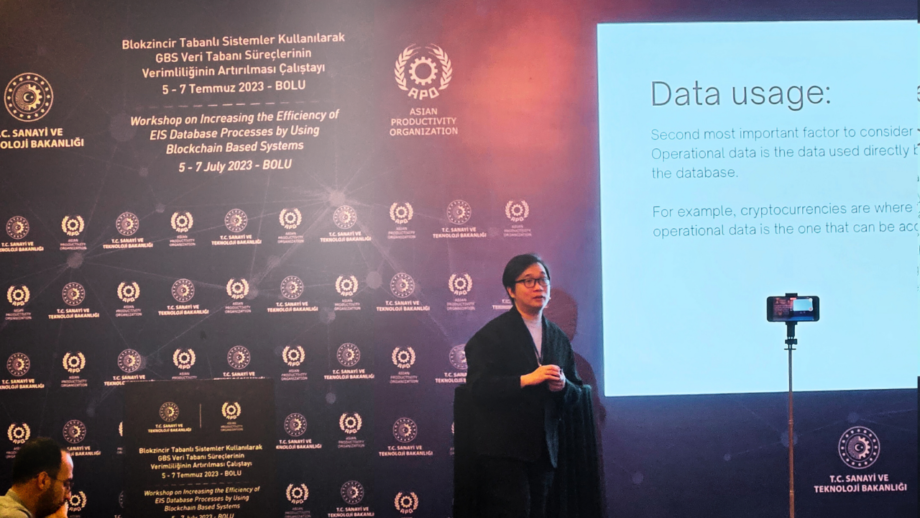
Creating and Managing Blockchain Databases in the Public Sector | Ministry of Industry and Technology of Turkiye

Creating and Managing Blockchain Databases in the Public Sector  | Ministry of Industry and Technology of Turkiye

Blockchain technology has been creating significant impacts across industries, and the public sector is no exception. Its transformative potential to revolutionize data management and bolster security has attracted the attention of government agencies and organizations globally. In this presentation, Anndy Lian sheds light on the steps involved in creating and managing blockchain databases within the public sector, along with crucial factors to ensure successful implementation.

Empowering the Public Sector with Blockchain

Before delving into the technical aspects of blockchain databases, it’s essential to emphasize the goal of empowering the people on the ground with the right knowledge. By equipping individuals with the ability to understand blockchain technology, they can communicate effectively and ask relevant questions when engaging with experts or vendors for blockchain solutions. This understanding ensures that the right decisions are made and the system is structured efficiently.

Choosing the Right Blockchain Platform

When implementing a blockchain database, the first crucial decision is to choose the right blockchain platform. There are various options available, but two of the simplest and widely used ones are private and public blockchains.

Private Blockchain

Private blockchains are suitable for organizations seeking enhanced security for their data, ensuring only authorized participants have access to the network. IBM is a prominent example of using private blockchains to establish secure and efficient collaboration among trusted participants. By implementing strong identity verification measures, private blockchains maintain a certain level of transparency while streamlining processes.

Public Blockchain

Public blockchains, like Ethereum, offer an open and decentralized approach. They allow anyone to access and participate in the network. While this openness can lead to concerns about data privacy, it can be advantageous in certain scenarios, especially for public organizations seeking a higher level of transparency.

Essential Steps to Create a Blockchain Database

Whether you opt for a private or public blockchain, the process of creating a blockchain database involves fundamental steps. Here’s a concise guide to get you started:

1. Choose the Right Blockchain Platform

Select the blockchain platform that aligns with your organization’s goals and requirements. Determine if you need a private blockchain for heightened security or if a public blockchain’s transparency suits your needs better.

2. Decide on the Programming Language

The choice of programming language plays a significant role in developing blockchain-based applications. Depending on the blockchain platform, you can opt for languages such as Go, JavaScript, Python, Golang, C++, or Rust. Choose a language with an active developer community for ample support.

3. Define Data Structure

Once the programming language is chosen, define the data structure for your blockchain database. Consider what information you want to put on the chain and how you plan to verify and validate the data.

4. Establish Consensus Mechanism

Decide on the consensus mechanism that governs how data is added and validated on the blockchain. The consensus mechanism could be Proof-of-Work (PoW), Proof-of-Stake (PoS), or other variations. Each mechanism comes with its advantages and trade-offs, so choose wisely based on your specific needs.

5. Implement Security Measures

Security is paramount in any blockchain implementation. Implement robust identity verification, access control, and encryption measures to protect sensitive data and ensure the integrity of the system.

6. Test and Deploy

Thoroughly test your blockchain database before deployment. Identify and resolve any issues to ensure smooth functionality.

7. Governance and Consensus Upgrades

Set up governance rules and consensus mechanisms that allow the network to adapt to changing needs and upgrades. This flexibility ensures that the blockchain database can evolve with your organization’s requirements.

Considerations for Effective Management

Managing a blockchain database involves ongoing tasks and considerations to ensure its efficient operation:

Scalability and Performance

Address scalability and performance concerns by exploring solutions like hybrid blockchains or Layer Two solutions. These can enhance transaction speed and optimize the overall performance of the blockchain database.

Network Monitoring and Maintenance

Maintain a vigilant approach to network monitoring and regular maintenance. Ensure that all servers and nodes are functioning correctly to avoid downtime and potential security breaches.

Data Verification and Validation

Design a robust data verification and validation process to ensure data integrity and prevent fraudulent activities. This process is critical, especially in contexts like e-voting systems, where the accuracy of data is paramount.

Collaboration with External Experts

It is also important to engage with external experts who can offer valuable advice and insights. Collaborating with experienced blockchain consultants or seeking advice from other government organizations that have successfully implemented blockchain can be highly beneficial.

Implementing and managing blockchain databases in the public sector is a transformative endeavor with vast potential. The choice of the right blockchain platform, programming language, and consensus mechanism is crucial. While private blockchains offer enhanced security, public blockchains provide transparency and openness. The steps to create a blockchain database are not as complex as they may seem, and the benefits of proper implementation are substantial. By empowering the public sector with blockchain technology, governments can enhance data management, increase security, and improve efficiency for the betterment of society as a whole.

This video is part of a consultation session on “Technical Expert Service on Improvement of Public Sector Efficiency Using Blockchain-based Database”. The implementing organizations include the Ministry of Industry and Technology of Turkiye and the Asian Productivity Organization. The event was held in Ankara and Bolu, Turkiye, from 4–7 July 2023.


Anndy Lian is an early blockchain adopter and experienced serial entrepreneur who is known for his work in the government sector. He is a best selling book author- “NFT: From Zero to Hero” and “Blockchain Revolution 2030”.

Currently, he is appointed as the Chief Digital Advisor at Mongolia Productivity Organization, championing national digitization. Prior to his current appointments, he was the Chairman of BigONE Exchange, a global top 30 ranked crypto spot exchange and was also the Advisory Board Member for Hyundai DAC, the blockchain arm of South Korea’s largest car manufacturer Hyundai Motor Group. Lian played a pivotal role as the Blockchain Advisor for Asian Productivity Organisation (APO), an intergovernmental organization committed to improving productivity in the Asia-Pacific region.

An avid supporter of incubating start-ups, Anndy has also been a private investor for the past eight years. With a growth investment mindset, Anndy strategically demonstrates this in the companies he chooses to be involved with. He believes that what he is doing through blockchain technology currently will revolutionise and redefine traditional businesses. He also believes that the blockchain industry has to be “redecentralised”.

j j j

Anndy Lian Interviews Nischal Shetty, Founder of WazirX “We are creating a new crypto revolution!”

Anndy Lian Interviews Nischal Shetty, Founder of WazirX “We are creating a new crypto revolution!”

Blockcast: Good morning folks. I am Melody, Managing Editor of Blockcast.cc. We have been monitoring the crypto market in India for quite some time. On our end at Blockcast, we are also working with a few Indian communities and projects. Today, we have two experts in this interview. The first expert is Nischal Shetty. He is the Founder and CEO of WazirX Exchange and Crowdfire. He is also a Forbes 30 under 30. Then we have Anndy Lian, an intergovernmental blockchain advisor and Chairman of DECENT Foundation. Anndy today will help to facilitate this interview. 

Good morning guys.

Nischal: Good morning Melody and Anndy.

Anndy: Good day Nischal and Melody. 

Blockcast: Hi Nischal, can you tell us more about yourself before we go into the more serious blockchain and crypto topics?

Nischal: I’m the Founder, CEO at WazirX. It is India’s largest and most trusted cryptocurrency exchange with more than 400,000 registered users with an average app rating of 4.6. We have recently gone global.

I’ve also founded Crowdfire, a social media management tool with 20 Million users
after an all-night coding session. I’m India’s top Blockchain influencer on Twitter with over 60K followers. I’ve also been featured in Forbes ‘30 under 30’ list. I’m on a mission to involve everyone in the blockchain revolution.

Blockcast: Tell us more about WazirX India. What is your unique selling point and what do you stand for?

Nischal: We started WazirX with the aim to involve Indians into the blockchain revolution. WazirX is India’s largest and most trusted cryptocurrency exchange with more than 400,000 users with an average rating of 4.6. Few key points:
● Our mobile apps are the highest rated
● Within 20 months of building WazirX, we became the first Indian exchange to be
acquired by the world’s biggest one
● Instant INR deposits and withdrawals available 24×7
● Smart Token Fund (STF) – helps non-traders participate in crypto. STF helps you
choose smart traders who will manage your crypto investments for you. This feature
has shown good initial response from users.
● Highly liquid spot exchange with the lowest fee in India
● Prior startup experience of the WazirX founding team, the fact that I’m the top crypto
influencer in India

Anndy: Hi Nischal, can you share with us about your partnership with Binance and our friend CZ? I see that Binance has placed a lot of efforts in different countries and India is one of the main highlights in my own opinion. 

Nischal: WazirX has become the first-ever Indian exchange to be acquired by the world’s biggest one, and it’s a big deal. This is a historic moment and a beacon of hope for the entire Indian cryptocurrency ecosystem. Everyone in India feels more confident about crypto now due to WazirX’s acquisition. WazirX continues to run as an independent brand of Binance. I continue to run and grow WazirX with my team. We’ll continue to innovate and bring in more improvements in WazirX. My plan is to grow WazirX even further and make crypto accessible to everyone in India.

Anndy: Your mission for WazirX in India is indeed future thinking and daring. My involvement with several government bodies have also given me some insights in India too. We know that India has opened up a fair bit for cryptocurrency. Your government is actively building regulations around this. Can you give us a brief update on the situation? How friendly is the banking system actually?

Nischal: Thanks Anndy, this is a good question. Cryptocurrency trading was never illegal in India. However, recently the Supreme Court struck down the Indian central bank’s banking ban on crypto. The verdict is historic and positive for the ecosystem. Crypto exchanges including WazirX have enabled banking channels for INR deposit
and withdrawals. With banking channels now open, it has made it easier for Indians to enter crypto. Due to the banking ban, Indians had to use P2P which was successful for WazirX but banking channels will be even more successful as it’s more convenient for users.

Anndy: Blockchain technology has been mature in India, do you invest in blockchain projects and which project in India do you see has the biggest potential to be the next unicorn?

Nischal: We need more startups that focus on India related problems and solve them through Blockchain and Crypto. Recently, WazirX and Binance announced a $50 Million USD ‘Blockchain in India’ fund to invest in Indian projects and startups focusing on solving problems through blockchain technology. Besides investing, we also look forward to partnering with traditional funds who believe in blockchain, and provide mentorship and support to student organisations and universities who want to set up blockchain technology incubators. We plan to help every entrepreneur trying to solve a problem with blockchain technology.

Anndy: I always see that blockchain and cryptocurrency have an interlinked relationship. But many said that cryptocurrency will grow but not blockchain. I don’t agree on this statement, what about you?

Nischal: I agree with you. Blockchain and Cryptocurrency are two sides of the same coin. It’s like the Internet (Blockchain) and Crypto (website). Usefulness to the public is derived only when both exist. When crypto grows, blockchain grows too, vice versa.

Anndy: Adoption for blockchain technology is slower than most projected. Do you think the adoption rate will increase and in which areas do you see the growth in?

Nischal: I think in the next 2 to 3 years crypto will go mainstream. It has already started disrupting payments, and will soon disrupt the supply chain as well. Most importantly, crypto can help the unbanked with financial inclusion.

We hope to see much more innovation in the Indian crypto ecosystem such that it solves India specific problems.

Anndy: Bitcoin is the leader on Coinmarketcap as we all know. Do you think there will be another coin that will go close to take over their position in the market?

Nischal: There won’t be another Bitcoin as it’s a decentralised asset class which is owned by the public. If it was a private entity then you could have thought of having alternatives. However, there are thousands of utility tokens and there will be millions of utility tokens eventually. These are crypto with specific use cases such as ETH which is used on Ethereum Blockchain, WRX which is used in WazirX for trading incentives etc

Anndy: Many are bullish on #Bitcoin, just for fun, how much do you think Bitcoin will be at the end of the year? $50,000? 

Nischal: If you look at the history of Bitcoin halving until now, you’ll see how it’s pushed its price up. Bitcoin halving just happened last week, and this event will add greatly to the momentum for 2020. Bitcoin is a global asset class, and it will be exciting to see how far up it goes now.

Moreover, Bitcoin was created in the 2008 financial crisis. Due to the COVID19 pandemic, we’re in the middle of another one. Crypto is showing signs of stability compared to the traditional stock market.

Bitcoin is slowly becoming a popular investment option in global economies with high inflation.

Anndy: The artificial inflation mechanism of the #bitcoin halving of block rewards will no longer have an impact on the price of the cryptocurrency when all 21m are in circulation. Well, we can look at this again in the later part of the year. 

Blockcast: Guess it is my turn to ask a few more questions before we end this interview.

Nischal: Sure Melody, go ahead.

Blockcast: Can you share some of your advice on crypto trading and speculation for the readers?

Nischal: Do research about a project before you invest in it. Read up the project’s whitepaper, the stage of development it is in, about the founders and their prior experience.

Blockcast: Last but not least, can you share an inspiring quote for our Readers?

Nischal: Crypto is getting started, and we are in the early stages of the revolution.

We are creating a new crypto revolution!

We are all early adopters, and it’s upon you to educate your friends and family about the crypto ecosystem. Keep busting misinformation around crypto and win!

Blockast: Well said Nischal. Thanks for sharing with us. We need to work together in these early stages to grow the crypto industry. 

Nischal: Thanks for your kind words Melody and thank you Anndy to facilitate this interview.

Anndy: It is my pleasure. I believe WazirX will be the gateway for crypto South Asia. “Stay local and be international.”

I hope to see you soon when COVID19 crisis is more controlled. There are many collaborations to be forged and a lot to chat about on DECENT can help in the process. 

Nischal: Thanks a lot, see you soon.

Blockcast: For more information about WazirX, you can go to https://wazirx.com/


Original Source: https://blockcast.cc/interviews/blockcast-exclusive-interview-with-nischal-shetty-founder-of-wazirx-we-are-creating-a-new-crypto-revolution/

Anndy Lian is an early blockchain adopter and experienced serial entrepreneur who is known for his work in the government sector. He is a best selling book author- “NFT: From Zero to Hero” and “Blockchain Revolution 2030”.

Currently, he is appointed as the Chief Digital Advisor at Mongolia Productivity Organization, championing national digitization. Prior to his current appointments, he was the Chairman of BigONE Exchange, a global top 30 ranked crypto spot exchange and was also the Advisory Board Member for Hyundai DAC, the blockchain arm of South Korea’s largest car manufacturer Hyundai Motor Group. Lian played a pivotal role as the Blockchain Advisor for Asian Productivity Organisation (APO), an intergovernmental organization committed to improving productivity in the Asia-Pacific region.

An avid supporter of incubating start-ups, Anndy has also been a private investor for the past eight years. With a growth investment mindset, Anndy strategically demonstrates this in the companies he chooses to be involved with. He believes that what he is doing through blockchain technology currently will revolutionise and redefine traditional businesses. He also believes that the blockchain industry has to be “redecentralised”.

j j j