Exploring Brian Armstrong’s 10 Favorite Ideas in Crypto

Exploring Brian Armstrong’s 10 Favorite Ideas in Crypto

From flatcoins to international payroll on the blockchain – Coinbase CEO Brian Armstrong’s vision for the future is sweeping.

Cryptocurrency was once a fledgling field dominated by tech enthusiasts, but it has now captured the imagination of innovators globally.

And with it, the next wave of blockchain business ideas and how they can impact the world are a key focus for companies such as Coinbase.

Disruptive technologies and the convergence of the traditional financial world with digital currencies present an unprecedented paradigm shift – but work still needs to be done.

We dig into the businesses Armstrong would be “starting today if he could” and how these would affect the world of tomorrow.

I’m sometimes asked, if you were to start another crypto company today, what would it be? The crypto space is in its infancy. In five years, many entrepreneurs will be looking back wishing they had started a crypto company in 2023. Bear markets are for building, so why not start today?

I decided to share my 10 top ideas with the hope that someone goes out and builds them. Ideas are cheap. It’s the hard work and determination to go build them that will be challenging. Coinbase has the resources to build a lot in crypto, but we don’t have time to build everything.

Coinbase’s Clarion Call for Innovation

Brian Armstrong’s video and post this week aren’t merely about capitalizing on a trend but pioneering the next wave of innovations that could redefine society’s economic fabric.

Coinbase, one of the crypto industry’s juggernauts, sees an even grander future.

By highlighting areas ripe for exploration and disruption, Armstrong seeks to catalyze a collective push into new realms, opening doors to solutions that have only been imagined so far.

This comes ahead of the Coinbase Ventures Summit, which aims to bring together 30-40 builders to shift the boundaries of crypto innovation.

Let’s delve deeper into each of these crypto frontiers to truly grasp their potential.

Brian Armstrong’s Top 10 Crypto Ideas

1. Flatcoin: Reinventing Currency

Armstrong’s envisioning of a ‘flatcoin’ is a technical marvel and a societal game-changer.

It sets out to resolve the inconsistencies in traditional currency values and the disparities caused by inflation that still plague fiat-pegged stablecoins.

By mirroring consumer prices, flatcoins could bring stability in a volatile financial landscape, and with decentralized operations, they could bypass governmental controls and market speculations, ensuring a more egalitarian global economy.

The true beauty lies in its potential to become a universally accepted medium of exchange without the baggage of regional economic pressures.

2. On-chain Reputation: Trust in a Trustless World

In an era where anonymity is both a boon and a curse, a decentralized reputation system is no less than revolutionary.

Armstrong’s idea transcends mere online reviews; it aims to create a robust, unfalsifiable ledger of trust.

Businesses and individuals alike could benefit. Imagine entering any transaction armed with an indisputable record of the other party’s history – this could redefine due diligence, lending practices, or even simple online trades.

“I think on-chain reputation should be expanded into ‘on-chain credit score,’” said Anndy Lian, an inter-governmental blockchain expert and book author of Blockchain Revolution 2030.

“Decentralized identity solutions like ENS provide a foundation for trust; however, knowing who to trust among the vast number of participants in a decentralized network remains challenging. On-chain credit scores could act as a reliable indicator of the trustworthiness of an entity.

Lian added: “Thinking further, on-chain credit scores could also play a role in distributing airdrops more equitably; VIPs or users with higher on-chain credit scores could be rewarded for their participation and positive contributions to the network.

“While all these are good to have, I still want to caution that the accuracy of the on-chain data used to calculate credit scores is crucial. Garbage in, garbage out—meaning the credit scores could be unreliable if the data is flawed or manipulated.”

3. On-chain Ads: The Evolution of Advertising

With Web 3.0, the Internet will no longer be a static repository; it will become an ever-evolving organism tailored to individual users.

In this setting, on-chain advertising has the potential to redefine marketing dynamics; instead of being intrusive, ads could become informative and welcomed.

Based on transparent metrics, advertisers can provide genuine value to consumers – Armstrong’s vision could spell the end of ‘spray and pray’ marketing tactics, moving towards precision and authenticity.

4. On-chain Capital Formation: Democratizing Fundraising

Armstrong taps into the shortcomings of present-day fundraising mechanisms – the exclusivity of venture capitalism or the geographically confined nature of crowdfunding.

Envisaging a crypto-powered platform, capital could flow seamlessly across borders, championing projects solely based on merit.

Innovators worldwide could access funds, removing traditional barriers and leveling the entrepreneurial playing field.

5. Job/Task Marketplace for Crypto: Bridging Global Labor

With its geographical and economic barriers, the conventional job market often leaves talent untapped.

Armstrong’s proposed crypto job marketplace can transcend these barriers; professionals worldwide could offer their expertise, ensuring a global talent pool.

It wouldn’t just be about getting tasks done; it would be about getting them done by the very best, irrespective of where they reside.

6. Privacy for Layer 2: Transactional Privacy in the Spotlight

Privacy concerns are paramount in an increasingly interconnected world; the dichotomy between transparency and privacy becomes evident as blockchain expands.

Armstrong’s push for layer 2 privacy solutions underscores the need for personal and business transactions to remain confidential without sacrificing blockchain’s inherent transparency.

This strategic move could bolster widespread blockchain adoption, assuring businesses and individuals of their confidentiality.

7. P2P Exchange Fully On-chain: Decentralizing Trade

Centralized exchanges, while popular, often become single points of failure in the crypto space.

Armstrong’s vision for a fully on-chain P2P exchange aims to circumvent this issue; users could enjoy direct trades without the intervention of third parties, resulting in reduced fees, increased security, and enhanced autonomy.

It’s not merely about trading assets but redefining the essence of trade.

8. On-chain Games: Immersive Gaming with Crypto

Armstrong recognizes that the gaming industry is not just about entertainment; it’s an evolving economy.

Integrating crypto mechanisms can allow gamers absolute ownership of in-game assets; this integration could spawn a marketplace where virtual items hold tangible value, blurring the lines between virtual economies and real-world financial systems.

Gamers could then transition from mere players to stakeholders.

9. Tokenizing Real World Assets: Merging Real and Virtual

The tokenization of assets isn’t a novelty, but Armstrong’s perspective takes it to new heights.

Beyond stocks or commodities, envision a world where art, property, or intellectual properties can be effortlessly traded on decentralized platforms.

It democratizes asset ownership, making investments more accessible to the average individual and potentially revolutionizing wealth distribution.

10. Software To Start and Manage Network States: Building Communities

Beyond crypto’s financial implications, Armstrong envisages a future where blockchain-backed software can nurture, manage, and govern communities.

This could encompass everything from niche online forums to sprawling digital cities; elements like voting, community contributions, and governance could be seamlessly managed, heralding an era of organized, transparent, and democratic digital communities.

The Bottom Line

The crypto realm, as painted by visionaries like Armstrong, isn’t a mere extension of the present – it’s a bold leap into the future.

As we venture into the heart of Armstrong’s visionary outlook, it becomes clear that he isn’t merely projecting the cryptocurrencies and tools of the future but also how its underlying technology might influence every facet of our society.

From transforming fundamental financial structures to reshaping the paradigms of trust, advertising, and even gaming, Armstrong paints a comprehensive picture.

A future where assets, digital or tangible, are accessible to all, where trust is algorithmic, and where borders, both geographically and ideationally, fade.

As traditional financial systems intertwine with crypto innovations, we can witness the dawn of an era where immediate settlements, democratized access, and seamless integrations become the norm.

This isn’t just technological advancement; it’s a societal evolution.


Source: https://www.techopedia.com/exploring-brian-armstrongs-10-favorite-ideas-in-crypto

Anndy Lian is an early blockchain adopter and experienced serial entrepreneur who is known for his work in the government sector. He is a best selling book author- “NFT: From Zero to Hero” and “Blockchain Revolution 2030”.

Currently, he is appointed as the Chief Digital Advisor at Mongolia Productivity Organization, championing national digitization. Prior to his current appointments, he was the Chairman of BigONE Exchange, a global top 30 ranked crypto spot exchange and was also the Advisory Board Member for Hyundai DAC, the blockchain arm of South Korea’s largest car manufacturer Hyundai Motor Group. Lian played a pivotal role as the Blockchain Advisor for Asian Productivity Organisation (APO), an intergovernmental organization committed to improving productivity in the Asia-Pacific region.

An avid supporter of incubating start-ups, Anndy has also been a private investor for the past eight years. With a growth investment mindset, Anndy strategically demonstrates this in the companies he chooses to be involved with. He believes that what he is doing through blockchain technology currently will revolutionise and redefine traditional businesses. He also believes that the blockchain industry has to be “redecentralised”.
j j j

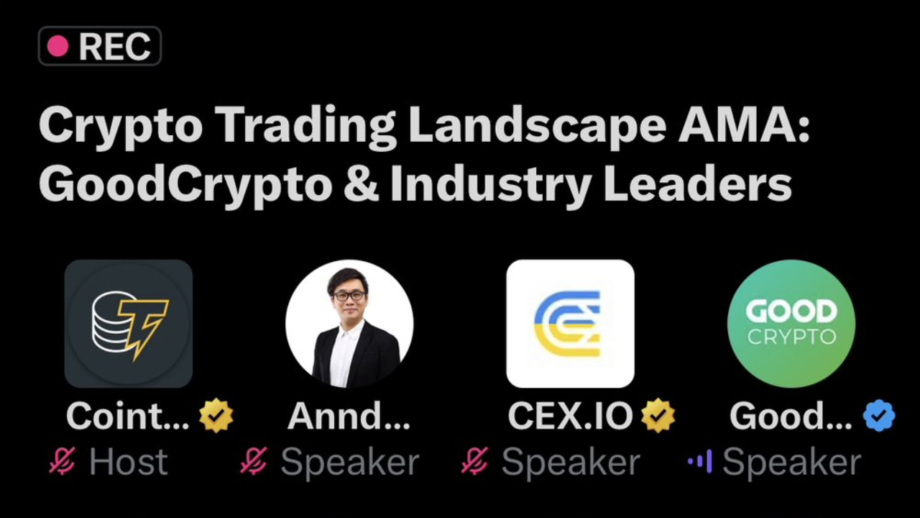
Cointelegraph Crypto Trading Landscape AMA: Navigating the Complex Crypto Landscape

Cointelegraph Crypto Trading Landscape AMA: Navigating the Complex Crypto Landscape

In the ever-changing realm of cryptocurrency trading, numerous factors converge to mold the direction of the market. Recently, a link has emerged between traditional finance and the crypto domain, bringing forth both positive and negative consequences. The fluctuations in the banking sector, notably in Europe and the United States, have a direct impact on the cryptocurrency world. Nonetheless, the prevailing uncertainty, particularly in the US, poses a challenge for crypto exchanges in navigating their path.

An integral aspect within this intricate landscape revolves around the need for clear regulations. Experts stress the significance of embracing regulations as a pivotal driver for global crypto adoption. Collaborating with regulatory bodies, the crypto industry aspires to forge a secure and equitable environment for users across the globe. This proactive stance establishes the foundation for sustainable growth.

The current year has ushered in a nuanced strategy for confronting these hurdles. Within the US, where regulatory ambiguity limits crypto trading, platforms are compelled to be discerning in their offerings. Regulatory limitations predominantly confine activities to basic cryptocurrency transactions. The industry holds optimism for clearer regulations that would facilitate service expansion and more comprehensive solutions.

The concern of liquidity, a substantial matter of recent times, necessitates multifaceted resolutions. The reduction in liquidity has instilled a cautious approach within the market, notably among prominent institutions and market makers. To counteract this, crypto exchanges have proactively engaged traditional market makers to infuse much-needed liquidity into the ecosystem.

An alternative method for upholding liquidity levels involves concentrating on significant trading pairs and well-established cryptocurrencies. Despite the challenges brought by the unpredictable altcoin market, established cryptocurrencies maintain their robust standing. A profound comprehension of the market and the establishment of partnerships play an instrumental role in discerning trends and capitalizing on liquidity opportunities.

The procedure of introducing new tokens significantly propels growth within the crypto landscape. Nevertheless, the existing environment has impacted this process. The lifespan of trending assets has contracted due to a fusion of factors. In the past, AI and RSD projects enjoyed extended periods of prominence. In contrast, the current market witnesses the ascendancy of meme tokens, fueled by market dynamics and the pursuit of arbitrage prospects. Despite these shifts, the industry demonstrates resilience, with exchanges actively on the lookout for the next wave of promising ventures. “I think exchanges must try their best to find quality projects and not list any projects that come their way. The token listing process within Bybit is fairly strict. We have listing meetings just to get a good consensus across company experts to properly assess the project. Since we are in a good position, we don’t need to chase listings to collect fees from those projects. Our focus is on the audiences projects can bring to us and if they are in line with our values. If we have all these elements in place, the projects that Bybit lists are always of a high standard.’ Anndy Lian said.

Thriving within this intricate panorama calls for a diverse array of strategies from crypto platforms. Embracing regulatory involvement, fortifying liquidity, and remaining attuned to market trends stand as pivotal components for achieving success. Collaborations with influential brands and the prudent introduction of new tokens have augmented the industry’s resilience.

Amidst uncertainties in the crypto realm, experts maintain an optimistic outlook. Industry players exhibit a resolute determination to surmount challenges by focusing on user requirements, technological innovation, and driving widespread adoption. As the crypto landscape evolves continuously, adaptability and strategic foresight will remain the cornerstone for enduring growth.

Socials:

Facebook: http://www.facebook.com/anndylian
Twitter: http://www.twitter.com/anndylian
Instagram: http://www.instagram.com/liananndy
LinkedIn: https://www.linkedin.com/in/anndylian/
Homepage: http://www.anndy.com
YouTube: https://www.youtube.com/@AnndyLian

Anndy Lian is an early blockchain adopter and experienced serial entrepreneur who is known for his work in the government sector. He is a best selling book author- “NFT: From Zero to Hero” and “Blockchain Revolution 2030”.

Currently, he is appointed as the Chief Digital Advisor at Mongolia Productivity Organization, championing national digitization. Prior to his current appointments, he was the Chairman of BigONE Exchange, a global top 30 ranked crypto spot exchange and was also the Advisory Board Member for Hyundai DAC, the blockchain arm of South Korea’s largest car manufacturer Hyundai Motor Group. Lian played a pivotal role as the Blockchain Advisor for Asian Productivity Organisation (APO), an intergovernmental organization committed to improving productivity in the Asia-Pacific region.

An avid supporter of incubating start-ups, Anndy has also been a private investor for the past eight years. With a growth investment mindset, Anndy strategically demonstrates this in the companies he chooses to be involved with. He believes that what he is doing through blockchain technology currently will revolutionise and redefine traditional businesses. He also believes that the blockchain industry has to be “redecentralised”.

j j j

The Future of Crypto: What are the next big trends? By Anndy Lian | JCI Startup

The Future of Crypto: What are the next big trends? By Anndy Lian | JCI Startup

Anndy Lian, an intergovernmental blockchain expert shared his vision with JCI Startup. It’s clear that several key shifts are poised to reshape the crypto world:

Artificial Intelligence (AI) and Crypto Synergy
Artificial intelligence has long been an enabler of innovation, and its integration with the crypto space is no exception. AI-powered trading applications are gaining traction, offering both newcomers and seasoned traders insights and predictions about market behavior. By leveraging AI algorithms and advanced data analytics, platforms like Bybit’s Tools GPT provide real-time trading advice based on aggregated statistics and historical patterns.

Furthermore, AI’s influence extends beyond trading. AI-driven relationship projects are becoming prevalent, with users interacting with AI personas and companions. This symbiotic relationship between users and AI fosters engagement and community building. As AI becomes more integral, creators will likely monetize their AI’s capabilities, ultimately shaping new economic models within the crypto ecosystem.

Central Bank Digital Currencies (CBDCs) Revolutionize Finance
The advent of Central Bank Digital Currencies (CBDCs) marks a significant shift in financial paradigms. CBDCs hold the potential to revolutionize transactions by offering traceability, accountability, and tax compliance. This enhanced transparency could lead to a seismic change in the cryptocurrency landscape, bridging the gap between traditional finance and digital assets.

CBDCs’ ability to track and verify transactions could provide a comprehensive understanding of financial flows. This heightened oversight could redefine how cryptocurrencies are viewed and integrated into global economies, potentially driving mainstream adoption.

Decentralization and the Quest for Privacy
Decentralization has long been a foundational principle of cryptocurrencies. However, the rise of decentralized applications (DApps) and peer-to-peer networks heralds a new era of heightened monitoring and governance. These systems are increasingly being developed with built-in mechanisms to strike a balance between privacy and security, aligning with regulatory frameworks.

As decentralized governance gains prominence, organizations will collaborate on decisions, ensuring a more inclusive and diverse representation of stakeholders. The ongoing evolution of decentralized technologies, combined with AI’s role in regulating these networks, is shaping a more automated and structured crypto environment.

NFTs and Beyond: The Next Phase of Digital Collectibles
Non-fungible tokens (NFTs) have surged into prominence, redefining digital ownership and creativity. While NFT sales volume has experienced fluctuations, their adoption has steadily grown thanks to collaborations with established brands. Examples such as Oracle Red Bull Racing’s Velocity Series highlight the potential of combining NFTs with well-known entities to engage audiences and create new communities.

The evolution of NFTs extends beyond art and collectibles. The integration of NFTs in titles deeds, medical records, and property ownership could revolutionize industries reliant on trust and provenance.

Security Tokens (STOs) and Commodities on the Blockchain
Security tokens (STOs) are redefining how financial assets are represented on the blockchain. As traditional securities transition to tokenized formats, the bridge between traditional finance and blockchain strengthens. STOs empower investors with fractional ownership and enhance liquidity, ultimately broadening access to previously exclusive investment opportunities.

Commodities trading is also witnessing a transformation through blockchain technology. Tokenizing commodities enables fractional ownership, making these assets accessible to a broader range of investors. This innovation could democratize trading and investing in commodities, creating a more inclusive financial landscape.

Regulatory Clarity and Institutional Adoption
Regulatory clarity is emerging as a catalyst for institutional adoption of cryptocurrencies. Major financial institutions, including private banks and family offices, are exploring allocations in the crypto space. These institutions are recognizing the potential for diversification and growth that cryptocurrencies offer.

As regulations become more defined, institutional involvement is likely to increase, leading to a maturation of the crypto market. This trend could reshape the dynamics of the financial industry and contribute to the broader adoption of cryptocurrencies as legitimate investment vehicles.

In Conclusion

The future of cryptocurrency holds a myriad of possibilities, driven by the convergence of AI, regulatory developments, and innovative applications of blockchain technology. As trends continue to evolve, the crypto landscape is poised for transformation, reshaping traditional finance and pushing the boundaries of what’s possible in the digital realm.


Anndy Lian is an early blockchain adopter and experienced serial entrepreneur who is known for his work in the government sector. He is a best selling book author- “NFT: From Zero to Hero” and “Blockchain Revolution 2030”.

Currently, he is appointed as the Chief Digital Advisor at Mongolia Productivity Organization, championing national digitization. Prior to his current appointments, he was the Chairman of BigONE Exchange, a global top 30 ranked crypto spot exchange and was also the Advisory Board Member for Hyundai DAC, the blockchain arm of South Korea’s largest car manufacturer Hyundai Motor Group. Lian played a pivotal role as the Blockchain Advisor for Asian Productivity Organisation (APO), an intergovernmental organization committed to improving productivity in the Asia-Pacific region.

An avid supporter of incubating start-ups, Anndy has also been a private investor for the past eight years. With a growth investment mindset, Anndy strategically demonstrates this in the companies he chooses to be involved with. He believes that what he is doing through blockchain technology currently will revolutionise and redefine traditional businesses. He also believes that the blockchain industry has to be “redecentralised”.

j j j