New NFTs Need To Build Community To Succeed, Says Head of Crypto Exchange

New NFTs Need To Build Community To Succeed, Says Head of Crypto Exchange

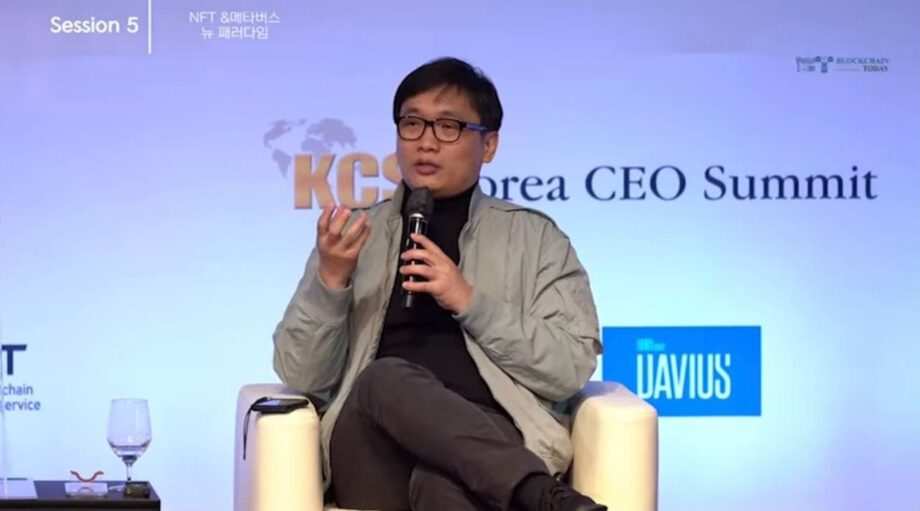
Speaking at the 14th World Blockchain Summit MARVELS, the Chairman of BigONE Exchange Anndy Lian said that key to success for NFT startups was a supportive community and a compelling user case. As a guest speaker at the event on February 22, under the theme of ‘NFT META Korea 2022’, Lian agreed that the global market for NFTs was very active currently but wanted to share his experience in how NFT projects can be successful in the longer run.


“While NFT creation looks straightforward the true essence of the NFT, the true value comes from community, as well as the technology and the tokenomics. If you are looking to launch a NFT studio, and you wish to partner with our partners, it could be with a meme coin community with Shiba Inu, Kishu Inu, or XRdoge, as all these projects have a very big community behind them; if you need that kind of partnership to succeed in the global market then we can help you,” Lian told his audience at the Seoul event.


The market in NFTs boomed in 2021, with total sales globally totaling $25 billion, up from just $94.9 million the year before, according to DappRadar. “Not surprisingly social media is awash with tales of get rich quick NFT success, from CryptoPunks to Bored Apes, and everything in between, but the fascination with digital art is going to change in 2022, with more use cases around utility. Clearly NFT projects need to be as transparent as possible when creating their offerings and grow a viable community as they progress, said Lian


One key factor that should be with a team from the outset is to ensure the NFT has utility, which is closely tied to the importance of community. At its core of course NFTs are a great way for creators and artists to contact directly with their fans, with their community. And that’s probably the most compelling use case to date that’s going to sustain the growth of NFTs into the future, Lian added.


Lian illustrated for the audience the importance of getting this relationship between the NFT and its community, between creators and fans, with the example of starting a NFT around a well-known soccer player. While on paper the fans of a soccer player appear to be automatically part of the NFT community you are building, that isn’t necessarily the case. What is needed is a strong bond to be created between the fans and the soccer star and the platform for it to work. This was related to the importance of ensuring that when you see a new project in the NFT space you should as an investor consider whether it has utility.


Lian added that for NFT creators it was important to be transparent about their offering to investors, not only to better convey its value, but also to ensure that when regulators start to enter the space in 2022 the quality of the NFT industry stands up to scrutiny.


Oh Myung, former Deputy Prime Minister and Minister of Science and Technology; Oh Se-hoon, Mayor of Seoul City; Lee Won-Wook, National Assemblyman and Minister of Land, Infrastructure, and Transport; Cho Myung-hee, chairman of the National Assembly and the Special Committee for Future Industry Jobs; Yoon Chang-Hyun, chairman of the Special Committee for Virtual Assets; and Yang Jung-sook, a member of the National Assembly and the Korea Communications Commission delivered speeches opening the conference.


About BigONE Exchange


BigONE is a global cryptocurrency exchange that provides a platform for trading various cryptocurrencies. It was founded in 2017 and registered in the Netherlands. The group operates in Russia, Brazil, Vietnam, Seychelles, Singapore, Japan, and Indonesia, providing marketing, investment, and blockchain technology research & development. Further information here.


Original Source: https://www.asiaone.com/business/new-nfts-need-build-community-succeed-says-head-crypto-exchange

Anndy Lian is an early blockchain adopter and experienced serial entrepreneur who is known for his work in the government sector. He is a best selling book author- “NFT: From Zero to Hero” and “Blockchain Revolution 2030”.

Currently, he is appointed as the Chief Digital Advisor at Mongolia Productivity Organization, championing national digitization. Prior to his current appointments, he was the Chairman of BigONE Exchange, a global top 30 ranked crypto spot exchange and was also the Advisory Board Member for Hyundai DAC, the blockchain arm of South Korea’s largest car manufacturer Hyundai Motor Group. Lian played a pivotal role as the Blockchain Advisor for Asian Productivity Organisation (APO), an intergovernmental organization committed to improving productivity in the Asia-Pacific region.

An avid supporter of incubating start-ups, Anndy has also been a private investor for the past eight years. With a growth investment mindset, Anndy strategically demonstrates this in the companies he chooses to be involved with. He believes that what he is doing through blockchain technology currently will revolutionise and redefine traditional businesses. He also believes that the blockchain industry has to be “redecentralised”.

j j j

Where Can You Find the Best Crypto ETFs?

Where Can You Find the Best Crypto ETFs?

Crypto ETFs captured the attention of the crypto investors late last year when the first Bitcoin ETF in the US, the ProShares Bitcoin Strategy ETF (BITO) was listed on the New York Stock exchange.  It also made crypto investing accessible to the wider investment world, after years of attempts to launch one. The ETF was designed to appeal to investors comfortable with the traditional investment world of stocks and ETFs, but who perhaps didn’t fancy the learning curve of creating their own crypto account and wallet. Nevertheless, the launch was welcomed by many as a radical step forward allowing crypto and NFTs as an alternative investment, to diversify portfolios to withstand future economic changes, as well as widening public understanding of the value of crypto.

ETF, which stands for Exchange Traded Fund, traditionally a mutual fund that is traded on a stock exchange, is typically consists of three components: an index, a stock type, and a fund. In other words, an ETF is essentially a fund that tracks an index while also being bought and sold in the stock market. To put it simply, “An exchange traded fund (ETF) is a basket of securities that trade on an exchange just like a stock does,” according to Investopedia. As a result of their makeup, the key advantage of ETFs is their ability to diversify risks. For example, if there are 100 different stocks in an ETF then they all cannot drop in price together. As a result, the investment portfolio established by this ETF will not suffer a significant drop either.

As well as ProShare’s BITO, there are several similar products which all have one thing in common, they are in the main issued by traditional financial institutions. The practical implication for interested crypto investors is that their categories are however fairly limited to include BTC, ETH and a few ETH products. Despite these drawbacks the struggle to launch further ETFs has continued, despite a reluctant SEC. At the end of January Fidelity tried to get a Bitcoin ETF passed (the so-called “Wise Origin Bitcoin Trust”) only to see it rejected, only to follow up the next day with the Fidelity Crypto Industry and Digital Payments ETF and the Fidelity Metaverse ETF. A key difference that inspired the SEC ban was that the Fidelity Bitcoin ETF was designed to directly hold the cryptocurrency, unlike other BTC ETFs approved by the SEC which solely deal with Bitcoin futures. In other words, buying the BITO ETF doesn’t mean you own BTC, rather that ProShares invests in Bitcoin futures contracts on the Chicago Mercantile Exchange (CME). As confirmed in a report in Fortune: “Rejecting Fidelity’s proposal is just the latest disappointment for investors that had hoped 2022 could be the year where an ETF directly tied to the price of Bitcoin would make it to market in the U.S.”

Outside the US comes more promising news of crypto-related ETFs with the launch this month in Brazil of the world’s first fund dedicated to DeFi, called the Hashdex DeFi Index (DEFI11). “We are confident that DeFi, through its innovative and disruptive technology, will exponentially grow and play a vital role in the financial sector of the future. By offering the first DeFi ETF in the world, we are providing our global investors with the ability to play a part in the next evolution of the crypto ecosystem,” said Marcelo Sampaio, CEO of Hashdex. According to a FT report the ETF will invest in eight DApps, including Uniswap; lender Aave; Polygon, a service designed to speed up transactions on blockchains which recently raised $450 million in a new venture financing round; and oracle innovator Chainlink. It’s also worth noting that as these DApps have smaller market capitalizations than BTC and ETH the tokens may be even more volatile. Cryptocurrency advisor Michele Zilocchi explained: “ETFs are not cryptocurrencies and so they do not give you the ownership, but they allow you to replicate trends. BITO and Hashdex represent a great innovation and a helping hand to institutional investors that were afraid of actual cryptocurrencies ownership. I think that these ETFs represent the doorway for institutional investors to the crypto-space.”

On the regulatory front the launch highlights a divide between global financial centers that have thus far permitted little innovation in the growing field of digital assets, and relatively more laissez-faire financial hubs. “While Canada, Sweden, Germany, Switzerland, Jersey and Liechtenstein all boast spot cryptocurrency ETPs (exchange-traded products), and Australia and India are poised to join them, US regulators have only approved futures-based versions, while those in the UK, Hong Kong and Singapore have not even permitted these vehicles,” the FT report pointed out. Barrister Brian Sanya Mondoh and The Cake advisor, said that when rejecting ETFs, the SEC applies Section 6(b)(5) of the Exchange Act, which requires, in part, that the rules of a national securities exchange be “designed to prevent fraudulent and manipulative acts and practices [and] to protect investors and the public interest.” However, Mondoh agreed that the lack of uniformity in applying this legal test has resulted in impeding investor choice and stifles innovation. “With an increased appetite for Bitcoin and other cryptocurrencies, investors often bypass the law to access crypto markets. Rather than expose investors to bad actors, ETFs should be allowed to ensure more robust protections for investors and more effective surveillance for market manipulation and other fraudulent activity.”

What hasn’t been reported widely is the comparative success of leveraged ETFs launched by cryptocurrency exchanges themselves including BigONE. What they lack in trading volume enjoyed by traditional financial institutions they more than make up for in the advantages offered to the savvy investor. For starters, users do not need to pay the collateral assets to achieve the effect of leveraged trading on the target asset. The product has no expiration date, no risk of liquidation, but it contains the risk that the net value might close to zero. In addition, the ETF products available on cryptocurrency exchanges cover a far wider range of cryptos categories within the ETFs than traditional financial institutions offer. And because their market cap is lower, compared to the likes of BTC and ETH, the impact of the smaller crypto ETF’s upward price movements results in bigger gains.

A leveraged ETF typically uses financial derivatives and debt to scale up the returns of an underlying index. While a traditional ETF typically tracks the securities in its underlying index on a one-to-one basis, a leveraged ETF may aim for a 2:1 or 3:1 ratio, according to Investopedia. For example, for every 1% increase in BTC, BTC3L (three times long BTC) increases 3%, and BTC3S (three times short BTC) decreases 3%. In other words, compared with spot trading, the same asset leveraged ETF will generate three times the profit. On BigONE Exchange this means if you purchase one asset of BTC3L and achieve three times profitability in a unilateral rise, all of this is also managed by platform fund managers, which crucially means users can easily build their own leveraged investment portfolio without knowing the specific mechanism. Plus, he/she does not need to borrow money or pay for the secured assets to achieve their goal.

Thanks to the unique rebalancing mechanism of BigONE’s leveraged ETF product, when the ETF is profitable, it will automatically increase the position after the adjustment. While in the event of a loss, the position will be automatically reduced after the adjustment to avoid the risk of being liquidated. The mechanism is designed to automatically adjust the position of the contract behind each product, and the number of currency holdings will not change. Which in simple terms means while the ETF price remains stable, the level of profitability is also greater.

“What we are seeing is the maturation of the crypto ETF market with the launch of the Hashdex DeFi Index, the world’s first fund dedicated to DeFi. While the US is lagging with the SEC looking for further regulation before committing to a spot crypto ETF, I see the real innovation coming from crypto exchanges like BigONE,” said BigONE Chairman Anndy Lian. “But clearly following the BITO ETF and news of Australia’s corporate regulator giving the green light to a range of cryptocurrency-related ETFs, which could see Bitcoin and Ethereum-backed investment funds trading on the ASX in the coming months, the potential for the global crypto ETF market is huge,” he added.


Original Source: https://www.timebulletin.com/where-can-you-find-the-best-crypto-etfs/

Anndy Lian is an early blockchain adopter and experienced serial entrepreneur who is known for his work in the government sector. He is a best selling book author- “NFT: From Zero to Hero” and “Blockchain Revolution 2030”.

Currently, he is appointed as the Chief Digital Advisor at Mongolia Productivity Organization, championing national digitization. Prior to his current appointments, he was the Chairman of BigONE Exchange, a global top 30 ranked crypto spot exchange and was also the Advisory Board Member for Hyundai DAC, the blockchain arm of South Korea’s largest car manufacturer Hyundai Motor Group. Lian played a pivotal role as the Blockchain Advisor for Asian Productivity Organisation (APO), an intergovernmental organization committed to improving productivity in the Asia-Pacific region.

An avid supporter of incubating start-ups, Anndy has also been a private investor for the past eight years. With a growth investment mindset, Anndy strategically demonstrates this in the companies he chooses to be involved with. He believes that what he is doing through blockchain technology currently will revolutionise and redefine traditional businesses. He also believes that the blockchain industry has to be “redecentralised”.

j j j

Will Institutional Adoption of Crypto Continue in 2022?

Will Institutional Adoption of Crypto Continue in 2022?

The principles and practice of web3 and decentralized protocols may be enabling the birth of a new digital world, but central to the ambition is the pivotal role of cryptocurrencies. From stablecoins to new meme coins it’s clear that cryptocurrencies have long held appeal to individual users wanting an exciting new asset which is completely decentralized. A recent report from American Banker found that only about 20% of banks in the world currently offer crypto asset consulting to their clients. However, it found nearly 40% of its banking industry respondents from around the world stated that they may begin providing crypto-asset services to their retail customers in 2022. It also makes sense that if the decentralized economy is to valuable and innovative, that the overall market value of the cryptocurrency sector must continue to rise. And institutional investment is particularly important during this current bear market phase, when the crypto market has shed more than $1 trillion in market cap since November’s high of $3.1 trillion.


It’s therefore timely to consider how the widespread adoption of cryptocurrency by institutional investors with substantial sums of money to invest could impact the ideals of decentralization in today’s crypto market. According to a 2021 Alternative Investment Management Association report, on global crypto hedge funds, nearly half of hedge fund managers with $180 billion in assets under management (AUM) were considering investing in Bitcoin. With in terms of the main obstacles to investing, regulatory uncertainty the greatest barrier (82%). So, it’s striking that the report found “64% of respondents said that if the main barriers were to be removed, they would either actively accelerate investment in digital assets.” Considering the report’s identification of regulatory impediments to greater institutional involvement in crypto, despite the risks it’s potentially good for the current bear market that the US Biden administration is due to launch a government-wide strategy for digital assets. This executive order will direct all relevant federal agencies to assess crypto’s opportunities and risks and submit their findings later in 2022.


Grayscale Bitcoin Trust had been bullish on institutional investment, having witnessed an influx of almost $2 billion since October 2020, compared to outflows of $7 billion for exchange-traded funds backed by gold. However, in the current downturn it appears one of the biggest causalities has been the trust, as the $27 billion fund (ticker GBTC) has plunged nearly 17% so far in 2022, outpacing Bitcoin’s nearly 9% decline, according to Bloomberg. And just a few days ago CoinDesk reported that crypto trader Tantra, which offered an interest-bearing investment product, planned to close due to the ‘GBTC Discount’ widening to a record level.


So, what are the prospects for the future for increase institutional investment with the significant loss of value in the cryptocurrency market currently? The entry of institutional investors into the crypto industry may have accelerated the adoption of digital currencies as mainstream assets. But will institutional investors’ increased adoption of cryptocurrencies continue, or will the combined headwinds of market forces and regulatory pressures provide an obstacle to growth in 2022?


What drives institutional investors’ adoption of cryptocurrency?

Investment diversification is a significant reason institutional investors have flocked to the cryptocurrency market in search of assets to balance out their portfolio. While many of cryptocurrency’s procedures and structures compared to ‘TradFi’ are relatively still in their infancy, investors can reap various financial benefits in the long term. In similar fashion, institutional investors see it as an opportunity to enter the sector early and reap the benefits of early adopters. Perhaps one of the most dramatic examples in 2021 was El Salvador’s decision to adopt Bitcoin as legal tender. This was given a fresh twist after the president, Nayib Bukele tweeted he’d taken advantage of the current drop in BTC price, thanks to the fact that “Some guys are selling really cheap.”


On the financial management side of the investment equation the news in 2021 that BlackRock, the big news was when the world’s largest asset manager with $9.5 trillion assets, was one of 16 mutual fund managers to gain access to the crypto market via its Global Allocation and Strategic Income Opportunities funds, which have a collective worth of over $40 billion. As Forbes reported in August 2021, “BlackRock is also indirectly exposed to bitcoin via a 14.56 percent stake in MicroStrategy, the cloud software firm with over $3.4 billion of BTC on its balance sheet. MicroStrategy’s outspoken founder Michael Saylor has been one of bitcoin’s biggest champions in recent years arguing that it will soon be on the balance sheets of cities, states, governments, companies, small and big investors as well as core to tech innovation at Apple, Amazon, and Facebook.”


Protecting institutional adoption of crypto in the future

As more institutional investors enter the crypto market, it aids in the broader acceptance of digital assets by bringing more excellent stability to the space. For example, we’ve heard various statements that the most popular cryptocurrency, Bitcoin, would increase in value by a factor of 25 over the next several years due to institutional support. While institutional support appears to help crypto stability and value, crypto innovation must avoid the same mistakes traditional financial services made and remain truly decentralized.


BigONE’s chairman Anndy Lian said: “As a recent IMF report showed crypto prices are increasing in sync with stocks, following the pandemic and the printing of currency by central banks; so it’s not surprising that when tech stocks declined recently, that crypto would follow suit.


“The IMF’s view is that this means less institutional use of crypto is required to diversify risk, and to avoid an increased risk of a larger market downturn as a result. While I disagree with this pessimistic attitude to crypto, I support the report’s conclusion that as regulation makes crypto safer for institutional investment, we also need a robust infrastructure to enable crypto assets to be become part of the mainstream financial system.”


Original Source: https://www.ustimesnow.com/will-institutional-adoption-of-crypto-continue-in-2022/

Anndy Lian is an early blockchain adopter and experienced serial entrepreneur who is known for his work in the government sector. He is a best selling book author- “NFT: From Zero to Hero” and “Blockchain Revolution 2030”.

Currently, he is appointed as the Chief Digital Advisor at Mongolia Productivity Organization, championing national digitization. Prior to his current appointments, he was the Chairman of BigONE Exchange, a global top 30 ranked crypto spot exchange and was also the Advisory Board Member for Hyundai DAC, the blockchain arm of South Korea’s largest car manufacturer Hyundai Motor Group. Lian played a pivotal role as the Blockchain Advisor for Asian Productivity Organisation (APO), an intergovernmental organization committed to improving productivity in the Asia-Pacific region.

An avid supporter of incubating start-ups, Anndy has also been a private investor for the past eight years. With a growth investment mindset, Anndy strategically demonstrates this in the companies he chooses to be involved with. He believes that what he is doing through blockchain technology currently will revolutionise and redefine traditional businesses. He also believes that the blockchain industry has to be “redecentralised”.

j j j