From Tokyo to crypto: How political shifts and policy bets are reshaping global markets

From Tokyo to crypto: How political shifts and policy bets are reshaping global markets

The recent victory of Sanae Takaichi in the Liberal Democratic Party leadership race marks a pivotal moment for Japan, positioning her to step into the role of the country’s first female prime minister by mid-October. Investors caught off guard by this outcome quickly adjusted their positions, leading to notable shifts across Japanese markets. The yen weakened significantly, closing above 150 against the US dollar, while Japanese government bonds faced pressure and equities surged in response.

Takaichi’s strong advocacy for expansive fiscal and monetary policies fuelled this immediate reaction, as markets anticipated a push toward reflationary measures. Her focus on sectors such as defence, nuclear energy, and consumer support promises to drive targeted investments, potentially invigorating economic growth in areas that have long been overdue for attention.

From my perspective, this development injects a fresh dynamism into Japan’s economy, which has grappled with stagnation for years. A leader willing to embrace bold stimulus could finally break the cycle of timid reforms, though the path ahead carries risks that demand careful navigation.

Markets reacted swiftly to Takaichi’s win, reflecting a broader repricing that favoured equities over safer assets. The Nikkei 225 climbed 1.9 per cent on Friday, reaching an all-time high amid a rally in tech and semiconductor shares across Asia. Investors now expect further upside in Japanese stocks, particularly in sectors aligned with Takaichi’s priorities.

Defence and nuclear stocks stand out as prime beneficiaries, given her strategic emphasis on bolstering national security and energy independence. Infrastructure plays and domestic demand-oriented companies also look poised for gains, as her policies aim to stimulate household spending and support small caps.

Exporters benefit from the yen’s depreciation, which enhances their competitiveness abroad. Banks, however, faced initial selling pressure, as expectations for a Bank of Japan rate hike in the fourth quarter diminished under the assumption of Takaichi’s influence.

Yet, this dip presents an opportunity, in my view, because her reflationary approach could boost loan growth, and the central bank might still raise rates to manage volatility in the yen and bond markets. Overall, this sector rotation highlights a market that is betting on policy-driven growth, where winners emerge from areas tied to fiscal expansion.

Macro risks loom large in this scenario, tempering the enthusiasm. The yen’s weakness raises concerns about imported inflation and currency stability, particularly given Japan’s debt-to-GDP ratio, which exceeds 260 per cent. Such high leverage amplifies worries over fiscal sustainability if expansive policies lead to overshooting.

The Bank of Japan may be compelled to hike front-end rates, although many now anticipate a delay into 2026 amid persistent inflation and negative real yields. Policy uncertainty adds another layer, as Takaichi’s administration must balance bold promises with execution.

Investors should monitor how her government addresses these challenges, as any misstep could erode confidence. In my opinion, while the immediate rally feels justified, the long-term success hinges on disciplined implementation. Japan has seen reformist leaders falter before, so Takaichi’s ability to deliver tangible results will determine whether this surge sustains or fizzles.

Shifting to the investment thesis, the stimulus-led upside appears compelling for Japanese equities in the near term, particularly in sectors aligned with Takaichi’s agenda. A risk-adjusted strategy favours reflation beneficiaries, with appropriate hedges to mitigate volatility. The market places its bets on her delivering bold policy changes, but execution risk remains a critical factor. Fiscal discipline will prove essential to avoid exacerbating debt issues.

From where I stand, this moment offers a buying opportunity for those optimistic about Japan’s potential under new leadership. The rally could extend if Takaichi assembles a cohesive cabinet and pushes through her agenda swiftly, drawing in foreign capital seeking exposure to Asia’s third-largest economy.

On the global front, risk sentiment stayed muted due to the ongoing US government shutdown, as the Senate repeatedly failed to pass a funding bill with lawmakers sticking to their stances. This impasse delayed key data releases, including September’s non-farm payrolls, which investors awaited on Friday but never received.

In contrast, Sanae Takaichi’s LDP win captured headlines, highlighting a stark difference in political momentum between the two nations. Wall Street closed mixed on Friday, with the Dow Jones up 0.51 per cent, the S&P 500 edging higher by 0.01 per cent, and the Nasdaq dipping 0.28 per cent as the tech rally paused. US Treasury yields climbed despite services data falling short of expectations, with the 10-year yield rising 3.7 basis points to 4.119 per cent and the two-year yield also up 3.7 basis points to 3.576 per cent.

The US dollar index slipped 0.1 per cent to 97.72, while gold advanced 0.8 per cent to 3886 dollars per ounce. Brent crude gained 0.7 per cent to 64.53 dollars per barrel, buoyed by President Trump’s warnings to Hamas regarding his plan to end the Gaza war. Asian equities ended higher on Friday, driven by tech and semiconductor stocks, although early trading on Monday showed mixed results. US equity futures indicate a higher open, suggesting some resilience amid uncertainty.

Looking ahead, the week features speeches from Federal Reserve officials, including Governor Stephen Miran on Wednesday and Chair Jerome Powell on Thursday. Delays in US data persist, affecting August trade figures, initial jobless claims, and the September federal budget balance.

These events could shape market expectations, particularly around monetary policy. The US shutdown exacerbates economic fog, pushing investors toward safe havens like gold while pressuring equities. Yet the interplay with Japan’s developments creates intriguing cross-currents, where Asian stimulus might offset some Western headwinds.

Turning to the crypto market, it rose 1.04 per cent over the last 24 hours, building on its 7-day gain of 9.07 per cent and 30-day advance of 10.76 per cent. Several factors drove this momentum, starting with macro tailwinds from the US shutdown and weak jobs data, which heightened bets on Federal Reserve rate cuts.

Bitcoin surged 12 per cent last week following the shutdown and ADP jobs report showing a drop of 32K against expectations of plus 50K. Markets now see a 98 per cent chance of a cut by October 29, according to TokenPost. Gold’s 48 per cent year-to-date rise mirrored crypto’s rally as a hedge against uncertainty.

The high correlation between crypto and equities, at 0.82 over seven days versus the Nasdaq-100, amplified these gains as traders shifted into risk assets. Investors should watch Powell’s October 29 speech and FOMC minutes for insights into the rate path. This environment favors crypto as a speculative play, where dovish signals could propel further upside.

Binance’s ecosystem provided another bullish pillar, with the exchange achieving 2.55 trillion dollars in monthly futures volume, a 2025 high, and capturing 87 per cent of Bitcoin taker buy volume per CMC. Its new AI-powered Trading Signals feature boosted activity in the BNB ecosystem, lifting BNB by 18.42 per cent weekly.

Binance’s liquidity depth, holding 41.1 per cent global market share, and institutional tools draw in capital, fostering network effects for its token and partners. This dominance reinforces confidence, making Binance a linchpin in the market’s resilience. I see this as a sign of maturing infrastructure in crypto, where platforms like Binance evolve from mere exchanges to comprehensive ecosystems, attracting serious investors amid broader volatility.

Altcoin developments added a mixed but largely positive influence. Ethereum climbed 9.96 per cent weekly, approaching 4500 dollars ahead of December’s Fusaka upgrade. Solana’s Alpenglow upgrade, reducing block finality by 40 per cent, spurred 13 per cent weekly gains.

However, Bitcoin dominance increased to 58.55 per cent as traders secured profits from alts. These upgrades sustain narratives around altcoins, though Bitcoin’s seven-day RSI of 87.4 indicates overbought territory. The key question revolves around Ethereum’s post-Fusaka momentum, especially as staking yields compress. From my standpoint, altcoins offer diversification in a bull run, but their reliance on upgrades highlights the sector’s innovation-driven nature, which can yield outsized returns when executed well.

In conclusion, today’s market dynamics blend opportunity with caution. Japan’s shift under Takaichi promises stimulus-fuelled growth, potentially lifting equities and sectors like defence and nuclear, while the yen’s weakness and debt concerns warrant vigilance.

Globally, the US shutdown clouds data and sentiment, yet it bolsters rate-cut expectations that benefit risk assets, including crypto. The crypto surge, driven by macro bets, Binance’s strength, and altcoin catalysts, reflects a Goldilocks scenario for bulls. Nonetheless, resistance at Bitcoin’s 125K level and potential Fed hawkishness could prompt pullbacks.

I believe the overarching trend leans positive for investors willing to embrace calculated risks, as political and economic shifts create fertile ground for gains. Takaichi’s leadership could herald a new era for Japan, complementing crypto’s resilience in uncertain times, but success depends on policy delivery and central bank responses. This interconnected landscape demands agility, where staying informed on speeches and upgrades will separate winners from the rest.


Source: https://e27.co/from-tokyo-to-crypto-how-political-shifts-and-policy-bets-are-reshaping-global-markets-20251006/

Anndy Lian is an early blockchain adopter and experienced serial entrepreneur who is known for his work in the government sector. He is a best selling book author- “NFT: From Zero to Hero” and “Blockchain Revolution 2030”.

Currently, he is appointed as the Chief Digital Advisor at Mongolia Productivity Organization, championing national digitization. Prior to his current appointments, he was the Chairman of BigONE Exchange, a global top 30 ranked crypto spot exchange and was also the Advisory Board Member for Hyundai DAC, the blockchain arm of South Korea’s largest car manufacturer Hyundai Motor Group. Lian played a pivotal role as the Blockchain Advisor for Asian Productivity Organisation (APO), an intergovernmental organization committed to improving productivity in the Asia-Pacific region.

An avid supporter of incubating start-ups, Anndy has also been a private investor for the past eight years. With a growth investment mindset, Anndy strategically demonstrates this in the companies he chooses to be involved with. He believes that what he is doing through blockchain technology currently will revolutionise and redefine traditional businesses. He also believes that the blockchain industry has to be “redecentralised”.

j j j

Hong Kong isn’t the loophole Chinese crypto firms think it is

Hong Kong isn’t the loophole Chinese crypto firms think it is

China’s crypto ban has been in place since 2021, but that hasn’t stopped companies from chasing what they believe are ways to reenter.

Hyped-up stablecoin announcements in Hong Kong and overseas listings that hint at digital assets are just some of the ways companies are testing boundaries. Each time, Beijing responds with fresh warnings — a stark reminder that China’s crypto U-turn isn’t around the corner.

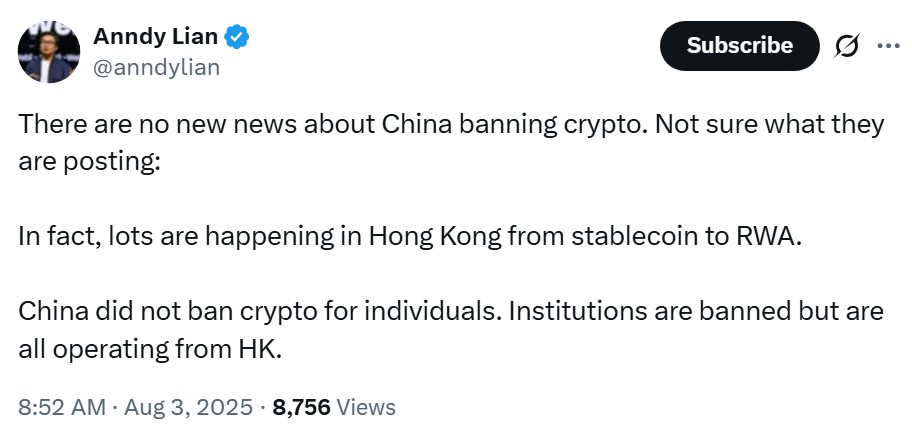
Crypto industry watcher observes RWA and stablecoin activity rising in Hong Kong
Hong Kong’s RWA and stablecoin activity picked up as new licensing rules took effect. (Anndy Lian)

The latest warning reportedly came from the China Securities Regulatory Commission, which advised companies to pause real-world asset ventures in Hong Kong. It followed a state-owned company scrubbing announcements about tokenizing bonds and other enterprises revealing RWA projects, piling on recent warnings against stablecoins after Hong Kong introduced its licensing framework.

To understand why these illusions of loopholes keep appearing — and why they collapse — Magazine spoke with Joshua Chu, co-chair of the Hong Kong Web3 association.

This conversation has been edited for clarity and length.

Magazine: Crypto has been banned for years in China, so why do regulators keep issuing fresh warnings?

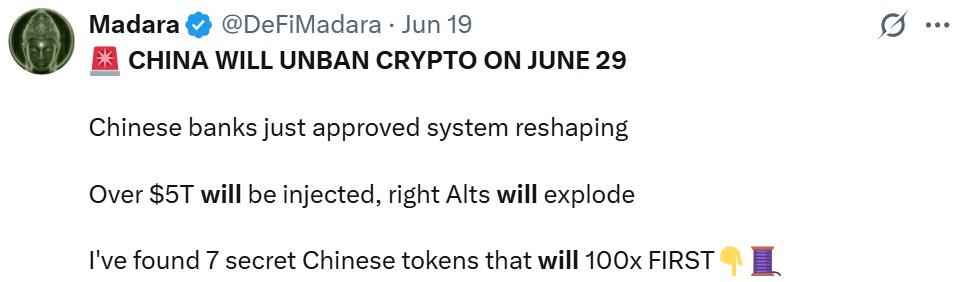
China crypto ban reversal rumor
Countless social media accounts predicted Beijing would reverse its crypto ban, but it hasn’t moved so far. (DeFiMadara)

Chu: The challenge is that many new lawyers in Hong Kong moving into Web3 don’t have much experience with cross-border issues. That’s created fragmentation and a lot of confusion. Some journalists and lawyers even claimed there was a 180-degree reversal on crypto policy. China doesn’t do 180-degree turns in policy. The only U-turn in recent memory was the rollback of COVID-19 mandates.

The crypto ban from 2021 is a good example: Speculative assets are not meant for the retail sector. The People’s Republic of China is still a communist country, and if an unsophisticated investor loses money gambling on crypto, in the government’s view, that’s losing money for the state. That’s why the only entities we’ve seen handling crypto assets are the government or state-owned enterprises.

Magazine: How do you explain this cycle where Chinese firms repeatedly attempt to enter a trendy crypto venture through Hong Kong, only for mainland regulators to push back?

Chu: The issue is how they’re doing it. Even big companies with money can act in a less-than-sophisticated way. There’s a difference between state-owned enterprises and private institutions. The government is comfortable with blockchain infrastructure and foreign direct investment. What it won’t tolerate is speculation because speculation equals bubbles.

That’s why regulators crack down on projects designed to hype markets or pull value from retail investors. It’s the same logic behind China’s real estate policy: Buying to live in is fine, but speculation isn’t. You can think of it as a parental style of governance: Just as parents wouldn’t let children gamble with family savings, the state won’t let retail investors gamble away wealth in crypto.

Crypto Is Alive and Well, Though Skeptics Say It’s ‘Not Money’

At the end of the day, companies see profit potential, which is why they want in. But regulators will only support ventures that are sophisticated, compliant and responsible. That’s also why Hong Kong can hold itself out as one of the world’s top three financial hubs — its reputation depends on keeping the system clean, and the same principle applies to virtual assets.

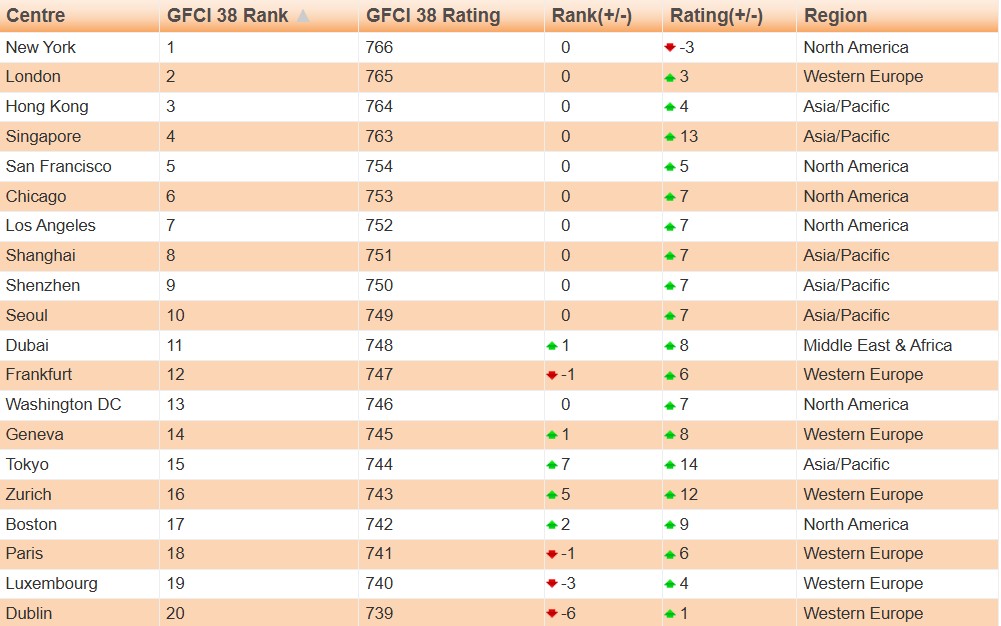
New York tops Long Finance's 2025 Global Financial Centres Index, followed by London, then Hong Kong
Hong Kong aims to strengthen its financial center rating through cryptocurrencies. (Long Finance)

Magazine: Isn’t the real problem that Chinese firms are hunting for loopholes and Hong Kong lawyers aren’t equipped to stop them?

Chu: Unfortunately, that happens a lot. If your whole business is founded on loopholes, you’re already on shaky ground. Regulators don’t create loopholes for you to exploit; they expect you to build something sustainable and compliant.

But because of the 2021 crypto ban, you have an entire market that’s been shut out. Human psychology kicks in, and people think: “Maybe this is my way back in.” That’s why you see companies making loud announcements before they’ve even filed an application. Take the stablecoin regime: Some firms were hyping plans to apply for licenses just to pump their stock price. Naturally, regulators step in.

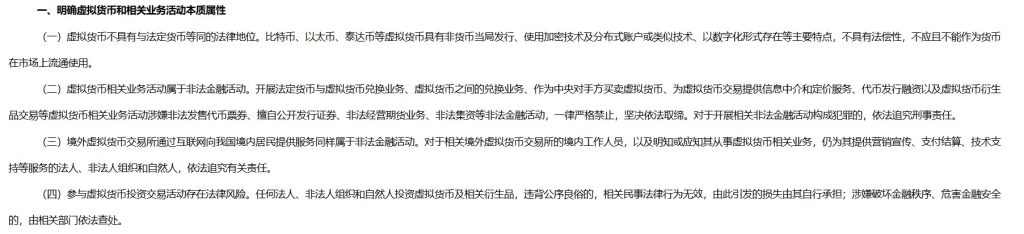
A screenshot of China's crypto ban statement in mandarin
China’s 2021 crypto ban defines crypto-related businesses as illegal financial activities. (China State Administration of Foreign Exchange)

We’ve seen this pattern before. When initial coin offerings were being sold as a cheaper alternative to initial public offerings, companies said you didn’t need a prospectus or compliance. But there’s a reason those safeguards exist: to protect investors. So, when players start cutting corners and shouting about it, it draws scrutiny. And that’s when clampdowns happen.

Magazine: When Chinese firms listed in Hong Kong or the US gain crypto exposure, is this regulatory arbitrage?

Chu: When a Chinese company lists on Nasdaq, it’s absorbing foreign investment, which triggers a different response than if it were raising funds domestically. The real question is how they structure these RWA or tokenization projects.

If they’re putting Chinese corporate data on a public blockchain, that creates cross-border data transfer issues. Remember, even listed companies have run into problems with US auditors because of China’s strict rules on what information can leave the country. Blockchain raises those concerns all over again.

There’s also the financial side. Many of these treasury strategies look risky, especially when driven by institutional FOMO at the peak of a bull cycle. Without strong internal risk controls, volatility can overwhelm the market cap of these firms. That’s exactly the kind of contagion risk regulators want to avoid.

If that happens, the scrutiny won’t just come from Beijing; it will come from the SEC as well.


Source: https://cointelegraph.com/magazine/hong-kong-isnt-loophole-chinese-crypto-firms-think/

Anndy Lian is an early blockchain adopter and experienced serial entrepreneur who is known for his work in the government sector. He is a best selling book author- “NFT: From Zero to Hero” and “Blockchain Revolution 2030”.

Currently, he is appointed as the Chief Digital Advisor at Mongolia Productivity Organization, championing national digitization. Prior to his current appointments, he was the Chairman of BigONE Exchange, a global top 30 ranked crypto spot exchange and was also the Advisory Board Member for Hyundai DAC, the blockchain arm of South Korea’s largest car manufacturer Hyundai Motor Group. Lian played a pivotal role as the Blockchain Advisor for Asian Productivity Organisation (APO), an intergovernmental organization committed to improving productivity in the Asia-Pacific region.

An avid supporter of incubating start-ups, Anndy has also been a private investor for the past eight years. With a growth investment mindset, Anndy strategically demonstrates this in the companies he chooses to be involved with. He believes that what he is doing through blockchain technology currently will revolutionise and redefine traditional businesses. He also believes that the blockchain industry has to be “redecentralised”.
j j j

Diverging signals: Dow rises, gold breaks records, and crypto faces derivatives squeeze

Diverging signals: Dow rises, gold breaks records, and crypto faces derivatives squeeze

As the United States inches closer to a federal government shutdown, with no resolution in sight after talks between congressional leaders and President Donald Trump ended without progress on Monday, investors are navigating a complex web of signals.

Wall Street stays resilient amid shutdown fears

Despite the looming administrative paralysis, Wall Street closed higher on Tuesday, extending its winning streak into a second consecutive quarter. The Dow Jones Industrial Average rose 0.2 per cent, the S&P 500 gained 0.4 per cent, and the Nasdaq added 0.3 per cent.

This resilience suggests that market participants either believe the shutdown will be short-lived or have already priced in its limited economic impact, given that past shutdowns have rarely derailed broader market trends for long.

Treasury yields and gold signal investor anxiety

Beneath the surface, subtle shifts in asset prices reveal deeper unease. US Treasury yields moved in opposite directions, reflecting a classic flight-to-quality dynamic mixed with short-term policy uncertainty. The 10-year yield inched up by one basis point to 4.148 per cent, while the 2-year yield fell by two basis points to 3.612 per cent.

This flattening of the yield curve often signals that investors expect near-term economic disruptions, such as a government shutdown, to weigh on growth, even if longer-term inflation or fiscal concerns remain elevated. Meanwhile, the US Dollar Index declined 0.1 per cent to 97.8, indicating a modest retreat in safe-haven demand for the greenback.

In contrast, gold surged 0.6 per cent to a record high of US$3,858.18 per ounce, underscoring its enduring role as a hedge against political and institutional instability. The precious metal’s ascent to unprecedented levels speaks volumes about the depth of investor anxiety, even as equities hold firm.

Oil and Asian markets reflect fragile demand

Commodities tell a different story. Brent crude oil dropped 1.4 per cent to US$67 per barrel, pressured by expectations that OPEC+ may accelerate its planned output increases in the coming months. This potential supply boost comes at a time when global demand outlooks remain fragile, particularly with China, the world’s largest oil importer, entering its week-long National Day holiday.

Asian equities reflected this caution, trading mixed on Tuesday and lower in early sessions on Wednesday, with mainland China and Hong Kong markets shuttered for the festivities. The absence of Chinese participation in regional trading has amplified volatility and reduced liquidity, leaving other markets more exposed to external shocks, including developments in Washington and shifts in US monetary policy expectations.

Crypto faces a risk-off correction

The crypto market declined 0.51 per cent over the past 24 hours, aligning with the broader theme of risk-off behaviour and profit-taking following recent rallies. Two distinct forces are shaping this correction: regulatory evolution and the dynamics of the derivatives market.

On the regulatory front, the Securities and Exchange Commission (SEC) issued new guidance allowing state-chartered trust companies, such as those operated by Coinbase, to act as custodians for investment advisers managing crypto assets.

At first glance, this appears to be a significant step toward institutional legitimacy. Long-term, it could pave the way for greater participation from traditional finance players who have long cited custody as a primary barrier to entry.

However, the guidance comes with stringent requirements, including mandatory annual audits and strict asset segregation protocols. These conditions have sparked operational concerns among crypto firms, many of which now face the prospect of higher compliance costs and structural overhauls.

As a result, the short-term market reaction has been one of caution rather than celebration. The progress is real, but the path to implementation remains uncertain, and the industry is watching closely for follow-up rule-making and clarity on adoption timelines from major platforms.

Simultaneously, the derivatives market is flashing warning signs. Perpetual futures open interest, a key gauge of leveraged positioning, fell by 5.48 per cent even as trading volume surged by 16.78 per cent. This divergence suggests that traders are actively unwinding leveraged long positions rather than initiating new ones. Compounding the pressure, average funding rates spiked to 0.0068, a staggering 354 per cent increase over 24 hours.

In perpetual futures markets, funding rates represent the cost of maintaining leveraged positions; when they turn sharply positive, it often indicates excessive bullish sentiment that becomes unsustainable. The recent surge suggests that longs were willing to pay a premium to stay in the market, creating a fragile equilibrium that ultimately collapsed under the weight of profit-taking and margin calls.

Notably, US$50 million in liquidations hit the XPL token alone, highlighting how concentrated leverage in smaller altcoins can amplify broader market selloffs. Historically, such spikes in funding rates precede heightened volatility, and if rates turn persistently negative, it could signal a deeper bearish shift as shorts dominate the market.

The current dip in crypto prices thus reflects a tug-of-war between structural progress and cyclical risk reduction. On one side, regulatory clarity around custody could eventually unlock billions in institutional capital, particularly if traditional asset managers gain confidence in secure, compliant infrastructure.

On the other hand, traders are aggressively trimming exposure in anticipation of near-term headwinds not just from potential SEC enforcement actions but also from macro crosscurrents like the US government shutdown and shifting Treasury dynamics.

This tension is further exacerbated by outflows from crypto ETFs, which have seen US$418 million exit Bitcoin funds and US$248 million leave Ethereum products recently. These outflows suggest that even regulated vehicles are not immune to sentiment swings, and that spot market demand may be insufficient to absorb the selling pressure from leveraged traders and cautious institutions alike.

The weeks ahead

Looking ahead, the critical support level for Bitcoin sits at US$113,000. A decisive break below this threshold could trigger further technical selling, especially if derivatives markets remain unstable.

Conversely, holding above this level might attract bargain hunters, particularly if the SEC’s custody framework begins to translate into tangible institutional inflows. Altcoins like Aster and Hyperbot face additional challenges due to supply-side constraints, which could either cushion their downside or exacerbate volatility depending on market liquidity.

Ultimately, the next few weeks will test whether the cryptocurrency market can decouple from macroeconomic noise and regulatory ambiguity, or whether it remains tethered to the same risk calculus that governs traditional assets. For now, prudence prevails, and the record highs in gold alongside muted equity gains suggest that even in a world of rising asset prices, uncertainty remains the dominant currency.


Source: https://e27.co/diverging-signals-dow-rises-gold-breaks-records-and-crypto-faces-derivatives-squeeze-20251001/

Anndy Lian is an early blockchain adopter and experienced serial entrepreneur who is known for his work in the government sector. He is a best selling book author- “NFT: From Zero to Hero” and “Blockchain Revolution 2030”.

Currently, he is appointed as the Chief Digital Advisor at Mongolia Productivity Organization, championing national digitization. Prior to his current appointments, he was the Chairman of BigONE Exchange, a global top 30 ranked crypto spot exchange and was also the Advisory Board Member for Hyundai DAC, the blockchain arm of South Korea’s largest car manufacturer Hyundai Motor Group. Lian played a pivotal role as the Blockchain Advisor for Asian Productivity Organisation (APO), an intergovernmental organization committed to improving productivity in the Asia-Pacific region.

An avid supporter of incubating start-ups, Anndy has also been a private investor for the past eight years. With a growth investment mindset, Anndy strategically demonstrates this in the companies he chooses to be involved with. He believes that what he is doing through blockchain technology currently will revolutionise and redefine traditional businesses. He also believes that the blockchain industry has to be “redecentralised”.
j j j