Anndy Lian: “Opening Banking is good. Defi is better. It can fill up the existing financial gaps.”

Anndy Lian: “Opening Banking is good. Defi is better. It can fill up the existing financial gaps.”

The modern-day, tech-savvy consumers’ demand for a more avant-garde service, gave rise to what’s now called the open banking revolution. And, it is changing the way transactional data is shared, used and stored outside Financial Institutions.

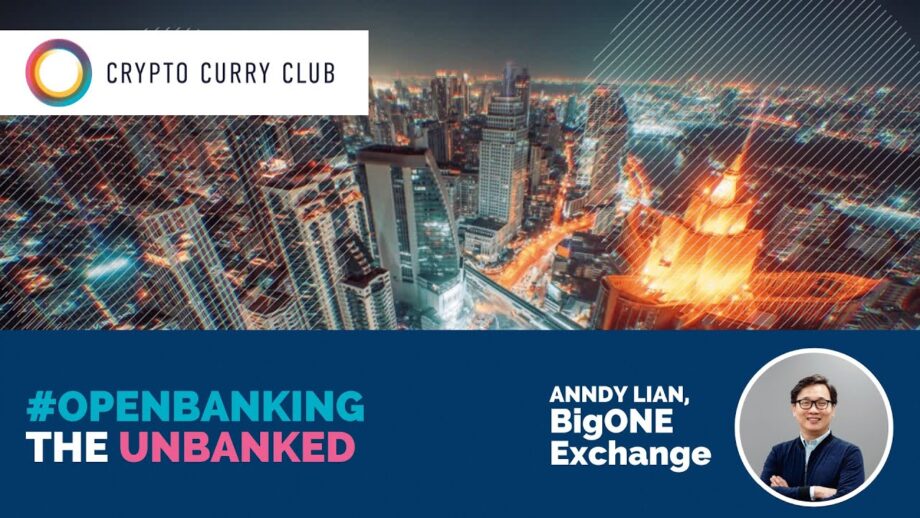
This paradigm shift is actively transforming the payments landscape, and with cryptocurrencies squeezing their way toward the innovation space, it looks like it’s set to play a significant role. Crypto Curry Club spoke to BigONE Exchange Chairman, Anndy Lian to discuss the potentially life-changing opportunities that Open Banking brings and how crypto can be leveraged in this new scene.

What is Opening Banking?

Open banking is a banking practice that allows third-party financial service providers to access consumer banking and financial data via application programming interfaces (APIs).

Why do credit bureaus use open banking?

Credit bureaus need to access and process customer information in order to accurately determine creditworthiness. Open banking reduces administrative costs by eliminating manual document collection. Furthermore, open banking allows credit bureaus to analyse consumption patterns, such as overspending, to provide better credit scores (Julio, 2021). Additionally, open banking prevents fraud through authentication and verification of the validity of data (Julio, 2021).

In the video, Anndy and Erica discussed the following topics:

[00:02:01] Give an overview of what open banking is. How is this bringing some disruption and some benefits to the traditional roles of things like lending and credit?

[00:04:51] Do you see any other benefits to the area of credit decision?

[00:08:05] How specifically do you see open banking benefiting people who are either looking to get in crypto or who are already in the crypto space?

[00:12:25] Have you seen a large take up for that sort of access of on ramping via open banking on your exchange?

[00:15:58] What are some of the security benefits that open banking brings?

[00:17:51] What do you see is next for open banking in terms of helping the credit, lending space, and the crypto exchanges picking up this technology of using open banking?

“Open banking prevents fraud through authentication and verification of the validity of data. For financial service providers, open banking will allow financial service providers to significantly innovate on their product offerings to businesses. For businesses, opening banking will mean more effective and efficient financial tools in their business. For customers, it will mean better ways to spend, borrow, and invest.

Opening Banking is good. Defi is better. It can fill up the existing financial gaps.”


About Crypto Curry Club:

The Crypto Curry Club connects like-minded individuals to come together and affect real change that innovates our future while driving businesses forward.


About Anndy Lian:

Anndy Lian is an all-rounded business strategist in Asia. He has provided advisory across a variety of industries for local, international, public listed companies and governments. He is an early blockchain adopter and experienced serial entrepreneur, book author, investor, board member and keynote speaker. Currently, he is appointed as the Chief Digital Advisor at Mongolia Productivity Organization, championing national digitization. He is also the Chairman, Asia for BigONE Exchange.


About Erica Stanford:

Erica is the Founder of Crypto Curry Club. She is also the author of Crypto Wars: Faked Deaths, Missing Billions and Industry Disruption published by Kogan Page.

The full video can be found at:

Anndy Lian is an early blockchain adopter and experienced serial entrepreneur who is known for his work in the government sector. He is a best selling book author- “NFT: From Zero to Hero” and “Blockchain Revolution 2030”.

Currently, he is appointed as the Chief Digital Advisor at Mongolia Productivity Organization, championing national digitization. Prior to his current appointments, he was the Chairman of BigONE Exchange, a global top 30 ranked crypto spot exchange and was also the Advisory Board Member for Hyundai DAC, the blockchain arm of South Korea’s largest car manufacturer Hyundai Motor Group. Lian played a pivotal role as the Blockchain Advisor for Asian Productivity Organisation (APO), an intergovernmental organization committed to improving productivity in the Asia-Pacific region.

An avid supporter of incubating start-ups, Anndy has also been a private investor for the past eight years. With a growth investment mindset, Anndy strategically demonstrates this in the companies he chooses to be involved with. He believes that what he is doing through blockchain technology currently will revolutionise and redefine traditional businesses. He also believes that the blockchain industry has to be “redecentralised”.

j j j

Forkast News: Why DeFi holds the key to metaverse success

Forkast News: Why DeFi holds the key to metaverse success

A profound shift is underway in online culture, writes Anndy Lian of BigOne Exchange. Here’s how decentralized finance might one day power the NFT and metaverse economy.

Visa buying a CryptoPunk NFT for around $150,000 recently may be the first sign that these unique digital assets are starting to be taken seriously for commerce. Up until now, the sale of these “non-fungible” assets has been associated with high-priced artwork, but Visa’s purchase, while also about art, is really about promoting their expertise to businesses in the field of using NFTs for commerce. Indeed, in a report, coinciding with the CryptoPunk purchase, Visa states a longer-term vision: “While the prices of individual NFTs fluctuate, fascinating use cases for NFTs are still emerging and the groundwork is being laid for the long-term utility of NFTs.”

One such use case led by big consumer brands from Facebook to Coca Cola is the use of NFTs in the virtual world, called the metaverse. Indeed, if you heard the news that Facebook is about to launch its own crypto wallet Novi (which is — in true metaverse fashion — interoperable with other wallets) then you may also recall it’s also due to work with NFTs as well as stablecoins.

What you may not know is that Facebook’s CEO Mark Zuckerberg sees the future of the global social network in the metaverse. Indeed, Zuckerberg recently said that within five years Facebook would be a “metaverse company,” while Satya Nadella, Microsoft’s CEO, said they were investing in the “enterprise metaverse.” Simply put, whoever can integrate NFTs and payment with the metaverse may well lead the biggest change in online culture and economy since the birth of the web in the 1990s. This view is also supported by David Raszucki, head of the US$50 billion Roblox Corporation, who sees the emergence of the metaverse as profound a shift as the invention of the internet and the World Wide Web.

Certainly, it’s along those lines in terms of potential of the wider metaverse, coupled with the key role of NFTs that software developer Alethea AI, which claims to have created the world’s first “intelligent NFT,” recently raised US$16 million in funding to create a metaverse populated by its bots. The NFTs that will fill the metaverse will be talking, intelligent NFTs (iNFTs) created by Alethea: machine-learning bots that can have human-like conversations.

“Alethea’s thesis is that NFTs will provide a definitive property rights infrastructure for the emerging Metaverse driven by interactive and intelligent Avatars,” according to the company. “The AI infrastructure built by Alethea will serve as the underlying connective tissue to enable NFTs to ‘come alive’ as interactive media assets, with personality traits, preferences and real-time interactive capability.”

In a recent interview in The Verge, Zuckerberg laid out his vision of a metaverse bringing “enormous opportunity to individual creators and artists; to individuals who want to work and own homes far from today’s urban centers; and to people who live in places where opportunities for education or recreation are more limited. You can think about the metaverse as an embodied internet, where instead of just viewing content — you are in it.”

Of course, anyone who’s watched The Social Network, or has seen how Facebook can do harm through manipulating its online users’ behavior, is certainly going to wonder if the metaverse is going to be in safe hands with Facebook. As Tim Sweeney, CEO of Fortnite maker Epic Games famously once remarked: “This metaverse is going to be far more pervasive and powerful than anything else. If one central company gains control of this, they will become more powerful than any government, and be a god on Earth.”

Supporters of a thoroughly decentralized metaverse, where NFTs play a pivotal role in facilitating the DeFi (decentralized finance) necessary for this meta-project to come into being, gathered recently at the Paris-based ETH event EthCC. Key speaker Ben Lakoff , co-founder of NFT-protocol Charged Particles, led discussion of the need for permissionless, trustless financial services with a high transaction rate for a metaverse to function optimally. The metaverse would also necessitate a large amount of data to be stored and unaltered, where blockchain technology comes into play.

Lakoff underlined this point to the audience, connecting DeFi and identity in his presentation: “NFTs as identity, as a DeFi passport, this on-chain credit scoring — all of these things kind of mixed together. We can start to see how these things play together in a very, very unique way that paved the way for Web 3.0.” Lakoff became particularly passionate when talking about NFTs as financial products able to hold other tokens. “You have your NFT that acts as a basket, owning all of these different types of assets,” he explained, adding that baskets could contain social tokens and interest-bearing assets, as well as enabling easy transfer to another individual’s portfolio.

Certainly, there are many aspects of the metaverse to be figured out before the vision becomes a reality. Matthew Ball, a venture capitalist who wrote a key article about the metaverse in early 2020, also makes this point. A lot of the pieces of the jigsaw must come together before the metaverse can take shape, with Epic Games’ popular “Fortnite” game possibly the nearest to that future available right now, says Ball.

Putting aside the technological challenges of an “always on” environment capable of supporting thousands if not millions of people online in the same virtual space at the same time, what is certain is that a DeFi financial architecture involving NFTs is likely to be key to its success, what you might call the “MetaverseFi.”

Looking at the current cryptocurrency landscape for clues on what form these decentralized products and services might take in the metaverse it’s worth returning to the real world. Take the accelerating mainstream adoption of cryptocurrencies, and greater financial institutional involvement. From the legalization of Bitcoin in El Salvador, the implementation of crypto payments in PayPal, to the reformation of the Dogecoin Foundation to push its crypto payment potential, the trend is clear. At the same time, as we’ve seen over in the U.S. with the Infrastructure Bill inclusion of provisions on crypto, and the European Commission’s proposed Regulation on Markets in Crypto Assets (MiCA), there’s a parallel push for greater regulation from the government.

Clearly, any key players in creating the metaverse which includes large corporations like Facebook and Epic Games are going to have to be compliant with these emerging DeFi crypto regulations when creating its decentralized payment systems.

In an in-depth look at the prospects for a metaverse, U.K.-based blockchain VC company Outlier Venture has found the the need to have a crypto-decentralized core is paramount: “It needs its own economy and currencies native to it, where value can be earnt, spent, lent, borrowed or invested interchangeably in both a physical or virtual sense and most importantly without the need for a government.”

However, while the metaverse may reside in the virtual world, I believe its use of NFTs and DeFi to bring it to life are firmly rooted in the real world. The dream of an open metaverse is a motivating vision that engages individuals and attracts corporations, but if it’s going to include people from all around the world from Beijing to Boston, it’s also going to have to contend with the impact that increased government scrutiny and regulation will have on DeFi.


AUTHOR PROFILE: ANNDY LIAN

Anndy Lian is chairman of BigOne Exchange, a trading platform registered in the Netherlands. Anndy is a business strategist with over 15 years of experience in Asia, and he has worked in various industries for local, international and publicly traded companies. Anndy is also currently the chief digital advisor at the Mongolian Productivity Organisation.


Original Source: https://forkast.news/why-defi-holds-key-to-metaverse-success/

Anndy Lian is an early blockchain adopter and experienced serial entrepreneur who is known for his work in the government sector. He is a best selling book author- “NFT: From Zero to Hero” and “Blockchain Revolution 2030”.

Currently, he is appointed as the Chief Digital Advisor at Mongolia Productivity Organization, championing national digitization. Prior to his current appointments, he was the Chairman of BigONE Exchange, a global top 30 ranked crypto spot exchange and was also the Advisory Board Member for Hyundai DAC, the blockchain arm of South Korea’s largest car manufacturer Hyundai Motor Group. Lian played a pivotal role as the Blockchain Advisor for Asian Productivity Organisation (APO), an intergovernmental organization committed to improving productivity in the Asia-Pacific region.

An avid supporter of incubating start-ups, Anndy has also been a private investor for the past eight years. With a growth investment mindset, Anndy strategically demonstrates this in the companies he chooses to be involved with. He believes that what he is doing through blockchain technology currently will revolutionise and redefine traditional businesses. He also believes that the blockchain industry has to be “redecentralised”.

j j j

Anndy Lian: “DeFi will be too profitable to simply kill off with regulation”

Anndy Lian: “DeFi will be too profitable to simply kill off with regulation”

Decentralized finance (DeFi) poses both opportunities and challenges for governments and regulators coming out of the pandemic. Take the case of the USA where tricky new regulations around crypto have been tacked on the key infrastructure bill, lead by Senator Elizabeth Warren, including her urging Treasury Secretary Janet Yellen to identify and remedy risks posed by cryptocurrencies.

At the same time, you have countries like Kazakhstan, Canada, U.S.A. is benefiting from the migration of crypto miners following China’s crackdown, now allowing bitcoin to be used by their banks. The task for the DeFi sector is to carry on educating Governments and regulators on the benefits of DeFi especially in parts of the world where banking is hard to access, and in promoting crypto entrepreneurship for the future. Nevertheless, governments are trying to know more to get themselves fitted with the new DeFi trends.

DeFi is here to stay, that’s worth saying first and foremost. What shape it takes, and how much it will be a benefit to everyone rather than a select few, depends on all stakeholders working together. DeFi startups that take a proactive attitude, following best practices, and in dialogue with their regulators, will be in the best position to advance not just their business but also the interests of their customers. Obviously, recent examples such as Binance reigning in the amount of leverage they are offering for futures contracts show that it’s prudent to take account of the regulatory landscape.

As a pro-government crypto advisor myself, I emphasise the value of working with regulators and the public to explain the risks involved in different products are vital.


————————————–

Regulators are Coming for the DeFi Goose and Its Golden Eggs

  • There are two big sources of ambiguity: one is conceptual and linguistic, and the other relates to international consistency.
  • DeFi’s survival is “guaranteed” by the fact that it’s much too lucrative for governments to completely hobble it.

Regulation is becoming a very hot topic in the crypto industry as governments try to understand how they should respond to this still relatively new phenomenon. With United States-based crypto companies now fighting the infrastructure bill battle in the House after a defeat in the Senate, the industry could potentially look very different in a few years, after recently proposed rule changes have been implemented.

Various sub-sectors within crypto will likely be affected in different ways by incoming regulation, but one area that may be affected more than most is decentralized finance (DeFi). This is largely because, due to its arguably decentralized nature, it would potentially be very hard to carry out know-your-customer (KYC) and anti-money laundering (AML) checks on users if it becomes truly decentralized.

According to industry figures who spoke to Cryptonews.com, DeFi is currently dogged by vagueness, ambiguity and inconsistency in the application of existing rules, as well as proposed new laws. However, while most observers agree that DeFi will likely suffer from ongoing regulatory uncertainty in the short-to-medium term, they also say that regulators will ultimately choose to adopt guidelines that nurture – rather than nuke – the fledgling sector.

Ambiguity…and more ambiguity

The aforementioned infrastructure bill provides a good example of the kind of minefield that current and incoming regulations present to the DeFi world.

The original draft of the bill included decentralized exchanges and peer-to-peer marketplaces in its definition of “broker,” thereby encompassing much of DeFi with its proposal to subject all “brokers” to the requirement to report large transactions to the Internal Revenue Service (IRS).

Coin Center executive director Jerry Brito celebrated an amendment that sought to remove both decentralized exchanges and peer-to-peer marketplaces from the scope of the bill. However, a subsequent proposed amendment proposed altering the language yet again, so that only proof-of-work mining appeared to be excluded by the new definition of “broker.”

This isolated example illustrates just how tricky it will be for DeFi players to navigate future regulations.

But there are plenty more examples of this kind of lack of clarity and certainty. It’s a common feature of pretty much all laws and regulations that will affect the DeFi sector, from the European Commission’s recent anti-money laundering proposals to the Financial Action Task Force (FATF)’s soon-to-be-revised guidelines.

There are two big sources of ambiguity: One is conceptual and linguistic, and the other relates to international consistency.

Anndy Lian, the Chairman of the crypto exchange BigONE and the Chief Digital Advisor to the Mongolian Productivity Organization, said,

“At the FATF recent Plenary meeting in June this year, a key takeaway was the concern around the apparent lack of consensus across different jurisdictions and between industry players regarding the best way to comply with the Travel Rule. And while the private sector has led the way in developing solutions to enable implementation of the Travel Rule, ‘a majority of jurisdictions have not yet implemented the FATF’s requirements.’”

For Lian, the real issue and challenge for the DeFi sector is the uneven compliance with the Travel Rule across jurisdictions, which “poses real headaches for both DeFi businesses and their customers.”

But in terms of incoming and future regulation, there’s also a big problem related to semantics and conceptual clarity. According to the MakerDAO (MKR) community member PaperImperium, technical terms aren’t used consistently by regulators and the crypto industry, making it unclear as to what exactly policymakers want.

PaperImperium told Cryptonews.com:

“A great example of this is the debate around stablecoins. As the Gorton-Zhang paper from a few weeks ago makes clear, later confirmed by private discussions, even a term as simple as ‘stablecoin’ has a different meaning in policy circles than in the cryptoverse.”

Most people working within crypto would use the term “stablecoin” to signify any token that is purposefully trying to remain in a price band around a given benchmark. However, PaperImperium said, “policymakers and regulators are generally talking about redeemable-upon-demand-for-fiat tokens to the exclusion of algorithmically managed tokens.”

This creates a big headache for stablecoins such as DAI, which is generated by MakerDAO. In fact, prior to the recent infrastructure bill, the Democratic Representative Don Beyer has put forward a draft bill that would effectively outlaw all stablecoins that don’t meet certain regulatory criteria and aren’t registered by their issuer. The latter condition is something that DAI, for instance, could never meet.

Still, most people working within DeFi claim that regulation is not only inevitable, but good for the sector in the long term.

Layerzero, a member of MakerDAO’s Sustainable Ecosystem Scaling Core Unit Team, explained:

“I believe regulation is necessary and a sign that the industry matures. Not having legal certainty is a risk that hinders future growth.”

And Layerzero added,

“I welcome good regulation that provides legal certainty to market participants and that doesn’t hinder innovation, but of course, this is hard to achieve. The problem is that the current regulatory framework is outdated and was not designed for decentralized ledger technology.”

DeFi’s golden eggs

New proposals are coming thick and fast at the moment, and it’s uncertain what regulatory hurdles the DeFi ecosystem will have to clear in the months and years to come. It’s also uncertain whether all soon-to-be-imposed hurdles will actually be clearable, and whether further growth in DeFi sector might become somewhat restricted as a result.

Still, DeFi industry players estimate that the sector will endure for a long time to come, even if its mature form may be somewhat different from how it is now.

For ​​Skirmantas Januškas, the CEO and Co-founder of DappRadar, DeFi’s survival will be guaranteed by the fact that it’s much too lucrative for regulators and governments to completely obliterate.

He told Cryptonews.com:

“The sheer amount of wealth generated and locked into our industry – especially now, at a time when governments inject trillions into the economy by way of rescue packages to the detriment of, say, infrastructure and other long-term needs that must also be met – makes us the proverbial goose that laid the golden eggs. And the act of laying golden eggs is a potentially taxable event.”

Given that DeFi went from USD 1 billion in total value locked in to around USD 90 billion in just under a year (according to DeFi Pulse), most governments will want to extract a portion of the value it has generated for tax and public spending. In other words, they will seek to avoid imposing too-stringent regulation.

Januškas added:

“Regulators worldwide will likely seek to capitalize on our industry, just as we crypto natives have, and this places us in a very strong position in a dialogue that is only just starting. And while it may take years of regulations being proposed, effected, repealed, before we come to a solution that safeguards consumers’ and governments’ interests and still harbors innovation, the regulations that do come into force will likely work to DeFi’s advantage in the long run.”

Anndy Lian agreed that DeFi will be too profitable to simply kill off with regulation, regardless of how that regulation will end up looking in a few years. In his view (as someone who actually does advise governments), DeFi poses both opportunities and challenges for governments and regulators emerging from the coronavirus pandemic.

Lian said,

“The task for the DeFi sector is to carry on educating governments and regulators on the benefits of DeFi especially in parts of the world where banking is hard to access, and in promoting crypto entrepreneurship for the future. Nevertheless, governments are trying to know more to get themselves fitted with the new DeFi trends.”

The question is: how long will DeFi need to wait until authorities produce the clear regulations the sector needs to grow sustainably?

“In some areas, like tax or AML, it’s a matter of months. In some others, it’s unrealistic to expect full regulatory clarity even within years,” said Jacek Czarnecki, the Global Legal Counsel at MakerDAO.

Given the likely lengths of time involved, Czarnecki suggested that new DeFi projects should definitely engage in dialogue with regulators and policymakers.

Czarnecki told Cryptonews.com,

“We have pioneered such activities at Maker, and have been meeting with both multiple national regulators (including central banks) as well as international organizations (e.g. the OECD, FATF, the Financial Stability Board) since 2018. That has helped us gain trust and awareness among the regulatory community.”

Source: https://cryptonews.com/exclusives/regulators-are-coming-for-the-defi-goose-and-its-golden-eggs-11458.htm

 

Anndy Lian is an early blockchain adopter and experienced serial entrepreneur who is known for his work in the government sector. He is a best selling book author- “NFT: From Zero to Hero” and “Blockchain Revolution 2030”.

Currently, he is appointed as the Chief Digital Advisor at Mongolia Productivity Organization, championing national digitization. Prior to his current appointments, he was the Chairman of BigONE Exchange, a global top 30 ranked crypto spot exchange and was also the Advisory Board Member for Hyundai DAC, the blockchain arm of South Korea’s largest car manufacturer Hyundai Motor Group. Lian played a pivotal role as the Blockchain Advisor for Asian Productivity Organisation (APO), an intergovernmental organization committed to improving productivity in the Asia-Pacific region.

An avid supporter of incubating start-ups, Anndy has also been a private investor for the past eight years. With a growth investment mindset, Anndy strategically demonstrates this in the companies he chooses to be involved with. He believes that what he is doing through blockchain technology currently will revolutionise and redefine traditional businesses. He also believes that the blockchain industry has to be “redecentralised”.
j j j