The market wrap for February 27, 2025, paints a vivid picture of a world grappling with choppy risk sentiment, spurred by US President Donald Trump’s latest pronouncements on trade policy. His remarks during Wednesday’s cabinet meeting—laden with ambiguity about tariffs on Canada and Mexico, hints of a delay from March to April, and a firm declaration of 25 per cent reciprocal tariffs on European autos—have sent ripples of unease across global markets.
Add to that a slew of economic data points, corporate earnings, and geopolitical developments, and you’ve got a recipe for volatility that’s keeping investors on their toes. Here’s my take on what’s unfolding, grounded in facts and a healthy dose of skepticism about where this all might lead.
Let’s start with Trump’s trade rhetoric, which has once again thrust uncertainty into the spotlight. His contradictory signals about tariffs on Canada and Mexico—major US trading partners—suggest a strategy that’s either deliberately fluid or frustratingly inconsistent.
On one hand, he’s floated a potential delay, pushing the timeline from March to April, which could buy time for negotiations or simply prolong the suspense. On the other, he’s doubled down with a pledge for 25 per cent tariffs on European autos and other goods, a move that’s less about surprise (given his long-standing “tariff man” persona) and more about escalation.
The markets despise ambiguity, and Trump’s words have delivered it in spades. Investors are left parsing his intentions: Is this a negotiating tactic to extract concessions, or a genuine prelude to a broader trade war? The historical precedent from his first term—where tariffs on steel and aluminum roiled markets but often softened in practice—offers little comfort when the stakes now seem higher and the global economy more fragile.
The economic data isn’t helping soothe nerves either. US new home sales took a nosedive in January, dropping 10.5 per cent to 657,000 units. That’s a stark signal of cooling demand in a housing market already battered by high interest rates and affordability woes. For context, this figure undershoots even the most pessimistic forecasts, hinting at deeper structural issues—perhaps a pullback in consumer confidence or a ripple effect from trade-related uncertainty.
Housing is a bellwether for broader economic health, and this bearish turn could amplify growth concerns, especially as Trump’s policies threaten to layer on inflationary pressures via tariffs. It’s no wonder equity markets have been volatile, with traders caught between macroeconomic red flags and the micro-level drama of corporate earnings.
Speaking of earnings, Nvidia’s latest report was the week’s marquee event, and it didn’t disappoint—or rather, it didn’t fully satisfy. The chip giant, a darling of the tech rally, posted results that beat analyst expectations, yet the stock wobbled in after-hours trading. Why? After two years of blowout performances that fuelled AI-driven euphoria, this “modest beat” felt like a letdown.
Investors have grown accustomed to Nvidia shattering ceilings, and anything less sparks doubts about whether the growth story has peaked. The broader MSCI US index eked out a negligible 0.03 per cent gain, buoyed by a 0.8 per cent rise in the Info Tech sector, but the lack of decisive momentum reflects a market wrestling with bigger questions. Are we seeing the limits of tech-led optimism in an environment where tariffs and inflation could crimp corporate margins?
Meanwhile, fixed-income markets offered their own commentary. The benchmark 10-year Treasury yield slipped 4 basis points to 4.25 per cent, a subtle nod to growth fears trumping inflation worries—for now. Lower yields signal a flight to safety, as investors bet on a slowing economy potentially forcing the Federal Reserve to rethink its rate-cut trajectory.
The US Dollar Index, up 0.1 per cent to 106.49, suggests some resilience, likely propped up by Trump’s tariff threats enhancing the greenback’s safe-haven appeal. Gold, too, ticked up 0.1 per cent to US$2,915.92 an ounce, hovering near record territory as a hedge against uncertainty. These moves aren’t dramatic, but they underscore a cautious repositioning amid the noise.
Across the Atlantic, MSCI Europe climbed a solid 1.0 per cent, lifted by a new minerals deal between the US and Ukraine. It’s a rare bright spot, hinting at strategic shifts in resource alliances that could cushion Europe against trade disruptions. But let’s not kid ourselves—European autos, now squarely in Trump’s tariff crosshairs, could drag sentiment down fast. Companies like Volkswagen and Stellantis, with heavy exposure to North American supply chains, face a reckoning if those 25 per cent duties stick. The sector’s already nursing wounds from a post-pandemic slump, and this could be salt in the wound.
Asia, meanwhile, tells a tale of resilience and divergence. The MSCI Asia ex-Japan index rebounded 1.5 per cent, with Hong Kong’s Hang Seng stealing the show at a 3.3 per cent surge. The catalyst? News that China plans to recapitalise its biggest banks, a move that could stabilise a financial system creaking under bad debt and sluggish growth.
It’s a bold step, and the market’s enthusiastic response suggests hope that Beijing’s got more tricks up its sleeve. Yet, early trading today showed Asian indices mixed, and US equity futures point to a softer open stateside. The global mood remains jittery, and China’s bank rescue might be a temporary salve rather than a cure.
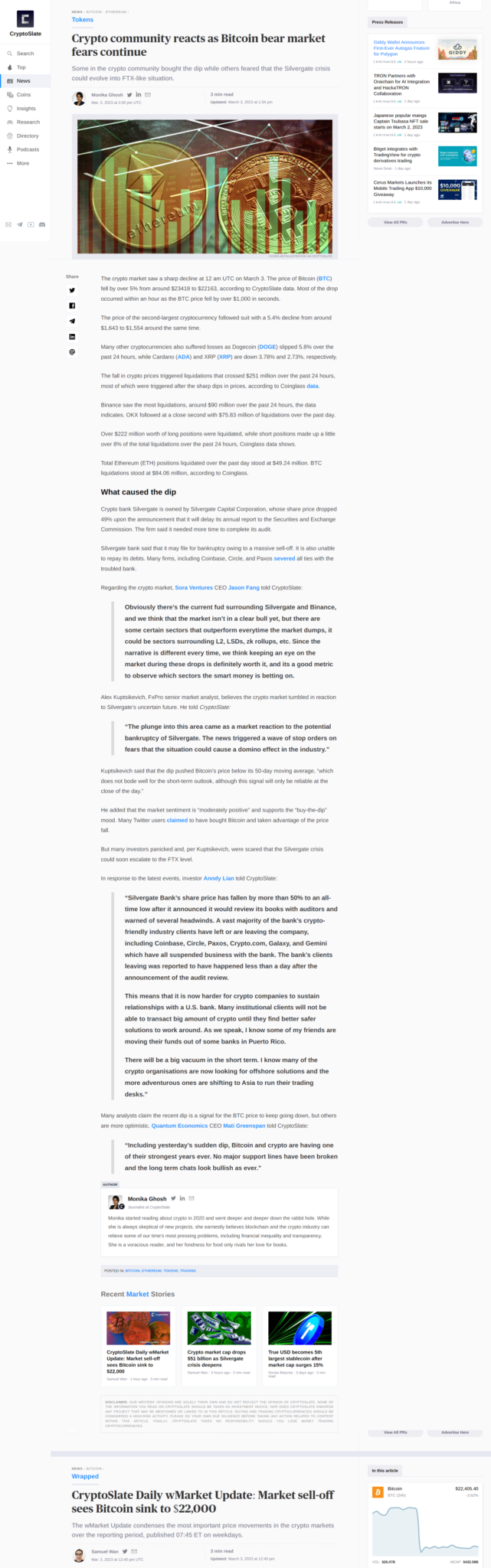
Then there’s the cryptocurrency saga, a wild subplot in this market drama. Over US$800 billion has evaporated from global crypto markets in recent weeks, a brutal reversal from the post-election euphoria tied to Trump’s perceived pro-crypto stance. Bitcoin shed 3.6 per cent on Wednesday, hitting US$85,600, while Ethereum took a 4 per cent dive to US$2,275—its lowest since September.
The culprits are manifold: inflation fears, tariff anxieties, a cooling meme coin craze, and a US$1.4 billion hack at the Bybit exchange, linked to the notorious Lazarus group. The forensic fallout confirms it was a targeted attack, not a flaw in Safe Wallet’s smart contracts, but the damage to confidence is real. Crypto’s 4 per cent daily drop mirrors the broader sell-off in risk assets, and Ethereum’s 53 per cent lag from its 2021 peak is a stark reminder of how far the mighty can fall when sentiment sours.
Oil, too, is feeling the heat. Brent crude slipped 0.7 per cent to US$72.71 a barrel, pressured by an unexpected buildup in US fuel inventories and whispers of a Russia-Ukraine peace deal. The latter could ease supply concerns, but the former points to weakening demand—a troubling sign when paired with the housing data. Energy markets are a microcosm of the push-pull between geopolitical hope and economic reality, and right now, reality’s winning.
So, what’s my point of view on all this? I have mentioned this many times in the past few days. I see a world at a crossroads, where Trump’s trade gambit could either spark a manageable reshuffling of global commerce or tip us into a deeper slowdown. The data—housing’s slump, oil’s slide, crypto’s crash—screams caution, yet pockets of strength in Europe and Asia hint at adaptability.
Nvidia’s underwhelming “win” feels symbolic: growth is still possible, but the easy gains are gone. Investors are right to be skittish; tariffs could stoke inflation just as growth falters, a stagflationary nightmare the Fed’s ill-equipped to handle if yields keep dropping. I’m skeptical of Trump’s ability to thread this needle—his track record leans more toward disruption than finesse. But markets are nothing if not resilient, and the next few weeks, with Fed testimony and more tariff clarity looming, will test that resilience to the hilt. For now, I’d say buckle up: this ride’s only getting bumpier.
Source: https://e27.co/market-recap-europe-gains-crypto-falls-and-trade-fears-grow-20250227/


Anndy Lian is an early blockchain adopter and experienced serial entrepreneur who is known for his work in the government sector. He is a best selling book author- “NFT: From Zero to Hero” and “Blockchain Revolution 2030”.
Currently, he is appointed as the Chief Digital Advisor at Mongolia Productivity Organization, championing national digitization. Prior to his current appointments, he was the Chairman of BigONE Exchange, a global top 30 ranked crypto spot exchange and was also the Advisory Board Member for Hyundai DAC, the blockchain arm of South Korea’s largest car manufacturer Hyundai Motor Group. Lian played a pivotal role as the Blockchain Advisor for Asian Productivity Organisation (APO), an intergovernmental organization committed to improving productivity in the Asia-Pacific region.
An avid supporter of incubating start-ups, Anndy has also been a private investor for the past eight years. With a growth investment mindset, Anndy strategically demonstrates this in the companies he chooses to be involved with. He believes that what he is doing through blockchain technology currently will revolutionise and redefine traditional businesses. He also believes that the blockchain industry has to be “redecentralised”.