
Shaping the Future of DevPortals: A Think Tank on Decentralization, AI, and Beyond

Shaping the Future of DevPortals: A Think Tank on Decentralization, AI, and Beyond

The digital landscape is rapidly evolving, reshaping how we build, deploy, and interact with software. At the forefront of this revolution are DevPortals, the unsung heroes that empower developers to build the future.

But What Are Developer Portals?

Blockchain Developer Portals (DevPortals) are specialized platforms designed to provide developers with the necessary resources, documentation, and tools to interact with blockchain networks and build decentralized applications (dApps). These portals play a critical role in the blockchain ecosystem by enabling developers to integrate blockchain functionalities into their applications, deploy smart contracts, and interact with various blockchain networks.

Ethereum, Polkadot, Solana, Binance Smart Chain (BSC), and Cardano are just a few of the popular blockchain networks that had their own dedicated DevPortals. Ethereum, for example, had been a cornerstone for dApp developers, offering extensive resources on smart contract languages like Solidity and tools like Truffle. Solana, on the other hand, gained traction due to its emphasis on high-speed transactions and low fees, making it ideal for DeFi applications. Polkadot’s Developer Hub stood out for its focus on interoperability, providing guidance on building parachains and custom blockchains using Substrate.

And, very recently, Shiba Inu’s Layer 2 scalability solution Shibarium joined the ranks of these innovative platforms with the launch of the ShibDev portal.

To explore the future of these crucial platforms, we’ve assembled a panel of industry luminaries. Anndy Lian, a pioneer in intergovernmental blockchain, joins forces with the forward-thinking team at Unification, and Mikko Ohtamaa, co-founder of TradingProtocol. Together, they’ll delve into the transformative potential of decentralized technologies, AI, and the metaverse.

From secure and transparent collaboration to personalized AI assistance, these experts envision a future where DevPortals are more than just repositories of code. They’ll become dynamic ecosystems that empower developers to build faster, smarter, and more inclusively.

In this Alpha Insights, we look into the challenges, opportunities, and ethical considerations that lie ahead. By understanding the future of DevPortals, we can pave the way for a new era of innovation and accessibility for all.

Decentralization: Building Trust, One Block at a Time

Lian believes that blockchain technology holds the key to unlocking a new level of trust and transparency in developer portals. “Imagine a world where every contribution is immutably recorded, and ownership is clearly defined,” he said. By leveraging blockchain’s inherent security features, developer portals can become secure havens for valuable code and data.

However, Lian acknowledged that decentralization presents its own set of hurdles. Scalability – the ability to handle a growing number of users and projects – remains a key concern. Governance, too, requires careful consideration. Decentralized models, while empowering, must be designed to prevent malicious actors from hijacking the platform.

AI: The Personalized Tutor and the Ethical Tightrope

The Unification team envisioned a future where AI assistants become indispensable companions for developers. “AI can go far beyond code suggestions,” they explained. “Imagine an AI that predicts the environmental impact of your code and suggests optimizations.” This level of personalized assistance could significantly accelerate the development process.

But Lian cautioned that the integration of AI must be approached with ethical awareness. “AI algorithms can inherit and amplify existing biases,” he warned. He highlighted that transparency in how AI makes decisions and user consent in data collection are crucial to building trust.

Interoperability: Bridging the Islands of Code

Lian advocates for open standards and protocols to enable seamless integration between different developer portals. “Think of it like building bridges between islands,” he said. This interoperability would allow developers to move freely between platforms, accessing a wealth of resources and expertise.

However, challenges like vendor lock-in and differing technical architectures must be addressed. Lian believes that a commitment to open standards and the development of adapter layers can pave the way for a truly interconnected developer ecosystem.

The Metaverse: From Virtual Hangouts to Revenue Generators

Lian sees the metaverse as more than just a place for developers to socialize. He envisioned immersive environments where developers can collaborate on debugging in real-time, manipulating 3D data structures with their hands.

Furthermore, the metaverse could unlock new revenue streams for developer portals. Virtual marketplaces for code libraries and tools, and even virtual conferences and hackathons, could generate income for both the platform and its users.

Accessibility and Inclusivity: Building a Welcoming Space for All

Lian emphasized the importance of designing developer portals that are accessible to everyone, regardless of disability. Screen reader compatibility, keyboard navigation, and adjustable font sizes are just some of the features that can make a difference.

The Unification team stressed that accessibility should not be an afterthought. “It should be baked into the initial requirements from the very beginning,” they argue. They advocate for close collaboration with diverse communities to ensure that developer portals are truly inclusive.

Emerging Technologies: Adapting to Stay Ahead

Lian believes that emerging technologies like quantum computing and augmented reality will reshape the development landscape. Developer portals must adapt by providing educational resources, investing in robust infrastructure, and implementing strong security measures.

Ohtamaa, however, offers a reminder that human expertise remains paramount. “No technology can replace the need for high-quality senior developers to craft these portals,” he says.

A Collaborative Future

The future of DevPortals is bright, but it requires a concerted effort to address the challenges and seize the opportunities. By embracing decentralization, AI, and the metaverse, while prioritizing accessibility and inclusivity, DevPortals can become powerful engines of innovation and collaboration.

As the digital landscape continues to evolve, DevPortals will play a crucial role in empowering developers to build a better future. By providing the tools, resources, and community support they need, these platforms can foster creativity, collaboration, and the development of groundbreaking applications.

Want to dive deeper into the future of DevPortals? Read the full interviews at the links below.

Shaping the Future of DevPortals: An Exclusive Interview with Anndy Lian

The Future of DevPortals: An Exclusive Interview with Unification

About the Experts

Anndy Lian is a global blockchain strategist and thought leader. As an early adopter and investor, he has played pivotal roles in shaping the industry through advisory work with governments, corporations, and international organizations. His expertise is reflected in his books, Blockchain Revolution 2030 and NFT: From Zero to Hero. Currently leading digital transformation in Mongolia, Lian’s impact spans from cryptocurrency exchanges to automotive giants.

Unification (FUND) is a hybrid blockchain pioneering Web3 accessibility. It empowers both traditional enterprises and dApp developers by providing a user-friendly platform and open-source tools. It focuses on decentralization, rapid deployability, and multi-chain compatibility. We’re committed to bridging the gap between Web2 and Web3, making the decentralized world more accessible to everyone.

Mikko Ohtamaa is a seasoned blockchain expert with over 25 years of experience in software development. He has held CTO positions at numerous fintech companies and co-founded TokenMarket, a successful blockchain fundraising platform. As an early adopter of Ethereum, Mikko has deep expertise in Solidity development and auditing.

Mikko now leverages his experience to advise blockchain startups and conduct technical due diligence for DeFi projects. His extensive knowledge and hands-on experience make him a valuable asset to the industry.


Source: https://magazine.shib.io/article/66d86a7287c4c100015d5d7f
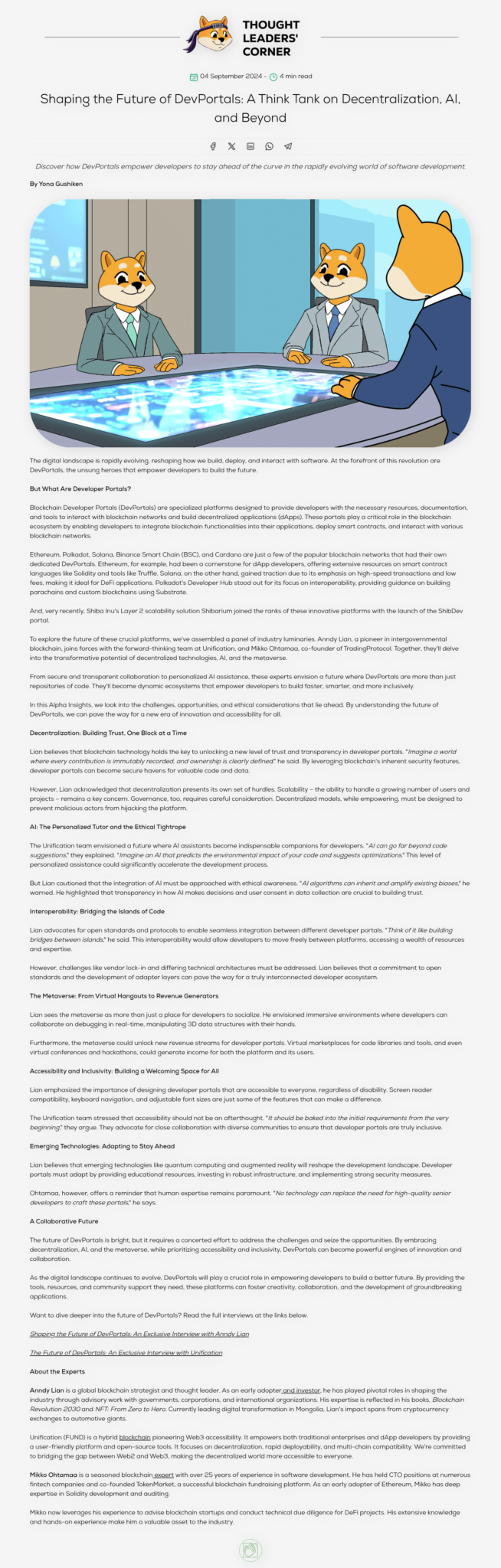
Anndy Lian is an early blockchain adopter and experienced serial entrepreneur who is known for his work in the government sector. He is a best selling book author- “NFT: From Zero to Hero” and “Blockchain Revolution 2030”.

Currently, he is appointed as the Chief Digital Advisor at Mongolia Productivity Organization, championing national digitization. Prior to his current appointments, he was the Chairman of BigONE Exchange, a global top 30 ranked crypto spot exchange and was also the Advisory Board Member for Hyundai DAC, the blockchain arm of South Korea’s largest car manufacturer Hyundai Motor Group. Lian played a pivotal role as the Blockchain Advisor for Asian Productivity Organisation (APO), an intergovernmental organization committed to improving productivity in the Asia-Pacific region.

An avid supporter of incubating start-ups, Anndy has also been a private investor for the past eight years. With a growth investment mindset, Anndy strategically demonstrates this in the companies he chooses to be involved with. He believes that what he is doing through blockchain technology currently will revolutionise and redefine traditional businesses. He also believes that the blockchain industry has to be “redecentralised”.

j j j

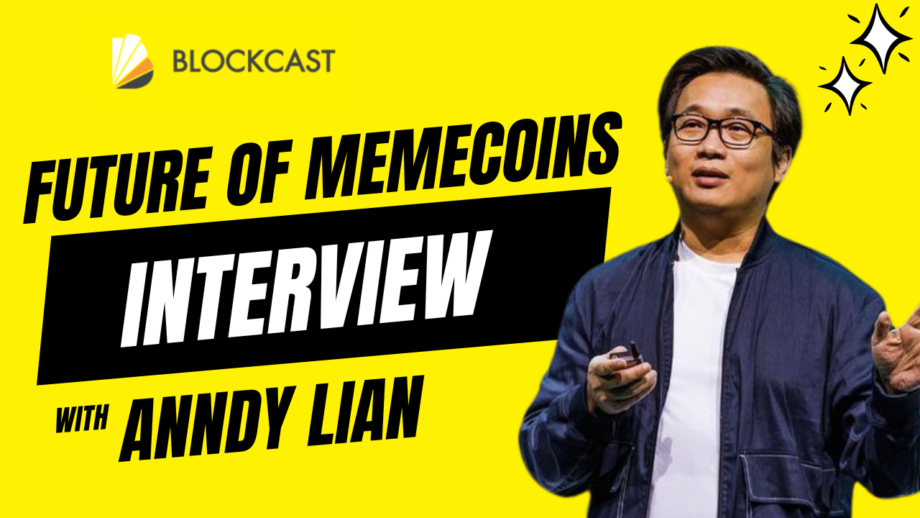
Future of Memecoins: Interview with Anndy Lian

Future of Memecoins: Interview with Anndy Lian

Part 1: Memecoins, Expertise, and Paradox

Question: Good to see you in Seoul at the event organized by Memecore. Anndy, you’re a respected figure in the blockchain space, advising governments and traditional finance. Many might find your enthusiasm for memecoins surprising. What clicked for you? When did you realize this wasn’t just a passing fad?

Answer: I’ll admit, I was skeptical at first. Memecoins seemed like a joke, a flash in the pan. But then I witnessed the sheer energy of these communities, their global reach, their ability to mobilize resources at an astonishing speed. It reminded me of the early internet – chaotic, yes, but also full of raw potential. That’s when it clicked: this wasn’t just about the technology, it was about the people. Memecoins tap into something primal – our desire to belong, to be part of something bigger. That’s powerful, and it’s what drives real adoption.

Question: Your book, “Blockchain Revolution 2030,” paints a picture of blockchain’s vast potential. Where do memecoins fit into this grand vision? How can they contribute to serious real-world adoption?

Answer: For blockchain to truly revolutionize the world, it needs mass adoption. And that’s where memecoins, despite the criticism, play a crucial role. They act as a gateway, making crypto less intimidating and more accessible to the average person. People are drawn in by the humor, the community, the sense of belonging.  Then, curiosity kicks in. They start exploring other aspects of blockchain – DeFi, NFTs, DAOs – and suddenly, this complex technology becomes less daunting.  This is how we bridge the gap between the crypto-savvy and the crypto-curious, paving the way for a truly inclusive financial future.

Question: Critics argue memecoins are purely speculative, lacking the utility of other crypto projects. As someone who analyzes blockchain from a technical and financial standpoint, what potential do you see in memecoins beyond speculation?

Answer: It’s true that speculation is a factor, especially in the early stages. But to dismiss memecoins entirely is to miss the forest for the trees. These communities are incredibly self-organizing, capable of rapid fundraising and decision-making. They’re passionate, engaged, and eager to build. That’s a powerful foundation for developing real-world applications.  Imagine memecoins powering decentralized social platforms, rewarding content creators, facilitating micro-transactions in developing economies.  We’re already seeing glimpses of this future. The key is to harness the energy of these communities and channel it towards building tangible solutions.

Question: Regulation is coming to the crypto wild west. Do you think this will help or hinder memecoins? What kind of regulatory approach would allow them to thrive while protecting investors?

Answer: Regulation is inevitable, and frankly, necessary for the long-term health of the crypto space. The key is to strike a balance between protecting investors and fostering innovation.  We need clear guidelines on token issuance, community governance, and responsible disclosure.  This will weed out scams and rug pulls, building trust and legitimacy for the entire industry.  At the same time, regulators need to be mindful of stifling creativity.  A collaborative approach, involving both policymakers and industry experts, is crucial to creating a regulatory framework that allows memecoins and the broader crypto ecosystem to thrive.

Question: You’re a fund manager. Would you ever consider a memecoin-focused fund? What would make a memecoin project investment-worthy in your eyes?

Answer: As a fund manager, my priority is identifying projects with strong fundamentals, regardless of the label attached to them. A memecoin, despite its often whimsical origins, is not inherently off-limits.  I look for projects with a clear roadmap, active development, a passionate and engaged community, and most importantly, a genuine use case beyond speculation.  Does the project solve a real-world problem? Does it offer a unique value proposition?  These are the questions I ask myself.  If a memecoin project ticks all the boxes, then yes, it would definitely be worth considering for investment.


Part 2: Community and Global Impact

Question: You’ve said community is the strongest asset of memecoins. Why is this sense of community so powerful, especially in the context of crypto?

Answer: Humans are social creatures. We crave connection, belonging, a sense of shared purpose. Memecoins, perhaps surprisingly, tap into this primal need in a way that few other crypto projects do. They create communities united by humor, shared values, and a desire to be part of something bigger than themselves.  In the decentralized world of crypto, where trust is paramount, this sense of community is incredibly powerful.  It fosters transparency, encourages collaboration, and builds a level of trust that’s difficult to replicate through traditional means.

Question: Memecoins often go viral globally, transcending language barriers. What opportunities does this present for financial inclusion, particularly in regions with limited access to traditional banking?

Answer: One of the most exciting aspects of memecoins is their ability to transcend geographical borders and cultural differences. A meme, by its very nature, is a universal language. This allows memecoin communities to form organically across the globe, connecting people from all walks of life. This has profound implications for financial inclusion.  In many parts of the world, people lack access to basic financial services.  Memecoins, with their low barrier to entry and global reach, offer a potential solution.  They can empower individuals, facilitate cross-border transactions, and provide access to financial tools and services that were previously out of reach.

Question: We’ve seen memecoin communities rally for charitable causes. Is this social impact potential something inherent to memecoins, or is it just a reflection of the internet culture surrounding them?

Answer: The charitable giving we’ve seen from memecoin communities is truly inspiring. I believe it’s a reflection of both the inherent nature of these communities and the broader internet culture they inhabit.  Memecoin communities are often young, digitally native, and acutely aware of social issues. They’re used to mobilizing online for causes they believe in.  This translates into a strong desire to make a positive impact on the world.  We’ve seen incredible fundraising efforts for disaster relief, mental health awareness, environmental causes, and more.  This spirit of generosity and social responsibility is something to be celebrated and nurtured.

Question: What advice would you give to governments or institutions who might be skeptical of the memecoin phenomenon? How can they approach this space with an open mind?

Answer: My advice to governments and institutions is simple: approach memecoins with curiosity, not dismissal. Engage with these communities, listen to their stories, understand their motivations.  Yes, there’s hype, there’s speculation, there are risks involved.  But there’s also genuine enthusiasm, a desire to build something new, and a deep well of creativity.  By working together, by fostering dialogue and collaboration, we can harness this energy to create a more inclusive, innovative, and equitable financial future.  Dismissing memecoins outright would be a missed opportunity.

Question: Looking ahead, what excites you most about the future of memecoins? What role do you see them playing in the next 5-10 years of the blockchain revolution?

Answer: The future of memecoins is brimming with possibilities. What excites me most is their potential for positive disruption.  Imagine memecoins powering micro-economies in developing nations, funding social good initiatives at scale, revolutionizing how we interact with the digital world.  We’re already seeing glimpses of this future – decentralized autonomous organizations (DAOs) governed by memecoin holders, charitable foundations funded by memecoin donations, innovative DeFi applications built on top of memecoin protocols.  We’re just scratching the surface of what’s possible.  The next decade will be a fascinating journey, and I, for one, am incredibly excited to see where the memecoin revolution takes us.

Questions: What are you doing at the event organized by Memecore?

Answer: The short answer is that Memecore is building its own blockchain tailored for meme coins and its community. I am eager to find out more about what they are doing. I will also be moderating 3 panels later at the event. You should stay on too.

Memecore is building its ecosystem and I will assist them in building their ecosystem fund. This is aligned with my aim of building community. I do not have all the information now but I will let you know firsthand once I have them.

Thank you, Anndy! I hope to catch up with you soon. 


Source: https://blockcast.cc/future-of-memecoins-interview-with-anndy-lian/

Anndy Lian is an early blockchain adopter and experienced serial entrepreneur who is known for his work in the government sector. He is a best selling book author- “NFT: From Zero to Hero” and “Blockchain Revolution 2030”.

Currently, he is appointed as the Chief Digital Advisor at Mongolia Productivity Organization, championing national digitization. Prior to his current appointments, he was the Chairman of BigONE Exchange, a global top 30 ranked crypto spot exchange and was also the Advisory Board Member for Hyundai DAC, the blockchain arm of South Korea’s largest car manufacturer Hyundai Motor Group. Lian played a pivotal role as the Blockchain Advisor for Asian Productivity Organisation (APO), an intergovernmental organization committed to improving productivity in the Asia-Pacific region.

An avid supporter of incubating start-ups, Anndy has also been a private investor for the past eight years. With a growth investment mindset, Anndy strategically demonstrates this in the companies he chooses to be involved with. He believes that what he is doing through blockchain technology currently will revolutionise and redefine traditional businesses. He also believes that the blockchain industry has to be “redecentralised”.
j j j

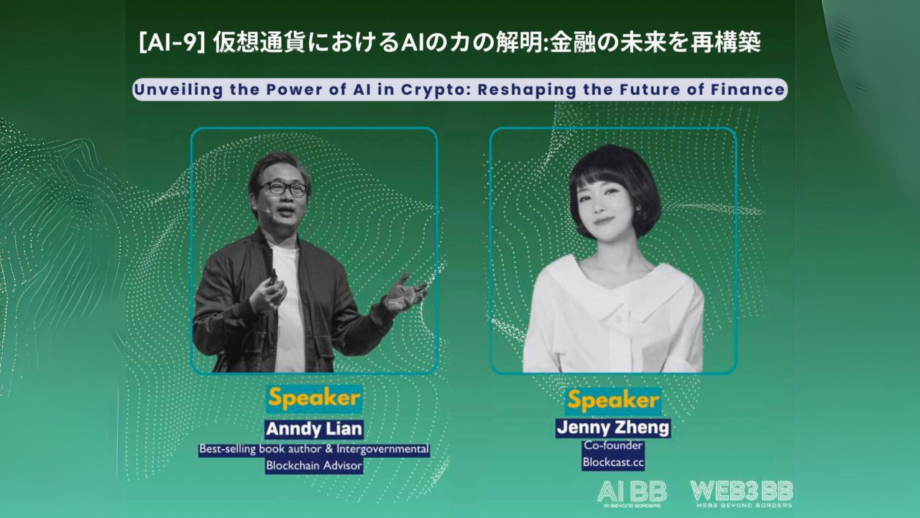
Unveiling the Power of AI in Crypto: Reshaping the Future of Finance at WEB3BB Tokyo 2024

Unveiling the Power of AI in Crypto: Reshaping the Future of Finance at WEB3BB Tokyo 2024

The intersection of artificial intelligence (AI) and cryptocurrency is rapidly becoming one of the most exciting frontiers in the tech world. As both technologies continue to evolve at breakneck speeds, their synergy promises to revolutionize how we interact with digital assets and financial systems.

To explore this cutting-edge convergence, Web3BB, one of Japan’s largest business communities dedicated to bridging global and Japanese perspectives on emerging technologies, recently hosted a panel discussion on “The Power of AI in Crypto.” This event brought together industry luminaries, including Anndy Lian, a book author and venture capitalist, and Jenny Zheng, co-founder of Blockcast.cc. Their insights offer a compelling glimpse into how AI is reshaping the cryptocurrency landscape and what we can expect in the near future.

Beyond Trading: AI’s Broader Impact on Crypto

While trading applications are at the forefront, Anndy emphasized that AI’s potential in the crypto space extends far beyond just price predictions. Some key areas of impact include:

1. Security Enhancement: AI can be used to detect security vulnerabilities in blockchain networks and identify irregular activities or potential threats.

2. Productivity and Automation: AI is helping streamline various processes in the crypto industry, from smart contract development to project auditing.

3. User Experience Improvement: AI assistants are being developed to lower the technical barriers for crypto adoption, helping users navigate complex processes like wallet management and transactions.

4. Code Auditing: Project owners can use AI to analyze smart contracts and identify potential bugs or vulnerabilities, enhancing the overall security of their platforms.

5. Due Diligence: Venture capital firms are leveraging AI models to conduct more thorough and efficient due diligence on crypto projects.

Blockchain as a Secure Foundation for AI

An interesting perspective shared during the panel was how blockchain technology could serve as a secure foundation for AI systems. By storing AI models and data sets on blockchain networks, it adds an extra layer of security and transparency to their AI operations.

This integration of blockchain and AI is becoming increasingly seamless. As Anndy noted, “Nowadays there are fewer people talking about blockchain… because it’s really very well integrated into different systems.” He predicts that the combination of AI and blockchain will soon become so commonplace that it will no longer be considered newsworthy.

Ethical Considerations and Risk Mitigation

The panel also touched on the ethical implications of AI in the crypto space. Jennty commented that while AI offers numerous benefits, there are concerns about potential misuse or unintended consequences. The experts suggested that blockchain technology could play a role in governing AI systems, potentially serving as a failsafe mechanism.

For example, smart contracts could be programmed to automatically limit or shut down AI systems if certain conditions are met, providing a decentralized and tamper-resistant way to mitigate risks associated with AI.

Looking Ahead: The Future of AI in Crypto

As the discussion concluded, the panelists emphasized the transformative potential of AI in the crypto industry. They encouraged users to embrace AI tools to enhance their decision-making processes, while also maintaining a balanced perspective on the technology’s capabilities and limitations.

Anndy’s final advice to the audience was clear: “Try to use smarter tools to get by your days… AI has a lot to do to help you with your whole decision-making process. Just try to use it.”

As AI continues to evolve and integrate more deeply with blockchain and cryptocurrency systems, we can expect to see even more innovative applications emerge. From more sophisticated trading algorithms to enhanced security measures and improved user experiences, AI is set to play a crucial role in shaping the future of the crypto industry.

Conclusion

The key for users and industry participants will be to stay informed about these developments, critically evaluate AI tools, and leverage them responsibly to navigate the complex and fast-paced world of cryptocurrencies.

As with any powerful technology, the responsible development and deployment of AI in the crypto space will be crucial. The ethical considerations and risk mitigation strategies discussed by the panelists underscore the need for a balanced approach. As we move forward, it will be essential for industry players, regulators, and users alike to stay informed and engaged in shaping the future of AI in crypto.

Anndy Lian is an early blockchain adopter and experienced serial entrepreneur who is known for his work in the government sector. He is a best selling book author- “NFT: From Zero to Hero” and “Blockchain Revolution 2030”.

Currently, he is appointed as the Chief Digital Advisor at Mongolia Productivity Organization, championing national digitization. Prior to his current appointments, he was the Chairman of BigONE Exchange, a global top 30 ranked crypto spot exchange and was also the Advisory Board Member for Hyundai DAC, the blockchain arm of South Korea’s largest car manufacturer Hyundai Motor Group. Lian played a pivotal role as the Blockchain Advisor for Asian Productivity Organisation (APO), an intergovernmental organization committed to improving productivity in the Asia-Pacific region.

An avid supporter of incubating start-ups, Anndy has also been a private investor for the past eight years. With a growth investment mindset, Anndy strategically demonstrates this in the companies he chooses to be involved with. He believes that what he is doing through blockchain technology currently will revolutionise and redefine traditional businesses. He also believes that the blockchain industry has to be “redecentralised”.

j j j