The Bright Future of Crypto: Anndy Lian’s Predictions for 2030

The Bright Future of Crypto: Anndy Lian’s Predictions for 2030

The year 2030 marks a pivotal era in finance where cryptocurrencies, once considered on the fringe and associated with speculation, have now become an integral part of the global economy.

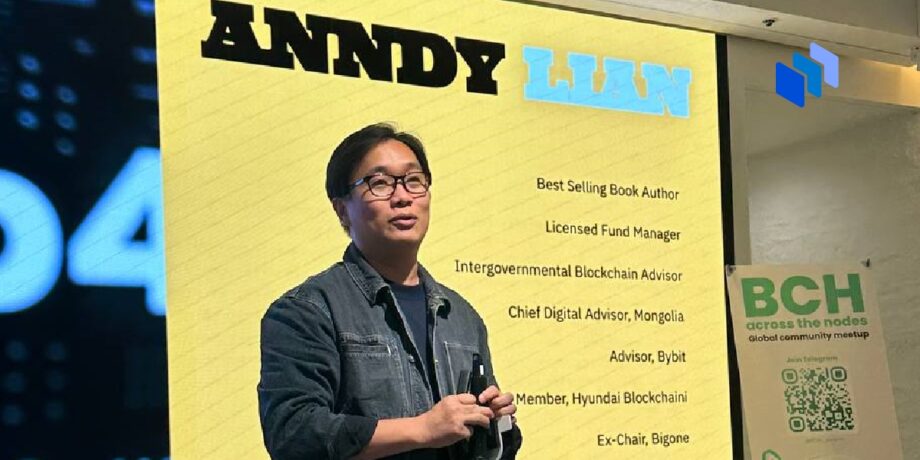
That’s the view of Anndy Lian, who illuminated the factors that propelled this rapid surge in crypto’s acceptance in his enlightening closing speech at the Bitcoin Cash (BCH) Seoul Meetup. As we delve into the future, what obstacles and opportunities are expected to shape the trajectory of the crypto industry and its users?

The Surge in Cryptocurrency Adoption

Blockchain, the pioneering backbone of cryptocurrencies, has revolutionized how transactions are recorded and managed. Its innovative distributed ledger system stands as the linchpin behind the widespread adoption of cryptocurrencies. This groundbreaking technology securely logs transactions in an unchangeable, transparent manner, facilitating direct peer-to-peer exchanges without intermediaries. By bypassing middlemen, blockchain significantly reduces transaction costs and friction, ultimately enhancing efficiency and fostering greater trust among participants.

The evolution of blockchain technology has given rise to a rich array of crypto assets that extend far beyond just Bitcoin (BTC) and Ethereum (ETH). This spectrum includes stablecoins, utility tokens, security tokens, and non-fungible tokens, each designed with distinct functionalities. These assets serve a multitude of purposes, ranging from acting as a secure store of value to enabling seamless exchanges of digital assets, representing tangible real-world assets in a digital format, granting access to decentralized applications (DApps), and enabling ownership of unique digital collectibles.

Forecasts from a comprehensive study conducted by Grand View Research, Inc. paint a compelling picture of the future trajectory of the global cryptocurrency market. The study predicts that by 2030, the market is poised to burgeon to an impressive USD 4,600 billion. This anticipated growth reflects a robust annual expansion rate of 7.1% from 2021 to 2030.

Escalating demands from both retail and institutional investors drive such exponential growth. Additionally, the integration of blockchain technology across a diverse spectrum of industries plays a pivotal role in transforming how businesses operate and transactions are conducted.

Furthermore, the backing of supportive regulations in specific nations contributes significantly to this upward surge, fostering an environment conducive to the flourishing of cryptocurrencies and their associated technologies.

Rising Popularity and Mainstream Embrace

The rise in awareness and understanding among the general populace stands as a pivotal driver behind the soaring popularity of cryptocurrencies. More and more individuals are gaining insights into the potential advantages that cryptocurrencies offer, including their role in fostering financial inclusivity, empowerment, privacy, and autonomy. This increasing knowledge has propelled the uptake of cryptocurrencies.

The availability of diverse platforms and services has played a crucial role in expediting the adoption of cryptocurrencies. These platforms encompass exchanges facilitating crypto trading, wallets for securely storing digital assets, and lending platforms offering innovative financial services within the crypto sphere. Their widespread availability has simplified access for newcomers and seasoned users alike, fueling the growth of cryptocurrency adoption on a global scale.

Forecasts by some analysts, such as Boston Consulting Group (BCG), Bitget, and Foresight Ventures, present an astonishing forecast: surpassing one billion crypto users by 2030. This exponential surge is fueled by a historic growth rate of 63.2% annually.

A multitude of factors contribute to this anticipated surge in crypto users. Notably, the expanding reach and influence of flagship cryptocurrencies like Bitcoin and Ethereum, the emergence of groundbreaking trends like decentralized finance (DeFi) and non-fungible tokens (NFTs), institutional involvement through specialized crypto products, and endorsements by influential personalities collectively drive the mass adoption of cryptocurrencies.

These factors, coupled with the continuous evolution and innovation within the crypto space, are poised to reshape the financial landscape and solidify cryptocurrencies’ position as a mainstream and transformative force in the global economy.

Decentralization: Pillar of Web3

Decentralization serves as the fundamental and revolutionary aspect of cryptocurrencies, defining a system where control isn’t centralized but shared among participants. This concept applies to networks, protocols, or data structures where power and accountability are distributed. It encourages collaboration through consensus mechanisms and economic models that reward cooperative actions.

At the heart of Web3 lies the vision for a next-generation internet constructed upon blockchain and related distributed technologies. Decentralization within Web3 aims to create a more open, fair, and democratic web environment. In this paradigm, users gain increased control and ownership over their data, identity, and digital assets. This shift in power dynamics allows individuals to have a greater say in how their information is used and shared.

Web3’s impact extends beyond mere ownership; it facilitates the development of decentralized applications (DApps), which operate on distributed networks, ensuring greater transparency and security. Smart contracts, encoded within these networks, execute predefined actions autonomously based on predefined conditions, fostering trustless and transparent transactions.

Governance mechanisms within Web3 enable decentralized decision-making processes, allowing stakeholders to actively participate in the management and evolution of the network or platform. Furthermore, the rise of decentralized finance within Web3 has disrupted traditional financial systems, providing innovative and accessible financial services without the need for intermediaries.

Looking ahead, the evolution into Web4 is envisioned, aiming to integrate the physical and digital realms more seamlessly. This next evolution would merge technologies such as artificial intelligence (AI), virtual reality (VR), and the Internet of Things (IoT) into a cohesive ecosystem, further blurring the boundaries between the physical and digital worlds.

The underlying premise of decentralization within Web3 paves the way for a future where users have increased sovereignty over their digital lives, fostering a more transparent, inclusive, and interconnected global landscape.

Challenges and Opportunities Ahead

Despite significant advancements, the landscape of cryptocurrencies faces persistent challenges. The lack of clear regulations across different regions poses substantial risks and obstacles for users, developers, and businesses involved in the crypto space. Additionally, ensuring the robust security and scalability of crypto networks remains a top priority, especially considering the intricate technical intricacies involved.

Addressing these challenges also involves bridging educational gaps and streamlining adoption processes, which are crucial components for realizing the full potential of cryptocurrencies. Simplifying the understanding of cryptocurrencies and their usage can significantly contribute to their widespread acceptance and integration into mainstream use.

Amidst these hurdles, numerous opportunities arise. The collaborative spirit and innovative drive within the crypto community continue to foster groundbreaking advancements and enhance accessibility. This collective creativity holds the potential to empower individuals who are unbanked or marginalized, providing them with access to financial services and opportunities previously unavailable to them.

The transformative impact of cryptocurrencies extends beyond just finance, permeating various industries. Cryptocurrencies have the potential to disrupt traditional models, offering novel solutions that are peer-to-peer and decentralized. These alternatives challenge existing norms, creating avenues for more inclusive, transparent, and equitable systems across different sectors.

The Bottom Line

Cryptocurrency transcends its technical aspects; it symbolizes a movement advocating for transparency, fairness, and democracy. It embodies a cultural shift fostering innovation, collaboration, and diversity. Envisioning a future where everyone has equal access to and benefits from the digital economy is at the core of this vision.

Looking ahead to 2030, one can anticipate crypto’s continued growth, evolution, and the navigation of new challenges and prospects. Its impact will endure, shaping not only the future of currency but also becoming a cornerstone in shaping finance, the web, and the global landscape as a whole.


Source: https://www.techopedia.com/anndy-lian-looking-ahead-to-cryptos-future-in-2030
Anndy Lian is an early blockchain adopter and experienced serial entrepreneur who is known for his work in the government sector. He is a best selling book author- “NFT: From Zero to Hero” and “Blockchain Revolution 2030”.

Currently, he is appointed as the Chief Digital Advisor at Mongolia Productivity Organization, championing national digitization. Prior to his current appointments, he was the Chairman of BigONE Exchange, a global top 30 ranked crypto spot exchange and was also the Advisory Board Member for Hyundai DAC, the blockchain arm of South Korea’s largest car manufacturer Hyundai Motor Group. Lian played a pivotal role as the Blockchain Advisor for Asian Productivity Organisation (APO), an intergovernmental organization committed to improving productivity in the Asia-Pacific region.

An avid supporter of incubating start-ups, Anndy has also been a private investor for the past eight years. With a growth investment mindset, Anndy strategically demonstrates this in the companies he chooses to be involved with. He believes that what he is doing through blockchain technology currently will revolutionise and redefine traditional businesses. He also believes that the blockchain industry has to be “redecentralised”.

j j j

Looking ahead 2030 – How crypto will shape the future of finance

Looking ahead 2030 – How crypto will shape the future of finance

The year is 2030. The world has changed dramatically in the past decade, especially in the field of finance. Cryptocurrencies, once considered a niche and speculative asset class, have become mainstream and widely adopted by millions of people around the world. What are the factors that have contributed to this rapid growth and popularity of crypto? And what are the challenges and opportunities that lie ahead for the crypto industry and its users?

One of the main drivers of crypto adoption is the innovation and development of the underlying technology, blockchain. Blockchain is a distributed ledger that records transactions in a secure, transparent, and immutable way. It enables peer-to-peer transactions without intermediaries, reduces costs and friction, and enhances efficiency and trust.

Blockchain has enabled the creation and proliferation of various types of crypto assets, such as Bitcoin, Ethereum, stablecoins, utility tokens, security tokens, non-fungible tokens (NFTs), and more. These assets have different use cases and value propositions, such as store of value, medium of exchange, digital representation of real-world assets, access to decentralized applications (DApps), and ownership of digital collectibles.

According to a study conducted by Grand View Research, Inc., the global cryptocurrency market size is expected to reach USD 11.71 billion by 2030, expanding at a compound annual growth rate (CAGR) of 7.1% from 2021 to 2030. The study attributes this growth to the increasing demand for crypto assets among retail and institutional investors, the growing adoption of blockchain technology in various sectors, and the supportive regulatory environment in some countries.

Popularity and Mainstream Adoption

Another factor that has boosted crypto adoption is the increasing awareness and education among the general public. More people are becoming familiar with the benefits and potential of crypto, such as financial inclusion, empowerment, privacy, and sovereignty. Crypto adoption is also facilitated by the availability and accessibility of various platforms and services, such as exchanges, wallets, payment processors, lending platforms, and more.

According to a report on Github, it is estimated that the number of crypto users will reach one billion by 2030, based on a historical growth rate of 63.2% per year. The report also identifies the key drivers of crypto adoption, such as the growth of Bitcoin and Ethereum, the emergence of DeFi and NFTs, the launch of institutional products and services, and the endorsement of celebrities and influencers.

Decentralization: The Core of Web3

One of the most significant and revolutionary aspects of crypto is decentralization. Decentralization means that no single entity or authority controls or governs the network, the protocol, or the data. Instead, the power and responsibility are distributed among the participants, who are incentivized to cooperate and coordinate through consensus mechanisms and economic models.

Decentralization is the core of Web3, the next generation of the internet that is built on blockchain and other distributed technologies. Web3 aims to create a more open, fair, and democratic web, where users have more control and ownership over their data, identity, and digital assets. Web3 also enables the development of new types of applications and services that are decentralized, peer-to-peer, and censorship-resistant.

Some of the examples of Web3 applications and services are:

  • Decentralized Applications (DApps): These are applications that run on a decentralized network, such as Ethereum, and use smart contracts to execute logic and transactions. DApps can provide various functions and features, such as gaming, social media, e-commerce, and more.
  • Smart Contracts: These are self-executing contracts that are encoded on the blockchain and perform actions based on predefined rules and conditions. Smart contracts can facilitate trustless and transparent transactions, such as escrow, swaps, and auctions.
  • Governance and DAOs: These are mechanisms and organizations that enable the collective decision-making and management of a network, a protocol, or a project. Governance and DAOs allow the stakeholders to propose, vote, and implement changes and improvements, such as upgrades, parameters, and policies.
  • DeFi: This is a term that refers to the decentralized and open financial system that is enabled by blockchain and smart contracts. DeFi aims to provide alternative and innovative financial services and products, such as lending, borrowing, trading, investing, and saving, without intermediaries or intermediaries.
  • Web4: This is a term that refers to the future evolution of the web, where the physical and digital worlds are integrated and augmented by technologies such as artificial intelligence, virtual reality, and the internet of things. Web4 will enable new forms of interaction, communication, and expression, such as immersive experiences, holograms, and avatars.

Challenges and Opportunities

Despite the remarkable progress and potential of crypto, there are still many challenges and uncertainties that need to be addressed and overcome. Some of the main challenges are:

  • Regulation and Compliance: The legal and regulatory status of crypto varies widely across different jurisdictions and regions. Some countries have adopted a friendly and supportive approach, while others have imposed bans or restrictions. The lack of clarity and consistency in regulation and compliance can pose risks and barriers for crypto users, developers, and businesses.
  • Security and Scalability: The security and scalability of crypto networks and platforms are essential for ensuring the reliability, performance, and user experience of crypto. However, there are still many technical and operational challenges and trade-offs that need to be solved and optimized, such as network congestion, high fees, hacking attacks, and human errors.
  • Education and Adoption: The education and adoption of crypto are crucial for achieving the vision and mission of crypto. However, there are still many gaps and obstacles that need to be bridged and overcome, such as the lack of awareness, understanding, and trust, the complexity and usability of crypto, and the resistance and inertia of the incumbents and the status quo.

On the other hand, there are also many opportunities and possibilities that crypto can offer and explore. Some of the main opportunities are:

  • Innovation and Development: The innovation and development of crypto are driven by the creativity and collaboration of the crypto community, which consists of diverse and talented individuals and groups from various backgrounds and disciplines. The crypto community is constantly experimenting and iterating on new ideas and solutions, such as layer-2 protocols, interoperability standards, and privacy-enhancing technologies.
  • Inclusion and Empowerment: The inclusion and empowerment of crypto are enabled by the accessibility and affordability of crypto, which can reach and serve anyone with an internet connection and a smartphone. Crypto can provide financial and social inclusion and empowerment to the unbanked and underbanked, the marginalized and oppressed, and the aspiring and ambitious.
  • Transformation and Disruption: The transformation and disruption of crypto are manifested by the impact and influence of crypto on various sectors and industries, such as finance, media, art, and gaming. Crypto can transform and disrupt the existing models and paradigms, such as intermediation, centralization, and monetization, and create new and better alternatives, such as peer-to-peer, decentralized, and tokenized.

Conclusion

Crypto is not just a technology, a currency, or an asset. It is a movement, a culture, and a vision. It is a movement that aims to create a more open, fair, and democratic world. It is a culture that values innovation, collaboration, and diversity. It is a vision that imagines a future where everyone can participate, contribute, and benefit from the digital economy.

As we look ahead to 2030, we can expect crypto to continue to grow, evolve, and mature, and to face new challenges and opportunities. We can also expect crypto to shape the future of finance, and beyond. Crypto is not only the future of money, but also the future of the web, and the future of the world.


Source: https://www.financialexpress.com/business/digital-transformation-looking-ahead-2030-how-crypto-will-shape-the-future-of-finance-3310083/

Anndy Lian is an early blockchain adopter and experienced serial entrepreneur who is known for his work in the government sector. He is a best selling book author- “NFT: From Zero to Hero” and “Blockchain Revolution 2030”.

Currently, he is appointed as the Chief Digital Advisor at Mongolia Productivity Organization, championing national digitization. Prior to his current appointments, he was the Chairman of BigONE Exchange, a global top 30 ranked crypto spot exchange and was also the Advisory Board Member for Hyundai DAC, the blockchain arm of South Korea’s largest car manufacturer Hyundai Motor Group. Lian played a pivotal role as the Blockchain Advisor for Asian Productivity Organisation (APO), an intergovernmental organization committed to improving productivity in the Asia-Pacific region.

An avid supporter of incubating start-ups, Anndy has also been a private investor for the past eight years. With a growth investment mindset, Anndy strategically demonstrates this in the companies he chooses to be involved with. He believes that what he is doing through blockchain technology currently will revolutionise and redefine traditional businesses. He also believes that the blockchain industry has to be “redecentralised”.

j j j

Why regulated decentralized exchanges are the wave of crypto trading’s future

Why regulated decentralized exchanges are the wave of crypto trading’s future

The world of cryptocurrency trading is undergoing a profound metamorphosis, fueled by a growing wave of investors seeking alternatives to the well-established centralized exchanges (CEXs) that have long reigned supreme. These CEXs have traditionally acted as intermediaries, facilitating transactions between buyers and sellers of digital currencies like Bitcoin and Ethereum. While CEXs offer certain advantages such as liquidity, convenience and security, they also carry significant downsides, including hefty fees and privacy concerns as well as susceptibility to hacking and fraud.

Rise of decentralized crypto trading

Crypto’s shifting landscape has propelled decentralized exchanges (DEXs) into the limelight. DEXs are platforms that empower users to engage in direct peer-to-peer trading of crypto assets, eliminating the need for intermediaries. Harnessing the power of blockchain or distributed ledger technology, DEXs introduce a range of advantages over their centralized counterparts, including:

1. Lower fees: DEXs typically impose more favorable fee structures than CEXs, which often burden users with high commissions, spreads and withdrawal charges.

2. Enhanced privacy: Unlike CEXs, which demand personal information and identity verification, DEXs operate with greater privacy, sidestepping anti-money laundering (AML) and know-your-customer (KYC) regulations.

3. Greater control: DEXs empower users by allowing them to maintain full control over their crypto assets and private keys, unlike CEXs that hold users’ funds in their own wallets or custodial services.

4. Fostering innovation: DEXs provide access to a broader spectrum of crypto assets and services, including lending, borrowing, staking, yield farming, non-fungible tokens (NFTs) and more.

Nonetheless, decentralized exchanges grapple with their own set of challenges, such as:

1. Limited liquidity: DEXs often face lower trading volumes and liquidity compared to CEXs, resulting in higher price slippage and longer transaction processing times.

2. Increased complexity: DEXs may require users to possess a higher degree of technical expertise compared to CEXs, potentially discouraging novice or casual traders.

3. Security concerns: DEXs are not immune to cyberattacks or technical glitches, posing risks to the platform’s integrity and the functionality of underlying smart contracts.

4. Regulatory uncertainty: Operating within a legal gray area, DEXs often lack clear definitions or regulations in most jurisdictions, raising questions about their compliance.

The birth of RDEXs

Is it possible to marry the strengths of centralized exchanges and decentralized exchanges? Can we envision a decentralized exchange that adheres to regulatory standards? The answer is affirmative. Enter the regulated decentralized exchange (RDEX). An RDEX allows users to engage in direct crypto asset trading while adhering to relevant laws and regulations in its jurisdiction of operation. It preserves the fundamental tenets of decentralization — transparency, immutability and censorship resistance — while bolstering them with legitimacy, accountability and security.

So, how does an RDEX function? It achieves this delicate balance by incorporating a regulatory framework into its protocol design, employing smart contracts to enforce user and transaction rules and standards. For instance, it may mandate user registration with real identities and source of funds verification before permitting trading. It may also impose limits on trade amounts or frequencies and report transactions to authorities for tax and compliance purposes.

Some of them will adopt a hybrid approach, blending on-chain and off-chain components. By leveraging off-chain service providers for KYC/AML checks and liquidity pools, they maintain decentralization and security through cryptographic proofs, ensuring the honesty and integrity of these services.

Value of RDEXs

Why are RDEXs so vital in the crypto space? It presents a pragmatic solution to one of the crypto industry’s foremost challenges: regulation. As governments and regulators worldwide grow increasingly concerned about the economic and societal implications of crypto activities, regulation becomes inevitable. While constructive regulation can offer clarity, security and recognition, excessive restrictions can stifle innovation and growth.

RDEXs can serve as a bridge between the crypto industry and regulators. They demonstrate that crypto activities can be conducted in a responsible, compliant and transparent manner, preserving decentralization’s core values. By fostering trust among users, investors and authorities, RDEXs mitigate the risks of fraud, manipulation and abuse.

Moreover, RDEXs empower the future of decentralized trading by granting access to a broader array of crypto assets and services. These include the trading of security tokens, which represent real-world assets like stocks, bonds, real estate or art. While security tokens promise to revolutionize the financial industry, their strict regulations demand compliant platforms, which RDEXs can provide.

Central bank digital currencies (CBDCs) are another facet of the crypto landscape that RDEXs can facilitate. CBDCs, digital versions of fiat currencies issued by central banks, promise faster, cheaper and more secure transactions but pose unique challenges for the crypto industry. It can integrate CBDCs with other crypto assets and services, ensuring privacy, interoperability and competition.

RDEXs in action

RDEXs are not just theoretical concepts; they are tangible realities. Projects like eToroX, backed by eToro and licensed by the Gibraltar Financial Services Commission, is an example of the RDEX in action — enabling users to trade crypto assets, including security tokens and stablecoins pegged to fiat currencies while adhering to regulatory frameworks.

Injective Protocol, supported by Binance, another major player in the crypto space, offers a layer-2 DEX built on Ethereum. It facilitates the trading of crypto assets, including derivatives, futures, options and synthetics, and collaborates with central banks on CBDC integration.

Projects like Bitverse, supported by Bybit and the Mantle Network, are pioneering a credit rating system. This system allows users to leverage their crypto assets and reputation to access a range of financial services and products in the Web3 space. Regulators could explore such platforms to verify user creditworthiness, both on and off-chain. (I do not have any ties to any of the projects or companies mentioned in this piece.)

On the horizon

In summary, RDEXs represent a new breed of decentralized exchanges that adhere to regulation. They bridge the gap between the crypto industry and regulators, providing platforms that cater to both sides’ needs. It unlocks access to a broader spectrum of crypto assets and services, empowering the future of decentralized trading.

However, RDEXs are not the final destination of crypto’s evolution. Numerous challenges and questions remain, including those related to interoperability, scalability, security and the ever-growing complexity of crypto assets and services.

Furthermore, the crypto industry continues to dream beyond RDEXs. Web 4.0, the hypothetical next chapter of the internet, hints at an even more immersive, intuitive and intelligent way of interacting with information and value in the most decentralization manner governed by artificial intelligence may be the way forward. While Web4 remains speculative, it underscores the crypto industry’s relentless pursuit of innovation, openness, fairness and decentralization. This concept also works well with RDEXs, where no single person is running the exchange, it is run by codes and AI.

The crypto industry’s evolution is far from over, with more innovative solutions and revolutionary ideas on the horizon, all aimed at shaping a more decentralized future.


Source: https://finance.yahoo.com/news/why-regulated-decentralized-exchanges-wave-090100997.html

Anndy Lian is an early blockchain adopter and experienced serial entrepreneur who is known for his work in the government sector. He is a best selling book author- “NFT: From Zero to Hero” and “Blockchain Revolution 2030”.

Currently, he is appointed as the Chief Digital Advisor at Mongolia Productivity Organization, championing national digitization. Prior to his current appointments, he was the Chairman of BigONE Exchange, a global top 30 ranked crypto spot exchange and was also the Advisory Board Member for Hyundai DAC, the blockchain arm of South Korea’s largest car manufacturer Hyundai Motor Group. Lian played a pivotal role as the Blockchain Advisor for Asian Productivity Organisation (APO), an intergovernmental organization committed to improving productivity in the Asia-Pacific region.

An avid supporter of incubating start-ups, Anndy has also been a private investor for the past eight years. With a growth investment mindset, Anndy strategically demonstrates this in the companies he chooses to be involved with. He believes that what he is doing through blockchain technology currently will revolutionise and redefine traditional businesses. He also believes that the blockchain industry has to be “redecentralised”.

j j j