Exploring the Future of Privacy-Preserving DeFi: Insights from the DeCC Day X Shielding Summit

Exploring the Future of Privacy-Preserving DeFi: Insights from the DeCC Day X Shielding Summit

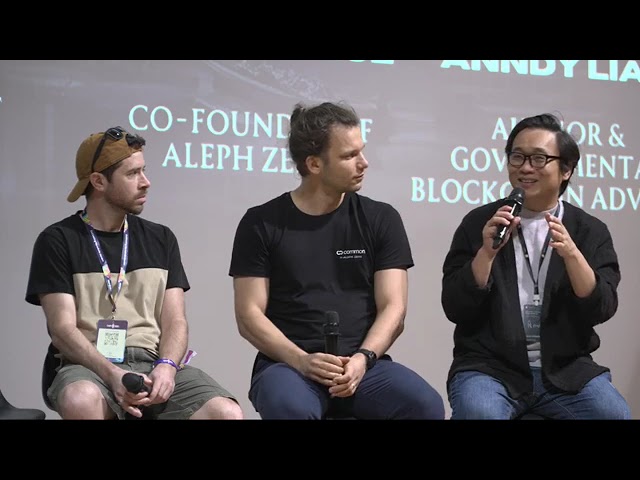
Privacy remains a critical yet challenging frontier. The DeCC Day X Shielding Summit brought together thought leaders and innovators to discuss the current state and future of privacy-preserving DeFi. Moderated by Carter Woetzel of Shade Protocol, the panel featured Supdoggie of SilentSwap, Adam Gagol of Aleph Zero, and intergovernmental expert Anndy Lian. The panel dives into their insights on the importance of privacy in DeFi, the hurdles faced by developers, and the potential pathways to broader adoption.

The Importance of Privacy in DeFi

Privacy in DeFi is not just a feature; it’s a necessity. As Carter Woetzel pointed out, “Privacy and the concept of shielding assets in DeFi have been around for a long time, yet adoption has lagged.” The panelists agreed that privacy is crucial for protecting user data and preventing malicious activities like front-running, where traders exploit transaction information for profit.

Anndy Lian, a governmental blockchain advisor, emphasized the significance of privacy from an investment perspective. “I realized that privacy is really important,” he said, drawing from his experience in the medical field where data breaches are a major concern. Lian’s journey into privacy began with creating a blockchain-based medical record system, highlighting the cross-industry relevance of privacy solutions.

Challenges in Privacy-Preserving DeFi

Despite its importance, privacy in DeFi faces significant challenges. Adam Gagol of Aleph Zero noted, “Right now, it has terrible user experience because the proof generation times are over 10 seconds for most products.” This technical hurdle, coupled with the complexity of privacy protocols, deters users who are accustomed to more straightforward financial interactions.

Regulatory barriers also play a significant role in stifling adoption. Supdoggie pointed out that “the biggest problem is regulation,” citing the example of Tornado Cash, a privacy tool classified as a mixer and banned in many jurisdictions. This regulatory uncertainty creates a hostile environment for privacy-focused projects, limiting their growth and accessibility.

Overcoming the Hurdles

To overcome these challenges, the panelists discussed several strategies. Improving user experience is paramount. As Adam Gagol mentioned, “We’re trying to build a wallet that looks like a regular wallet so that you don’t immediately even notice that this is a private wallet.” By simplifying the user interface and reducing the complexity of privacy features, developers can make privacy-preserving DeFi more accessible to the average user.

Another approach is to address liquidity issues. Supdoggie explained that SilentSwap is tackling this by “borrowing liquidity from public blockchains but transacting or swapping privately.” This innovative method allows users to benefit from the liquidity of public networks while maintaining privacy.

The Path to Adoption

The path to widespread adoption of privacy-preserving DeFi involves not only technical improvements but also strategic marketing and community building. Anndy Lian highlighted the importance of creating demand: “If you don’t have users, you don’t have liquidity. If you don’t have liquidity, you have nothing.” Building a strong community and generating excitement around privacy features are crucial steps toward achieving critical mass.

Carter Woetzel added that the race between privacy-first projects and traditional DeFi platforms integrating privacy features will be pivotal. “The Uniswaps of the world are going to start adding in privacy features,” he noted, suggesting that the first to successfully combine privacy with liquidity and user-friendliness will gain a significant advantage.

The Future of Privacy-Preserving DeFi

Looking ahead, the panelists were optimistic about the future of privacy-preserving DeFi. Adam Gagol predicted that “the proof generation time for the majority of use cases will stop being the topic of conversation because it’s going to be low enough to be actually useful.” As technical barriers diminish, the focus will shift to broader adoption and integration with existing financial systems.

Anndy Lian emphasized the need for collaboration and integration with larger platforms. “Instead of them creating that demand, the real true blue privacy guys should go there and say, ‘Hey, can we integrate? Can we do something together?'” By partnering with established players, privacy-focused projects can leverage existing networks to reach a wider audience.

Conclusion

The DeCC Day X Shielding Summit highlighted both the challenges and opportunities in the realm of privacy-preserving DeFi. As the panelists discussed, the road to adoption is fraught with technical, regulatory, and market challenges. However, with innovative solutions, strategic partnerships, and a focus on user experience, the future of privacy in DeFi looks promising. As Carter Woetzel aptly summarized, “Private DeFi is good. Can we find the demand and do it before someone else integrates privacy with large-scale distribution?” The race is on, and the stakes are high.

Anndy Lian is an early blockchain adopter and experienced serial entrepreneur who is known for his work in the government sector. He is a best selling book author- “NFT: From Zero to Hero” and “Blockchain Revolution 2030”.

Currently, he is appointed as the Chief Digital Advisor at Mongolia Productivity Organization, championing national digitization. Prior to his current appointments, he was the Chairman of BigONE Exchange, a global top 30 ranked crypto spot exchange and was also the Advisory Board Member for Hyundai DAC, the blockchain arm of South Korea’s largest car manufacturer Hyundai Motor Group. Lian played a pivotal role as the Blockchain Advisor for Asian Productivity Organisation (APO), an intergovernmental organization committed to improving productivity in the Asia-Pacific region.

An avid supporter of incubating start-ups, Anndy has also been a private investor for the past eight years. With a growth investment mindset, Anndy strategically demonstrates this in the companies he chooses to be involved with. He believes that what he is doing through blockchain technology currently will revolutionise and redefine traditional businesses. He also believes that the blockchain industry has to be “redecentralised”.


j j j

Exclusive: Anndy Lian Discusses the Future of NFT Bridges

Exclusive: Anndy Lian Discusses the Future of NFT Bridges

Non-Fungible Tokens (NFTs) have exploded in popularity, extending their reach beyond digital art and collectibles into the realms of gaming, the metaverse, and decentralized finance (DeFi). Central to this expansion is the rise of NFT bridges – sophisticated protocols that act as digital conduits, connecting previously isolated blockchain networks and enabling the seamless transfer of NFTs across diverse ecosystems.

As the NFT market continues its meteoric rise, the role of these bridges in shaping the future of this burgeoning industry becomes increasingly critical. However, the path to this interoperable future is not without its challenges. Scalability limitations, security vulnerabilities, and the nascent regulatory landscape surrounding NFT bridges require careful consideration and innovative solutions.

To delve deeper into these complexities and explore the future of NFT bridges, The Shib sought the expertise of Anndy Lian, an internationally recognized blockchain expert and author.

Bridging the Gap: The Role of NFT Bridges in the Blockchain Ecosystem

The Shib: How can NFT bridges address the scalability challenges associated with high-volume  transactions and network congestion, especially when dealing with large-scale NFT collections?

Lian: NFT bridges face a tough challenge when it comes to scalability, especially with the surge in NFT adoption. High transaction volumes and network congestion can lead to slow transaction speeds and exorbitant gas fees, hindering the smooth transfer of NFTs across different blockchains.

To tackle this, NFT bridges can leverage several strategies. One promising approach is integrating layer-2 scaling solutions like optimistic rollups and zk-rollups. By bundling multiple transactions off-chain and settling them on the mainnet in batches, these solutions can drastically reduce gas costs and increase transaction throughput.

Another approach is to optimize the bridge’s underlying architecture for efficiency. This could involve implementing state channels or sidechains to process transactions off the main blockchain, freeing up bandwidth for larger volumes.

Ultimately, a multi-faceted approach combining these technologies will be crucial for NFT bridges to handle the demands of a rapidly growing NFT ecosystem.

Navigating the Challenges: Addressing Scalability, Liquidity, and Security

The Shib: How will NFT bridges impact the liquidity and pricing of NFTs across different blockchain  ecosystems? Could they potentially lead to price arbitrage opportunities or market manipulation?

Lian: NFT bridges have the potential to significantly impact NFT liquidity and pricing by connecting previously isolated marketplaces. This increased interoperability could lead to a more unified and efficient market, where NFTs are priced more consistently across different blockchains.

However, this interconnectedness also introduces the possibility of price arbitrage. Savvy traders could exploit price discrepancies between marketplaces on different chains, buying low on one and selling high on another. While this can enhance market efficiency, it also opens the door for potential market manipulation.

For instance, malicious actors could artificially inflate the price of an NFT on one chain to profit from selling it at an inflated price on another. Therefore, robust monitoring mechanisms and potentially even decentralized governance models will be crucial to mitigate the risks of market manipulation as NFT bridges become more prevalent.

The Shib: What are the emerging regulatory frameworks for NFT bridges, and how can they be  harmonized to promote innovation while ensuring consumer protection?

Lian: There’s a big focus on preventing money laundering, which makes sense since NFT bridges deal with cross-blockchain transactions. We’ll likely see stricter “Know Your Customer” rules and anti-money laundering checks built into these platforms.

Consumer protection is another huge concern. Imagine your precious NFT getting lost or stuck during a transfer – that’s a nightmare! Regulations could require bridge operators to meet certain security standards and maybe even set up ways to handle disputes or offer refunds if something goes wrong.

Then there’s the whole debate about whether some NFTs should be treated like securities. This gets really complex, especially if a bridge starts issuing wrapped tokens or other financial instruments based on NFTs.

The challenge is to create rules that protect people without stifling innovation. It’s going to take a lot of collaboration between governments, industry experts, and even NFT enthusiasts to find the right balance.  Clear guidelines that everyone understands will be key to unlocking the full potential of NFT bridges.

The Shib: What are the potential security vulnerabilities associated with NFT bridges, and how can these risks be mitigated to protect users and their digital assets?

Lian: NFT bridges, while promising, can be a bit like walking across a tightrope with valuable treasures in hand – there’s always a risk involved. One major concern is the security of the bridge’s smart contracts. If there’s a vulnerability in the code, hackers could potentially exploit it to steal NFTs or manipulate transactions. It’s like leaving a backdoor open in your digital art gallery!

Another risk is what’s called a “rug pull,” where a bridge’s developers suddenly disappear with everyone’s funds. It’s like the bridge collapsing just as you reach the other side. To prevent this, it’s crucial to have transparent teams and thoroughly audited code.

Then there’s the challenge of ensuring the bridge itself is resistant to hacks and exploits. This requires robust security measures, like multi-signature wallets and decentralized governance, to prevent any single point of failure.

To protect users, we need a multi-layered approach. Thorough code audits by reputable security firms are essential. Decentralized bridges, where control is distributed rather than centralized, can also reduce risk. And, of course, educating users about potential scams and best practices for securely managing their digital assets is crucial. It’s like wearing a safety harness while walking that tightrope – better to be safe than sorry!

The Future of NFT Bridges: Opportunities and Challenges

The Shib: How can NFT bridges facilitate the development of cross-chain gaming experiences and enhance interoperability between different gaming ecosystems?

Lian: NFT bridges can break down the walls between gaming ecosystems, allowing players to truly own and port their digital assets across different platforms. This opens up a whole new dimension of interoperability and cross-game experiences.

For example, imagine earning a unique NFT weapon in a fantasy RPG and then using that same weapon in a sci-fi shooter game, all thanks to NFT bridges. This interoperability could lead to a more interconnected and immersive gaming metaverse, where players have greater control over their digital identities and possessions.

Moreover, NFT bridges can facilitate the creation of cross-chain gaming economies. Players could potentially earn and trade NFTs across different games, fostering a more vibrant and interconnected gaming ecosystem. This could empower developers to create more engaging and rewarding experiences for players, blurring the lines between gaming platforms and fostering a more unified gaming metaverse.

The future of NFTs is poised for a dramatic expansion, propelled by the transformative potential of NFT bridges. These sophisticated protocols, akin to digital highways connecting previously isolated blockchain islands, promise to revolutionize the way we interact with and trade digital assets. By overcoming scalability hurdles, fostering seamless interoperability, and navigating the evolving regulatory landscape, NFT bridges are poised to unlock a wealth of opportunities for creators, collectors, and businesses alike. As the blockchain ecosystem continues its rapid evolution, NFT bridges will undoubtedly play a central role in shaping a more interconnected and vibrant digital world.

About The Expert

Anndy Lian is a distinguished business strategist and early blockchain adopter in Asia, known for his diverse roles as a serial entrepreneur, author, investor, board member, and keynote speaker. Currently serving as Chief Digital Advisor at the Mongolia Productivity Organization, Anndy is leading national digitization efforts. His previous roles include Chairman of BigONE Exchange and Advisory Board Member for Hyundai DAC. He has also contributed as a Blockchain Advisor to the Asian Productivity Organisation and participated in the Gyeongsangbuk-do Blockchain Special Committee in South Korea. Anndy has authored influential books such as “Blockchain Revolution 2030” and “NFT: From Zero to Hero,” and is a dedicated supporter of start-ups, investing in various ventures to advance blockchain technology and redefine traditional business models.


Source: https://news.shib.io/2024/09/11/exclusive-anndy-lian-discusses-the-future-of-nft-bridges/

Anndy Lian is an early blockchain adopter and experienced serial entrepreneur who is known for his work in the government sector. He is a best selling book author- “NFT: From Zero to Hero” and “Blockchain Revolution 2030”.

Currently, he is appointed as the Chief Digital Advisor at Mongolia Productivity Organization, championing national digitization. Prior to his current appointments, he was the Chairman of BigONE Exchange, a global top 30 ranked crypto spot exchange and was also the Advisory Board Member for Hyundai DAC, the blockchain arm of South Korea’s largest car manufacturer Hyundai Motor Group. Lian played a pivotal role as the Blockchain Advisor for Asian Productivity Organisation (APO), an intergovernmental organization committed to improving productivity in the Asia-Pacific region.

An avid supporter of incubating start-ups, Anndy has also been a private investor for the past eight years. With a growth investment mindset, Anndy strategically demonstrates this in the companies he chooses to be involved with. He believes that what he is doing through blockchain technology currently will revolutionise and redefine traditional businesses. He also believes that the blockchain industry has to be “redecentralised”.

j j j

The Future of NFT Bridges in the Blockchain Ecosystem

The Future of NFT Bridges in the Blockchain Ecosystem

The thriving world of Non-Fungible Tokens (NFTs) is rapidly expanding beyond digital art and collectibles, finding applications in gaming, the metaverse, and decentralized finance (DeFi). A crucial element in this evolution is the emergence of NFT bridges – protocols that enable the seamless transfer of NFTs between different blockchains. These bridges hold the potential to unlock new levels of interoperability and liquidity, but also raise critical questions about scalability, security, and regulation.

To explore the future of NFT bridges and their impact on the blockchain ecosystem, The Shib gathered insights from leading industry experts: Anndy Lian, an intergovernmental blockchain expert and author; Arpan Mondal, MegaVerse Founder and CEO; and Sergey Onyshchenko, co-founder at Blaize.

Scaling the Bridge: Addressing Transaction Volume and Congestion

One of the key challenges facing NFT bridges is the need to handle the increasing volume of transactions and the potential for network congestion, particularly when dealing with large-scale NFT collections.

Lian highlighted the limitations of current blockchain infrastructure and suggested that “NFT bridges face a tough challenge when it comes to scalability, especially with the surge in NFT adoption.” He proposed leveraging layer-2 scaling solutions like optimistic rollups and zk-rollups to address this issue, explaining that these solutions can “drastically reduce gas costs and increase transaction throughput” by bundling transactions off-chain.

Onyshchenko echoed this sentiment, emphasizing the role of bridges in distributing transaction load and “alleviating pressure on individual networks.” Both Onyshchenko and Mondal viewed bridges as essential tools for “expanding the overall capacity of the decentralized ecosystem” and paving the way for broader adoption.

Liquidity and Pricing: Navigating the Arbitrage Landscape

NFT bridges have the potential to significantly impact the liquidity and pricing of NFTs by connecting previously isolated marketplaces.

Lian pointed out that this increased interoperability could lead to a more unified and efficient market, but also cautioned about the risks of price arbitrage and market manipulation. He warned that “savvy traders could exploit price discrepancies between marketplaces on different chains,” potentially leading to artificial price inflation and market instability.

Onyshchenko focused on the benefits of increased market reach, noting that bridges “widen the market for NFTs and provide more flexibility.” Mondal agreed, suggesting that bridges can “unlock trapped assets and inject liquidity into DEXs, fostering efficient price discovery.” He also acknowledged the potential for arbitrage opportunities, stating that bridges “empower nimble players to capitalize on fleeting disparities in rates across the interoperable landscape.”

Regulatory Frameworks: Striking a Balance Between Innovation and Protection

The rapid development of NFT bridges has outpaced the development of clear regulatory frameworks.

Lian emphasized the need for regulations to address concerns around money laundering and consumer protection. He predicted stricter “Know Your Customer” rules and anti-money laundering checks, as well as potential requirements for bridge operators to meet security standards and handle disputes. He also raised the complex issue of whether some NFTs should be treated as securities, particularly when bridges are involved in issuing wrapped tokens or other financial instruments.

While Mondal didn’t delve into specific regulations for NFT bridges, he underscored the importance of regulations for blockchain bridges in general, emphasizing their role in fostering a more “inclusive, efficient, and dynamic blockchain revolution.”

Security Vulnerabilities: Safeguarding Digital Assets

The security of NFT bridges is paramount, as vulnerabilities can expose users and their digital assets to significant risks.

Onyshchenko acknowledged the potential for higher security risks with bridging due to the involvement of additional parties in the transfer process. Mondal highlighted the trade-off between trusted and trustless bridges, suggesting that users must consider their individual needs and risk tolerance when choosing a bridge.

Lian painted a vivid picture of the potential security threats, comparing using an insecure NFT bridge to “walking across a tightrope with valuable treasures in hand.” He warned about the risks of smart contract vulnerabilities, rug pulls, and hacks, emphasizing the need for thorough code audits, decentralized governance, and user education to mitigate these risks.

Cross-Chain Gaming: Unlocking Interoperability and Immersive Experiences

NFT bridges hold immense promise for the future of gaming, particularly in enabling cross-chain gaming experiences and enhancing interoperability between different gaming ecosystems.

Onyshchenko used the example of a user moving assets between Ethereum and Polygon to illustrate the broader potential of bridges for unlocking diverse use cases. Mondal’s insights on liquidity and arbitrage opportunities also apply to the gaming context, suggesting that bridges could facilitate the development of vibrant in-game economies.

Lian envisioned a future where players could seamlessly port their digital assets across different games, creating a more interconnected and immersive gaming metaverse. He highlighted the potential for cross-chain gaming economies, where players can earn and trade NFTs across different games, fostering a more unified and rewarding gaming experience.

Building Bridges to a Decentralized Future

The future of NFT bridges is filled with both promise and challenges. As these protocols mature and evolve, addressing issues of scalability, security, and regulation will be crucial for realizing their full potential. The insights shared by Lian, Mondal, and Onyshchenko provide a valuable framework for understanding the key considerations shaping the development and adoption of NFT bridges.

By fostering collaboration between developers, regulators, and users, the blockchain community can work towards building robust and secure bridges that connect the diverse ecosystems of the decentralized world, unlocking new possibilities for innovation and growth.

To delve deeper into the insights of Anndy Lian, check out the verbatim interview at the link below.

Exclusive: Anndy Lian Discusses the Future of NFT Bridges


Source: https://magazine.shib.io/article/66e1d32a8378350001d69c75#articles-5-edition-41

Anndy Lian is an early blockchain adopter and experienced serial entrepreneur who is known for his work in the government sector. He is a best selling book author- “NFT: From Zero to Hero” and “Blockchain Revolution 2030”.

Currently, he is appointed as the Chief Digital Advisor at Mongolia Productivity Organization, championing national digitization. Prior to his current appointments, he was the Chairman of BigONE Exchange, a global top 30 ranked crypto spot exchange and was also the Advisory Board Member for Hyundai DAC, the blockchain arm of South Korea’s largest car manufacturer Hyundai Motor Group. Lian played a pivotal role as the Blockchain Advisor for Asian Productivity Organisation (APO), an intergovernmental organization committed to improving productivity in the Asia-Pacific region.

An avid supporter of incubating start-ups, Anndy has also been a private investor for the past eight years. With a growth investment mindset, Anndy strategically demonstrates this in the companies he chooses to be involved with. He believes that what he is doing through blockchain technology currently will revolutionise and redefine traditional businesses. He also believes that the blockchain industry has to be “redecentralised”.
j j j