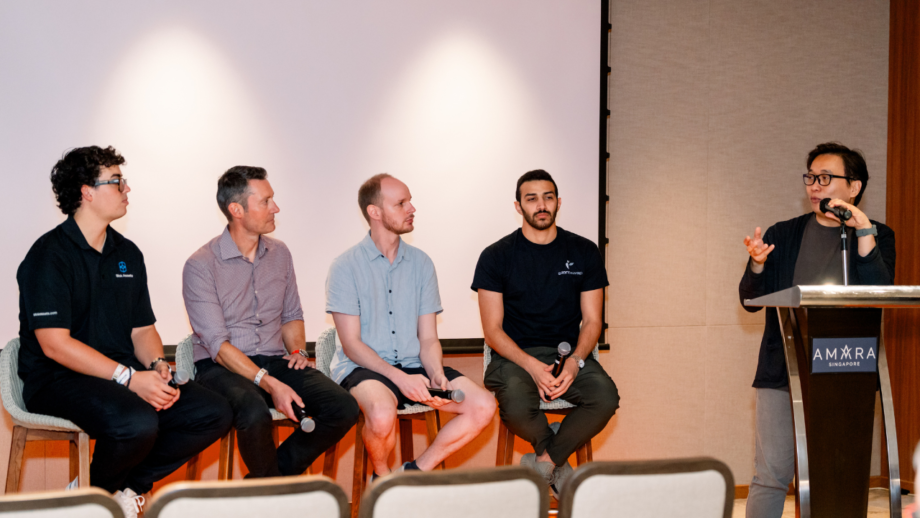
Anndy Lian illustrates how to distinguish between real and fake decentralized projects.
According to Lian, genuine decentralized projects require broad community alignment, including tokenholder votes and open proposals. In contrast, projects claiming decentralization but where founders or VCs retain more than 51% voting power are not truly decentralized.
Lian’s scrutiny of decentralized governance structures aligns with his broader caution on financial transparency, having previously highlighted how inflation can be obscured by expansive money printing. Additionally, his advocacy for practical applications in the crypto sphere was demonstrated through his support for crypto donations to Shanghai animal shelters, underscoring the sector’s potential for real-world impact.
Source: https://tradersunion.com/news/market-voices/show/1319470-decentralized-projects/


Anndy Lian is an early blockchain adopter and experienced serial entrepreneur who is known for his work in the government sector. He is a best selling book author- “NFT: From Zero to Hero” and “Blockchain Revolution 2030”.
Currently, he is appointed as the Chief Digital Advisor at Mongolia Productivity Organization, championing national digitization. Prior to his current appointments, he was the Chairman of BigONE Exchange, a global top 30 ranked crypto spot exchange and was also the Advisory Board Member for Hyundai DAC, the blockchain arm of South Korea’s largest car manufacturer Hyundai Motor Group. Lian played a pivotal role as the Blockchain Advisor for Asian Productivity Organisation (APO), an intergovernmental organization committed to improving productivity in the Asia-Pacific region.
An avid supporter of incubating start-ups, Anndy has also been a private investor for the past eight years. With a growth investment mindset, Anndy strategically demonstrates this in the companies he chooses to be involved with. He believes that what he is doing through blockchain technology currently will revolutionise and redefine traditional businesses. He also believes that the blockchain industry has to be “redecentralised”.