Modern-Day Version of Howey Test For Cryptocurrencies- How Does It Look Like?

Modern-Day Version of Howey Test For Cryptocurrencies- How Does It Look Like?

Howey test, which the Securities and Exchange Commission uses to decide whether a digital asset should be classed as a security, has certain limitations, according to SEC Commissioner Hester Peirce. I can relate to this statement very much. I felt the same way too, especially when they used the same framework for cryptocurrencies. I will walk you through my thoughts on what should the modern-day version look like.

What is Howey Test?

The Howey test is used by the U.S. Securities and Exchange Commission (SEC) to determine whether a particular financial product or transaction qualifies as an “investment contract.” If a product or transaction is deemed to be an investment contract, it is subject to certain regulatory requirements under federal securities laws.

The test is named after the 1946 Supreme Court case SEC v. W.J. Howey Co., in which the Court established a four-part test to determine whether a transaction qualifies as an investment contract:

1.         It involves an investment of money

2.         There is an expectation of profits from the investment

3.         The investment of money is in a common enterprise

4.         Any profit comes from the efforts of a promoter or third party

If all four of these criteria are met, the transaction is considered an investment contract and is subject to regulation as a security.

What is a Security?

Before we look further, let’s look at what is a security. A security is a financial instrument representing an ownership position in a publicly traded corporation (stock), a creditor relationship with a governmental body or a corporation (bond), or rights to ownership as represented by an option.

There are several types of securities, including:

1.         Stocks: Stocks represent ownership in a company and entitle the holder to a share of the company’s profits.

2.         Bonds: Bonds are a type of debt security that involves borrowing money from an investor for a set period of time at a fixed interest rate.

3.         Options: Options are a type of derivative security that gives the holder the right, but not the obligation, to buy or sell a specific asset at a predetermined price within a specific time frame.

4.         Mutual funds: Mutual funds are investment vehicles that pool money from multiple investors and use that money to buy a diversified portfolio of stocks, bonds, or other securities.

5.         Exchange-traded funds (ETFs): ETFs are investment funds that are traded on stock exchanges, much like stocks. They typically track an index, such as the S&P 500, or a specific sector or theme.

6.         Derivatives: Derivatives are financial instruments that are derived from other assets, such as stocks, bonds, commodities, or currencies. They are used to hedge risk or speculate on the price movements of the underlying asset. Examples of derivatives include futures, options, and swaps.

Howey Test Applied to Cryptocurrencies

The Howey test is a well-established legal test used for decades to determine whether a financial product or transaction qualifies as an investment contract and is subject to regulation as a security. While the test was originally developed in the context of traditional securities, it has also been applied to cryptocurrency and initial coin offerings (ICOs).

The four-part test established by the Howey case has generally been applied to cryptocurrency in the same way as it has been used to traditional securities. However, there may be some nuances or specific considerations that apply specifically to cryptocurrency when applying the Howey test.

For example, the first prong of the test, which requires an investment of money, may be satisfied by the purchase of a cryptocurrency using fiat currency (such as U.S. dollars) or by the exchange of one cryptocurrency for another.

The second prong, which requires an expectation of profits, may be satisfied by the potential appreciation of the cryptocurrency’s value or by the ability to earn returns through the use of the cryptocurrency in a particular platform or network.

The third prong, which requires the investment of money to be in a common enterprise, may be satisfied by the pooling of resources or the use of a shared infrastructure or platform.

The fourth prong, which requires any profits to come from the efforts of a promoter or third party, may be satisfied by the involvement of a central authority or the use of a decentralized autonomous organization (DAO) to manage the cryptocurrency or ICO.

Modern-Day Version of Howey Test for Cryptocurrencies

The above pointers may sound familiar to you. You are a project owner and have spoken to a lawyer before; this is the same advice they gave you. My question now is, since the state of play in cryptocurrencies are changing rapidly, should there be an adapted version for the modern day?

The modern-day version might look something like this:

1.         Is there an investment of money?

If the crypto digital asset issuer has not sold any assets issued to build its project. It is most likely not considered a security.

2.         Is there an expectation of profits from the investment?

If the crypto asset is utility-based, for example, it is used for voting purposes. It is most likely not considered a security.

3.         Is the investment of money in a common enterprise?

If the project is decentralized, it is not controlled and operated by a centralized entity. It is most likely not considered a security.

4.         Are any profit comes from the efforts of a promoter or third party?

If the profit primarily comes from the community which has nothing to do with the issuance of the crypto asset. It is most likely not considered a security.

Reminding all again, when all four criteria are met, the investment is considered a security and is subject to regulatory requirements of the Securities Act of 1933. The application of the Howey test to cryptocurrency may involve considering the specific characteristics and features of the particular cryptocurrency or ICO in question, as well as the broader market and regulatory context in which it operates.

Take some time to do a self-evaluation based on the above thoughts shared. If you have time, you can ask yourself these questions about the tokens you invested. This is a good exercise for self-reference. I am not a lawyer, and none of the written content is formal advice.

“If you are a retail crypto investor- Do your crypto research. Learning about the regulation side of things can help you with your investment decision, avoiding unnecessary issues down the road.

If you are a project and you claim to be decentralized. Please stay decentralized. This will also avoid getting into any regulatory problems.” – Anndy Lian


Source: https://www.benzinga.com/22/12/30205466/modern-day-version-of-howey-test-for-cryptocurrencies-how-does-it-look-like

Anndy Lian is an early blockchain adopter and experienced serial entrepreneur who is known for his work in the government sector. He is a best selling book author- “NFT: From Zero to Hero” and “Blockchain Revolution 2030”.

Currently, he is appointed as the Chief Digital Advisor at Mongolia Productivity Organization, championing national digitization. Prior to his current appointments, he was the Chairman of BigONE Exchange, a global top 30 ranked crypto spot exchange and was also the Advisory Board Member for Hyundai DAC, the blockchain arm of South Korea’s largest car manufacturer Hyundai Motor Group. Lian played a pivotal role as the Blockchain Advisor for Asian Productivity Organisation (APO), an intergovernmental organization committed to improving productivity in the Asia-Pacific region.

An avid supporter of incubating start-ups, Anndy has also been a private investor for the past eight years. With a growth investment mindset, Anndy strategically demonstrates this in the companies he chooses to be involved with. He believes that what he is doing through blockchain technology currently will revolutionise and redefine traditional businesses. He also believes that the blockchain industry has to be “redecentralised”.

j j j

How many cronos tokens are there? CRO token circulation analysis

How many cronos tokens are there? CRO token circulation analysis

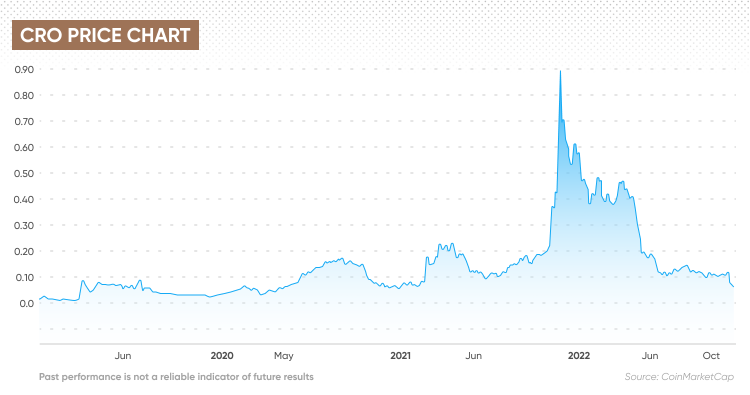
Crypto.com is one of the biggest crypto exchanges out there, however, recent negative sentiment and the collapse of the FTX crypto exchange have sent its native token, cronos (CRO), into a downwards spiral, forcing it to lose over 90% of its value from $0.8992 in November 2021 to $0.0698 a year later.

What are the latest token analytics suggesting, and how many cronos tokens are there?

What is CRO?

CRO is the native cryptocurrency of the Crypto.com chain and the Cronos EVM Chain. It was formerly known as the Crypto.org Coin before being renamed to CRO.

Crypto.com is a public, open-source and permissionless blockchain that aims to help drive the mass adoption of blockchain technology through decentralised finance (DeFi), payments and non-fungible tokens (NFTs). The platform has named itself as the “next generation public blockchain”.

The platform was co-founded in 2016 by Kris Marszalek, Rafael Melo, Bobby Bao and Gary Or and is now operated as a desktop and mobile application.

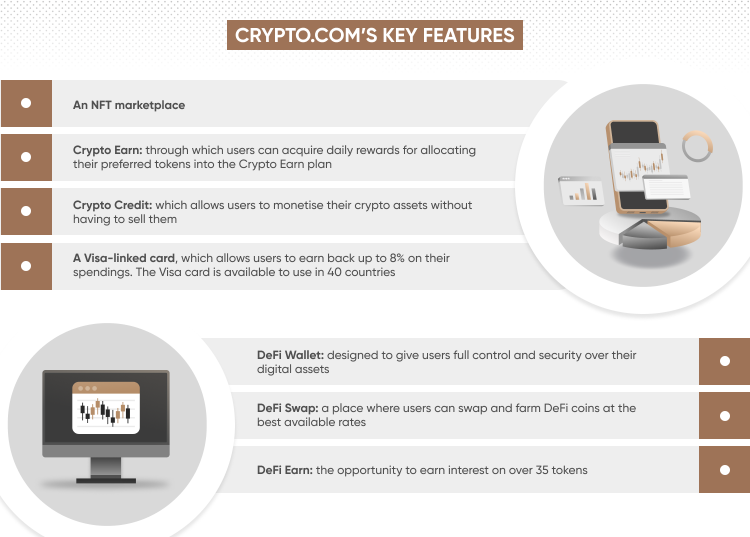
Crypto.com's key features

The Cronos EVM Chain is the first ever Ethereum-compatible blockchain that was built on Cosmos SDK technology. It is an open source, permissionless Layer 1 chain that aims to scale the DeFi, GameFi and overall Web3 communities by letting builders instantly port apps and crypto assets from other chains while benefiting from low transaction fees, high throughput and fast finality.

The CRO token powers the ecosystem and is used for staking, which grants users a number of rewards and helps maintain the platform’s security and decentralisation. The cronos cryptocurrency is also used to settle transaction fees on the Crypto.org Chain.

Latest CRO market news

2022 has not been the best year for CRO. The token has fallen by more than 87% from its all-time high of $0.8992 on 24 November 2021 to $0.1093 on 17 June 2022. The dip in the CRO price was heightened as Crypto.com announced on 1 May 2022 that it would be slashing staking rewards for all tiers of its VISA cards “to ensure long-term sustainability”, effective as of 1 June 2022.

CRO price chart

Between mid-July 2022 and end of September 2022, Crypto.com has received a number of licence updates worldwide, including Italy, Cyprus, South Korea, Australia, Canada, the UK and France. In addition, on 12 October 2022 the firm said that Paris was established as its European Regional Headquarters and invested €150m (around $155m, as of 18 November) in France to support market operations.

Between 25 October 2022 and 28 October 2022, Crypto.com had signed three MOUs: one with the game software developing studio ACT Games; one with the city of Busan in South Korea to advance the blockchain industry; and one more with global content studio A Story to develop NFT collaborations.

However, amid all the positive news, Crypto.com has also been caught in an array of negative news. An article published on 6 October 2022 by Ad Age tech claimed that the platform had cut off deals with a number of big sports organisations, including the Los Angeles’ Angels City Football Club, the 2022 FIFA World Cup in Qatar and the online sports tournament host Twitch Rivals. The article cited unanimous former and current Crypto.com employees.

In addition, according to a series of Tweets by the article’s journalist Asa Hiken, between “June and August, 30-40% of Crypto[dot]com’s entire workforce left the company, per former and current employees. That’s 2,000+ departures — the vast majority of which were layoffs.”

The company did not address the reports.

Now, let’s take a closer look at how many cronos tokens there are now.

How many cronos tokens are there?

So, let’s have a look at how many cronos tokens are available in circulation as of 18 November 2022.

According to data provided by CoinMarketCap, the maximum supply of the cronos tokens is 30.2 billion, meaning that once the total number of cronos tokens in circulation reaches that value, new tokens can no longer be mined. The current circulating supply of the CRO coin surpassed 25 billion.

However, this was not always the case for the cryptocurrency.

When the cryptocurrency was launched in 2018, its maximum supply was fixed at 100 billion coins. But, in order for the Crypto.com network to become fully decentralised at Mainnet Launch, Crypto.com decided to burn 70 billion CRO tokens in what it called “the largest token burn in history”. This was announced by the platform on 22 February 2021.

The platform released a schedule which shows that an initial batch of 59.6 billion CRO tokens was burned on 22 February 2021. Meanwhile, 10.4 billion coins were locked in a smart contract and would be burned every month as they get unlocked. This was aiming to increase the cryptocurrency circulating supply from 24% at the time to over 80%.

The remaining 5.9 billion CRO tokens were distributed in the following way:

  • 5 billion CRO were allocated to mainnet block rewards for Chain validators and delegators
  • 0.9 billion CRO were allocated to the development of the Chain ecosystem

Of that 70 billion burned:

  • 20 billion tokens came from the platform’s capital reserve
  • 5.5 billion coins came from the platform’s community development
  • 10.4 billion tokens came from secondary distribution and launch incentives
  • 20 billion tokens came from ecosystem grants
  • 20 billion tokens came from network long-term incentives

Who are the biggest CRO token holders?

Now that we have established how many cronos tokens are in circulation, let’s take a look at the biggest CRO token holders.

Data provided by etherscan.io showed that, as of 18 November, there were 281,902 CRO holders in total. The 10 biggest CRO holders collectively owned 92.54% of the total token supply in circulation, meanwhile the top 100 owned 95.93%.

The website noted that the top account holding the most CRO tokens in total was a Null Address owning over 77 billion coins, amounting to 77.89% of the total circulating supply. Crypto.com was also among the top CRO holders in the world, owning around 7 billion tokens or approximately 6.9% of the total supply.

Analyst thoughts

Anndy Lian, chief digital advisor at the Mongolian Productivity Organisation and author of ‘NFT: From Zero to Hero’ told Capital.com that while burning 70% of the then maximum CRO token supply was a good decision, doing so in 2021 was a “downside”.

“Personally, I would prefer them to burn and then buyback in stages of burning such a huge amount. The burn back then did make the market perceive that the remaining tokens have more value but that was short lived.”

Lian added that taking into consideration everything that has happened with the FTX crypto exchange in recent weeks, CRO holders are also getting anxious about the wellbeing of the Crypto.com platform, however, Crypto.com CEO Kris Marszalek’s live AMA session on YouTube on 14 November 2022 helped calm those worries down.

“Crypto.com is still facing potential bank run in my humble opinion. This to me is one of the biggest risks that CRO has a direct impact on.”

The bottom line

While knowing key info about the cronos tokenomics and circulating supply is important for accessing the project’s health, it shouldn’t substitute your own research. You should always conduct your own due diligence before trading, looking at the latest news, technical and fundamental analysis, and a wide range of analysts’ opinions before making any trading decision.

Keep in mind that past performance is no guarantee of future returns. And never trade or invest money that you cannot afford to lose.


Source: https://capital.com/how-many-cro-tokens-are-there-crypto-com-circulation-analysis

Anndy Lian is an early blockchain adopter and experienced serial entrepreneur who is known for his work in the government sector. He is a best selling book author- “NFT: From Zero to Hero” and “Blockchain Revolution 2030”.

Currently, he is appointed as the Chief Digital Advisor at Mongolia Productivity Organization, championing national digitization. Prior to his current appointments, he was the Chairman of BigONE Exchange, a global top 30 ranked crypto spot exchange and was also the Advisory Board Member for Hyundai DAC, the blockchain arm of South Korea’s largest car manufacturer Hyundai Motor Group. Lian played a pivotal role as the Blockchain Advisor for Asian Productivity Organisation (APO), an intergovernmental organization committed to improving productivity in the Asia-Pacific region.

An avid supporter of incubating start-ups, Anndy has also been a private investor for the past eight years. With a growth investment mindset, Anndy strategically demonstrates this in the companies he chooses to be involved with. He believes that what he is doing through blockchain technology currently will revolutionise and redefine traditional businesses. He also believes that the blockchain industry has to be “redecentralised”.
j j j

Who is Anndy Lian? How Does he Turn You Into an NFT Hero?

Who is Anndy Lian? How Does he Turn You Into an NFT Hero?

Anndy Lian is a serial entrepreneur based in Singapore. He is always trying to work hard in the crypto and blockchain industry. When I first met him, he was actively investing in Layer 1 blockchains. Then he was advising a sovereign wealth fund and was the chairperson at an Esports association. He is always busy.


His journey started in 2017 during the ICO times. He started one of the earliest supply chain blockchain companies back then and moved on to advising governments as he felt that there were too many dodgy businesses going on in the crypto scene.


He is a fund manager and partner at a local capital market services licensed firm. He is a philanthropist, giving back to society by donating and spending time serving his Singapore community. His servant leadership and attitude is well-liked by his peers.


His latest book, “NFT: From Zero to Hero”, is aligned with what he does. He likes the technology behind NFT and never likes how projects are managing NFTs as if it is like a valueless Ponzi scheme. That is also why Anndy chooses to launch the book after the hype and not during the hype. He believes that this is the right time to launch a book to tell everyone about the good and bad of NFT and how the market is changing and building stronger than ever at the same time.


During this interview, he emphasized a few points. Firstly, he wants all to know that mastering the logic behind NFT is not difficult. You need only the correct mindset and set up clear purposes when creating the NFTs. There is also a lot of information online for you to read about, and there is no reason why you cannot understand it.


Secondly, he said that there are many good tools online to help you decide what you can consider buying. He has spent time using some of the tools and listed a handful in his book that he thinks are useful. “Instead of guessing what NFT to buy, use the statistics to aid your decision,” Anndy said.


Anndy also went on to share that data could be contradicting. For example, 10,000 NFTs were sold, but when you look at the on-chain wallet addresses, only 10 of them exist. These are the small details you need to catch when making a decision.


Thirdly, he wants people who read his book and look at the trends ahead. The general public knowledge is very superficial. Many people think that NFT is a quick money scheme and we are purely selling “air”. “The fact that NFT is not just about a jpeg profile picture is not known to many. This is disturbing.”


According to Anndy, we can look at creating medical platforms using NFTs and empowering patients with the ability to control their medical records. We can look at digitizing land title deeds using NFT too. “The NFT usage scenarios are limitless.”


I also took the chance to ask Anndy what we should invest in next. He said to follow the simple rules- Consider investing in projects with good utility, strong community, and always building. “If they do not have the above, there is no need to consider who is on their cap table and how strong their team is. Assuming they have a working tech solution.”


Lian added that some people said that investing in Layer 1 blockchain is a sure win is totally wrong. He said starting layer 1 is not difficult; sustaining it with good usage is the challenging part. You need a lot more money to make it work compared to layer 2.


He said that, similarly, some people hate meme coins and said they have no value. “I don’t see eye to eye on this. The value of a meme coin is in its community and the core team. If the community is strong, anything can happen.” He added that bad management is one of the core reasons why meme coins fail. “The tell-tale signs are obvious.”


Just like the same old Anndy we see on Twitter. He ended by saying, “not financial advice”.


Anndy Lian’s new book has sold more than 8,000 copies during its launch at Bybit NFT marketplace. He has subsequently listed them on leading platforms like Amazon and Google books. At the point of this interview, he told me that he had appointed a Singapore distributor who would put his books in major bookstores in the South East Asia region.


I also read that he was awarded an Honorary Doctoral Degree by the Academic Council of Ulaanbaatar Erdem University in recognition of his contribution to the development of productivity science in Mongolia. He is also completing his PhD soon.


Congratulations Anndy.


The Future of NFTs


A number of countries are now actively working on regulatory frameworks for NFT assets, strengthening anti-fraud and anti-manipulation audits of projects, determining the business core of each platform, and solving financial security issues such as illegal fundraising and false fraud.


Nowadays, NFT financial tools are becoming more and more abundant, and the scale of financial derivatives is steadily increasing. At the same time, major public chains are actively upgrading, expanding, and building their own ecological frameworks to provide underlying support for the production, confirmation, pricing, circulation, and traceability of NFT assets. The NFT industry is gradually exploring a development path suitable for blockchain assets.


Due to the short development history of NFTs, we are still in the industry’s infancy, but we can still see its rapid development and gradual maturity. It is believed that under the transformation of the market, the improvement of supervision, and the gradual improvement of the ecosystem, the future of NFTs will never be just about hype but will become an indispensable part of future technological life.


The NFT space is fast-changing. While writing this, new NFT projects are popping up every day. From the Busan Metropolitan Government in Korea announcing an NFT conference to the International Cricket Council launching cricket NFTs to CoinRunners crowdfunding a movie by selling NFTs.


The few consistent NFT trends over the past year have been their steady growth, the rising interest in them, and their ever-expanding applications.


The future these NFT trends depict is an interesting one. While many people are concerned about the implications of the metaverse and the rise of AI, it’s a future full of possibilities.


It’s a future that bridges the gap between consumers and creators gives value and security to digital assets, and one which, for better or for worse, will shake up the world.


The future is bright, but the road is tortuous. The NFT market will eventually mature and deliver on its promise.


Your new asset is in the digital world.


Source: https://hackernoon.com/who-is-anndy-lian-how-does-he-turn-you-into-an-nft-hero?source=rss


Anndy Lian is an early blockchain adopter and experienced serial entrepreneur who is known for his work in the government sector. He is a best selling book author- “NFT: From Zero to Hero” and “Blockchain Revolution 2030”.

Currently, he is appointed as the Chief Digital Advisor at Mongolia Productivity Organization, championing national digitization. Prior to his current appointments, he was the Chairman of BigONE Exchange, a global top 30 ranked crypto spot exchange and was also the Advisory Board Member for Hyundai DAC, the blockchain arm of South Korea’s largest car manufacturer Hyundai Motor Group. Lian played a pivotal role as the Blockchain Advisor for Asian Productivity Organisation (APO), an intergovernmental organization committed to improving productivity in the Asia-Pacific region.

An avid supporter of incubating start-ups, Anndy has also been a private investor for the past eight years. With a growth investment mindset, Anndy strategically demonstrates this in the companies he chooses to be involved with. He believes that what he is doing through blockchain technology currently will revolutionise and redefine traditional businesses. He also believes that the blockchain industry has to be “redecentralised”.

j j j
