How Influencers and Content Can Onboard More People onto Web3: Insights from Taipei Blockchain Week 2024

How Influencers and Content Can Onboard More People onto Web3: Insights from Taipei Blockchain Week 2024

The Taipei Blockchain Week 2024 brought together some of the brightest minds in the blockchain and Web3 space to discuss the future of the industry. One of the standout panels of the event was titled “How Influencers and Content Can Onboard More People onto Web3”, featuring a diverse group of panelists:

  • Anndy Lian, Intergovernmental Blockchain Advisor
  • Dan, representing Retail DAO
  • Andrew Weiner, VP of WEEEX Global
  • Emily Lai, CMO of HYPE

The discussion was lively, insightful, and packed with actionable advice on how influencers and content creators can help bridge the gap between Web2 and Web3, making blockchain technology more accessible to the masses. Below, we’ll explore the key takeaways and quotes from the panelists.


The Role of Authenticity in Influencer Marketing

One of the first topics discussed was the importance of authenticity in influencer marketing. Andrew Weiner emphasized that the biggest mistake in influencer marketing is working with influencers who don’t genuinely use or believe in the product they’re promoting. He stated:

“The worst mistake you can make with influencer marketing is getting people to say something good without them authentically using it. Today’s consumers want to see and be educated on how things actually work, not just be sold to.”

This sentiment was echoed by Dan, who shared his approach as a content creator. He explained that he only promotes projects he believes in and ensures transparency with his audience:

“If a company approaches me, I first have to find out if they’re going to be around in a few years. I also make it clear to my audience when content is sponsored. Authenticity is key.”

The panelists agreed that audiences are becoming increasingly savvy and can easily spot inauthentic endorsements. For Web3 projects, building trust through genuine engagement is far more effective than flashy but hollow marketing campaigns.


Community First: The Foundation of Web3 Success

Anndy Lian brought a unique perspective as both an investor and advisor. He stressed the importance of community-driven projects, stating that the strength of a project’s community often determines its success:

“I don’t look at the product first; I look at the community. If the community is strong and genuinely engaged, that’s a good sign. Projects that focus on building a real community will always have a better chance of succeeding.”

He also highlighted the pitfalls of working with influencers who have a short-term mindset, noting that some influencers are quick to sell their tokens, which can harm the project and its community:

“The worst kind of influencers are those who sell early. If you’re bullish on your project, you should hold and support it. A strong community and long-term commitment are what drive success.”

This focus on community was a recurring theme throughout the panel. Emily Lai summarized it well:

“At the end of the day, it’s not just about the go-to-market strategy. Consumers and communities need to genuinely want to engage with and use the product. That’s what creates lasting momentum.”


The Marketing Funnel for Influencers: Different Types for Different Stages

The panelists also discussed the different types of influencers and how they fit into the marketing funnel. Anndy Lian broke it down into three stages:

  1. Awareness Stage:
    At this stage, projects can work with influencers who have large followings, even if their engagement is low or their content is less authentic. The goal is to create noise and get the project on people’s radar.
  2. Engagement Stage:
    Here, projects should collaborate with influencers who have a more engaged audience, even if their reach is smaller. These influencers can help build trust and drive meaningful interactions.
  3. Conversion Stage:
    Finally, projects need to work with high-integrity influencers who have built trust with their audience over time. These influencers can drive conversions and long-term loyalty.

Anndy explained:

“There’s no one-size-fits-all solution. You need to work with different types of influencers at different stages of your project. But ultimately, the goal is to build a community that’s real and engaged.”


The Challenges of Onboarding New Users to Web3

One of the biggest challenges in the Web3 space is onboarding new users, especially those unfamiliar with blockchain technology. Dan, who creates educational content for retail traders, shared his insights:

“The problem with getting people into DeFi is that it’s too complicated. There are too many steps, too many things to remember, and too many ways to lose money. It has to be a gradual process.”

He explained that his most popular content is often educational, such as tutorials on how to use platforms like Coinbase or how to navigate decentralized finance (DeFi). By breaking down complex topics into simple, actionable steps, he’s able to attract and retain a wider audience.


East vs. West: Differences in Influencer Marketing

The panel also explored the differences between influencer marketing in Asia and the West. Andrew Weiner noted that in the West, cryptocurrency has historically been viewed with skepticism, which has shaped the way content is created:

“In the West, crypto was a boogeyman for years. Now, the narrative is shifting, and people are more open to learning about these products. Educational content is crucial for onboarding new users.”

In contrast, Anndy Lian pointed out that in Asia, marketing strategies are often more aggressive and creative. He mentioned the prevalence of referral programs and multi-level marketing (MLM) models in the region, which can be highly effective in driving adoption:

“In the Chinese-speaking market, a lot of projects use referral or MLM strategies to onboard users. It’s very different from the West, where these methods are less common.”


Creativity in Influencer Marketing: Standing Out in a Crowded Market

As the Web3 space becomes increasingly competitive, creativity in marketing is more important than ever. Andrew Weiner shared an example of experiential marketing, which he believes is the next frontier:

“We recently partnered with Michael Owen, a world champion soccer player, to create unique experiences for our users. Instead of just giving away USDT, we’re offering opportunities to attend exclusive events, like coaching sessions or live games. These types of experiences are far more engaging and memorable.”

Anndy Lian added that some projects are even exploring unconventional platforms like OnlyFans to reach new audiences. While this approach may not be suitable for every project, it highlights the importance of thinking outside the box.


The Future of Influencer Marketing in Web3

As the panel wrapped up, the speakers shared their thoughts on the future of influencer marketing in the Web3 space. Emily Lai emphasized the need for authenticity and trust:

“The highest-tier influencers are those who have built trust with their audience over time. In a crowded market, trust is what sets you apart.”

Dan highlighted the importance of education:

“Educational content is key to onboarding new users. The more we can simplify and demystify Web3, the more people we can bring into the space.”

Finally, Anndy Lian reiterated the importance of community:

“At the end of the day, it’s all about the community. A strong, engaged community is the foundation of any successful Web3 project.”


Conclusion

The panel at Taipei Blockchain Week 2024 provided valuable insights into how influencers and content creators can help onboard more people onto Web3. From the importance of authenticity and community to the need for creativity and education, the discussion highlighted the many facets of effective marketing in the blockchain space. As the industry continues to evolve, these strategies will play a crucial role in driving adoption and building a more inclusive Web3 ecosystem.


Anndy Lian is an early blockchain adopter and experienced serial entrepreneur who is known for his work in the government sector. He is a best selling book author- “NFT: From Zero to Hero” and “Blockchain Revolution 2030”.

Currently, he is appointed as the Chief Digital Advisor at Mongolia Productivity Organization, championing national digitization. Prior to his current appointments, he was the Chairman of BigONE Exchange, a global top 30 ranked crypto spot exchange and was also the Advisory Board Member for Hyundai DAC, the blockchain arm of South Korea’s largest car manufacturer Hyundai Motor Group. Lian played a pivotal role as the Blockchain Advisor for Asian Productivity Organisation (APO), an intergovernmental organization committed to improving productivity in the Asia-Pacific region.

An avid supporter of incubating start-ups, Anndy has also been a private investor for the past eight years. With a growth investment mindset, Anndy strategically demonstrates this in the companies he chooses to be involved with. He believes that what he is doing through blockchain technology currently will revolutionise and redefine traditional businesses. He also believes that the blockchain industry has to be “redecentralised”.

j j j

The Future of Gaming and Mini Apps: Insights from OKX Ventures Panel Discussion

The Future of Gaming and Mini Apps: Insights from OKX Ventures Panel Discussion

The gaming industry is undergoing a transformative phase, with mini apps and blockchain technology playing a pivotal role in shaping its future. At a recent panel discussion hosted by OKX Ventures, industry leaders shared their insights on the evolving landscape of gaming and mini apps. The panel featured Anndy Lian, Intergovernmental Blockchain Advisor and Managing Director of MemeCore Ecofund; 撒幣哥, Founder of CashCash Boot; and Darren Wong, Head of Business Development at Spacenation. The discussion revolved around the integration of blockchain, the rise of mini apps, and the challenges and opportunities in the gaming ecosystem.


The Role of Blockchain in Gaming

Anndy Lian, representing MemeCore Ecofund, emphasized the importance of blockchain in creating a more inclusive and secure gaming environment. He explained how MemeCore Ecofund focuses on Layer 1 solutions for meme coins, bringing together large communities to engage in gaming ecosystems. According to Lian, the key to success lies in making gaming platforms easy to use and integrating blockchain wallets seamlessly.

“When it’s easy to use, people will come and play,” Lian remarked. He highlighted the growing adoption of mini games and platforms like Telegram, which have integrated blockchain wallets to enhance user experience. Lian also pointed out that the gaming industry is moving towards greater transparency and security, thanks to blockchain technology.


Mini Apps: The Gateway to Mass Adoption

撒幣哥, the founder of CashCash Boot, shared his perspective on the role of mini apps in driving user engagement. He noted that mini apps, particularly on platforms like Telegram, have gained significant traction due to their simplicity and accessibility.

“The biggest adoption right now is to make it very easy,” he said, emphasizing the importance of user-friendly interfaces. He also discussed the integration of wallets within mini apps, which provides users with a sense of security and ease of management.

撒幣哥 highlighted the challenges of attracting genuine users to mini apps, as many platforms face issues with fake accounts and bots. He stressed the need for robust monitoring systems to ensure a real and engaged community.

“We need to keep a more real community on these gaming platforms,” he stated, adding that exchanges and projects are becoming smarter in identifying and filtering out fake users.


The Evolution of MMORPGs and Virtual Economies

Darren Wong from Spacenation delved into the future of MMORPGs (Massively Multiplayer Online Role-Playing Games) and the role of virtual economies. He explained how Spacenation is leveraging blockchain to streamline existing gaming models rather than reinventing the wheel.

“We’re not inventing something new; we’re streamlining what already works,” Wong said. He cited examples like World of Warcraft, where players have been trading assets and accounts for years. Blockchain, he argued, provides a more efficient and secure way to manage these transactions.

Wong also emphasized the importance of a strong in-game economy for the success of MMORPGs. He noted that many games fail because their economies collapse, leading to a decline in player engagement.

“The reason some games are so successful is because they have the right recipe for their economy,” he explained. Spacenation is focusing on creating a sustainable virtual economy that can support long-term player engagement.


Challenges in the Gaming Ecosystem

The panelists also discussed the challenges faced by the gaming industry, particularly in the context of mini apps and blockchain integration. One major issue is the prevalence of low-value users who participate in giveaways and promotions without genuine interest in the platform.

“There will always be people who are just in it for the free money,” Lian acknowledged. However, he argued that these users are still necessary for building initial momentum and creating a buzz around new projects.

Darren Wong added that unrealistic KPIs set by exchanges and platforms often force projects to resort to tactics like buying followers or inflating user numbers. He called for more realistic standards to ensure sustainable growth.

“When we have more realistic standards, we won’t need to resort to these unusual tactics,” Wong said.


The Role of AI in Gaming

Towards the end of the discussion, the panelists touched upon the potential of AI in revolutionizing the gaming industry. Anndy Lian expressed his hope for AI to play a larger role in game development, from content creation to user experience optimization.

“I really hope to see AI coming into the picture,” he said, adding that AI could help streamline various aspects of game development and enhance the overall gaming experience.


The Future of Gaming and Mini Apps

The panel concluded with a discussion on the future of gaming and mini apps. The panelists agreed that platforms like TikTok and WeChat are setting the stage for the next wave of mini app innovation. Darren Wong predicted that these platforms would continue to drive high-quality content and user engagement.

“I believe that mini games on platforms like TikTok and WeChat will follow the same path of success,” Wong said.

Anndy Lian emphasized the need for collaboration between projects to create a more cohesive gaming ecosystem. He called for greater integration of blockchain and AI to unlock new possibilities in gaming.

“The only way we get very decent results is by working closely together,” he concluded.


Key Takeaways

  1. Blockchain Integration: Blockchain technology is transforming gaming by enhancing transparency, security, and user experience.
  2. Mini Apps: Platforms like Telegram and TikTok are driving the adoption of mini apps, thanks to their simplicity and accessibility.
  3. Virtual Economies: Sustainable in-game economies are crucial for the success of MMORPGs and other gaming platforms.
  4. Challenges: The industry must address issues like fake users, unrealistic KPIs, and low-value engagement to ensure long-term growth.
  5. AI in Gaming: AI has the potential to revolutionize game development and user experience, paving the way for the next generation of gaming.

The panel discussion hosted by OKX Ventures provided valuable insights into the future of gaming and mini apps. As blockchain and AI continue to evolve, the gaming industry is poised for unprecedented growth and innovation. By addressing current challenges and leveraging emerging technologies, the industry can create a more inclusive and engaging gaming ecosystem for players worldwide.


Anndy Lian is an early blockchain adopter and experienced serial entrepreneur who is known for his work in the government sector. He is a best selling book author- “NFT: From Zero to Hero” and “Blockchain Revolution 2030”.

Currently, he is appointed as the Chief Digital Advisor at Mongolia Productivity Organization, championing national digitization. Prior to his current appointments, he was the Chairman of BigONE Exchange, a global top 30 ranked crypto spot exchange and was also the Advisory Board Member for Hyundai DAC, the blockchain arm of South Korea’s largest car manufacturer Hyundai Motor Group. Lian played a pivotal role as the Blockchain Advisor for Asian Productivity Organisation (APO), an intergovernmental organization committed to improving productivity in the Asia-Pacific region.

An avid supporter of incubating start-ups, Anndy has also been a private investor for the past eight years. With a growth investment mindset, Anndy strategically demonstrates this in the companies he chooses to be involved with. He believes that what he is doing through blockchain technology currently will revolutionise and redefine traditional businesses. He also believes that the blockchain industry has to be “redecentralised”.

j j j

Exploring the Future of Privacy-Preserving DeFi: Insights from the DeCC Day X Shielding Summit

Exploring the Future of Privacy-Preserving DeFi: Insights from the DeCC Day X Shielding Summit

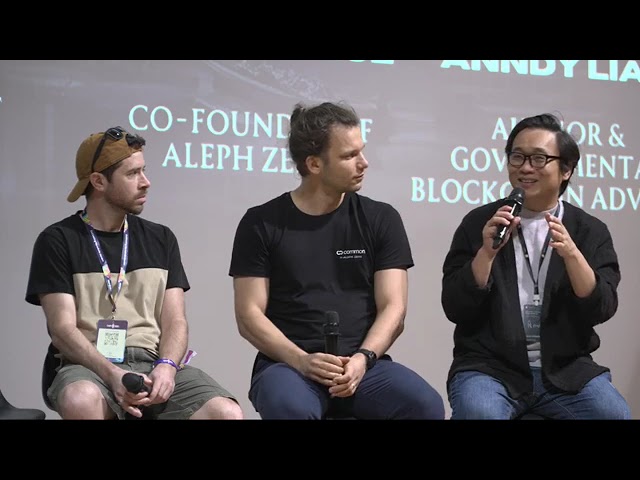
Privacy remains a critical yet challenging frontier. The DeCC Day X Shielding Summit brought together thought leaders and innovators to discuss the current state and future of privacy-preserving DeFi. Moderated by Carter Woetzel of Shade Protocol, the panel featured Supdoggie of SilentSwap, Adam Gagol of Aleph Zero, and intergovernmental expert Anndy Lian. The panel dives into their insights on the importance of privacy in DeFi, the hurdles faced by developers, and the potential pathways to broader adoption.

The Importance of Privacy in DeFi

Privacy in DeFi is not just a feature; it’s a necessity. As Carter Woetzel pointed out, “Privacy and the concept of shielding assets in DeFi have been around for a long time, yet adoption has lagged.” The panelists agreed that privacy is crucial for protecting user data and preventing malicious activities like front-running, where traders exploit transaction information for profit.

Anndy Lian, a governmental blockchain advisor, emphasized the significance of privacy from an investment perspective. “I realized that privacy is really important,” he said, drawing from his experience in the medical field where data breaches are a major concern. Lian’s journey into privacy began with creating a blockchain-based medical record system, highlighting the cross-industry relevance of privacy solutions.

Challenges in Privacy-Preserving DeFi

Despite its importance, privacy in DeFi faces significant challenges. Adam Gagol of Aleph Zero noted, “Right now, it has terrible user experience because the proof generation times are over 10 seconds for most products.” This technical hurdle, coupled with the complexity of privacy protocols, deters users who are accustomed to more straightforward financial interactions.

Regulatory barriers also play a significant role in stifling adoption. Supdoggie pointed out that “the biggest problem is regulation,” citing the example of Tornado Cash, a privacy tool classified as a mixer and banned in many jurisdictions. This regulatory uncertainty creates a hostile environment for privacy-focused projects, limiting their growth and accessibility.

Overcoming the Hurdles

To overcome these challenges, the panelists discussed several strategies. Improving user experience is paramount. As Adam Gagol mentioned, “We’re trying to build a wallet that looks like a regular wallet so that you don’t immediately even notice that this is a private wallet.” By simplifying the user interface and reducing the complexity of privacy features, developers can make privacy-preserving DeFi more accessible to the average user.

Another approach is to address liquidity issues. Supdoggie explained that SilentSwap is tackling this by “borrowing liquidity from public blockchains but transacting or swapping privately.” This innovative method allows users to benefit from the liquidity of public networks while maintaining privacy.

The Path to Adoption

The path to widespread adoption of privacy-preserving DeFi involves not only technical improvements but also strategic marketing and community building. Anndy Lian highlighted the importance of creating demand: “If you don’t have users, you don’t have liquidity. If you don’t have liquidity, you have nothing.” Building a strong community and generating excitement around privacy features are crucial steps toward achieving critical mass.

Carter Woetzel added that the race between privacy-first projects and traditional DeFi platforms integrating privacy features will be pivotal. “The Uniswaps of the world are going to start adding in privacy features,” he noted, suggesting that the first to successfully combine privacy with liquidity and user-friendliness will gain a significant advantage.

The Future of Privacy-Preserving DeFi

Looking ahead, the panelists were optimistic about the future of privacy-preserving DeFi. Adam Gagol predicted that “the proof generation time for the majority of use cases will stop being the topic of conversation because it’s going to be low enough to be actually useful.” As technical barriers diminish, the focus will shift to broader adoption and integration with existing financial systems.

Anndy Lian emphasized the need for collaboration and integration with larger platforms. “Instead of them creating that demand, the real true blue privacy guys should go there and say, ‘Hey, can we integrate? Can we do something together?'” By partnering with established players, privacy-focused projects can leverage existing networks to reach a wider audience.

Conclusion

The DeCC Day X Shielding Summit highlighted both the challenges and opportunities in the realm of privacy-preserving DeFi. As the panelists discussed, the road to adoption is fraught with technical, regulatory, and market challenges. However, with innovative solutions, strategic partnerships, and a focus on user experience, the future of privacy in DeFi looks promising. As Carter Woetzel aptly summarized, “Private DeFi is good. Can we find the demand and do it before someone else integrates privacy with large-scale distribution?” The race is on, and the stakes are high.

Anndy Lian is an early blockchain adopter and experienced serial entrepreneur who is known for his work in the government sector. He is a best selling book author- “NFT: From Zero to Hero” and “Blockchain Revolution 2030”.

Currently, he is appointed as the Chief Digital Advisor at Mongolia Productivity Organization, championing national digitization. Prior to his current appointments, he was the Chairman of BigONE Exchange, a global top 30 ranked crypto spot exchange and was also the Advisory Board Member for Hyundai DAC, the blockchain arm of South Korea’s largest car manufacturer Hyundai Motor Group. Lian played a pivotal role as the Blockchain Advisor for Asian Productivity Organisation (APO), an intergovernmental organization committed to improving productivity in the Asia-Pacific region.

An avid supporter of incubating start-ups, Anndy has also been a private investor for the past eight years. With a growth investment mindset, Anndy strategically demonstrates this in the companies he chooses to be involved with. He believes that what he is doing through blockchain technology currently will revolutionise and redefine traditional businesses. He also believes that the blockchain industry has to be “redecentralised”.

j j j