Why Your USDT Is A Tool, Not An Interest-Bearing Bond

Why Your USDT Is A Tool, Not An Interest-Bearing Bond

The digital asset market is often clouded by a fundamental misunderstanding of the products we use daily. Recently, during a discussion on an X Space hosted by members of a Chinese crypto community, a guest speaker passionately argued that Tether (CRYPTO: USDT) holders are entitled to a share of the interest generated by Tether Limited’s massive reserves. This sentiment is growing, fueled by a desire for passive income in a volatile market. However, this perspective represents a dangerous conflation of financial concepts. We must be clear: 1 USDT is equivalent to $1 USD in terms of purchasing power within the ecosystem, but it is fundamentally not the same as holding a US dollar in a savings account or a Treasury Bill. To demand a direct share of Tether’s corporate interest is to fundamentally misunderstand the architecture of stablecoins and the laws that govern them.

When you exchange your fiat currency for USDT, you are not making a deposit into a bank; you are purchasing a product. Tether Limited operates as a private entity that issues a digital token backed by a basket of assets. The primary value proposition of USDT is liquidity and stability, the ability to move value across borders and between exchanges at the speed of the blockchain. Forgoing your fiat in exchange for USDT is a voluntary trade-off. You give up the sovereign protections and the interest-bearing potential of the traditional banking system in exchange for the utility of a digital asset. To expect the issuer to then hand back its corporate profits is akin to asking a privately owned bank to distribute its quarterly earnings directly to every person holding its banknotes. It is a logical fallacy that ignores the operational costs and risks assumed by the issuer.

The data regarding Tether’s revenue generation is transparent, yet often misinterpreted. As of 2026, Tether continues to manage one of the world’s largest reserve portfolios. The majority of these reserves, roughly 74% to 77%, are held in U.S. Treasury Bills. The remaining assets are diversified across Reverse Repurchase Agreements (11-12%), secured loans (8%), and strategic holdings in precious metals and Bitcoin (12-14%). Tether has become one of the largest global holders of U.S. debt. The interest generated from these trillions of dollars in T-bills belongs to Tether Limited. This income covers their operational expenses, legal defense funds, and provides the capital necessary to maintain the 1:1 peg even during market de-pegging events. This profit is the reward for the company’s management of risk and liquidity; it is not a communal pot for token holders.

Furthermore, we must address the “No Native Staking” reality. Unlike Ethereum or Solana, USDT is not a native token of a proof-of-stake blockchain. It is an asset issued on top of other networks like Tron, Ethereum, and TON. Because USDT does not secure the underlying network through a consensus mechanism, there is no technical “work” being done by a holder simply by letting the tokens sit in a wallet. Without providing a service to the network, such as validating transactions or providing liquidity, there is no logical or technical basis for a “reward.” The concept of “staking” USDT is a misnomer; what people are actually doing is lending, which is a different financial activity entirely.

This leads us to the critical role of CeFi and DeFi intermediaries. If a holder wants to earn interest on their USDT, they must enter the arena of “risk”. Platforms like Binance Earn or decentralized protocols like Aave allow users to generate yield. However, this yield does not come from Tether’s T-bills. It comes from other market participants who are willing to pay a premium to borrow your USDT for leverage or liquidity. In this scenario, the middleman, whether it is a centralized exchange (CEX) or a smart contract, takes a cut for facilitating the match. This is a “fair logic” ecosystem. You are compensated for the counterparty risk you assume. While U.S. Treasury Bills are considered “risk-free” as long as the U.S. government stands, lending USDT on a platform carries the risk of platform insolvency or smart contract failure. You cannot have the “risk-free” rate of a T-bill without actually owning the T-bill.

Looking toward the horizon of 2026, the regulatory landscape is finally catching up to these nuances. The latest draft of the Digital Asset Market Clarity Act provides a definitive answer to the guest speaker’s demands. The Act explicitly states that platforms cannot pay yield simply for “parking” stablecoins. This is a move to prevent stablecoins from being classified as unregistered securities. According to the draft, rewards are only permissible when a user is “active”, meaning they must be providing liquidity or contributing to the operation of a network. This reinforces the journalist’s point: the law itself is being written to prevent the very “mix-up in concept” that the Chinese group was advocating for. If Tether were to pay interest directly to holders, USDT would legally transform into a security, subjecting it to a level of regulation that would likely destroy its utility as a global medium of exchange.

However, the future does hold a potential evolution for Tether. As Tether moves toward launching and scaling its own proprietary blockchain, the distribution of rewards could change legitimately. On its own chain, Tether could implement a system where rewards are distributed to those who help secure the network or facilitate its decentralized operations. In this context, the “interest” is rebranded and restructured as a “network reward.” This is not a payout of T-bill interest; it is compensation for the utility provided to the new ecosystem. Until that fruition, demanding interest for simply holding the token remains a fundamental misunderstanding of the difference between an asset and an investment contract.

The psychological drive behind the speaker’s demand is understandable; everyone wants a piece of the massive profits Tether is generating. But in the world of high-level finance and digital assets, desire does not dictate structure. If you want the interest from U.S. Treasuries, the path is simple: hold USD and buy the Treasuries. If you want the flexibility of the world’s most liquid stablecoin, you hold USDT and accept that the “cost” of that flexibility is the interest you forgo. You cannot trade your fiat for a tool and then demand the tool act like a bank account.

Ultimately, the distinction between 1 USDT and $1 USD is one of “ownership of yield.” When you hold $1 USD in a sophisticated financial setup, you own the potential yield of that dollar. When you hold 1 USDT, you own a digital certificate of value that Tether Limited promises to redeem for $1 USD. The yield generated by the backing of that certificate belongs to the issuer who maintains the system. This is the bedrock of the stablecoin economy. To twist this concept is to invite regulatory crackdowns and economic instability. And to mislead your followers with the wrong concept is also causing instability. Communities must be equipped with the right knowledge, learn from the best and not from the loudest.

As we navigate the complexities of 2026 and beyond, we must remain disciplined in our definitions: USDT is for movement and utility; USD is for savings and interest. Mixing the two serves only to create a “yield mirage” that the law and common sense will eventually evaporate.


Source: https://www.benzinga.com/Opinion/26/01/50010512/why-your-usdt-is-a-tool-not-an-interest-bearing-bond


Anndy Lian is an early blockchain adopter and experienced serial entrepreneur who is known for his work in the government sector. He is a best selling book author- “NFT: From Zero to Hero” and “Blockchain Revolution 2030”.

Currently, he is appointed as the Chief Digital Advisor at Mongolia Productivity Organization, championing national digitization. Prior to his current appointments, he was the Chairman of BigONE Exchange, a global top 30 ranked crypto spot exchange and was also the Advisory Board Member for Hyundai DAC, the blockchain arm of South Korea’s largest car manufacturer Hyundai Motor Group. Lian played a pivotal role as the Blockchain Advisor for Asian Productivity Organisation (APO), an intergovernmental organization committed to improving productivity in the Asia-Pacific region.

An avid supporter of incubating start-ups, Anndy has also been a private investor for the past eight years. With a growth investment mindset, Anndy strategically demonstrates this in the companies he chooses to be involved with. He believes that what he is doing through blockchain technology currently will revolutionise and redefine traditional businesses. He also believes that the blockchain industry has to be “redecentralised”.

j j j

China to let banks pay interest on digital yuan wallets from January 2026

China to let banks pay interest on digital yuan wallets from January 2026

China’s central bank is rolling out a new framework for the digital yuan that will allow commercial banks to pay interest on e-CNY wallet balances starting Jan. 1, 2026, a move officials say will push the central bank digital currency (CBDC) beyond its original role as a cash substitute.

The new CBDC framework will allow banks to treat the digital yuan as part of their asset-liability operations, Lu Lei, a deputy governor of the People’s Bank of China, wrote in a PBOC-affiliated China Financial Times article published on Monday.

“The digital RMB will move from the digital cash era to the digital deposit currency (Digital Deposit Money) era,” said Lei in the report. “It has the functions of monetary value scale, value storage, and cross-border payment.”

While cryptocurrency transactions and stablecoins are banned in Mainland China, the PBOC continues developing its CBDC framework, seeking to utilize the efficiency of blockchain rails through a central-bank-issued digital cash alternative.

This is in contrast to the stablecoin-friendly US regime, where President Donald Trump issued an executive order banning the creation of a CBDC, citing concerns over their potential to threaten financial system stability, individual privacy and national sovereignty.

The executive order, signed on Jan. 23, prohibits the establishment, issuance, circulation or use of CBDCs, a development described as a “game-changer” for the growth of the US crypto industry, Anndy Lian, an author and intergovernmental blockchain adviser, previously told Cointelegraph.

In July, Trump signed the Guiding and Establishing National Innovation for US Stablecoins (GENIUS) Act, the US’s first comprehensive stablecoin framework, which established clear rules for stablecoin collateralization and mandated compliance with Anti-Money Laundering laws.

China’s “Action Plan” to accelerate e-CNY adoption

China’s new framework, the “Action Plan on Further Strengthening the Digital RMB Management Service System and Related Financial Infrastructure Construction,” seeks to expand the national use of the e-CNY and build the necessary infrastructure.

In September, the central bank established the RMB International Operations Center in Shanghai, a blockchain services platform seeking to build onchain settlement tools and crosschain transfer capabilities to promote the use of the digital yuan in cross-border settlement.

While the PBOC said that the digital yuan could create more financial inclusion, some critics are concerned about its ability to give more financial control to the central bank.

“The Chinese government wants more control over payments,” according to Alex Gladstein, chief strategy officer at non-profit organization the Human Rights Foundation.

While the central bank already holds a “firm grip” on the two leading commercial payment giants, direct control and oversight over a digital currency would provide more data and “power to deny people access,” Gladstein told MIT Technology Review in August 2023.


Source: https://cointelegraph.com/news/china-digital-yuan-interest-wallets-2026

Anndy Lian is an early blockchain adopter and experienced serial entrepreneur who is known for his work in the government sector. He is a best selling book author- “NFT: From Zero to Hero” and “Blockchain Revolution 2030”.

Currently, he is appointed as the Chief Digital Advisor at Mongolia Productivity Organization, championing national digitization. Prior to his current appointments, he was the Chairman of BigONE Exchange, a global top 30 ranked crypto spot exchange and was also the Advisory Board Member for Hyundai DAC, the blockchain arm of South Korea’s largest car manufacturer Hyundai Motor Group. Lian played a pivotal role as the Blockchain Advisor for Asian Productivity Organisation (APO), an intergovernmental organization committed to improving productivity in the Asia-Pacific region.

An avid supporter of incubating start-ups, Anndy has also been a private investor for the past eight years. With a growth investment mindset, Anndy strategically demonstrates this in the companies he chooses to be involved with. He believes that what he is doing through blockchain technology currently will revolutionise and redefine traditional businesses. He also believes that the blockchain industry has to be “redecentralised”.

j j j

XRP, ADA, Meme Coins Become Object of Interest for Author of Bestselling NFT Book, Anndy Lian

XRP, ADA, Meme Coins Become Object of Interest for Author of Bestselling NFT Book, Anndy Lian

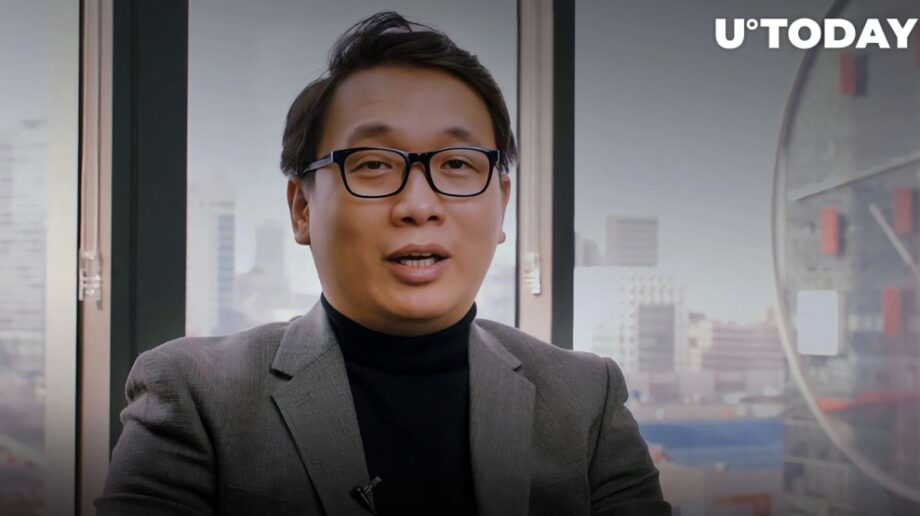
Anndy Lian, international blockchain expert who positions himself as a thought leader on social media platforms and is the author of a book called “NFT: from Zero to Hero,” has taken to Twitter to pick its followers’ brains about whether he should invest in altcoins such as XRP, ADA and IOTA. Judging from his tweet, Lian is already a holder of meme cryptocurrencies.

Judging from his tweet, Lian is already a holder of meme cryptocurrencies.

“XRP, ADA, IOTA or should I stay with #meme?”

From his tweet, Anndy Lian is considering making a purchase of some leading altcoins, including top 10 XRP and ADA, as well as IOTA, CRO and NEAR.

He also says that he could stay with the meme; however, he does not specify exactly which meme coins he holds – DOGE, SHIB, FLOKI, BabyDoge or some canine coins with smaller capitalizations.

From his earlier tweets posted in September, it is clear that Lian has been following the main events in the crypto industry, such as Cardano’s Vasil and Ethereum’s Merge hard forks.

He has not disclosed which cryptocurrencies he holds.

“NFT: from Zero to Hero” is Lian’s second book, according to his LinkedIn page. In 2019, he also co-authored a book titled “Blockchain Revolution 2030.” By now, 8,000 copies of the former have been sold.

This crypto influencer considers buying SHIB

Crypto influencer David Gokhshtein, former U.S. congressional candidate who founded Gokhshtein Media, has tweeted that yesterday he nearly purchased meme token Shiba Inu.

Gokhshtein has been bullish on the second largest meme token throughout the year, praising its model and its metaverse. He holds both Dogecoin and SHIB. Recently, he tweeted that it is okay to hold both, while some in the armies of both tokens find it hard to find a mutual understanding.

On Wednesday, Gokhshtein also shared that he had been considering buying more XRP tokens to expand his XRP bag. He believes that if Ripple wins the current legal battle against the SEC that has been going on since 2020, it will become a major driver not only for Ripple and XRP but for the entire crypto industry too.

As part of his challenge, he also considers buying some LUNC.

Read more on U.Today https://u.today/xrp-ada-meme-coins-become-object-of-interest-for-author-of-bestselling-nft-book-anndy-lian

Anndy Lian is an early blockchain adopter and experienced serial entrepreneur who is known for his work in the government sector. He is a best selling book author- “NFT: From Zero to Hero” and “Blockchain Revolution 2030”.

Currently, he is appointed as the Chief Digital Advisor at Mongolia Productivity Organization, championing national digitization. Prior to his current appointments, he was the Chairman of BigONE Exchange, a global top 30 ranked crypto spot exchange and was also the Advisory Board Member for Hyundai DAC, the blockchain arm of South Korea’s largest car manufacturer Hyundai Motor Group. Lian played a pivotal role as the Blockchain Advisor for Asian Productivity Organisation (APO), an intergovernmental organization committed to improving productivity in the Asia-Pacific region.

An avid supporter of incubating start-ups, Anndy has also been a private investor for the past eight years. With a growth investment mindset, Anndy strategically demonstrates this in the companies he chooses to be involved with. He believes that what he is doing through blockchain technology currently will revolutionise and redefine traditional businesses. He also believes that the blockchain industry has to be “redecentralised”.

j j j