From Wall Street to crypto miners: How global risks reshape investment strategies

From Wall Street to crypto miners: How global risks reshape investment strategies

The mixed risk sentiment observed in recent sessions reflects the market’s attempt to balance optimism from easing trade frictions with caution stemming from ongoing uncertainties. On one hand, the progress in US-China trade negotiations, as evidenced by China’s confirmation of a trade framework with the US, has provided a boost to market confidence. This development contributed to US stock markets ending higher on Friday, with the S&P 500 gaining 0.52 per cent and the Nasdaq also up by 0.52 per cent, both reaching fresh record highs.

On the other hand, President Trump’s announcement terminating trade talks between the US and Canada introduced a new layer of uncertainty, leading to a pullback in US equities from their intraday highs. This dichotomy underscores the fragile nature of the current market rally and the potential for swift shifts in sentiment in response to geopolitical events.

Adding to this complexity is the Federal Reserve’s monetary policy stance. Minneapolis Fed President Neel Kashkari, although not a voting member of the 2025 Federal Open Market Committee, anticipates two rate reductions this year. However, he cautioned that tariffs could have a delayed impact on inflation, presenting a challenge for policymakers attempting to calibrate their response.

The bond market’s reaction has been intriguing, with US Treasury yields edging higher across the curve despite the prospect of rate cuts. The 10-year US Treasury yield rose by 3.5 basis points to close at 4.277 per cent, while the 2-year yield increased by 2.9 basis points to 3.748 per cent. This counterintuitive movement suggests that investors are grappling with the implications of monetary easing, juxtaposed against potential inflationary pressures from tariffs. This tension is likely to persist in the near term.

In the currency and commodity markets, the US Dollar Index advanced by 0.26 per cent, reflecting its status as a preferred safe-haven asset amid these uncertainties. In comparison, gold prices retreated by 1.61 per cent to US$3,274.33 per troy ounce. Brent crude oil saw a marginal uptick of 0.06 per cent, settling at US$67.77 per barrel, though it experienced a significant 12 per cent decline over the week, underscoring the energy sector’s sensitivity to trade developments and economic growth prospects.

Meanwhile, Asian equity indices mainly opened higher in early trading, and US equity index futures suggest an optimistic start for US stocks, pointing to a cautiously positive outlook despite the mixed signals. In a notable contrast, the cryptocurrency market has exhibited resilience, with Bitcoin’s hashprice surging to its highest level since early February, above US$58.5 per petahash per second, driven by a 7.4 per cent drop in network difficulty, alongside Bitcoin’s price hovering around US$108,500, Ethereum breaking key resistance, and XRP nearing a critical level.

Equities: Balancing trade optimism with geopolitical risks

US stock markets have shown remarkable resilience, with the S&P 500 and Nasdaq achieving record highs despite the mixed global risk sentiment. Several factors underpin this strength. Strong corporate earnings, particularly from technology and consumer discretionary sectors, have bolstered equity valuations, providing a robust foundation for market gains.

Expectations of Federal Reserve rate cuts have further enhanced investor confidence, as lower interest rates typically reduce the cost of borrowing and support higher valuations by lowering the discount rate applied to future cash flows. Additionally, the easing of US-China trade frictions has alleviated fears of a prolonged trade war that could erode corporate profits and hinder economic growth, contributing to the bullish momentum observed on Friday.

However, the termination of US-Canada trade talks introduces a significant counterweight to this optimism. The potential for escalating tariffs or retaliatory measures could pressure corporate earnings, particularly for multinational firms that rely on cross-border supply chains. This development tempers the initial rally and serves as a reminder that trade tensions remain a potent risk factor.

Looking ahead, investors should closely monitor the upcoming earnings season, which will provide critical insights into the health of corporate America and the tangible effects of trade developments on profit margins. Progress or setbacks in trade negotiations, not only with China but also with other key partners such as Canada, will likely influence market sentiment.

For those seeking to position themselves strategically, sectors less exposed to trade volatility, such as healthcare or utilities, may offer a defensive tilt, while maintaining exposure to growth-oriented sectors like technology could capture upside potential in a favourable trade resolution scenario.

Bonds: Unpacking yield movements amid policy shifts

The US Treasury market presents a puzzling picture, with yields rising despite expectations of Fed rate cuts, a scenario that typically signals lower yields as bond prices increase. The 10-year Treasury yield is climbing to 4.277 per cent, and the two-year yield is reaching 3.748 per cent, suggesting that several underlying dynamics are at play. One plausible explanation is that the market is anticipating higher inflation due to tariffs, which could lead to increased consumer prices as import costs rise.

Higher inflation expectations naturally push yields upward, as investors demand greater compensation for the erosion of purchasing power. Another factor could be the increased supply of Treasury securities to fund the US budget deficit, exerting upward pressure on yields. While safe-haven demand for Treasuries typically tempers yield increases, the current rise suggests that inflationary concerns or other market forces are overshadowing this effect.

The yield curve, which remains relatively flat given the narrow spread between the 2-year and 10-year yields, continues to draw scrutiny. Historically, a flat or inverted yield curve has foreshadowed economic slowdowns, though the present context, marked by trade uncertainties and proactive monetary policy, may alter this interpretation. For bond investors, managing duration risk becomes paramount in this volatile yield environment.

Shorter-duration bonds could provide a buffer against interest rate fluctuations, offering stability if yields continue to rise. Additionally, Treasury Inflation-Protected Securities (TIPS) might appeal to those anticipating sustained inflationary pressures from tariffs. Exploring international bonds from countries with more predictable monetary frameworks could also diversify yield opportunities, mitigating risks tied to US-specific developments.

Currencies and commodities: Safe havens and energy volatility

The US Dollar Index’s 0.26 per cent gain, despite rate cut expectations, is striking, as lower interest rates typically weaken a currency by reducing its yield appeal. Yet, the dollar’s advance likely reflects its entrenched status as a safe haven, bolstered by geopolitical uncertainties such as trade disputes and broader global instability. The relative resilience of the US economy compared to other major economies may further underpin this strength, drawing capital flows even as growth slows.

Gold, traditionally a rival safe-haven asset, fell by 1.61 per cent to US$3,274.33 per troy ounce, suggesting that investors currently favor the liquidity and stability of the dollar over gold’s inflation-hedging properties. However, should trade tensions intensify or economic conditions worsen, gold could swiftly regain favour as a store of value.

Brent crude’s marginal 0.06 per cent rise to US$67.77 per barrel masks a deeper weekly decline of approximately 12 per cent, highlighting the energy sector’s exposure to trade-related disruptions and weakening global demand signals. As tariffs threaten to slow economic activity, oil prices face downward pressure, though geopolitical risks could introduce short-term spikes.

For currency and commodity investors, maintaining some dollar exposure offers a near-term safe-haven play; however, vigilance is warranted in case of potential weakening if rate cuts proceed. Gold remains a compelling hedge against systemic risks, making it a worthy consideration for portfolio diversification. In the energy space, selective investments in companies with robust fundamentals may outperform a broadly challenged sector, particularly if demand continues to falter.

Cryptocurrencies: Resilience amid traditional market flux

The cryptocurrency market stands out for its strength, with Bitcoin’s hash price surging above US$58.5 per petahash per second—its highest since early February—following a 7.4 per cent decline in network difficulty, the steepest since the aftermath of China’s 2021 mining ban. This adjustment, which exceeds the 7.3 per cent drop during the 2022 bear market, enhances miner profitability by reducing the computational power required to earn rewards —a boon amid prior margin compression since Q4.

Bitcoin’s price, hovering around US$108,500 and just three per cent shy of its all-time high of US$111,980 from May 22, reflects this momentum, supported by a Relative Strength Index (RSI) of 59 and a bullish MACD crossover, signalling potential for further gains toward US$120,000 if resistance is breached.

Ethereum complements this narrative, closing above its 50-day exponential moving average and key resistance at US$2,461, trading around US$2,498 with an RSI of 52 and a near-bullish MACD crossover, indicating a potential rally toward US$2,724 if support holds. XRP, nearing its critical resistance level at US$2.23, could see upward momentum with a breakout, buoyed by broader confidence in the crypto market.

These movements suggest cryptocurrencies are increasingly viewed as an alternative asset class, possibly benefiting from institutional interest and their decoupling from traditional market risks. Yet, their volatility demands caution. Diversifying across Bitcoin, Ethereum, and XRP, setting strict risk parameters, and monitoring regulatory shifts are prudent steps for investors looking to enter this space.

Synthesis and strategic outlook

The current market landscape is a delicate interplay of optimism and caution. Easing US-China trade frictions and anticipated Fed rate cuts fuel equity gains and crypto resilience; however, the collapse of US-Canada trade talks and tariff-induced inflation risks temper this enthusiasm.

Investors face a multifaceted environment where diversification and adaptability are key. Equities offer opportunities in resilient sectors, such as technology and healthcare, while balancing trade-sensitive risks. Shorter-duration bonds and TIPS can navigate yield volatility and inflation, while dollar exposure hedges near-term uncertainty, with gold as a systemic risk buffer. Cryptocurrencies, although speculative, offer diversification potential for risk-tolerant investors, provided risk management is rigorous.

Success hinges on staying attuned to trade developments, Fed actions, and sector trends, adjusting portfolios dynamically as conditions evolve. By embracing a holistic view across asset classes, investors can seize opportunities while safeguarding against the volatility inherent in this intricate global market moment.

 

Source: https://e27.co/from-wall-street-to-crypto-miners-how-global-risks-reshape-investment-strategies-20250630/


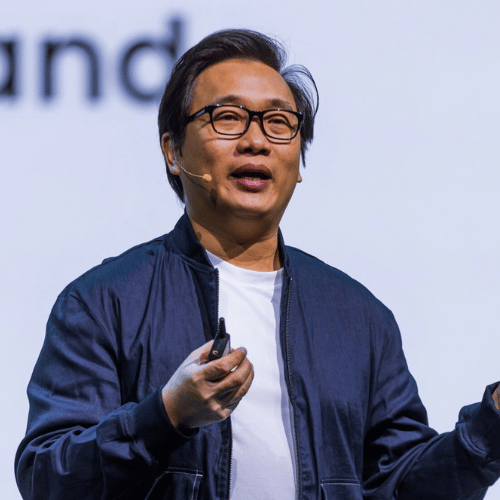
Anndy Lian is an early blockchain adopter and experienced serial entrepreneur who is known for his work in the government sector. He is a best selling book author- “NFT: From Zero to Hero” and “Blockchain Revolution 2030”.

Currently, he is appointed as the Chief Digital Advisor at Mongolia Productivity Organization, championing national digitization. Prior to his current appointments, he was the Chairman of BigONE Exchange, a global top 30 ranked crypto spot exchange and was also the Advisory Board Member for Hyundai DAC, the blockchain arm of South Korea’s largest car manufacturer Hyundai Motor Group. Lian played a pivotal role as the Blockchain Advisor for Asian Productivity Organisation (APO), an intergovernmental organization committed to improving productivity in the Asia-Pacific region.

An avid supporter of incubating start-ups, Anndy has also been a private investor for the past eight years. With a growth investment mindset, Anndy strategically demonstrates this in the companies he chooses to be involved with. He believes that what he is doing through blockchain technology currently will revolutionise and redefine traditional businesses. He also believes that the blockchain industry has to be “redecentralised”.

j j j

From Bitcoin to bonds: How the Iran conflict is reshaping investment strategies

From Bitcoin to bonds: How the Iran conflict is reshaping investment strategies

The recent US military strikes on Iranian nuclear facilities, announced by President Donald Trump on Saturday, have thrust the ongoing Iran-Israel conflict into a new and dangerous phase, sending ripples of uncertainty through global markets. Investors, already grappling with mixed signals from US stock performance and upcoming economic indicators, are now forced to weigh the potential fallout of this unprecedented escalation.

In my view, this moment represents a critical juncture—not just for financial markets, but for the broader trajectory of global stability and economic health. Below, I’ll unpack the myriad factors at play, offering a detailed exploration of how these developments are shaping the world as we know it.

The geopolitical powder keg: US strikes and Iran’s retaliation

The announcement that the United States had directly entered the Iran-Israel conflict by launching attacks on three Iranian nuclear sites—Fordo, Natanz, and Isfahan—caught markets and analysts off guard. This operation, executed in coordination with Israel and involving over 125 aircraft and bunker-buster munitions, marks a significant departure from the US’s previous role as a diplomatic and indirect supporter in this regional standoff.

These strikes targeted key components of Iran’s nuclear program, a move that signals a bold escalation aimed at curbing Tehran’s nuclear ambitions. The immediate aftermath has been anything but reassuring. Iran responded swiftly with missile and drone attacks on Israeli cities, coupled with threats to target US military bases in the Gulf. This tit-for-tat retaliation has heightened fears of a broader conflict that could engulf the Middle East, a region already fraught with tension.

This escalation is a double-edged sword. On one hand, the US and Israel may view it as a necessary step to deter Iran’s nuclear progress, potentially stabilising the region in the long term by weakening a perceived threat. On the other hand, the immediate risk of miscalculation or overreaction could plunge the region—and by extension, the global economy—into chaos.

The Middle East is a linchpin for global oil markets, and any disruption here could send shockwaves far beyond its borders. As an observer, I can’t help but feel a sense of unease about how delicately balanced this situation is and how quickly it could spiral out of control depending on Iran’s next move.

Market reactions: A mixed bag of caution and resilience

The financial markets have responded to these developments with a blend of caution and measured resilience, reflecting the uncertainty that defines this moment. On Friday, before the US strikes were announced, US stock markets closed with mixed results: the Dow Jones Industrial Average eked out a modest gain of 0.08 per cent, while the S&P 500 and Nasdaq Composite slipped by 0.22 per cent and 0.51 per cent, respectively.

This uneven performance hints at investor hesitation even before the weekend’s bombshell news. By Monday, as the new trading week began, Asian equities opened lower, and US equity index futures pointed to a downward start for Wall Street, suggesting that the geopolitical shock is starting to weigh more heavily on global risk sentiment.

What strikes me here is the flight to safety that’s becoming evident in other asset classes. US Treasury yields, for instance, were mostly lower on Friday, with the 10-year yield dipping to 4.37 per cent and the 2-year yield falling to 3.90 per cent. This decline in yields—a drop of more than 1 basis point for the 10-year and over three basis points for the two-year—signals that investors are piling into government bonds, traditionally seen as a safe haven during times of uncertainty.

Gold, another classic refuge, held steady at US$3,368.68 per ounce, showing little movement, while Brent crude oil unexpectedly fell by 2.33 per cent to US$77.01 per barrel. The muted reaction in oil prices surprised me, given the Middle East’s critical role in global energy supplies. It suggests that, for now, investors aren’t pricing in a significant disruption, but that could change in an instant if the conflict intensifies.

Cryptocurrencies: A barometer of risk appetite

The cryptocurrency market, often a bellwether for risk appetite, has not been immune to the turbulence. Bitcoin, the world’s largest cryptocurrency by market value, took a sharp dive on Sunday, dropping 4.13 per cent to US$99,237 by mid-morning Eastern Time. Ether, the second-largest, fared even worse, plummeting 8.52 per cent to US$2,199. This sell-off sent Bitcoin below the psychological US$100,000 support level, a threshold that traders watch closely.

Popular trader Cas Abbe, in a post on X, warned that Bitcoin could slide further to the US$93,000–US$94,000 range before finding a bottom. The weakness didn’t stop with Bitcoin; it dragged other major altcoins, such as ETH, XRP, SOL, and HYPE, below their respective support levels, signalling a broader souring of sentiment in the cryptocurrency space.

Yet, there’s a glimmer of hope—or perhaps speculative optimism-in Bitcoin’s late-Sunday recovery, as it climbed back above US$101,000. To me, this rebound, alongside the modest moves in gold and subdued reactions in oil and equity futures, hints that some traders are betting on a contained conflict rather than a sustained geopolitical crisis.

Still, the volatility in cryptocurrencies underscores a broader risk-off mood. As someone who has closely followed these markets, I see this as a reflection of how intertwined digital assets have become with global events—once seen as a fringe phenomenon, they’re now a real-time gauge of investor sentiment.

Economic data: The next piece of the puzzle

Amid this geopolitical maelstrom, the US economic calendar is poised to deliver critical data that could either calm or inflame market jitters. Tonight, we’ll see the preliminary S&P Global US PMI readings for June, which measure the health of the manufacturing and service sectors, alongside existing home sales data for May, a key indicator of consumer confidence and the vitality of the housing market.

A strong PMI could signal that the US economy is holding up despite external pressures, potentially buoying investor confidence. Conversely, a weak reading might stoke fears of a slowdown, amplifying the uncertainty already swirling around the Iran-Israel conflict.

The housing data, meanwhile, offers a window into how American consumers are faring. A drop in existing home sales could suggest that high interest rates and economic uncertainty are eroding confidence, while a robust figure might counterbalance some of the geopolitical gloom.

Personally, I’m inclined to think these numbers will be pivotal—not just for markets, but for the Federal Reserve’s next moves, which I’ll explore shortly. In a world where every data point is scrutinised, tonight’s releases feel like a potential tipping point.

The Fed’s delicate dance: Rates, inflation, and oil

Speaking of the Federal Reserve, Fed Governor Christopher Waller’s recent comments have added another layer to this intricate narrative. On Friday, he noted that inflation was softening to a level where the Fed could contemplate cutting interest rates at its July meeting.

This dovish tilt sent US Treasury yields lower and contributed to a 0.20 per cent decline in the US Dollar Index to 98.71. For me, Waller’s remarks are a ray of light in an otherwise stormy outlook—lower rates could stimulate an economy facing headwinds from tariffs and now geopolitical risks. But here’s the catch: the Iran-Israel conflict could upend this calculus.

If the conflict disrupts oil supplies—say, through Iranian retaliation targeting Gulf infrastructure or the Strait of Hormuz—oil prices could surge. Analysts from JPMorgan have cautioned that an all-out conflict might push oil above US$100 per barrel, a level not seen since 2022.

Higher energy costs would act like a tax on consumers and businesses, potentially reigniting inflation just as the Fed hopes to tame it. In my view, this puts the Fed in a bind: cut rates to support growth and risk fueling inflation, or hold steady and risk choking an economy already under strain. It’s a tightrope walk, and the geopolitical wild card makes it all the more precarious.

The bigger picture: Global economic risks and opportunities

Zooming out, the implications of this conflict extend far beyond immediate market swings. The Middle East accounts for a substantial portion of global oil production, and any prolonged disruption could significantly impact economies that rely heavily on energy imports.

Higher oil prices would squeeze consumer spending, slow economic growth, and possibly tip the world into a stagflationary spiral, characterised by stagnant growth paired with rising prices. For the US, already navigating Trump’s tariff-driven economic policies, this could compound existing challenges, creating a perfect storm of inflationary pressures and reduced demand.

Yet, there’s a flip side. If the conflict de-escalates, perhaps through diplomatic breakthroughs or a mutual stand-down, markets could stabilise, and attention might shift back to economic fundamentals. A contained outcome could even spur long-term shifts, such as accelerated investments in renewable energy or alternative oil sources, thereby reducing dependence on the volatile Middle East.

I see both peril and potential here: the risk of a downturn is real, but so is the chance for resilience and adaptation if cooler heads prevail.

My take: A call for vigilance

In my opinion, we’re at a crossroads where vigilance is paramount. The US strikes on Iran have upped the ante, and while markets haven’t yet priced in a worst-case scenario, the potential for escalation looms large. Investors should keep a close eye on Iran’s response, tonight’s economic data, and the Fed’s July meeting.

For now, the flight to safety, into Treasuries and, to a lesser extent, gold, makes sense, but the muted oil reaction and Bitcoin’s partial recovery suggest a fragile hope that this won’t spiral out of control.

Personally, I’m torn. Part of me fears the domino effect of a broader conflict: higher oil prices, stalled growth, and a Fed with its hands tied. Another part wonders if this could be a catalyst for overdue shifts in global energy and geopolitical strategies.

Either way, the stakes are sky-high, and the coming days will tell us much about where this road leads. For investors and ordinary folks alike, staying informed and agile is the best defence against a world that feels increasingly unpredictable.


Source: https://e27.co/from-bitcoin-to-bonds-how-the-iran-conflict-is-reshaping-investment-strategies-20250623/

Anndy Lian is an early blockchain adopter and experienced serial entrepreneur who is known for his work in the government sector. He is a best selling book author- “NFT: From Zero to Hero” and “Blockchain Revolution 2030”.

Currently, he is appointed as the Chief Digital Advisor at Mongolia Productivity Organization, championing national digitization. Prior to his current appointments, he was the Chairman of BigONE Exchange, a global top 30 ranked crypto spot exchange and was also the Advisory Board Member for Hyundai DAC, the blockchain arm of South Korea’s largest car manufacturer Hyundai Motor Group. Lian played a pivotal role as the Blockchain Advisor for Asian Productivity Organisation (APO), an intergovernmental organization committed to improving productivity in the Asia-Pacific region.

An avid supporter of incubating start-ups, Anndy has also been a private investor for the past eight years. With a growth investment mindset, Anndy strategically demonstrates this in the companies he chooses to be involved with. He believes that what he is doing through blockchain technology currently will revolutionise and redefine traditional businesses. He also believes that the blockchain industry has to be “redecentralised”.

j j j

“Memes Are Main Pillar in Web3”: Industry Experts Debate IP and Investment Opportunities at MemeX Festival

“Memes Are Main Pillar in Web3”: Industry Experts Debate IP and Investment Opportunities at MemeX Festival

The MemeX Festival, held on February 18, 2025, during Consensus HK 2025, brought together blockchain enthusiasts, investors, and meme lovers to explore the fascinating intersection of meme intellectual property (IP) and investment opportunities. Here’s the most interesting moments from the meme coins discussion.

MemeCore, a leading EVM-based Layer 1 blockchain, hosted an event to connect Web2 and Web3 projects and boost brand visibility. The festival attracted more than 2,000 registrations, marking a significant moment for blockchain and meme communities.

A panel discussion called “Crypto Meme Magic: The Intersection of Meme IP and Investment Opportunities” was among the festival’s key events. I moderated the panel. Industry experts Thomas Kay (head of international business, WEEX Global), Christian Oertel (global expansion lead, Conflux Network), Larry Lundy (chief business officer, Hashpower X) and Tasso Lago (founder, Financial Move) discussed memes’ role in the blockchain ecosystem.

Christian brought up some real-world examples. “At Conflux, we’re working with IPs like McDonald’s in China,” he said. “The catch is, it’s mostly NFTs for now.” Still, he’s optimistic—look at Pudgy Penguins or Doodles. Those projects turned memes into IP through NFTs and token drops. It’s a glimpse of what’s possible.

Thomas added another layer. “IP is so recognizable,” he said. “People see your project and instantly know it’s you.” He shared some wild stats from WEEX Global: when Trump Coin launched, user activity tripled, and trading volume shot up tenfold. That’s the kind of impact meme IP can have—I was blown away.

How I’d Invest in Memes

The panelists had some great takes on meme coin investing. Tasso keeps it practical: “I check the charts first, then see if the meme’s building an ecosystem.” He’s a fan of Shiba Inu’s approach—engaging new projects and showing long-term promise. I think that’s a smart way to play it.

Larry loves Dogecoin’s versatility. “It’s one of the original proof-of-work minables,” he said. “A victimless way to move liquidity in and out.” He’s got a point—its emotional pull makes it a unique bet. “Memes are culture, and they’re business,” he wrapped up. I couldn’t agree more.

Where Memes Are Headed in Web3

As we wound down, we looked ahead. Christian called memes a “social phenomenon.” “You feel the full cycle of emotions and share it with thousands of strangers,” he said. “There’s something mystical there.” I feel that too—it’s what keeps me hooked.

Thomas doubled down on community. “The most activity in crypto right now? It’s in the meme space,” he said. “It’s a top driver for growth and engagement.” He’s spot-on—memes are where the energy is.

I closed things out with my own take: “Meme is a main pillar in Web3. It’s a door opener and the biggest community driver.” It’s why I’m so passionate about this at MemeCore.

My Final Thoughts

Hosting the Crypto Meme Magic panel was a blast. It showed me—again—how transformative memes are in blockchain. They onboard newbies, pump liquidity, and build communities like nothing else. The future? I think it’s about memes evolving into ecosystems, creating lasting IP, and linking Web2 to Web3.

With their mix of humor, culture, and investment potential, memes aren’t going anywhere—they’re here to shape the crypto world.


Source: https://yellow.com/news/memes-are-main-pillar-in-web3-industry-experts-debate-ip-and-investment-opportunities-at-memex-festival


Anndy Lian is an early blockchain adopter and experienced serial entrepreneur who is known for his work in the government sector. He is a best selling book author- “NFT: From Zero to Hero” and “Blockchain Revolution 2030”.

Currently, he is appointed as the Chief Digital Advisor at Mongolia Productivity Organization, championing national digitization. Prior to his current appointments, he was the Chairman of BigONE Exchange, a global top 30 ranked crypto spot exchange and was also the Advisory Board Member for Hyundai DAC, the blockchain arm of South Korea’s largest car manufacturer Hyundai Motor Group. Lian played a pivotal role as the Blockchain Advisor for Asian Productivity Organisation (APO), an intergovernmental organization committed to improving productivity in the Asia-Pacific region.

An avid supporter of incubating start-ups, Anndy has also been a private investor for the past eight years. With a growth investment mindset, Anndy strategically demonstrates this in the companies he chooses to be involved with. He believes that what he is doing through blockchain technology currently will revolutionise and redefine traditional businesses. He also believes that the blockchain industry has to be “redecentralised”.

j j j