Opinion Article on Forkast : How Yuga Labs’ NFT sale failed to put its community first

Opinion Article on Forkast : How Yuga Labs’ NFT sale failed to put its community first

The ‘virtual land’ sale that broke Ethereum was also a fiasco for buyers. Should Yuga Labs have seen it coming and taken preventative action?

The largest and perhaps most highly anticipated NFT sale so far this year took place recently when Yuga Labs launched their sale of virtual land to ApeCoin holders for around US$5,800 (the clearing price was set at 305 ApeCoin). The huge level of demand for the hugely popular Otherdeed NFT mint, which raised about US$320 million, created a two-fold problem for the Ethereum-based sale. Firstly, the steep rise in the volume of transactions led to a spike in the price of Ethereum gas fees, requiring people to spend around two ETH (approximately US$6,000) in fees to mint. Secondly, many of the participants in the sale, due to the bottleneck in demand, both missed out on the minting and lost their Ethereum in the process.

Such was the chaos that soon after the sale, Yuga Labs tweeted: “We are aware that some users had failed transactions due to the incredible demand being forced through Ethereum’s bottleneck.” While YugaLabs promised “we’ve got your back” and that they would be “refunding your gas,” there was considerable pushback from the NFT (non-fungible tokens) community. Considering the stature of the sale, it is worth examining what happened in greater detail to understand what this means both for the NFT market going forward, not to mention its implications for the ideal of the core importance of the Web 3.0 community to the future of NFTs and the metaverse.

After Yuga Labs acquired CryptoPunks earlier this year, which put the VC-backed company valued at US$4 billion in the spotlight, this latest event certainly raises the stakes. Yuga Labs admitted the scale of the minting event not only crashed Etherscan but also seriously impacted Ethereum. “It seems abundantly clear that ApeCoin will need to migrate to its own chain in order to properly scale. We’d like to encourage the DAO to start thinking in this direction,” they added. But clearly with all the resources at their disposal, the chaotic result only created more skepticism on crypto Twitter.

But before diving into the organizational aspects, the upset among NFT newbies should not be ignored when crypto is so keen to gain mass adoption. That upset was voiced by NFT influencer ap3father.eth, who pointed out that he’d brought many friends into the space for the drop: “My friends said things like, ‘who would ever use Ethereum?’ ‘NFTs are only for rich people’ … and to be honest I agreed with them … although my initial reactions were filled with emotion … I agreed … How was this going to prove we are ‘innovating.’” It’s worth noting that Yuga Labs raised around US$320 million through the minting, with 55,000 tokens sold out in under three hours.

The key problem is that it’s not only an issue with scaling the number of transactions but also the number of smart contracts (“trustless computation”) — an issue also faced by so-called Ethereum killers like Polygon, Avalanche and Solana. While these chains may boast of a fast transaction per second (TPS) performance, only a small percentage is available for smart contract operations. It is interesting that in the example from U.K.-based Radix DLT that they’ve done away with the EVM (Ethereum Virtual Machine) and instead built their own engine, which meant “a transaction is a transaction, it doesn’t matter if that is minting NFTs, swapping on DEXs or taking out a crypto loan,” tweeted Radix Works CEO Piers Rudyard in response to the Yuga Labs mint bottleneck and proposed scaling solutions. “That means that TPS performance and DeFi performance on Radix are basically the same thing,” Now, while I appreciate Rudyard is using this opportunity to plug his solution, the Yuga Labs mint controversy is also highlighting the significant blockchain bottleneck challenges ahead for mass adoption.

Putting that high-level critique of Ethereum smart contract functionality aside, using optimized smart contracts, such as ERC-721A, could have made the mint more equitable by reducing gas fees to the bare minimum. As Will Papper, co-founder of SyndicateDAO, tweeted: “Modifying a few words would have saved $80M+.”

Furthermore, limiting the number of KYC (know-your-customer)-approved wallets to only those required for the mint would have helped avoid gas wars and provided a positive minting experience for all parties involved. But for some, such as @DrNickA of FactoryDAO, this was missing the point because the fact that the number of NFTs outstripped KYC’d wallets was intentional. After all, Yuga had the KYC information in advance for all the prospective buyers, they could have created a whitelist to manage demand.

While Yuga Labs has since confirmed it would refund the fees for transactions that failed due to the problems, it’s clear that lessons need to be learned from its minting debacle. While the likes of Yuga’s VC backers, a16z, point to the core importance of “community ownership” to Web3, including NFTs and the metaverse, surely how that ownership is delivered is important?

Particularly coming so closely after its purchase of CryptoPunks, it’s worrying — and not helpful to the cause of mass adoption — when the leading NFT company is so careless with its community. It’s certainly my hope that ApeCoinDAO, which styles itself as independent of BAYC and community-led, lives up to its responsibilities and shows that Web3 is more than a business model for the metaverse, but also a way for people to engage in this new (virtual) world.


Original Source: https://forkast.news/how-yuga-labs-otherdeed-nft-mint-failed-put-community-first/

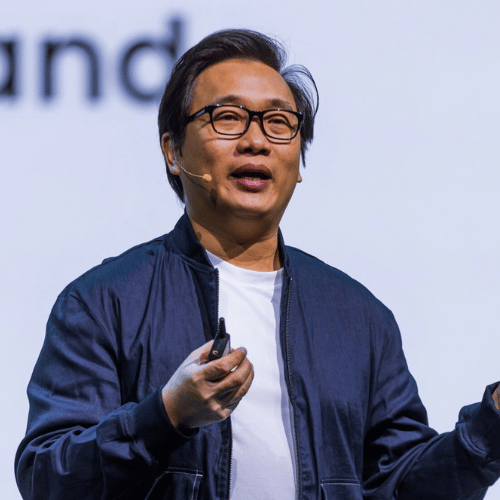
Anndy Lian is an early blockchain adopter and experienced serial entrepreneur who is known for his work in the government sector. He is a best selling book author- “NFT: From Zero to Hero” and “Blockchain Revolution 2030”.

Currently, he is appointed as the Chief Digital Advisor at Mongolia Productivity Organization, championing national digitization. Prior to his current appointments, he was the Chairman of BigONE Exchange, a global top 30 ranked crypto spot exchange and was also the Advisory Board Member for Hyundai DAC, the blockchain arm of South Korea’s largest car manufacturer Hyundai Motor Group. Lian played a pivotal role as the Blockchain Advisor for Asian Productivity Organisation (APO), an intergovernmental organization committed to improving productivity in the Asia-Pacific region.

An avid supporter of incubating start-ups, Anndy has also been a private investor for the past eight years. With a growth investment mindset, Anndy strategically demonstrates this in the companies he chooses to be involved with. He believes that what he is doing through blockchain technology currently will revolutionise and redefine traditional businesses. He also believes that the blockchain industry has to be “redecentralised”.

j j j

Comments on Banklesstimes: “NFT Activity is not ‘Stabilizing’, its maturing.”

Comments on Banklesstimes: “NFT Activity is not ‘Stabilizing’, its maturing.”

Sharing additional comments:

I disagree that NFT transaction activity is stabilizing in 2022. I will not say it’s stabilizing, I will use the word “matured”. If you are comparing the “blue chips” of NFTs, yes I do agree that the transaction activities are somewhat dormant. Take Bored Ape for example, if you perhaps hold more than 50 pieces and you want to sell it, can you sell it at the floor price? I do not think so. In another word, the realisation of the sale is not very feasible.

The volume will in fact pick up in the next half of the year given that more NFTs are being made available on more chains. Polygon for instance will be gaining a lot more traction in the months to come with their NFT and game assets NFTs. The in-game assets both in NFT and FT would bring in more liquidity to the space and will help to increase transactions.

You see more variations, music, celebrity, membership, game, even PFPs got more mature and complete storylines. Projects that are trending such as STEPN and Moonbird has inspired many crypto native to come out with a similar concept. Some others such as High Sloth Society is bringing membership to the next level by partnering with Sandbox to replicate a Korean National Treasure onto the Metaverse and showcase Korean heritage in a different way. This brings more utility and usage to NFTs.

Before you can only purchase from Opeansea now there are thousands of marketplaces, centralized and decentralized. Looksrare at one point even overtaken Opensea.

Projects launched this year are also more mature and more “professional”, they have utility, ecosystem, established team (so-called labs), tokenomics (such as X to earn). There are NFT financial products coming out like staking or nesting. This brings in volume.

Adding on, traditional web2 players also came into the picture and try to take a cut from it. We see more and more brands and companies issue their own NFTs or collaborations. This is a win-win for everyone.

This year you can no longer hear a new NFT went up 10,000 times, a 10 times growth will be considered extremely successful. Glad to see the NFT market is now more mature.


———————————————


NFT Activity ‘Stabilizing’ in 2022: Report

  • NFT transaction volume growth inconsistent since 2021
  • $37 billion poured into NFT marketplaces in 2022 as of May 1
  • NFT transaction activity in the week of March 13 lowest since the week of August 1, 2021
  • Q1 2022, 950,000 unique addresses bought or sold an NFT, up from 627,000 in Q4 2021
  • Web traffic to popular NFT platforms most from Central and Southern Asia

Even as NFT transactions volume grew significantly since the beginning of 2021 despite fluctuating month to month, activities in the space have cooled off in the first quarter of 2022, according to a report from blockchain data firm Chainalysis.

Overall, collectors have sent over $37 billion to NFT marketplaces in 2022 as of May 1, putting them on pace to beat the total of $40bn sent in 2021.

NFT market growth inconsistent

However, since late summer 2021, NFT transaction growth has remained inconsistent, with activity largely remaining flat except for two big spikes: One in late August, which was likely driven by the release of the Mutant Ape Yacht Club collection, and one stretching from late January to early February of 2022, which was likely driven by the launch of the LooksRare NFT marketplace.

After that spike though, NFT transaction activity declined significantly beginning in mid-February, dropping from $3.9bn the week of February 13 to $964 million the week of March 13 — the lowest weekly level since the week of August 1, 2021.

The NFT space is cresting the peak of the Gartner hype cycle and since NFTs are by nature illiquid and communities are built around concepts like diamond hands – who do not sell, many will continue to hold rather than sell for ever-lower prices.

Garrett Minks, CTO of RAIR TECH

“This trend will reverse when real utility is attached to the surviving NFT projects. Blue-chip projects such as Cryptopunks, Bored Apes, and Art Blocks, will likely survive and come out the other side stronger for proving themselves through an entire cycle. Some NFTs might even continue to gain value as safe haven NFTs assets, while liquidity is drained from lower-tier projects,” Minks says.

In Q1 2022, 950,000 unique addresses bought or sold an NFT, up from 627,000 in Q4 2021.

Increase in number of active NFT buyers since Q2 2020

Overall, the number of active NFT buyers and sellers has increased every quarter since Q2 2020. In Q2 2022 as of May 1, 491,000 addresses have transacted with NFTs, putting the NFT market on pace to continue its quarterly growth trend in the number of participants, the report states.

Anndy Lian, Thought Leader and Chief Digital Advisor to Mongolian Productivity Organisation disagrees the NFT transaction activity has “stabilized,” but rather “matured”.

“The volume will in fact pick up in the next half of the year given that more NFTs are being made available on more chains. Polygon for instance will be gaining a lot more traction in the months to come with their NFT and game assets NFTs,” he says and adds that this year, one will no longer hear a new NFT went up 10,000 times, a 10 times growth will be considered extremely successful.

Echoing similar sentiments, experts say stabilizing of the NFT activity is a positive sign, that the market is maturing and transitioning from speculation to real application development.

NFT valuation will depend on the usability of the token and the best tokens will be those that allow people to transact real value quickly and simply.

“That may be a virtual good, a service, or something else. The end goal is to have a variety of tokens that people use to buy and sell things as easily as we use dollars today. As long as someone is actively transacting with a token, the value of that token is increasing. The stabilization will happen once a few major applications have been implemented,” Chris Panteli, Founder at LifeUpswing says.

Original Source: https://www.banklesstimes.com/news/2022/05/08/nft-activity-stabilizing-in-2022-report/

Anndy Lian is an early blockchain adopter and experienced serial entrepreneur who is known for his work in the government sector. He is a best selling book author- “NFT: From Zero to Hero” and “Blockchain Revolution 2030”.

Currently, he is appointed as the Chief Digital Advisor at Mongolia Productivity Organization, championing national digitization. Prior to his current appointments, he was the Chairman of BigONE Exchange, a global top 30 ranked crypto spot exchange and was also the Advisory Board Member for Hyundai DAC, the blockchain arm of South Korea’s largest car manufacturer Hyundai Motor Group. Lian played a pivotal role as the Blockchain Advisor for Asian Productivity Organisation (APO), an intergovernmental organization committed to improving productivity in the Asia-Pacific region.

An avid supporter of incubating start-ups, Anndy has also been a private investor for the past eight years. With a growth investment mindset, Anndy strategically demonstrates this in the companies he chooses to be involved with. He believes that what he is doing through blockchain technology currently will revolutionise and redefine traditional businesses. He also believes that the blockchain industry has to be “redecentralised”.

j j j

Interview with Anndy Lian: Role of DAO and its Future

Interview with Anndy Lian: Role of DAO and its Future

– An Ukrainian DAO raised about 8 million dollar for the war effort? How do you see the role of DAO in international financing for economically ravaged/weaker countries?

There’s certainly potential in quickly and securely using DAOs (decentralized autonomous organizations) for financing for troubled parts of the world. The case of the Ukraine DAO shows that such a decentralized structure can be spun up quickly and cheaply and engage with a community around issues of concern to individuals around the world. You can also see from the growing use of crypto donations in the NGO and charity sector that DAOS could become a more formal means to channel funds and with less cost in terms of money transfer fees, and with less issues with government bureaucracy by directing funds straight into the pockets of those most in need. In addition, as a collectively owned and managed entity with a set of rules written in computer code, the DAO offers the potential couple with good governance, to avoid corruption that can damage already economically weakened countries.


– Russia has now been imposed multiple economic sanctions. How will DAO in particular play a role in Russian economy now that it will largely be cut off from the international financial system?

It may well be that civil society groups and civilian organizations faced with the impact of economic sanctions will use DAOs to bypass central government restrictions and appeal directly to people across the world for financial help. That will pose problems for the DAO as a model for co-operation as it raises pertinent questions about governance, how do you prove governance and how do you resist your funds being secured by state organizations. However, with the likely collapse of the Russian economy cryptocurrency gives ordinary Russians the opportunity to safeguard funds, as well as to use DAOs to pool resources to meet the needs for housing and heating to name two essential requirements for societal infrastructure to sustain the fabric of civil society in the face of the possible collapse of central government.


– Do you the ongoing Ukraine-Russia war as an inflection point in the mass adoption of DAO system? and how?

In fact, the rise of the DAO is closely tied to the emergence of cryptocurrency with the launch of Bitcoin back in 2008. It set the template, where typically the DAO founder has no workplace and no employees, but the project continues to run quietly because a group of people who believe in the project contribute to it.

More than a decade later, this DAO-based project has a market value of $1.3 trillion, making it one of the world’s top five company in terms of market value. Yes, Bitcoin is the most successful DAO right now, and its founder is the anonymous Satoshi Nakamoto. There is no boss or employees to manipulate, and all such organizations operate autonomously and anonymously. This is DAO’s core value.

More recently, the trend in using DAOs specifically to raise money for campaigns with a political theme have also emerged, in the lead up to the war in Ukraine. Notably ConstitutionDAO was founded on November 11, 2021, by a group of cryptocurrency enthusiasts. Its creators hoped to raise funds through the DAO method in order to purchase a copy of the US Constitution to realize the great dream of “putting the Constitution in the hands of the people,” and attracting over 17,000 donors. ConstitutionDAO took just nine days to raise approximately 11,000 ETH, which is worth more than $47 million.

While in December 2021 a DAO created to raise money for Ross Ulbricht, the jailed founder of Silk Road, announced that over 1,320 people raised over 2,800 ETH in to win the auction for Ross’s NFT. In short, the main reasons for FreeRossDAO’s popularity are its association with NFTs and people’s sympathy for the unfair treatment of Ross.

Taken in this context the mass adoption of DAOs to raise money to support the Ukrainian people is part of a growing trend, highlighted by the urgent need for resources to help refugees and civilian organizations. Indeed, the inspiration for the Ukraine DAO, the leading DAO which has raised over $13 million in crypto donations to date, came from a UK-based Ukrainian activist Alona Shevchenko who works with FreeRossDAO. Connecting to her network of friends led to the connection to Nadya Tolokonnikova of Pussy Riot, who launched the DAO on February 25 along with Trippy Labs and members of PleasrDAO, which was behind FreeRossDAO.

Therefore, the launch of the Ukraine DAO is in many ways simply a recognition of the already growing use of DAOs to raise funds for specific causes; the Russian invasion was the catalyst but whether it is a ‘tipping point’ remains to be seen. Some of the previous issues such as concerns about crypto scammers using the situation to fraudulently raise funds have emerged concerning published crypto addresses when queried by Ethereum’s founder Vitalik Butelin. Which is why the use of the DAO mechanism, which provides greater transparency has proved so popular as well as the means to organize collectively around it. As stated on the Ukraine DAO website, similar to a direct P2P crypto donation method using a DAO coupled with crypto as the funding mechanism means that: “Decentralized Autonomous Organizations are a model for the world to witness how people with a common purpose can join and work together quickly to distribute funds to present humanitarian causes.”

The speed and global reach of the Ukraine DAO, bypassing the problems caused by using conventional funding means whether through central funding institutions such as the banks or examples such as the Patreon startup, which returned money raised for the Ukrainian army, certainly shows their power for future fundraising in Ukraine. Whether this will mean that DAOs will work as a broader model for organizational structure is another question. DAOS have also caught the imagination of the startup community in the US for example, with VC money following suit. That entrepreneurial interest includes celebrity crypto owner Mark Cuban, who added a note of caution in highlighting the importance of good governance to provide long-term benefit to DAO members. “The future of corporations could be very different as DAOs take on legacy businesses,” he is quoted as saying. “Entrepreneurs that enable DAOs can make money. If the community excels at governance, everyone shares in the upside.”


– DAO, largely speaking, is legally still undefined. In the sense, there is a lot of gray area when it comes to DAO. Do you see DAO as a tool to channel the wealth of people who have been sanctioned?

It’s correct to say that DAOs can be used by any group of people with a collective purpose in mind, harnessing the power of cryptocurrency and guided by a set of principles embedded into the smart contracts that regulate the DAO’s operations. However, as recently outlined by the industry organisation CryptoUK, the converse is that by the nature of crypto its very possible to track any illegal funds coming out of Russia. For example, that are a lot of coin swap pools that are trackable, which can be monitored. So, when it comes to trying to evade sanctions it shows that the crypto industry has the capability to react and mobilize in real time to freeze or block funds and also to trace transactions to a single wallet where required. “Crypto transactions are not anonymous and untraceable. Through Public / Private sector collaboration we can quickly inform the criminal world (or those looking to circumvent sanctions) that this technology is exactly the opposite of what they are looking for in terms of anonymity and lack of traceability,” confirmed CryptoUK.


– How can DAO become more legally secured across the world, in order to make sure it is not misused by non-state actors?

While DAOs offer an alternative to organizing a corporation with decision making baked into the code, funding via the Dao’s token, and decisions decided by the whole community, in practice they currently lack the legal status of a corporate entity and a consistent regulatory framework. The token itself depending on the country’s regulations may be deemed as a security and come under tight legal regulations of its own, potentially opening up members of a DAO to liability. At least in the US as unincorporated entities, DAOs do not need to follow the legal formalities of incorporation such as registration, bylaws, and contracts. As a result, DAOs are treated as unincorporated partnerships. In a partnership, each individual has unlimited liability. Therefore, if the DAO is hacked or declares bankruptcy, each member is exposed to liability for the entire amount of funds. This key aspect of the legal status of DAOs for fund raising would need to be resolved to ensure they are not misused by non-state actors. It maybe that a lead would need to be taken at an international level, such as through the United Nations, as well as by individual nation states if the DAO is to prove sustainable from a regulatory standpoint, therefore.


Original Source: https://newslookout.com/feature/interview-with-anndy-lian-role-of-dao-and-its-future/

Anndy Lian is an early blockchain adopter and experienced serial entrepreneur who is known for his work in the government sector. He is a best selling book author- “NFT: From Zero to Hero” and “Blockchain Revolution 2030”.

Currently, he is appointed as the Chief Digital Advisor at Mongolia Productivity Organization, championing national digitization. Prior to his current appointments, he was the Chairman of BigONE Exchange, a global top 30 ranked crypto spot exchange and was also the Advisory Board Member for Hyundai DAC, the blockchain arm of South Korea’s largest car manufacturer Hyundai Motor Group. Lian played a pivotal role as the Blockchain Advisor for Asian Productivity Organisation (APO), an intergovernmental organization committed to improving productivity in the Asia-Pacific region.

An avid supporter of incubating start-ups, Anndy has also been a private investor for the past eight years. With a growth investment mindset, Anndy strategically demonstrates this in the companies he chooses to be involved with. He believes that what he is doing through blockchain technology currently will revolutionise and redefine traditional businesses. He also believes that the blockchain industry has to be “redecentralised”.

j j j