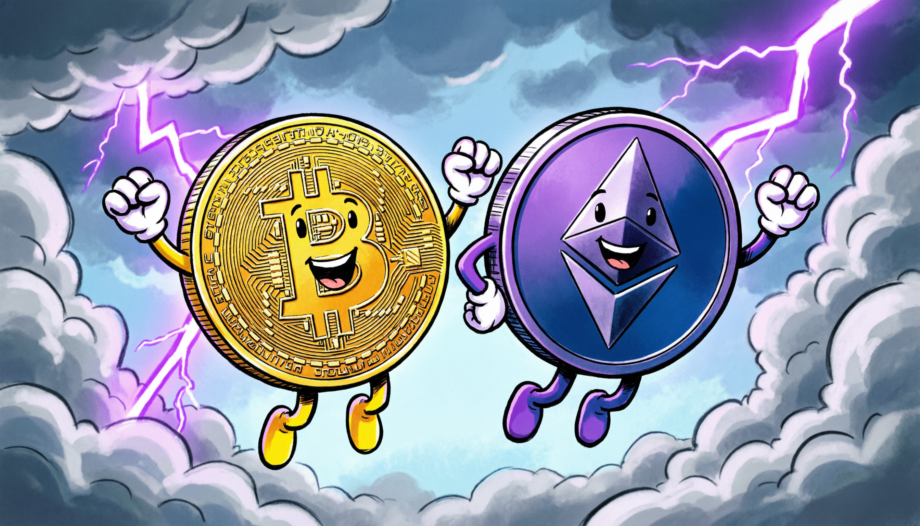
Bitcoin and Ethereum just flushed US$1.44B in shorts and the real test begins now

Bitcoin and Ethereum just flushed US$1.44B in shorts and the real test begins now

The digital asset landscape navigates a critical transition phase. Investors watch an ecosystem digesting massive recent gains as they search for the next directional catalyst. The broader cryptocurrency sector recorded a modest gain of 0.92 per cent over the last 24 hours. This steady upward movement reflects a maturing environment where traditional finance dictates the pace.

My perspective on this current structure highlights a profound shift in underlying demand dynamics. Pure hype no longer drives valuations. Traditional financial mechanisms and macroeconomic policies now anchor the leading networks. This consolidation period offers a necessary cooling-off mechanism after historic surges. Participants now monitor specific technical thresholds and upcoming legislative events.

Bitcoin leads this consolidation effort, slightly underperforming the broader sector. The premier digital asset registered a 0.65 per cent increase, reaching US$77,458.78. This minor uptick represents a direct continuation of last week’s rally. The primary engine driving this sustained upward momentum remains the relentless institutional appetite flowing through spot exchange-traded funds. These vehicles absorbed a staggering US$1.92 billion in net inflows last week.

This figure marks the strongest weekly capital influx in 10 months. BlackRock commanded a massive share of participation in traditional finance. Their specific fund attracted over US$1.33 billion in fresh money. This persistent buying establishes a formidable demand floor. Large financial entities continuously absorb selling pressure from early adopters. This dynamic fundamentally shifts the supply-and-demand equilibrium toward higher valuations.

The derivatives sector further illustrates this shift in structure. Traders experienced a historic short squeeze between August 19 and August 21. Exchanges forcibly closed out US$1.44 billion in short positions. Such massive liquidations typically signal extreme volatility. The current environment shows remarkable resilience. Total liquidation volume over the last 24 hours dropped 10 per cent to US$95.91M. This sharp decline indicates that leveraged participants have largely flushed out their risky positions.

The ecosystem now digests the previous volatility without the threat of cascading margin calls. Bitcoin is currently consolidating comfortably above its 200-day simple moving average at US$68,980. The relative strength index sits at 80.2. While this reading technically indicates an overbought condition, it simultaneously confirms the strength of the prevailing bullish trend.

The immediate trajectory of Bitcoin hinges entirely on its ability to defend crucial technical zones. The asset must remain above the US$72,879 mark. This valuation aligns perfectly with the 38.2 per cent Fibonacci retracement threshold. A successful defence of this area will likely trigger a renewed attempt to breach the recent swing high of US$79,463. Analysts often round this target to US$79,500.

A failure to hold this critical floor invites downside risk. Bears could push the valuation toward the 50 per cent Fibonacci zone at US$70,845. A complete breakdown might trigger a deeper correction toward US$69,000. Traders must also watch the political calendar. The United States Senate scheduled a crucial procedural vote on the crypto market structure Clarity Act for September 15. This legislative event could provide the exact regulatory clarity the ecosystem desperately craves.

Ethereum mirrors this institutional narrative while exhibiting unique macroeconomic characteristics. The second-largest network climbed 1.43 per cent to trade at US$2,448.87. This performance extends a strong weekly surge. Ethereum demonstrated a 94 per cent positive correlation with gold over the past week. This close relationship suggests that traditional safe-haven assets and digital protocols share the same macroeconomic drivers. Spot exchange-traded funds once again provide the foundational buying pressure.

These Ethereum investment vehicles recorded their strongest weekly inflows of 2026. The funds absorbed nearly US$700 million in fresh money for the week ending August 21. Friday saw US$185 million flow into these products. This direct participation in traditional finance confirms deep confidence in the underlying utility beyond mere speculative trading.

The macroeconomic environment also played a vital role in igniting this rally. The United States Treasury announced an expansion of liquidity support buybacks on August 19. This policy decision directly boosted risk assets and provided the initial impulse for the recent surge. Technical indicators suggest buyers might need a brief pause to digest these rapid gains.

The 14-day relative strength index for Ethereum currently rests at 78.15. This elevated reading clearly signals overbought conditions. The rapid pace of recent gains often necessitates sideways movement to allow technical indicators to reset. Buyers now test whether this protocol can sustain its upward trajectory despite these stretched readings.

The near-term path for Ethereum requires a decisive breakout above immediate resistance. The asset recently faced rejection at the US$2,500 barrier. Bulls must push the daily closing valuation convincingly above this ceiling. A successful breach opens the path toward the 127.2 per cent Fibonacci extension target at US$2,745. Buyers must fiercely defend the US$2,375 floor.

This valuation aligns with the 23.6 per cent Fibonacci retracement zone. A drop below this threshold would invalidate the immediate bullish structure. Developers also have a major catalyst on the horizon. The ecosystem scheduled a major Public Testnet Upgrade for September 2026. This technological milestone will likely draw significant attention and money back to the protocol.

My view interprets these parallel movements as a clear sign of ecosystem maturation. Both leading networks now rely heavily on traditional financial inflows and macroeconomic liquidity. Modest daily gains reflect a necessary pause following historic discoveries. Institutional money provides a solid foundation that limits downside volatility.

The sector now enters a defined consolidation phase with mapped risk and reward parameters. Participants must watch the crucial floors and await the upcoming legislative and technological catalysts. The ability of these assets to hold their ground during this quiet period will determine the magnitude of the next major cycle.

 

Source: https://e27.co/bitcoin-and-ethereum-just-flushed-us1-44b-in-shorts-and-the-real-test-begins-now-20260824/

Anndy Lian is an early blockchain adopter and experienced serial entrepreneur who is known for his work in the government sector. He is a best selling book author- “NFT: From Zero to Hero” and “Blockchain Revolution 2030”.

Currently, he is appointed as the Chief Digital Advisor at Mongolia Productivity Organization, championing national digitization. Prior to his current appointments, he was the Chairman of BigONE Exchange, a global top 30 ranked crypto spot exchange and was also the Advisory Board Member for Hyundai DAC, the blockchain arm of South Korea’s largest car manufacturer Hyundai Motor Group. Lian played a pivotal role as the Blockchain Advisor for Asian Productivity Organisation (APO), an intergovernmental organization committed to improving productivity in the Asia-Pacific region.

An avid supporter of incubating start-ups, Anndy has also been a private investor for the past eight years. With a growth investment mindset, Anndy strategically demonstrates this in the companies he chooses to be involved with. He believes that what he is doing through blockchain technology currently will revolutionise and redefine traditional businesses. He also believes that the blockchain industry has to be “redecentralised”.

j j j

Global markets ride the Fed wave, but can the rally last?

Global markets ride the Fed wave, but can the rally last?

Global markets showed a resilient spirit as investors largely brushed aside brewing political storms in key regions like Japan, France, and parts of the emerging world. Traders focused instead on the promise of easier monetary policy from the Federal Reserve, which propelled US stocks toward fresh peaks.

The S&P 500 gained 0.21 per cent, the Nasdaq Composite climbed 0.45 per cent to a record close of 21,798.70, and the Dow Jones Industrial Average rose 0.25 per cent. This upbeat mood reflected growing bets on a rate cut at the Fed’s September 17 meeting, with markets now pricing in a strong chance of a 50 basis point reduction following recent weak jobs data.

Economists at Standard Chartered and Bank of America adjusted their forecasts accordingly, pointing to cooling labour market signals as the trigger for bolder action from policymakers.

In my view, this optimism makes sense because the US economy still hums along with solid consumer spending and corporate earnings, but the Fed needs to act decisively to prevent any slowdown from gaining traction. A half-point cut could juice risk assets further without igniting inflation fears, especially with core PCE readings holding steady around 2.6 per cent.

Bonds, dollar, and gold respond

Bond markets echoed this sentiment as yields dipped across the curve. The two-year Treasury yield dropped 2.3 basis points to 3.486 per cent, while the ten-year yield fell 3.4 basis points to 4.040 per cent. Investors piled into Treasuries as a safe haven amid the political noise overseas, but the real driver came from expectations of lower short-term rates. The US Dollar Index weakened 0.3 per cent, easing pressure on exporters and giving multinational companies a breather on their overseas profits.

Gold, meanwhile, advanced 0.7 per cent to close at US$3,636 per ounce, benefiting from the dollar’s slide and persistent safe-haven demand tied to geopolitical flare-ups in the Middle East and Europe. I see gold’s rally as a classic hedge play, but its lofty levels also hint at broader concerns about fiscal sustainability in the US, where deficits continue to balloon past US$2 trillion annually. If the Fed cuts rates too aggressively, it could fuel even more gold buying from central banks in Asia and the Middle East.

Oil steadies on OPEC+ restraint

Over in commodities, Brent crude oil settled 0.8 per cent higher at US$66 per barrel after OPEC+ surprised markets with a smaller-than-expected supply hike. The group, comprising eight key members, agreed to boost output by just 137,000 barrels per day starting in October, a fraction of the 555,000 barrels per day increases seen in prior months. This cautious approach stems from sticky demand worries amid slowing global growth and ample non-OPEC supply from the US shale patch.

Geopolitical tensions, including Houthi attacks in the Red Sea and sanctions on Russian exports, kept a floor under prices, preventing a deeper slide. OPEC+’s restraint buys time for oil producers to navigate the energy transition, but it also underscores the cartel’s waning influence as electric vehicles proliferate and renewable investments surge. If China’s economy rebounds more forcefully than expected, we could see Brent push toward US$70 by year-end, but recession risks in Europe temper that upside.

Asia reacts to US momentum

Asian stock indexes mostly climbed on Monday, buoyed by the US rally and hopes for synchronised global easing. Japan’s Nikkei 225 surged to a milestone 44,000 for the first time, fuelled by optimism around trade deals and consumer spending data that beat forecasts. The index pulled back slightly in early Tuesday trading as Prime Minister Shigeru Ishiba’s potential departure added to policy uncertainty, with the yen weakening further against the dollar.

Political turbulence in Europe and emerging markets

In France, the government’s collapse under Prime Minister François Bayrou marked yet another chapter in political instability, raising fears of snap elections and fiscal gridlock that could drag on the eurozone’s recovery. Emerging markets faced their own headwinds, but the standout story came from Indonesia, where the Jakarta Composite plunged 1.28 per cent ahead of President Prabowo Subianto’s announcement replacing Finance Minister Sri Mulyani Indrawati with economist Purbaya Yudhi Sadewa.

Mulyani, a globally respected figure who steered the economy through the pandemic, leaves a void that could spark market jitters, especially with Indonesia’s rupiah already under pressure from capital outflows. Early Tuesday sessions saw most Asian bourses edge higher, with Hong Kong’s Hang Seng up 0.5 per cent on tech gains and South Korea’s Kospi adding 0.3 per cent.

These political shifts, while disruptive, are priced mainly in the months following, and markets will pivot back to fundamentals, such as earnings growth. That said, Indonesia’s move feels riskier; losing Mulyani at a time of high public debt could invite rating agency scrutiny and higher borrowing costs for Southeast Asia’s largest economy.

Crypto consolidates amid uncertainty

Turning to cryptocurrencies, Bitcoin grappled with resistance around US$112,500, consolidating after a recovery from the US$110,000 support zone. The flagship coin traded above US$111,000 and its 100-hour simple moving average, with a bullish trend line holding at US$110,800 on the hourly chart sourced from Kraken data. Bulls pushed past the 50 per cent Fibonacci retracement of the recent swing from US$113,372 to US$110,039, but bears dug in near US$112,600, capping upside.

A break below US$110,800 could trigger a sharper pullback, while staying under US$113,000 might signal more downside. Recent whale activity added pressure, with large holders offloading 112,000 BTC over the past month, hinting at September’s historical weakness for the asset.

On X, analysts noted Bitcoin boxing between US$112,000 and US$114,000 ahead of key CPI data, urging caution in a video breakdown that highlighted macro tailwinds from Fed cuts. Another post from Swiss Whale Intelligence flagged massive sales of over 5,000 BTC each, underscoring exchange inflows that could weigh on sentiment.

In my opinion, Bitcoin’s current stall reflects a broader crypto market awaiting clarity on US policy, but the setup favours bulls if rate cuts materialise. With mining difficulty hitting all-time highs, network security remains robust, and institutional inflows via ETFs could propel BTC toward US$116,000 if it clears US$113,000 resistance. September often proves choppy for Bitcoin, but this cycle’s momentum from halvings and adoption suggests any dip below US$110,000 offers a buying opportunity rather than a bear trap.

Dogecoin’s speculative swings

Dogecoin, the perennial meme coin darling, sparked endless debates on its trajectory, blending community fervour with technical scrutiny. After a strong first-quarter rebound above US$0.40, DOGE retreated to around US$0.22, testing support amid waning hype. Recent charts from CryptoELITES on X show resistance at US$0.27 and US$0.31, with a breakout requiring fresh institutional spark or viral momentum.

The REX-Osprey ETF filing emerged as a potential catalyst, promising easier access for big players and clearer regulations that could mirror Bitcoin’s ETF boost. Changelly’s forecasts paint a measured path: US$0.21 to US$0.24 in 2025, dipping to US$0.14 to US$0.19 in 2026 before rebounding to US$0.36 in 2027 and US$0.45 to US$0.53 in 2028.

By 2030, they eye highs near US$1.13, driven by broader crypto adoption and Dogecoin’s utility in payments via integrations like Twitter’s tipping features. Other analysts diverge; Wallet Investor sees an average US$0.279 by the end of 2025, while CoinCodex predicts a 16 per cent rise to US$0.276 by October, contingent on the altcoin season kicking in as Bitcoin dominance fades.

I lean toward the conservative side here; Dogecoin thrives on Elon Musk’s tweets and meme culture, but sustained growth requires real-world use cases, such as microtransactions or DeFi integrations. At current levels, it carves a potential bottom, and a push to US$0.54 on ETF approvals feels plausible, but US$5 remains a stretch without massive hype cycles. Speculators aiming for US$1 by 2030 should watch for volume spikes and correlation with Bitcoin’s movements, as DOGE often amplifies broader crypto trends.

Final thoughts: Risk appetite intact

Looking across these developments, global risk appetite holds firm despite the political crosswinds, and I expect that trend to persist into the week’s CPI release and Fed meeting. US equities near records underscore the strength of tech and consumer sectors, but watch for overvaluation in megacaps like Nvidia and Apple, where earnings multiples exceed 30 times forward profits.

Political risks in Japan and France could spill over if they delay reforms, hurting export-dependent economies, while Indonesia’s finance minister swaps tests emerging market resilience. In commodities, oil’s modest uptick buys time for OPEC+, but non-OPEC supply growth caps gains. Crypto, with Bitcoin’s consolidation and Dogecoin’s speculative allure, mirrors the macro divide between steady growth and high-volatility bets.

Overall, I view this as a constructive setup for risk assets, provided the Fed delivers on cuts without signalling distress. Investors should trim exposures in volatile pockets like emerging equities and meme coins, while adding to quality US names and gold as hedges. The next few days will clarify if this shrug-off of uncertainties proves prescient or premature, but the data points to a continued upward grind amid easing cycles worldwide.


Source: https://e27.co/global-markets-ride-the-fed-wave-but-can-the-rally-last-20250909/

Anndy Lian is an early blockchain adopter and experienced serial entrepreneur who is known for his work in the government sector. He is a best selling book author- “NFT: From Zero to Hero” and “Blockchain Revolution 2030”.

Currently, he is appointed as the Chief Digital Advisor at Mongolia Productivity Organization, championing national digitization. Prior to his current appointments, he was the Chairman of BigONE Exchange, a global top 30 ranked crypto spot exchange and was also the Advisory Board Member for Hyundai DAC, the blockchain arm of South Korea’s largest car manufacturer Hyundai Motor Group. Lian played a pivotal role as the Blockchain Advisor for Asian Productivity Organisation (APO), an intergovernmental organization committed to improving productivity in the Asia-Pacific region.

An avid supporter of incubating start-ups, Anndy has also been a private investor for the past eight years. With a growth investment mindset, Anndy strategically demonstrates this in the companies he chooses to be involved with. He believes that what he is doing through blockchain technology currently will revolutionise and redefine traditional businesses. He also believes that the blockchain industry has to be “redecentralised”.

j j j

Will UNI’s 70% Rally Last? Risks of Uniswap’s Fee Proposal

Will UNI’s 70% Rally Last? Risks of Uniswap’s Fee Proposal

Leading decentralized exchange (DEX) Uniswap’s UNI token received a massive boost in late February 2024 following a proposal to share platform fees with token holders who delegate and stake their tokens.

Following the announcement, UNI jumped over 70% to a near two-year high of $12.79 on February 24 on expectations of higher demand and lower UNI circulating supply from increased staking on the platform.

Will the latest news affect the long-term Uniswap (UNI) price prediction?

In this article, we analyze Uniswap’s fee-sharing proposal and highlight risks that could cut short the token’s rally.

Uniswap’s Fee Switch Upgrade to Reward UNI Holders

On February 23, 2024, the Uniswap Foundation proposed a network upgrade to implement a fee mechanism that rewards UNI token holders that have delegated and staked their tokens.

The Uniswap Foundation said that the proposed fee mechanism upgrade seeks to invigorate Uniswap’s governance system by incentivizing token delegation and staking.

“Less than 10% of circulating UNI is used to vote on a given proposal. Further, a large portion of existing delegation is ‘stale.’ As of February 1, 2024, 14 of the top 30 delegates by voting power had not voted over the last 10 proposals, and only 7 of these delegates have ever created a proposal,” said Uniswap Foundation.

How Will Uniswap’s Fee Switch Upgrade Work?

At the time of writing, Uniswap collects 0.3% fees on v2 and 0.05% to 1% fees on v3 for swapping tokens, which are paid to liquidity providers (LP).

If the new fee mechanism is approved, UNI stakers and delegators will receive a part of the LP fees.

The fee mechanism proposal is also known as the “fee switch” upgrade because the collection of protocol fees is actually built into the Uniswap protocol. However, the protocol fee collection was never turned on and was initially set to zero.

Here are key details of the proposed Uniswap fee switch upgrade:

  • The protocol fees that will be distributed will be expressed as a fraction of LP fees.
  • The protocol fees will be adjustable by governance and can be 0, 1/4, 1/5, 1/6, 1/7, 1/8, 1/9, or 1/10 of the LP fees.
  • Protocol fees can be set on a pool-by-pool basis.
  • Fees are accrued in both tokens that comprise the pool.

Two new smart contracts will be introduced with the new fee mechanism proposal:

1. V3FactoryOwner.sol

This contract will bring a programmatic, permissionless collection of protocol fees. It will also allow the conversion of those fees into a common ERC20 for distribution to stakers.

2. UniStaker.sol

This contract will manage delegation and fee distribution.

Risks to UNI Token Price From New Fee Mechanism Proposal

News of Uniswap’s proposed fee mechanism that rewards UNI stakers and delegators was cheered by the crypto market participants who pushed the UNI token price to its highest since April 2022.

In this section, we highlight events that could cut short Unswap’s explosive rally.

Protocol Fee-Sharing Approval Awaits

UNI token holders have to bear in mind that the proposed fee-sharing mechanism has not been approved as of February 27, 2024.

The Uniswap community will begin voting on the proposal on March 1, 2024. All Uniswap proposals are subject to a 7-day voting period during which UNI token holders can vote for, against, or abstain from voting.

Although it is widely expected that the proposal will get approved (as it benefits UNI holders who are voting), there are certain members of the Uniswap community for whom the new fee mechanism is unfavorable — Uniswap liquidity providers.

Anndy Lian, an intergovernmental blockchain expert, told Techopedia:

“If the proposal is approved, it would activate the protocol fee switch and distribute a portion of the fees collected by Uniswap to the token holders. This would increase the demand and value of UNI and incentivize more participation and delegation in the governance process.

“However, if the proposal is rejected, it could lead to a sell-off and a drop in the UNI price.”

Uniswap Trading Volume, TVL, and Liquidity Expected to Fall on Protocol Fee Sharing

According to a report by crypto analytics firm Gauntlet, the distribution of protocol fees to UNI stakers and delegators can reduce the profitability of LPs on Uniswap.

The reduced LP yield is expected to cause some of them to withdraw liquidity from Uniswap. The less liquidity in Uniswap’s trading pools might result in higher slippages for traders. The higher slippages might cause poor user experience and force traders to choose rival DEXs, which might ultimately result in decreased trade volume on Uniswap.

It should also be noted that lower trade volume might result in lower protocol fees distributed as the platform collects fees when token swaps occur.

Gauntlet warned that setting extremely high protocol fees would result in the DEX being “unable to retain any LPs.”

The research firm also added that core trading volumes from retail and institutional traders will be less affected than MEV volume, which accounts for 40% to 80% of volume on Uniswap and other DEXs, as MEV trades are more sensitive to market liquidity.

Gauntlet noted:

“At the extreme, a 100% protocol fee should result in a 100% loss of all volume, since such a DEX would be unable to retain any LPs. However, even for an extremely aggressive 80% protocol fee, the simulated DEX still retains substantial core volume. This once again highlights that liquidity is rarely a limiting factor for most of Uniswap’s core users.

“We note that for a viable 10-25% protocol fee, the revenue curves are fairly linear and far from the theoretical maximum. We conclude that a protocol fee in this range would be effective at generating revenue and is unlikely to suffer from diminishing returns due to core volume loss.”

Uniswap (UNI) Price Analysis: Is the Rally Short-Lived?

The rally in UNI token price has cooled since the crypto jumped as much as over 70% on February 23, 2024, following the fee switch upgrade proposal announcement. Token holders took the chance to book profit after UNI hit near two-year highs of $12.79.

Blockchain analytics firm Lookonchain reported that a “Uniswap Team/Investor/Advisor wallet” sold 90,000 UNI tokens from $1.03 million in USDC.


Tony Severino, a CMT candidate, technical analyst, and the author of the CoinChartist VIP newsletter, was bullish on the UNI token as he shared his technical analysis on the crypto:

“UNI’s over 50% single-week surge might only be the beginning of a sustained trend change. The clean breakout above the weekly and monthly upper Bollinger Band is a technical buy signal following a nearly two-year accumulation range.”

Elsewhere, CoinCodex data showed UNI token trading at an overbought zone as its 14-day relative strength index stood at 75 points on February 27, 2024. The token traded at $10.05 at the time of writing, above its 200-day simple moving average of $5.68.

The Bottom Line

Uniswap’s fee switch proposal is expected to have lasting consequences if approved.

Although the crypto market is currently focused on the direct benefits that UNI holders hope to enjoy, the resulting effects on Uniswap governance from an approved fee switch upgrade cannot be understated.

The upgrade is expected to incentivize “active, engaged, and thoughtful delegation,” which will ultimately make Uniswap more decentralized, resilient, and community-driven.


Source: https://www.techopedia.com/uniswap-uni-price-analysis

Anndy Lian is an early blockchain adopter and experienced serial entrepreneur who is known for his work in the government sector. He is a best selling book author- “NFT: From Zero to Hero” and “Blockchain Revolution 2030”.

Currently, he is appointed as the Chief Digital Advisor at Mongolia Productivity Organization, championing national digitization. Prior to his current appointments, he was the Chairman of BigONE Exchange, a global top 30 ranked crypto spot exchange and was also the Advisory Board Member for Hyundai DAC, the blockchain arm of South Korea’s largest car manufacturer Hyundai Motor Group. Lian played a pivotal role as the Blockchain Advisor for Asian Productivity Organisation (APO), an intergovernmental organization committed to improving productivity in the Asia-Pacific region.

An avid supporter of incubating start-ups, Anndy has also been a private investor for the past eight years. With a growth investment mindset, Anndy strategically demonstrates this in the companies he chooses to be involved with. He believes that what he is doing through blockchain technology currently will revolutionise and redefine traditional businesses. He also believes that the blockchain industry has to be “redecentralised”.

j j j