Stablecoin Yield Ban Deal Clears Path for Landmark Crypto Law in April

Stablecoin Yield Ban Deal Clears Path for Landmark Crypto Law in April

The recent bipartisan agreement on stablecoin yields marks a pivotal moment for United States crypto regulation, and it demands careful scrutiny from those who understand both the technical realities of decentralized finance and the political pressures shaping this legislation. Senators Thom Tillis and Angela Alsobrooks have reached an agreement in principle with the White House to restrict yield on passive stablecoin balances, a compromise that resolves a major standoff between traditional banks and crypto innovators. This development removes a critical roadblock to the CLARITY Act, potentially enabling a committee markup in the second half of April, with a target window of April 14 to 20 for Senate Banking action.

The core of this compromise centers on how stablecoin rewards can be paid, specifically targeting yield paid on idle balances. Reports indicate the deal would bar rewards on passive stablecoin balances, addressing banks’ fears that high on-chain yields could drain deposits, while possibly still allowing activity-based rewards on certain products. Senator Alsobrooks framed the agreement as protecting innovation while preventing widespread deposit flight, while Senator Tillis stressed that industry still needs to vet the language before it becomes locked in. This distinction between passive and active yields matters tremendously for how users interact with digital assets. A person who holds stablecoins simply to preserve value faces different constraints than someone actively participating in liquidity provision or governance. The technical challenge lies in defining these categories without creating arbitrary boundaries that stifle legitimate innovation or push activity offshore. Having examined similar regulatory frameworks globally, I recognize that the devil truly resides in these implementation details.

This yield dispute represented one of the primary reasons the Digital Asset Market Clarity Act remained stalled in the Senate Banking Committee, despite versions advancing through other legislative channels. With this compromise in place, Senate Banking leaders now prepare for an April markup and potential mid April vote, giving the CLARITY Act its first real path forward in months. If the bill progresses, it can move to the Senate floor and be reconciled with earlier work, potentially delivering the first broad United States market structure law for crypto on top of the 2025 GENIUS Act stablecoin framework. This timeline creates both opportunity and pressure. Legislative windows can close quickly, and the details finalized in committee often determine a bill’s ultimate impact more than its broad intentions. For those watching institutional adoption trends, this sequence matters because regulatory clarity often precedes significant capital allocation decisions.

The CLARITY Act aims to spell out federal jurisdiction, giving the SEC and CFTC defined roles and establishing rules for trading platforms, custody, tokens and stablecoins. Limiting yield on passive stablecoin balances would likely constrain United States based park and earn stablecoin products, while still giving room for more regulated, bank compatible designs if they tie rewards to activity. This tradeoff reflects a fundamental tension in crypto regulation. Users seeking yield on idle assets represent a significant portion of retail participation, and restricting these options could reduce domestic engagement with digital assets. At the same time, traditional financial institutions require certain guardrails before committing substantial resources to this emerging sector. The challenge involves creating a framework that protects consumers without eliminating the very features that make decentralized finance attractive. Having analyzed market liquidity patterns and derivatives volume as indicators of sentiment, I observe that regulatory uncertainty often suppresses participation more than any specific rule might.

Other open issues, including DeFi treatment and ethics rules on officials holding crypto, could significantly affect how permissive or restrictive the final regime becomes for on chain finance and institutional participation. The definition of passive balances remains particularly crucial because it determines which activities fall under restriction. Does providing liquidity in a decentralized pool count as passive or active? What about staking tokens to secure a network? These questions cannot be answered through political compromise alone. They require technical expertise and a genuine understanding of how blockchain systems function. Having served in government advisory roles related to blockchain technology, I recognize the difficulty of translating technical concepts into legislative language. Getting this translation wrong risks creating rules that either fail to address real risks or inadvertently harm legitimate innovation.

This compromise represents progress but not a finished solution. This is mentioned in my previous article too. The United States stands at a crossroads where it can either lead in shaping a thoughtful regulatory environment for digital assets or cede that leadership to jurisdictions with more flexible approaches. The CLARITY Act’s potential to define federal rules for exchanges, custody and stablecoins offers a foundation for broader institutional comfort with digital assets. The tradeoff of tighter limits on easy stablecoin yield in exchange for regulatory certainty requires careful evaluation. For users who value financial sovereignty, the distinction between passive and active yields may feel arbitrary when the underlying technology treats all transactions with equal transparency. The risk involves creating a system that favors incumbent financial structures over emerging decentralized alternatives, potentially slowing the very innovation that could enhance financial inclusion and resilience.

Watch for the published committee draft, the exact wording on passive balances, and DeFi language, because those details will decide whether this framework becomes mainly a compliance burden or a foundation for larger, safer crypto adoption in the United States. The April markup window provides a critical opportunity for industry stakeholders to engage with lawmakers on these technical nuances. Having followed the evolution of crypto regulation across multiple jurisdictions, I observe that the most effective frameworks emerge from ongoing dialogue between policymakers and technologists. The stablecoin yield compromise removes a significant obstacle, but the journey toward comprehensive crypto market law requires continued attention to how rules affect real world usage patterns. For those building the next generation of financial infrastructure, the stakes extend beyond immediate compliance to the long term viability of decentralized systems within a regulated environment.

The political dynamics surrounding this legislation reflect broader tensions about the future of money and financial power. A bipartisan deal that addresses bank concerns while preserving some room for crypto innovation demonstrates the possibility of constructive compromise. The ultimate test will be whether the resulting framework enables the United States to harness the benefits of blockchain technology while managing its risks. The flow from compromise to committee markup to potential floor vote creates a sequence where each step offers opportunities for refinement or regression.

No matter what happens, I will still believe in the decentralized future, the next evolution of the internet.

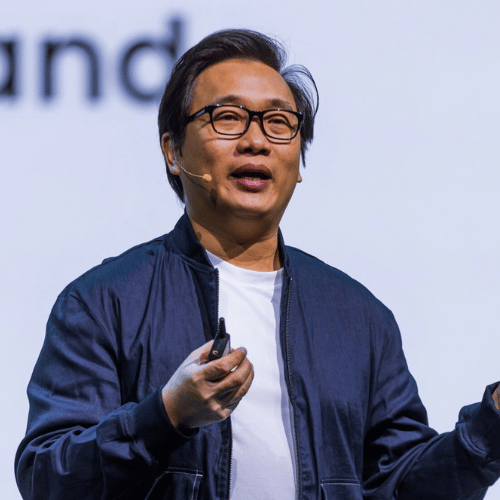


Anndy Lian is an early blockchain adopter and experienced serial entrepreneur who is known for his work in the government sector. He is a best selling book author- “NFT: From Zero to Hero” and “Blockchain Revolution 2030”.

Currently, he is appointed as the Chief Digital Advisor at Mongolia Productivity Organization, championing national digitization. Prior to his current appointments, he was the Chairman of BigONE Exchange, a global top 30 ranked crypto spot exchange and was also the Advisory Board Member for Hyundai DAC, the blockchain arm of South Korea’s largest car manufacturer Hyundai Motor Group. Lian played a pivotal role as the Blockchain Advisor for Asian Productivity Organisation (APO), an intergovernmental organization committed to improving productivity in the Asia-Pacific region.

An avid supporter of incubating start-ups, Anndy has also been a private investor for the past eight years. With a growth investment mindset, Anndy strategically demonstrates this in the companies he chooses to be involved with. He believes that what he is doing through blockchain technology currently will revolutionise and redefine traditional businesses. He also believes that the blockchain industry has to be “redecentralised”.

j j j

The Legal Implications of AI-Generated Content in Copyright Law

The Legal Implications of AI-Generated Content in Copyright Law

Highlights

The increasing use of Artificial Intelligence (AI) in creative industries raises copyright concerns, particularly in terms of whether AI-generated art can be protected under copyright laws. The U.S. Copyright Office has taken the position that creations made by non-human entities, including machines, are not eligible for copyright protection.

The influence of Artificial Intelligence (AI) is expanding in diverse domains, as seen in natural language processing tools like GPT-3, image recognition software such as Google Lens, and product recommendation engines, including Amazon’s product suggestion system. AI is gaining traction in the art world, exemplified by the sale of “Edmond de Belamy,” a portrait generated by AI, for an unprecedented $432,500 in an auction. Nonetheless, the increasing involvement of AI in creative pursuits raises copyright concerns.

When it comes to training AI models, the use of copyrighted materials is considered to be in a legal grey area. As it stands now, copyright laws do not safeguard any creation that is wholly generated by AI, regardless of whether it stemmed from a human-crafted text prompt. While fair use laws permit the use of copyrighted material under certain conditions without the owner’s permission, the ongoing legal disputes could disrupt this status quo and bring uncertainty in the future of AI model training.

Undoubtedly, the advent of generative AI has revolutionized our lifestyle, labor practices, and artistry output within a mere few months. In turn, the inundation of AI-fabricated written works, pictures, and tunes, alongside the mechanisms through which they were created, has stimulated a plethora of intricate legal inquiries. These challenge our understanding of ownership, fairness, and the core foundation of innovation.

Can AI-generated art be copyrighted?

The issue of whether AI-generated art can be protected under copyright laws has been a contentious topic, with various opinions and viewpoints. The U.S. Copyright Office has taken the position that creations made by non-human entities, including machines, are not eligible for copyright protection. Consequently, the product of a generative AI model cannot be considered copyrightable.

The fundamental challenge lies in the way generative AI systems operate. These models learn by identifying and replicating patterns found in data. Thus, the AI system must first learn from human creations to produce output such as written text or images. For example, if an AI-generated image resembles the art of Japanese artist Yokoyama Taikan, it would have been trained using actual pieces of art created by the human artist. Similarly, to generate written content in the style of J. K. Rowling, the AI system would need to be trained with words written by J. K. Rowling.

However, according to current U.S. copyright law, these AI systems – which encompass image and music generators, as well as chatbots like ChatGPT – cannot be regarded as the creators of the content they produce. Instead, their outputs result from a culmination of human-generated work, much of which is copyrighted in some form and sourced from the internet. This does not mean that AI-generated works are necessary in the public domain. Another example if a company uses AI to generate content, that company may still have proprietary rights to that content, such as a trade secret or patent.

This raises a perplexing question: how can the rapidly evolving artificial intelligence industry be harmonized with the intricate details of U.S. copyright law? This is a question that creative professionals, companies, courts, and the U.S. government are all grappling with as they navigate the complexities and nuances of AI-generated content and intellectual property laws.

Will copyright issues get tougher when humans and AI do the work together?

The issue of copyright protection for creative works resulting from collaboration between humans and machines is complex. According to the Copyright Office, if a human arranges or selects AI-generated material creatively or modifies it in a sufficiently creative way, copyright protection will only apply to the human-authored components of the work, not the AI-generated material itself. The issue of copyright protection for works created jointly by humans and machines is less clear, and registration applications must name all joint authors.

The use of generative AI for creating artistic works can also lead to copyright infringement concerns if the output shows similarities to pre-existing works on the internet. These models are often trained on existing works found online, which may lead to similarities to previous works. While there are cases where a human creatively selects or arranges AI-generated material or modifies it, resulting in copyright protection for only the human-authored aspects of the work, the situation becomes murky regarding works jointly created by humans and machines. It’s a requirement to name all joint authors, including potentially the AI, in applications for registration. It may be challenging to ascertain whether generative AI output is a derivative work or infringes upon the rights of previous authors.

Lawsuits

Getty Images has taken legal action against Stability AI, accusing the company of unlawfully copying over 12 million photos from Getty Images’ collection and utilizing them in generative AI systems without proper permission or licensing. Stability AI is not alone in facing lawsuits related to generative AI. With the launch of generative AI by numerous companies such as Microsoft, OpenAI, and GitHub, creative industries are beginning to file lawsuits over the co-opting or use of copyrighted work by AI. In addition to Getty’s case, a group of artists has also sued Stability AI, Midjourney, and DeviantArt for alleged mass copyright infringement via the use of their work in generative AI systems. These lawsuits are bringing to light the legal implications of using generative AI, which is becoming an increasingly common practice.

Legal action of collective nature was instituted against GitHub, Microsoft, and OpenAI. The motion claimed that the AI-powered coding aide GitHub Copilot infringed copyright laws by generating code derived from code licensed under open source, which is publicly accessible. Copilot provides programmers with suggestions for novel code based on their existing code in real-time. As per the legal action, Copilot’s code-generating software was trained on code that was subject to copyright, without obtaining the necessary authorization. Furthermore, the program creates new code that is akin or identical to the original work. This is the premier lawsuit to be brought involving generative AI. The case aims to attain class-action status, and if it prevails, it could potentially affect the whole AI industry and how it utilizes publicly available code for training models.

Microsoft, GitHub, and OpenAI have submitted a motion to dismiss the legal action. They argue that Copilot produces unique code and that the code generated is not merely identical copies of the data used for training.

These are some lawsuits that were filed lately involving generative AI. The resolution of the legal action and its influence on the AI industry remains unknown.

Ending Remarks

Copyright law is a fundamental aspect of protecting intellectual property and encouraging creativity. It gives creators the right to control their work’s use, distribution, and adaptation and encourages them to create more by offering them exclusive rights. Creative Commons licenses provide even more options for creators to choose the level of protection they want for their work.

As AI technology advances, it becomes increasingly involved in the creative process. With AI’s ability to generate original content and collaborate with humans, there is a growing need for a legal framework that addresses the copyright protection of collaborative works involving AI. It is crucial to strike a delicate balance between safeguarding the rights of creators and nurturing innovation and originality. It is difficult to predict the exact trajectory of copyright law as it pertains to AI-generated works. Still, it is undeniable that as AI technology becomes increasingly integrated into the creative process, the legal framework governing copyright protection will undergo significant and ongoing transformation.

Source: https://indiaai.gov.in/article/the-legal-implications-of-ai-generated-content-in-copyright-law

Anndy Lian is an early blockchain adopter and experienced serial entrepreneur who is known for his work in the government sector. He is a best selling book author- “NFT: From Zero to Hero” and “Blockchain Revolution 2030”.

Currently, he is appointed as the Chief Digital Advisor at Mongolia Productivity Organization, championing national digitization. Prior to his current appointments, he was the Chairman of BigONE Exchange, a global top 30 ranked crypto spot exchange and was also the Advisory Board Member for Hyundai DAC, the blockchain arm of South Korea’s largest car manufacturer Hyundai Motor Group. Lian played a pivotal role as the Blockchain Advisor for Asian Productivity Organisation (APO), an intergovernmental organization committed to improving productivity in the Asia-Pacific region.

An avid supporter of incubating start-ups, Anndy has also been a private investor for the past eight years. With a growth investment mindset, Anndy strategically demonstrates this in the companies he chooses to be involved with. He believes that what he is doing through blockchain technology currently will revolutionise and redefine traditional businesses. He also believes that the blockchain industry has to be “redecentralised”.

j j j

The Future Of AI And Copyright Law In U.S.: Navigating The Nuances And Complexities

The Future Of AI And Copyright Law In U.S.: Navigating The Nuances And Complexities

Artificial Intelligence (AI) is a rapidly evolving technology that has permeated a diverse range of domains, including natural language processing, image recognition, and product recommendation systems. AI has made significant breakthroughs in various areas, such as language translation and speech recognition, allowing machines to produce text and communicate with humans more effectively than ever before.

For example, Google Lens employs AI in image recognition to identify objects and provide information about them using the camera on a mobile device. In contrast, Amazon’s product suggestion system harnesses machine learning algorithms to analyze users’ shopping behavior and offer personalized recommendations based on their preferences.

AI has also made its way into the art world, where “Edmond de Belamy,” an AI-generated portrait, was sold for a staggering $432,500 at a major auction. This marked the first instance of an AI-generated artwork being sold at such a high-profile event, prompting concerns about whether such works are eligible for copyright protection.

Copyright law typically grants exclusive rights to creators of original works, allowing them to maintain control over how their creations are used, copied, and distributed. When it comes to training AI models, the use of copyrighted materials is considered to be in a legal grey area. As it stands now, copyright laws do not safeguard any creation that is wholly generated by AI, regardless of whether it stemmed from a human-crafted text prompt. While fair use laws permit the use of copyrighted material under certain conditions without the owner’s permission, the ongoing legal disputes could disrupt this status quo and bring uncertainty in the future of AI model training.

Undoubtedly, the advent of generative AI has revolutionized our lifestyle, labor practices, and artistry output within a mere few months. In turn, the inundation of AI-fabricated written works, pictures, and tunes, alongside the mechanisms through which they were created, has stimulated a plethora of intricate legal inquiries. These challenge our understanding of ownership, fairness, and the core foundation of innovation.

Is It Possible To Copyright Art Created By AI?

The question of whether AI-generated art can be protected by copyright laws is a subject of much debate. The U.S. Copyright Office has stated that creations made by non-human entities, including machines, cannot be eligible for copyright protection. This means that the product of a generative AI model cannot be considered copyrightable.

The challenge stems from the way generative AI systems operate. These models learn by identifying and replicating patterns found in data. To produce output such as written text or images, the AI system must first learn from human creations. For instance, an AI-generated image resembling the art of Japanese artist Yokoyama Taikan would have been trained using actual pieces of art created by the human artist. Similarly, to generate written content in the style of J.K. Rowling, the AI system would require training with words written by J.K. Rowling.

However, according to current U.S. copyright law, these AI systems – which include image and music generators, as well as chatbots like ChatGPT – cannot be seen as the creators of the content they produce. Instead, their outputs result from a culmination of human-generated work, much of which is copyrighted in some form and sourced from the internet. Nonetheless, this doesn’t necessarily mean that AI-generated works are in the public domain. For example, if a company employs AI to produce content, that company may still have proprietary rights to that content, such as a trade secret or patent.

This raises a difficult question: how can the rapidly evolving artificial intelligence industry be reconciled with the intricate details of U.S. copyright law? This is a question that creative professionals, companies, courts, and the U.S. government are all grappling with as they navigate the complexities and nuances of AI-generated content and intellectual property laws.

Could Copyright Concerns Become More Challenging As Humans Collaborate With AI To Produce Work?

The topic of copyright protection for creative works resulting from collaboration between humans and machines is quite complicated. The Copyright Office specifies that if a human creatively arranges or selects AI-generated material, or modifies it in a sufficiently creative way, then copyright protection will only apply to the human-authored portions of the work, and not the AI-generated material itself. However, when it comes to works created jointly by humans and machines, the issue of copyright protection is less clear, and registration applications must identify all joint authors.

Using generative AI to create artistic works can also raise concerns regarding copyright infringement if the output bears similarities to pre-existing works on the internet. These models often learn from existing works found online, which may result in similarities to previous works. While there are instances where a human creatively arranges or selects AI-generated material, resulting in copyright protection for only the human-authored components of the work, the situation becomes less clear with jointly created works. It is necessary to name all joint authors, which could potentially include the AI, in registration applications. It can be challenging to determine whether generative AI output is a derivative work or infringes upon the rights of previous authors.

Legal Battles Emerge In The Age Of Generative AI

Getty Images has taken legal action against Stability AI for allegedly copying more than 12 million photos from Getty Images’ collection and using them in generative AI systems without proper permission or licensing. Stability AI is one of several companies facing lawsuits related to generative AI. The rise of generative AI technology has led to creative industries filing lawsuits over the use of copyrighted work by AI, including the recent lawsuit by a group of artists against Stability AI, Midjourney, and DeviantArt for alleged mass copyright infringement.

In another legal case involving generative AI, a group of companies including Microsoft, GitHub, and OpenAI were collectively sued for copyright infringement related to their AI-powered coding aide GitHub Copilot. The plaintiffs claimed that Copilot generated code derived from code licensed under open source without the necessary authorization. The case aims to attain class-action status and could have an impact on the entire AI industry. They have however submitted a motion to dismiss the lawsuit, arguing that Copilot produces unique code and not identical copies of the data used for training.

These lawsuits highlight the legal implications of using generative AI and its increasing prevalence. The outcome of these legal actions and their influence on the AI industry remain uncertain.

Final Thoughts

Copyright law is a crucial component in safeguarding intellectual property and promoting creativity. It enables creators to control how their work is used, shared, and modified, motivating them to produce more by providing them with exclusive rights. Additionally, Creative Commons licenses give creators the option to select the degree of protection they prefer for their work.

With the rise of AI technology, it has become increasingly involved in the creative process. AI can generate original content and work with humans to create collaborative works, highlighting the need for a legal framework that considers copyright protection for such works. It’s vital to strike a balance between protecting creators’ rights while fostering innovation and creativity. The trajectory of copyright law concerning AI-generated content remains unpredictable, but one thing is evident: the legal framework will evolve significantly as AI technology becomes further integrated into the creative process.


Source: https://www.benzinga.com/23/05/32162183/the-future-of-ai-and-copyright-law-in-u-s-navigating-the-nuances-and-complexities

Anndy Lian is an early blockchain adopter and experienced serial entrepreneur who is known for his work in the government sector. He is a best selling book author- “NFT: From Zero to Hero” and “Blockchain Revolution 2030”.

Currently, he is appointed as the Chief Digital Advisor at Mongolia Productivity Organization, championing national digitization. Prior to his current appointments, he was the Chairman of BigONE Exchange, a global top 30 ranked crypto spot exchange and was also the Advisory Board Member for Hyundai DAC, the blockchain arm of South Korea’s largest car manufacturer Hyundai Motor Group. Lian played a pivotal role as the Blockchain Advisor for Asian Productivity Organisation (APO), an intergovernmental organization committed to improving productivity in the Asia-Pacific region.

An avid supporter of incubating start-ups, Anndy has also been a private investor for the past eight years. With a growth investment mindset, Anndy strategically demonstrates this in the companies he chooses to be involved with. He believes that what he is doing through blockchain technology currently will revolutionise and redefine traditional businesses. He also believes that the blockchain industry has to be “redecentralised”.

j j j