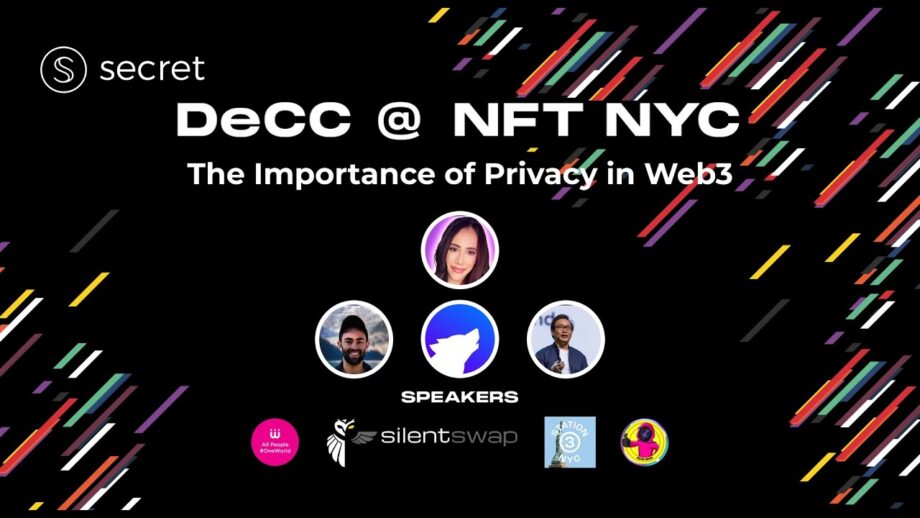
The Future of Privacy in Web3 | DeCC @ NFT.NYC | Wendy O, Anndy Lian, Tor Bair, Gav Blaxberg

The Future of Privacy in Web3 | DeCC @ NFT.NYC | Wendy O, Anndy Lian, Tor Bair, Gav Blaxberg

At the forefront of the Web3 revolution, DeCC @ NFT.NYC convened a panel of visionaries to unravel the complexities of privacy in a blockchain-powered world. Moderated by the influential Wendy O, the panel featured Gav Blaxberg of Wolf Financial, Tor Bair of Stashh, and Anndy Lian, a best-selling author and thought leader.

The event underscored the attendees’ commitment to privacy, with many overcoming significant obstacles to join the conversation. The introduction of “Decentralized Confidential Computing” (DCC) marked a pivotal moment, signaling a shift towards a narrative that champions confidentiality in the transparent realm of blockchain.

Panelists shared their diverse experiences, from advising on crypto regulations to pioneering encrypted NFTs, all converging on the consensus that privacy and security are the bedrock of a sustainable Web3 ecosystem. The dialogue navigated through the evolution from Web2 to Web3, highlighting the persistent challenges and the urgent need for technological alternatives that empower users with control over their data.

A key distinction emerged between privacy and security. While privacy is often viewed as a luxury, security is a fundamental necessity. The irreversible nature of lost privacy was a sobering reminder of the stakes involved. Personal stories from the panelists brought to life the real-world consequences of security breaches, emphasizing the importance of vigilance in the digital age.

The session concluded with an engaging Q&A, where a question about AI’s role in privacy and security sparked a nuanced debate. AI’s dual potential to both compromise and enhance privacy was acknowledged, with a call for responsible AI development that aligns with public interest.

DeCC @ NFT.NYC was not just an event; it was a clarion call for collective action towards a future where privacy is a standard, not an afterthought. The insights and passion of the panelists inspired attendees to advocate for privacy and champion security in the digital domain.

As the narrative around DCC unfolds, the event stands as a testament to the ongoing efforts to protect our digital lives. The journey towards a more private and secure digital world is just beginning, and every step taken is a step towards a better future for all.

Anndy Lian is an early blockchain adopter and experienced serial entrepreneur who is known for his work in the government sector. He is a best selling book author- “NFT: From Zero to Hero” and “Blockchain Revolution 2030”.

Currently, he is appointed as the Chief Digital Advisor at Mongolia Productivity Organization, championing national digitization. Prior to his current appointments, he was the Chairman of BigONE Exchange, a global top 30 ranked crypto spot exchange and was also the Advisory Board Member for Hyundai DAC, the blockchain arm of South Korea’s largest car manufacturer Hyundai Motor Group. Lian played a pivotal role as the Blockchain Advisor for Asian Productivity Organisation (APO), an intergovernmental organization committed to improving productivity in the Asia-Pacific region.

An avid supporter of incubating start-ups, Anndy has also been a private investor for the past eight years. With a growth investment mindset, Anndy strategically demonstrates this in the companies he chooses to be involved with. He believes that what he is doing through blockchain technology currently will revolutionise and redefine traditional businesses. He also believes that the blockchain industry has to be “redecentralised”.
j j j

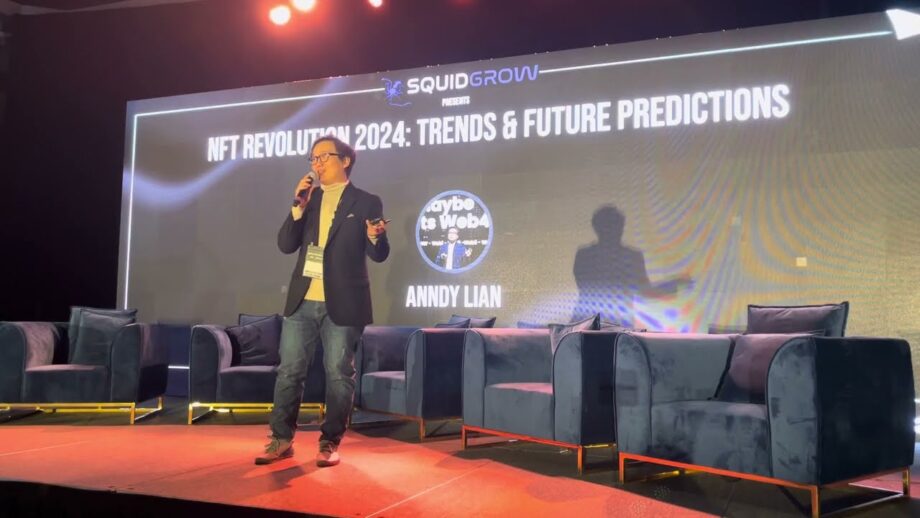
NFT.NYC 2024/ Main Stage/ 4 April – NFT Revolution 2024: Trends & Future Predictions by Anndy Lian

NFT.NYC 2024/ Main Stage/ 4 April – NFT Revolution 2024: Trends & Future Predictions by Anndy Lian

Anndy Lian took the stage at NFT.NYC to share his insights on the evolving landscape of non-fungible tokens (NFTs). His speech, a blend of personal anecdotes and industry analysis, provided a compelling look at the future of NFTs.

The Journey from Skepticism to Mainstream

Lian reminisced about the early days of NFTs, when his predictions were met with skepticism. Yet, he stood firm, and today, the diverse utilities of NFTs vindicate his foresight. His books, “Blockchain Revolution 2030” and “NFT: From Zero to Hero,” have not only topped sales charts but also demystified NFTs for the masses.

NFT Revolution 2024: The Trends Shaping the Future

Lian highlighted several key trends poised to shape the NFT space:

1) Hybrid Protocols such as ERC404: The convergence of fungible tokens (FTs) and NFTs creates new possibilities for asset management and ownership.
2) Real-World Asset NFTs (RWA NFTs): NFTs are transcending digital art, impacting sectors like real estate and supply chain management, making transactions more transparent and efficient. Nexum.ai is another example he gave on how they use supply chain financing with NFTs.
3) Institution-Backed NFTs: Major institutions are exploring NFTs, wrapping products within them, and providing a layer of credibility and security to the digital assets.
4) AI-Enhanced NFTs: Beyond generative art, AI is being leveraged to offer membership access and training products, signaling a move towards more practical applications. Copx.ai was the platform he quoted.
5) Meme-Inspired NFTs with a Twist: Projects like SquidGrow demonstrate the power of community and intellectual property (IP) in driving the value and utility of NFTs.
5) Photography NFT Marketplaces: Real photographs as NFTs offer a unique taste and authenticity that could attract big brands and create new opportunities for photographers. The example he shared about Seed.Photo is good sample.

Final Thoughts: The Road Ahead

Concluding his speech, Lian stressed the need for security measures to foster consumer adoption. The goal is to integrate mainstream buyers into the NFT ecosystem, ensuring robust communities and sustainable revenue streams.

Anndy Lian’s speech at NFT.NYC was more than just a presentation; it was a clarion call for the industry to embrace the NFT revolution with open arms and a cautious mind. As we look towards the future, it’s clear that NFTs are not just a fleeting trend but a transformative force reshaping the digital economy.

This article aims to encapsulate the essence of Anndy Lian’s speech, offering readers a glimpse into the potential trajectories of NFTs. For those looking to go deeper into the subject, Lian’s books and social media channels are good references in the realm of digital assets.


Anndy Lian is an early blockchain adopter and experienced serial entrepreneur who is known for his work in the government sector. He is a best selling book author- “NFT: From Zero to Hero” and “Blockchain Revolution 2030”.

Currently, he is appointed as the Chief Digital Advisor at Mongolia Productivity Organization, championing national digitization. Prior to his current appointments, he was the Chairman of BigONE Exchange, a global top 30 ranked crypto spot exchange and was also the Advisory Board Member for Hyundai DAC, the blockchain arm of South Korea’s largest car manufacturer Hyundai Motor Group. Lian played a pivotal role as the Blockchain Advisor for Asian Productivity Organisation (APO), an intergovernmental organization committed to improving productivity in the Asia-Pacific region.

An avid supporter of incubating start-ups, Anndy has also been a private investor for the past eight years. With a growth investment mindset, Anndy strategically demonstrates this in the companies he chooses to be involved with. He believes that what he is doing through blockchain technology currently will revolutionise and redefine traditional businesses. He also believes that the blockchain industry has to be “redecentralised”.

j j j

AI will also create new ethical and social issues around privacy, bias, accountability, and trust: Anndy Lian

AI will also create new ethical and social issues around privacy, bias, accountability, and trust: Anndy Lian

As part of our rapid fire interview series, Anndy Lian, an Intergovernmental Blockchain Expert shares his quick take on the AI evolution, how it will impact the workforce in APAC, and his favourite thing about AI.

Anndy Lian is an Intergovernmental Blockchain Expert and Best Selling Book Author “NFT: From Zero to Hero”. He has provided advisory across a variety of industries for local, international, public listed companies and governments. He is an early blockchain adopter and experienced serial entrepreneur, book author, investor, board member and keynote speaker.

As part of our rapid fire interview series, Anndy shares his quick take on the AI evolution, how it will impact the workforce in APAC, and his favourite thing about AI.

Can you share with us your background and experience?

I have started to look at cryptocurrencies in 2013 and then blockchain in 2017. The first time I got to know what blockchain can do is at a closed door session with a pharma company. Blockchain’s ability to fight counterfeit is very effective. I have then gone full time into this space since. I gave advice to governments, listed companies, leading crypto exchanges and the list goes on.

As a tech leader, what’s the first thing you do when you start your work?

The first thing I do when I start my work is to check the latest news and trends in the tech world, especially in the areas of blockchain, AI, and cybersecurity. I like to keep myself updated on the current developments and challenges in these fields, and how they affect the society and the economy. I also like to connect with other tech leaders and experts, and exchange ideas and insights on how to leverage technology for positive impact.

What does AI evolution mean to you in one sentence?

AI evolution means the continuous improvement and advancement of AI systems and applications, driven by human creativity and curiosity, to solve complex problems and enhance human capabilities.

What is one way in which AI will impact enterprise security?

One way in which AI will impact enterprise security is by enabling more effective and efficient detection and prevention of cyberattacks, such as malware, phishing, ransomware, and DDoS. AI can help analyse large volumes of data, identify patterns and anomalies, and respond to threats in real time. AI can also help automate and optimise security processes, such as authentication, encryption, and backup.

What do you see as the biggest transformation that AI will bring about in the workforce in APAC?

The biggest transformation that AI will bring about in the workforce in APAC is the creation of new jobs and opportunities that require higher levels of skills, creativity, and collaboration. AI will also augment and complement human workers, by taking over repetitive and mundane tasks, and providing insights and recommendations. AI will also enable more flexible and remote work arrangements, as well as lifelong learning and upskilling.

One challenge which AI will pose for the workforce in APAC.

One challenge which AI will pose for the workforce in APAC is the potential displacement and disruption of existing jobs and industries, especially those that rely on low-skilled and manual labor. AI will also create new ethical and social issues, such as privacy, bias, accountability, and trust. Therefore, it is important to ensure that AI is developed and deployed in a responsible and inclusive manner, that respects human rights and values, and that benefits all stakeholders.

What’s your favourite thing about AI?

My favourite thing about AI is its ability to generate novel and innovative solutions and content that can inspire and amaze humans. For example, AI can write poems, stories, songs, code, and more, using its own words and knowledge. I find this aspect of AI very fascinating and exciting, as it shows the potential and diversity of AI creativity.

AI can also improve productivity and efficiency, by automating and optimising various tasks and processes, such as data analysis, decision making, customer service, and more. AI can help humans save time, money, and resources, and focus on more strategic and creative work. AI can also enhance quality and accuracy, by reducing errors and biases, and providing insights and recommendations.

What is one advice you would like to give organisations when it comes to AI adoption ?

One advice I would like to give organisations when it comes to AI adoption is to start small and scale up gradually, by identifying and prioritising the most relevant and valuable use cases and applications of AI for their business goals and customer needs. I would also advise them to involve and empower their employees and customers in the AI journey, by providing them with the necessary training, support, and feedback. Lastly, I would advise them to adopt a culture of experimentation and learning, by testing and iterating their AI solutions, and measuring and improving their outcomes and impacts.

Anndy Lian is an early blockchain adopter and experienced serial entrepreneur who is known for his work in the government sector. He is a best selling book author- “NFT: From Zero to Hero” and “Blockchain Revolution 2030”.

Currently, he is appointed as the Chief Digital Advisor at Mongolia Productivity Organization, championing national digitization. Prior to his current appointments, he was the Chairman of BigONE Exchange, a global top 30 ranked crypto spot exchange and was also the Advisory Board Member for Hyundai DAC, the blockchain arm of South Korea’s largest car manufacturer Hyundai Motor Group. Lian played a pivotal role as the Blockchain Advisor for Asian Productivity Organisation (APO), an intergovernmental organization committed to improving productivity in the Asia-Pacific region.

An avid supporter of incubating start-ups, Anndy has also been a private investor for the past eight years. With a growth investment mindset, Anndy strategically demonstrates this in the companies he chooses to be involved with. He believes that what he is doing through blockchain technology currently will revolutionise and redefine traditional businesses. He also believes that the blockchain industry has to be “redecentralised”.

j j j