From shutdown to surge: How macro relief is lifting crypto and equities

From shutdown to surge: How macro relief is lifting crypto and equities

Equity markets hover at critical technical junctures while macroeconomic headwinds, particularly the spectre of a prolonged US government shutdown, have only just begun to recede. Cryptocurrency markets, deeply intertwined with broader risk sentiment, have rebounded modestly, buoyed by improved macro conditions and renewed institutional interest in Layer 1 infrastructure. Beneath the surface, divergences in both traditional and digital asset markets suggest that the current calm may be temporary and highly contingent on incoming data, policy developments, and capital flows that remain in flux.

Equity markets continue to tread carefully around key technical support levels. The S&P 500, a bellwether for global investor sentiment, finds itself sandwiched between its 50-day and 100-day moving averages, zones that often act as fulcrums between continuation and reversal. Although recent price action has been subdued, the possibility of a year-end rally persists, especially given the surprisingly strong third-quarter earnings results that delivered a 15 per cent year-over-year profit growth across the index. This strength is increasingly concentrated and increasingly fragile.

The so-called Magnificent 7, once a monolithic engine of market returns, now exhibit stark performance divergence. Tesla, emblematic of this fragmentation, encapsulates the broader uncertainty. Analyst forecasts span from bullish projections of a 6x price surge to bearish scenarios anticipating steep corrections. Such volatility in outlook underscores a market increasingly sceptical of uniform growth assumptions and more attuned to company-specific fundamentals, execution risk, and macro dependencies.

This skepticism is well-founded. While optimism around artificial intelligence remains intact, particularly in the context of long-term structural transformation, the near-term outlook for capital expenditure shows signs of potential deceleration. The year 2026 may witness a slowdown in AI-related capex, especially in downstream sectors where valuations appear stretched relative to near-term revenue visibility.

Compounding this risk is the fact that many of the Magnificent 7 remain deeply tethered to consumer behavior, whether through digital advertising, cloud services, or hardware sales. Should broader economic conditions falter, driven by persistent inflation, tighter credit conditions, or geopolitical shocks, their vaunted cash flow strength could erode faster than anticipated. Investors would be wise to adopt a selective approach, distinguishing between companies with resilient business models and those riding speculative momentum.

Currency markets add another layer of complexity. The US Dollar Index (DXY), which had been testing the psychologically significant 100 level, pulled back slightly to 99.60 following news of a Senate resolution to end the 40-day government shutdown. The dollar remains strong, and positioning appears crowded. Such crowding increases the risk of sharp reversals should upcoming macro data or, more likely, signals from the Federal Reserve shift market expectations. A stronger dollar typically acts as a headwind for US multinational earnings and emerging market assets alike, and its influence on capital flows cannot be overstated. In the context of crypto, where dollar strength often inversely correlates with asset prices, this dynamic remains a critical variable.

Global themes further complicate the narrative. China’s strategic push into humanoid robotics, exemplified by XPENG’s IRON project, signals a broader ambition to dominate next-generation industrial and consumer technologies. Simultaneously, Chinese companies are accelerating overseas expansion, challenging incumbents in markets from Southeast Asia to Latin America. India, by contrast, has underperformed relative to both China and Japan, raising questions about its near-term growth inflexion and policy responsiveness. In such an environment, a barbell strategy, combining exposure to large-cap growth leaders with defensively positioned, dividend-paying equities, offers a prudent approach to navigating regional and sectoral divergences.

The macro backdrop improved meaningfully over the weekend with the Senate’s bipartisan agreement to end the government shutdown, the longest in US history. This resolution directly addresses a significant source of liquidity drain. Since October 10, approximately US$700 billion in economic activity has been disrupted or delayed, constraining both consumer and institutional risk appetite. With the shutdown concluded, capital can begin to reallocate toward risk assets, a dynamic already reflected in the 4.83 per cent 24-hour gain in crypto markets following a 3.94 per cent weekly loss. Bitcoin’s 0.70 seven-day correlation with the S&P 500 underscores how tightly crypto remains linked to traditional market sentiment. Relief in one arena quickly transmits to the other.

Layer 1 ecosystems have emerged as a focal point of this renewed optimism. Solana’s 4.42 per cent sector gain was catalysed by Western Union’s announcement that it will launch a US dollar stablecoin exclusively on Solana in the first quarter of 2026. This is not a speculative foray but a strategic institutional endorsement of Solana’s scalability and throughput.

Similarly, Ethereum received a significant vote of confidence through EigenCloud’s US$200 million deployment of ETH-based infrastructure to support AI systems. These developments indicate that blockchain is no longer merely a speculative playground but an operational backbone for real-world financial and technological infrastructure. Institutional adoption of this magnitude validates the long-term utility of high-performance Layer 1 networks and draws capital toward ecosystems demonstrating clear use cases and execution capability.

Technically, the crypto market rebounded from oversold territory, with the 14-day RSI at 37.4 signalling exhaustion among sellers. Bitcoin retested its 50-week moving average near the US$103,000 level, a zone that often acts as a magnet for price action. Spot trading volume rose 14 per cent to US$159 billion, while derivatives open interest climbed 5.76 per cent, suggesting that traders are cautiously re-engaging.

This optimism remains tempered. Ethereum ETFs recorded US$466 million in outflows on November 7 alone, highlighting persistent institutional scepticism toward ETH despite its technological advancements. Moreover, the market must sustain a close above the seven-day simple moving average at US$3.46 trillion in total market cap to confirm bullish momentum. Failure to do so could trigger a retest of the US$3.37 trillion Fibonacci support level.

Gold’s rise to US$4,007 per ounce amid dollar softening and shutdown-related uncertainty further illustrates the fragile nature of current sentiment. Safe-haven demand remains elevated, even as risk assets rally. This duality, bullish price action coexisting with defensive positioning, is a hallmark of late-cycle or transitional market regimes.

Whether Bitcoin can hold above US$105,000 in this environment depends not only on technicals but on broader macro confirmation. Sustained liquidity normalisation, stable dollar conditions, and continued institutional validation of blockchain infrastructure must all align. Until those pillars solidify, the relief rally, while welcome, should be approached with disciplined risk management and selective exposure.

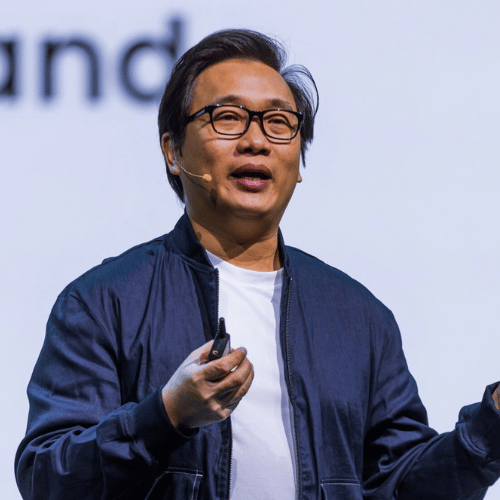
Anndy Lian is an early blockchain adopter and experienced serial entrepreneur who is known for his work in the government sector. He is a best selling book author- “NFT: From Zero to Hero” and “Blockchain Revolution 2030”.

Currently, he is appointed as the Chief Digital Advisor at Mongolia Productivity Organization, championing national digitization. Prior to his current appointments, he was the Chairman of BigONE Exchange, a global top 30 ranked crypto spot exchange and was also the Advisory Board Member for Hyundai DAC, the blockchain arm of South Korea’s largest car manufacturer Hyundai Motor Group. Lian played a pivotal role as the Blockchain Advisor for Asian Productivity Organisation (APO), an intergovernmental organization committed to improving productivity in the Asia-Pacific region.

An avid supporter of incubating start-ups, Anndy has also been a private investor for the past eight years. With a growth investment mindset, Anndy strategically demonstrates this in the companies he chooses to be involved with. He believes that what he is doing through blockchain technology currently will revolutionise and redefine traditional businesses. He also believes that the blockchain industry has to be “redecentralised”.

j j j

The new market symbiosis: How Fed easing, AI, and crypto ETFs are lifting equities

The new market symbiosis: How Fed easing, AI, and crypto ETFs are lifting equities

As markets wrapped up trading on Monday, September 30, 2025, investors witnessed a steady climb in major indices, driven by ongoing negotiations in Congress to prevent a government shutdown. Traders focused on these developments, which injected a dose of optimism into the session.

The Dow Jones Industrial Average climbed 69 points, marking a 0.2 per cent increase. Meanwhile, the S&P 500 advanced 0.3 per cent, and the Nasdaq Composite led the pack with a 0.5 per cent gain. This upward movement highlighted a resilient market mood, even amid earlier fluctuations that tested investor resolve.

Earlier in the day, the Dow showed signs of recovery after a choppy start. It ended up 32 points, or 0.1 per cent, despite spending much of the session in negative territory. This modest rebound came as 18 out of the 30 component stocks turned positive, indicating solid breadth across the index. Such participation from a majority of its members suggested underlying strength, rather than a rally propped up by just a handful of heavyweights.

The S&P 500, for its part, held firm in positive ground throughout, rising 0.2 per cent by early afternoon. It experienced several ups and downs, reflecting the push and pull between buyers and sellers, yet it never dipped into the red for long.

The Nasdaq Composite’s 0.5 per cent advance stood out, fuelled by renewed interest in artificial intelligence-related names and the broader Big Tech sector. This dip-buying behaviour explained much of the divergence, as tech enthusiasm lifted the index while others lagged slightly.

The Dow faced headwinds mid-session, slipping 45 points or 0.1 per cent after an initial pop higher. Only 14 of its 30 stocks gained ground at that point, underscoring its relative underperformance compared to peers. Unlike the Nasdaq or S&P, the Dow carries fewer pure-play AI and tech exposures, and it prices its components by share value rather than overall market capitalisation. This structure amplified the drag from laggards.

Notably, Apple, one of the Dow’s key holdings, traded lower despite its recent strong run, which further weighed on the index. In contrast, the Nasdaq benefited from its heavier tilt toward innovative sectors, where investors scooped up shares on any weakness, perpetuating the rally in tech darlings.

Shifting focus to broader influences, several macroeconomic tailwinds and regulatory advancements played a pivotal role in bolstering sentiment. The Federal Reserve’s rate cut in September, which brought the target range to 4.00 per cent to 4.25 per cent, eased borrowing pressures across the economy. Coupled with this, the GENIUS Act streamlined rules for exchange-traded funds, enhancing liquidity prospects.

The Securities and Exchange Commission approved ETFs for alternative coins and unified derivatives regulations, which cleared away much of the fog surrounding crypto investments. These steps actively drew in more capital from institutions, fostering a positive spillover into equities. Crypto’s seven-day correlation to the Nasdaq 100 stood at +0.72, illustrating how shared economic drivers linked these assets.

Investors now anticipate the SEC’s October 10 deadline for approving a Solana ETF, with analysts pegging the odds above 95 per cent. This potential green light could further integrate digital assets into traditional portfolios, amplifying the bullish momentum seen in stocks.

Binance’s recent initiatives added another layer of institutional momentum to the mix. The exchange introduced a white-label platform allowing banks and brokerages to integrate crypto offerings seamlessly, echoing a similar launch by Coinbase in June. This development sparked a sharp uptick in activity, with spot trading volume surging 58.47 per cent over 24 hours and derivatives volume jumping 77.41 per cent.

Such increases pointed to heightened engagement from professional players, bridging the gap between traditional finance and digital assets. Tokens like BNB rose 3.78 per cent, while Mantle climbed 7.41 per cent, buoyed by corporate adoptions such as CEA Industries’ US$160 million purchase of BNB for its treasury.

These moves signalled growing confidence in crypto as a viable reserve asset. Looking ahead, Binance’s full rollout of this service in the fourth quarter will serve as a crucial gauge for enduring demand from institutions, potentially sustaining the uplift in related equities.

On the technical and on-chain front, the picture presented a blend of encouraging and cautionary signals. BNB’s Maxwell hard fork reduced block times to 0.75 seconds, accelerating network efficiency and spurring greater usage. Bitcoin’s market dominance edged up to 58.05 per cent, hinting at a shift toward established large-cap cryptos amid uncertainty.

Total open interest in crypto reached US$1.14 trillion, up 9.66 per cent in the last 24 hours, which underscored robust speculative interest. However, the MACD histogram dipped to -10.59 billion, flagging potential overheating in derivatives markets. This duality captured the market’s current state: enthusiasm tempered by risks of excess leverage.

In my opinion, this Monday’s market action marks a turning point where policy easing and innovation converge to propel assets higher, albeit with vulnerabilities. I view the Fed’s dovish stance as a foundational support, lowering costs and encouraging risk-taking that benefits both stocks and crypto. The rate cut directly contributes to improved liquidity, which in turn supports the Nasdaq’s outperformance through investments in AI and tech.

Regulatory clarity, especially around ETFs and derivatives, removes barriers that once deterred big money, and the high odds for Solana’s approval excite me as a catalyst for fresh inflows. Binance’s push feels like a game-changer, actively pulling traditional finance into the fold and driving those volume spikes that ripple into broader markets. The corporate buys, like CEA Industries’ sizable BNB stake, convince me that we’re seeing real adoption, not just hype.

I remain watchful of the mixed technicals. The rise in Bitcoin dominance suggests investors favor safety in giants, which could cap gains in smaller names and indirectly pressure diversified indices like the S&P. The open interest boom is thrilling, but that negative MACD reading worries me about overextension in derivatives, where unwinds could spark volatility. Spot ETF assets under management at US$147.75 billion provide a buffer, yet if leverage risks escalate, they might not hold the line.

Overall, I lean bullish, believing macro tailwinds and institutional integration outweigh the froth. The Dow’s recovery, with 18 components advancing, reassures me of broad participation, while the Nasdaq’s 0.5 per cent gain highlights sector leadership. If Congress averts the shutdown, this could extend the grind higher.


Source: https://e27.co/the-new-market-symbiosis-how-fed-easing-ai-and-crypto-etfs-are-lifting-equities-20250930/

Anndy Lian is an early blockchain adopter and experienced serial entrepreneur who is known for his work in the government sector. He is a best selling book author- “NFT: From Zero to Hero” and “Blockchain Revolution 2030”.

Currently, he is appointed as the Chief Digital Advisor at Mongolia Productivity Organization, championing national digitization. Prior to his current appointments, he was the Chairman of BigONE Exchange, a global top 30 ranked crypto spot exchange and was also the Advisory Board Member for Hyundai DAC, the blockchain arm of South Korea’s largest car manufacturer Hyundai Motor Group. Lian played a pivotal role as the Blockchain Advisor for Asian Productivity Organisation (APO), an intergovernmental organization committed to improving productivity in the Asia-Pacific region.

An avid supporter of incubating start-ups, Anndy has also been a private investor for the past eight years. With a growth investment mindset, Anndy strategically demonstrates this in the companies he chooses to be involved with. He believes that what he is doing through blockchain technology currently will revolutionise and redefine traditional businesses. He also believes that the blockchain industry has to be “redecentralised”.

j j j