金色财经独家专访 Linfinity CEO Anndy Lian:“区块链+供应链+AI”带来深层溯源的IoT新世界

金色财经独家专访 Linfinity CEO Anndy Lian:“区块链+供应链+AI”带来深层溯源的IoT新世界

内容摘自《金色财经》:https://www.jinse.com/blockchain/213905.html

近日,Linfinity CEO Anndy Lian接受了金色财经独家专访,他围绕“区块链+供应链+AI”技术的整合,向我们展现来自深层溯源IoT的新世界。

入局区块链前Anndy Lian已经是一个成功的商人。他不仅在新加坡经营几家贸易公司,也在韩国经商8年,交易了3万种产品,积累了供应链中的大量经验。而也正是经历了供应链中的各个场景,Anndy充分感受到了传统供应链中的各个“痛点”——缺乏信任。

区块链的出现,给了Anndy足够的想象空间,这种分布式结构与可溯源的技术特点,似乎已经为解决传统供应链的“痛点”提供了可能性——他的Linfinity区块链之旅正式开启。


覆盖商品生产交换的全过程 实现深层溯源

解决供应链“痛点”就是要构建一套可信任的供应链生态,为此Anndy为Linfinity设置了3个主要方向:

一、技术服务:依托以往的IoT优势,让供应链、区块链、人工智能结合起来,成就技术服务的核心价值;

二、商品的深层次溯源:从原材料、到仓储、到整个物流用区块链全面覆盖,让区块链溯源最大限度的达到防伪的功效;

三、可回收的环保生态:用区块链跟踪货品的使用中和使用后的过程,以此进行回收与环保;


在这样的系统之下,只用通过扫码就可以了解或验证一件商品从源头到终端各个环节的详细信息。

“Linfinity在药品、化妆品、烟草方面能做到的溯源已经比较成熟。虽然二维码看上去没有太大区别,但每一个都不同,每一个都记录在链上,这已经对于传统防伪有了很大的改进”Anndy如是说到。

目前,Linfinity已经与8个厂商进行了战略合作,且还会有更多企业参与起来;7月初,台湾举办的亚洲区块链峰会期间,Linfinity与台湾阿里山集团签署战略合作协议,将为其旗下的香烟品牌提供区块链防伪技术,用区块链有效杜绝假货横行市场;8月,还会将业务拓展到英国、中国大陆、中国台湾地区等地进行推广,用Linfinity结合多种产品的供应链。

“三合一” 让区块链加IoT的想法更加现实

当前,做区块链+IoT领域的公司不少,但由于技术与产业脱节,很多人认为把IoT如此大的一个盘子搬进区块链显得有些“虚无”。而坚定的以“区块链+供应链+AI”当做一把务实钥匙的Anndy,确信目前所做的实践正在向初始目标迈进:

“我从来不怀疑IoT+区块链的价值,现在的大大小小的公司目前还没有真正理解IoT怎么样去促进他们经营的提升,另一部分,也许因为没有足够广阔的视角、或者没有足够的资金让区块链+IoT的想法付诸实践,我认为这就是目前有些人认为IoT’不靠谱’的原因。”

Anndy相信,要想让IoT在区块链下发挥出巨大的潜力,独自奋战是不行的。有许多人说他们不信IoT,但Linfinity的理念中,IoT应该有一个未来明确的方向,而AI+ 区块链就是Linfinity为IoT提出的现实方案。

“这样的结合,可以大大提升IoT的使用频率和生产能力,整个市场是可以在保持足够的透明度的情况下提升效率的。”Anndy也指出,目前Linifinity所做的努力正是培育行业“幼儿”,相信在一年之后,更多的应用都将正式落地。

如何推进Linfinity事业,厂商是突破口之一。Anndy让更多的厂商了解到区块链在溯源中存在的巨大价值,然后将企业的全局理念和总体实力展现出来,让厂商驱动,带动消费者共同参与到Linfinity的使用中来。

Anndy试图向人们传递区块链的长远价值,并将继续致力于用区块链改变现有产业,解决痛点,实现双赢。


Anndy Lian is an early blockchain adopter and experienced serial entrepreneur who is known for his work in the government sector. He is a best selling book author- “NFT: From Zero to Hero” and “Blockchain Revolution 2030”.

Currently, he is appointed as the Chief Digital Advisor at Mongolia Productivity Organization, championing national digitization. Prior to his current appointments, he was the Chairman of BigONE Exchange, a global top 30 ranked crypto spot exchange and was also the Advisory Board Member for Hyundai DAC, the blockchain arm of South Korea’s largest car manufacturer Hyundai Motor Group. Lian played a pivotal role as the Blockchain Advisor for Asian Productivity Organisation (APO), an intergovernmental organization committed to improving productivity in the Asia-Pacific region.

An avid supporter of incubating start-ups, Anndy has also been a private investor for the past eight years. With a growth investment mindset, Anndy strategically demonstrates this in the companies he chooses to be involved with. He believes that what he is doing through blockchain technology currently will revolutionise and redefine traditional businesses. He also believes that the blockchain industry has to be “redecentralised”.

j j j

Anndy Lian: Linfinity will be the Backbone of Reshaping Supply Chain Ecology

Anndy Lian: Linfinity will be the Backbone of Reshaping Supply Chain Ecology

The block chain is about to bring about an unprecedented industrial revolution. All this is attributed to the distributed and decentralized storage mode and strong storage capacity of the block chain for the network. With this advantage, it can provide enterprises or organizations with better quality services, such as improving efficiency, making information transparent, and strengthening network security. According to a study by Juniper Research, more than two-thirds of enterprises expressed their willingness to introduce block chain technology, which is also an unprecedented new user connection method.

Linfinity, born in Singapore, is a pioneer in integrating block chain technology with the cross-border supply chain industry, aiming at establishing a reliable and traceable anti-counterfeiting supply chain solution through block chain technology. It not only reduces the cost of supply chain management, but also increases the safety of commodity circulation. Through different applications in different industries, Linfinity saw the huge potential implied by the block chain in various industries, such as food industry, fast moving consumer goods industry, and even financial market.

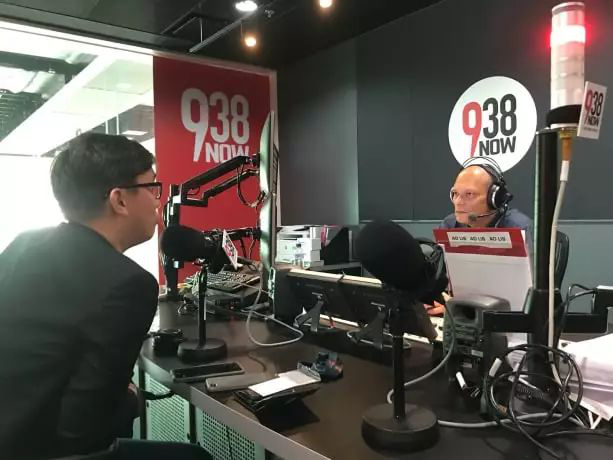
Recently, in an exclusive interview with Singapore’s 938Now radio – block chain series, Anndy Lian, CEO of Linfinity, expressed a series of insightful views on Linfinity’s focus on applying block chain technology to the supply chain industry.

What role does Linfinity play in the logistics industry?  

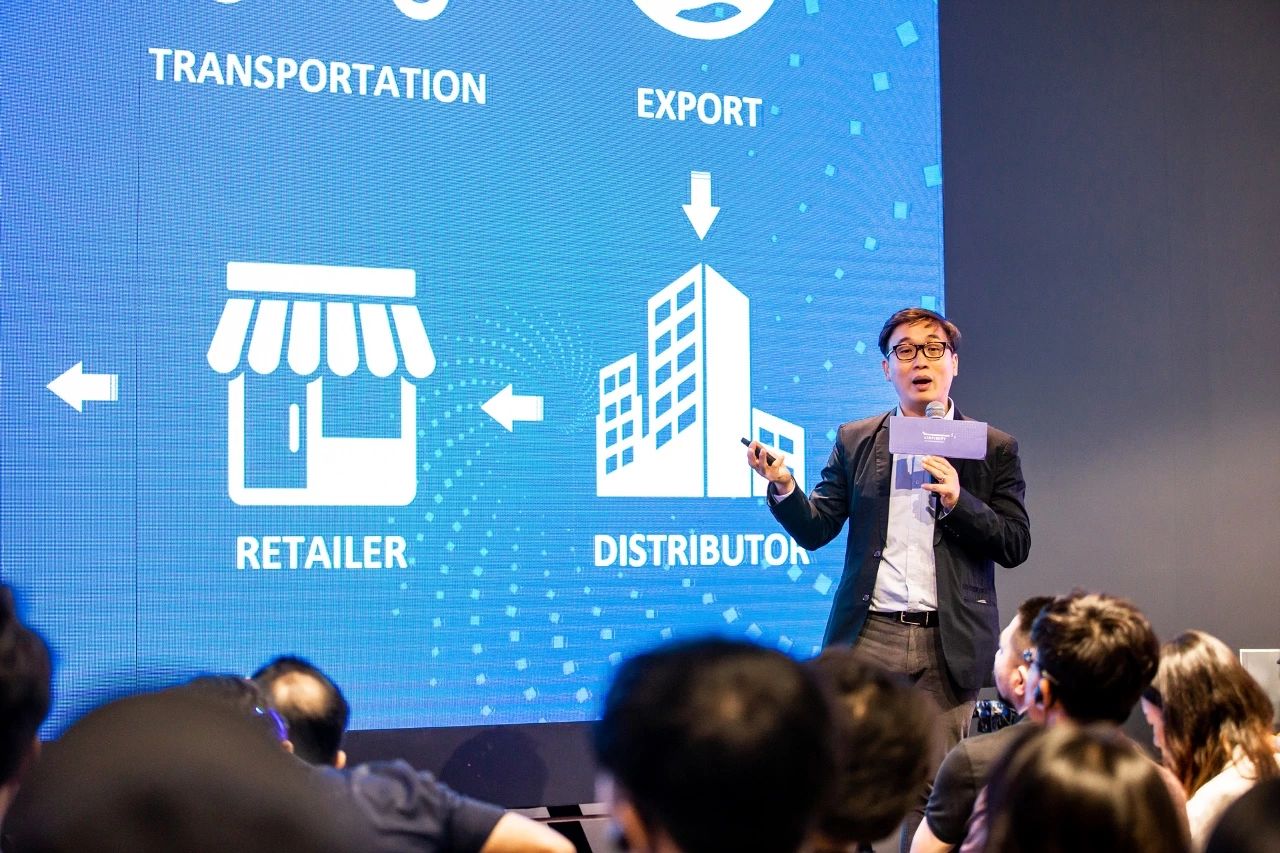
In the logistics industry, Linfinity focuses on the entire supply chain system. At present, Linfinity is working hard to build an ecosystem that organically combines block chains with traditional logistics. In this system, we can easily check the specific conditions such as raw material supply, logistics, distribution, etc.  Not only that, Linfinity also touched on other aspects. Recently, Linfinity Talk in South Korea also talked about the important role Linfinity plays in supply chain material recovery. In addition, we are also interested in integrating block chains with different industries or organizations, such as banks and financial institutions.

What role does Linfinity play? Is the supply chain managed by the participating companies themselves, or is it managed by Linfinity?

At present, Linfinity mainly has the following two modes in the commercial application cooperation of the block chain:

1. Linfinity assists them in onchain management until they can run independently or builds ecology together with them;

2. If the other party has its own block chain, the information on these chains will become very private, and Linfinity will graft the information on these chains to Linfinity’s own block chain for use by the other party.

Is Linfinity a provider of block chain technology solutions? Are there any other partners?

Yes, Linfinity is a pioneer in providing block chain technology solutions. as far as I know, we may be the first in the industry now, but I believe there will be more partners in this industry to promote the vigorous development of this industry. This is the “way” of the block chain industry.

How to improve the transparency of end customer information through block chain technology and Linfinity ecology?

If you look at a specific industry, such as cosmetics industry, from product production to store terminals, all links in the entire supply chain are quite complicated and complicated, so it is very difficult to change the entire industry chain. We have found a common pain point in the cosmetics industry – “fake goods are rampant”, especially for some famous brands, the resulting social impact is fatal.

This is a very serious problem. If all the product data are centrally stored according to the traditional supply chain system, this structure is very vulnerable to hacker attacks, such as adjusting the production date, etc. The use of decentralized block chain technology makes it necessary for each data node to authenticate each other so as to ensure the genuine attributes of the product identity.

Linfinity focuses on these pain points and proposes a series of solutions to the cosmetic industry. First, reduce the anti-counterfeiting cost; second, use the block chain to enhance the brand image.

Based on block chain technology, product information becomes more transparent, thus achieving the purpose of tracking and anti-counterfeiting. This will be a “trust ecology” built by merchants and consumers. It has better brand consensus and better user experience.

Does the appearance of Linfinity mean the disappearance of fake goods?

Yes, as the number of blocks in the chain continues to increase, the mutual authentication of various links will also increase accordingly, which makes counterfeiting more difficult. The traditional physical anti-counterfeiting method is to confirm authenticity by scanning two-dimensional codes, RFID tags or bar codes. Unfortunately, these codes are easily copied and forged by counterfeiters. As for Linfinity, relying on the distributed characteristics of the block chain, we can create our own unique certification mark — Linfinity Mark. It can let people know that once you scan this special two-dimensional code, you can track and verify all the information about the product.

What is the progress of Linfinity’s current business practice?

A month ago, Linfinity signed six memorandums of understanding with some large companies in Singapore, one of which is a very traditional logistics company. If they take advantage of the advantages of block chain technology, they will develop better. For example, improve management efficiency and discover potential food safety problems.

In addition, in Taiwan, Linfinity has signed a strategic cooperation agreement with Alishan Group, which will provide block chain anti-counterfeiting technology for its cigarette brands. At the same time, Linfinity has also talked with some Chinese food suppliers. They all face serious problems of lost goods and stale fruits. If they use block chain technology to make information going onchain, then these problems will be solved — goods can be tracked and fruit information will be clear at a glance.

Why are there some people who are skeptical about the block chain? How do you think people should view the new technology of block chain?

The misunderstanding of the block chain mainly comes from people’s ignorance of it. The block chain is like a “catalyst” that can ” empower” traditional enterprises which thus embark on the digital track. I do not think that the emergence of block chain technology will cause more people to lose their original jobs.

In fact, many block chain projects are aimed at commercialization or proving the concept itself. When we are gradually realizing commercialization, we still need to do a lot of preparatory work. For example, the traditional large-scale enterprises may have resistance to this because they already have a mature data management system, which makes the cost of their transformation huge. For ordinary enterprises, it is relatively easier to accept new technologies. they believe that the block chain is helpful to the long-term development of their own enterprises.

Block chain is a technological revolution. Its appearance will not only change the traditional technology and application scene, but also may change the management mode of enterprises. Lower cost, better brand, broader market — this is the biggest bonus that block chain technology brings to enterprises.

What are the advantages of combining block chain technology with traditional supply chain and logistics business?

Decentralized or distributed organization is the biggest feature of block chain, which is not available in traditional organization. For example, for a famous brand shampoo, because some batches of products failed to meet the quality inspection standards, they was recycled by unscrupulous middlemen, and was transported and exported to overseas for sale. Without the introduction of block chain technology, consumers would not be able to check whether the quality of the shampoo they bought was qualified. Whether the information of products is transparent or not in all circulation links is the biggest difference between the block chain and the traditional technology.

Does the enterprise need to continuously update its own system in order to integrate with the block chain technology?

No, the block chain technology is just like a layer of network. It only needs to be attached to the original system. Its function is only to collect and feedback data and information for enterprises, so as to achieve mutual authentication and tracking of information on various blocks.

Does the supply chain ecology based on block chain include a payment system?

It is possible. Linfinity is already in contact with banks and other like-minded partners, such as the issue of financing loans. The financial lending market must consider the safety and traceability. The essential attribute of the block chain can help the financial industry to solve this problem so that the lending and financing business can be carried out safely and efficiently.

Anndy Lian is an early blockchain adopter and experienced serial entrepreneur who is known for his work in the government sector. He is a best selling book author- “NFT: From Zero to Hero” and “Blockchain Revolution 2030”.

Currently, he is appointed as the Chief Digital Advisor at Mongolia Productivity Organization, championing national digitization. Prior to his current appointments, he was the Chairman of BigONE Exchange, a global top 30 ranked crypto spot exchange and was also the Advisory Board Member for Hyundai DAC, the blockchain arm of South Korea’s largest car manufacturer Hyundai Motor Group. Lian played a pivotal role as the Blockchain Advisor for Asian Productivity Organisation (APO), an intergovernmental organization committed to improving productivity in the Asia-Pacific region.

An avid supporter of incubating start-ups, Anndy has also been a private investor for the past eight years. With a growth investment mindset, Anndy strategically demonstrates this in the companies he chooses to be involved with. He believes that what he is doing through blockchain technology currently will revolutionise and redefine traditional businesses. He also believes that the blockchain industry has to be “redecentralised”.

j j j

Linfinity: the Pioneer and Practitioner of Landing of Blockchain Technology Application

Linfinity: the Pioneer and Practitioner of Landing of Blockchain Technology Application

Since the first day of the birth of blockchain, the attention and discussion on it from all walks of life have never diminished. This is not only because it has created Bitcoin or encrypted currency, but also because it has the ability to transform traditional organizations and the huge business opportunities that come with it.

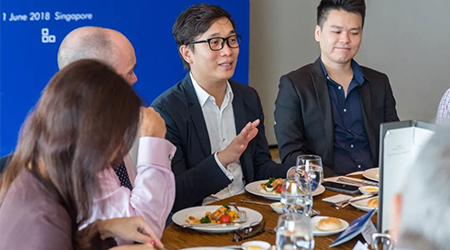
Linfinity is undoubtedly the pioneer and practitioner of landing of blockchain technology application. In different countries and regions, linfinity has held several round tables aimed at the development of blockchain industry, which not only attracted the participation of many blockchain enthusiasts, but also brought together many experts from finance, investment, hotels, real estate and other industries and put forward many insights of blockchain on the development of traditional industries.

How will blockchain change our lives? 

“Blockchain technology is undoubtedly a change for the whole industry. Blockchains and encrypted currencies are irresistible trends. For example, in terms of food safety issues, if the blockchain technology appears early and can be landed and applied for promotion, the problems of dairy products and mad cow disease beef may all be solved.”

                                                                                                 — Elaine Chia, Associate Director, Bank of Singapore

Distributed structure and traceability are the two biggest characteristics of blockchain. Linfinity achieves mutual authentication of information in each block through information onchain. This has the advantage that no matter where we are, we can view and trace the information we want to know, and this information is credible, open, transparent, secure and cannot be tampered with by human beings.

This technology is suitable for a variety of industries, especially for the food industry, fast-moving consumer goods industry, luxury industry, financial industry, pharmaceutical industry, etc. As long as the product information of these industries goes “onchain”, consumers can check and verify the authenticity of the information in all circulation links they exist. However, traditional industries cannot realize this in the anti-counterfeiting aspect.

Blockchain: bane or boon?

“Based on the special properties of the real estate industry, there are a lot of capital flows and transactions occurring every day. It is extremely urgent to introduce blockchain technology.”

                                                                                — Edward Tan, Real Estate Consultant, Seed Global Investment

Since the first day of its birth, blockchain has faced the dilemma of “mixed reception”. All this stems from people’s failure to have a clear understanding of the blockchain technology. The “boon” and “bane” of blockchain do not depend on the block chain itself, but lie in how ” we” correctly use this new technology to bring its due value into play.

The advantages of blockchain technology are not only reflected in the transparency and traceability of transactions, but also expected to simplify the management process and improve the management efficiency. For example, embedding a blockchain into a bank or financial system can make loan financing well documented and safe and efficient.

Regardless of whether blockchain is a boon or a bane, it is worth affirming that it has indeed accelerated the development process in some fields and industries, which is why Linfinity has begun to provide block chain solutions for the supply chain industry.

Ico: is it legal?

Recently, fraudulent companies have defrauded investors of millions of dollars through ICO, which has become a headline news. Fraudulent companies usually used various “ unwarranted” white papers or found so-called “celebrities” in the currency circle to endorse themselves and peddle air coin to illegally raise funds, thus seriously infringing on investors’ asset rights and interests. So people began to criticize block chain and even remained hesitant and skeptical about the application of the block chain.

“The number of digital token exchanges and ICOs continues to grow. If a one-size-fits-all approach is adopted, it is bound to hurt those block chain enterprises that abide by the law. However, she also pointed out that the introduction of policies and regulations on ICO projects should be expedited so as to promote the healthy development of the industry.”

— lLee Boon Ngiap, Deputy General Manager of Capital Markets, Monetary Authority of Singapore (MAS)

Linfinity only focuses on the popularization and landing of blockchain technology, so it does not intend to carry out ICO financing. We believe that all financial tokens should run according to all its own rules, only in this way can we truly benefit the entire industry by using the “token model”.

Practical Application of BlockChain Technology

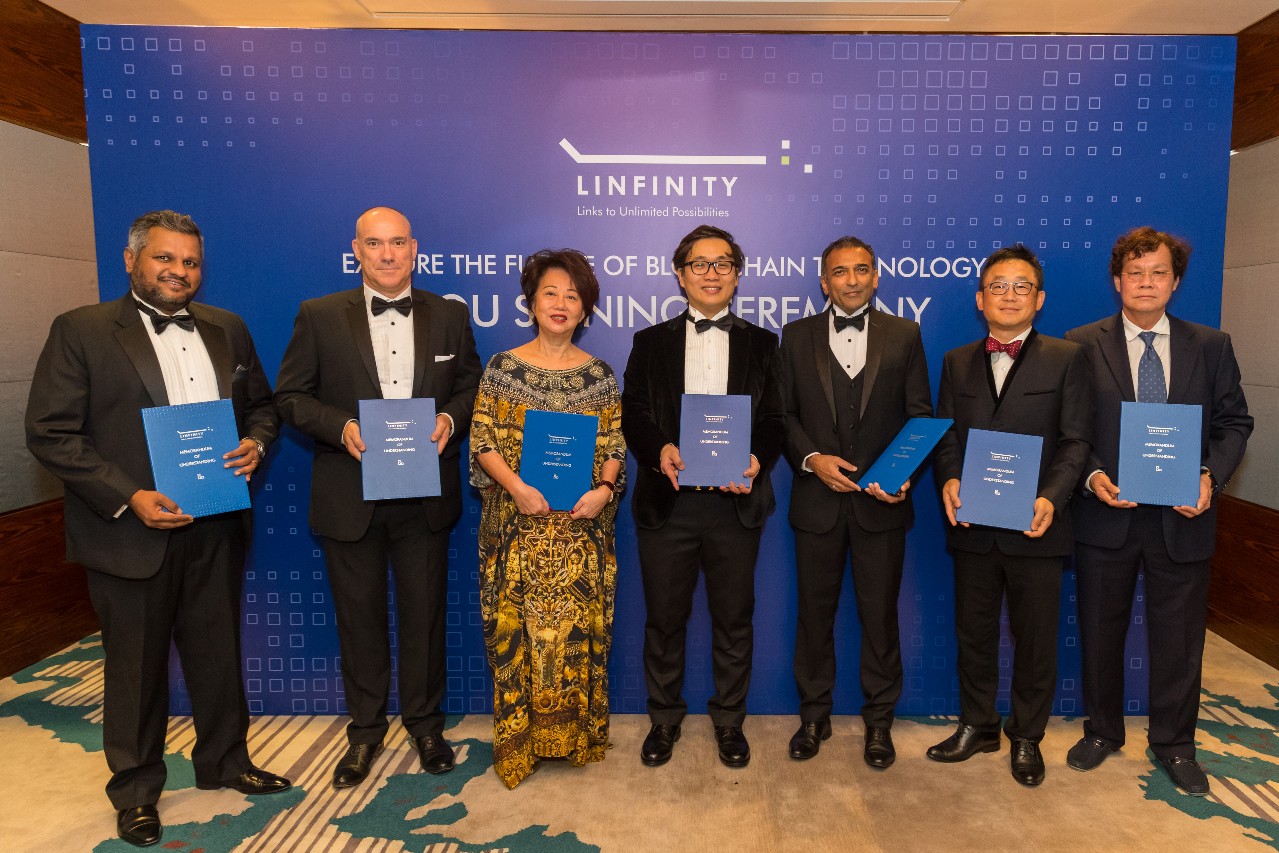
To date, Linfinity has signed strategic cooperation agreements in Singapore with a number of international enterprises including Crossinvest, RHTLaw TaylorWessing LLP, RHT Holdings, RONGDE Logistics, Scientific Tradition and WealthBriefingAsia, and will reach more cooperation in the two regions.

These agreements mark that Linfinity has begun to build a reliable and traceable supply chain ecology based on the blockchain system, which will transform the blockchain technology from concept to reality. The scope of these cooperation agreements covers finance, law, logistics, fast moving consumer goods, etc. the companies that cooperate with us will use Linfinity’s block chain technology to improve the efficiency and transparency of their own enterprise supply chains.

In addition, Linfinity signed a strategic cooperation agreement with Alishan Group in Taiwan. According to the agreement, Linfinity will build a “bridge of integrity” with traceability & anti-counterfeiting between the enterprise and consumers.

“The blockchain will change people’s lifestyle and the future development of many industries just like paper making, printing and even internet technology.”

                                    — AnndyLian, CEO of Linfinity

Anndy Lian is an early blockchain adopter and experienced serial entrepreneur who is known for his work in the government sector. He is a best selling book author- “NFT: From Zero to Hero” and “Blockchain Revolution 2030”.

Currently, he is appointed as the Chief Digital Advisor at Mongolia Productivity Organization, championing national digitization. Prior to his current appointments, he was the Chairman of BigONE Exchange, a global top 30 ranked crypto spot exchange and was also the Advisory Board Member for Hyundai DAC, the blockchain arm of South Korea’s largest car manufacturer Hyundai Motor Group. Lian played a pivotal role as the Blockchain Advisor for Asian Productivity Organisation (APO), an intergovernmental organization committed to improving productivity in the Asia-Pacific region.

An avid supporter of incubating start-ups, Anndy has also been a private investor for the past eight years. With a growth investment mindset, Anndy strategically demonstrates this in the companies he chooses to be involved with. He believes that what he is doing through blockchain technology currently will revolutionise and redefine traditional businesses. He also believes that the blockchain industry has to be “redecentralised”.
j j j