
Blockchain is poised to disrupt major industries in the near future. A study by Juniper Research stated that two thirds of firms say they expect the technology to be integrated into their systems by the end of 2018. With the ability to store huge amounts of data on distributed and decentralised networks, blockchain provides many advantages to organisations, such as improving efficiency and corporate transparency, enhancing cybersecurity, streamlining services and connecting users in an unprecedented manner.
The first to use blockchain technology on supply chains across borders is Linfinity, a Singapore-based platform that aims to build a trusted and traceable anti-counterfeiting supply chain through blockchain technology. With different applications across different industries, Linfinity sees unparalleled opportunities to transform the supply chain industry. Integrating blockchain into supply chains will increase the convenience and security regardless of industry, from FMCG to the financial sector.
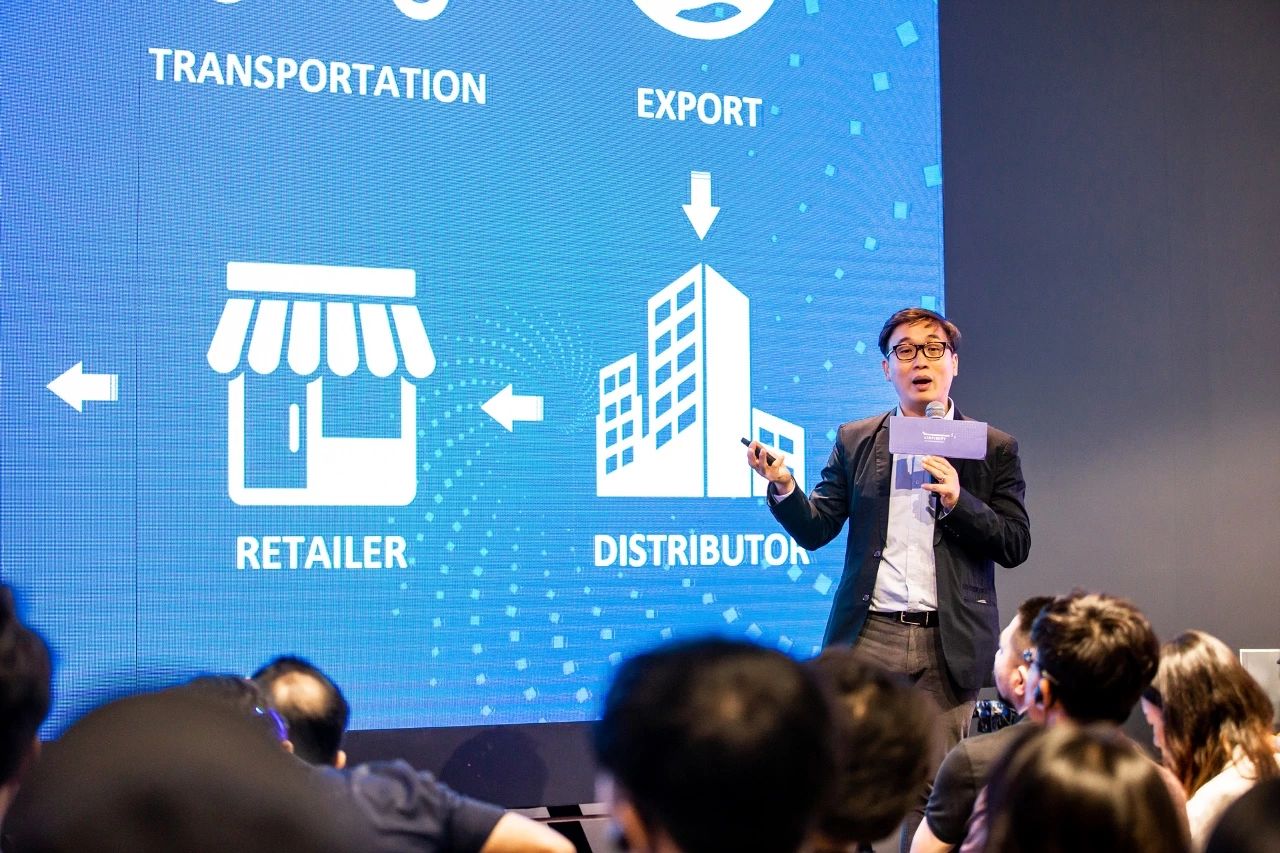
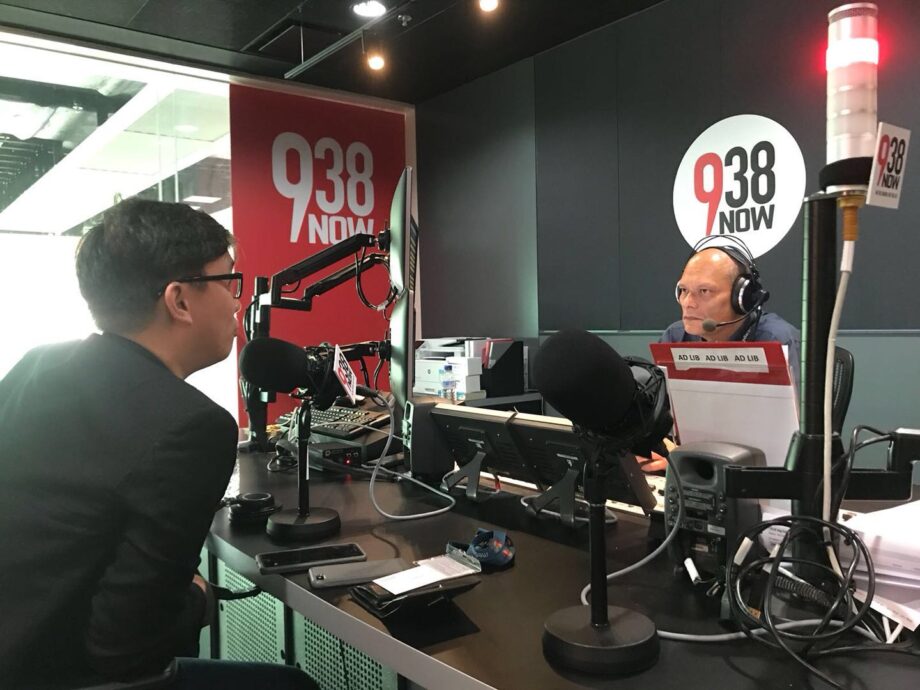
Anndy Lian, CEO of Linfinity, kicks off 938Now’s Blockchain Series by discussing the role that blockchain technology plays in businesses, the solutions that Linfinity’s supply chain technology provide, as well as the need for traceability and transparency in today’s fragmented economy.
[1]Q: Tell us what Linfinity does within the logistics industry.
A: In the logistics industry, Linfinity looks at the total supply chain – right now in any industry the buzzword is blockchain. So currently, we are trying to create a value system that is going to work well for new businesses and traditional players already in the market.
We look at a few things within blockchain for supply chains, such as challenges with raw materials, as well as logistics and distribution problems. We had a talk in Korea recently, which even touched on how the recycling process can be part of the total supply chain. There are many things that Linfinity touches on, and beyond that we are also interested in really integrating blockchain by linking up with different organisations – so we have been meeting up with banks, financial institutions and other sectors as well.
Q: What is Linfinity’s role – is it allowing companies to manage their own supply chains, or does Linfinity manage it for them?
A: It works both ways – 1) we manage them and get them on to our chain and help them smoothen out their processes; or work out a more hybrid model together 2) they own their own blockchain so it’s more private, and when they’re ready they mount on to Linfinity’s chain
Q: Is Linfinity a solutions provider using blockchain technology? And are there other companies providing the same technology, similar solutions, to the same industry?
A: Yes we are a solutions provider using blockchain technology – and we may be the first for now, but there will people who will follow us and try to do even better. It’s the way of this industry.
Q: How is transparency to the end customer facilitated by blockchain technology and Linfinity’s solutions?
A: If you look at a particular industry, let’s take for example (from my recent talk in Korea) the cosmetic industry from manufacturer to brand owner – when looking at the whole supply chain, it really is a lot of players and could take months to transform.
Some pain points that we found out from the cosmetics industry, especially the more popular brands, are that there are fake goods claiming to be of the brand in the market. So that’s a really big issue. If you look at the current system, not on blockchain, many of these are on a centralised database. When it’s centralised, issues can arise such as hacking of the system, brands tweaking the expiry dates of products, and so on. With blockchain technology, it’s based on a consensus model – people have to vote that it is a real product, it takes the feedback of the majority to ensure that the product is authenticated.
Linfinity looks at some of these pain points, and for the cosmetics industry we have come up with a series of solutions to help them to – firstly, reduce the cost of authentication; secondly, build a better brand where blockchain is involved. With blockchain, things are much more transparent because the products can be traced and authenticated. This will build trust with the consumers and they will have a better user experience, feeling that it is safer to use this brand.
Q: Does it eliminate counterfeit products?
A: It will. As the chain gets bigger, the number of users increases, and the anti-counterfeiting steps become more elaborate so it would become harder for fake goods to pass off as real.
If we look at the technology, there are a few parts to it. The current situation is such that people have to scan codes (QR codes, RFID tag, bar code), and unfortunately these are all easily duplicated. At Linfinity, we are creating our own mark – a Linfinity mark, which lets people know that once you scan this mark you will be able to get all the different data which cannot be duplicated easily.
[2]
Q: In the supply chain industry with all its inefficiencies, how has it run for so long without blockchain technology?
A: Legacy systems have been around for a long time. They exist to facilitate businesses in doing what they need to. When blockchain came about, there was a lot of buzz and questions about how different blockchain is to the current systems that are being used, how troublesome would it be to migrate systems and so on.
But blockchain is revolutionary – if you look at blockchain systems now and the transparency it offers, it shares many data points with consumers. This is very different to the old systems which keeps the data hidden. When it’s on blockchain, data is more secure – because in order to change a particular data in the past, all you have to do is change it at one point. But now the data is stored on multiple blocks of systems (think of it like multiple boxes of information), and it would almost be impossible to change the data now because you would have to find out where the information is, what data the blocks are filled with.
Coming back to how systems from the past are different to systems on blockchain – currently with blockchain systems, things are much more accounted for and traceable. My favourite saying is that, blockchain enables companies to better manage what they already have. It’s not just about a CRM system or how to trace where the goods are, but it’s about helping people trust that it’s an authentic product by going through a decentralised system that ensures openness and transparency.
Q: Take for instance, I am a coffee retailer – how does this decentralised system work, would it affect the producers, how the coffee gets to me and how it gets delivered to the customer?
A: Coincidentally, Linfinity is in talks with a coffee plantation dealing with green beans, not yet roasted. And they ask me, when we talk about the total supply chain for coffee, how would Linfinity help and how would our consumers benefit from this?
Linfinity’s value add is this – we actually trace the data from the very beginning, even before seeing the green beans. When the green beans are harvested, we keep track of how and where the green beans are stored, temperature of the storage, who the beans will be handled by – all these information will be on the blockchain. As you look at the chain, you will be able to track the roasting of the beans, grinding of the beans, separation into coffee bags and so on. What Linfinity does is trace each different point in the supply chain process, and be able to pinpoint the exact point that an issue came about, if any.
For example, if there is a food security issue with the coffee, we will be able to backtrack and find out where things went wrong (e.g. temperature problem, grind problem) which led to the issue. With blockchain technology together with IoT products (cameras, tracking devices), this enables the traceability within the supply chain which Linfinity advocates.
Q: Will it eliminate the middle man?
A: Yes looking at the way blockchain works typically, it may eliminate the middle man – people have said that it may eliminate the bank in the financial sector, eliminate some traditional players in the shipping industry.
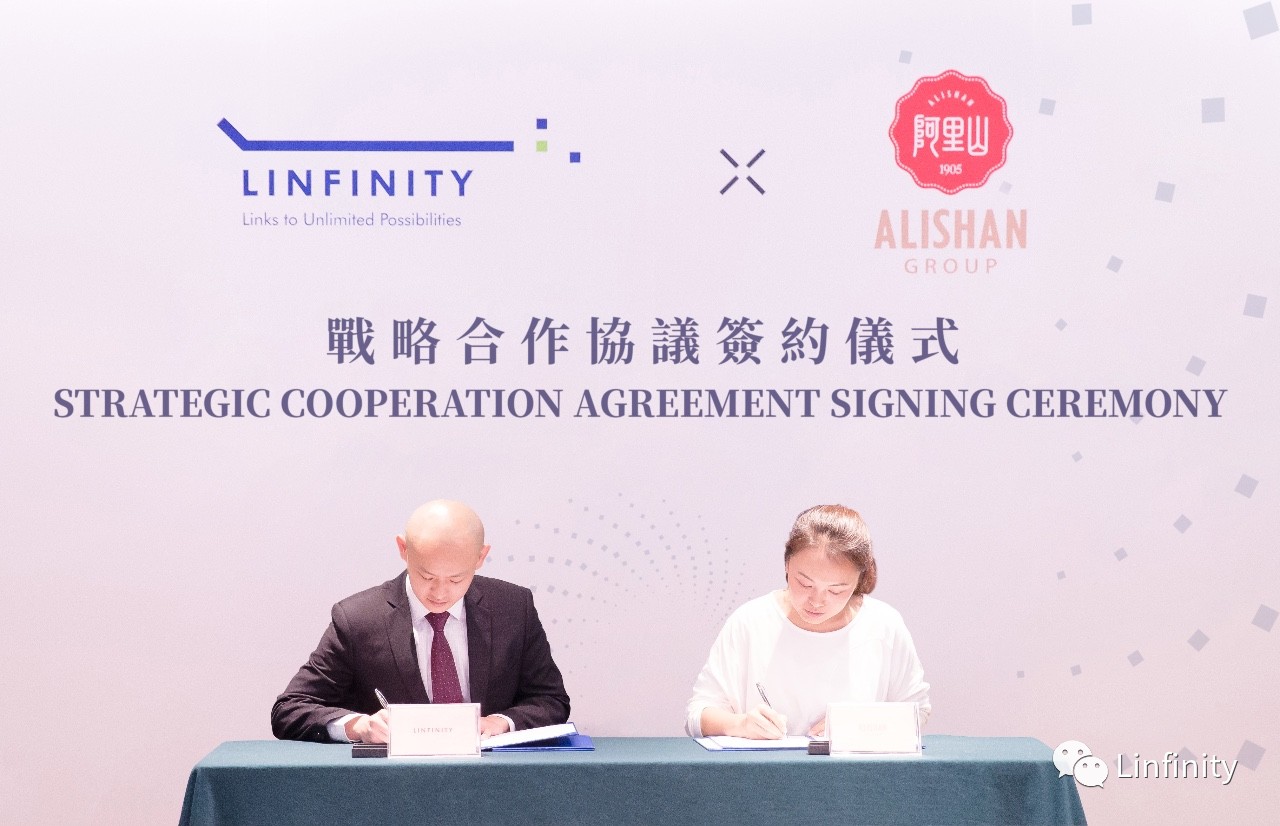
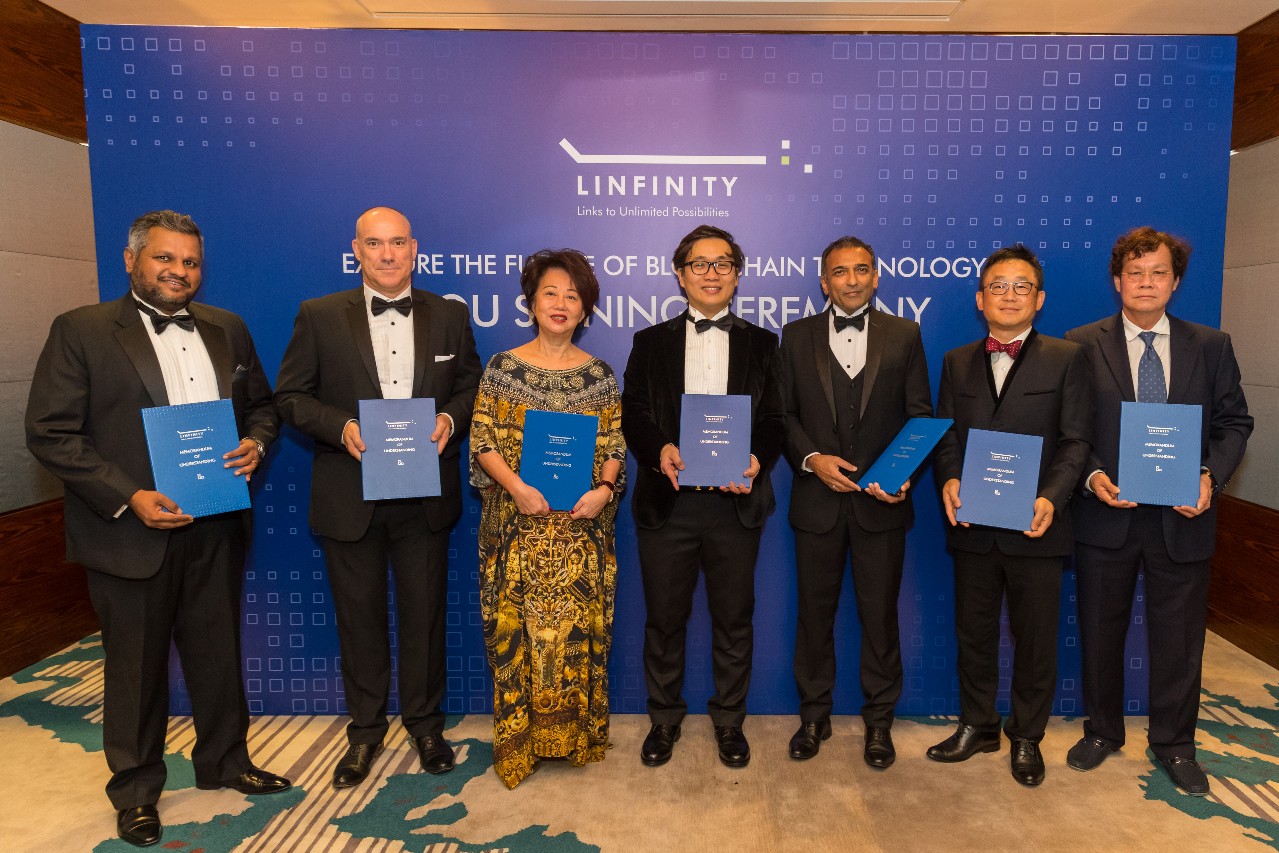
But Linfinity has a different perspective – about a month ago, we signed 6 MOUs with Singapore companies, one of which is a very traditional logistics company. They are doing well, but are also looking a blockchain because of the advantages that blockchain can provide – such as smoothening their business processes, and handling potential problems like food security issues.
Linfinity has also had conversations with food suppliers in China who face challenges like fruit produce that get lost, or do not arrive in optimum condition – but they are unable to trace where it went wrong. If they were on blockchain, it would be placed on a consensus model and can be traced.
Q: So would each and every fruit have to be barcoded?
A: Well we go by batches. For example like coffee beans, it’s definitely not possible to tag every single bean, so we look at each packet or sack of beans. So we look at how each sack of beans are handled and where, how it’s been packed, who packs it. These are valuable information that are stored in the chain and can be traced back when something happens.
[3]
Q: Why are people resistant to this technology, and what would you like people to understand about blockchain?
A: I think it’s mainly due to wrong perception – because blockchain acts like a hybrid that helps businesses get on a digital track. I don’t think people are losing jobs because of blockchain, in fact I know of many blockchain projects that are hiring people. When blockchain integrates with traditional businesses, they also have to get more people in to facilitate this transition.
Many of these blockchain projects aim to get commercialised, or obtain proof of concept. When we commercialise projects like this, it takes a lot of effort. Big brands may be resistant to this because they already have legacy systems in place that are managing their data. For other businesses who are more receptive, they see blockchain as preparing for their future.
The key thing is that blockchain is an enabler – it does not only disrupt the current tech and traditional scene, but wants to enable them to improve on their systems. Lower cost, better branding, more prospects – that’s what we envision blockchain can do for businesses.
Q: For a traditional business that has been in the supply chain and logistics, what is the advantage for them to integrate their business with blockchain?
A: It goes back to the same theory – blockchains are decentralised. Traditional businesses using traditional systems have legacy problems. In the previous example of cosmetics, or let’s say FMCG goods – the industry is huge and there are many products. Take for example, a big brand that has to discard a whole shipping container worth of shampoo because of an allergy test that some products didn’t pass. This batch of goods are then sent out of the country due to a middleman problem and might end up in Singapore and sold in some neighbourhood stores where consumers cannot verify if these goods are real or rejected.
With blockchain technology, consumers can do a simple scan which directs them to an independent website where they can find all the relevant information on their product. In the traditional model, all these data are not traceable and that’s the difference.
Q: If businesses have been updating all their systems, would blockchain amalgamate all the systems or would they have to get rid of the systems?
A: Blockchain adds another layer to existing systems, so there’s no need to get rid of anything. Blockchain technology functions as an additional layer that enables businesses to harvest more data, to a certain level of traceability. Of course, this would be an ongoing process.
Q: Would this include payment systems?
A: It will, Linfinity is already talking to banks and other like-minded blockchain projects discussing how we could look at supply chain finance. The supply chain finance does need traceability as well, not just giving out loan amounts based on what consumers say. Systems like blockchain help them to verify, to authenticate, to get the loan in place much faster.

Anndy Lian is an early blockchain adopter and experienced serial entrepreneur who is known for his work in the government sector. He is a best selling book author- “NFT: From Zero to Hero” and “Blockchain Revolution 2030”.
Currently, he is appointed as the Chief Digital Advisor at Mongolia Productivity Organization, championing national digitization. Prior to his current appointments, he was the Chairman of BigONE Exchange, a global top 30 ranked crypto spot exchange and was also the Advisory Board Member for Hyundai DAC, the blockchain arm of South Korea’s largest car manufacturer Hyundai Motor Group. Lian played a pivotal role as the Blockchain Advisor for Asian Productivity Organisation (APO), an intergovernmental organization committed to improving productivity in the Asia-Pacific region.
An avid supporter of incubating start-ups, Anndy has also been a private investor for the past eight years. With a growth investment mindset, Anndy strategically demonstrates this in the companies he chooses to be involved with. He believes that what he is doing through blockchain technology currently will revolutionise and redefine traditional businesses. He also believes that the blockchain industry has to be “redecentralised”.