Total Value Locked Is A Lie; Now Decentralization Is A Lie Too?

Total Value Locked Is A Lie; Now Decentralization Is A Lie Too?

The decentralized finance landscape, once a frontier for radical transparency and sovereign ownership, has increasingly begun to resemble the very labyrinthine financial systems it originally sought to replace. We find ourselves in an era where the metrics used to judge success, specifically Total Value Locked (TVL), have become distorted by layers of rehypothecation and recursive leverage. When we look at the dashboard of a major protocol and see billions of dollars in value, we are often looking at a digital mirage. This is a series of claims built upon claims, where the same dollar is counted four, five, or ten times over. This structural fragility is not merely a technical quirk. It is a systemic sickness that masks true risk and necessitates the very centralized interventions that the industry claims to have moved past.

To understand how $1,000 can effectively become $1 million in the eyes of a data aggregator, one must understand the modern DeFi loop. In a vacuum, decentralization implies a one-to-one relationship between an asset and its utility. But the hunger for yield has pushed developers and users to create a Matryoshka doll of financial instruments. You deposit $1,000 worth of ETH into a protocol; that is your base TVL. The story does not end there. You borrow $800 against that ETH and deposit it into a second protocol. Now, the aggregate TVL across the ecosystem is recorded at $1,800, despite only $1,000 in real capital. By the time you borrow $600 against that $800 and repeat the process three or four more times, the on-chain data suggests a thriving, multi-thousand-dollar economy. In reality, it is a precarious tower of debt where a minor price fluctuation in the underlying asset can trigger a cascading liquidation that wipes out the entire stack.

This phenomenon scales exponentially when we move from the retail level to the institutional level. The leap from $1 million to $1 billion in TVL is often achieved through the same smoke-and-mirrors tactics, just with more sophisticated wrappers. We are currently witnessing a cycle of yield juicing that involves liquid staking, restaking, and liquid restaking tokens. This is what some call the old economist trick. A user starts by staking ETH with a provider like Lido to receive stETH. They then take that stETH, which is a receipt for their capital, and deposit it into a restaking protocol like EigenLayer. To maintain liquidity, they use a liquid restaking protocol like KelpDAO to receive rsETH. This rsETH is then used as collateral on a lending platform like Aave to borrow more ETH, which is then fed back into the loop. Each step adds a layer of TVL to the ecosystem’s statistics, but also a layer of smart-contract risk and counterparty dependency. We have reached a point where the value in DeFi is more about the velocity of receipts than the stability of assets.

The danger of this complexity was laid bare in the recent crisis involving the KelpDAO exploit and the subsequent intervention by the Arbitrum Security Council. This event serves as a perfect case study for why the current state of DeFi is fundamentally sick. The sequence of events was a masterclass in modern systemic risk. The rsETH tokens, which were already several layers removed from the original staked ETH, relied on a cross-chain bridge called LayerZero to maintain their utility. When a vulnerability was exploited by actors linked to North Korea, the underlying collateralization of the rsETH tokens was compromised. Because these tokens were being used as collateral in leveraged looping positions across the ecosystem, the entire stack became stuck. Traders were left with unprofitable and uncloseable positions. The contagion threatened to spread to every protocol that had integrated these receipt tokens.

What followed was perhaps even more revealing about the state of the industry than the exploit itself. The Arbitrum Security Council took emergency action to freeze 30,766 ETH, which is nearly $100 million at current market rates, held in an address linked to the exploit. By their own admission, the council performed a technical maneuver that effectively allowed them to move funds as if they were the hacker. They did this by temporarily upgrading a contract to override the standard permissions of the blockchain. While this action was undoubtedly taken to protect the community and recover stolen assets, it shatters the illusion of immutability that serves as the bedrock of decentralized philosophy. The funds were successfully transferred to an intermediary frozen wallet on April 20 at 11:26pm ET. They can now only be moved by further action by Arbitrum governance.

If a small group of twelve individuals can, at their discretion, decide which transactions are valid and which are not, we must ask ourselves if we are actually decentralized. The technical answer is a resounding no. We are currently operating under a system of progressive decentralization, which is often a polite euphemism for centralization with a promise to change later. The Arbitrum Security Council is a 12-person multisig body elected by the Arbitrum DAO. Its power is absolute in times of crisis. If nine out of those twelve members were compromised, they would possess the God Mode keys to the entire chain. They could perform privileged operations on any contract, freeze any wallet, and alter the state of the ledger at will. This is not the vision of a permissionless financial system. It is a high-tech version of a central bank committee operating with even less regulatory oversight.

The defense for such measures is always security and integrity. If the council can intervene to stop a bad actor, who defines what bad is? Today, it is a North Korean hacker. Tomorrow, it could be a political dissident, a rival protocol, or a user who simply participated in a trade that the council deemed harmful to the ecosystem stability. When we give a council the power to move funds without a private key, we are admitting that the code is not law. Instead, the council is the law.

This brings us to the broader ethical and structural crisis in DeFi. We have built a system that is too complex to be allowed to fail. Because it is too complex to fail, it cannot be truly decentralized.


 

Source: https://www.benzinga.com/Opinion/26/04/51967206/total-value-locked-is-a-lie-now-decentralization-is-a-lie-too

Anndy Lian is an early blockchain adopter and experienced serial entrepreneur who is known for his work in the government sector. He is a best selling book author- “NFT: From Zero to Hero” and “Blockchain Revolution 2030”.

Currently, he is appointed as the Chief Digital Advisor at Mongolia Productivity Organization, championing national digitization. Prior to his current appointments, he was the Chairman of BigONE Exchange, a global top 30 ranked crypto spot exchange and was also the Advisory Board Member for Hyundai DAC, the blockchain arm of South Korea’s largest car manufacturer Hyundai Motor Group. Lian played a pivotal role as the Blockchain Advisor for Asian Productivity Organisation (APO), an intergovernmental organization committed to improving productivity in the Asia-Pacific region.

An avid supporter of incubating start-ups, Anndy has also been a private investor for the past eight years. With a growth investment mindset, Anndy strategically demonstrates this in the companies he chooses to be involved with. He believes that what he is doing through blockchain technology currently will revolutionise and redefine traditional businesses. He also believes that the blockchain industry has to be “redecentralised”.

j j j

Anndy Lian believes DeFi will also result in more and more bitcoins being locked up, “which will bring another bull market for bitcoin.”

Anndy Lian believes DeFi will also result in more and more bitcoins being locked up, “which will bring another bull market for bitcoin.”

Anndy Lian’s comments were featured on CryptoNews on 27 September 2020. He believes that DeFi will also result in more and more bitcoins being locked up, “which will bring another bull market for bitcoin.”

“This inter-related relationship between Bitcoin and Defi works hand in hand with the demand as seen in the market. The breakout trend in Defi for 2020 will continue. New terms will supersede “Yield Farming”  and a more stable environment will be established as you see the bigger exchanges like Binance, Gemini, Huobi and Okex taking the lead.” Anndy Lian added.

Read more about the article on Google News:

https://news.google.com/articles/CAIiEGyo6SpEJbiRN5EMTwYXqjoqMwgEKioIACIQOG0vTzP65T11pGTnFueHJCoUCAoiEDhtL08z-uU9daRk5xbnhyQwg7vbBg?hl=en-SG&gl=SG&ceid=SG%3Aen


‘If DeFi Collapsed, Bitcoin Would Still Be Bitcoin’


  • The core driver of DeFi is its use case, not Bitcoin.
  • “BTC is money, DeFi is banks, that’s how people should think about it.”
‘If DeFi Collapsed, Bitcoin Would Still Be Bitcoin’ 101
Source: Adobe/golibtolibov

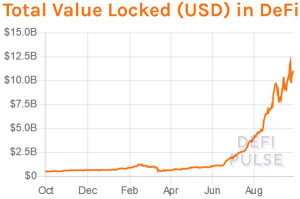
Bitcoin (BTC) and DeFi both had a good summer. After the coronavirus-induced collapse of March, the price of bitcoin rose from USD 3,500 to just over USD 12,000 in August, while the total value locked into DeFi platforms rose from USD 1bn in June to almost USD 12bn in late September.

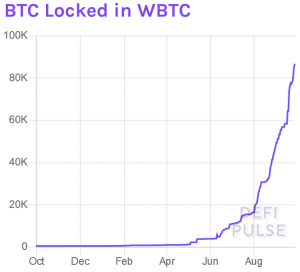
It’s tempting to view the performances of bitcoin and DeFi as connected. Given that the supply of wrapped bitcoin has ballooned from wBTC 500 to almost wBTC 90,000 in the past 12 months, it would seem that bitcoin holders have been driving the growth of DeFi.

However, industry figures speaking to Cryptonews.com said that, while BTC has been a significant player in DeFi’s growth, its importance within the DeFi ecosystem will wane over time. And while some may be tempted to regard Bitcoin and DeFi as interdependent, most commenters believe that each can survive without the other.

Bitcoin boosts DeFi

There’s little doubt that bitcoin — and in particular wrapped bitcoin — has spurred at least a portion of DeFi’s impressive growth over the past few months – USD 1.4bn worth of BTC is locked in DeFi today, or almost 13% of total value locked (TVL) in decentralized finance projects.

As data from Defi Pulse indicates, the demand for wBTC began rising exponentially from the end of June onwards.

‘If DeFi Collapsed, Bitcoin Would Still Be Bitcoin’ 102
Source: defipulse.com

And data also indicates, it was around the end of June that TVL into DeFi platforms suddenly began rising more strongly, as ethereum (ETH) locked in DeFi jumped also this past summer.

‘If DeFi Collapsed, Bitcoin Would Still Be Bitcoin’ 103
Source: defipulse.com

Industry figures agree that the two trends are connected, even if they have their own opinions on how long the interconnection may continue.

“Yes, I think the use of wBTC pair mining will boost the Defi market to a certain extent,” said crypto advisor and author Anndy Lian.

“According to the data released today (the second day of Uniswap Liquidity Mining), 50% of the miners used the wBTC/ETH pair in the initial mining, and most of them are big whales.”

Analyst and CryptoMondays Partner Lou Kerner suggested that bitcoin will remain an important part of DeFi in the medium term, not least because it still accounts for over half of the total value of all cryptoassets.

“Given its scale, bitcoin will be an increasingly significant asset in DeFi. But over time, as real world assets are tokenized and enter DeFi, bitcoin relevance will decrease,” he told Cryptonews.com.

However, while BTC has played a role in DeFi’s recent growth, ADVFN CEO Clem Chambers doesn’t see it as the main factor.

“Bitcoin will influence DeFi but it is not the core driver. The core driver is the powerful use case,” he said.

DeFi boosts BTC

Conversely, commenters agree that DeFi is boosting BTC, or that it will in the near future. By offering the chance to earn an additional return on the bitcoin you own, DeFi’s liquidity mining and yield farming is making BTC seem even more attractive to investors, particularly during a period of reduced economic opportunity.

“DeFi has made BTC even more attractive as an investment,” according to Kerner.

That said, Chambers estimated that most of DeFi’s boost to BTC still awaits us in the future.

“It will [boost bitcoin] but not yet. DeFi is still underground with only the core early adopters ‘getting it’,” he said.

Aside from enhancing the returns offered by bitcoin, Anndy Liang pointed out that DeFi will also result in more and more bitcoins being locked up, “which will bring another bull market for bitcoin.”

Mutual aid, not mutual interdependence

While DeFi and bitcoin both help each other in various ways, commentators seem that they don’t believe that each needs the other to survive.

“Bitcoin crashing would certainly slow the growth of DeFi, but one is not dependent on the other,” said Kerner.

Likewise, if DeFi were to somehow collapse, Interlapse CEO and Co-founder Wayne Chen said that BTC would continue as before.


“Bitcoin has seen massive growth over the past decade and will certainly continue its momentum,” he told Cryptonews.com. “If DeFi collapsed, Bitcoin would still be Bitcoin and continue its growth and adoption.”

On the other hand, some think that bitcoin crashing would have a severe effect on DeFi, since even if parts of the DeFi ecosystem survived, altcoins would struggle.

“Most of the ‘value’ coins will go to zero if the price of bitcoin crashed significantly or collapsed,” suggested Lian. “One thing is for sure: no coin (maybe tiny s***coins can) can survive if bitcoin collapses.”

The future: parallel, not pivotal

As for the more distant future, some experts believe that DeFi and Bitcoin will increasingly operate in parallel, rather than remain interlinked.

“BTC is money, DeFi is banks, that’s how people should think about it. The linkage is parallel not pivotal,” argued Chambers.

Chen claims that it’s in the interests of DeFi and Bitcoin that each maintains a degree of independence from the other in the future.

“Industry professionals will likely try to interrelate DeFi and Bitcoin. However, this needs to be done cautiously so that it doesn’t turn into a complicated financial product which can ultimately confuse the market,” he said.

Anndy Lian isn’t completely sure that DeFi will be around in several years’ time. However, if it is, he said there’s a chance other cryptoassets could emerge to reduce BTC’s influence on DeFi.

“But personally I do hope to see new players coming into challenge Bitcoin’s supremacy,” he said. “With challenges, there are improvements. This is what’s lacking in today’s crypto space.”


Original Source: https://cryptonews.com/exclusives/if-defi-collapsed-bitcoin-would-still-be-bitcoin-7827.htm


Anndy Lian is an early blockchain adopter and experienced serial entrepreneur who is known for his work in the government sector. He is a best selling book author- “NFT: From Zero to Hero” and “Blockchain Revolution 2030”.

Currently, he is appointed as the Chief Digital Advisor at Mongolia Productivity Organization, championing national digitization. Prior to his current appointments, he was the Chairman of BigONE Exchange, a global top 30 ranked crypto spot exchange and was also the Advisory Board Member for Hyundai DAC, the blockchain arm of South Korea’s largest car manufacturer Hyundai Motor Group. Lian played a pivotal role as the Blockchain Advisor for Asian Productivity Organisation (APO), an intergovernmental organization committed to improving productivity in the Asia-Pacific region.

An avid supporter of incubating start-ups, Anndy has also been a private investor for the past eight years. With a growth investment mindset, Anndy strategically demonstrates this in the companies he chooses to be involved with. He believes that what he is doing through blockchain technology currently will revolutionise and redefine traditional businesses. He also believes that the blockchain industry has to be “redecentralised”.

j j j