Walking on eggshells: Why investors are cautious amid mixed market signals

Walking on eggshells: Why investors are cautious amid mixed market signals

It’s a fascinating time in the markets, with investors acting a bit like they’re walking on eggshells, unsure of which way things might crack. The mood out there is what folks are calling muted, which basically means people aren’t jumping in with both feet or running for the exits either.

They’re digesting a bunch of mixed signals from recent events like the US second-quarter earnings, some big trade deal announcements, and even wild moves in the cryptocurrency world. Buckle up, because there’s a lot to unpack here!

What’s behind this muted risk sentiment?

Picture this: you’re an investor trying to figure out where to put your money, and the news is a mixed bag. That’s where we’re at right now. The muted global risk sentiment means investors are feeling cautious, neither overly excited nor panicked, but rather waiting to see what happens next.

A big part of this comes from the US second-quarter earnings results. Some companies knocked it out of the park, beating expectations and boosting confidence, while others stumbled, missing the mark and raising eyebrows. It’s like receiving a report card with A’s and C’s, leaving you unsure whether the class is excelling or needs extra help.

On top of that, there’s been a quiet spell in big economic news. No blockbuster jobs reports or inflation numbers to shake things up lately, just a data-light week that’s keeping everyone in a holding pattern. Without a clear signpost, investors are hesitant to make bold bets, and that’s keeping the risk appetite dialed down. It’s not doom and gloom, but it’s not a party either, just a steady, cautious vibe.

Trade deals stirring the pot

Now, let’s talk about these trade deals that US President Donald Trump has been touting. He’s calling the one with Japan a massive deal, and it comes with reciprocal tariffs of 15 per cent on Japan’s exports to the US. Then there’s a freshly concluded deal with the Philippines, slapping a 19 per cent tariff on their goods coming into the States. These announcements sound big, right? But what do they really mean for the markets?

For Japan, a 15 per cent tariff could significantly impact industries such as cars and electronics, which are crucial to its economy. If it gets pricier to sell those goods in the US, Japanese companies might see profits shrink, and that could ripple out to global markets.

The Philippines deal, with its 19 per cent tariff, might make imports like electronics or clothing less competitive here, potentially nudging prices up for US consumers. On the flip side, these deals could give a leg up to some American industries by levelling the playing field a bit.

They might boost certain US sectors in the short term, but they’re also injecting uncertainty into global trade. Investors hate uncertainty, and the thought of supply chain hiccups or higher costs down the road is probably adding to that muted sentiment. We’re still early days on seeing how this plays out, but it’s definitely a piece of the puzzle.

US stocks: Playing defence

Switching gears to the stock market, US equities had a mixed day on Tuesday. The S&P 500 crept up a tiny 0.06 per cent, the Dow Jones climbed a solid 0.40 per cent, but the NASDAQ slipped 0.39 per cent. What stands out here is the defensive vibe at the sector level. Healthcare and Utilities, the kinds of stocks you lean on when you’re worried about a storm, did better than the flashy tech or growth names.

This tells me investors are hedging their bets. When you see money flowing into defensive sectors, it’s like people are putting on a raincoat even if the forecast isn’t clear. The mixed performance across the big indices shows there’s no unified story yet, some optimism in the Dow, a bit of tech fatigue in the NASDAQ. It fits right into that cautious, muted mood we’re seeing everywhere else.

Treasuries and the safety net

Over in the bond world, US Treasury yields are sliding, and that’s another clue about what’s on investors’ minds. Ahead of next week’s Federal Reserve meeting, the 10-year Treasury yield dropped over two basis points to 4.34 per cent, and the two-year yield eased more than 1 basis point to 3.83 per cent. Lower yields mean bond prices are going up, and that usually happens when folks are looking for a safe place to park their cash.

This flight to safety jives with the broader sentiment. When you’re not sure about stocks or the economy, Treasuries start looking pretty cozy. The Fed’s next move is a wildcard here. If they hint at rate cuts or sound dovish, yields could dip further, but a hawkish surprise might shake things up. For now, this yield drop is like a neon sign saying investors are playing it safe.

Dollars and commodities: More mixed signals

The US Dollar Index took a 0.47 per cent dip, which isn’t huge but still notable in a quiet week. A weaker dollar often ties to less demand for it as a safe haven, maybe because folks aren’t as freaked out as they could be.

In commodities, gold slipped 0.3 per cent to US$3,385 an ounce, and Brent crude fell 0.9 per cent to US$69 a barrel. Gold dropping is a bit surprising since it’s the go-to when people are nervous, so maybe some are cashing in profits after its big run. Oil’s decline could point to worries about global demand slowing, especially with those trade deals in the mix.

These moves don’t scream panic, but they don’t shout confidence either. It’s like the markets are whispering, trying to figure out the next big thing.

Crypto chaos: Bitcoin and BNB take centre stage

Now, let’s get into the wild world of cryptocurrencies, because there’s some serious action here. Trump Media and Technology just made waves by scooping up US$2 billion in Bitcoin and Bitcoin-related securities, plus setting aside US$300 million for Bitcoin options.

Their stock popped 7.2 per cent on Monday and is up nine per cent over the week, sitting near US$20. With two-thirds of their US$3 billion in liquid assets now in Bitcoin, they’re all in on this crypto bet. CEO Devin Nunes says it’s about financial freedom, and the market seems to like the boldness.

Bitcoin itself, though, is having a tougher time. It hit a new high of US$123,100 last week but has since pulled back to US$118,752. There’s this thing called Binance Net Taker Volume that’s gone negative, dropping below US$60 million, which means more people are selling than buying on that exchange.

In the US, the Coinbase Premium Index is flat, showing spot buyers aren’t rushing in, and in Korea, the Premium Index is negative, hinting at a discount and weak demand there too. Still, Bitcoin’s holding above US$115,000 with buyers stepping in strong at that level, so the bulls aren’t giving up.

Then there’s Binance Coin, or BNB, which is on fire. It jumped five per cent in a day to over US$800, pushing its market cap to US$111 billion and overtaking Solana as the fifth-biggest crypto. Over the past week, BNB’s up 16 per cent while Bitcoin’s only gained two per cent.

Companies like Nano Labs are diving in, boosting their BNB stash to 120,000 tokens, worth about US$90 million after grabbing 45,684 more through over-the-counter deals at an average of US$764 per token. They’re planning to keep piling into BNB and even invest in BNB-focused firms.

The crypto space is a rollercoaster right now. Trump’s Bitcoin play is a huge signal that big players see it as more than just a fad, maybe a hedge or a growth engine. But Bitcoin’s stumbles show retail folks are jittery, taking profits or waiting for a dip. BNB’s surge feels more solid, tied to real adoption in the Binance ecosystem. It’s like crypto’s splitting into two stories: Bitcoin as the big kahuna with growing pains, and altcoins like BNB flexing new muscle.

Tying it all together

So, where does this leave us? The global risk sentiment is muted because investors are juggling a lot of balls, mixed earnings, trade deal uncertainties, a defensive tilt in stocks, and a crypto scene that’s part boom, part bust. Treasuries are a safe harbour, the dollar and commodities are wobbling, and the Fed’s next meeting looms large.

My perspective is that we’re in a transition phase. The trade deals could spark growth or friction, equities are treading water, and crypto’s rise shows risk isn’t dead, just choosy.

The standout is how traditional markets and crypto are starting to dance together. Companies betting big on Bitcoin and BNB while Treasuries draw safety seekers, it’s a tale of two worlds colliding. The Fed could tip the scales, but until then, this cautious vibe makes sense.

Stay sharp and flexible, because this market’s got more twists coming!


Source: https://e27.co/walking-on-eggshells-why-investors-are-cautious-amid-mixed-market-signals-20250723/

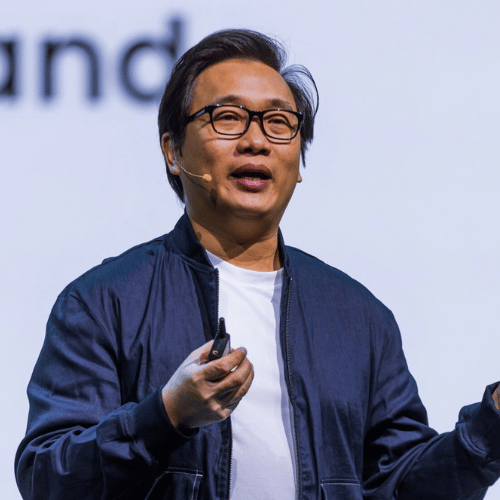
Anndy Lian is an early blockchain adopter and experienced serial entrepreneur who is known for his work in the government sector. He is a best selling book author- “NFT: From Zero to Hero” and “Blockchain Revolution 2030”.

Currently, he is appointed as the Chief Digital Advisor at Mongolia Productivity Organization, championing national digitization. Prior to his current appointments, he was the Chairman of BigONE Exchange, a global top 30 ranked crypto spot exchange and was also the Advisory Board Member for Hyundai DAC, the blockchain arm of South Korea’s largest car manufacturer Hyundai Motor Group. Lian played a pivotal role as the Blockchain Advisor for Asian Productivity Organisation (APO), an intergovernmental organization committed to improving productivity in the Asia-Pacific region.

An avid supporter of incubating start-ups, Anndy has also been a private investor for the past eight years. With a growth investment mindset, Anndy strategically demonstrates this in the companies he chooses to be involved with. He believes that what he is doing through blockchain technology currently will revolutionise and redefine traditional businesses. He also believes that the blockchain industry has to be “redecentralised”.

j j j

Inflation, trade, and tariffs: A mixed macro picture

Inflation, trade, and tariffs: A mixed macro picture

assets and the anticipation surrounding key macro events, numerous factors are driving market movements across equities, volatility, digital assets, fixed income, currencies, and commodities.

I’ll break down these drivers and catalysts, weaving in specific data and headlines to provide a thorough understanding of the current landscape.

Equities: Trade tensions and regional resilience

The equities market is experiencing a tug-of-war between geopolitical uncertainty and regional strength. Donald Trump’s confirmation of a 50 per cent tariff on copper imports, a figure double the anticipated 25 per cent, has sent ripples through global markets.

This bold move, aimed at protecting domestic industries, is poised to increase costs for US businesses reliant on copper, such as those in construction, electronics, and renewable energy. The tariff’s immediate effect has been to heighten uncertainty, with investors bracing for potential retaliatory actions from trading partners.

Yet, despite this turbulence, equities in the European Union are holding strong. The STOXX Europe 600 Index has climbed over two per cent in the past week, fuelled by robust economic data and optimism about the region’s recovery. Sectors like technology and industrials are leading the charge, suggesting that European markets are, for now, shrugging off the broader trade war concerns.

Meanwhile, UK exporters are reaping the benefits of a weaker pound, which has depreciated by roughly 1.5 per cent against the dollar recently. This currency movement has made British goods more competitive internationally, boosting companies like Rolls-Royce and AstraZeneca, which have reported increased export orders. The FTSE 100 has seen modest gains as a result, though the shadow of escalating trade tensions looms large.

In my view, the resilience of EU and UK equities is impressive, but it’s tempered by the risk that Trump’s tariff policies could spark a broader trade conflict, potentially derailing these gains. Investors should keep a close eye on how these dynamics unfold, as the balance between regional strength and global uncertainty remains delicate.

Volatility: A calm before the storm?

Turning to volatility, the VIX, often dubbed the market’s “fear gauge,” has eased to 16.8, down from recent highs, signalling a period of relative calm. This decline suggests that investors are less worried about immediate market swings, possibly reassured by positive economic signals or the resolution of some geopolitical tensions.

The S&P 500’s expected move of ±0.44 per cent further supports this picture of stability, indicating a tight trading range for the index. Additionally, the flat volatility curve, where short-term and long-term expectations align, hints at a lack of imminent stress. Historically, a VIX below 20 is considered a sign of market confidence, and at 16.8, we’re in that territory.

However, I’m skeptical that this tranquility will last. A flat volatility curve can be a double-edged sword; while it reflects calm now, it’s often a precursor to sharp corrections when underlying risks such as Trump’s trade policies or upcoming macroeconomic events resurface.

My take is that this lull is a breather rather than a new normal. Investors might be lulled into complacency, but the potential for sudden disruptions remains high. Keeping an eye on catalysts like the FOMC minutes or unexpected tariff escalations will be critical in the days ahead.

Digital assets: Stability and divergence

The digital asset space presents a fascinating contrast to traditional markets, striking a balance between stability and selective growth. Bitcoin has held steady around US$109,000, a sign of its maturing role as a store of value amid broader market uncertainty. This resilience is bolstered by continued inflows into Bitcoin ETFs like IBIT, which have drawn institutional interest seeking exposure to cryptocurrencies.

Meanwhile, Ethereum has posted gains, trading at approximately US$2,557, likely driven by developments in decentralised finance (DeFi) and anticipation of network upgrades. However, not all digital assets are thriving equally, ETHA, an Ethereum-based ETF, has dipped, highlighting the nuanced dynamics within this sector.

Beyond the price action, there’s notable activity in the crypto-treasury space. Binance co-founder Changpeng Zhao’s family office, YZi Labs, is backing The BNB Treasury Company, a new firm offering exposure to BNB with plans to list on a major US exchange. With BNB trading at US$662.43, this move highlights the growing convergence of cryptocurrency and traditional finance.

Similarly, Donald Trump Jr.’s investment in Thumzup Media Corp, a social media marketing firm adopting Bitcoin as a treasury asset at US$111,178 per coin, reflects a broader trend of corporate Bitcoin adoption. Thumzup’s stock, trading at US$9.50 per share with Trump Jr. holding 350,000 shares valued at nearly US$3.3 million, illustrates how even non-tech firms are embracing crypto strategies.

Analysts also suggest Bitcoin may face a short-term dip below US$107,000 before its next rally, potentially hitting a Fair Value Gap between US$106,500 and US$106,200. This correction could be a strategic play by “smart money” to grab liquidity before pushing prices to new highs.

Fixed income: Yields on the rise

In the fixed income market, US Treasury yields are climbing ahead of the pivotal 10-year auction, with the benchmark 10-year yield reaching approximately 4.35 per cent. This uptick reflects investor expectations of tighter monetary policy from the Federal Reserve, as well as anticipation of higher interest rates to combat lingering inflation pressures.

Rising yields have broad implications: they make bonds more attractive compared to equities, potentially triggering a shift in investor allocations, and they increase borrowing costs, which could slow economic growth. The upcoming US$39 billion 10-year Notes auction at 1700 GMT will be a litmus test; strong demand could signal confidence in the US economy, while weak demand might raise red flags about yield sustainability.

The rise in yields is a double-edged sword. It reflects a healthy adjustment to economic realities, but it also risks stifling growth if rates rise too quickly. The auction’s outcome will be a key indicator of market sentiment, and I’d wager that investors are bracing for a bumpy ride as they balance yield opportunities against broader uncertainties.

Currencies: Dollar’s modest strength

The US dollar is enjoying modest gains against its G10 peers, buoyed by rising Treasury yields and its safe-haven status amid trade war jitters. It’s particularly strong against the Japanese yen and the euro, where dovish central bank policies have weakened local currencies.

However, these gains are restrained by concerns over the economic fallout from Trump’s tariffs, which could dampen US growth and, in turn, the dollar’s appeal. The pound’s 1.5 per cent drop, as noted earlier, is another piece of this puzzle, driven by export dynamics rather than broad dollar strength.

I see the dollar’s current position as a reflection of short-term flight-to-safety flows rather than a sustained bullish trend. If trade tensions escalate, the dollar could face headwinds, but for now, it’s holding its ground. Currency markets are notoriously sensitive to macro shifts, so the FOMC minutes and auction results could quickly alter this trajectory.

Commodities: Copper in the spotlight

Commodities are feeling the heat of Trump’s trade policies, with HG copper surging to a near 30 per cent premium over London prices following the 50 per cent tariff announcement.

Copper, a critical input for industries like electronics and construction, is now at the centre of supply chain concerns, with US manufacturers warning of price hikes and disruptions. This premium reflects anticipated shortages and higher costs, though global supply chains may eventually adapt to blunt the tariff’s impact.

In my view, copper’s surge is a classic case of policy-driven volatility. While the short-term effects are clear, the long-term picture depends on how producers and consumers adjust. For now, it’s a stark reminder of how quickly commodities can become geopolitical pawns.

Macro events and data: What’s next?

Two major macro events loom large: the US 10-year Notes auction and the release of the FOMC minutes from the June meeting at 1800 GMT. The auction will gauge investor appetite for US debt, while the minutes will offer clues about the Fed’s stance on rates and inflation, critical drivers of market expectations.

Elsewhere, macro data paints a mixed picture. US consumer inflation expectations for June 2025 have dropped to three per cent, a sign of cooling pressures, but commodity price expectations remain elevated for gas (4.2 per cent), medical care (9.3 per cent), college education (9.1 per cent), and rent (9.1 per cent). Taiwan’s trade surplus, meanwhile, jumped to US$12.07 billion, driven by exports of tech products, though exports to Europe declined.

Headlines amplify the noise: Trump’s tariff threats extend beyond copper to pharmaceuticals (up to 200 per cent, delayed 12-18 months) and India (an extra 10 per cent for BRICS ties), with no extensions on country-specific levies due in August. He’s also mulling a new tariff on the EU over tech disputes. These moves keep markets on edge, and I’d argue they’re a wildcard that could overshadow even the Fed’s signals if they materialise.

My take: Navigating the uncertainty

In wrapping up, the current market environment is a complex tapestry of opportunity and risk. Trump’s trade policies are the loudest drumbeat, shaking up commodities and equities while leaving volatility deceptively calm.

Digital assets are carving out a niche of stability, fixed income is adjusting to policy shifts, and currencies are caught in the crosscurrents. The upcoming macro events will either clarify or complicate this picture, but for now, caution seems warranted.

The markets’ resilience strikes me: EU equities, UK exporters, and Bitcoin are holding firm, but I can’t shake the feeling that we’re one tariff tweet away from a sharper correction. Investors would do well to remain nimble, closely monitor the data, and be prepared for surprises in this unpredictable landscape.


Source: https://e27.co/inflation-trade-and-tariffs-a-mixed-macro-picture-20250710/

Anndy Lian is an early blockchain adopter and experienced serial entrepreneur who is known for his work in the government sector. He is a best selling book author- “NFT: From Zero to Hero” and “Blockchain Revolution 2030”.

Currently, he is appointed as the Chief Digital Advisor at Mongolia Productivity Organization, championing national digitization. Prior to his current appointments, he was the Chairman of BigONE Exchange, a global top 30 ranked crypto spot exchange and was also the Advisory Board Member for Hyundai DAC, the blockchain arm of South Korea’s largest car manufacturer Hyundai Motor Group. Lian played a pivotal role as the Blockchain Advisor for Asian Productivity Organisation (APO), an intergovernmental organization committed to improving productivity in the Asia-Pacific region.

An avid supporter of incubating start-ups, Anndy has also been a private investor for the past eight years. With a growth investment mindset, Anndy strategically demonstrates this in the companies he chooses to be involved with. He believes that what he is doing through blockchain technology currently will revolutionise and redefine traditional businesses. He also believes that the blockchain industry has to be “redecentralised”.

j j j

New legislation to protect cryptocurrency exchange users faces mixed reactions

New legislation to protect cryptocurrency exchange users faces mixed reactions

South Korea’s Financial Services Commission (FSC) introduced new legislation last week to bolster state-led oversight of the local cryptocurrency sector and enhance user protection despite concerns among industry leaders.

While South Korea’s burgeoning cryptocurrency market attracts increasing interest from global blockchain enterprises, recent high-profile incidents such as the collapse of Terra — a South Korean-led blockchain platform — point to the continued lack of centralized measures to safeguard the users’ assets.

The South Korean government’s pledge to improve its regulatory framework by enacting the Act on the Protection of Virtual Asset Users is, in part, a response to such concerns.

However, experts told Korea Pro that the country’s new legal measure comes with a significant risk, contradicting the fundamental allure of the cryptocurrency market — decentralization.

THE NEW LAW

Scheduled to take effect from July 19, after being passed by the National Assembly last June, the primary aim of the Act on the Protection of Virtual Asset Users is to oversee and protect participants in the burgeoning virtual assets market.

The law’s core objective is to protect individuals engaged in various activities within this domain, including trading, exchanging, transferring, storing, or managing virtual assets. Essentially, it serves as a regulatory framework designed to uphold the integrity of cryptocurrency transactions while prioritizing the security of users’ assets.

Under the legislation, virtual assets are defined as “electronic proofs” — assets that possess economic value and are tradable or transferable electronically. The law also delineates entities excluded from virtual assets, such as in-game currencies, and imposes obligations on virtual asset service providers (VASPs) to manage users’ deposits and assets securely.

In particular, regulations mandate that a significant portion of user assets must be stored in secure offline storage — known as cold wallets — to mitigate the risk of hacking and security breaches.

It also establishes criteria for insurance coverage or reserve fund accumulation to address risks stemming from hacking or system failures, stating that companies must have insurance or reserves to compensate users. The amount of insurance coverage required depends on the value of assets the company holds.

To address issues concerning the disclosure of vital information, insider trading, and the blocking of user assets, the legislation prohibits unjustifiable blocking of user deposits and assets, mandating crypto exchanges monitor abnormal transactions and impose severe fines for unfair trading practices.

Oh-hoon Kwon, a representative attorney at Cha & Kwon, told Korea Pro that the new act will still apply to fraudulent activities overseas if their effects are felt domestically.

“This means that foreign VASPs conducting business targeting Korea are also subject to this act,” Kwon said.

The new legislation follows the implementation of a similar law on regulating uniformity for crypto-assets in the European Union, enacted last June.

However, Kwon noted to Korea Pro that Seoul’s new law on crypto exchanges differs from the EU’s Markets in Crypto-Assets Regulations (MiCA) law in that MiCA has a broader target scope, regulating various aspects of crypto-assets across different operational domains while Seoul’s new legislation is more narrowly tailored, specifically targeting activities within virtual asset exchanges.

RECENT CONTROVERSIES

The act was prompted by a significant industry shakeup involving Terraform Labs, the start-up behind Terra, a blockchain protocol and payments platform, and its founder, Do Kwon.

Terra blockchain specialized in algorithmic stablecoins, which are cryptocurrencies backed by reserve assets such as fiat currencies like the U.S. dollar and aim to maintain a 1:1 peg with the underlying currency.

However, terraUSD (UST), instead of being backed directly by fiat currency reserves, relied on algorithmic equations and its sister cryptocurrency, LUNA, to stabilize its supply and demand, thereby maintaining its value at $1 as it fluctuated alongside the U.S. dollar.

Before its crash, Terra had gained significant attention within the crypto community. However, in May 2022, concerns about Do Kwon’s alleged involvement in illicit activities and questionable business practices emerged, triggering a sell-off of UST and LUNA tokens.

This also caused UST to “de-peg” from the dollar, meaning its value was no longer fixed at $1 and fluctuated independently. Consequently, both cryptocurrencies experienced a collapse in value.

Thousands of investors lost over $400 billion in investments, highlighting the necessity for transparency, accountability and regulatory compliance in the virtual asset market and prompting governments to forge newer regulations to protect against such incidents.

Edward Dhong, a senior foreign attorney at Yoon & Yang, told the Asia Law Business Journal that the country’s insufficient regulations to safeguard virtual asset users did not align with South Korea’s substantial scale of crypto transactions in 2021.

A STEP IN THE RIGHT DIRECTION?

Amid fears of a collapse similar to the one seen with Terra and to ensure user protection, the new law targets cryptocurrency exchanges based in South Korea, mandating they store user assets through banks in bond and offline to enhance user security.

Third-party management operations are also barred, and service providers must hold assets identical in amount and type to those entrusted by users.

The new act is the latest in the National Assembly’s continued efforts to streamline legislation in line with unconventional currencies, such as tabling a bill to oversee digital assets independently in Nov. 2022.

In the past, the legal system was subject to more regulatory gaps, as cryptocurrencies were under the jurisdiction of the Capital Markets Act, which is designed for a broader financial market.

Experts told Korea Pro that Seoul’s effort to protect virtual investor assets has been a necessary step forward, considering user concerns about the emerging crypto market.

Anndy Lian, an inter-governmental blockchain advisor based in Singapore, lauded the new law as a catalyst for nurturing a transparent legal environment conducive to the growth and innovation of virtual assets.

He told Korea Pro that it could potentially “attract more investment and participation from domestic and foreign entities.”

Lian also anticipated a “smoother integration of virtual assets into the existing financial system,” allowing for more efficient transactions and services and an improvement in the standards of market practice in South Korea.

While attorney Kwon echoed Lian’s views, outlining that the law provides the groundwork for restraining fraudulent virtual asset trading activities within the market, he also highlighted the need for the law to incorporate additional guidelines offering clarity on its clauses.

“While this legislation targets fraudulent virtual asset trading activities, such as unfair trading, it lacks specific details regarding the various forms of fraudulent behavior,” Kwon explained.

Lian also acknowledged this, noting several significant hurdles the legislation must overcome to successfully exercise its projected role in the South Korean virtual asset market.

He noted that the stringent regulations could potentially cause VASPs to exit the South Korean market and restrict crypto services for South Korean users, as the costs and guidelines required by South Korean jurisdiction may prove too challenging.

“We need to understand that we are dealing with innovation and it changes very fast. Creating a baseline and having backup correction plans along the journey would be a more protective method for the South Korean market,” according to Lian.


Source: https://koreapro.org/2024/02/new-legislation-to-protect-cryptocurrency-exchange-users-faces-mixed-reactions/

Anndy Lian is an early blockchain adopter and experienced serial entrepreneur who is known for his work in the government sector. He is a best selling book author- “NFT: From Zero to Hero” and “Blockchain Revolution 2030”.

Currently, he is appointed as the Chief Digital Advisor at Mongolia Productivity Organization, championing national digitization. Prior to his current appointments, he was the Chairman of BigONE Exchange, a global top 30 ranked crypto spot exchange and was also the Advisory Board Member for Hyundai DAC, the blockchain arm of South Korea’s largest car manufacturer Hyundai Motor Group. Lian played a pivotal role as the Blockchain Advisor for Asian Productivity Organisation (APO), an intergovernmental organization committed to improving productivity in the Asia-Pacific region.

An avid supporter of incubating start-ups, Anndy has also been a private investor for the past eight years. With a growth investment mindset, Anndy strategically demonstrates this in the companies he chooses to be involved with. He believes that what he is doing through blockchain technology currently will revolutionise and redefine traditional businesses. He also believes that the blockchain industry has to be “redecentralised”.

j j j