Crypto rallies 4.5 per cent amid stock sell-off: Smart money is moving fast

Crypto rallies 4.5 per cent amid stock sell-off: Smart money is moving fast

Markets on January 13 and 14, 2026, signal a divergence between traditional finance and digital assets. In the United States, equities retreated as investors weighed mixed signals from inflation data and the opening salvos of earnings season. The Dow Jones Industrial Average dropped nearly 400 points, while the S&P 500 and Nasdaq Composite posted smaller but still notable declines. Financial stocks led the decline after JPMorgan Chase missed expectations on investment banking fees, underscoring how even modest disappointments can ripple through a market already cautious about the sustainability of growth.

Meanwhile, across the Pacific, Asian markets painted a more optimistic picture. Japan’s Nikkei 225 surged 0.9 per cent to breach the 54,000 mark for the first time in history, propelled by a weakening yen that slid past 159 per dollar and speculation around a potential snap election. Elsewhere in Asia, gains were modest but consistent, reflecting regional confidence that contrasts with Wall Street’s hesitation.

Commodities and currencies mirrored this tension between caution and opportunity. Gold pulled back slightly from its record high of US$4,644 an ounce to settle at US$4,590, suggesting that while safe-haven demand remains elevated, some investors are rotating into riskier assets. Crude oil rose 2.5 per cent to US$61 per barrel amid geopolitical tensions over potential US tariffs targeting nations trading with Iran. This shows that energy markets remain sensitive to policy-driven uncertainty. Currency markets showed similar stress, with the yen continuing its slide while the euro held steady near US$1.1645.

From my perspective, what stands out is not only the divergence between US and Asian equity performance but also the concurrent surge in crypto markets. Bitcoin reclaimed US$95,000, triggering a cascade of algorithmic buying and liquidating US$62 million in short positions within 24 hours. This move was not speculative noise. It was structurally reinforced by institutional momentum. Morgan Stanley’s filing for Bitcoin, Ethereum, and Solana ETFs marks a pivotal expansion of regulated crypto access, following Grayscale’s own exploratory filings and bolstered by pro-crypto political rhetoric. The numbers speak clearly: US$571 million flowed into Bitcoin ETFs this week, while Ethereum attracted US$1.24 billion. These are not marginal bets. They represent deep conviction from traditional finance players.

The technical breakout in Bitcoin coincided with a sharp spike in funding rates, up 87 per cent in one day, as leveraged traders scrambled to cover shorts after the price pierced the US$94,500 Fibonacci resistance. Open interest fell by nearly 10 per cent, indicating a wave of deleveraging rather than a new speculative buildup. That distinction matters. It suggests the rally has a foundation beyond hype. It reflects both institutional validation and a clearing of excessive bearish positioning.

Caution remains warranted. While cooler-than-expected US CPI data offered relief, bond markets still price in no Federal Reserve rate cuts until mid-2026. China’s consumer prices rose 0.8 per cent year-over-year, the fastest since early 2023, even as producer prices stayed deflationary, hinting at fragile domestic demand. These macro crosscurrents mean that while crypto enjoys a moment of strength, it does so against a backdrop where traditional markets are still searching for clarity.

In conclusion, January 14 presents a world in which legacy markets tread carefully amid earnings scrutiny and geopolitical friction, while digital assets surge amid institutional adoption and technical triggers. The real test will come in whether Bitcoin can hold above US$94,000 without immediate profit-taking. If it does, this rally may signal more than a short-term bounce. It could mark the beginning of a new phase in which crypto operates not as a fringe asset but as a core component of diversified portfolios.


Source: https://e27.co/crypto-rallies-4-5-per-cent-amid-stock-sell-off-smart-money-is-moving-fast-20260114/

Anndy Lian is an early blockchain adopter and experienced serial entrepreneur who is known for his work in the government sector. He is a best selling book author- “NFT: From Zero to Hero” and “Blockchain Revolution 2030”.

Currently, he is appointed as the Chief Digital Advisor at Mongolia Productivity Organization, championing national digitization. Prior to his current appointments, he was the Chairman of BigONE Exchange, a global top 30 ranked crypto spot exchange and was also the Advisory Board Member for Hyundai DAC, the blockchain arm of South Korea’s largest car manufacturer Hyundai Motor Group. Lian played a pivotal role as the Blockchain Advisor for Asian Productivity Organisation (APO), an intergovernmental organization committed to improving productivity in the Asia-Pacific region.

An avid supporter of incubating start-ups, Anndy has also been a private investor for the past eight years. With a growth investment mindset, Anndy strategically demonstrates this in the companies he chooses to be involved with. He believes that what he is doing through blockchain technology currently will revolutionise and redefine traditional businesses. He also believes that the blockchain industry has to be “redecentralised”.

j j j

From gold to Bitcoin: Where smart money is moving ahead of the Fed’s December cut

From gold to Bitcoin: Where smart money is moving ahead of the Fed’s December cut

Financial markets exhibited surface-level stability last week, but this calm belies a significant recalibration in investor positioning driven by fresh US macroeconomic data and a rapidly crystallising consensus around an imminent Federal Reserve pivot toward monetary easing. The September Personal Consumption Expenditures (PCE) price index, the Fed’s preferred inflation metric, registered a 0.3 per cent month-over-month increase, unchanged from August, while the core PCE excluding food and energy rose 2.8 per cent on an annual basis.

Although this remains modestly above the central bank’s two per cent target, the sustained moderation in underlying price pressures has materially strengthened market expectations for a 25 basis point rate cut at the December FOMC meeting. This shifting policy outlook is already exerting tangible influence across asset classes, subtly but decisively reshaping allocations in equities, fixed income, foreign exchange, and digital assets alike.

US equities edged higher on the week’s final trading day, with the Dow Jones Industrial Average rising 0.22 per cent, the S&P 500 gaining 0.19 per cent, and the Nasdaq Composite climbing 0.31 per cent. The modest advances underscore a market in transition, one that is neither exuberant nor risk-averse but increasingly confident that the tightening cycle has peaked. This environment calls not for aggressive rotation out of US equities but for strategic diversification. Investors benefit from maintaining exposure to high-quality US names while selectively exploring non-US value and mid-cap equities, which offer both relative undervaluation and potential alpha as global monetary policies diverge.

In fixed income, US Treasury yields nudged upward, with the 10-year yield rising nearly 3 basis points to 4.13 per cent and the two-year yield climbing over 3 basis points to 3.56 per cent. The modest yield bump reflects a temporary pause in the rally that preceded the data release, but it also creates a more compelling entry point for longer-duration assets.

With the Fed’s pivot now widely anticipated, the widening spread between equities and bonds is beginning to tilt the risk-reward calculus back in favour of quality fixed income. Accumulating high-grade bonds ahead of actual rate cuts positions portfolios to capture both capital appreciation and enhanced yield as the easing cycle unfolds.

The US dollar softened against most major currencies last Friday, a natural consequence of declining real yield differentials as rate cut expectations solidify. Notably, the Japanese yen took a brief pause in its recent appreciation, with USD/JPY edging up 0.1 per cent. This respite appears tactical rather than structural. The Bank of Japan has signalled its readiness to hike rates as early as December, a move that would further compress the yield gap with the US and likely reinvigorate yen strength. Investors should anticipate continued JPY outperformance in the quarters ahead, especially if the Fed’s easing path proves more aggressive than currently priced.

Commodity markets responded with characteristic sensitivity to shifting macro narratives. Brent crude rose 0.77 per cent to settle at US$63.75 per barrel, reflecting both subdued demand concerns and simmering geopolitical risks that continue to underpin oil prices. Gold, however, delivered a more emphatic statement, climbing one per cent to close at US$2121.16 per ounce. The precious metal’s advance was directly fuelled by mounting expectations of near-term Fed easing, reinforcing its role as a defensive hedge in environments of declining real rates and heightened policy uncertainty. Gold remains an essential portfolio component, not as a speculative vehicle but as a stabilising asset amid monetary regime shifts.

In Asia, equity markets closed mixed, mirroring the cautious optimism seen globally. The regional landscape remains bifurcated, with China continuing to attract strategic interest despite structural headwinds. A barbell approach, favouring both high-growth technology names and high-yield dividend payers, offers a balanced exposure to China’s evolving recovery, where consumer sentiment remains fragile, but policy support is intensifying. This dual focus captures both upside optionality and downside protection in an uncertain macro backdrop.

Perhaps the most telling signal of shifting investor psychology emerged in the crypto market, which rose 1.47 per cent over the past 24 hours after a turbulent week. This rebound was not a mere reflexive bounce but the product of three converging catalysts that collectively point toward maturing market dynamics.

First, Binance’s regulatory breakthrough in Abu Dhabi marked a watershed moment for the industry. By securing a full suite of operational licenses under the Abu Dhabi Global Market framework, effective January 2026, the exchange has positioned itself under what many consider a gold-standard regulatory regime. This development directly addresses longstanding concerns about operational and compliance risk, particularly for institutional participants. The market’s response was immediate, with BNB rallying 1.57 per cent on the week, underscoring how regulatory legitimacy now drives valuation as much as technological innovation.

Second, technical indicators offered mixed but ultimately supportive signals. The total crypto market capitalisation, now at US$63.753.1 trillion, broke above its seven-day simple moving average of US$63.753.09 trillion and reclaimed a key pivot point at US$63.753.1 trillion, aided by a bullish MACD crossover. This technical strength coexists with significant fragility. Bitcoin liquidations surged 653 per cent in 24 hours to US$63.75110 million, even as open interest swelled 17 per cent to US$63.75810 billion. Such leverage concentration magnifies downside risk, creating conditions for cascading sell-offs if sentiment sours. Compounding this vulnerability, the Fear and Greed Index remains stuck at 24, deep in Extreme Fear territory, revealing that retail and smaller institutional participants have yet to regain conviction despite the price rebound.

Third, a subtle but meaningful rotation into select altcoins signalled a growing appetite for narrative-driven opportunities beyond Bitcoin. Solana surged 10.89 per cent over the week, while SUI-related tokens gained traction following Grayscale’s filing for an SUI exchange-traded fund. Ethereum’s recent Fusaka upgrade, which lowered Layer 2 transaction costs, further bolstered developer and user activity in scalable blockchain ecosystems. Though the Altcoin Season Index remains low at just 19 out of 100, capital is clearly flowing toward platforms with tangible real-world utility. Solana’s integration into US$63.7514 billion of home equity line of credit infrastructure exemplifies this trend, where blockchain moves beyond speculation into functional finance. Notably, the 24-hour correlation between crypto and the Nasdaq fell to 0.55, suggesting that digital assets are beginning to decouple from broader tech risk, a promising sign of market maturity.

Taken together, these developments paint a picture of a crypto market at an inflexion point. On the one hand, regulatory milestones like Binance’s ADGM approval and real-world adoption in sectors such as DePIN and real-world assets provide durable bullish underpinnings. On the other hand, excessive leverage and persistent fear expose the market to volatility spikes that could erase short-term gains. The critical test lies ahead. Can these strengthening fundamentals overcome a shaky market structure?

Two focal points will likely determine the path forward. First, Bitcoin’s US$63.7591,000 support level, if held, would validate the current rebound and potentially usher in a new leg higher. Second, the January 2026 launch of Binance’s ADGM-regulated operations will serve as a litmus test for institutional inflows, potentially catalysing a broader reassessment of crypto as a legitimate asset class.

In sum, the current market steadiness reflects a delicate balance between fading inflation concerns, anticipated Fed easing, and emerging confidence in digital asset infrastructure. Beneath the calm lies a market preparing for its next major move, one that will hinge not on speculation alone but on the intersection of regulation, utility, and structural resilience.


Source: https://e27.co/from-gold-to-bitcoin-where-smart-money-is-moving-ahead-of-the-feds-december-cut-20251208/

Anndy Lian is an early blockchain adopter and experienced serial entrepreneur who is known for his work in the government sector. He is a best selling book author- “NFT: From Zero to Hero” and “Blockchain Revolution 2030”.

Currently, he is appointed as the Chief Digital Advisor at Mongolia Productivity Organization, championing national digitization. Prior to his current appointments, he was the Chairman of BigONE Exchange, a global top 30 ranked crypto spot exchange and was also the Advisory Board Member for Hyundai DAC, the blockchain arm of South Korea’s largest car manufacturer Hyundai Motor Group. Lian played a pivotal role as the Blockchain Advisor for Asian Productivity Organisation (APO), an intergovernmental organization committed to improving productivity in the Asia-Pacific region.

An avid supporter of incubating start-ups, Anndy has also been a private investor for the past eight years. With a growth investment mindset, Anndy strategically demonstrates this in the companies he chooses to be involved with. He believes that what he is doing through blockchain technology currently will revolutionise and redefine traditional businesses. He also believes that the blockchain industry has to be “redecentralised”.

j j j

Web4: Is the Crypto Space Moving on from Web3 Already?

Web4: Is the Crypto Space Moving on from Web3 Already?

Web4?! What on earth is Web4? Weren’t we just on the cusp of Web3 adoption? People are finally warming to the idea of Bitcoin (BTC)Ethereum (ETH), and blockchain technology. Yet, some theorists in the cryptocurrency industry have already fixed their gaze on the next shiny horizon.

The internet moves fast. Decentralized technologies and the crypto industry move even faster, so it makes sense that ‘the next generation of the internet’ is already being speculated about.

Web4 AI and Brain-Computer Interfaces promise to change how we use the internet forever, but what does that actually mean?

The Evolution of the Internet

The internet has evolved dramatically since its inception, from a simple, static network of chunky, hyperlinked web pages to a dynamic, interactive, and increasingly decentralized platform.

Distinct phases have marked this evolution, each bringing its own set of innovations and challenges.

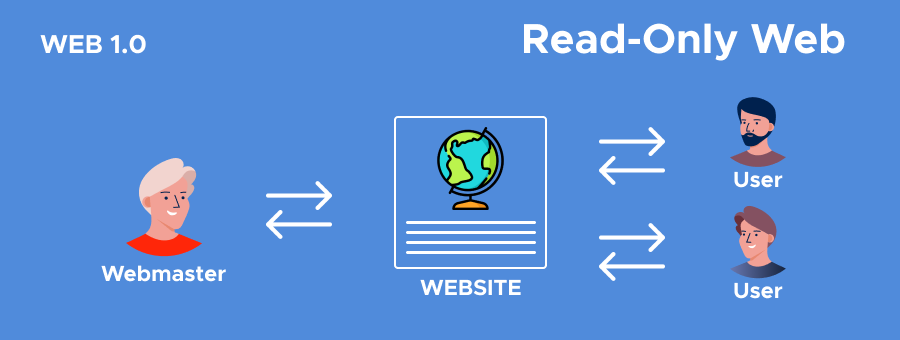
Web1: A Read-Only Internet

Web 1 Read-Only Diagram
Source: BidsCube

It seems strange to call it Web 1.0 now, but the original World Wide Web was exactly that. Also known as the “read-only web,” it was the first iteration of the Internet. Invented by Tim Berners-Lee, it was a static network of hyperlinked web pages where users could only consume information.

The lack of interactive elements and user control was due to the technological limitations of the time, including the absence of read/write functionalities and cloud systems.

Early detractors laughed at the idea of the World Wide Web. On an American talk show in 1995, David Letterman teased Bill Gates, ‘What about this Internet thing?’ and made jokes implying that existing inventions like radio and tape recorders made it redundant.

Web2: A Read/Write Internet

Circular dial of Web 2 app logos.
Source: DigitalBE

Web 2.0 marked a significant shift in the internet’s evolution, transforming it into a dynamic, interactive platform. It’s the most cherished and beloved internet we are familiar with today.

The advent of cloud computing characterized this era, improved read/write capabilities, content creation, and the explosion of social media platforms. Everyone, not just computer ‘nerds’, could now contribute to and expand the internet, creating content and sharing their ideas.

If Web 1.0 was like a book that people could read, Web 2.0 was more like a book with blank pages that people could fill. Web2 brought everything from blogs and community forums to online shopping, mobile apps, and remote startups.

Web2 gave birth to thousands of new use cases and business models, like online advertising. But the parabolic growth of Web 2.0 was something of a double-edged sword. It raised concerns about data privacy and ownership, as users’ personal data was often controlled by centralized entities, like Meta and Twitter.

Web3: A Read/Write/Own Internet

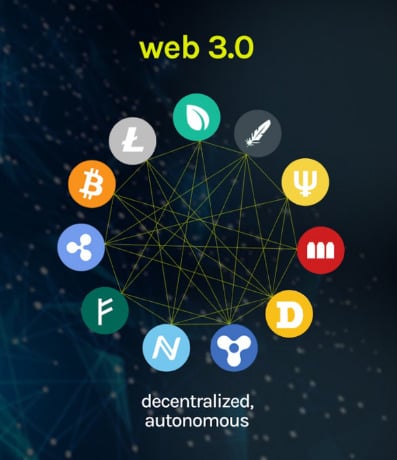
Web 3 app logos in a circle.
Source: Clubic

This brings us to where we are now, the Web3 revolution. Also called the semantic web, cryptocurrency enthusiasts consider Web3 an improved internet where new technologies like blockchain, cryptocurrency, and NFTs give users greater control over their assets, data, and identity online.

Decentralization is the key driving force of the Web3 movement. Instead of vast portions of the internet being controlled and owned by centralized entities and exploitative intermediaries, ownership is distributed among everyday users like you and me.

Through blockchain technology, cryptocurrency, and smart contracts, Web3 gave birth to decentralized finance (DeFi). DeFi is a central pillar of the Web3 world, giving everyone on the planet permissionless, trustless access to financial tools and services they were previously excluded from.

Internet users are no longer required to share their data with centralized entities or use them to transfer funds over the Internet. Instead, peer-to-peer networks, like Bitcoin and Ripple (XRP), give people full control and self-custody of their assets.

Where do we go from here?

Web4: The Symbiotic Web

Web 4.0 is the proposed next phase of the internet’s evolution. It’s envisioned as a more connected, intelligent, and personalized version of the Internet that draws on emerging technology like artificial intelligence.

Often referred to as ‘The Symbiotic Web’, Web4 promises to intertwine our lives and the internet more deeply than ever before.

What exactly does that mean?

What Is Web4?

Web4 -human finger connects with robotic finger.
Source: Medium

Before diving into what we can expect from Web4, I need to clarify: Web4 is a purely theoretical concept that is fuelled entirely by speculation. The roadmap for what Web4 looks like is unclear, with theorists sparking off radical ideas.

Web4’s proponents present the next evolutionary stage of the internet as a decentralized web that fully incorporates new technologies to deliver an unprecedented internet user experience.

Artificial Intelligence

Web4 AI is expected to play a significant role in the next generation of the internet, enabling more dynamic and adaptable machine learning ecosystems that can learn from data and improve over time.

Like a giant universal ChatGPT, Web4 AI could lead to more personalized and efficient online experiences.

Brain-Computer Interfaces

If you thought Apple’s new VR/AR headset was impressive, Brain-Computer Interfaces (BCI) is the next step up. BCIs allow humans to interact with computers using their thoughts by measuring brain activity and translating it into commands that computers can understand.

While undoubtedly a fascinating piece of technology, it all sounds rather dystopic. Just because we might be able to connect our brains to the Internet directly doesn’t mean we should. Even on top of all the ethical questions it raises, BCI connections seem like a massive security and health risk waiting to happen.

Metaverse

A virtual space portraying Metaverse.
Source: MuddyColours

As we know, the Metaverse is a virtual reality space where users can engage in immersive experiences and interact with a vast array of digital content. If you ever saw Spielberg’s 2018 film ‘Ready Player One,’ you probably have a pretty good idea of what the Metaverse looks like.

Web4 seeks to expand the Metaverse, offering new avenues for social interaction, entertainment, and economic opportunities through blockchain-powered virtual assets.

Sound familiar? That’s because it is. All these features are already possible in the Web 3 world. This brings me nicely to my next point.

Is Web4 Really Any Different from Web3?

Apart from Brain-Computer Interfaces, everything Web4 theorists speculate about already exists within the Web3 world. Web3 aims to create a decentralized internet of permissionless, trustless applications, giving users self-custody and complete control over their digital assets.

Based on the information circulating the internet, Web4 has the same goals. One of the leading proponents of Web4, Anndy Lian, argues that “Web4 is more decentralized than Web3.”

He supports this claim, asserting:

“Web4 also aims to create decentralized applications (dApps) that run on decentralized infrastructure, which eliminates the need for intermediaries and centralized organizations to control and manage the applications.”
ralized infrastructure, which eliminates the need for intermediaries and centralized organizations to control and manage the applications.”

Maybe I’ve missed something, but replace Web4 with Web3, and you have the same sentence and the same idea.

At the same time, maybe I’m behaving just like David Letterman in 1995. It’s absolutely possible that while Web3 laid the foundation for decentralized applications and user ownership of data, Web4 will take it a step further by integrating advanced technologies to enhance the user experience.

Perhaps Web4 envisions a future where the boundaries between physical and digital realities blur, offering unprecedented possibilities that we cannot yet fathom.

Web4 Pros and Cons

Like any technological advancement, Web4 has its own advantages and challenges. Let’s objectively recap Web4’s pros and cons.

Pros

  • Enhanced user experiences – Web4 promises immersive and personalized experiences, leveraging AI and the Metaverse to create dynamic and interactive digital environments.
  • Improved efficiency – AI-powered automation in Web 4.0 could boost productivity, speed up time to market, and lower costs, giving businesses a competitive edge and better customer service.
  • Expanded possibilities for cryptocurrencies – Web4’s advancements offer new opportunities for cryptocurrency integration, fostering innovation in areas like DeFi.

Cons

  • Scalability –  As the number of devices and people connected to the internet grows, it will become increasingly challenging to keep up with the demand.
  • Security – As Web4 incorporates advanced technologies, ensuring personal data privacy and cybersecurity becomes more challenging, demanding robust security measures.
  • Ethical implications – AI and BCIs raise important ethical questions regarding privacy, consent, and the potential misuse of personal information. Responsible development and regulation are vital.

On the Flipside

  • While discussions turn towards Web4 and whatever that might mean for the future of the internet, Twitter creator and Bitcoin Maxi Jack Dorsey is already one step ahead. Dorsey is crafting Web5, an even more decentralized internet built on the Bitcoin blockchain.

Why This Matters

People are always looking for the next big thing in the crypto market. Web3 is well-established. We know what it is, and have tangible applications and use cases that we can take advantage of daily.

On the other hand, Web4 still asks more questions than it answers. It’s still unclear what Web4 will actually look like and how it differs from Web3.

FAQs

What is Web4?

Web4 is the proposed next generation of the internet, which promises an improved user experience through emerging technologies like artificial intelligence.

Is there a Web4 now?

At this point Web4 is purely speculative, with no concrete examples of its applications or use cases.

Does Web3 have a future?

If you believe in cryptocurrency, decentralization, and the right self-custody of assets, then Web3 definitely has a future for you.

Is Web3 just crypto?

Parts of the Web3 world use crypto to transfer funds on peer-to-peer networks. However, the scope of Web3 is much larger than crypto alone and includes ownership and control of your data online.


Source: https://dailycoin.com/what-is-web-4/

Anndy Lian is an early blockchain adopter and experienced serial entrepreneur who is known for his work in the government sector. He is a best selling book author- “NFT: From Zero to Hero” and “Blockchain Revolution 2030”.

Currently, he is appointed as the Chief Digital Advisor at Mongolia Productivity Organization, championing national digitization. Prior to his current appointments, he was the Chairman of BigONE Exchange, a global top 30 ranked crypto spot exchange and was also the Advisory Board Member for Hyundai DAC, the blockchain arm of South Korea’s largest car manufacturer Hyundai Motor Group. Lian played a pivotal role as the Blockchain Advisor for Asian Productivity Organisation (APO), an intergovernmental organization committed to improving productivity in the Asia-Pacific region.

An avid supporter of incubating start-ups, Anndy has also been a private investor for the past eight years. With a growth investment mindset, Anndy strategically demonstrates this in the companies he chooses to be involved with. He believes that what he is doing through blockchain technology currently will revolutionise and redefine traditional businesses. He also believes that the blockchain industry has to be “redecentralised”.

j j j