Navigating the privacy paradox in Web3: Insights from DeCC Day at Consensus 2024

Navigating the privacy paradox in Web3: Insights from DeCC Day at Consensus 2024

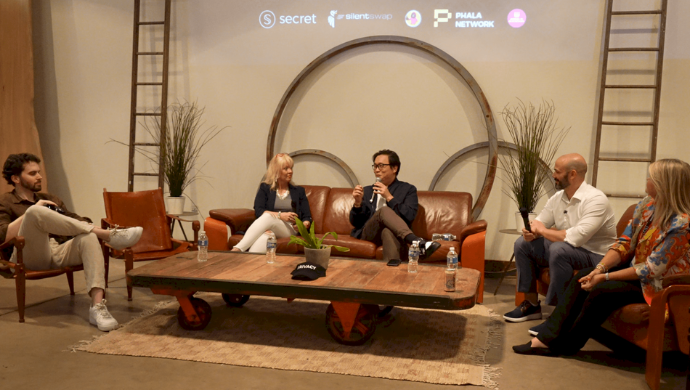
Web3 privacy emerges as a central theme, often heralded as a fundamental human right yet paradoxically elusive in the digital realm. The DeCC Day panel at Consensus 2024, titled “The Importance of Privacy in Web3,” brought together a diverse group of experts to unravel this complex issue.

Adryenn Ashley, a venture capitalist and founder of Slay Ventures, opened the discussion with a provocative introduction. She highlighted her background in creating a dating app that prioritised privacy and consent, leveraging blockchain technology. Her energetic tone set the stage for a dynamic exchange of ideas.

Seth, known in the crypto community as ‘MineyourBiz,’ identified himself as a privacy advocate to the point of affliction. His commitment to evaluating technologies for market viability and technological soundness has led him to monitor major waves in privacy tech and interview many privacy-oriented founders.

Sandy Carter, COO of Unstoppable Domains and founder of Unstoppable Women of Web3 in AI shared her company’s efforts in creating a digital identity platform that empowers users to control their personal information. She underscored the importance of allowing individuals to decide what they disclose, framing privacy as a choice rather than a given.

As a book author and fund manager from Singapore, I was also a part of this panel and naturally emphasised the significance of privacy, offering a unique perspective as both an author and investor.

Debating privacy: Universal desire vs curiosity and government oversight

The panellists engaged in a spirited debate over the nature of privacy and its perception among individuals and governments. Seth argued that privacy is a universal human desire, transcending cultural and political boundaries. However, Ashley countered that while individuals crave privacy, they are equally curious about others’ lives, driven by a systematic craving for information.

The conversation turned when I discussed the consumer’s role in the privacy equation. I posited that consumers must care about their privacy to be effectively protected, citing the use of Zero-Knowledge Proofs (ZKPs) in blockchain applications to preserve user anonymity while enhancing user experience.

Carter expanded on this by discussing the role of digital identities in managing privacy settings, allowing users to share information with applications selectively. This approach, she argued, respects the individual’s right to privacy while acknowledging the varying degrees of openness each person is comfortable with.

Also Read: Embracing the NFT revolution: Insights from Anndy Lian’s NFT.NYC speech

The panellists also tackled the thorny issue of government surveillance and regulation. Seth highlighted the lack of consideration for privacy in government discussions, often viewed as an inconvenience rather than a necessity. I shared insights from his direct advisory role with governments, revealing that while on-chain activities might be challenging to trace, off-chain actions, particularly cashing out to fiat, are transparent and traceable.

As the discussion drew close, the panellists agreed on the importance of trust in the relationship between privacy, governments, and the public. Austin Arnold, Co-Founder of Altcoin Daily, closed the panel by emphasising that privacy builds confidence and trust, which are crucial for market movement and engagement.

Privacy in Web3: A cornerstone for the future

In the digital tapestry of Web3, privacy is a beacon of individual autonomy, a principle ardently debated and fiercely defended. The DeCC Day panel at Consensus 2024 illuminated the intricate dance between personal discretion and societal transparency. The discourse traversed the spectrum of privacy—from a fundamental human yearning to a nuanced societal construct, challenging the audience to reconsider their own stances on the matter.

The panellists, each a vanguard in their respective fields, unravelled the privacy paradox with eloquence and insight. They painted a world where privacy is not a relic of the past but a cornerstone of the future—a future where trust is the currency and privacy is its mint. The dialogue underscored the imperative for privacy to be more than an afterthought in the Web3 narrative; it must be the plot itself.

As the conversation drew to a close, the consensus was clear: privacy in Web3 is not just about the right to secrecy but the right to agency. It is about crafting a digital realm where individuals navigate with confidence, empowered by the sovereignty over their data. The panel at DeCC Day did not just discuss privacy; they championed it, urging us to envision a Web3 ecosystem that is as secure as it is open, as private as it is communal.

In this era of technological renaissance, the panel’s insights serve as a compass, guiding us toward a more equitable and private digital future. The importance of privacy in Web3, as articulated by these thought leaders, is a clarion call to action—a call to protect what makes us human in a world that is increasingly digital.

The full video can be found here.


Source: https://e27.co/navigating-the-privacy-paradox-in-web3-insights-from-decc-day-at-consensus-2024-20240622/

Anndy Lian is an early blockchain adopter and experienced serial entrepreneur who is known for his work in the government sector. He is a best selling book author- “NFT: From Zero to Hero” and “Blockchain Revolution 2030”.

Currently, he is appointed as the Chief Digital Advisor at Mongolia Productivity Organization, championing national digitization. Prior to his current appointments, he was the Chairman of BigONE Exchange, a global top 30 ranked crypto spot exchange and was also the Advisory Board Member for Hyundai DAC, the blockchain arm of South Korea’s largest car manufacturer Hyundai Motor Group. Lian played a pivotal role as the Blockchain Advisor for Asian Productivity Organisation (APO), an intergovernmental organization committed to improving productivity in the Asia-Pacific region.

An avid supporter of incubating start-ups, Anndy has also been a private investor for the past eight years. With a growth investment mindset, Anndy strategically demonstrates this in the companies he chooses to be involved with. He believes that what he is doing through blockchain technology currently will revolutionise and redefine traditional businesses. He also believes that the blockchain industry has to be “redecentralised”.

j j j

Navigating the Murky Waters: The Philippines and Regulating Cryptocurrency

Navigating the Murky Waters: The Philippines and Regulating Cryptocurrency
The Philippines, a nation known for its vibrant culture and growing economy, is wading into the ever-evolving world of cryptocurrency. With the potential for both economic boon and lurking dangers, the Philippine government has set its sights on establishing a regulatory framework for cryptocurrencies by the end of 2024. This article will delve into the current state of cryptocurrency in the Philippines, explore the potential benefits and drawbacks of regulation, and offer a perspective on the path forward for this dynamic technology.

A Nation Embracing Crypto

The Philippines has emerged as a surprising leader in cryptocurrency adoption. According to a 2022 report by TripleA, a crypto research firm, 7 million Filipinos, or 6.13 of the total population, own some form of cryptocurrency.

This widespread adoption can be attributed to several factors. The Philippines has a large young population comfortable with technology, and Filipinos working abroad often use cryptocurrency for remittances, sending money back home faster and cheaper than traditional methods. Additionally, the lack of robust financial infrastructure in some areas makes cryptocurrency an attractive alternative for storing wealth and conducting transactions.

The Need for Regulation: Taming the Wild West

While the Philippines’ embrace of cryptocurrency is commendable, the current Wild West landscape poses significant challenges. The absence of regulations leaves investors vulnerable to scams, market manipulation, and hacking.

An article on Nikkei Asia reported that Philippines lacks digital literacy and cybercrime awareness and more than one-third of Filipinos surveyed had been scammed or encountered retail fraud online. In the same article, they mentioned about a study initiated by the Global Anti-Scam Alliance along with the tech security firm Gogolook based in Taiwan, gathered data from 20,000 individuals regarding their encounters with online shopping across various countries including Vietnam, China, Thailand, Hong Kong, Taiwan, Indonesia, South Korea, Japan, Malaysia, Singapore, and the Philippines. The Philippines reported the highest frequency of shopping scams, with a staggering 35.9% of respondents affected, outstripping China, which came in second at 27.2%. On the other end of the spectrum, South Korea registered the smallest percentage of such scams, with a mere 4.2% of participants reporting incidents.

The numbers of cryptocurrency scams can be worst as that lack public education. The anonymity associated with cryptocurrency transactions can facilitate money laundering and other criminal activities.

The Benefits of Regulation: Building a Sustainable Future

Regulation, if implemented thoughtfully, can usher in a new era for cryptocurrency in the Philippines. A well-defined regulatory framework would provide much-needed clarity and security for investors. Investors would be better protected from fraudulent activity, fostering trust and encouraging wider participation in the cryptocurrency market. Regulations could also establish Know Your Customer (KYC) and Anti-Money Laundering (AML) standards, deterring criminal activity and ensuring the integrity of the financial system.

In my humble opinion, regulators should focus on establishing clear guidelines for cryptocurrency exchanges and initial coin offerings (ICOs) while allowing for flexibility and adaptability in a rapidly evolving space. Additionally, the government should consider collaborating with industry experts and stakeholders to create a regulatory framework that is both effective and practical.

The Philippines can learn valuable lessons from countries that have already implemented cryptocurrency regulations. Singapore, for example, has established itself as a global hub for cryptocurrency by adopting a progressive regulatory approach. The Monetary Authority of Singapore (MAS) has issued licenses to cryptocurrency exchanges and implemented KYC/AML standards, creating a safe and secure environment for investors. Similarly, Japan has legalized cryptocurrency as a legal tender, providing a clear legal framework for its use.

The Road Ahead: Challenges and Opportunities

The Philippines faces several challenges in its quest to regulate cryptocurrency. One major hurdle is the lack of a comprehensive legal framework for digital assets. The government will need to define cryptocurrencies and establish clear rules for their issuance, trading, and use. Additionally, the Philippines needs to build capacity within its regulatory agencies to effectively oversee the cryptocurrency market.

Despite these challenges, the Philippines has a unique opportunity to become a leader in responsible cryptocurrency regulation. By striking a balance between investor protection and fostering innovation, the Philippines can create a regulatory framework that attracts businesses and investors while safeguarding its financial system.

A Personal Perspective: Embracing the Future with Caution

As a practitioner who has closely followed the development of cryptocurrency, I believe that its potential for positive change is undeniable. However, I also recognize the inherent risks associated with this nascent technology. Regulation, if implemented strategically, can be a powerful tool to harness the power of cryptocurrency for good. The Philippines has the opportunity to become a model for other nations by creating a regulatory framework that is both effective and forward-thinking. The journey ahead will not be easy, but the potential rewards are significant. By embracing innovation while safeguarding its citizens, the Philippines can navigate the murky waters of cryptocurrency and emerge as a leader in the digital age.

In Conclusion

In the quest to harness the transformative power of cryptocurrency, the Philippines stands at a pivotal crossroads. The nation’s journey towards establishing a comprehensive regulatory framework by the end of 2024 is not merely a bureaucratic endeavor but a strategic move to secure its place in the global financial landscape. The widespread adoption of cryptocurrency among Filipinos reflects a society that is both innovative and adaptive, yet the absence of regulation has left it vulnerable to the darker elements of the digital frontier.

The need for regulation is clear: to protect investors, to deter criminal activity, and to establish the Philippines as a reputable and secure environment for the burgeoning crypto economy. The benefits of such regulation are manifold, promising to bring stability, trust, and growth to a market that is currently akin to the Wild West. By learning from the successes and failures of other nations, the Philippines can craft a regulatory framework that is both robust and flexible, capable of evolving with the rapid pace of technological change.

As we look to the future, the Philippines’ approach to cryptocurrency regulation will undoubtedly serve as a case study for other nations grappling with similar challenges. With thoughtful regulation, the Philippines can mitigate the risks and unlock the full potential of this revolutionary technology. The journey will require diligence, collaboration, and a steadfast commitment to the principles of transparency and integrity. If successful, the Philippines will not only navigate the murky waters of cryptocurrency but also chart a course for others to follow, emerging as a beacon of progress in the digital age.


Source: https://www.benzinga.com/24/06/39338078/navigating-the-murky-waters-the-philippines-and-regulating-cryptocurrency

Anndy Lian is an early blockchain adopter and experienced serial entrepreneur who is known for his work in the government sector. He is a best selling book author- “NFT: From Zero to Hero” and “Blockchain Revolution 2030”.

Currently, he is appointed as the Chief Digital Advisor at Mongolia Productivity Organization, championing national digitization. Prior to his current appointments, he was the Chairman of BigONE Exchange, a global top 30 ranked crypto spot exchange and was also the Advisory Board Member for Hyundai DAC, the blockchain arm of South Korea’s largest car manufacturer Hyundai Motor Group. Lian played a pivotal role as the Blockchain Advisor for Asian Productivity Organisation (APO), an intergovernmental organization committed to improving productivity in the Asia-Pacific region.

An avid supporter of incubating start-ups, Anndy has also been a private investor for the past eight years. With a growth investment mindset, Anndy strategically demonstrates this in the companies he chooses to be involved with. He believes that what he is doing through blockchain technology currently will revolutionise and redefine traditional businesses. He also believes that the blockchain industry has to be “redecentralised”.
j j j

Navigating the Privacy Paradox in Web3: Insights from DeCC Day at Consensus 2024

Navigating the Privacy Paradox in Web3: Insights from DeCC Day at Consensus 2024

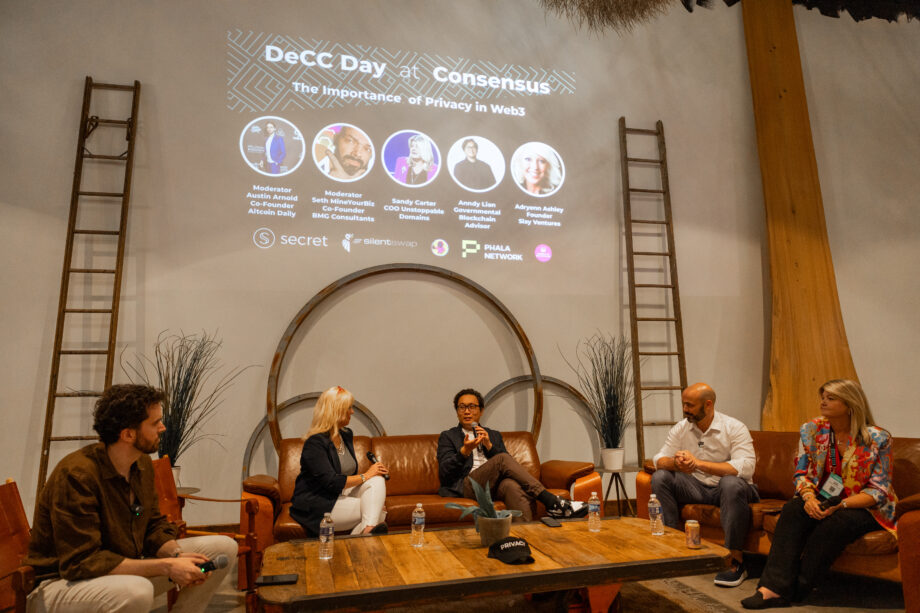
Web3 privacy emerges as a central theme, often heralded as a fundamental human right yet paradoxically elusive in the digital realm. The DeCC Day panel at Consensus 2024, titled “The Importance of Privacy in Web3,” brought together a diverse group of experts to unravel this complex issue.

Adryenn Ashley, a venture capitalist and founder of Slay Ventures, opened the discussion with a provocative introduction, highlighting her background in creating a dating app that prioritized privacy and consent, leveraging blockchain technology. Her energetic tone set the stage for a dynamic exchange of ideas.

Anndy Lian, a book author and fund manager from Singapore, expressed his passion for privacy, emphasizing its significance in various conferences he attends. His perspective as an author and investor provided a unique lens through which to view the privacy debate.

Seth, known in the crypto community as ‘MineyourBiz,’ identified himself as a privacy advocate to the point of affliction. His commitment to evaluating technologies for market viability and technological soundness has led him to monitor major waves in privacy tech, interviewing many privacy-oriented founders.

Sandy Carter, COO of Unstoppable Domains and founder of Unstoppable Women of Web3 in AI, shared her company’s efforts in creating a digital identity platform that empowers users to control their personal information. She underscored the importance of allowing individuals to decide what they disclose, framing privacy as a choice rather than a given.

The panellists engaged in a spirited debate over the nature of privacy and its perception among individuals and governments. Seth argued that privacy is a universal human desire, transcending cultural and political boundaries. However, Adryenn countered that while individuals crave privacy for themselves, they are equally curious about others’ lives, driven by a systematic craving for information.

The conversation took a turn when Anndy brought up the consumer’s role in the privacy equation. He posited that consumers must care about their privacy for it to be effectively protected, citing the use of Zero-Knowledge Proofs (ZKPs) in blockchain applications as a means to preserve user anonymity while enhancing user experience.

Sandy expanded on this by discussing the role of digital identities in managing privacy settings, allowing users to selectively share information with applications. This approach, she argued, respects the individual’s right to privacy while acknowledging the varying degrees of openness each person is comfortable with.

The panelists also tackled the thorny issue of government surveillance and regulation. Seth highlighted the lack of consideration for privacy in government discussions, often viewed as an inconvenience rather than a necessity. Andy shared insights from his direct advisory role with governments, revealing that while on-chain activities might be challenging to trace, off-chain actions, particularly cashing out to fiat, are transparent and traceable.

As the discussion drew to a close, the panellists agreed on the paramount importance of trust in the relationship between privacy, governments, and the public. Austin Arnold, Co-founder of Altcoin Daily closed the panel by emphasizing that privacy builds confidence and trust, which are crucial for market movement and engagement.

In the digital tapestry of Web3, privacy stands as a beacon of individual autonomy, a principle ardently debated and fiercely defended. The DeCC Day panel at Consensus 2024 illuminated the intricate dance between personal discretion and societal transparency. The discourse traversed the spectrum of privacy—from a fundamental human yearning to a nuanced societal construct, challenging the audience to reconsider their own stances on the matter.

The panellists, each a vanguard in their respective fields, unravelled the privacy paradox with eloquence and insight. They painted a world where privacy is not a relic of the past but a cornerstone of the future—a future where trust is the currency and privacy its mint. The dialogue underscored the imperative for privacy to be more than an afterthought in the Web3 narrative; it must be the plot itself.

As the conversation drew to a close, the consensus was clear: privacy in Web3 is not just about the right to secrecy but the right to agency. It is about crafting a digital realm where individuals navigate with confidence, empowered by the sovereignty over their data. The panel at DeCC Day did not just discuss privacy; they championed it, urging us to envision a Web3 ecosystem that is as secure as it is open, as private as it is communal.

In this era of technological renaissance, the panel’s insights serve as a compass, guiding us toward a more equitable and private digital future. The importance of privacy in Web3, as articulated by these thought leaders, is a clarion call to action—a call to protect what makes us human in a world that is increasingly digital.

Anndy Lian is an early blockchain adopter and experienced serial entrepreneur who is known for his work in the government sector. He is a best selling book author- “NFT: From Zero to Hero” and “Blockchain Revolution 2030”.

Currently, he is appointed as the Chief Digital Advisor at Mongolia Productivity Organization, championing national digitization. Prior to his current appointments, he was the Chairman of BigONE Exchange, a global top 30 ranked crypto spot exchange and was also the Advisory Board Member for Hyundai DAC, the blockchain arm of South Korea’s largest car manufacturer Hyundai Motor Group. Lian played a pivotal role as the Blockchain Advisor for Asian Productivity Organisation (APO), an intergovernmental organization committed to improving productivity in the Asia-Pacific region.

An avid supporter of incubating start-ups, Anndy has also been a private investor for the past eight years. With a growth investment mindset, Anndy strategically demonstrates this in the companies he chooses to be involved with. He believes that what he is doing through blockchain technology currently will revolutionise and redefine traditional businesses. He also believes that the blockchain industry has to be “redecentralised”.

j j j