New NFTs Need To Build Community To Succeed, Says Head of Crypto Exchange

New NFTs Need To Build Community To Succeed, Says Head of Crypto Exchange

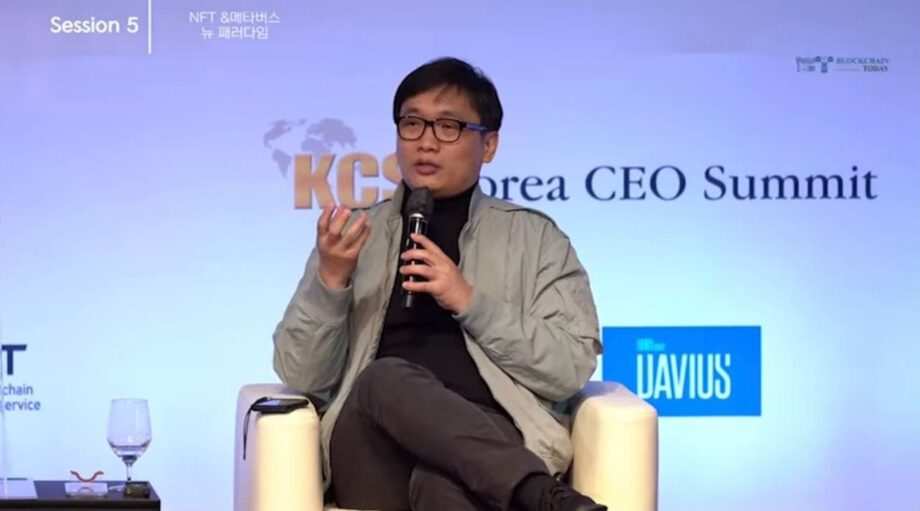
Speaking at the 14th World Blockchain Summit MARVELS, the Chairman of BigONE Exchange Anndy Lian said that key to success for NFT startups was a supportive community and a compelling user case. As a guest speaker at the event on February 22, under the theme of ‘NFT META Korea 2022’, Lian agreed that the global market for NFTs was very active currently but wanted to share his experience in how NFT projects can be successful in the longer run.


“While NFT creation looks straightforward the true essence of the NFT, the true value comes from community, as well as the technology and the tokenomics. If you are looking to launch a NFT studio, and you wish to partner with our partners, it could be with a meme coin community with Shiba Inu, Kishu Inu, or XRdoge, as all these projects have a very big community behind them; if you need that kind of partnership to succeed in the global market then we can help you,” Lian told his audience at the Seoul event.


The market in NFTs boomed in 2021, with total sales globally totaling $25 billion, up from just $94.9 million the year before, according to DappRadar. “Not surprisingly social media is awash with tales of get rich quick NFT success, from CryptoPunks to Bored Apes, and everything in between, but the fascination with digital art is going to change in 2022, with more use cases around utility. Clearly NFT projects need to be as transparent as possible when creating their offerings and grow a viable community as they progress, said Lian


One key factor that should be with a team from the outset is to ensure the NFT has utility, which is closely tied to the importance of community. At its core of course NFTs are a great way for creators and artists to contact directly with their fans, with their community. And that’s probably the most compelling use case to date that’s going to sustain the growth of NFTs into the future, Lian added.


Lian illustrated for the audience the importance of getting this relationship between the NFT and its community, between creators and fans, with the example of starting a NFT around a well-known soccer player. While on paper the fans of a soccer player appear to be automatically part of the NFT community you are building, that isn’t necessarily the case. What is needed is a strong bond to be created between the fans and the soccer star and the platform for it to work. This was related to the importance of ensuring that when you see a new project in the NFT space you should as an investor consider whether it has utility.


Lian added that for NFT creators it was important to be transparent about their offering to investors, not only to better convey its value, but also to ensure that when regulators start to enter the space in 2022 the quality of the NFT industry stands up to scrutiny.


Oh Myung, former Deputy Prime Minister and Minister of Science and Technology; Oh Se-hoon, Mayor of Seoul City; Lee Won-Wook, National Assemblyman and Minister of Land, Infrastructure, and Transport; Cho Myung-hee, chairman of the National Assembly and the Special Committee for Future Industry Jobs; Yoon Chang-Hyun, chairman of the Special Committee for Virtual Assets; and Yang Jung-sook, a member of the National Assembly and the Korea Communications Commission delivered speeches opening the conference.


About BigONE Exchange


BigONE is a global cryptocurrency exchange that provides a platform for trading various cryptocurrencies. It was founded in 2017 and registered in the Netherlands. The group operates in Russia, Brazil, Vietnam, Seychelles, Singapore, Japan, and Indonesia, providing marketing, investment, and blockchain technology research & development. Further information here.


Original Source: https://www.asiaone.com/business/new-nfts-need-build-community-succeed-says-head-crypto-exchange


Anndy Lian is an early blockchain adopter and experienced serial entrepreneur who is known for his work in the government sector. He is a best selling book author- “NFT: From Zero to Hero” and “Blockchain Revolution 2030”.

Currently, he is appointed as the Chief Digital Advisor at Mongolia Productivity Organization, championing national digitization. Prior to his current appointments, he was the Chairman of BigONE Exchange, a global top 30 ranked crypto spot exchange and was also the Advisory Board Member for Hyundai DAC, the blockchain arm of South Korea’s largest car manufacturer Hyundai Motor Group. Lian played a pivotal role as the Blockchain Advisor for Asian Productivity Organisation (APO), an intergovernmental organization committed to improving productivity in the Asia-Pacific region.

An avid supporter of incubating start-ups, Anndy has also been a private investor for the past eight years. With a growth investment mindset, Anndy strategically demonstrates this in the companies he chooses to be involved with. He believes that what he is doing through blockchain technology currently will revolutionise and redefine traditional businesses. He also believes that the blockchain industry has to be “redecentralised”.

j j j

Anndy Lian: Why do you need to hire a Chief Bitcoin Officer?

Anndy Lian: Why do you need to hire a Chief Bitcoin Officer?

Dataquest India, India’s largest IT publication has published my piece on “Why do you need to hire a Chief Bitcoin Officer? in their June 2021 edition. In this article, I have talked about the importance of having a CBO and how it will help moving forward. 


Why do you need to hire a Chief Bitcoin Officer?

Bitcoin has drawn many naysayers since it hits us years ago. Some called it an online scam, while others call it fake money. This coin was created in January 2009 by the mysterious Satoshi Nakamoto.

The whitepaper illustrates a network that allows lower transaction fees compared to the traditional methods and unlike central bank-backed currencies, bitcoin is operated in a decentralized environment. The value of one bitcoin was $0 when it was first introduced in 2009 and when bitcoin first started trading from around $0.0008 to $0.08 per coin in July 2010. Today, it is more than $57,000.

Bitcoin has gone past the getting-to-know stage and right now I dare to say that more people know about bitcoin. It is often described as a cryptocurrency, a virtual currency, digital currency or a store of value. Depending on where you are located, you will see shops accepting cryptocurrency. With online payment service giant, PayPal allowing its customers to buy and sell bitcoin, this will truly open up to more usage.

PayPal is not the only publicly-traded company that is into the king of cryptocurrencies. Many other publicly traded firms have adopted bitcoin as a form of reserve asset and hold direct control over their bitcoin funds.

Top 6 Public Companies with the Biggest Bitcoin Portfolios

1) MicroStrategy Inc 91.579
2) Tesla, Inc 43,200
3) Square Inc 8,027
4) Marathon Digital Holdings 5,263
5) Coinbase Global, Inc 4,487
6) Galaxy Digital Holdings 4,000

Total: $9.05 trillion (BTC: $57,810)

Top 3 Private Companies with the Biggest Bitcoin Portfolios

1) MTGOX K.K 141,686
2) Block.one 140,000
The Tezos Foundation 24,808

Total: $17.72 trillion (BTC: $57,810)

Top 3 ETF like Funds with the Biggest Bitcoin Portfolios

1) Greyscale Bitcoin Trust 654,885
2) CoinShares/ XBT Provider 69,730
3) Ruffer Investment Company 45,000

Market cap $44.49 trillion (BTC: $57,810)

(Data contained from Bitcoin Treasuries.)

The list above excludes the recent banks such as Morgan Stanley and Goldman Sachs who are offering bitcoin to their wealth management clients. These companies together manage about trillions of dollars too. I have also excluded governments or government-linked entities that are holding bitcoin. For example, it is reported that Ukrainian officials are holding over $2.6 billion in bitcoin.

As you can see, the bigger corporations are putting bitcoins to their balance sheets. They need subject matter experts to advise them on how they should manage their bitcoin holdings. This is the reason why I have emphasized that companies should start to look at hiring their very own Chief Bitcoin Officer (CBO).

This role should be on the same level as the Chief Financial Officer but the CBO will look at the cryptocurrency side of things. It is also good that this key appointment holder has relevant experience dealing with the government on crypto regulations and understand finance or fund management. Handling bitcoin and other cryptocurrencies are not an easy task. You will need dedicated resources and expertise.

Regulatory risks
There are still isn’t a blanket approach for bitcoin for all governments. Though governments understand bitcoin, they do not embrace it all. Bitcoin is still seen as the rival to fiat currency. Creating Central Bank Digital Currencies or CBDC is one way to track the flow of money and possibly the flow of bitcoin.

For example, for U.S. taxpayers, it is known that anyone with more than $10,000 digital currency aboard needs to fill out the Report of Foreign Bank and Financial Accounts (FBAR). This rule could have changed and the everchanging rules may be a legal concern for many. When governments start to regulate, ban or restrict bitcoin, CBO will be the first to know and act accordingly.

Security risks
CBO needs to look at security risks. Hackers often target bitcoin wallets and exchanges. As we all know, bitcoin transactions are permanent and irreversible, there are no third party to retrieve your loss coins. Putting your bitcoin with the centralized exchanges are the closest to how you keep your money in a bank but bear in mind that there are cases where exchanges got hacked and millions of dollars were wiped out overnight.

Cryptocurrency exchanges are constantly improving their security measures but this does not mean that it is 100% safe putting your coins in one single basket. There are other instances where the founder of the exchange got arrested by the police and withdrawals were stopped for weeks. So, if your company has a big holding of bitcoin, it is important to place them in the right wallets catered to the investment strategies and with the right set of security features.

Market risks
Bitcoin’s price can fluctuate a few thousand dollars each day in today’s context. It is volatile. The unexpected changes in the market sentiments can lead to sharp and sudden price movements. It is also subjected to the high volume of buying and selling on exchanges and movements by bitcoin whales. Bitcoin has also fallen more than 80% in 2014 in a single day.

CBO needs to be ready for such fluctuations. He or she has to look at the latest market news, who are the latest institutional investors, at what price they came in at, when is the next halving, is there a new fork etc. Take hard forking for instance. When it occurs, the market may experience sizable price volatility around this event and we may see suspended trading or ununiformed prices or price differences in various exchanges.

If you are into bitcoin and your company bought a sizable amount of bitcoin, these are some of the things you need to take note of. The job of a CBO is not easy and it is a specialized role.

When I posted this on Twitter, I have people coming to me asking if this is applicable for SMEs? My reply to them is that if your SME is forward-looking, you should also start to look at this as well. You may not be hiring a Chief Bitcoin Officer, because of it price. So maybe a Chief Litecoin Officer or a Chief Crypto Officer.

So hire your Chief Bitcoin Officer today.


Author: Anndy Lian

You can download the magazine at this link. 

Or at https://www.dqindia.com/why-do-you-need-to-hire-a-chief-bitcoin-officer/


Anndy Lian is an early blockchain adopter and experienced serial entrepreneur who is known for his work in the government sector. He is a best selling book author- “NFT: From Zero to Hero” and “Blockchain Revolution 2030”.

Currently, he is appointed as the Chief Digital Advisor at Mongolia Productivity Organization, championing national digitization. Prior to his current appointments, he was the Chairman of BigONE Exchange, a global top 30 ranked crypto spot exchange and was also the Advisory Board Member for Hyundai DAC, the blockchain arm of South Korea’s largest car manufacturer Hyundai Motor Group. Lian played a pivotal role as the Blockchain Advisor for Asian Productivity Organisation (APO), an intergovernmental organization committed to improving productivity in the Asia-Pacific region.

An avid supporter of incubating start-ups, Anndy has also been a private investor for the past eight years. With a growth investment mindset, Anndy strategically demonstrates this in the companies he chooses to be involved with. He believes that what he is doing through blockchain technology currently will revolutionise and redefine traditional businesses. He also believes that the blockchain industry has to be “redecentralised”.

j j j

Blockchain Cannot be Developed behind Closed Doors “To change the real world, blockchain companies need to step out of blockchain world.”

Blockchain Cannot be Developed behind Closed Doors “To change the real world, blockchain companies need to step out of blockchain world.”

The blockchain industry does not lack hype, for sure. New blockchain companies seem to spruce up every single day. Initial Coin Offerings (ICOs) raised more money in the first three months of 2018 than the whole of 2017, according to data collected by CoinDesk.

Source from: https://www.coindesk.com/6-3-billion-2018-ico-funding-already-outpaced-2017/

However, blockchain is still a distance away from mass adoption. The technology remains in a nascent stageand has not impacted people around the world yet, which has led many to question whether the world can really be transformed by blockchain.

Linfinity CEO Anndy Lian believes that in order to speed up the tapping of blockchain’s potential, blockchain companies need to proactively try to merge their technologies with traditional businesses and industries, especially those that are less digitalised at the moment.

He said, “The appearance of blockchain provided traditional industries with unlimited heights of imagination. However, there are many problems that blockchain needs to overcome first.

“It cannot work behind closed doors, as its first-priority role should be a technological service that is integrated with traditional industries. In this process, blockchain technology can continually be upgraded.”

A wider audience Integrating blockchain with traditional businesses and industries will, most importantly, let it reach a wider audience.

The value of the blockchain market is estimated to be USD 550 million this year. While the size of the industry is rapidly increasing, it is hardly comparable to already established industries.

For example, Linfinity aims to provide blockchain-based solutions for the supply chain to make the supply chain industry more transparent and secure. The global supply chain management market size is worth around USD 14 billion now, making it 25 times as large as the entire blockchain market.

Hence, when Linfinity integrates blockchain into supply chain management, it opens up blockchain to a whole new paradigm of possibilities and business use-cases. By combining blockchain effectively with pre-existing technologies to help traditional businesses, it brings blockchain directly to the masses, rather than having blockchain stay within specific circles.

The blockchain process of transacting and storing information on a decentralised, distributed ledger yields many benefits for enterprise application data. That makes supply chain management a good use case — a consortium of stakeholders in a supply chain can own, operate and enforce rules for their own shared blockchain.

Combine with other technologies

Blockchain itself should be used sparingly, where it is needed. The ample cryptography which blockchains employ also make them slow. That provides another reason to reconsider off-chain processing and storage alternatives.

In order to maximise its effectiveness and applicability to enterprise scenarios, it needs to be used together with other pre-existing great technologies.

Lian said, “Making blockchain more widespread requires a process. Simply relying on the technology itself is unproductive.”

“Linfinity combines blockchain with Artificial Intelligence and the Internet of Things (IoT). We also focus on the demands of businesses and consumers, so we can speed up the commercialisation of blockchain.”

Besides, having data from the supply chain recorded onto blockchain, Linfinity plans to use other technologies, such as Artificial Intelligence, to conduct real time analysis and to magnify the value of supply chain data.

It will then be able to provide innovative value-add services such as smart energy monitoring, smart sales monitoring, and predictive maintenance.

For blockchain world to expand its reach to the wider world, blockchain companies need to proactively step out. Having access to wider markets and amplifying blockchain’s effectiveness aside, that is the only way blockchain can truly enhance the world.

Anndy Lian is an early blockchain adopter and experienced serial entrepreneur who is known for his work in the government sector. He is a best selling book author- “NFT: From Zero to Hero” and “Blockchain Revolution 2030”.

Currently, he is appointed as the Chief Digital Advisor at Mongolia Productivity Organization, championing national digitization. Prior to his current appointments, he was the Chairman of BigONE Exchange, a global top 30 ranked crypto spot exchange and was also the Advisory Board Member for Hyundai DAC, the blockchain arm of South Korea’s largest car manufacturer Hyundai Motor Group. Lian played a pivotal role as the Blockchain Advisor for Asian Productivity Organisation (APO), an intergovernmental organization committed to improving productivity in the Asia-Pacific region.

An avid supporter of incubating start-ups, Anndy has also been a private investor for the past eight years. With a growth investment mindset, Anndy strategically demonstrates this in the companies he chooses to be involved with. He believes that what he is doing through blockchain technology currently will revolutionise and redefine traditional businesses. He also believes that the blockchain industry has to be “redecentralised”.

j j j