Entertainment’s Next Evolution: AI, Web3, and Data Privacy

Entertainment’s Next Evolution: AI, Web3, and Data Privacy

The ways we consume media, interact with technology, and protect user data are constantly changing. Web3 and Artificial Intelligence (AI) are new technologies that are transforming the media and entertainment landscape even further.

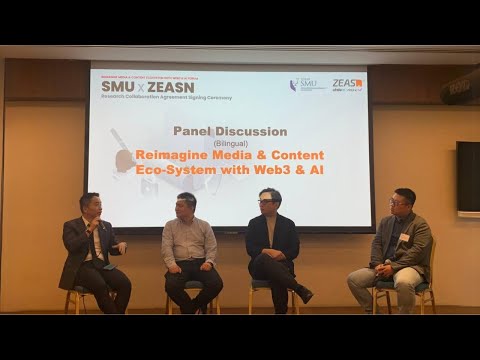
In a panel discussion titled “Reimagine Media & Content Ecosystem with Web3 & AI,” Feida Zhu (Associate Dean at SMU), James Liu (Director at Alibaba Cloud), Raymond Chung (CTO at ZEASN), and Anndy Lian (Advisor at Bybit) discussed the impact of these technologies on the industry.

Here is a recap of the event:

AI and the Changing Face of Television

With the proliferation of smartphones and portable devices, traditional TV viewership has been on the decline. People are now looking for more convenient and interactive ways to consume content. This shift has prompted experts to contemplate the future of television.

Many believe that AI is the key to making television more interactive and engaging. AI can offer personalized recommendations, provide real-time interaction, and enhance the overall viewing experience. AI-powered TVs can respond to voice commands, adapt to users’ preferences, and even offer educational content for children.

Anndy commented:

“AI can transform TV from a passive experience into an interactive one. Imagine a world where your TV is not just a screen but a knowledgeable companion. It can ask what kind of movie you’d like to watch, suggest content based on your preferences, and even help you with tasks like gaming or education.”

He added that AI can play a significant role in generating high-quality content. By using AI technology, content producers can create engaging, diverse, and unique content, ensuring that there is always something exciting to watch.

Raymond shared his experience:

“The integration of AI technology into the content creation process is another exciting prospect. With AI’s ability to generate high-quality content, it becomes possible to produce a plethora of new, engaging materials. This means AI can generate dynamic, interactive, and even personalized content, enhancing the user’s experience.

AI’s capabilities can extend beyond entertainment to areas like education and gaming. For instance, AI can create educational content tailored to a student’s learning style or generate interactive gaming experiences that adapt to a player’s skills and preferences. With AI, content creation is limited only by our imagination.”

Web3 and the Promise of Transparency

As the entertainment industry moves towards a more decentralized and transparent ecosystem, Web3 technology is gaining prominence. Web3, built on the principles of blockchain and decentralized networks, aims to provide a secure and transparent environment for content creators, users, and service providers.

James explained:

“One major advantage of Web3 is data privacy and security. Traditional platforms often collect massive amounts of user data, raising concerns about privacy and data breaches. With Web3, data can be stored securely on decentralized networks, ensuring that users have more control over their personal information.”

Feida continued by say that Web3 also enables creators to tokenize their influence. By using blockchain, content creators can create and manage their tokens, which represent their influence or popularity. These tokens can be traded or used within the ecosystem, creating a more fair and sustainable economy for content creators and their audiences.

Moreover, the transparency of blockchain can help combat piracy issues. Blockchain technology can track and verify content ownership, making it difficult for unauthorized parties to distribute content illegally.

To make the most of AI in user engagement, trust, and control are paramount. We must be cautious of deep fakes and manipulated content. This is where blockchain technology comes in as a control tool. By utilizing blockchain to verify the authenticity of content, we can ensure that what we see and hear is genuine.

Additionally, blockchain can offer transparency and accountability, which are essential in combating misinformation and promoting reliable content. By combining AI’s creativity with blockchain’s security, we can create a safer and more immersive digital landscape.

See the Full Panel Here
Monetization and the Creator’s Economy

Feida emphasized to all that Web 3, with its cryptocurrency and decentralized platforms, opens up new monetization opportunities.

Creators can use Web3 to create and sell non-fungible tokens (NFTs) of their content. This gives them a new way to monetize their work and reach a wider audience. The Creator’s Economy allows users to create content and share their experiences. AI, together with blockchain, can enhance the value of these experiences.

Users can be incentivized to produce content that resonates with a wide audience. From anime to soap operas, the possibilities are endless. AI and blockchain technologies provide a win-win situation for content creators and consumers, driving user engagement to new heights.

The Challenge of Data Privacy

While AI and Web3 technologies hold tremendous promise, they also raise concerns about data privacy. AI models require vast amounts of data to function effectively, and this data can potentially be misused or exploited.

Anndy shared his views:

“The responsibility falls on both service providers and users to protect data privacy. Service providers must design robust systems to ensure that sensitive data is stored securely and accessible only to authorized personnel. Users, on the other hand, need to be cautious about the information they provide and understand the implications of sharing personal data whether is it Web2 or Web3.”

Additionally, the development of privacy-focused AI models and encryption methods is crucial in safeguarding user data in the AI-driven world.

The Bottom Line

The evolution of entertainment is driven by AI, Web3 technology, and the demand for greater data privacy and security. The transformation of television into an interactive experience, the promise of Web3 for transparency and fair content monetization, and the challenges of data privacy all shape the future of the entertainment industry.

As we move forward, it is essential to embrace these technologies while being mindful of data privacy and ethical AI practices. The entertainment industry is on the cusp of a revolution, and only those who adapt to this changing landscape will thrive in the digital age.

This event is supported by Singapore Management University and Moledao.


Source: https://www.techopedia.com/entertainments-next-evolution-ai-web3-and-data-privacy

Anndy Lian is an early blockchain adopter and experienced serial entrepreneur who is known for his work in the government sector. He is a best selling book author- “NFT: From Zero to Hero” and “Blockchain Revolution 2030”.

Currently, he is appointed as the Chief Digital Advisor at Mongolia Productivity Organization, championing national digitization. Prior to his current appointments, he was the Chairman of BigONE Exchange, a global top 30 ranked crypto spot exchange and was also the Advisory Board Member for Hyundai DAC, the blockchain arm of South Korea’s largest car manufacturer Hyundai Motor Group. Lian played a pivotal role as the Blockchain Advisor for Asian Productivity Organisation (APO), an intergovernmental organization committed to improving productivity in the Asia-Pacific region.

An avid supporter of incubating start-ups, Anndy has also been a private investor for the past eight years. With a growth investment mindset, Anndy strategically demonstrates this in the companies he chooses to be involved with. He believes that what he is doing through blockchain technology currently will revolutionise and redefine traditional businesses. He also believes that the blockchain industry has to be “redecentralised”.

j j j

Entertainment’s Next Evolution: AI, Web3, and Data Privacy

Entertainment’s Next Evolution: AI, Web3, and Data Privacy

The ways we consume media, interact with technology, and protect user data are constantly changing. Web3 and Artificial Intelligence (AI) are new technologies that are transforming the media and entertainment landscape even further.

In a panel discussion titled “Reimagine Media & Content Ecosystem with Web3 & AI,” Feida Zhu (Associate Dean at SMU), James Liu (Director at Alibaba Cloud), Raymond Chung (CTO at ZEASN), and Anndy Lian (Advisor at Bybit) discussed the impact of these technologies on the industry.

Here is a recap of the event:

AI and the Changing Face of Television

With the proliferation of smartphones and portable devices, traditional TV viewership has been on the decline. People are now looking for more convenient and interactive ways to consume content. This shift has prompted experts to contemplate the future of television.

Many believe that AI is the key to making television more interactive and engaging. AI can offer personalized recommendations, provide real-time interaction, and enhance the overall viewing experience. AI-powered TVs can respond to voice commands, adapt to users’ preferences, and even offer educational content for children.

Anndy commented:

“AI can transform TV from a passive experience into an interactive one. Imagine a world where your TV is not just a screen but a knowledgeable companion. It can ask what kind of movie you’d like to watch, suggest content based on your preferences, and even help you with tasks like gaming or education.”

He added that AI can play a significant role in generating high-quality content. By using AI technology, content producers can create engaging, diverse, and unique content, ensuring that there is always something exciting to watch.

Raymond shared his experience:

“The integration of AI technology into the content creation process is another exciting prospect. With AI’s ability to generate high-quality content, it becomes possible to produce a plethora of new, engaging materials. This means AI can generate dynamic, interactive, and even personalized content, enhancing the user’s experience.

AI’s capabilities can extend beyond entertainment to areas like education and gaming. For instance, AI can create educational content tailored to a student’s learning style or generate interactive gaming experiences that adapt to a player’s skills and preferences. With AI, content creation is limited only by our imagination.”

Web3 and the Promise of Transparency

As the entertainment industry moves towards a more decentralized and transparent ecosystem, Web3 technology is gaining prominence. Web3, built on the principles of blockchain and decentralized networks, aims to provide a secure and transparent environment for content creators, users, and service providers.

James explained:

“One major advantage of Web3 is data privacy and security. Traditional platforms often collect massive amounts of user data, raising concerns about privacy and data breaches. With Web3, data can be stored securely on decentralized networks, ensuring that users have more control over their personal information.”

Feida continued by say that Web3 also enables creators to tokenize their influence. By using blockchain, content creators can create and manage their tokens, which represent their influence or popularity. These tokens can be traded or used within the ecosystem, creating a more fair and sustainable economy for content creators and their audiences.

Moreover, the transparency of blockchain can help combat piracy issues. Blockchain technology can track and verify content ownership, making it difficult for unauthorized parties to distribute content illegally.

To make the most of AI in user engagement, trust, and control are paramount. We must be cautious of deep fakes and manipulated content. This is where blockchain technology comes in as a control tool. By utilizing blockchain to verify the authenticity of content, we can ensure that what we see and hear is genuine.

Additionally, blockchain can offer transparency and accountability, which are essential in combating misinformation and promoting reliable content. By combining AI’s creativity with blockchain’s security, we can create a safer and more immersive digital landscape.

See the Full Panel Here


Monetization and the Creator’s Economy

Feida emphasized to all that Web 3, with its cryptocurrency and decentralized platforms, opens up new monetization opportunities.

Creators can use Web3 to create and sell non-fungible tokens (NFTs) of their content. This gives them a new way to monetize their work and reach a wider audience. The Creator’s Economy allows users to create content and share their experiences. AI, together with blockchain, can enhance the value of these experiences.

Users can be incentivized to produce content that resonates with a wide audience. From anime to soap operas, the possibilities are endless. AI and blockchain technologies provide a win-win situation for content creators and consumers, driving user engagement to new heights.

The Challenge of Data Privacy

While AI and Web3 technologies hold tremendous promise, they also raise concerns about data privacy. AI models require vast amounts of data to function effectively, and this data can potentially be misused or exploited.

Anndy shared his views:

“The responsibility falls on both service providers and users to protect data privacy. Service providers must design robust systems to ensure that sensitive data is stored securely and accessible only to authorized personnel. Users, on the other hand, need to be cautious about the information they provide and understand the implications of sharing personal data whether is it Web2 or Web3.”

Additionally, the development of privacy-focused AI models and encryption methods is crucial in safeguarding user data in the AI-driven world.

The Bottom Line

The evolution of entertainment is driven by AI, Web3 technology, and the demand for greater data privacy and security. The transformation of television into an interactive experience, the promise of Web3 for transparency and fair content monetization, and the challenges of data privacy all shape the future of the entertainment industry.

As we move forward, it is essential to embrace these technologies while being mindful of data privacy and ethical AI practices. The entertainment industry is on the cusp of a revolution, and only those who adapt to this changing landscape will thrive in the digital age.

This event is supported by Singapore Management University and Moledao.


Source: https://www.techopedia.com/entertainments-next-evolution-ai-web3-and-data-privacy

Anndy Lian is an early blockchain adopter and experienced serial entrepreneur who is known for his work in the government sector. He is a best selling book author- “NFT: From Zero to Hero” and “Blockchain Revolution 2030”.

Currently, he is appointed as the Chief Digital Advisor at Mongolia Productivity Organization, championing national digitization. Prior to his current appointments, he was the Chairman of BigONE Exchange, a global top 30 ranked crypto spot exchange and was also the Advisory Board Member for Hyundai DAC, the blockchain arm of South Korea’s largest car manufacturer Hyundai Motor Group. Lian played a pivotal role as the Blockchain Advisor for Asian Productivity Organisation (APO), an intergovernmental organization committed to improving productivity in the Asia-Pacific region.

An avid supporter of incubating start-ups, Anndy has also been a private investor for the past eight years. With a growth investment mindset, Anndy strategically demonstrates this in the companies he chooses to be involved with. He believes that what he is doing through blockchain technology currently will revolutionise and redefine traditional businesses. He also believes that the blockchain industry has to be “redecentralised”.


j j j

Is Asia on the Way to Becoming the Next Crypto Hub?

Is Asia on the Way to Becoming the Next Crypto Hub?

Asia seems to be standing at the forefront of the global cryptocurrency landscape and is headed to become the next crypto hub, with data revealing that central and southern Asia are leading regions in digital asset adoption.

With a number of key seminars taking place in South Korea, Singapore, and Hong Kong, the region is moving fast in establishing itself as a key player in the decentralized finance (DeFi) industry.

How is the region trying to achieve that?

Trade Volume in Asia Surges

ChainAnalysis’ 2023 crypto adaptation index showed central and southern Asia to be leading the way in crypto adaptation, with six of the top 10 countries being located in the region.

In addition, crypto trading volumes are also on the rise in the region, fuelled by market uncertainty in the West powered by the United States Securities and Exchange Commission (SEC) suing three major cryptocurrency exchanges earlier this year, it seems like most major players in the crypto space are moving East.

Anndy Lian, author of NFT: From Zero to Hero, explained:

“As US regulators sued three major crypto exchanges this year, billions of dollars of trading volumes have migrated to Asia. Investors and marketplaces are flocking to Singapore, Japan, South Korea, and more recently to Hong Kong, which introduced a new regulatory regime for crypto.”

Lian added that resilience in Asian crypto volumes is underpinned by institutional investors who view the regulatory environment in the region as less risky and more welcoming for DeFi firms.

Even though market activity has been stagnant, with global crypto adaption taking a hit, influenced by the collapse of FTX and the de-pegging of the TerraUST stablecoin, a number of lower-middle-income (LMI) category countries have been seeing a recovery in grassroots crypto adoption.

“Many of the top countries on our Global Crypto Adoption Index, from Central & Southern Asia to Africa, are in the LMI category, and taken together, LMI countries have seen the greatest recovery in grassroots crypto adoption over the last year. In fact, LMI is the only category of countries whose total grassroots adoption remains above where it was in Q3 2020, just before the most recent bull market,” research by ChainAnalysis revealed.

Asian Countries Are Embracing Cryptocurrencies

“In recent years, Asia has emerged as a hotbed for cryptocurrency innovation and adoption, sparking a growing debate over whether the continent is poised to become the next global crypto hub. With a dynamic blend of technological prowess, regulatory shifts, and a burgeoning interest in digital assets, Asia’s crypto journey is a captivating one to watch,” Rishi Vaidya, the co-founder and head of partnerships and marketing at Carbo-X Token and a recent speaker at the EDGE Global AI and Web3 Investment Summit in Hong Kong told Technopedia in an exclusive interview.

Overall, Asia has been populated with crypto events, including the Korea Blockchain Week at the start of September, Token2049 in Singapore in mid-September, and the Edge Summit in Hong Kong last week.

Token2049 has even made headlines as being the largest cryptocurrency event, sporting 300 exhibitors and 400 side events, and leading faces in the DeFi industry are drawn to the region thanks to its more lenient regulatory regime.

Singapore was the first country to agree on stablecoin regulation meanwhile, Hong Kong had decided to let retail investors trade digital assets while trading crypto in mainland China continues to stay illegal.

Karl Blomsterwall, the CEO of Planet IX and another speaker at the EDGE Summit, told Technopedia:

“Over the last couple of months, we have seen a push from Hong Kong to position itself in a favorable position to capture a larger share of the future crypto and blockchain market. It’s not surprising as the lack of regulatory clarity and commitment in other regions, such as the US, opens up for new entrants.”

Lian added that with so much uncertainty surrounding crypto regulation in the West, a number of major cryptocurrency exchanges have decided to shift their focus to the region, helping it “grow better and in a more stable manner”.

Asia to Become the Next Crypto Hub

Carbo-X Token’s Vaida, Asia’s fascination with cryptocurrencies, can be tracked to the early days of bitcoin (BTC). While the digital asset started as a speculative playground, it has managed to evolve into a more serious investment landscape, with a number of countries in the region embracing cryptocurrencies and establishing a strong foundation for several crypto businesses to flourish.

“China’s foray into the digital yuan and blockchain technology has added further weight to Asia’s crypto dominance. Asian nations have invested heavily in blockchain technology and cryptocurrency infrastructure. South Korea, for instance, has become a hotbed for blockchain startups, while Singapore is a global leader in fintech innovation. These advancements in technology are not just creating opportunities for local entrepreneurs but are also attracting international crypto giants.”

Vaida further noted that regulation will play a bigger role in determining whether Asia will manage to evolve into a crypto hub.

“Asian governments have been exploring various regulatory frameworks to balance innovation and security. Japan, known for its progressive approach, has introduced clear regulations for cryptocurrencies, instilling investor confidence.”

Lian added that Singapore’s proactive approach to regulating stablecoins has given the country a competitive edge in the crypto space, as it offered the region a clear and consistent legal framework for issuers and users of such digital assets.

He highlighted:

“By setting standards for anti-money laundering, consumer protection, and financial stability, Singapore has attracted many global players in the crypto industry, such as Binance, Coinbase, and Gemini, to set up their regional headquarters in the city-state. Singapore’s stablecoin regulation has also influenced other Asian countries, such as Japan, Thailand, and Malaysia, to adopt similar measures or to collaborate with Singapore on cross-border supervision and innovation. As a result, Asia has emerged as a leading region in the crypto markets, with high levels of adoption, liquidity, and innovation.”

Increased Adoption Plays a Major Role

“One of the driving forces behind Asia’s crypto boom is the increasing adoption of digital assets. In countries like India, where a massive population lacks access to traditional banking, cryptocurrencies offer a new financial frontier. Moreover, the younger generation in Asia is more receptive to digital currencies, which bodes well for long-term adoption,” Vaida said.

Planet IX’s Blomsterwall added that the blockchain industry tends to wield much of the world’s talent and is expected to grow massively over the next couple of years. Data found Singapore has the second highest number of crypto-related jobs relative to the country’s population, with 90.86 vacancies per million people, further pushing the region as a great pool for further crypto adoption.

Vaidya added:

“Asia’s crypto ecosystem is not limited to its own borders. International investors and crypto companies are actively seeking opportunities in the region. Silicon Valley giants are eyeing partnerships and investments in Asian startups, recognizing the potential of this market.”

Challenges Remain

Even though the region pushes itself as an emerging space for the DeFi industry, challenges remain.

Vaidya mentioned regulatory uncertainties, security concerns, and the need for cross-border collaboration as some of the most critical factors many nations in the region must still consider.

Blomsterwall added:

“With the recent fraud in JPEX, however, it will be interesting to follow which stance policymakers take towards crypto – keep their current strategy or revert back to a more conservative view.”

However, led by its rapid technological innovation, growing crypto adoption, and dynamic business landscape, Asia “is undeniably on the path to shaping the future of cryptocurrencies”.

The Bottom Line

Asia’s crypto boom signifies a seismic shift in the global financial landscape, pushing the region to become a massive crypto hub in the coming years. Fuelled by regulatory clarity, technological innovation, and growing adoption, the area has emerged as the epicenter of cryptocurrency investment and innovation.

Despite challenges, Asia’s proactive approach, coupled with increasing acceptance among its populace, positions it as the driving force shaping the future of digital currencies.


Source: https://www.techopedia.com/is-asia-on-the-way-to-becoming-the-next-crypto-hub

Anndy Lian is an early blockchain adopter and experienced serial entrepreneur who is known for his work in the government sector. He is a best selling book author- “NFT: From Zero to Hero” and “Blockchain Revolution 2030”.

Currently, he is appointed as the Chief Digital Advisor at Mongolia Productivity Organization, championing national digitization. Prior to his current appointments, he was the Chairman of BigONE Exchange, a global top 30 ranked crypto spot exchange and was also the Advisory Board Member for Hyundai DAC, the blockchain arm of South Korea’s largest car manufacturer Hyundai Motor Group. Lian played a pivotal role as the Blockchain Advisor for Asian Productivity Organisation (APO), an intergovernmental organization committed to improving productivity in the Asia-Pacific region.

An avid supporter of incubating start-ups, Anndy has also been a private investor for the past eight years. With a growth investment mindset, Anndy strategically demonstrates this in the companies he chooses to be involved with. He believes that what he is doing through blockchain technology currently will revolutionise and redefine traditional businesses. He also believes that the blockchain industry has to be “redecentralised”.

j j j