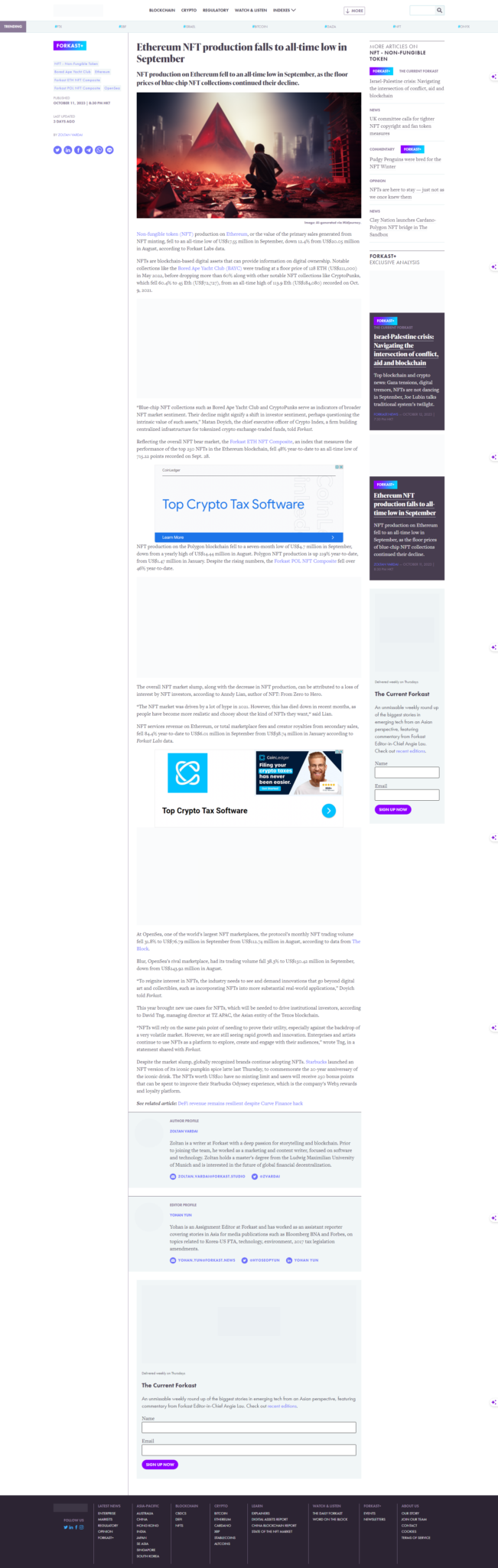
NFTs, or non-fungible tokens, were once hailed as the next big thing in the crypto world. They were supposed to revolutionize the way we create, own, and trade digital assets, from art and music to games and memes. They were supposed to empower artists and creators and democratize the digital economy. They were supposed to make millions for savvy investors and collectors.
But now, it seems that the NFT craze has come to an abrupt end. According to a report by DappGambl, a website that analyzes the crypto gambling industry, 95% of NFT collections have a market cap of zero. That means that the vast majority of NFTs are worthless and that millions of people who bought them have lost their money.
How did this happen? How did a crypto fad turn into a flop? And what does this mean for the future of NFTs and the cryptocurrency industry?
The Rise and Fall of NFTs
NFTs are essentially digital certificates of ownership recorded on a blockchain, usually Ethereum. They can represent any unique digital asset, such as an image, a video, a song, or a tweet. Unlike traditional digital files, which can be copied and shared endlessly, NFTs are supposed to be scarce and verifiable, giving them value and authenticity.
The concept of NFTs is not new. The first NFTs were created in 2017, with projects such as CryptoKitties and CryptoPunks. However, it was not until 2021 that NFTs exploded in popularity and price. Driven by the hype and speculation around crypto assets, NFTs attracted celebrities, artists, influencers, and investors who saw them as a new way to express themselves, support causes or make profits.
Some of the most notable NFT sales in 2021 include:
These astronomical prices created a frenzy in the NFT market, as more and more people wanted to get in on the action. New platforms, projects, and collections emerged every day, offering various types of NFTs, from art and music to sports and gaming. The supply and demand of NFTs skyrocketed, reaching a peak in August 2021, when the monthly trading volume of NFTs hit $2.8 billion.
However, this boom was not sustainable. As more and more NFTs flooded the market, their quality and originality declined. Many NFTs were simply copies or variations of existing works or concepts with little or no artistic or creative value. Many NFTs were also overpriced or overhyped, with unrealistic expectations or promises. Many NFTs were also vulnerable to technical issues or security breaches, such as hacking or minting errors.
As a result, the demand and interest for NFTs plummeted. Many buyers realized they had bought worthless or dubious assets they could not sell or use. Many sellers realized that they had missed the opportunity to cash out or diversify their portfolios. Many platforms realized that they had failed to attract or retain customers or partners.
According to DappGambl’s report, out of 73,257 NFT collections that it analyzed,
- 69,795 collections have a market cap of zero ETH.
- 15% of collections have less than 10 percent ownership.
- Only 21% of collections have full ownership.
- 18% of top collections have a floor price of zero.
- 41% of collections are priced between $5 and $100.
- Less than 1% of collections are valued above $6,000.
These statistics show that the majority of NFTs are worthless or unsold and that the NFT market is in a state of collapse. The report also predicts that the NFT market will continue to decline, as more and more people lose interest or confidence in NFTs.
The Future of NFTs
Does this mean that NFTs are dead? Not necessarily. While the NFT craze may have been a bubble that burst, the underlying technology and concept of NFTs still have potential and value. NFTs can still offer a novel and innovative way to create, own, and trade digital assets, as well as to support artists and creators and to democratize the digital economy.
Major challenges and limitations
However, for NFTs to survive and thrive, they need to overcome some major challenges and limitations. One of these challenges is the lack of clear and consistent regulation and standards for NFTs. This creates uncertainty and confusion for both creators and consumers, as well as for regulators and policymakers.
NFTs are currently governed by a patchwork of laws and regulations that vary across countries and jurisdictions, making it difficult to determine the legal status, rights, and obligations of NFTs and their owners. Moreover, there is no widely accepted or enforced standard for verifying the authenticity, provenance, and quality of NFTs, which leaves room for fraud, plagiarism, and manipulation.
Another challenge is the low quality and originality of many NFTs. This dilutes the value and appeal of NFTs and undermines their credibility and legitimacy. As the NFT market grows and attracts more participants, there is an influx of low-effort, low-quality, or copied NFTs that flood the market and saturate the demand. These NFTs not only reduce the scarcity and uniqueness of NFTs but also erode the trust and confidence of consumers and collectors who may question the artistic merit and cultural significance of NFTs.
A third challenge is the high volatility and speculation of the NFT market. This exposes investors and collectors to significant risks and losses and discourages long-term appreciation and adoption of NFTs. The NFT market is driven by hype, FOMO (fear of missing out), and celebrity endorsements, which create artificial demand and inflate prices beyond their intrinsic value. The market is also prone to crashes, bubbles, and scams, as seen in the recent decline of NFT sales and prices after a record-breaking peak in March 2023. These factors make the NFT market unpredictable and unstable, deterring potential buyers and sellers who seek more reliable and sustainable returns on their investments.
The last challenge is the limited accessibility and usability of NFTs. This requires technical knowledge and skills, as well as crypto wallets and platforms, to create, buy, sell, or use NFTs. NFTs are not easily accessible or usable for the average person who may not be familiar with the concepts and technologies behind them. To participate in the NFT market, one needs to have a crypto wallet that supports the specific blockchain network that hosts the NFTs, as well as enough cryptocurrency to pay for the transaction fees that can be quite high depending on the network congestion. Moreover, one needs to use specialized platforms or marketplaces that facilitate the creation or exchange of NFTs, which may have different features, functions, and interfaces.
Take proactive and collaborative actions
To address these challenges and limitations, the NFT industry and community need to take some proactive and collaborative actions. These actions include developing and adopting best practices and guidelines for creating, valuing, verifying, and marketing NFTs, as well as for ensuring their security, privacy, and interoperability.
These standards would help to establish a common framework and understanding for NFTs, as well as to protect the rights and interests of both creators and consumers. They would also facilitate the exchange and transfer of NFTs across different platforms and networks, as well as to prevent fraud, theft, or misuse of NFTs.
Another action that is needed is to explore and implement more sustainable and efficient solutions for producing and storing NFTs, such as using renewable energy sources or alternative blockchains. These solutions would help to reduce the environmental impact and cost of NFTs, as well as to improve their performance and scalability. For example, some blockchains use a consensus mechanism called Proof-of-Stake (PoS), which does not require intensive computation or electricity to validate transactions and secure the network.
Furthermore, the NFT space needs to foster more creativity and diversity by encouraging more original and innovative works or concepts, as well as more representation and inclusion of different voices and perspectives. These efforts would help to enhance the quality and originality of NFTs, as well as to showcase the artistic potential and cultural value of NFTs. They would also attract more audiences and participants to the NFT market, as well as to foster more collaboration and inspiration among creators.
Additionally, the NFT industry and community need to promote more education and awareness about the benefits and risks of NFTs and their legal and ethical implications for both creators and consumers. These initiatives would help to inform and empower both creators and consumers about their rights and responsibilities regarding NFTs, as well as to provide them with the necessary knowledge and skills to create, buy, sell, or use NFTs. They would also help to dispel some of the myths and misconceptions about NFTs, as well as to address some of the social and moral concerns that may arise from NFTs.
Moreover, the NFT industry and community need to enhance more integration and compatibility of NFTs with other platforms and applications, such as social media, gaming, e-commerce, or art. These integrations would help to increase the accessibility and usability of NFTs, as well as to expand their use cases and functionalities. They would also help to create more value and demand for NFTs, as well as to enrich the user experience and engagement with NFTs.
Finally, the NFT industry and community need to work with the right partners who can bring extraordinary results, too. For example, Oracle Red Bull Racing and Bybit launched the Velocity Pass in this quarter, and they have over 1000ETH trading volume on secondary marketplaces, including Bybit NFT, OpenSea, and Blur, since its release. The latest in its series, called Pursuit by Per Kristian Stoveland, launched on 21 September, has more than 125ETH in volume, with floor price of almost five times.
The Bottom Line
The NFT crash is not the end of the story. It is a wake-up call for the NFT industry and community. It is an opportunity to learn from the mistakes and failures of the past. It is a chance to improve and innovate for the future.
NFTs are not just a crypto fad. They are a crypto phenomenon. They have the potential to transform the way we create, own, and trade digital assets. They have the potential to empower artists and creators. They have the potential to democratize the digital economy.
But they also have the potential to fail. They have the potential to harm the environment. They have the potential to deceive investors. They have the potential to disrupt society.
The future of NFTs depends on how we use them. The future of NFTs depends on us. We will survive it.
Source: https://www.techopedia.com/the-nft-crash-how-a-crypto-fad-turned-into-a-flop-and-how-you-can-survive-it


Anndy Lian is an early blockchain adopter and experienced serial entrepreneur who is known for his work in the government sector. He is a best selling book author- “NFT: From Zero to Hero” and “Blockchain Revolution 2030”.
Currently, he is appointed as the Chief Digital Advisor at Mongolia Productivity Organization, championing national digitization. Prior to his current appointments, he was the Chairman of BigONE Exchange, a global top 30 ranked crypto spot exchange and was also the Advisory Board Member for Hyundai DAC, the blockchain arm of South Korea’s largest car manufacturer Hyundai Motor Group. Lian played a pivotal role as the Blockchain Advisor for Asian Productivity Organisation (APO), an intergovernmental organization committed to improving productivity in the Asia-Pacific region.
An avid supporter of incubating start-ups, Anndy has also been a private investor for the past eight years. With a growth investment mindset, Anndy strategically demonstrates this in the companies he chooses to be involved with. He believes that what he is doing through blockchain technology currently will revolutionise and redefine traditional businesses. He also believes that the blockchain industry has to be “redecentralised”.