Panel Discussion: Web3 Industry & AI Rapid Growth: Unleashing Innovation and Potential

Panel Discussion: Web3 Industry & AI Rapid Growth: Unleashing Innovation and Potential

We have witnessed a remarkable surge in growth and development in both the Web3 industry and the field of Artificial Intelligence (AI). This convergence has brought forth a wave of innovative technologies, revolutionizing various sectors and opening doors to endless possibilities.

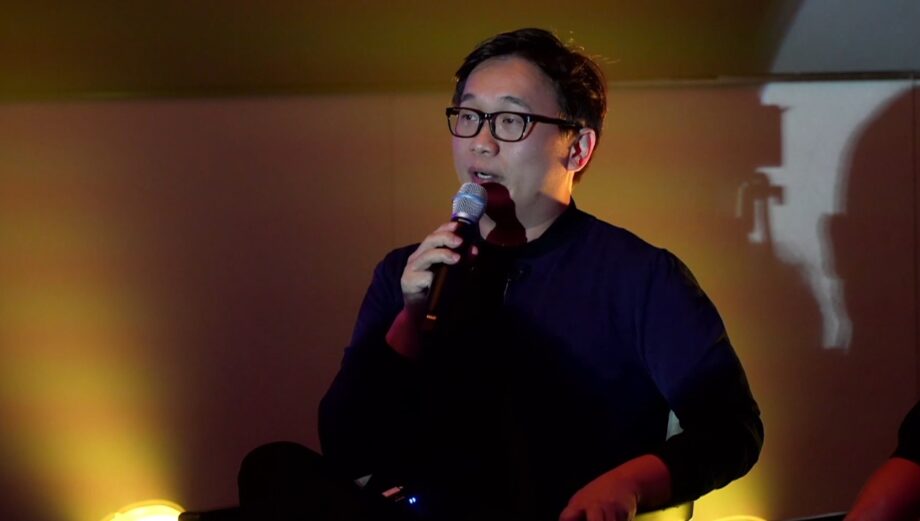
The panel of experts at the Brand Launchpad Event held on 29 May 2023 at Ho Chi Minh, Vietnam, delve into the impressive progress observed in the Web3 industry and the accelerated growth of AI, shedding light on their profound impact on society and the immense potential they hold for the future. Tienee Huynh, Founder of Tinker Academy, Thanh Dao, Founder of Jung Von Matt, Jake Zheng, Growth Evangelist of Chainklink, Anndy Lian, Advisor of Bybit and Tony Tong, Chairman of HKBA were present to share their insights.

Unleashing the Power of Web3:
The emergence of Web3 signifies a significant departure from the conventional centralized web towards a decentralized and more user-centric ecosystem. By leveraging blockchain technology as its foundation, Web3 empowers individuals with greater control over their digital assets, enhanced privacy and security, and the ability to engage in peer-to-peer interactions without intermediaries. This decentralized architecture fosters trust, transparency, and immutability, making it an ideal framework for a wide range of applications. Anndy Lian emphasized that what we should all focus on is that ” Web3 is for the creators.”. He explains how Web3 “ushers in a fresh type of economy that empowers users and communities to make more informed and advantageous business choices.”

Revolutionizing Industries:
Web3 has unleashed its transformative potential across diverse industries. In the realm of finance, decentralized finance (DeFi) has emerged as a prominent use case, offering decentralized lending, borrowing, and trading options. This decentralized approach disrupts traditional financial systems, granting individuals access to a more inclusive and efficient financial landscape.

Jake Zheng mentioned earning from using their own work and data in the Web3 era. Web3 has revolutionized the realm of digital content and entertainment. Non-Fungible Tokens (NFTs) have gained immense popularity, empowering artists, musicians, and creators to tokenize their work and directly sell it to consumers. This not only benefits artists by providing new revenue streams, but also ensures traceability and provenance of digital assets.

The Expanding Horizon of AI:
Concurrently, the field of Artificial Intelligence has been experiencing rapid advancements, fundamentally transforming the way we live and work. AI encompasses a broad spectrum of technologies, including machine learning, natural language processing, computer vision, and robotics. These technologies have facilitated automation, enhanced decision-making processes, and enabled personalized experiences across various industries. Tony Tong explained that we should not be afraid of AI and should find ways to learn more about it.

The Synergy of Web3 and AI:
The convergence of Web3 and AI has unleashed a new wave of possibilities. Web3’s decentralized nature provides an ideal environment for AI systems, ensuring data privacy, security, and transparency. On the other hand, AI augments the capabilities of Web3 by providing intelligent decision-making algorithms and automation. Together, they create a powerful synergy that has the potential to redefine industries and drive innovation.

Future Implications:
As the Web3 industry and AI continue to flourish, their implications for the future are profound. The integration of Web3 and AI technologies holds the power to revolutionize various sectors, including finance, healthcare, supply chain, and governance. Decentralized AI systems can ensure data privacy while empowering individuals with personalized experiences and decision-making capabilities. This symbiotic relationship has the potential to democratize access to services, increase efficiency, and foster greater trust in systems.

In conclusion, the rapid growth of the Web3 industry and AI has ushered in a new era of technological advancement. The decentralized nature of Web3, combined with the transformative power of AI, has created an ecosystem ripe with innovation and boundless possibilities. Embracing this convergence can lead to groundbreaking solutions, improved efficiencies, and a more inclusive digital landscape. To fully realize the potential of these emerging technologies, it is crucial to support and nurture their growth through collaboration and exploration.

Anndy Lian is an early blockchain adopter and experienced serial entrepreneur who is known for his work in the government sector. He is a best selling book author- “NFT: From Zero to Hero” and “Blockchain Revolution 2030”.

Currently, he is appointed as the Chief Digital Advisor at Mongolia Productivity Organization, championing national digitization. Prior to his current appointments, he was the Chairman of BigONE Exchange, a global top 30 ranked crypto spot exchange and was also the Advisory Board Member for Hyundai DAC, the blockchain arm of South Korea’s largest car manufacturer Hyundai Motor Group. Lian played a pivotal role as the Blockchain Advisor for Asian Productivity Organisation (APO), an intergovernmental organization committed to improving productivity in the Asia-Pacific region.

An avid supporter of incubating start-ups, Anndy has also been a private investor for the past eight years. With a growth investment mindset, Anndy strategically demonstrates this in the companies he chooses to be involved with. He believes that what he is doing through blockchain technology currently will revolutionise and redefine traditional businesses. He also believes that the blockchain industry has to be “redecentralised”.

j j j

Panel Discussion: How will NFT empower the creator economy in the web3 era?

Panel Discussion: How will NFT empower the creator economy in the web3 era?

The rise of Non-Fungible Tokens (NFTs) has sparked a remarkable transformation in the cultural and creative economy, ushering in an era filled with new possibilities within the web3 ecosystem. NFTs offer creators unprecedented opportunities to monetize their work, establish ownership, and engage with their audience in exciting and innovative ways. This panel, organized by WikiEXPO explores the ways in which NFTs empower the creator economy and contribute to the development and prosperity of the cultural industry.

The panelists are Ganesh R, Co-founder, Firebond; Hanis Harmiles, Founder, Reinvent DAO; Tony Fu, Founder, NFT China; James Lee, CCO, Srarry Nift; Caesar Chen, Ethereum Developer & Anndy Lian, Intergovernmental Blockchain Advisor.

Direct Monetization and Increased Revenue:

NFTs provide creators with a distinct advantage: the ability to monetize their work directly, without the need for intermediaries. By minting and selling their digital creations as NFTs, artists can bypass traditional platforms and retain a larger portion of the revenue generated. This direct relationship between creators and collectors promotes a more equitable distribution of profits, ensuring that artists receive fair compensation for their contributions and fostering a sustainable economy.

Royalties and Secondary Sales:

A revolutionary aspect of NFTs is the inclusion of smart contracts. Creators can program these contracts to include royalties, guaranteeing them a percentage of future sales. This means that artists can benefit from the increasing value of their work over time or from subsequent sales on secondary markets. Such a system provides artists with a consistent revenue stream, incentivizing them to continue producing exceptional works and fueling the growth of the cultural industry.

Authenticity and Provenance:

Authenticity has long been a concern in the art world. However, NFTs tackle this issue by leveraging blockchain technology to establish transparent and immutable records of ownership and provenance. Each NFT is uniquely identified and linked to its creator, making it incredibly difficult to counterfeit or plagiarize digital assets. Collectors can now have confidence in the legitimacy and originality of the NFTs they acquire, building trust within the ecosystem and driving the demand for digital creations.

Tokenizing Intellectual Property:

NFTs extend beyond traditional visual artworks, encompassing a wide range of digital content such as music, videos, virtual real estate, and virtual goods. This ability to tokenize intellectual property opens up new avenues for creators in various fields to monetize their unique creations. Musicians, for instance, can release albums as NFTs, granting exclusive access to bonus tracks or backstage experiences. Filmmakers can tokenize movie memorabilia, offering collectors the opportunity to own iconic props or moments from their favorite films. This expansion of tokenization possibilities stimulates creativity and innovation, propelling the cultural industry forward.

Community Engagement and Collaboration:

NFTs foster direct interaction between creators and their audience, nurturing a sense of community and engagement. Artists can utilize platforms built around NFTs to communicate with collectors, offer exclusive perks, organize virtual events, and cultivate a dedicated fan base. This heightened connectivity enables creators to receive insights, feedback, and support from their community, resulting in more refined and impactful artistic creations. NFTs also facilitate collaboration between artists, encouraging the exchange of ideas, cross-disciplinary projects, and collective creativity.

Decentralized Marketplaces and Creative Freedom:

In the web3 era, NFTs are accompanied by decentralized marketplaces that empower creators with greater autonomy and creative freedom. These platforms eliminate the need for traditional gatekeepers, allowing artists to reach a global audience without geographical limitations. Moreover, creators have the flexibility to experiment with various pricing models, access real-time sales data, and maintain control over their artistic direction. By removing barriers and creating a more inclusive environment, NFTs unlock the full potential of the creator economy, fostering a thriving cultural industry.

Conclusion:

NFTs have emerged as a powerful force propelling the cultural and creative economy into uncharted territories. By empowering creators through direct monetization, royalties, authenticity, and community engagement, NFTs have revolutionized how artists interact with their audience and monetize their work. Through the tokenization of intellectual property and the freedom offered by decentralized marketplaces. As this technology continues to evolve, it promises to reshape the future of creativity, creating a more vibrant and inclusive ecosystem for artists and enthusiasts alike.


Anndy Lian is an early blockchain adopter and experienced serial entrepreneur who is known for his work in the government sector. He is a best selling book author- “NFT: From Zero to Hero” and “Blockchain Revolution 2030”.

Currently, he is appointed as the Chief Digital Advisor at Mongolia Productivity Organization, championing national digitization. Prior to his current appointments, he was the Chairman of BigONE Exchange, a global top 30 ranked crypto spot exchange and was also the Advisory Board Member for Hyundai DAC, the blockchain arm of South Korea’s largest car manufacturer Hyundai Motor Group. Lian played a pivotal role as the Blockchain Advisor for Asian Productivity Organisation (APO), an intergovernmental organization committed to improving productivity in the Asia-Pacific region.

An avid supporter of incubating start-ups, Anndy has also been a private investor for the past eight years. With a growth investment mindset, Anndy strategically demonstrates this in the companies he chooses to be involved with. He believes that what he is doing through blockchain technology currently will revolutionise and redefine traditional businesses. He also believes that the blockchain industry has to be “redecentralised”.

j j j

Panel Discussion on DAOs- Can DAO be the mainstream?

Panel Discussion on DAOs- Can DAO be the mainstream?

A decentralized autonomous organization (DAO) is a system developed to distribute decision-making, management, and entity ownership. It is an entity with no central leadership. Decisions get made from the bottom-up, governed by a community organized around a specific set of rules enforced on a blockchain. DAOs are internet-native organizations collectively owned and managed by their members.

Ideally, DAOs are being used for many purposes such as investment, charity, fundraising, borrowing, or buying NFTs, all without intermediaries. The panel discussion will share their point of view on DAOs.

1. 각자 DAO는 무엇인지 정의해 달라.
What is DAO. Each of you defines DAO.

2. 인간은 사회적 동물이다. 그리고 조직을 구성해 왔다. 그리고 그 조직은 언제나 리더가 이끌어왔다. 리더가 없는 조직, DAO 구현 가능할까.
Humans are social animals, and have formed organizations from the past. Any kinds of organizations always have a leader. Is it possible an organization without a leader (a.k.a DAO) in reality?

3. 다오의 의사결정과정은 다른 조직에 비해 상대적으로 비효율적이다. 그러한 비효율성에도 불구하고 다오가 주요한 조직의 형태가 될 수 있을까.
Decision making process of DAO is relatively inefficient than normal organizations. Can DAO be the mainstream forms of organizations, even if that kind of inefficiency?

4. 지금까지 유의미하게 성공한 다오가 있을까. 있다면 무엇이며, 없다면 그 이유는 뭘까.

5. 가장 극단적으로 중앙화된 조직의 형태 중 하나가 국가가 아닐까 한다. 그렇다면 국가와 다오는 공존할 수 있을까.
I think one of the extremely central organization forms is government. If so, can the government and DAOs coexist?

“Human are social animals ….. many DAOs effectively are centralized if you look at how they execute their decision process. Snapshot proposals are bullshit. A few calls and a few meetings outside the decentralized sphere changed the decisions. DAO can be very efficient, especially the single-purpose ones.

Yes, government and organizations can surely coexist vis DAOs. Look at Korea. The association/ lobby groups are a kind of DAO. Decisions are made by the community by votes. They lobby against the government for certain matters. Isn’t this the same as what we see in the crypto native space?” Anndy Lian, Book Author “NFT: From Zero to Hero” commented.

This event is held during the Korea Blockchain Week 2022. This sub-event brought many local Korean experts together.

When a DAO achieves success, it can then increase the value of the tokens. This helps tackle the issues related to generating capital. Anndy also mentioned that DAOs should find self-sustaining revenue and income.

Let’s DAO be a decentralized autonomous organization and not DOA (dead on arrival).

Anndy Lian is an early blockchain adopter and experienced serial entrepreneur who is known for his work in the government sector. He is a best selling book author- “NFT: From Zero to Hero” and “Blockchain Revolution 2030”.

Currently, he is appointed as the Chief Digital Advisor at Mongolia Productivity Organization, championing national digitization. Prior to his current appointments, he was the Chairman of BigONE Exchange, a global top 30 ranked crypto spot exchange and was also the Advisory Board Member for Hyundai DAC, the blockchain arm of South Korea’s largest car manufacturer Hyundai Motor Group. Lian played a pivotal role as the Blockchain Advisor for Asian Productivity Organisation (APO), an intergovernmental organization committed to improving productivity in the Asia-Pacific region.

An avid supporter of incubating start-ups, Anndy has also been a private investor for the past eight years. With a growth investment mindset, Anndy strategically demonstrates this in the companies he chooses to be involved with. He believes that what he is doing through blockchain technology currently will revolutionise and redefine traditional businesses. He also believes that the blockchain industry has to be “redecentralised”.

j j j