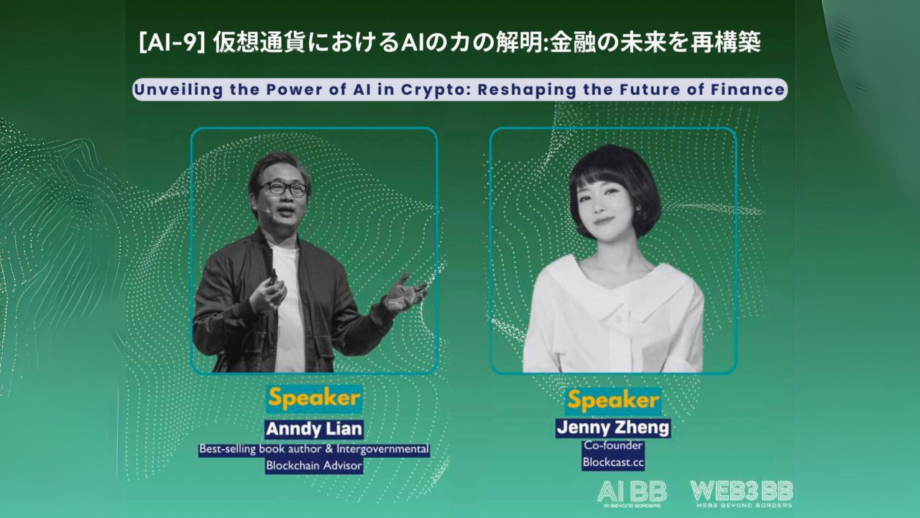
Unveiling the Power of AI in Crypto: Reshaping the Future of Finance at WEB3BB Tokyo 2024

Unveiling the Power of AI in Crypto: Reshaping the Future of Finance at WEB3BB Tokyo 2024

The intersection of artificial intelligence (AI) and cryptocurrency is rapidly becoming one of the most exciting frontiers in the tech world. As both technologies continue to evolve at breakneck speeds, their synergy promises to revolutionize how we interact with digital assets and financial systems.

To explore this cutting-edge convergence, Web3BB, one of Japan’s largest business communities dedicated to bridging global and Japanese perspectives on emerging technologies, recently hosted a panel discussion on “The Power of AI in Crypto.” This event brought together industry luminaries, including Anndy Lian, a book author and venture capitalist, and Jenny Zheng, co-founder of Blockcast.cc. Their insights offer a compelling glimpse into how AI is reshaping the cryptocurrency landscape and what we can expect in the near future.

Beyond Trading: AI’s Broader Impact on Crypto

While trading applications are at the forefront, Anndy emphasized that AI’s potential in the crypto space extends far beyond just price predictions. Some key areas of impact include:

1. Security Enhancement: AI can be used to detect security vulnerabilities in blockchain networks and identify irregular activities or potential threats.

2. Productivity and Automation: AI is helping streamline various processes in the crypto industry, from smart contract development to project auditing.

3. User Experience Improvement: AI assistants are being developed to lower the technical barriers for crypto adoption, helping users navigate complex processes like wallet management and transactions.

4. Code Auditing: Project owners can use AI to analyze smart contracts and identify potential bugs or vulnerabilities, enhancing the overall security of their platforms.

5. Due Diligence: Venture capital firms are leveraging AI models to conduct more thorough and efficient due diligence on crypto projects.

Blockchain as a Secure Foundation for AI

An interesting perspective shared during the panel was how blockchain technology could serve as a secure foundation for AI systems. By storing AI models and data sets on blockchain networks, it adds an extra layer of security and transparency to their AI operations.

This integration of blockchain and AI is becoming increasingly seamless. As Anndy noted, “Nowadays there are fewer people talking about blockchain… because it’s really very well integrated into different systems.” He predicts that the combination of AI and blockchain will soon become so commonplace that it will no longer be considered newsworthy.

Ethical Considerations and Risk Mitigation

The panel also touched on the ethical implications of AI in the crypto space. Jennty commented that while AI offers numerous benefits, there are concerns about potential misuse or unintended consequences. The experts suggested that blockchain technology could play a role in governing AI systems, potentially serving as a failsafe mechanism.

For example, smart contracts could be programmed to automatically limit or shut down AI systems if certain conditions are met, providing a decentralized and tamper-resistant way to mitigate risks associated with AI.

Looking Ahead: The Future of AI in Crypto

As the discussion concluded, the panelists emphasized the transformative potential of AI in the crypto industry. They encouraged users to embrace AI tools to enhance their decision-making processes, while also maintaining a balanced perspective on the technology’s capabilities and limitations.

Anndy’s final advice to the audience was clear: “Try to use smarter tools to get by your days… AI has a lot to do to help you with your whole decision-making process. Just try to use it.”

As AI continues to evolve and integrate more deeply with blockchain and cryptocurrency systems, we can expect to see even more innovative applications emerge. From more sophisticated trading algorithms to enhanced security measures and improved user experiences, AI is set to play a crucial role in shaping the future of the crypto industry.

Conclusion

The key for users and industry participants will be to stay informed about these developments, critically evaluate AI tools, and leverage them responsibly to navigate the complex and fast-paced world of cryptocurrencies.

As with any powerful technology, the responsible development and deployment of AI in the crypto space will be crucial. The ethical considerations and risk mitigation strategies discussed by the panelists underscore the need for a balanced approach. As we move forward, it will be essential for industry players, regulators, and users alike to stay informed and engaged in shaping the future of AI in crypto.

Anndy Lian is an early blockchain adopter and experienced serial entrepreneur who is known for his work in the government sector. He is a best selling book author- “NFT: From Zero to Hero” and “Blockchain Revolution 2030”.

Currently, he is appointed as the Chief Digital Advisor at Mongolia Productivity Organization, championing national digitization. Prior to his current appointments, he was the Chairman of BigONE Exchange, a global top 30 ranked crypto spot exchange and was also the Advisory Board Member for Hyundai DAC, the blockchain arm of South Korea’s largest car manufacturer Hyundai Motor Group. Lian played a pivotal role as the Blockchain Advisor for Asian Productivity Organisation (APO), an intergovernmental organization committed to improving productivity in the Asia-Pacific region.

An avid supporter of incubating start-ups, Anndy has also been a private investor for the past eight years. With a growth investment mindset, Anndy strategically demonstrates this in the companies he chooses to be involved with. He believes that what he is doing through blockchain technology currently will revolutionise and redefine traditional businesses. He also believes that the blockchain industry has to be “redecentralised”.

j j j

Unleashing the power of Web4.0: An intelligent and decentralised web ecosystem

Unleashing the power of Web4.0: An intelligent and decentralised web ecosystem

The internet has transformed the way we live, work, and connect with each other. From the early days of the World Wide Web to the rise of social media and e-commerce, the internet has become an integral part of our daily lives. However, it is clear that the current internet infrastructure has its limitations, including issues related to centralization, data privacy, and lack of intelligence. Enter Web4, a new vision for an intelligent and decentralized web that addresses these challenges and unlocks a world of new possibilities.

Understanding Web4:

Web4 represents a paradigm shift in how we envision and interact with the internet. It builds upon the principles of Web3 (decentralization) and integrates advanced technologies such as artificial intelligence (AI), blockchain, and the Internet of Things (IoT) to create a more intelligent and decentralized web ecosystem. Web4 aims to empower individuals, enhance privacy, and foster innovation while leveraging the potential of AI to provide personalized and context-aware experiences.

Key Features of Web4:

Decentralization: Web4 embraces the core tenets of Web3, ensuring that power and control are distributed across a network of interconnected nodes. By moving away from centralized entities and adopting decentralized architectures such as blockchain, Web4 reduces the risk of single points of failure, censorship, and data breaches. This decentralized approach fosters trust, transparency, and resilience in the web infrastructure.

Artificial Intelligence: AI is at the heart of Web4, enabling intelligent automation, data analysis, and decision-making. Through machine learning, natural language processing, and computer vision, Web4 systems can understand and interpret user data, preferences, and behavior. This allows for personalized recommendations, intelligent assistants, and context-aware applications that adapt to individual needs and provide a more intuitive and efficient user experience.

Enhanced Privacy and Security: Web4 prioritizes user privacy and data security. It leverages cryptographic techniques and decentralized identity systems to empower individuals with greater control over their personal information. With Web4, users can choose how their data is shared and accessed, reducing the risks associated with centralized data storage and surveillance. This focus on privacy strengthens user trust and encourages widespread adoption.

Interoperability and Open Standards: Web4 promotes interoperability and open standards, allowing different applications and platforms to seamlessly communicate and share data. By embracing common protocols and APIs, Web4 enables the creation of a vibrant ecosystem where innovative solutions can easily integrate and collaborate. This fosters competition, diversity, and rapid technological advancements, benefitting users and driving innovation forward.

Democratization of Innovation: Web4 empowers individuals and small businesses by reducing barriers to entry and enabling participation in the digital economy. Through decentralized platforms and smart contracts, Web4 enables peer-to-peer transactions, crowdfunding, and new funding models such as initial coin offerings (ICOs) and decentralized finance (DeFi). This democratization of innovation ensures that the benefits of the web are accessible to all, irrespective of geographical location or financial resources.

Potential Applications:

Web4’s intelligent, decentralized nature opens up a wide range of potential applications across various sectors:

Governance and Democracy: Web4 can facilitate transparent and decentralized governance models, enabling citizen participation, voting systems, and smart contracts that automate governance processes. This can lead to more accountable and inclusive decision-making at local, national, and global levels.

Supply Chain and Logistics: Web4 can revolutionize supply chain management by providing real-time tracking, transparency, and traceability. By leveraging blockchain and IoT technologies, Web4 enables secure and efficient supply chain operations, reducing fraud, improving product authenticity, and optimizing logistics processes.

Healthcare and Telemedicine: Web4 can transform healthcare by enabling secure and interoperable health records, personalized medicine, and telemedicine services. AI-powered diagnostics, remote monitoring, and decentralized data sharing can improve patient outcomes, facilitate research, and enhance collaboration among healthcare providers.

Smart Cities and Sustainability: Web4 can contribute to the development of smart cities that optimize resource usage, enhance energy efficiency, and improve urban planning. Through intelligent sensor networks and data analytics, Web4 can enable real-time monitoring, predictive maintenance, and sustainable infrastructure management.

Conclusion:

Web4 represents a bold vision for the future of the internet, one that embraces decentralization, artificial intelligence, and user empowerment. By combining these elements, Web4 has the potential to revolutionize various industries, enhance privacy and security, and democratize access to innovation. However, realizing the full potential of Web4 requires collaboration, standardization, and ethical considerations to ensure that the benefits are accessible to all while safeguarding user rights and societal values. As we embark on this new era of the web, let us envision and build a future that empowers individuals, fosters innovation, and creates a more inclusive and intelligent digital world.


Source: https://www.financialexpress.com/business/blockchain-unleashing-the-power-of-web4-0-an-intelligent-and-decentralised-web-ecosystem-3111477/


Anndy Lian is an early blockchain adopter and experienced serial entrepreneur who is known for his work in the government sector. He is a best selling book author- “NFT: From Zero to Hero” and “Blockchain Revolution 2030”.

Currently, he is appointed as the Chief Digital Advisor at Mongolia Productivity Organization, championing national digitization. Prior to his current appointments, he was the Chairman of BigONE Exchange, a global top 30 ranked crypto spot exchange and was also the Advisory Board Member for Hyundai DAC, the blockchain arm of South Korea’s largest car manufacturer Hyundai Motor Group. Lian played a pivotal role as the Blockchain Advisor for Asian Productivity Organisation (APO), an intergovernmental organization committed to improving productivity in the Asia-Pacific region.

An avid supporter of incubating start-ups, Anndy has also been a private investor for the past eight years. With a growth investment mindset, Anndy strategically demonstrates this in the companies he chooses to be involved with. He believes that what he is doing through blockchain technology currently will revolutionise and redefine traditional businesses. He also believes that the blockchain industry has to be “redecentralised”.

j j j

Unleashing the Power of Web4: An Intelligent and Decentralized Web Ecosystem

Unleashing the Power of Web4: An Intelligent and Decentralized Web Ecosystem

Dirk Kreuter is Europe’s most successful sales trainer. He shares his expert knowledge, which has been proven a thousand times over, in specialist books, online courses and seminars, which has been proven to work. Dirk has invited Anndy Lian to give a keynote speech to his guests on what is Web4 and how a decentralised web can transform the way we operate.


The internet has transformed the way we live, work, and connect with each other. From the early days of the World Wide Web to the rise of social media and e-commerce, the internet has become an integral part of our daily lives. However, it is clear that the current internet infrastructure has its limitations, including issues related to centralization, data privacy, and lack of intelligence. Enter Web4, a new vision for an intelligent and decentralized web that addresses these challenges and unlocks a world of new possibilities.


Understanding Web4:

Web4 represents a paradigm shift in how we envision and interact with the internet. It builds upon the principles of Web3 (decentralization) and integrates advanced technologies such as artificial intelligence (AI), blockchain, and the Internet of Things (IoT) to create a more intelligent and decentralized web ecosystem. Web4 aims to empower individuals, enhance privacy, and foster innovation while leveraging the potential of AI to provide personalized and context-aware experiences.


Key Features of Web4:

Decentralization: Web4 embraces the core tenets of Web3, ensuring that power and control are distributed across a network of interconnected nodes. By moving away from centralized entities and adopting decentralized architectures such as blockchain, Web4 reduces the risk of single points of failure, censorship, and data breaches. This decentralized approach fosters trust, transparency, and resilience in the web infrastructure.

Artificial Intelligence: AI is at the heart of Web4, enabling intelligent automation, data analysis, and decision-making. Through machine learning, natural language processing, and computer vision, Web4 systems can understand and interpret user data, preferences, and behavior. This allows for personalized recommendations, intelligent assistants, and context-aware applications that adapt to individual needs and provide a more intuitive and efficient user experience.

Enhanced Privacy and Security: Web4 prioritizes user privacy and data security. It leverages cryptographic techniques and decentralized identity systems to empower individuals with greater control over their personal information. With Web4, users can choose how their data is shared and accessed, reducing the risks associated with centralized data storage and surveillance. This focus on privacy strengthens user trust and encourages widespread adoption.

Interoperability and Open Standards: Web4 promotes interoperability and open standards, allowing different applications and platforms to seamlessly communicate and share data. By embracing common protocols and APIs, Web4 enables the creation of a vibrant ecosystem where innovative solutions can easily integrate and collaborate. This fosters competition, diversity, and rapid technological advancements, benefitting users and driving innovation forward.

Democratization of Innovation: Web4 empowers individuals and small businesses by reducing barriers to entry and enabling participation in the digital economy. Through decentralized platforms and smart contracts, Web4 enables peer-to-peer transactions, crowdfunding, and new funding models such as initial coin offerings (ICOs) and decentralized finance (DeFi). This democratization of innovation ensures that the benefits of the web are accessible to all, irrespective of geographical location or financial resources.


Potential Applications:

Web4’s intelligent, decentralized nature opens up a wide range of potential applications across various sectors:

Governance and Democracy: Web4 can facilitate transparent and decentralized governance models, enabling citizen participation, voting systems, and smart contracts that automate governance processes. This can lead to more accountable and inclusive decision-making at local, national, and global levels.

Supply Chain and Logistics: Web4 can revolutionize supply chain management by providing real-time tracking, transparency, and traceability. By leveraging blockchain and IoT technologies, Web4 enables secure and efficient supply chain operations, reducing fraud, improving product authenticity, and optimizing logistics processes.

Healthcare and Telemedicine: Web4 can transform healthcare by enabling secure and interoperable health records, personalized medicine, and telemedicine services. AI-powered diagnostics, remote monitoring, and decentralized data sharing can improve patient outcomes, facilitate research, and enhance collaboration among healthcare providers.

Smart Cities and Sustainability: Web4 can contribute to the development of smart cities that optimize resource usage, enhance energy efficiency, and improve urban planning. Through intelligent sensor networks and data analytics, Web4 can enable real-time monitoring, predictive maintenance, and sustainable infrastructure management.


Conclusion:

Web4 represents a bold vision for the future of the internet, one that embraces decentralization, artificial intelligence, and user empowerment. By combining these elements, Web4 has the potential to revolutionize various industries, enhance privacy and security, and democratize access to innovation. However, realizing the full potential of Web4 requires collaboration, standardization, and ethical considerations to ensure that the benefits are accessible to all while safeguarding user rights and societal values. As we embark on this new era of the web, let us envision and build a future that empowers individuals, fosters innovation, and creates a more inclusive and intelligent digital world.


Anndy Lian is an early blockchain adopter and experienced serial entrepreneur who is known for his work in the government sector. He is a best selling book author- “NFT: From Zero to Hero” and “Blockchain Revolution 2030”.

Currently, he is appointed as the Chief Digital Advisor at Mongolia Productivity Organization, championing national digitization. Prior to his current appointments, he was the Chairman of BigONE Exchange, a global top 30 ranked crypto spot exchange and was also the Advisory Board Member for Hyundai DAC, the blockchain arm of South Korea’s largest car manufacturer Hyundai Motor Group. Lian played a pivotal role as the Blockchain Advisor for Asian Productivity Organisation (APO), an intergovernmental organization committed to improving productivity in the Asia-Pacific region.

An avid supporter of incubating start-ups, Anndy has also been a private investor for the past eight years. With a growth investment mindset, Anndy strategically demonstrates this in the companies he chooses to be involved with. He believes that what he is doing through blockchain technology currently will revolutionise and redefine traditional businesses. He also believes that the blockchain industry has to be “redecentralised”.

j j j