Navigating the Privacy Paradox in Web3: Insights from DeCC Day at Consensus 2024

Navigating the Privacy Paradox in Web3: Insights from DeCC Day at Consensus 2024

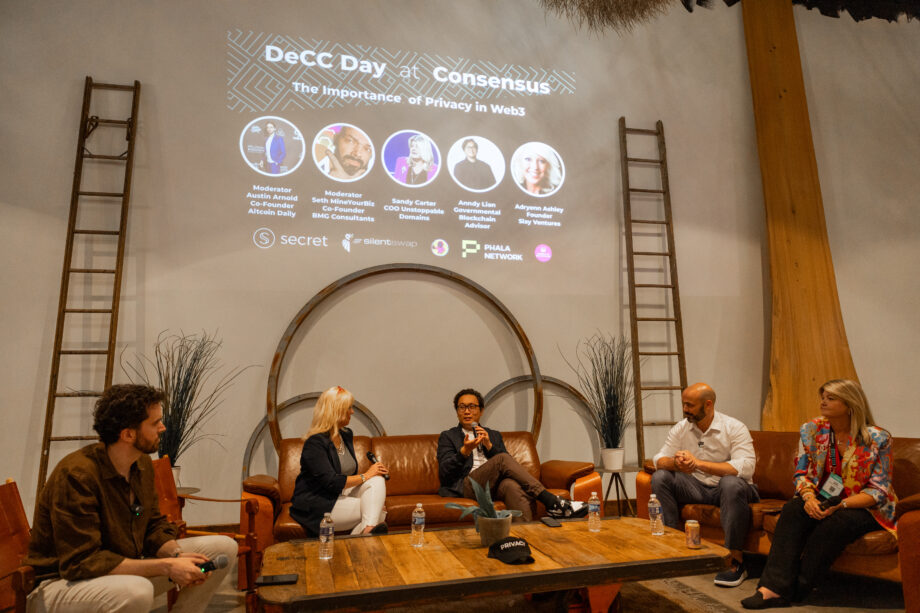
Web3 privacy emerges as a central theme, often heralded as a fundamental human right yet paradoxically elusive in the digital realm. The DeCC Day panel at Consensus 2024, titled “The Importance of Privacy in Web3,” brought together a diverse group of experts to unravel this complex issue.

Adryenn Ashley, a venture capitalist and founder of Slay Ventures, opened the discussion with a provocative introduction, highlighting her background in creating a dating app that prioritized privacy and consent, leveraging blockchain technology. Her energetic tone set the stage for a dynamic exchange of ideas.

Anndy Lian, a book author and fund manager from Singapore, expressed his passion for privacy, emphasizing its significance in various conferences he attends. His perspective as an author and investor provided a unique lens through which to view the privacy debate.

Seth, known in the crypto community as ‘MineyourBiz,’ identified himself as a privacy advocate to the point of affliction. His commitment to evaluating technologies for market viability and technological soundness has led him to monitor major waves in privacy tech, interviewing many privacy-oriented founders.

Sandy Carter, COO of Unstoppable Domains and founder of Unstoppable Women of Web3 in AI, shared her company’s efforts in creating a digital identity platform that empowers users to control their personal information. She underscored the importance of allowing individuals to decide what they disclose, framing privacy as a choice rather than a given.

The panellists engaged in a spirited debate over the nature of privacy and its perception among individuals and governments. Seth argued that privacy is a universal human desire, transcending cultural and political boundaries. However, Adryenn countered that while individuals crave privacy for themselves, they are equally curious about others’ lives, driven by a systematic craving for information.

The conversation took a turn when Anndy brought up the consumer’s role in the privacy equation. He posited that consumers must care about their privacy for it to be effectively protected, citing the use of Zero-Knowledge Proofs (ZKPs) in blockchain applications as a means to preserve user anonymity while enhancing user experience.

Sandy expanded on this by discussing the role of digital identities in managing privacy settings, allowing users to selectively share information with applications. This approach, she argued, respects the individual’s right to privacy while acknowledging the varying degrees of openness each person is comfortable with.

The panelists also tackled the thorny issue of government surveillance and regulation. Seth highlighted the lack of consideration for privacy in government discussions, often viewed as an inconvenience rather than a necessity. Andy shared insights from his direct advisory role with governments, revealing that while on-chain activities might be challenging to trace, off-chain actions, particularly cashing out to fiat, are transparent and traceable.

As the discussion drew to a close, the panellists agreed on the paramount importance of trust in the relationship between privacy, governments, and the public. Austin Arnold, Co-founder of Altcoin Daily closed the panel by emphasizing that privacy builds confidence and trust, which are crucial for market movement and engagement.

In the digital tapestry of Web3, privacy stands as a beacon of individual autonomy, a principle ardently debated and fiercely defended. The DeCC Day panel at Consensus 2024 illuminated the intricate dance between personal discretion and societal transparency. The discourse traversed the spectrum of privacy—from a fundamental human yearning to a nuanced societal construct, challenging the audience to reconsider their own stances on the matter.

The panellists, each a vanguard in their respective fields, unravelled the privacy paradox with eloquence and insight. They painted a world where privacy is not a relic of the past but a cornerstone of the future—a future where trust is the currency and privacy its mint. The dialogue underscored the imperative for privacy to be more than an afterthought in the Web3 narrative; it must be the plot itself.

As the conversation drew to a close, the consensus was clear: privacy in Web3 is not just about the right to secrecy but the right to agency. It is about crafting a digital realm where individuals navigate with confidence, empowered by the sovereignty over their data. The panel at DeCC Day did not just discuss privacy; they championed it, urging us to envision a Web3 ecosystem that is as secure as it is open, as private as it is communal.

In this era of technological renaissance, the panel’s insights serve as a compass, guiding us toward a more equitable and private digital future. The importance of privacy in Web3, as articulated by these thought leaders, is a clarion call to action—a call to protect what makes us human in a world that is increasingly digital.

Anndy Lian is an early blockchain adopter and experienced serial entrepreneur who is known for his work in the government sector. He is a best selling book author- “NFT: From Zero to Hero” and “Blockchain Revolution 2030”.

Currently, he is appointed as the Chief Digital Advisor at Mongolia Productivity Organization, championing national digitization. Prior to his current appointments, he was the Chairman of BigONE Exchange, a global top 30 ranked crypto spot exchange and was also the Advisory Board Member for Hyundai DAC, the blockchain arm of South Korea’s largest car manufacturer Hyundai Motor Group. Lian played a pivotal role as the Blockchain Advisor for Asian Productivity Organisation (APO), an intergovernmental organization committed to improving productivity in the Asia-Pacific region.

An avid supporter of incubating start-ups, Anndy has also been a private investor for the past eight years. With a growth investment mindset, Anndy strategically demonstrates this in the companies he chooses to be involved with. He believes that what he is doing through blockchain technology currently will revolutionise and redefine traditional businesses. He also believes that the blockchain industry has to be “redecentralised”.

j j j

The Future of Privacy in Web3 | DeCC @ NFT.NYC | Wendy O, Anndy Lian, Tor Bair, Gav Blaxberg

The Future of Privacy in Web3 | DeCC @ NFT.NYC | Wendy O, Anndy Lian, Tor Bair, Gav Blaxberg

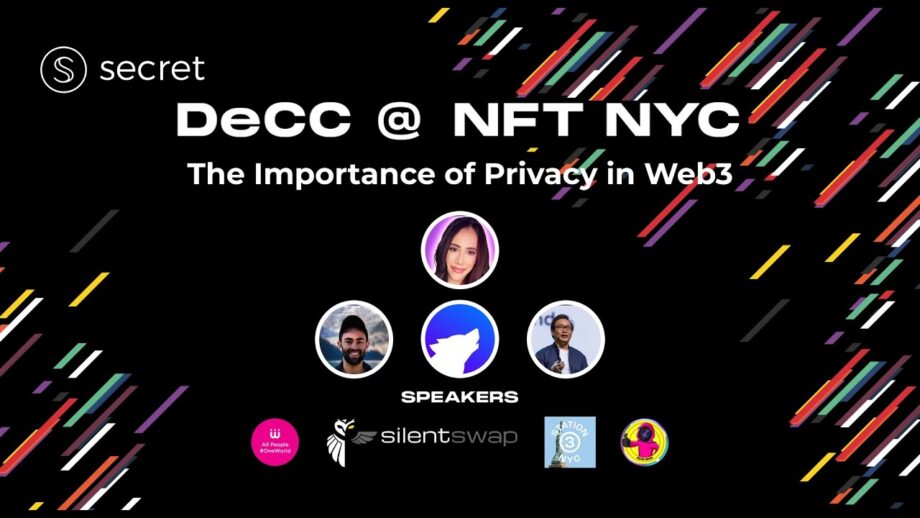
At the forefront of the Web3 revolution, DeCC @ NFT.NYC convened a panel of visionaries to unravel the complexities of privacy in a blockchain-powered world. Moderated by the influential Wendy O, the panel featured Gav Blaxberg of Wolf Financial, Tor Bair of Stashh, and Anndy Lian, a best-selling author and thought leader.

The event underscored the attendees’ commitment to privacy, with many overcoming significant obstacles to join the conversation. The introduction of “Decentralized Confidential Computing” (DCC) marked a pivotal moment, signaling a shift towards a narrative that champions confidentiality in the transparent realm of blockchain.

Panelists shared their diverse experiences, from advising on crypto regulations to pioneering encrypted NFTs, all converging on the consensus that privacy and security are the bedrock of a sustainable Web3 ecosystem. The dialogue navigated through the evolution from Web2 to Web3, highlighting the persistent challenges and the urgent need for technological alternatives that empower users with control over their data.

A key distinction emerged between privacy and security. While privacy is often viewed as a luxury, security is a fundamental necessity. The irreversible nature of lost privacy was a sobering reminder of the stakes involved. Personal stories from the panelists brought to life the real-world consequences of security breaches, emphasizing the importance of vigilance in the digital age.

The session concluded with an engaging Q&A, where a question about AI’s role in privacy and security sparked a nuanced debate. AI’s dual potential to both compromise and enhance privacy was acknowledged, with a call for responsible AI development that aligns with public interest.

DeCC @ NFT.NYC was not just an event; it was a clarion call for collective action towards a future where privacy is a standard, not an afterthought. The insights and passion of the panelists inspired attendees to advocate for privacy and champion security in the digital domain.

As the narrative around DCC unfolds, the event stands as a testament to the ongoing efforts to protect our digital lives. The journey towards a more private and secure digital world is just beginning, and every step taken is a step towards a better future for all.

Anndy Lian is an early blockchain adopter and experienced serial entrepreneur who is known for his work in the government sector. He is a best selling book author- “NFT: From Zero to Hero” and “Blockchain Revolution 2030”.

Currently, he is appointed as the Chief Digital Advisor at Mongolia Productivity Organization, championing national digitization. Prior to his current appointments, he was the Chairman of BigONE Exchange, a global top 30 ranked crypto spot exchange and was also the Advisory Board Member for Hyundai DAC, the blockchain arm of South Korea’s largest car manufacturer Hyundai Motor Group. Lian played a pivotal role as the Blockchain Advisor for Asian Productivity Organisation (APO), an intergovernmental organization committed to improving productivity in the Asia-Pacific region.

An avid supporter of incubating start-ups, Anndy has also been a private investor for the past eight years. With a growth investment mindset, Anndy strategically demonstrates this in the companies he chooses to be involved with. He believes that what he is doing through blockchain technology currently will revolutionise and redefine traditional businesses. He also believes that the blockchain industry has to be “redecentralised”.

j j j

AI will also create new ethical and social issues around privacy, bias, accountability, and trust: Anndy Lian

AI will also create new ethical and social issues around privacy, bias, accountability, and trust: Anndy Lian

As part of our rapid fire interview series, Anndy Lian, an Intergovernmental Blockchain Expert shares his quick take on the AI evolution, how it will impact the workforce in APAC, and his favourite thing about AI.

Anndy Lian is an Intergovernmental Blockchain Expert and Best Selling Book Author “NFT: From Zero to Hero”. He has provided advisory across a variety of industries for local, international, public listed companies and governments. He is an early blockchain adopter and experienced serial entrepreneur, book author, investor, board member and keynote speaker.

As part of our rapid fire interview series, Anndy shares his quick take on the AI evolution, how it will impact the workforce in APAC, and his favourite thing about AI.

Can you share with us your background and experience?

I have started to look at cryptocurrencies in 2013 and then blockchain in 2017. The first time I got to know what blockchain can do is at a closed door session with a pharma company. Blockchain’s ability to fight counterfeit is very effective. I have then gone full time into this space since. I gave advice to governments, listed companies, leading crypto exchanges and the list goes on.

As a tech leader, what’s the first thing you do when you start your work?

The first thing I do when I start my work is to check the latest news and trends in the tech world, especially in the areas of blockchain, AI, and cybersecurity. I like to keep myself updated on the current developments and challenges in these fields, and how they affect the society and the economy. I also like to connect with other tech leaders and experts, and exchange ideas and insights on how to leverage technology for positive impact.

What does AI evolution mean to you in one sentence?

AI evolution means the continuous improvement and advancement of AI systems and applications, driven by human creativity and curiosity, to solve complex problems and enhance human capabilities.

What is one way in which AI will impact enterprise security?

One way in which AI will impact enterprise security is by enabling more effective and efficient detection and prevention of cyberattacks, such as malware, phishing, ransomware, and DDoS. AI can help analyse large volumes of data, identify patterns and anomalies, and respond to threats in real time. AI can also help automate and optimise security processes, such as authentication, encryption, and backup.

What do you see as the biggest transformation that AI will bring about in the workforce in APAC?

The biggest transformation that AI will bring about in the workforce in APAC is the creation of new jobs and opportunities that require higher levels of skills, creativity, and collaboration. AI will also augment and complement human workers, by taking over repetitive and mundane tasks, and providing insights and recommendations. AI will also enable more flexible and remote work arrangements, as well as lifelong learning and upskilling.

One challenge which AI will pose for the workforce in APAC.

One challenge which AI will pose for the workforce in APAC is the potential displacement and disruption of existing jobs and industries, especially those that rely on low-skilled and manual labor. AI will also create new ethical and social issues, such as privacy, bias, accountability, and trust. Therefore, it is important to ensure that AI is developed and deployed in a responsible and inclusive manner, that respects human rights and values, and that benefits all stakeholders.

What’s your favourite thing about AI?

My favourite thing about AI is its ability to generate novel and innovative solutions and content that can inspire and amaze humans. For example, AI can write poems, stories, songs, code, and more, using its own words and knowledge. I find this aspect of AI very fascinating and exciting, as it shows the potential and diversity of AI creativity.

AI can also improve productivity and efficiency, by automating and optimising various tasks and processes, such as data analysis, decision making, customer service, and more. AI can help humans save time, money, and resources, and focus on more strategic and creative work. AI can also enhance quality and accuracy, by reducing errors and biases, and providing insights and recommendations.

What is one advice you would like to give organisations when it comes to AI adoption ?

One advice I would like to give organisations when it comes to AI adoption is to start small and scale up gradually, by identifying and prioritising the most relevant and valuable use cases and applications of AI for their business goals and customer needs. I would also advise them to involve and empower their employees and customers in the AI journey, by providing them with the necessary training, support, and feedback. Lastly, I would advise them to adopt a culture of experimentation and learning, by testing and iterating their AI solutions, and measuring and improving their outcomes and impacts.

Anndy Lian is an early blockchain adopter and experienced serial entrepreneur who is known for his work in the government sector. He is a best selling book author- “NFT: From Zero to Hero” and “Blockchain Revolution 2030”.

Currently, he is appointed as the Chief Digital Advisor at Mongolia Productivity Organization, championing national digitization. Prior to his current appointments, he was the Chairman of BigONE Exchange, a global top 30 ranked crypto spot exchange and was also the Advisory Board Member for Hyundai DAC, the blockchain arm of South Korea’s largest car manufacturer Hyundai Motor Group. Lian played a pivotal role as the Blockchain Advisor for Asian Productivity Organisation (APO), an intergovernmental organization committed to improving productivity in the Asia-Pacific region.

An avid supporter of incubating start-ups, Anndy has also been a private investor for the past eight years. With a growth investment mindset, Anndy strategically demonstrates this in the companies he chooses to be involved with. He believes that what he is doing through blockchain technology currently will revolutionise and redefine traditional businesses. He also believes that the blockchain industry has to be “redecentralised”.

j j j