Global markets are currently riding a wave of optimism, with risk sentiment surging as investors appear to shrug off a host of economic and political uncertainties. This buoyant mood stems mainly from two key drivers: the anticipation of earlier-than-expected Federal Reserve rate cuts and growing excitement about the potential for artificial intelligence to fuel economic growth.
Beneath this surface of confidence, there are substantial risks that could easily unsettle this delicate balance. From escalating trade tensions to shifting monetary policies and fluctuating commodity prices, the global financial landscape is anything but stable. Adding to the complexity is the cryptocurrency market, where Bitcoin’s price volatility has recently hit its lowest point in over a year, offering a curious contrast to the broader market dynamics.
Let’s begin with the economic and political risks that, despite being overlooked by many market participants, remain critical to understanding the current sentiment. One of the most prominent issues is the resurgence of trade tensions, highlighted by former President Donald Trump’s recent threat to raise tariffs on Indian goods substantially. His reasoning ties to India’s continued purchases of Russian oil, a move that has irked US policymakers amid geopolitical strains.
This isn’t just a bilateral spat between the US and India. It has the potential to ripple across global trade networks, disrupting supply chains and increasing costs for businesses worldwide. India plays a vital role in the global economy, particularly in technology and manufacturing, so any escalation in tariffs could dampen corporate earnings and slow economic momentum. This is a reminder that geopolitical posturing can quickly translate into economic consequences, and investors ignoring this risk might find themselves caught off guard if tensions boil over.
Turning to monetary policy, the Federal Reserve’s next moves are shaping up to be a linchpin for market sentiment. San Francisco Fed President Mary Daly recently indicated that the Fed might need to implement more than two rate cuts this year if the labour market weakens further and inflationary pressures from tariffs fail to materialise.
This comment caught my attention because it suggests a willingness to adopt a more supportive stance, which could bolster markets by lowering borrowing costs and encouraging investment. However, it also underscores the Fed’s challenging position. Cutting rates too aggressively risks reigniting inflation, especially if trade disruptions push up prices. On the other hand, holding back could stifle growth if the labor market deteriorates. Fed is walking a tightrope, and its decisions will likely amplify market swings in the coming months. For investors, this means staying attuned to economic data like employment figures and inflation readings, which will heavily influence the Fed’s path.
AI hype changes things
Meanwhile, the optimism around AI-driven growth is injecting a dose of excitement into the markets, and I can see why. Advances in artificial intelligence are no longer just theoretical. They’re starting to reshape industries. Companies are pouring resources into AI, betting that it will streamline operations, boost productivity, and open new revenue channels.
This enthusiasm is most evident in the tech sector, which has powered a recent rebound in US stock markets. The S&P 500 climbed 1.5 per cent, the NASDAQ jumped 2.0 per cent, and the Dow Jones rose 1.3 per cent, reflecting a clear risk-on attitude. I find this rally encouraging because it signals confidence in innovation as a growth driver. I also think it’s worth tempering expectations.
AI’s economic impact is still unfolding, and while the long-term potential is immense, short-term gains might be overstated. If other risks like trade disputes or policy missteps intensify, the AI narrative could lose its luster, leaving tech-heavy indices vulnerable.
The bond market offers another lens into investor sentiment, and here I see a mix of caution and opportunism. US Treasuries consolidated their gains on Monday after a strong showing the previous Friday, when renewed expectations of Fed rate cuts drove demand. The 10-year Treasury yield dropped 2.4 basis points to 4.192 per cent, inching close to its support level at 4.185 per cent.
Lower yields typically suggest investors are seeking safety, which seems at odds with the equity market’s rally. To me, this divergence hints at underlying unease; some investors are hedging their bets even as others pile into stocks. The US Dollar Index fell 0.4 per cent in response to these lower yields, while gold edged up 0.3 per cent to US$3,373 per ounce. Gold’s modest gain reinforces my view that safe-haven assets still hold appeal, despite the risk-on vibe dominating headlines. It’s a subtle but telling sign that not everyone is fully convinced by the current optimism.
The case with commodities
Commodities, too, are part of this intricate puzzle. Brent crude oil slipped 1.3 per cent to US$68 per barrel after OPEC+ agreed to increase production by over 500,000 barrels per day starting in September.
This move surprised me a bit, given the group’s usual caution, but it could ease inflationary pressures by keeping oil prices in check. For consumers and businesses, cheaper oil is a welcome relief, potentially supporting spending and investment. However, it also raises questions about global demand. If OPEC+ feels confident boosting output, does that mean they see economic growth slowing? I lean toward the idea that this is a strategic play to maintain market share, but it’s a development worth watching. Lower oil prices might give central banks like the Fed more room to cut rates without stoking inflation, indirectly supporting the risk sentiment driving markets.
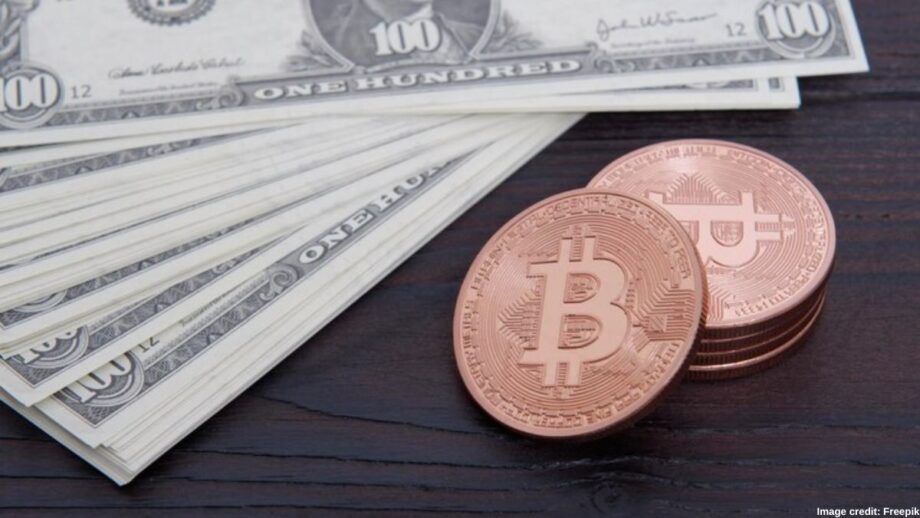
Now, let’s shift gears to Bitcoin, where an intriguing story is unfolding. The cryptocurrency’s price volatility has plummeted to its lowest level in over a year, a stark contrast to its historically wild swings. According to Blockforce Capital, Bitcoin’s annualised 60-day volatility fell to 28.53 per cent on July 30, the lowest since August 28, 2023. Its 30-day volatility hit 25.26 per cent on July 23, the calmest since October 15, 2023. This happened as Bitcoin’s price oscillated between US$105,000 and US$122,750 in July, per Coinbase data from TradingView.
I find this stability fascinating, especially given the broader market turbulence. Part of it stems from regulatory progress, including the passage of three US House bills on crypto and the enactment of regulations in July, with the GENIUS Act signed into law by President Trump. These steps likely reassured investors, reducing uncertainty.
But there’s more to this story. Institutional players are flexing their muscles, and I see this as a game-changer. Strategy, formerly known as MicroStrategy, acquired US$2.46 billion worth of Bitcoin between July 28 and August 3, increasing its holdings to 628,791 tokens, valued at over US$71 billion. That’s a massive bet, averaging $117,526 per token, and it shows how Michael Saylor has turned his company into a Bitcoin juggernaut.
Similarly, Japan’s Metaplanet grabbed 463 BTC for US$53 million, pushing its stash to 17,595 BTC, worth about $2.02 billion. These firms are treating Bitcoin like a treasury asset, buying even as retail enthusiasm wanes. I think this institutional muscle could steady Bitcoin through choppy waters, though it also ties the crypto’s fate closer to corporate strategies.
My view? Enjoy the ride, but keep your eyes wide open. The next few months could be a wild one.


Anndy Lian is an early blockchain adopter and experienced serial entrepreneur who is known for his work in the government sector. He is a best selling book author- “NFT: From Zero to Hero” and “Blockchain Revolution 2030”.
Currently, he is appointed as the Chief Digital Advisor at Mongolia Productivity Organization, championing national digitization. Prior to his current appointments, he was the Chairman of BigONE Exchange, a global top 30 ranked crypto spot exchange and was also the Advisory Board Member for Hyundai DAC, the blockchain arm of South Korea’s largest car manufacturer Hyundai Motor Group. Lian played a pivotal role as the Blockchain Advisor for Asian Productivity Organisation (APO), an intergovernmental organization committed to improving productivity in the Asia-Pacific region.
An avid supporter of incubating start-ups, Anndy has also been a private investor for the past eight years. With a growth investment mindset, Anndy strategically demonstrates this in the companies he chooses to be involved with. He believes that what he is doing through blockchain technology currently will revolutionise and redefine traditional businesses. He also believes that the blockchain industry has to be “redecentralised”.