Nikkei soars, gold shines, and Bitcoin reserves drop: What’s driving global markets?

Nikkei soars, gold shines, and Bitcoin reserves drop: What’s driving global markets?

Reports of progress in trade negotiations, coupled with dovish signals from Federal Reserve officials, have bolstered risk sentiment, sending equity markets higher and tempering yields on US Treasuries. At the same time, the cryptocurrency market, particularly Bitcoin, is experiencing a transformative moment as institutional adoption accelerates and exchange reserves dwindle to historic lows.

Observing these developments, I see a world at a crossroads—where traditional finance is grappling with geopolitical and monetary uncertainties, while the digital asset space is carving out a new paradigm of value storage and investment. This market wrap dives into these dynamics, offering my perspective on what they mean for investors, policymakers, and the broader global economy.

Let’s start with the equity markets, which a wave of positive sentiment has buoyed. The MSCI US index climbed 2.0 per cent, with the Information Technology sector leading the charge at a robust 3.5 per cent gain. Alphabet Inc., Google’s parent company, was a standout performer, surging 4.9 per cent in late trading after reporting earnings that surpassed analyst expectations.

This tech-driven rally underscores the sector’s resilience, even as macroeconomic uncertainties linger. Across the Pacific, Asian markets followed suit, with Japan’s Nikkei 225 jumping as much as 1.8 per cent. The yen’s decline, spurred by encouraging comments from US-Japan trade talks, added fuel to the rally. These gains reflect a broader market belief that trade tensions, particularly between the US and China, may be easing, though the picture is far from clear.

On the trade front, the narrative is mixed. President Trump’s assertion that his administration is engaged in talks with China has injected optimism into markets. However, Beijing’s denial of such negotiations and its demand for the revocation of unilateral US tariffs paint a more complex picture. This push-and-pull dynamic is emblematic of the broader US-China relationship, where rhetoric and reality often diverge.

The market’s reaction—evident in rising equity indices and a slight uptick in Brent crude prices (+0.7 per cent)—suggests that investors are betting on a de-escalation, even if only incremental. Yet, the risk of missteps remains high. A failure to bridge the gap between Washington and Beijing could reignite volatility, particularly in sectors like technology and energy that are sensitive to trade disruptions.

Monetary policy is another critical piece of the puzzle. Federal Reserve officials have signalled a willingness to cut interest rates sooner than previously anticipated, a move that has ripple effects across asset classes. US Treasury yields softened, with the 10-year yield dropping 6.6 basis points to 4.31 per cent and the 2-year yield falling 7.4 basis points to 3.80 per cent. This dovish tilt has weakened the US Dollar index by 0.5 per cent, while boosting gold prices (+1.9 per cent) above US$3,300 per ounce. Gold’s strength, underpinned by central bank buying and haven demand, reflects a market hedging against uncertainty.

As someone observing these trends, I believe the Fed’s openness to rate cuts signals a pragmatic response to slowing growth signals, but it also raises questions about the sustainability of the current economic expansion. Lower yields and a softer dollar could fuel further equity gains, but they also risk inflating asset bubbles in an already frothy market.

Amid this traditional financial backdrop, Bitcoin’s trajectory demands attention. The cryptocurrency has staged a remarkable recovery from a 30 per cent drop earlier this year, now trading steadily above US$93,000. What’s driving this resilience? A significant factor is the sharp decline in Bitcoin reserves on exchanges, which have fallen to 2.6 million BTC—the lowest level since November 2018. Since November 2024, exchanges have seen a net outflow of over 425,000 BTC, with public companies snapping up nearly 350,000 of those coins.

This trend, led by firms like Strategy, co-founded by Michael Saylor, is reshaping the Bitcoin market. Strategy alone has amassed 285,980 BTC since last November, with its latest purchase of 6,556 BTC announced in April 2025. Other players, such as Japan’s Metaplanet (holding 5,000 BTC with plans to double its stake) and Hong Kong’s HK Asia Holdings (raising US$8.35 million to bolster its reserves), are following suit.

This corporate accumulation is more than a footnote—it’s a paradigm shift. From my vantage point, it signals a growing acceptance of Bitcoin as a strategic asset, akin to gold or other stores of value. Companies are not just dabbling; they’re making calculated bets on Bitcoin’s long-term potential. The market impact is tangible: between April 19 and 23, 15,000 BTC left exchanges, coinciding with Bitcoin’s price breaching US$93,000.

This outflow suggests that investors, particularly institutions, are moving their holdings to cold storage for long-term investment rather than short-term trading. Such behavior is often interpreted as bullish, as it reduces the liquid supply available for selling pressure. Data from CryptoQuant reinforces this view, showing that long-term holders saw their realised market worth rise by US$26 billion in the first three weeks of April alone.

Institutional adoption is further evidenced by the surge in Bitcoin ETF inflows, with nearly US$1 billion pouring into US-based funds this week. ARK Invest’s bullish outlook, raising its 2030 Bitcoin price target to US$2.4 million, underscores the growing conviction that institutional money will drive the next leg of Bitcoin’s rally.

However, technical analysts caution that Bitcoin must hold above US$93,500 to maintain its upward momentum. A breach below this level could trigger a pullback, especially given the market’s sensitivity to macroeconomic shifts like Fed policy or trade developments.

Reflecting on these trends, I’m struck by the duality of the current market environment. On one hand, traditional markets are riding a wave of optimism fueled by trade hopes and dovish central bank signals. Equities are climbing, yields are softening, and gold is shining as a hedge. On the other hand, Bitcoin’s rise—driven by institutional adoption and shrinking exchange reserves—represents a parallel narrative of disruption.

I see Bitcoin’s ascent as a signal that the financial system is evolving. Corporations no longer view digital assets as speculative gambles but as strategic reserves, a hedge against inflation, and a bet on a decentralised future. Yet, risks abound. Bitcoin’s volatility, while tempered, remains a concern, and the broader market’s reliance on Fed policy and trade progress leaves it vulnerable to shocks.

Looking ahead, the interplay between these forces will shape the global economy. Risk assets like equities and oil could extend their gains if trade negotiations yield tangible progress. However, a breakdown in talks could send markets into a tailspin, boosting safe havens like gold and, potentially, Bitcoin.

The Fed’s next moves will be equally pivotal. Earlier rate cuts could sustain the equity rally but risk overheating markets, while a failure to act could choke off growth. For Bitcoin, the path seems clearer: institutional adoption is likely to continue, tightening supply and supporting prices. Yet, regulatory scrutiny, particularly in jurisdictions like the US and China, could pose headwinds.

In conclusion, the current market landscape is a tapestry of hope, uncertainty, and transformation. Traditional finance is navigating a delicate balance of trade and monetary policy, while Bitcoin is carving out a new role as a corporate treasury asset. I’m cautiously optimistic about the near-term outlook for risk assets but mindful of the fragility beneath the surface.

Bitcoin’s resilience, in particular, is a story of adaptation and conviction—one that may redefine how we think about value in the years to come. For now, investors would be wise to stay vigilant, balancing the allure of opportunity with the realities of risk.

 

Source: https://e27.co/nikkei-soars-gold-shines-and-bitcoin-reserves-drop-whats-driving-global-markets-20250425/


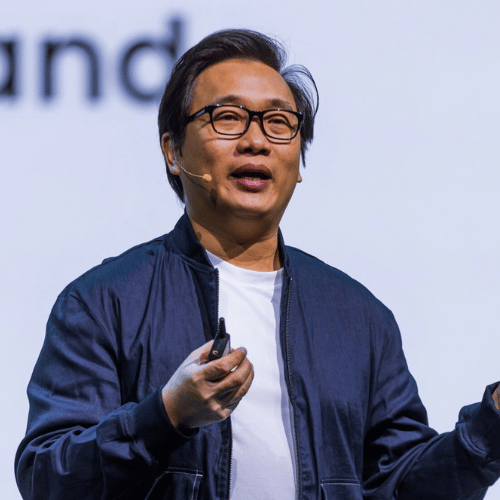
Anndy Lian is an early blockchain adopter and experienced serial entrepreneur who is known for his work in the government sector. He is a best selling book author- “NFT: From Zero to Hero” and “Blockchain Revolution 2030”.

Currently, he is appointed as the Chief Digital Advisor at Mongolia Productivity Organization, championing national digitization. Prior to his current appointments, he was the Chairman of BigONE Exchange, a global top 30 ranked crypto spot exchange and was also the Advisory Board Member for Hyundai DAC, the blockchain arm of South Korea’s largest car manufacturer Hyundai Motor Group. Lian played a pivotal role as the Blockchain Advisor for Asian Productivity Organisation (APO), an intergovernmental organization committed to improving productivity in the Asia-Pacific region.

An avid supporter of incubating start-ups, Anndy has also been a private investor for the past eight years. With a growth investment mindset, Anndy strategically demonstrates this in the companies he chooses to be involved with. He believes that what he is doing through blockchain technology currently will revolutionise and redefine traditional businesses. He also believes that the blockchain industry has to be “redecentralised”.

j j j

Bitcoin falls to US$81,300 as gold shines ahead of FOMC meeting 2025

Bitcoin falls to US$81,300 as gold shines ahead of FOMC meeting 2025

The global risk sentiment pulling back ahead of today’s FOMC meeting feels like the market holding its breath, and I can’t help but feel the weight of that tension myself. Investors rushing into safe-haven assets—gold soaring past US$3,030 an ounce, the 10-year US Treasury yield slipping to 4.285 per cent—tells a story of unease but also of resilience in the face of complexity.

Meanwhile, the MSCI US index dropping 1.1 per cent, dragged down by tech giants, and Brent crude sliding to US$71.8 a barrel amid a potential oil glut paint a contrasting picture of vulnerability. Add in Russia’s partial ceasefire, Trump-Putin talks, and a surprising uptick in US economic data, and it’s a lot to process. As a journalist who thrives on digging into the facts, I’m eager to weave these threads together and offer my take on what it all means.

Let’s start with the safe-haven stampede. Gold’s 40 per cent climb over the past year is staggering, and its latest push above US$3,030 an ounce feels like a siren blaring about global fears—economic slowdown, inflation, geopolitical strife, and central banks hoarding the metal like it’s the last lifeboat on a sinking ship.

The 10-year Treasury yield dipping by 2.1 basis points reinforces this flight to safety; investors are willing to accept lower returns for the comfort of US debt. I’ve seen this pattern before in times of uncertainty, like during the 2020 pandemic panic, but what strikes me now is the sheer velocity of gold’s ascent. It’s tempting to call it a bubble—too far, too fast, as some analysts are whispering—but I’m not so sure.

The drivers here are real: central banks like China and India have been buying gold to diversify away from the dollar, and with Russia’s ceasefire talks and Middle East tensions simmering, the geopolitical risk premium isn’t going away anytime soon. Still, I can’t shake the feeling that a correction might loom if the FOMC surprises with a dovish tilt or if global tensions ease more than expected.

On the flip side, the equity markets are showing strain. The MSCI US dropping 1.1 per cent, with tech mega caps leading the charge downhill, suggests that the risk-on exuberance of recent months is cooling. These stocks—think Apple, Nvidia, Amazon—have been the darlings of the bull run, but they’re sensitive to interest rate expectations, and the FOMC meeting is the elephant in the room.

Everyone’s expecting rates to hold steady, but the real action will be in the dot plot and Jerome Powell’s press conference. Will the Fed signal a longer pause or hint at cuts later in 2025? I suspect the upside surprises in US housing starts and industrial production—data points that landed stronger than anticipated—might give Powell room to strike a cautiously optimistic tone.

That could buoy stocks, as hinted by US equity futures pointing to a higher open. But for now, the market’s nerves are palpable, and I’d wager that tech’s decline reflects a broader reassessment of growth bets in an uncertain world.

Geopolitics is the wild card here, and it’s impossible to ignore Russia’s partial ceasefire amid Trump-Putin talks. This development could dial back some of the risk baked into markets, especially in energy.

Brent crude’s 0.8 per cent dip to US$71.8 a barrel puzzled me at first—shouldn’t Middle East tensions push oil higher? But digging deeper, the talk of a global crude glut makes sense. Supply is outpacing demand, and even with sanctions on Russia, their oil keeps flowing, often through creative crypto workarounds I’ll get to later.

A ceasefire, even partial, might stabilise energy markets further, though I’m skeptical it’ll stick without broader diplomatic breakthroughs. Trump’s involvement adds an unpredictable twist—his deal-making style could either calm things down or stir the pot, and I’m leaning toward the latter given his track record.

Europe’s a bright spot that caught my eye. German stocks climbing after parliament approved big spending on defense and infrastructure feels like a lifeline for a region that’s been stuck in neutral. The ZEW survey expectations leaping to 51.6 from 26 in February is the kind of data that makes me sit up—it’s a signal that investor confidence is rebounding, maybe even hinting at a German economic revival. I’ve covered Europe’s stagnation narrative for years, and this feels like a pivot worth watching. Could it mean Europe starts to decouple from US market woes? Possibly, though it’s early days.

Asia, though, is a mixed bag. Indonesia’s JCI index tanking 3.8 per cent over rumours of Finance Minister Sri Mulyani Indrawati’s resignation—rumours she’s since squashed—shows how jittery emerging markets can get. Four straight days of declines is brutal, and it’s a reminder that political stability is oxygen for these economies.

Meanwhile, the Bank of Japan and Bank Indonesia holding pat on rates aligns with the global wait-and-see vibe. Asian equities being mixed in early trading mirrors the indecision I’m seeing everywhere else.

Now, let’s talk gold versus Bitcoin, because this tug-of-war fascinates me. Gold’s red-hot run might be stealing thunder from Bitcoin, which slipped to US$81,300 from US$84,000. A 40 per cent gold surge versus Bitcoin’s more volatile path raises questions about sustainability. I’ve tracked both assets for years, and I see gold’s rally as a fear trade—steady, tangible, a hedge against chaos. Bitcoin, though, is the speculator’s playground, and its dip might reflect profit-taking or a shift in sentiment.

Enter MicroStrategy (MSTR), whose latest move—a Perpetual Strife Preferred Stock (STRF) with a 10 per cent dividend—shows they’re still betting big on Bitcoin. Raising funds to buy more BTC (they added 130 tokens for US$10.7 million last week, bringing their stash to 499,226) is bold, but the pace is slowing, and Wall Street’s enthusiasm might be waning.

MSTR’s stock dropping five per cent Tuesday alongside Bitcoin’s slide tells me the market’s reassessing this strategy. The STRF’s high-yield structure—10 per cent cash dividends, compounding to 18 per cent if unpaid, trading on Nasdaq soon—is clever, offering Bitcoin exposure without direct ownership. But I wonder if this signals desperation or genius as their fundraising spigot tightens.

Geopolitics crashing into crypto is the final piece of this puzzle, and it’s a doozy. Russia using Bitcoin and Ethereum to dodge sanctions—US$192 billion in oil trade rerouted through rupees, yuan, and crypto—is a game-changer. The process is slick: an Indian buyer pays a middleman in rupees, who swaps it for crypto, sends it to Russia, and they cash out in rubles. Sanctions? Skirted.

Reuters’ mid-March reporting nails this trend, and while one Russian exchange got shut down this month after US and EU sanctions, others will pop up. I’ve long argued that crypto’s global reach makes it a double-edged sword—freedom for some, a loophole for others. This isn’t just about Russia; it’s a signal that digital assets are reshaping geopolitics, and regulators are playing catch-up.

So where do I land? The FOMC meeting today is the linchpin—Powell’s words could either soothe or spook markets. Gold’s run feels frothy but grounded in real fears; Bitcoin’s dip is a hiccup, not a collapse. Geopolitics and crypto are intertwining in ways that’ll define the next decade, and Europe’s flicker of hope contrasts with Asia’s stumbles.


Source: https://e27.co/bitcoin-falls-to-us81300-as-gold-shines-ahead-of-fomc-meeting-2025-20250319/

Anndy Lian is an early blockchain adopter and experienced serial entrepreneur who is known for his work in the government sector. He is a best selling book author- “NFT: From Zero to Hero” and “Blockchain Revolution 2030”.

Currently, he is appointed as the Chief Digital Advisor at Mongolia Productivity Organization, championing national digitization. Prior to his current appointments, he was the Chairman of BigONE Exchange, a global top 30 ranked crypto spot exchange and was also the Advisory Board Member for Hyundai DAC, the blockchain arm of South Korea’s largest car manufacturer Hyundai Motor Group. Lian played a pivotal role as the Blockchain Advisor for Asian Productivity Organisation (APO), an intergovernmental organization committed to improving productivity in the Asia-Pacific region.

An avid supporter of incubating start-ups, Anndy has also been a private investor for the past eight years. With a growth investment mindset, Anndy strategically demonstrates this in the companies he chooses to be involved with. He believes that what he is doing through blockchain technology currently will revolutionise and redefine traditional businesses. He also believes that the blockchain industry has to be “redecentralised”.

j j j

Europe rises, Asia watches, Bitcoin sideways and gold shines: A world on edge

Europe rises, Asia watches, Bitcoin sideways and gold shines: A world on edge

The recent rebound in risk sentiment and the relief rally in US markets, spurred by the easing of fears surrounding a potential government shutdown. The developments over the past few days paint a fascinating, albeit complex, picture of an interconnected global financial system grappling with uncertainty, inflationary pressures, and shifting geopolitical dynamics.

Let’s dive into the details and unpack what this all means, both for the immediate future and the broader economic landscape.

The S&P 500’s 2.1 per cent surge last Friday was a welcome reprieve after it closed in a technical recession the previous day—a term that, while not officially signalling a full-blown economic downturn, certainly rattled investors. The rally was broad-based, with most sectors finishing in positive territory, reflecting a collective sigh of relief that a government shutdown, which could have paralysed federal operations and dented market confidence, appears to have been averted, at least for now. This kind of market behaviour is classic: when a looming threat dissipates, investors pile back in, eager to capitalise on discounted stocks.

Yet, beneath this optimism lies a more troubling undercurrent—US consumer sentiment has plummeted to its lowest level in over two years. The preliminary March sentiment index dropped to 57.9, a stark indicator that everyday Americans are growing increasingly anxious about the economy. This apprehension isn’t unfounded.

With tariffs looming as a potential disruptor, consumers are bracing for higher prices, a fear underscored by their expectation that inflation will climb to 3.9 per cent annually over the next five to ten years. That’s a significant jump from last month’s 3.5 per cent and the highest long-term inflation expectation in over three decades. It’s hard not to see this as a red flag—when consumers start anticipating sustained price increases, it can become a self-fulfilling prophecy as spending habits shift and businesses adjust accordingly.

Meanwhile, the Federal Reserve finds itself in a delicate balancing act. Despite these inflationary fears and a step-down in economic growth, the Fed is widely expected to hold steady at its Wednesday meeting, signalling patience rather than panic. This isn’t surprising—Fed Chair Jerome Powell has consistently emphasised a data-driven approach, and with inflation still above the two per cent target but not spiraling out of control, a pause makes sense.

However, the bond market tells a slightly different story. The yield on the 10-year US Treasury note ticked up 5 basis points to 4.31 per cent, a subtle but telling sign that investors are demanding higher returns to compensate for perceived risks. It’s a reminder that while equity markets may cheer short-term wins, the fixed-income crowd remains wary of longer-term uncertainties, particularly around fiscal policy and trade disruptions.

Speaking of trade, the commodities market offers another lens into this evolving narrative. Gold, that perennial safe-haven asset, climbed 0.5 per cent to breach the US$3,000-per-ounce mark for the first time—a milestone that speaks volumes about investor unease. With US policy uncertainty intensifying, particularly around tariffs and their potential to upend global supply chains, gold’s ascent feels less like a speculative bubble and more like a rational hedge.

Brent crude, too, edged higher by 0.3 per cent to US$71.61 per barrel, buoyed by the dual forces of tighter supply expectations (thanks to trade war jitters) and OPEC+’s decision to ramp up output. It’s a delicate dance—higher oil prices could stoke inflation further, yet they also reflect a market betting on sustained demand despite economic headwinds.

Across the Atlantic, European equities caught a tailwind from positive political developments in Germany, where Chancellor-in-waiting Friedrich Merz announced a deal with the Green Party on a defense and infrastructure package. This news lifted the EUR/USD pair by 0.3 per cent to 1.0876, suggesting a flicker of confidence in Europe’s economic stability amid its own challenges.

Asia, too, is showing signs of resilience. Equities there regained their footing last Friday and continued to trade higher in early sessions today, March 17, 2025. Investors are laser-focused on China’s upcoming data dump—fixed asset investments, retail sales, industrial production, and home prices—which could provide critical clues about the health of the world’s second-largest economy. Any weakness in these figures could ripple across global markets, especially given China’s role as a manufacturing powerhouse and consumer market. For now, though, the mood in Asia seems cautiously optimistic, mirroring the relief rally in the US.

But let’s pivot to a wildcard in this global financial tapestry: Bitcoin and its contrasting fates in South Korea and the United States. The Bank of Korea (BOK) has firmly rejected the idea of incorporating Bitcoin into its foreign exchange reserves, citing its wild price swings and the hefty transaction costs of converting it to cash.

The BOK’s stance aligns with the International Monetary Fund’s guidelines, which prioritise liquidity and risk management—attributes Bitcoin, with its volatility, struggles to meet. This conservative approach stands in sharp contrast to the US, where President Donald Trump recently signed an executive order establishing a Strategic Bitcoin Reserve.

It’s a bold move, signalling America’s willingness to embrace cryptocurrency as a strategic asset, perhaps as a hedge against dollar weakness or a play to attract blockchain investment. The divergence is striking: South Korea sees Bitcoin as a liability, while the US views it as an opportunity.

Then there’s North Korea, stealthily emerging as a major Bitcoin player through the exploits of the Lazarus Group. Their audacious US$1.4 billion heist from Bybit on February 21, 2025—mostly in Ethereum, later partially converted to Bitcoin—has catapulted the rogue state into the ranks of top government holders, with 13,562 BTC valued at US$1.14 billion.

It’s a chilling reminder of how cybercrime can reshape national wealth, turning digital theft into a treasury-building exercise. This development adds another layer of complexity to Bitcoin’s role in global finance, blurring the lines between legitimate investment and illicit gain.

Bitcoin’s price action itself remains a rollercoaster. I am eyeing a key resistance level at US$86,700, with failure to break through potentially sending it tumbling to US$77,859 or even US$71,011 if selling pressure mounts. Last week’s choppy movements reflect a market caught between bullish enthusiasm and bearish caution.

CryptoQuant analyst Darkfost noted on X that Bitcoin’s open interest hit a record US$33 billion in January, only to see nearly US$10 billion wiped out between February 20 and March 4 amid political uncertainty tied to Trump’s actions. This 90-day futures open interest drop of -14 per cent suggests a market reset, clearing out excess leverage and possibly setting the stage for a more stable recovery. It’s a pattern we’ve seen before—painful liquidations paving the way for cautious growth.

I see a world at a crossroads. The relief rally in US markets is a fleeting victory, a sugar high that masks deeper structural concerns. Consumer sentiment’s nosedive and rising inflation expectations signal a populace bracing for tougher times, potentially exacerbated by tariffs that could jack up costs across the board.

The Fed’s patience is prudent, but it risks being perceived as indecision if inflation accelerates unchecked. Gold’s record highs and oil’s upward creep underscore a flight to safety and supply-side worries, while Europe and Asia’s gains hint at a fragile global recovery that could easily falter. Bitcoin’s tale—shunned by South Korea, embraced by the US, and hoarded by North Korea—epitomises the chaos and opportunity of our digital age.

“For investors, it’s a time to tread carefully, balancing short-term gains against long-term risks. For the rest of us, it’s a front-row seat to a high-stakes economic drama where the next act is anyone’s guess.” — Anndy Lian


Source: https://e27.co/europe-rises-asia-watches-bitcoin-sideways-and-gold-shines-a-world-on-edge-20250317/

Anndy Lian is an early blockchain adopter and experienced serial entrepreneur who is known for his work in the government sector. He is a best selling book author- “NFT: From Zero to Hero” and “Blockchain Revolution 2030”.

Currently, he is appointed as the Chief Digital Advisor at Mongolia Productivity Organization, championing national digitization. Prior to his current appointments, he was the Chairman of BigONE Exchange, a global top 30 ranked crypto spot exchange and was also the Advisory Board Member for Hyundai DAC, the blockchain arm of South Korea’s largest car manufacturer Hyundai Motor Group. Lian played a pivotal role as the Blockchain Advisor for Asian Productivity Organisation (APO), an intergovernmental organization committed to improving productivity in the Asia-Pacific region.

An avid supporter of incubating start-ups, Anndy has also been a private investor for the past eight years. With a growth investment mindset, Anndy strategically demonstrates this in the companies he chooses to be involved with. He believes that what he is doing through blockchain technology currently will revolutionise and redefine traditional businesses. He also believes that the blockchain industry has to be “redecentralised”.

j j j